My Polarized Life — The Profound and the Profane

I’m sitting here trying to think of something uplifting to say. It’s not that today is a bad day, it’s just that like all my days, it’s too polarized — from the profound experience of learning to dance to the profane experience of life in my father’s house.

My father is 97 years old and is doing well — he gets up and can walk around by himself, can even take off the oxygen for a few minutes if he needs to go beyond the tether of the tubing. He mostly looks after himself, but the every day aspects of life are beginning to defeat him. He has a hard time concentrating and remembering, though these lacks are due to congestive heart failure and age, not Alzheimer’s. (He recently took and passed an Alzheimer’s test.) Still, there are always personal things that he needs me to take care of, such as shopping and cooking what few cooked foods he eats. There are frequent house matters for me to take care of such as bad television, phone, and computer reception. And there is my dysfunctional homeless brother who is currently camping out in the garage.

For some reason — perhaps because I am here — my brother delights in tormenting me, calling me childish names such as “Porky” and “Lard Ass” as well as more adult-rated names. He is obviously suffering, and I am trying to be kind to him, even when he graffities car and bangs on my windows for hours at a time, but I have no idea what he really wants. Even if I did know, I’m not sure I could do anything for him. His problems are way out of my ability to comprehend. His relationship with his problems is even harder to fathom. He likes his “evil” side. He thinks it’s the best part of him, and perhaps it is. His core personality seems to be humble and self-effacing, helpless, even, like a bewildered little boy stuck inside a grown man’s decaying body. For sure, he has no interest in getting help to balance himself out.

danceI sometimes think of moving on and leaving my father and brother to fend for themselves, but I’m not sure I want to be the sort of person who can walk out on her aged, increasingly confused father and leave him to care for himself. (My brother sure couldn’t do anything to help. He doesn’t seem to be able to recognize that anyone but himself needs help.)

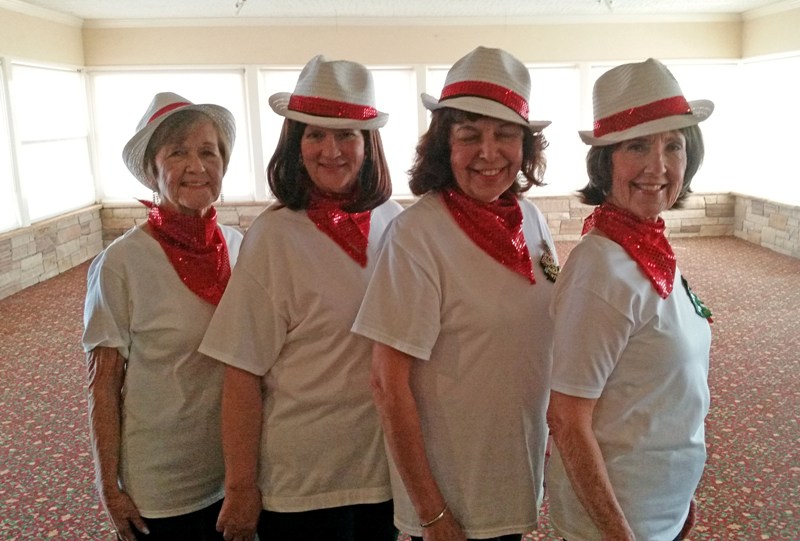
Besides, if I moved on, I’d have to give up dancing. The irony is that by being here in this bizarre household, I have the freedom to indulge my newfound love of dancing. If I left, I’d have to get a job, which would leave me no time or energy for dance classes, and for now, dancing is important to me. It feels like a pilgrimage, a spiritual journey. It has lessons to teach me beyond the discipline of the basic steps and the joy of the choreographed dances I am learning, though I’m not sure what those lessons are. I might never know since much of dance is subliminal, needing the focus of both the body’s mind as well as the mind’s mind and perhaps even the soul.

As Shirley MacLaine said, “Dance is an art that impends on the soul. It is with you every moment, it expresses itself in everything you do.”

Whatever lessons I learn from dance will be with me long after the memories of this household have faded. Dance is that important. And so I continue this polarized existence, paying for the profound privilege of dancing with the profanity in the rest of my life.

***

Pat Bertram is the author of the suspense novels Light Bringer, More Deaths Than One, A Spark of Heavenly Fire, and Daughter Am I. Bertram is also the author of Grief: The Great Yearning, “an exquisite book, wrenching to read, and at the same time full of profound truths.” Connect with Pat on Google+. Like Pat on Facebook.

A Tale of Two Insects

I watched an old CSI show the other day where Grissom told a story about a guy who found a spider swimming in his toilet. For a couple of mornings the guy watched the spider struggling to survive the maelstrom of flushing. One morning, the guy decided to rescue the spider. He took it out of the water and set it on the floor. The next day, he found thspidere spider dead. “Why,” Grissom asked, “did the spider die? Because one life impinged on another.”

In my case, it’s ants I find, and my tale is about ants in the microwave. At this time of year, ants are an epidemic, so it’s difficult to keep on top of the infestation. (I’m telling you this so you don’t think the microwave is filthy. It isn’t.) I don’t like killing anything, not even insects, but if you don’t keep on top of the little critters, they go home and tell all their friends about a great party house they found, and the next thing you know, you have ants boogieing all over the place, even on your body when you sleep. Not a pleasant way to be awakened, that creepy-crawly sensation. (Cinnamon sprinkled in corners, by doors, and under windows usually keeps ants away, but a few manage to find other ways into the house.)

The same day I watched CSI, I opened the microwave door after heating some food and found a couple of Pharoah ants scurrying around inside. (Pharoah ants are more commonly known as sugar ants because they are attracted to sweets and greasy foods. Sounds like most of us, doesn’t it?)

Obviously, the ants were inside when I started the oven, so they should have been nuked, but they weren’t.

A bit of research explained why they survived. Microwave ovens don’t heat evenly, so ants can hide in the cool corners. Ants have a relatively small amount of water inside their bodies compared to their outside surface, and apparently it’s the water that heats up in a microwave. This large body surface compared to their volume helps cool them down, so if they make a mistake and end up in a hot spot, their heat dissipates quickly.

So here we have a tale of two insects, one whose life was impinged on by another, and one whose life remained unimpinged.

The moral is . . . I don’t know. Perhaps that we have to live our lives the best way we know how, and if we impinge on other lives, so be it. It could even be that impinging is what life is all about.

***

Pat Bertram is the author of the suspense novels Light Bringer, More Deaths Than One, A Spark of Heavenly Fire, and Daughter Am I. Bertram is also the author of Grief: The Great Yearning, “an exquisite book, wrenching to read, and at the same time full of profound truths.” Connect with Pat on Google+. Like Pat on Facebook.
Walking and Volkswalking

No wonder I do so much alone. I don’t understand the point of many group activities that people seem to enjoy.

Someone suggested I look into volkswalking since I walk a lot, but it doesn’t really appeal to me. It seems to be organized walking in groups, and I get that with the three-nights-a-week conditioning walk with the Sierra Club and an occasional hike with one of the hiking groups in the area. Volkswalking also supposed to be non-competitive walking, but anyone who completes a walk or a certain amount of mileage gets a badge or a stamp in a book (which they pay for themselves) to show masseswhat they accomplished. To me, anytime you give people “achievement awards” for completing something, it’s competitive, even if there isn’t one so-called “winner.” Why else do you need a badge? You know you did it — a badge can’t give you that. Only you can.

The premiere purported purpose of the various volkswalking clubs is to promote regular physical fitness for overall good health. So if you’re already walking, half of what they have to offer is negated. I suppose if I were in a new area and wanted to meet people, I’d go on one of the walks, but otherwise, if I were interested in the area, I’d just . . . walk.

That’s always been the benefit of walking — if you have two working feet and legs or reasonable facsimiles, that’s all you need. You just put one foot in front of the other, and you’re walking. What can be simpler?

Still, over 400,000 people take part in American volkswalking activities every year, so the bewilderment over the phenomenon is obviously mine alone.

So, if you’re interested in walking and need more incentive than simply going outside and putting one foot in front of the other for as long as you want (or can), then perhaps volkswalking is for you.

***

Pat Bertram is the author of the suspense novels Light Bringer, More Deaths Than One, A Spark of Heavenly Fire, and Daughter Am I. Bertram is also the author of Grief: The Great Yearning, “an exquisite book, wrenching to read, and at the same time full of profound truths.” Connect with Pat on Google+. Like Pat on Facebook.
When Water isn’t Water

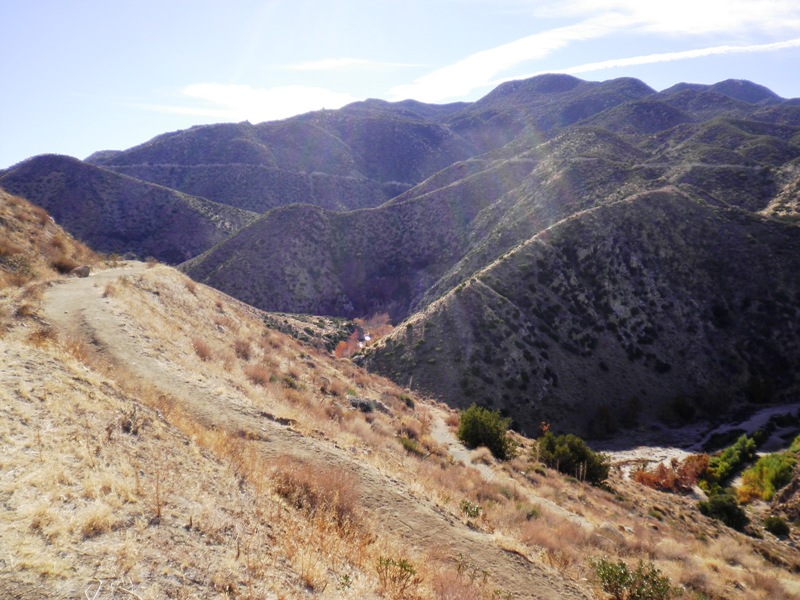
I got a bottle of flavored water at the store the other day. At least, that’s what I thought I was buying. I’d occasionally pick up a simple sparkling mineral water with lime and cherry oils added, which I found to be a delightfully refreshing drink that offered the same bite as sodas without the junk ingredients, and I’d indulge myself from time to time.

This time, however, I didn’t notice a change in the label until I got it home. Instead of simply calling it “Sparking Mineral Water” they called it “Sparkling Water Beverage.” When I saw the word “beverage” alarms went off in my head. “Beverage” added to water is like “drink” added to juice. It means it’s not what it says it is. (A juice drink generally is short on juice and waterlong on sugar and artificial flavors.)

The “beverage” turned out to have many different ingredients other than plain old water: carbonated water, citric acid, natural flavor, potassium citrate, aspartame, potassium benzoate, and acesulfame potassium.

If this particular beverage is water, then so is Coca Cola. The ingredients in Coke Zero are carbonated water, caramel color, phosphoric acid, aspartame, potassium benzoate, natural flavors, potassium citrate, potassium benzoate, and acesulfame potassium and caffeine.

The main difference between Coke Zero and “my” Sparkling Water Beverage seems to be the coloring and caffeine. Otherwise, they are basically the same sort of product.

I would never have bought the “water” if I had paid attention to the ingredients since I stay away from aspartame and rarely drink sodas.

I guess this will teach me to read all labels, especially the labels for something as innocuous as water.

***

Pat Bertram is the author of the suspense novels Light Bringer, More Deaths Than One, A Spark of Heavenly Fire, and Daughter Am I. Bertram is also the author of Grief: The Great Yearning, “an exquisite book, wrenching to read, and at the same time full of profound truths.” Connect with Pat on Google+. Like Pat on Facebook.

Today’s Weather

fire

Need I say more? Well, maybe I do. We’re also dealing with 25-mile-an-hour winds that do nothing to cool the scorch. Ouch.

I hope you’re having a cool, calm day.

***

Pat Bertram is the author of the suspense novels Light Bringer, More Deaths Than One, A Spark of Heavenly Fire, and Daughter Am I. Bertram is also the author of Grief: The Great Yearning, “an exquisite book, wrenching to read, and at the same time full of profound truths.” Connect with Pat on Google+. Like Pat on Facebook.
After Kicking the Bucket List

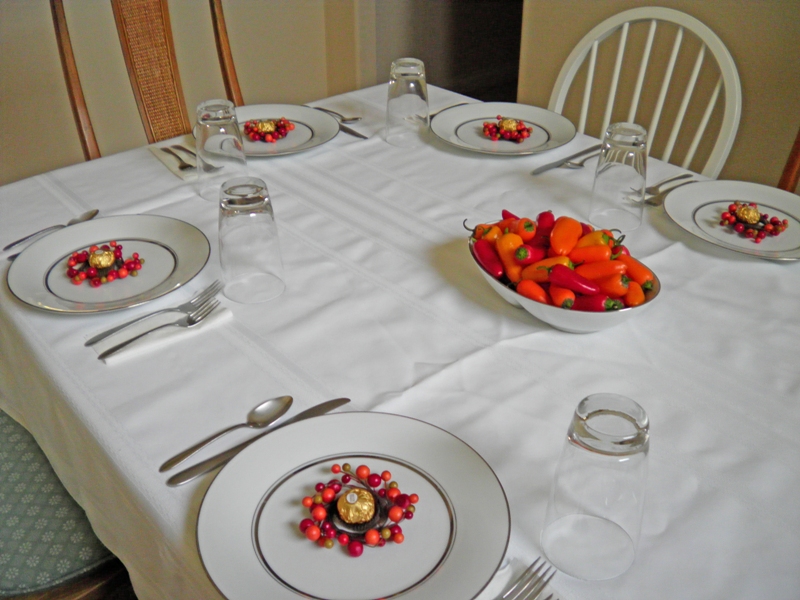
A few days ago I mentioned in a blog that I didn’t have a bucket list because there are too many things in the world that either I’m not aware of that perhaps I would like to do, or if I am aware of the things, I’m not aware that I would like to try them.

Several people pointed out that bucket lists have become a cliché, which they are, but the way I figure it, they are also redundant. A bucket list is a list of things you want to do before you die. As far as I know, every list is a list of things one wants to do before they die. A shopping list is more immediate and a heck of a lot less exciting than a list of activities such as sky diving or mountain climbing, but still, it’s a list of things to do while you are alive.angel

I have yet to see a list of things to do after one kicks the bucket, though I imagine such a list would read:

1) Make an appointment with God.
2) Tell Him/Her what He/She did wrong when creating the world.
3) Learn how to play the harp.
4) Shop for the latest fashion in wings and halos.

Or, in a more dire situation:

1) Amass a stock of aloe for burns.
2) Find your friends, especially those your parents once warned you about.
3) Look for a hot guy.
4) Have a hell of a good time.

Now those are bucket lists!

***

Pat Bertram is the author of the suspense novels Light Bringer, More Deaths Than One, A Spark of Heavenly Fire, and Daughter Am I. Bertram is also the author of Grief: The Great Yearning, “an exquisite book, wrenching to read, and at the same time full of profound truths.” Follow Pat on Google+. Like Pat on Facebook.

Requiem for Online Dating

Six months ago, a married friend urged me to join a dating site, more, I think, to fulfill her own fantasy of going out with a lot of different men than because of any perceived need of mine. She promised to help me weed through the site to find men who might be compatible, but still it took one entire sleepless night for me to make the decision to play her game. I’m not sure what I was afraid of — moving even further beyond my deceased life mate/soul mate perhaps. Or maybe accidentally falling in love again and tying my future to another person.

Although I wasn’t looking for a serious relationship, I was lonely. Thinking it would be fun to meet people, maybe go on a few dates, I signed up for a dating site and paid for a six-month subscription. I originally planned to pay for one month, but I didn’t want to sabotage myself by counting the cost.

At the beginning, I wrote charming messages to all the men my friend thought might be suitable, and even some the site found for me, though the site’s computers seemed to think I was looking for an inarticulate, overweight, tattooed smoker who rides a motorcycle. Um, no.

I suppose it’s understandable I got not a single response to my notes. Inadvertantly, I’d created a profile that guaranteed I wouldn’t catch any man’s attention — I told the truth about myself, used more than 95 words, didn’t downplay my intelligence, didn’t show cleavage, didn’t use words like “fun-loving” that could connote an eagerness for mattress games, and most of all, I didn’t lop years off my age. Eek. I must have seemed like their worst nightmare!

I eventually joined two free sites besides that first fee-based site, but the free ones garnered me no attention either. (In fact, those sites matched me with many of the same unsuitable men the first site did.)

Last night, my paid subscription ended, so I laid my profile to rest. I deleted my photos, deleted the description of myself, deleted my thoughts about what I was looking for in a man. Then I went through the whole rigmarole of deleting the profile. They promised that the profile would be permanently deleted from their site, but a while later, when I tried to sign in to make sure the profile really was gone, there it was along with a welcome back note. So I deleted it again.

The truth is, I am glad I didn’t find anyone to go out with. I am finding my wings, waiting to see if I can fly, and I don’t want to be held earthbound by anyone else’s expectations of me, no matter how potentially rewarding the relationship might be.

Goodbye, online dating. Goodbye, romance.

Hello to . . . whatever might come next.

***

Pat Bertram is the author of the suspense novels Light Bringer, More Deaths Than One, A Spark of Heavenly Fire, and Daughter Am I. Bertram is also the author of Grief: The Great Yearning, “an exquisite book, wrenching to read, and at the same time full of profound truths.” Follow Pat on Google+. Like Pat on Facebook.

On a Pilgrimage

Today when I mentioned my idea of walking up the coast, a friend asked, “Why walking?” I had to stop and think about that. I originally planned a journey by car, crisscrossing the country, so I’m not sure how the idea of driving metamorphosed into walking, or why the idea took hold except that I’ve always had an affinity for walking.

When I first started roaming the desert after the death of my life mate/soul mate, I would follow the paths drawn in the sandy soil by bikes and ATVs, always wanting to see what was up ahead, around the next turning, behind the next knoll. I had to be careful not to wear myself out because I needed to make sure I had enough energy to get myself back to home base, and I couldn’t help wondering what would happen if there were no home base, if I could just walk until I got tired, and when I was rested, continue on. Such practical things as being able to carry enough water, food, and protective coverings to get me to wherever I was going didn’t enter the equation. I just like the idea of walking to see . . . whatever there was to see.

Back then, I was still going through the pain of first grief, and walking was the only way I could find any peace. Somedays I walked for hours, limited only by my strength and the amount of water I’d brought. My walking, though it was always circular rather than to a special place, seemed like a pilgrimage, a long journey to a new life. My old life was dead, cremated along with my life mate/soul mate, and somehow I had to find a new way to connect with the world. My current idea of walking up the Pacific coast seems like a continuation of that grief-born pilgrimage.

“Pilgrimage” has been defined variously as any long journey, especially one undertaken as a quest; a journey or search of moral or spiritual significance; a walk in search of something intangible. Although making a pilgrimage was not my intention when I first thought of walking up the coast, “pilgrimage” seems to define most what I want out of the journey. I don’t want the journey to be one of survival (though I do intend to survive it, of course). My wilderness survival skills are nil, so in any contest between me and the wilderness, the wilderness would win. My ability to carry a heavy pack is also nil. And yet, I would like to see the coast more intimately than from the window of a car passing by at 65 miles an hour, with only periodic stops to rest. I would like to see what I am made of. Could I handle the endless hours of nothing to do after my walking stint is finished for the day? How would I connect with the world? Could I handle the uncertainty of never quite knowing what will happen? Could I spend so much time outside without becoming ill? I’d stay in motels when I could, but for long stretches, there would be just me and whatever was around the next bend.

Meantime, I am on another pilgrimage. Bruce Chatwin in Anatomy of Restlessness wrote, “To dance is to go on pilgrimage.” Some people see dancing just as exercise, but for me it’s a way of connecting with life, of being alive, of searching for something intangible, if only proficiency and grace. Dance is a journey of the spirit just as I would hope an epic walk would be, and it’s changing me in some ephemeral way. For example, for the first time in my life, I have no body image problems. All that time in front of a mirror is making me comfortable with the way I look, both my good points and bad. Dancing also seems to reach inside to hidden places and pull out previously unknown joys.

Dancing is the one thing besides physical inability that would change my mind about walking up the coast. It’s a rare and special privilege to be able to learn how to dance at any age but especially when one is sliding down the banister of life.

At the beginning of my journey into grief, a wise woman told me that I could be entering the happiest time of my life, and though it took longer than I expected, I can see that she was right. The pain of grief seems like a portal I went through, and now on the other side I can feel the possibility of true happiness and joy.

Walking. Dancing. Embracing whatever the future might bring.

My pilgrimage.

***

Pat Bertram is the author of the suspense novels Light Bringer, More Deaths Than One, A Spark of Heavenly Fire, and Daughter Am I. Bertram is also the author of Grief: The Great Yearning, “an exquisite book, wrenching to read, and at the same time full of profound truths.” Connect with Pat on Google+. Like Pat on Facebook.

Point Where You Want to Go

At ballet class the other day, I was practicing chaine turns and not doing a very good job of it. Chaine turns, in case you don’t know, are those often rapid turns performed in a straight line across the floor or a stage, moving from one foot to the other as you go. To keep from getting dizzy, you need to “spot” — to find something to focus on as you’re turning, and when you rotate out of sight of that spot, you need to whip your head around so that you can again focus on the spot. Trying to learn such a step after a certain age is difficult because one’s head does not whip around fast enough, so not only do you get dizzy, you end up not going where you want to go.

Seeing my difficulty, the teacher suggested pointing to the spot as well as looking at it on the assumption that where you are pointing, there you will go. And it worked. I mostly got to where I wanted to go. Still dizzy, but I got there.

twists and turnsIt seemed to me such a profound bit of advice, “Point where you want to go.” If you’re not pointed toward where you want to go, it’s hard to get there because we tend to go where we are looking. If we’re looking behind us or are distracted by side roads, it’s hard to keep focused on the goal. (It seems to me this is both metaphoric and physical, pertaining to actual physical movements and also pertaining to one’s journey through life.) Even something simple like gesticulating as we’re walking tends to keep us from walking in a straight line because we’re pointing everywhere but where we want to go.

One obvious image comes to mind as an example of pointing where you want to go. I’ve seen baseball players sometimes point their bat, in a grandstanding pose, toward the outfield where they aim to hit a home run. (Well, seen it in movies; I don’t know if they actually do it.)

Writers do the same thing, pointing where they want to go. In writing, such pointing is called foreshadowing. We writers need to know where we are going so we don’t get off track. and we need to know where we are going so we know to stop when we get there. We also need to give readers hints of where the story is pointing so they can find their way to the end, but we need to make sure readers don’t know where they are going until they get there, otherwise the suspense is lost. Hence, in writing, dizzying chaine turns keep the reader focused on the constantly changing twists and turns of the plot and not the end.

I feel so very cultured using a ballet term, but ironically, my very use of term is an example of the importance of sometimes not pointing where you want to go. I would never have made a point of taking ballet classes. It would never even have occurred to me, but when the option was offered, I grabbed hold of it. And now I am focused on the classes. (And yet I was looking for something to focus on, so maybe that counts.)

Twists and turns.

It’s what life, dance, and writing is all about.

***

Pat Bertram is the author of the suspense novels Light Bringer, More Deaths Than One, A Spark of Heavenly Fire, and Daughter Am I. Bertram is also the author of Grief: The Great Yearning, “an exquisite book, wrenching to read, and at the same time full of profound truths.” Connect with Pat on Google+. Like Pat on Facebook.
A Perfectly Fair Day

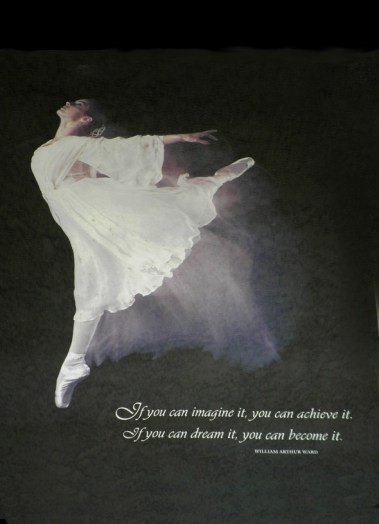
When I mentioned there were no single riders allowed on the Ferris wheel at the county fair and lamented having no one to ride with me, a woman from my dance class volunteered to accompany me if we went on Saturday. Such a lovely surprise, that offer, and I accepted eagerly.

Today, Saturday, turned out to be perfect. Perfect weather. Perfect fair. Perfect company. Usually when I go to a fair with people, they want to spend most of their time at the merchandise booths inside the pavilions, which to me seem like walking into one bad late-night television commercial after another. My friend had no interest in such exhibits. (See? Didn’t I say the day was perfect?) Instead we admired the quilts and, for a small contribution, we had the fun of making pins at the Quilts of Valor booth. 

Sporting our new finery, we looked at the handcrafts and collections, searched for the model of the U.S Constitution a walking buddy had made, and enjoyed the African violet display, especially this lovely flower that was smaller than my thumbnail:

We marveled at a cougar visiting from the zoo, checked out the artwork, passed by the haunted house.

Finally we went searching for the Ferris wheel and found not one but two wheels! (Well, three if you include the kiddy Ferris wheel.) Although there was no apparent difference between the two Ferris wheels, we decided (okay, I decided) to ride both wheels.

For some reason, one ride was both longer and faster, and the polite young man who operated that wheel let us stay on for a second ride. (See? Perfect!)

Afterward, we bought drinks and a taste of the fair. Every year, it seems they come up with something more esoteric to deep fry and this year it was cheesecake. Not something I’d recommend, but then, that’s what fair food is all about, tasting something outlandish, and so that, too was perfect.

We couldn’t find the picnic tables, so we sat on a curb like little girls to eat and rest and chat.

Can you tell I’m smiling as I write this?

Wait! I almost forgot! There was another treat. We drove to the fairgrounds in her convertible. I have no idea how it is possible that I have never ridden in a convertible before, so my first ride with the top down added the exclamation point to my perfect day.

***

Pat Bertram is the author of the suspense novels Light Bringer, More Deaths Than One, A Spark of Heavenly Fire, and Daughter Am I. Bertram is also the author of Grief: The Great Yearning, “an exquisite book, wrenching to read, and at the same time full of profound truths.” Connect with Pat on Google+. Like Pat on Facebook.