My New (Temporary) Relationship

A couple of weeks ago my car broke down, and for a week, the mechanic kept promising to fix it, but all sorts of emergencies got in the way, and he had to take care of those cars first. Emergencies? My car is the only one I have, and during the time it wasn’t working, my 97-year-old father had to go to the emergency room, doctors, and again to the hospital to take care of a medical crisis. How much more of an emergency could there possibly have been? Still, they did fix the car. For a couple of days, anyway.

Two or three days ago, the accelerator cable got stuck when I was out doing errands, and I had to drive back to the house at 5 miles per hour in second gear. I called the mechanic, thinking I’d try to make it to the repair shop, but he said to go home and he would come out and look at the car. I got back to the house, and waited. And waited. And waited. He never came. Never called.

The nknightext day I called him again, and he said he’d stop by after he finished for the day. Again, I waited. And waited. Made sure I had my phone by me so he could call if he couldn’t make it. Never came. Never called.

So this morning I called him again, and asked if he had forgotten me. He admitted that he had. He promised to come by in an hour or two, and said he’d call when he was on his way. So I made sure I had my phone. And I waited. And waited. He never came. Never called.

Finally I left to go to check on my father (luckily the hospital is within walking distance), and on my way, it occurred to me that this little contretemps with the mechanic seemed remarkably like a relationship, always waiting for him to stop by or call.

I know all relationships aren’t like that, but enough of them are to make me glad that my foray into online dating didn’t work out. I can just see me, sitting by the phone or the door the rest of my life, waiting for calls that never come, for visits that never materialize. Ouch.

Luckily, this particular relationship is a finite situation. One day the car will be fixed and I’ll have my life back. And that will be the end of waiting for men folk who so easily forget that I am alive.

***

Pat Bertram is the author of the suspense novels Light Bringer, More Deaths Than One, A Spark of Heavenly Fire, and Daughter Am I. Bertram is also the author of Grief: The Great Yearning, “an exquisite book, wrenching to read, and at the same time full of profound truths.” Connect with Pat on Google+. Like Pat on Facebook.
Temper, Temperament, and Temperature

My life continues its bizarre and zigzagging path into chaos. I finally got my car back from the auto shop, and like a human, it paid me back for the kindness with a temper tantrum. (It is strange how often people treat badly those who do them a favor.) The accelerator cable got stuck when I was out doing errands today, and I had to drive back to the house at 5 miles per hour in second gear. It was almost humorous, actually, but it wouldn’t have been so humorous if I’d gotten reamed crossing a busy street at such a miniscule speed. The mechanic will come look at it later. Old cars are temperamental and have such peculiar things going wrong. This time it’s probably a spring. Or at least I hope it’s that innocuous.

fireBesides that, I’ve been getting into fights with everyone today, especially the men in my life. They think I should blindly accept whatever they say, and I don’t think I should. I suppose it’s possible I’m at fault, but it’s hard to believe that no matter who I talk to and about what, I’m in the wrong. I should be right about something, don’t you think? It seems impossible to be wrong in everything I say. (That’s why I like this blog. I can say whatever I want, and blithely continue on my life without everything turning into an argument.)

My father is still in the hospital, and he’s being more temperamental than usual. Every time I talk to him, he’s castigating me for something. Yesterday he was accepting of the possible need for a catheter for the rest of his life, but he was insistent that I get him out of there at that very moment. Wasn’t happy with me at all when I said we had to wait to find out what was going on. He did acquiesce to staying a bit longer when I reminded him that there were no pain medications at the house.

Today when I went to see him, he was upset with the idea of the catheter and refused to go home with it still inserted. He’d been having troubles with incontinence, and he said he didn’t mind my having to change his diapers if it got to that point. (Of course, he didn’t ask if I minded.) When I reminded him that the catheter was to drain his bladder, and that it was the full bladder that caused him pain, he got mad at me. He also said he was willing to stay in the hospital longer. Yikes.

I understand that he wants to be in control and that he thinks having a catheter means turning his body over to a machine, but he doesn’t seem to understand the realities of a 97-year-old body — that the body is in control. If it’s not working, it’s not working. I’m keeping my fingers crossed that he will get the use of his bladder back. And maybe he will — luck is generally on his side.

Hundred degree temperatures don’t cool people’s tempers, but I’m trying to be as patient as I can. I hope the people I see are giving me the same courtesy.

***

Pat Bertram is the author of the suspense novels Light Bringer, More Deaths Than One, A Spark of Heavenly Fire, and Daughter Am I. Bertram is also the author of Grief: The Great Yearning, “an exquisite book, wrenching to read, and at the same time full of profound truths.” Connect with Pat on Google+. Like Pat on Facebook.

The Science of Creating Creativity

A friend sent me an article This Is Your Brain on Writing, thinking I might get a blog post out of it, and as you can see, I did.

The article explains about research into the neuroscience of creative writing. The experiment, led by Martin Lotze of the University of Greifswald in Germany, showed a broad network of regions in the brain working together as people produced their stories, but they found a big difference between novice and professional writers. According to Lotze, the inner workings of the professionally trained writers showed some similarities to people who are skilled at other complex actions, like music or sports. They also showed more activity in the regions involved with speech, while the novice writers seemed to activate more their visual centers.

Dr. Steven Pinker, a Harvard psychologist, wasn’t convinced that the experiments provided a clear picture of creativity, saying that “creativity is a perversely difficult thing to study.”

I don’t know who is right, but I don’t quite see how this experiment showed anything about how authors write a story.

According to the article, Dr. Lotze wanted to scan people while they were actually writing. But he couldn’t give his subjects a keyboard to write with, because the magnetic field generated by the scanner would have hurled it across the room. So Dr. Lotze ended up making a custom-built writing desk, clipping a piece of paper to a wedge-shaped block as his subjects reclined. They could rest their writing arm on the desk and scribble on the page. A system of mirrors let them see what they were writing while their head remained cocooned inside the scanner.

Um, yeah. That’s exactly how I write — lying on my back with my head wedged into a neuroscanner, my arm reaching up to scribble on papers clamped to a desk I can only see through mirrors.

How could that very process of the experiment not affect the ultimate creativity of a writer? Perhaps the professional writers were more used to working under diverse conditions. Maybe they couldn’t relax enough to visualize their story, and so told it to themselves as they wrote. Maybe the novice writers were able to visualize their stories because they found it harder to actually write under such conditions. Maybe the novice writers were novices because they were involved with a whole slew of other creative mechanisms — etching or sculpting, for example. Maybe professional writers might not have time to indulge in various art forms, so were more linear. Maybe . . . well, as you can see, there are a whole lot of possible maybes not touched on in the article.

The way I see the experiment is that the scientists didn’t learn anything about true creativity in the wild, but only in captivity. Most of us create our own milieus for writing — in perfect silence or with music in the background, writing by hand in bed or sitting at a desk clicking a keyboard, whenever life permits or within strict timeframes.

We generally don’t let others to dictate how we write, and if we did allow such interference, for sure it would change our process in the same way that dancing on a miniscule stage in an informal setting is different from dancing on a vast stage with thousands of people watching, and both are different from dancing in a studio. (If it weren’t different, all dancers would be satisfied with simply dancing in their living rooms.) So obviously, one’s outer space helps determine one’s inner space, which pretty much negates the experiment since they didn’t take environmnet into consideration.

Besides, our brains are only a small part of the creative process. We write with our souls, our bodies, our very beings. And anyway, why do we need to know how our brains create creativity? It won’t make our writing better. Only writing (and living) can make our writing better.

***

Pat Bertram is the author of the suspense novels Light Bringer, More Deaths Than One, A Spark of Heavenly Fire, and Daughter Am I. Bertram is also the author of Grief: The Great Yearning, “an exquisite book, wrenching to read, and at the same time full of profound truths.” Connect with Pat on Google+. Like Pat on Facebook.

The Bees Of The Invisible

Life and death are strange things. Or maybe it’s death that’s strange, at least to those of us who are still alive. A wise friend keeps saying we have to just accept the way things are, that we could go nuts trying to figure out the whys of it all, but since I seem to live on the edge of death (other people’s deaths, not mine), death and the process of getting there are often on my mind.

We start out as miniscule bits and pieces of two people, are born, grow from helpless infants to independent-minded children to independent and autonomous adults, finally ending up helpless again as our bodies deteriorate.

A few friends were talking the other day about all the nonagenarians in our lives, and someone asked what use they were. This is a question many of these aged folks themselves ask, so it’s not an insensitive question by any means. When there is nothing left to accomplish, when you can’t move about freely either mentally or physically, when you can no longer enjoy anything, not even your food because your taste buds have decamped, what use is there in living?

My 97-year-old father is “declining” as the doctors say, which is a cute euphemism for “slowly dying”. He could live a year or more, but still, everything is breaking down, even his normally sharp mind. He hates that he can’t think, hates that he can’t make instantaneous decisions, hates even more to have others make decisions for him. Even worse, he finds the situation embarrassing. I tell him, of course, that there’s nothing to be embarrassed about, that it’s part of the process, but my words don’t make him feel any better about himself.

I don’t want to live to such a great age, and especially I don’t want to wind up helpless and dependent on strangers (I won’t have the benefit my father has of a caregiving daughter). My wise friend reminds me we have no choice in the matter, which is true. The only real choice we have is to live as well as we can as long as we can.

For a long time I’ve thought that if God is Everything, then we are the sensory cells of the Everything, feeling, seeing, touching, hearing, smelling, tasting life. And the poet Rilke seems to agree. He wrote, “It is our task to imprint this temporary perishable earth into ourselves, so painfully and passionately, that its essence can rise again ‘invisibly’ inside us. We are the bees of the invisible. We wildly collect the honey of the visible, to store it in the great golden hive of the invisible.”

Maybe these nonagenarians are still gathering their invisible honey as best as they can, but even so, it doesn’t make it any easier watching the old get even older and feebler, gradually losing their touch on life.

Bee

***

Pat Bertram is the author of the suspense novels Light Bringer, More Deaths Than One, A Spark of Heavenly Fire, and Daughter Am I. Bertram is also the author of Grief: The Great Yearning, “an exquisite book, wrenching to read, and at the same time full of profound truths.” Connect with Pat on Google+. Like Pat on Facebook.

When Chaos Rains

Yeah, I know — the expression is when chaos reigns, but lately it seems as if chaos is raining down on me like an acidic shower that erodes everything it touches. Maybe things aren’t that bad. It’s possible I simply no longer have any perspective on the way things should be.

Take today for example. My car broke down last Wednesday, and every day since then the mechanic has promised to have the car ready for me. Normally, this wouldn’t be a problem except that my 97-year-old father is going through a medical crisis, and I’ve had to beg for rides to pharmacies for his medications, to doctors appointments, to and from the hospital. A lovely woman squired us around today, taking us not only to the doctor but to the hospital afterward when the same doctor who didn’t want to admit my father last Thursday decided my father needed hospital care after all.  My friend waited for me for arain while, then when I got tired of watching my father sleeping in the emergency room because they didn’t have a bed for him, we went out to dinner. Afterward, she took me back to the hospital so I could check on him once more, and it’s a good thing because they hadn’t fed him. And he was cold.

I got that straightened out, then my friend drove me home only to be met my demented brother who screamed obscenities at her. Cripes, she didn’t deserve that. Well, neither do I, of course, but her only “sin” was doing a good deed. She is used to dealing with the problems of the aged, so she understood what I was going through with my father, but now I feel bad for even asking her.

Luckily she, like everyone else in my life, knows the truth, so she didn’t believe brother dearest’s accusations that I’m killing the old man. (Where does he get this stuff?)

Perhaps I will get my car back tomorrow (with a hefty repair bill, I might add), but it’s no longer critical. I don’t need to worry about getting my father to the doctor’s office or to the hospital since he is already there. Well, sort of there. He’s parked in the emergency room with minimal care because even if they did have a bed for him, they don’t have the staff to man and woman it. Still, he’s right next to the nurse’s station, and she just got on duty and isn’t bored with the day yet, so he should be okay.

Me? I am so not cool. I lost my temper and screamed at my brother . I feel as if I should be above such base activities, but I am not always the person I want to be. Someday, perhaps . . .

***

Pat Bertram is the author of the suspense novels Light Bringer, More Deaths Than One, A Spark of Heavenly Fire, and Daughter Am I. Bertram is also the author of Grief: The Great Yearning, “an exquisite book, wrenching to read, and at the same time full of profound truths.” Connect with Pat on Google+. Like Pat on Facebook.
Doing Something Nice for Myself

Since my life continues to be traumatic and chaotic, a friend suggested I do something nice for myself. My car is in the shop, which is part of the chaos — my father is going through a medical crisis, and my not having a car only adds to the stress. Without a vehicle, I am pretty much stuck with what is in my immediate environs for that something nice. So I spent a few relaxing moments putting together a fake flower arrangement. It gave me my first smile in several days, so apparently it’s working. Hope it brings a smile to your life, too.

***

Pat Bertram is the author of the suspense novels Light Bringer, More Deaths Than One, A Spark of Heavenly Fire, and Daughter Am I. Bertram is also the author of Grief: The Great Yearning, “an exquisite book, wrenching to read, and at the same time full of profound truths.” Connect with Pat on Google+. Like Pat on Facebook.
Sheep Peach by Any Other Name . . .

Have you ever wondered about the origins or kiwifruit or where it got its name? I didn’t think so. Neither did I. But when I read that the plant was renamed with an eye on the American market, I had to look into the matter.

Kiwis — the fruits, not the slang word for New Zealanders or the name for the fuzzy bird — is a native of China where it was known as yang tao, roughly translated as “sheep peach.” It was also known as monkey peach, macaque pear, vine pear, sun peach and wood berry. (Wood berry makes most sense since the fruit is a berry of a woody vine genus that is widespread in Asia.) Recently, the Chinese name for “strange fruit,” a translation of kiwifruit, has become common in Taiwan and Hong Kong. (I’ve heard it said that what goes around comes around, and apparently this is true of cultivated fruit and fruit names as well as the rest of human activities.)

When yangsheep tao seeds were brought to New Zealand in the early part of the twentieth century, the new cultivators renamed the fruit “Chinese Gooseberries” or “melonettes.” At the beginning, it was mostly a novelty plant for gardens and small markets. Through cultivation, the fruit became bigger and sweeter, and its appeal grew. In the nineteen fifties, the growers wanted to expand their sales to the United States, but neither of these names were acceptable for the American market. They couldn’t call the fruit “Chinese Gooseberry” because the United States was in the midst of a cold war, and anything smacking of Communism was immediate death. Nor could they call it “melonette” because the United States had high tariffs for melons. Someone (several people claim the honor so there’s no point in naming names) came up with the label “kiwifruit” after the small brown fuzzy New Zealand bird, which distanced the fruit even further from its Chinese past. As I’m sure you’ve figured out, the ploy worked, and now kiwis are a staple of most people’s diet, but not mine. I don’t particularly like the fruit, no matter what its name. It seems to me the fruits are again becoming small and not very sweet, but most people still buy it.

Now that I think about it, the original appellation of “sheep peach” is a good name for the fruit. Like sheep, we were herded where the marketers wanted us to go.

***

Pat Bertram is the author of the suspense novels Light Bringer, More Deaths Than One, A Spark of Heavenly Fire, and Daughter Am I. Bertram is also the author of Grief: The Great Yearning, “an exquisite book, wrenching to read, and at the same time full of profound truths.” Connect with Pat on Google+. Like Pat on Facebook.

Planning Epic Transcendental and Mystical Journeys

I am so beyond stressed out from taking care of my father’s latest medical crisis, my brother’s continued mental problems, and my own lack of sleep because of caring for them that I can no longer find comfort in planning epic transcendental and mystical journeys. But here is an update for those of you who have expressed concern about my idea of walking up the Pacific Coast to Seattle.

Although I would take precautions, there is no doubt such a walk could be dangerous, but for now, that is not something I want to consider. In the past eight years, I’ve watched three people die slowly and painfully from cancer, and now I am watching my 97-year-old father die even more slowly from old age. Not taking the trip because of possible dangers would be merely saving myself for even more probable trauma in the future. Life itself is a danger. It does terrible things to people, taking everything they have until there is nothing left but a husk of skin and bones.

Despite all my thinking and blogging about an epic adventure, there is a chance this walk is merely a fantasy. I am not sure I have the physical capabilities of walking so far or spending so much time outside. I am not sure I can carry enough water and emergency supplies. And to be honest, I’m not sure I really want to do it — the thought could simply be a means of mentally escaping an untenable living situation. Still, if I take the trip, or try to take it, I will be as prepared as possible without carrying the whole world on my back. I’m looking into such things as mylar emergency blankets, down vests, bear spray (I figure if it can ward off a bear, the spray could ward off any human predator, too). I am also researching the best way of carrying things, and no, it isn’t on the back, it’s on the head, but that I won’t even consider. I want to look as if I am on a walk, not backpacking through the wilderness or trekking around East Africa.

The walk is only one possible adventure I am considering. I started out planning an extended cross-country road trip, perhaps visiting the national parks, sometimes camping out with full camping gear and sometimes staying in motels to catch up on civilization’s offerings, and this is still a possibility, especially if my car is running. (If I were to walk up the coast, I’m not sure what I would do with the vehicle during the year I would be gone.) Another possibility is to somehow use my ancient VW as a means of promoting my books, maybe painting it by hand to attract attention or letting people who buy a book sign my car while I am signing their boobedk. (Although I like that idea, I’m not sure how to market it. Marketing, unfortunately, is not my forte.)

And it’s possible I wouldn’t want to stop taking dance lessons, in which case I would take shorter long walks to prepare for the epic walk or go on weekend camping trips to gain experience in the outdoors. (Besides, my dance teacher says she doesn’t want me to stop, and it’s been a long time since someone wanted me around just for me, not for what I could do for them.)

In other words, despite all my blogging, thinking, talking, I have no idea what I will do when my responsibilities end.

Well, I do know one thing. I will sleep, or at least try to. Being responsible for others’ care is exhausting.

***

Pat Bertram is the author of the suspense novels Light Bringer, More Deaths Than One, A Spark of Heavenly Fire, and Daughter Am I. Bertram is also the author of Grief: The Great Yearning, “an exquisite book, wrenching to read, and at the same time full of profound truths.” Connect with Pat on Google+. Like Pat on Facebook.
A Three-Letter Word for Freedom

I don’t drive a lot — less than 150,000 miles in 42 years — but still, a car is important to me. Our society is set up where a vehicle is essential to go the long distances our daily lives seem to require. It’s a way of carrying all the food and equipment we need, a way to keep in touch with far-flung families and friends, a way of extending our reach and renewing the views forming the backdrop of our lives. But even more than that, a car spells freedom.

My car conked out the other night (actually, it was the fuel pump that conked out), and so I’ve been without transportation, having to rely on friends to get me and my father to his various appointments and to round up the medications he needs. I’ve been without a car before when it’s been in the shop, sometimes for several days, and I used to revel in the freedom of not having to care for such a large and needy object. Often I would go weeks without driving since I prefer traveling on foot when possible. But today, I’ve been antsy, waiting for the mechanics to call and tell me the car is fixed.

Even though I might not have driven today since my father needs me here, I feel trapped not having the car around in case I felt the urge to escape my life for just a few minutes. A car is a promise that we can go farther and faster than ever our feet could carry us. It’s a promise that life awaits beyond the confines of our responsibilities. It’s a promise of adventure, fun, freedom.

The irony of this situation is that I’ve been thinking about walking up the coast to Seattle, a trip that might take me a year, and the thought of not having to deal with a car and whatever mechanical and maintenance issues that might arise on a long trip has been refreshing. And here I am fretting over the absence of my car. (I know I’m overusing the word “car,” but it’s too old and bedraggled to merit the appellation of “vehicle.”)

So here I wait.

Is that the phone I hear? No, just my imagination calling me.

***

Pat Bertram is the author of the suspense novels Light Bringer, More Deaths Than One, A Spark of Heavenly Fire, and Daughter Am I. Bertram is also the author of Grief: The Great Yearning, “an exquisite book, wrenching to read, and at the same time full of profound truths.” Connect with Pat on Google+. Like Pat on Facebook.
Danceless

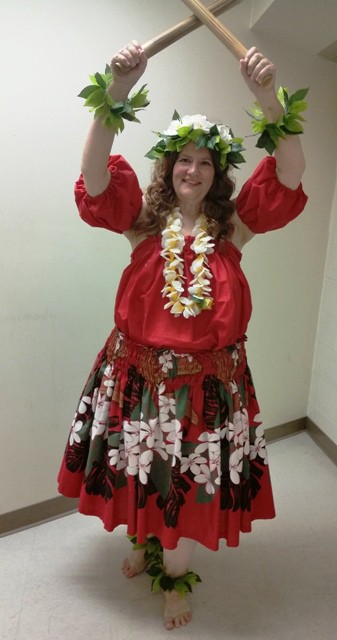
Today I missed dance class for the first time since I began taking lessons, and I feel bereft, as if I misplaced something I can never get back. I can go back to class, of course, but today’s classes were special in the way that all moments are special — each is a treasure, a singular occasion, that will never happen in exactly the same way twice.

More than that, dance is currently my savior, helping me get through the daily traumas of my life, and there have been more traumas than usual lately, especially the past 22 hours, so I needed those classes more than ever.

And yet, here I sit . . . danceless. Even if I wanted to practice the dances I’ve learned, I couldn’t. I’m exhausted.

tugofwarI know you’re dying to know what this is all about, so I’ll tell you — it’s just life.

More specifically, my car stopped running as I started out on my way to meet up for the Sierra Club walk last night. No gas seemed to be getting to the engine, which leads me to assume the fuel pump broke down. Not a problem, really, since I have emergency road insurance, and they will tow the car to be fixed.

What was a problem is that a few minutes after I coasted back down the hill and into the garage (how resourceful am I!), my father went through a minor medical emergency. I was up all night dealing with both him and my brother who seemed to sense the chaos. Early this morning my father decided he needed to go to the hospital via ambulence. I spent hours at the emergency room with him, but they didn’t want to admit him, so the rest of the day was spent begging rides from the hospital for both of us, rides to the pharmacy for his antibiotics, and then to another pharmacy because the first had no pharmacist on duty. (How can a major pharmacy not have a pharmacist on duty? Strange, that.) And to top it off, I had to forgo a treat I was looking forward to.

I sound selfish, don’t I? Well, that’s life, too.

Temporarily, all is quiet. Both men seem to be resting, and me . . . I’m here on this blog, trying to make sense of it all.

***

Pat Bertram is the author of the suspense novels Light Bringer, More Deaths Than One, A Spark of Heavenly Fire, and Daughter Am I. Bertram is also the author of Grief: The Great Yearning, “an exquisite book, wrenching to read, and at the same time full of profound truths.” Connect with Pat on Google+. Like Pat on Facebook.