Big Brother, Thy Name is Facebook

I feel as if I’ve fallen down a rabbit hole, and that rabbit hole has a name — Facebook. A couple of months ago, I met a reviewer on Facebook who had been prohibited from posting her reviews of mysteries on the Mystery Writer’s of America Page by MWA. (Isn’t that bizarre? Wouldn’t you think they would have wanted her reviews.) I invited her to post her reviews in my Suspense/Thriller Writers Group. I’ve mentioned before that we’ve banned most promotions except for reviews of other authors’ works, interviews with other authors, and excerpts from other authors’ novels. I’ve been trying to foster a sense of camaraderie, of authors helping authors rather than letting the authors inundate us with book links everyone is sick of seeing, and this reviewer’s posts seemed to fit with my concept.

But now she has been banned from posting links to her reviews in my group, not by me but by Facebook. Apparently, FB now have new rules banning any sort of promotion on one’s profile and from one’s profile. You have to use a business page for that. And so for now, people are still being allowed to blatantly promote their books, but unpaid reviewers are banned. Not just prohibited, but blocked — the links from her WordPress account and Networked blogs no longer post to her profile. And if she posts the links manually, her account will be suspended.

Technically, Facebook has always prohibited promotion. The profiles are supposed to be about socializing and connecting with real life friends, but people posted books links, giveaways, and all sorts of promos anyway, and Facebook never enforced it. A major change is coming now that FB is traded publicly. If FB allows promo anywhere on the site, the pages lose their competitive edge. FB also loses potential advertising bucks. (A related issue is that FB is not being welcomed by investors as enthusiastically as they had expected — huge numbers of users are accessing the site via phone and tablet and are bypassing the advertising, which makes FB not quite so lucrative as it was just a few months ago.)

But still . . . not to allow book reviews? Why is that a business? For some people it might be, but for this particular reviewer, it is a hobby, nothing more.

I asked the reviewer how FB found her and why they singled her out. She responded, “They tripped over me on another site and they FOLLOWED ME THERE! Yes, THEY FOLLOWED ME and about 4,000 OTHER people! That’s how they knew about my reviews, reviews that are free mind you. In time, though, I believe this will get to everyone. I’m betting I’m just in the first batch, but I’m sure they will be more.”

Yikes. Shades of big brother. I generally presume articles about Facebook fall under the category of urban legend until corroborated, but this reviewer’s experience seems to corroborate the following article: Wow. Facebook Rules Prohibit Users From Promoting Their Work, Company, And Much, Much More . . .

A Day for the Broken-Hearted

February 14th. A day to celebrate love with flowers, chocolate, romance. Sounds wonderful if you have someone to love, or even the hope of finding your true love, but if you are one of the many bereft whose beloved has died, the day brings not romance but tears. You remember that once you were loved, that once you loved. Of course, you still do love — love doesn’t die — but loving the eternal essence of someone who is dead is not exactly the same thing as loving someone who is present in body and mind and heart and voice.

We bereft are no longer whole-hearted. Our poor hearts still beat the same, but not with the same intensity they once did. Where once joy (or at least contentment) coursed through our veins, sorrow now flows. Sorrow doesn’t always flow, of course. We do heal . . . sort of. We piece our hearts together the best we can and go on living. But then comes Valentine’s Day, reminding us once again that we are broken-hearted.

My life mate/soul mate and I did nothing on Valentine’s Day. For us, it was just another meaningless day given significance only because we were together. Most of my fellow bereft are dreading tomorrow, knowing it will bring an upsurge in grief. They are planning lunches with friends and special outings to keep from thinking of what they have lost. I too am planning to go to lunch with friends, and this very effort underlines my problem. I can find people to do things with, but I no longer have someone to do nothing with.

My mate and I did nothing on Valentine’s Day, but we did it together. And now tomorrow I will have one more irreplaceable thing to mourn — nothing.

Celebrating Twenty Weeks of Daily Blogging

On September 25, 2011, I made a vow to blog for 100 days straight without fail. I wanted to get back into the discipline of daily writing, but didn’t want to make a major commitment such as writing a novel. I figured daily blog posts would satisfy the discipline and also satisfy the part in me that needs the reinforcement of completing a project. I passed the 100 day mark without even noticing, and now I’ve been posting a blog every day for twenty weeks — 140 posts.  Surprisingly, very few are frivolous, posted just for the sake of posting something. So today, let’s forget the seriousness of my usual posts. Let’s forget that this is Saturday, my sadder day. Let’s forget that my publisher, Second Wind Publishing, has moved to a new website and I have thousands of now-dead links to update. Let’s forget all of that, and just play.

And if that isn’t any fun, here’s a jigsaw puzzle (I get such a kick out of these!)

Want more fun?

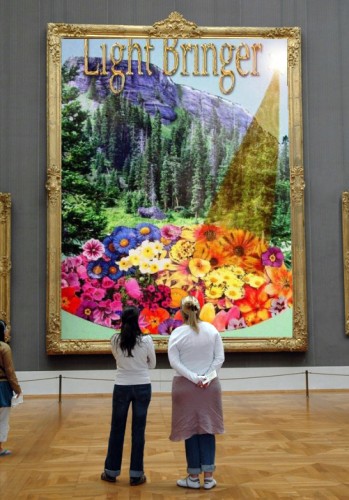
Click here to read the first chapter of: Light Bringer

Click here to read the back cover copy and an excerpt: Light Bringer

Click here to check out (and buy at $2.00 off!) Light Bringer at Second Wind Publishing’s new site: Light Bringer

Is “No Promotion” Really so Hard to Understand?

I moderate a writing discussion group on Facebook where we’ve banned any kind of promotion. The point is to develop a sense of camaraderie among members, and to share writing tips, techniques, friendship. It’s supposed to be a destination, a fun place to hang out, rather than a bulletin board with links to other sites. It’s almost impossible to get people to understand the benefits of such a group. The following correspondence I had with a Facebook Friend (now a former Facebook friend) is a graphic example. FBF joined the group on December 18, participated in a few discussions, and then sent me an interview for my interview blog.

December 20 — FBF: Did you receive my interview? I felt really good about my answers. What did you think?

December 23 — PB: Yes, I received it. Haven’t read it yet, but I did see it. I’ll read it when I format it for the site. It will be perhaps in a week.

December 23 — FBF: Yeah. You answered me on a post in the group so I already knew. I’m very excited. Thank you for doing this for me. You are amazing. Don’t let those promo people bug you. They obviously lack the social skills necessary to make friends and understand what professional respect means.

December 23 — PB: Actually, the one that bothered me the most was the guy who posted on the wall that what he hated was my whining about no promo. Before you joined, all anyone posted was promo, and some of the members rebelled. I was pleased because I’d just about decided to dismantle the whole thing. I think we’re developing a great group. Thank you for joining and for participating in our discussions.

December 23 — FBF: Your welcome. I’ve already gotten my book on two websites. An interview and two reviews in progress. And I never promoted my book once! So thank you.

December 23 — PB: See, that’s the whole point. Get to know people, and let them promote your book! And you’re welcome. I am glad to do what I can.

December 31 — PB: Hi. I posted your interview. Thank you! Sorry it took so long. Let me know if you need me to make any changes.

January 1 — FBF: It’s great. Thank you.

January 10 — FBF (in response to the question what three words describe your writing?): Comical, dialogue, needs-improvement. But that’s why I’m here.

February 8 — FBF: I posted a promo (a book trailer) on the group wall yesterday for a good writer, and it was removed. I’ve had enough. I’m outa here. [And then he used a lot of not-so-nice words.]

Grief: Overflowing Into the Empty Places

During all these months of posting blogs about my grief journey, I never understood their emotional impact on others. To me, writing the posts was all about finding words to explain how I felt so that perhaps those who had never experienced the loss of a soul mate could understand a little of what their bereft friends and family are feeling. But even more than that, it was about finding a measure of peace.

Grief is a difficult journey, and it’s made even more difficult when you lose a life mate/soul mate because the one person you need to turn to for support is the one who is gone. It’s also why, for some people, grief grows during the second and perhaps even the third year — the further you get away from your mate and your shared life, the more you need to talk to him about your bewilderment at his being so very gone from your life. You want to talk with him about the changes you’ve made in your life, to discuss ways of continuing to live without him, to share bits of your journey and show your growth. But he is not here to respond, and never will be again.

I’ve used this blog as a way of crying out to cyberspace, flinging my words to the electronic winds, sharing all those thoughts I can no longer share with him. And oddly (to me, anyway since it was never my intention) my grief somehow ends up overflowing into the empty spaces between the words, just as my sadness overflows into the empty spaces of my life. This emotional overflow is even odder when you consider that often when I write the posts, I am not feeling particularly bereft.

Yesterday I noticed that one of my grief blogs was getting an upsurge of views, and out of curiosity, I scanned the article to see what had caught people’s attention. Unexpectedly, the emotion of my words slipped through my usual editorial block and slammed into me. I started weeping. I don’t know how all that emotion ended up in a few hundred squiggles on a webpage (because, after all, letters are simply squiggles with no intrinsic meaning except that which we give them), but the sorrow is undeniable.

I’ve never been able to read my grief book all the way through. I had to edit in bits and pieces, and to depend on others to copyedit the book for me. All that angst just waiting between the covers of a book! I don’t quite know what to make of it. I don’t know why it was so important to me to show people that grieving is okay and even necessary, don’t know how so much of myself ended up in the book, don’t know where I got the courage to be publicly vulnerable. And yet, there it is, or rather, it there it will be in a couple of weeks when the book is finally released.

Super Bowl Overview

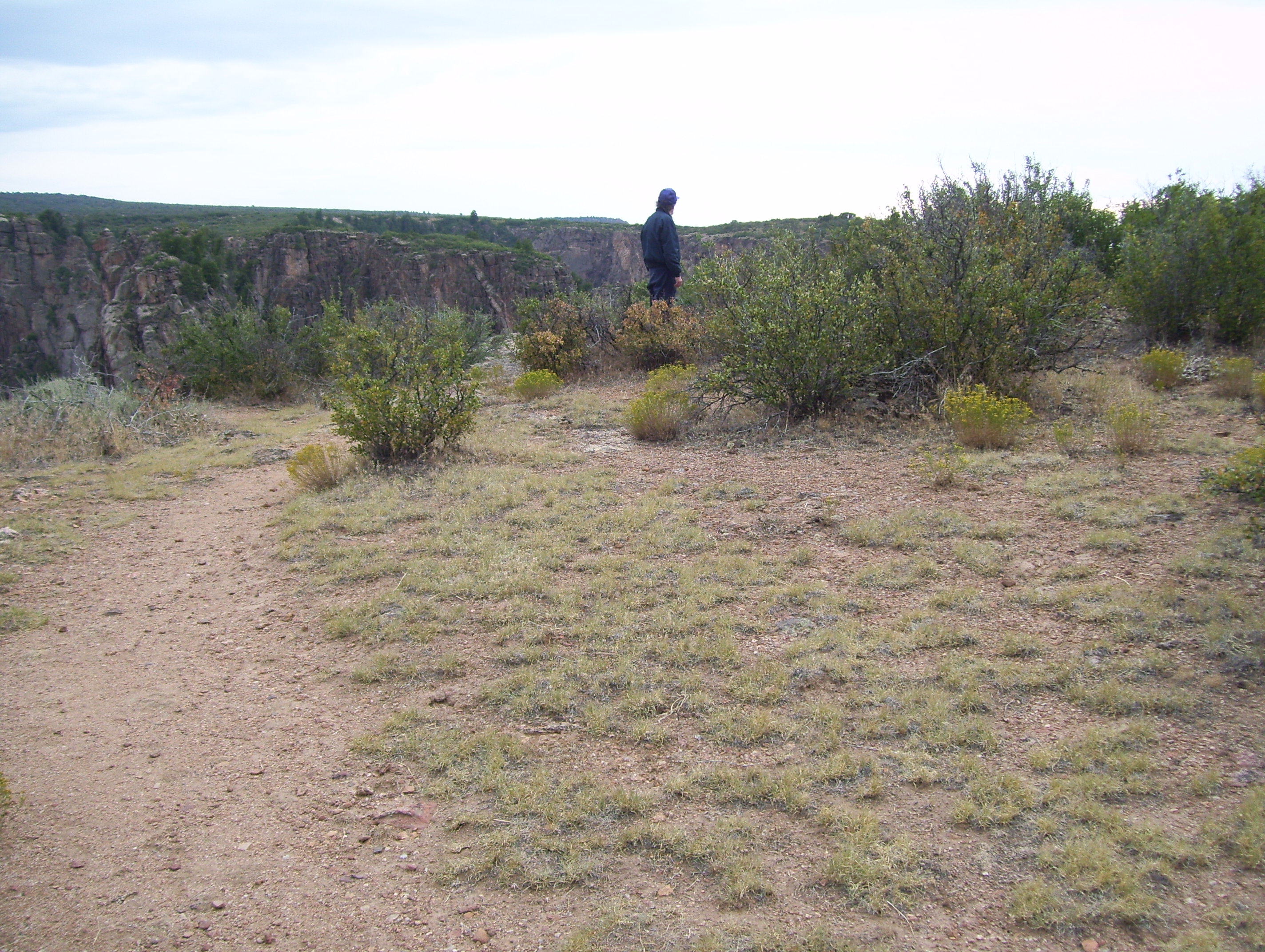
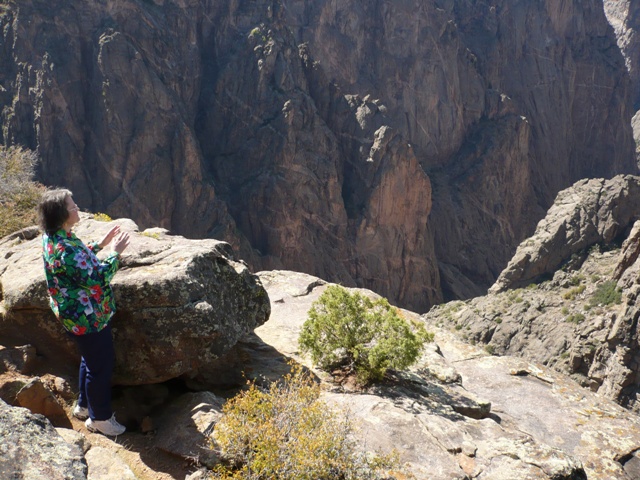
Overview of the Black Canyon of the Gunnison, a natural super bowl.

(Sorry. I couldn’t resist.)

My Baby Bonsai Forest

On January second, I planted a few black pine seeds as a symbol of starting my life from scratch. I would not have chosen black pines as they are notoriously hard to grow, but they came with a bonsai kit I got as a gift. Oddly, considering what a ungreen thumb I have, all the seeds have sprouted. Now what? Wait, I guess. See what happens. And that’s exactly what I’m doing with my life. Waiting to see what happens. Maybe I should go out and make things happen, but life, as with seeds, often flourishes in its own time, and all we can do is wait and see what happens.


Meeting the Challenges of the Second Year of Grief

A couple of weeks ago I talked about The Five Major Challenges We Face During the Second Year of Grief:

1. Trying to understand where he went.
2. Living without him
3. Dealing with continued grief bursts.
4. Finding something to look forward to rather than simply existing.
5. Handling the yearning.

There are other challenges, of course, some unique to each individual, but all the challenges are dealt with the same way: By continuing to feel the pain when it erupts rather than turning away from it to satisfy the concerns of those who don’t understand; by taking care of ourselves even when we don’t see the point; by trying new things.

In other words, we meet the challenges of the second year by living. It sounds simple, but nothing about grief for a life mate/soul mate is simple. By living, we begin to move away from our pain, but we also move away from the person we loved more than any other. For some bereft, this feels like a betrayal of their love — how can you continue to live when life on this earth is denied him? For others, it seems like a betrayal of themselves — how can you become the person you need to be without betraying the person you once were?

It seems an impossible situation, yet life does continue whether we will it or not.

In my case, I’ve been meeting the challenges of the second year the same way I met the horrendous challenges of the first year. I take long walks almost every day, I exercise (stretching, weight-lifting) two or three times a week. I dance to a couple of songs most days, hoping to train myself to feel lighter in spirit and maybe even learn to have fun — whatever that is. I also try to eat a salad every day and stay away from sugar. At least, that’s the goal. I’m very disciplined for several days, following everything on this list, and then I decide the heck with the list — treating myself is more important than doing the right thing.

Either way, I am moving away from the life we once shared. And I am living.

Grief: Being Ripped in Two

One of the truly bizarre aspects of having lost a life mate/soul mate is that his death rips you in two. It’s as if the person you were with him still exists, always bereft, always lost and lonely and amputated from him. At the same time, a new person comes to life: the person you are to become without him.

In the beginning, the person-becoming is so new you’re barely aware of her birth. You’re only aware of being the person-bereft, someone so awash in grief she sees no reason to live. Gradually, the person-becoming gains strength as you learn to live without your mate. You do new things, eat new foods, have new experiences. And all of these take you further away from the person you once were.

For a while — perhaps for several years after the first horrors of new grief have passed — you toggle between the person-bereft and the person-becoming. Eventually, you remain mostly the person-becoming, though the person-bereft is always there, shadowing you. Certain events, such as anniversaries, or new milestones, such as the birth of a grandchild, catapult you right back into person-bereft, and your loss feels fresh and raw and real.

If you’ve lost your mate, you know exactly what I’m talking about. If you haven’t lost such a significant person, this splitting apart sounds bizarre, and it is. How can you be two people, both a person who looks forward to continued life and a person who wants only to be with their mate?

I had a terrible realization while walking in the desert the other day: he died so I can live. Perhaps his death wasn’t as purposeful as that sounds, but our shared life had become a hell. As the cancer spread, the metastases in his brain grew larger and the drugs dosages became stronger. He kept getting weaker and more disoriented, and he turned into a stranger. There were moments that last year when I feared he would last for a very long time, slowly draining my life away. (Not an admirable admission, perhaps, but an understandable one considering the circumstances.)

Twenty-two months and two days ago, he died. And now I have the gift of life. His death gave me that. As much as the person-bereft wishes the whole thing were over with, the person-becoming sees glimmers of . . . not hope exactly, but possibility. I don’t know what I will do with this gift, but someday, somehow, I need to find a way to live so that I don’t waste his death.