Living Artistry

Who would have thought there was so much to do in and around Weatherford, Texas? Butterfly gardens. Exotic animal sanctuaries. House tours. And gardens.

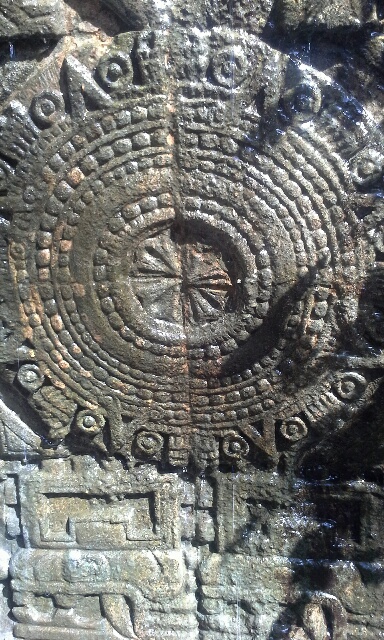
The last field trip my friend took me on was to the Chandor Gardens, a series of formal gardens created by Douglas Chandor, a renowned English portrait painter. “Living artwork” turned out to be his true calling. From 1936 until his death in 1953, he worked on the gardens, each a secluded gem of statues, waterfalls, fountains, trees, shrubs, rocks, and flowers, with surprises around every corner. (My favorite of the following photos is the tree with a tiny door at the base.)

After his wife’s death in 1970, the gardens grew wild for twenty years, but finally someone bought the place and brought the gardens back to life.

The gardens were a beautiful end to my stay in Texas. In a few hours I will be in Louisiana, hoping the rains don’t wash me away.

***

(Pat Bertram is the author of the suspense novels Light Bringer, More Deaths Than One, A Spark of Heavenly Fire, and Daughter Am I. Bertram is also the author of Grief: The Great Yearning, “an exquisite book, wrenching to read, and at the same time full of profound truths.”)

***
Where the Deer and the Antelope (and Giraffes!) Roam

I once visited an exotic animal santuary that seemed less of a sanctuary and more of a prison. All the big cats were in cages, and when I expressed my disappointment that they weren’t running free, the people looked at me as if I were a child and said, “but that wouldn’t be safe, would it?”

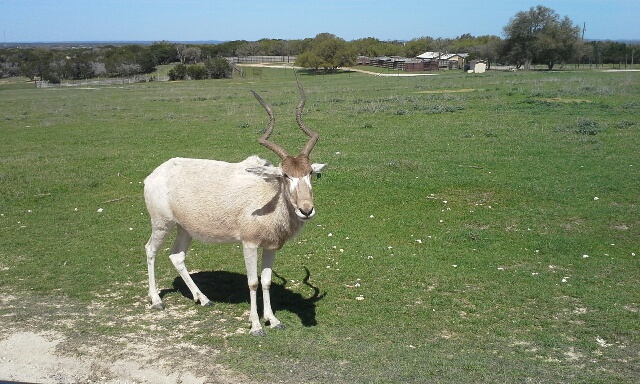
So it was with trepidation that I accepted an invitation to visit Fossil Rim, an exotic animal sanctuary here in Texas, but my hostess assured me the animals ran free, that we would be encaged in her vehicle. It sounded fair to me, and so it turned out to be. The animals (some nearing extinction in the outside world) are allowed to run free in huge pastures where they can live a near-normal life. The smallest enclosures were for the cheetahs, who were part of a breeding program to bring the species back from the brink of extinction.

More than thirty species, over 1,000 animals, live on the property. Most will live out their lives in the sanctuary (or so I presume), because they are accustomed to being fed by the workers and by the visitors. (Each vehicle is provided with a small bag of food pellets to feed the animals.) Since it was a hugely visited day (smack dab in the middle of spring break for children), many of the animals were sated to boredom, but others came up to the car looking for a handout.

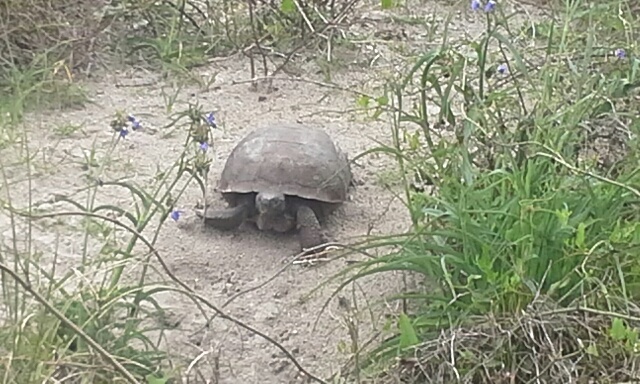
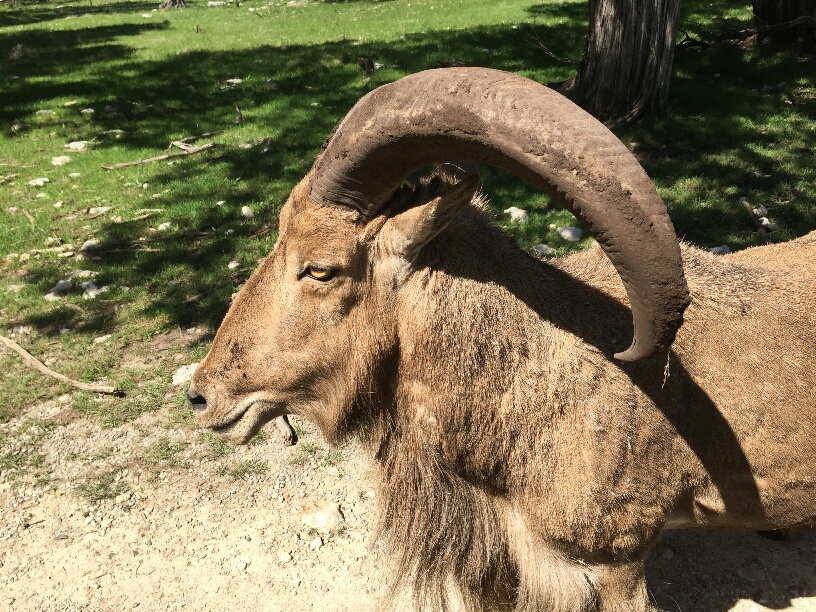
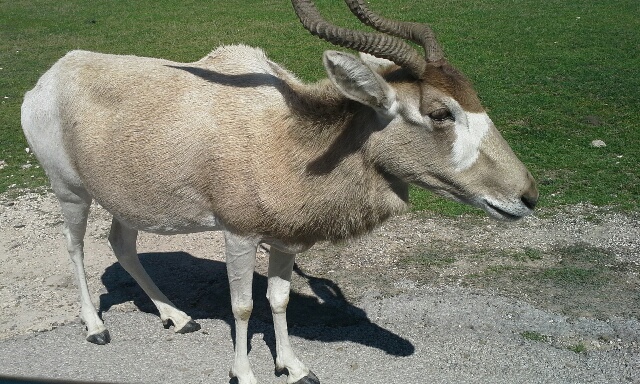
We saw several species of deer and antelope, giraffes, rhinos, cheetahs, wildebeast and all sorts of more common creatures such as bison and ostriches.

All these photos were taken by me or my friend. Such an unexpected experience!

***

(Pat Bertram is the author of the suspense novels Light Bringer, More Deaths Than One, A Spark of Heavenly Fire, and Daughter Am I. Bertram is also the author of Grief: The Great Yearning, “an exquisite book, wrenching to read, and at the same time full of profound truths.”)

***
Butterflies in the Garden

There are no butterflies in my garden because I don’t have a garden, don’t even have a place to put a garden, and even if I did have a garden, I doubt I would see many butterflies because they are disappearing from our every day lives.

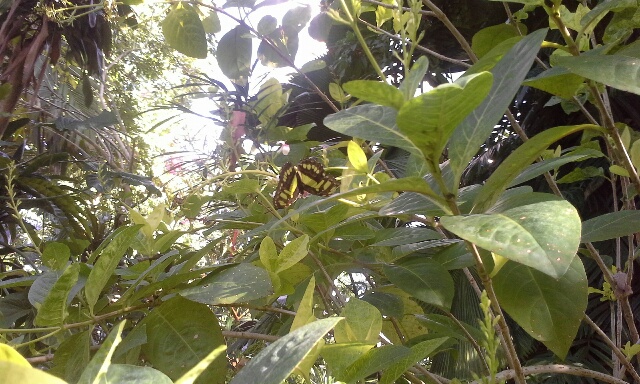
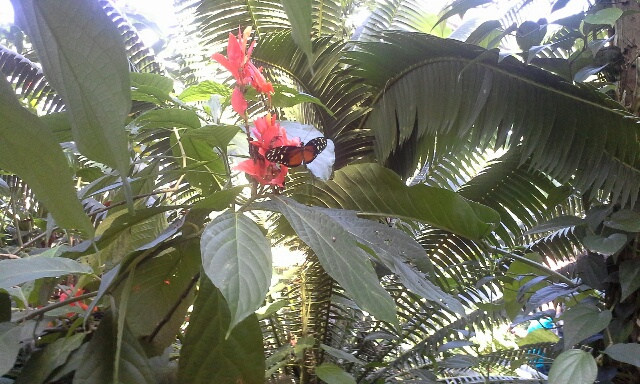
Luckily, some folks are trying to repopulate (repupanate?) the butterfly world. The Fort Worth Botanical Gardens presented a program called “Butterflies in the Garden; The Mayan Experience,” an exhibit of exotic butterflies in their conservatory. Live butterflies.(I despise collections of pinned butterflies. Such an ignoble end to any creature.)

We picked the wrong day to go — student day during spring break.— Yikes. Talk about packed! But still, it was a fantastic experience seeing so many butterflies living — relatively — free.

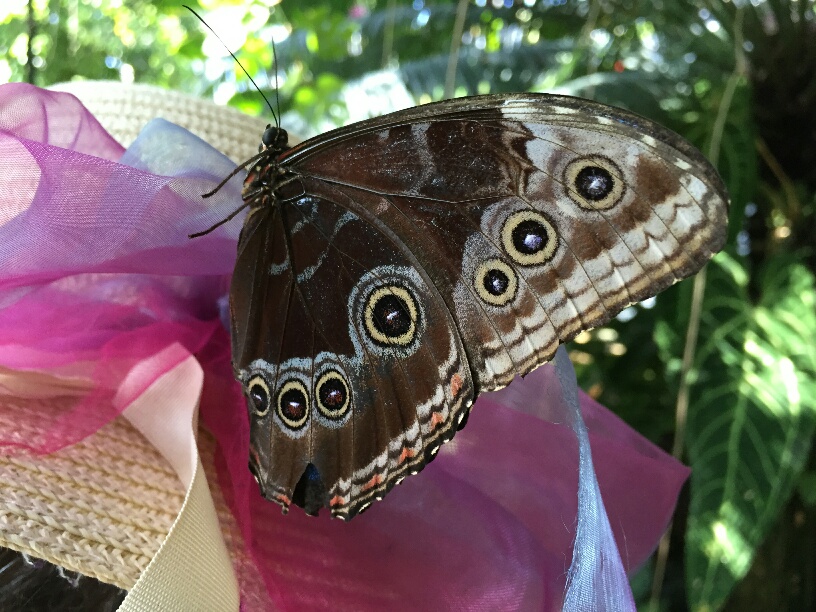
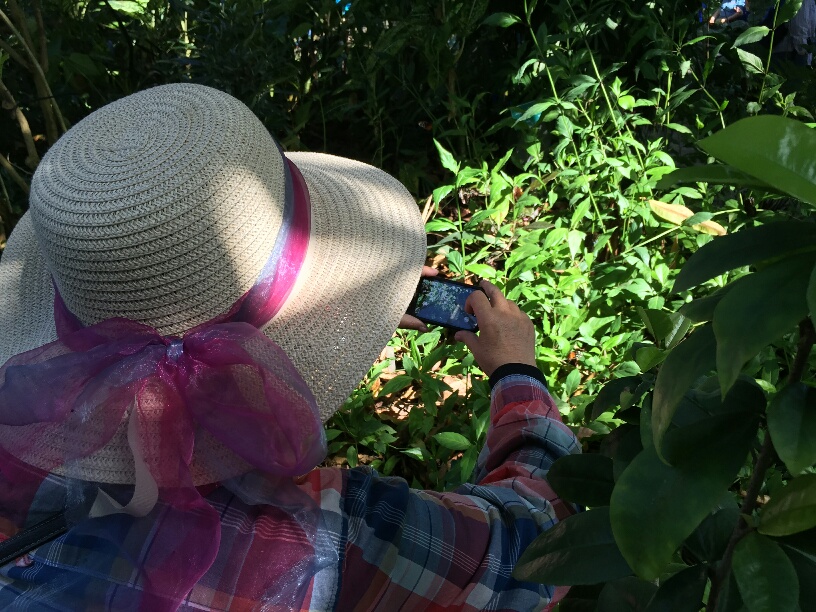
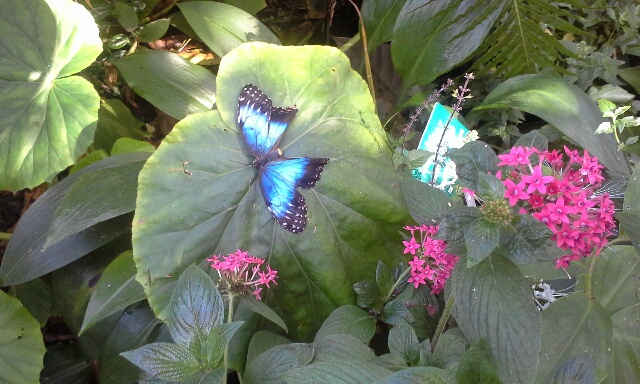
The prize of the exhibit was the Blue Morpho butterfly, seen on my hat with wings closed and on a leaf with wings open.

I hadn’t planned to play tourist this trip (though by definition, I am a tourist), but my gracious hostess is not only wining and dining me, but making sure my days are filled with delights. And such a delight was the day at the botanical gardens, playing with butterflies in the conservatory.

***

(Pat Bertram is the author of the suspense novels Light Bringer, More Deaths Than One, A Spark of Heavenly Fire, and Daughter Am I. Bertram is also the author of Grief: The Great Yearning, “an exquisite book, wrenching to read, and at the same time full of profound truths.”)

***

Luck and Labyrinths

I left Organ Pipe Cactus National Monument feeling lucky, grateful, and blessed to be on such a magical journey. I bought gas at a station on a reservation near Why, and while I sipped a drink, I wandered into the casino and talked to a fellow who looked and sounded like Fisher Stevens in Short Circuit.

I asked if there was a quarter machine, and he ushered me to a bewildering device that only took dollar bills, no coins. He showed me where to put the bill, explained that I could play one quarter at a time, or all four at once. Since I only wanted to push the button once for luck, I opted for the four-in-one chance to win. I pushed the button, and the machine lit up and made some jingly noises. I asked Fisher what that meant, and he said I’d won 34 quarters. I waited for the thrill of all those quarters cascading into my hands, but after a few seconds, the machine pinged, and spit out a voucher for $8.50. Quite an anticlimax, but see? Lucky!

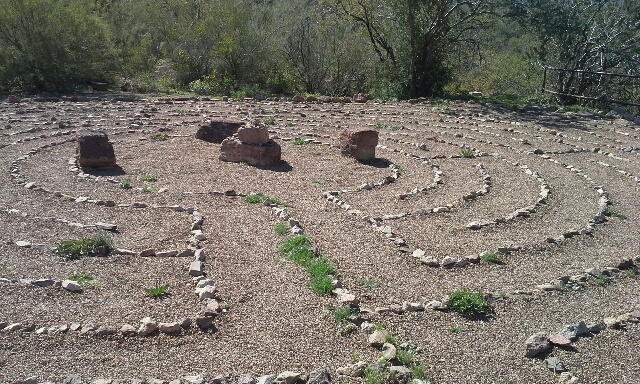
I proceeded to Tucson to meet up with a once-long-lost friend. We had a lovely dinner Saturday night, then yesterday she took me on a tour of some of her favorite places. First we visited the Mission San Xavier del Bac, nicknamed the “white dove of the desert,” because of its shining presence in the arid expanse. (The west tower was struck by lightning in 1939, and restoration continues when funds allow.) Then we drove through Saguaro National Park, and on the way back, we stopped at the Redemptorist Renewal Center on Picture Rocks Road.

I wandered the beautiful grounds, marvelled at the ancient petroglyphs, and made the holy walk through the labyrinth to the center, a symbol of life’s path

I sat on a rock in the center of the labyrinth, feeling blessed, feeling the rightness of this quest I am on. I don’t know what I want from my journey, don’t know if I will ever know the totality of what it will give me, but for once in my life, as with the labyrinth, I am willing to follow the path without understanding and let life make of me what it will.

***

(Pat Bertram is the author of the suspense novels Light Bringer, More Deaths Than One, A Spark of Heavenly Fire, and Daughter Am I. Bertram is also the author of Grief: The Great Yearning, “an exquisite book, wrenching to read, and at the same time full of profound truths.”)

***
Okay. Now I am Impressed

Well, so much for my blase attitude about this trip. Oh, my.

After leaving Quartzsite, I took a leisurely trip along busy highways and mostly deserted byways, stopping at such bustling metropolises as Ajo and Why. I stopped at Why, hoping to find the answer to all the whys I have been asking the past few years, but all I found out is that you have to buy special car insurance for a trip to Mexico, but no one could tell me why.

In the middle of a long stretch of empty desert highway (perhaps fifty miles along the Barry Goldwater Air Force Range), I saw a not-young woman walking. She was pushing the sort of cart that people who hike across the country use (because no one can carry all the necessary water for desert stretches) so I pulled off to the side of the road, which spooked her because she stopped and made as if to head away from me. I held up my hands in the surrender position, so she stopped and let me get close enough to ask if she needed water. Poor woman wasn’t wearing a hat and was bright red from the sun. I asked where she was going, and she replied, “Asia.” It took me a minute to realize she meant Ajo. I tried to put myself in her shoes. If I were doing a long highway hike in the desert sun, would I have been wary if someone stopped to see if I needed help? Perhaps. But that doesn’t matter. She so obviously wanted nothing to do with me, so I got in my car and headed down the road to my planned destination for the next couple of days, Organ Pipe Cactus National Monument.

It seemed so very far from anywhere, but once I arrived, I realized it wasn’t far from anywhere. It’s right here.

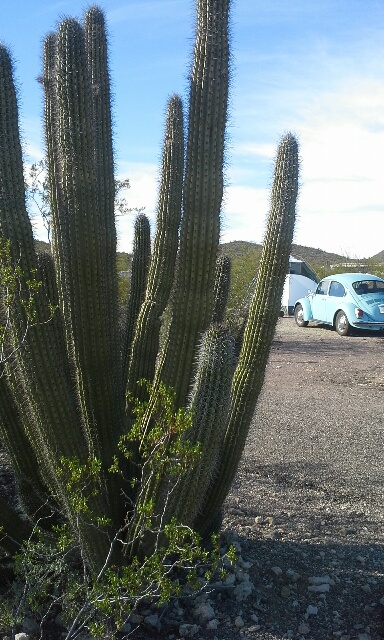
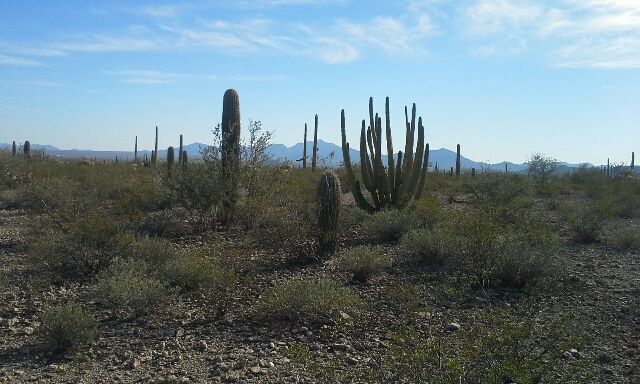
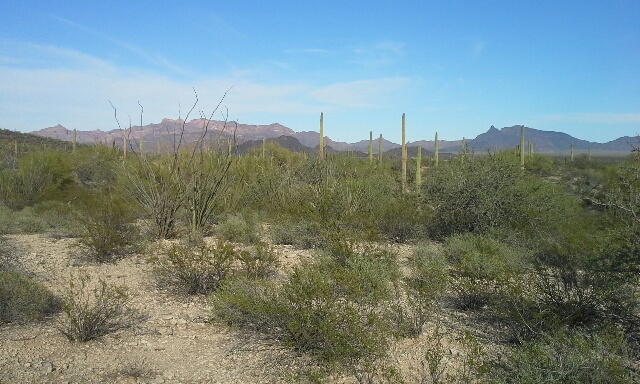
After I set up my camp (the tent looks different because I am not using the rainfly. It’s not supposed to rain, and it’s not supposed to get cold), I went for a stroll around the park in total awe. I felt as if I were meandering around a desert botanical garden. So many lush cactuses and succulents!

Often during the past few months I felt out of place, as if the people who rented the room to me resented my presence, but this land belongs to me. (Well, you too. I am willing to share.) For the two nights I will be here, I will have the biggest back yard imaginable.

And tomorrow I will go exploring.

***

(Pat Bertram is the author of the suspense novels Light Bringer, More Deaths Than One, A Spark of Heavenly Fire, and Daughter Am I. Bertram is also the author of Grief: The Great Yearning, “an exquisite book, wrenching to read, and at the same time full of profound truths.”)

***


No Ghosts in Swansea

My friend in Quartzsite and went on an adventure to search out the ghost town, Swansea, that once grew around a working copper mine. Abandoned in 1943, it didn’t really capture my imagination. Nor was my friend impressed witb the few ruins that comprise the so-called ghost of a town. (Apparently she didn’t know that many ghost towns are nothing but empty ground, with not even a ruin to mark the spot.)

Making the town more disappointing than it should have been, I skidded on the scree and skinned my knee quite badly. Luckily, I was wearing long pants, and even luckilier, I was wearing my fanny pack complete with first aid kit, so real harm done. This episode taught me two things — always bring my walking sticks (on purpose, I didn’t) and don’t be lazy — always wear some sort of pack complete with emergency supplies. (By accident, I did.)

The real joy of the trip (next, of course, to being able to spend time with my online-now-offline friend Holly), was the trip. Gorgeous scenery. A huge laugh when fifteen miles down a dirt road where we had seen no traffic, we had to stop at a stop sign. Admittedly, we were at a crossroads where we intersected another dirt road with no traffic for miles either way, but ludicrous for all that. (Holly took a photo of the stop sign. I didn’t, figuring we all know what a stop sign looks like.)

And wow, did she impress me when we came to ruts cutting across the road with no way around. These ditches (they were deep enough to drown my poor bug, so no way does “rut” give you an idea of how deep they were; if I were walking, I could not have negotiated them) had been cut by off-road vehicles, and seemed impassable. I thought we might have had to try to fill in the ditches so we could cross (we couldn’t turn back because we had already crossed an uncrossible patch of road, and besides, Holly is as stubborn as I am about backtracking) but Holly just studied those two parallel ditches, calculated the angle she would need to go to cross them, then put her car in gear and drove across as if those ditches were pinstripes in the road. Oh, my.

As interesting as that particular adventure was, I think I’ll stick to highways.

See you on down the road.

***

(Pat Bertram is the author of the suspense novels Light Bringer, More Deaths Than One, A Spark of Heavenly Fire, and Daughter Am I. Bertram is also the author of Grief: The Great Yearning, “an exquisite book, wrenching to read, and at the same time full of profound truths.”)

***
A Venue of Vultures

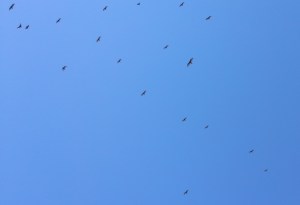
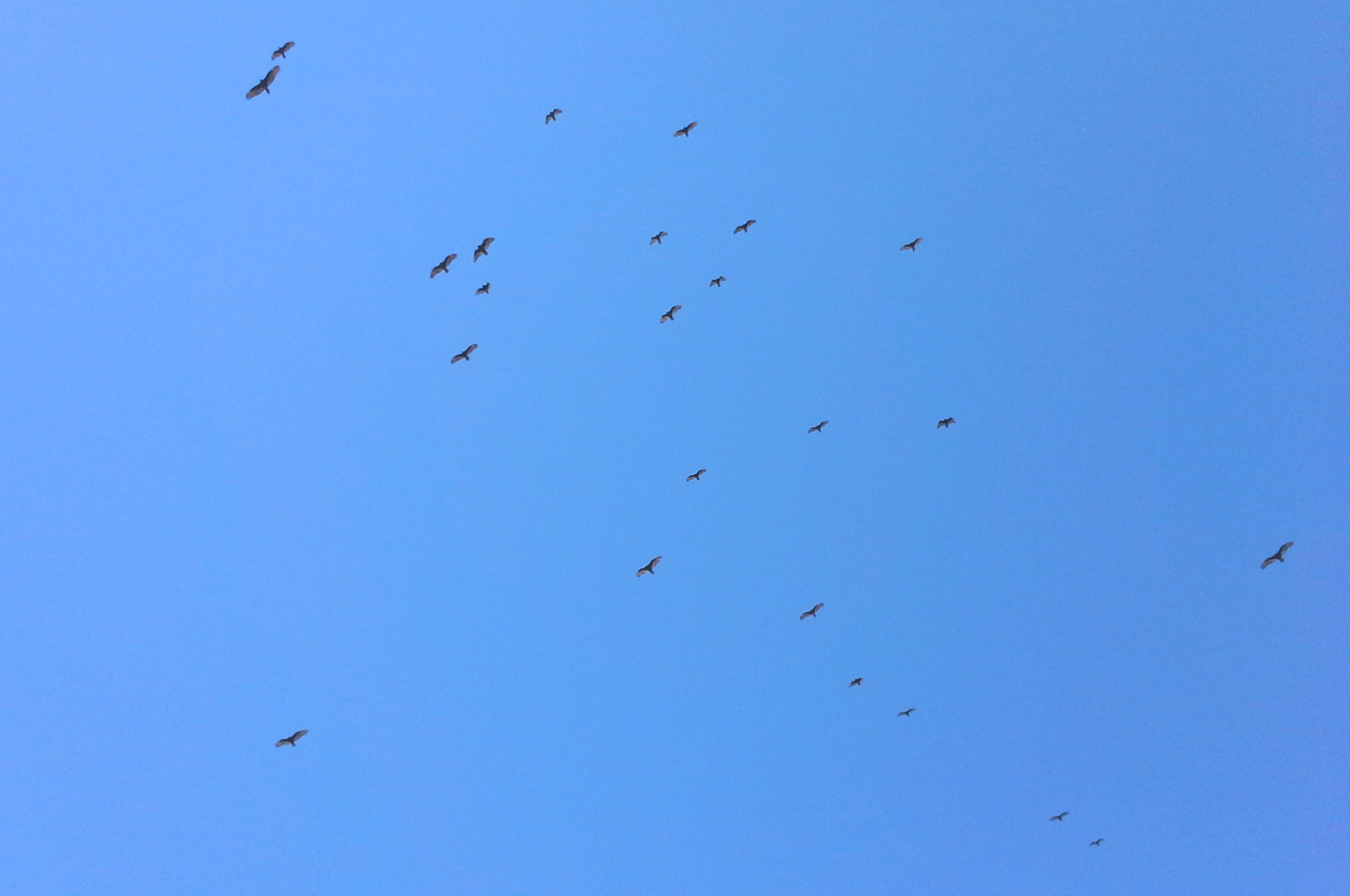
I had the special privilege of seeing one wave of the turkey vulture migration yesterday. The birds kept coming out of a small corner of the northern desert sky, and they continued on toward the south along the Mojave River corridor. Venues (as flocks of turkey vultures are called) gathered overhead, spiraling upward to catch the thermal drafts or perhaps waiting for stragglers to catch up, then that “kettle” would disappear into the glare of the sun. (Apparently these uprising groups are called kettles because they agitate like a boiling kettle.) Then another batch of birds would glide into place, wait for others to show up before they to headed south to catch up to their brethren on their way to San Diego or Mexico or Arizona to spend the winter.

In flight, the buzzards looked lovTurkey vulture migrationely, soaring and gliding like hawks, riding the air currents, then speeding along with just a few slow brushes of their wings (a six-foot span). Since they are also non-aggressive, unable to kill prey, the Hitchcock-like scene was completely misleading. (I never did understand why carrion birds are considered lesser birds, as if their inability to kill makes them evil.)

A flock of smaller birds scurried out of their path (perhaps scurry is not a word that can be applied to birds, but in this case their rapid movements and darting flight made it seem as if they were scurrying).

I must have seen hundreds, maybe even thousands of birds within thirty minutes, but I was so enthralled, I only remembered to takes photos when most of the birds had passed directly over my head, so these photos are pretty lame, though you get an idea of their numbers and the path of their flight.

I smiled all day yesterday. It was nice to be taken out of myself, to replace my funk with something so regal and awe-inspiring as the vulture migration.

Turkey vulture migration

***

(Pat Bertram is the author of the suspense novels Light Bringer, More Deaths Than One, A Spark of Heavenly Fire, and Daughter Am I. Bertram is also the author of Grief: The Great Yearning, “an exquisite book, wrenching to read, and at the same time full of profound truths.”)

I Hiked in the Woods

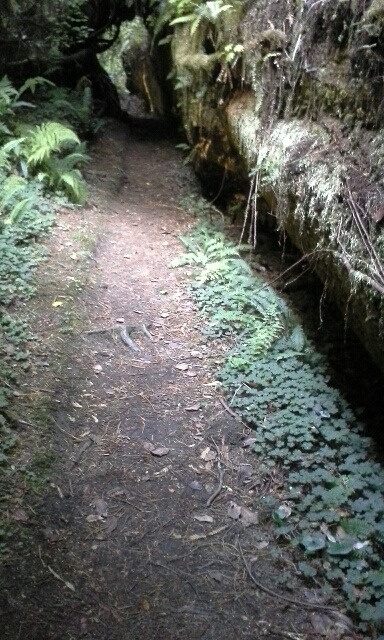
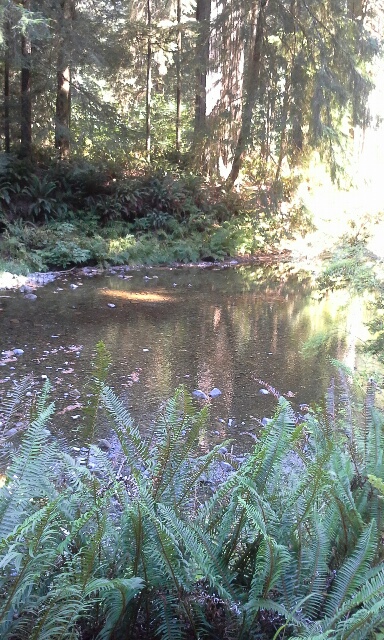
My summer adventure is nearing an end. Just a few more days of ocean and trees before I return to the desert. Since yesterday’s forest hike has to last me for a while, I stayed out most of the day, following one trail after another until I reached the site of my very first hike up here. It was an odd sensation, coming out of the forest to that very spot, as if I’d spent all these weeks wandering in the trees without a break. It certainly felt like weeks, though it was only six hours uphill, downhill, along rivers and creeks, picking my way on gnarly trails, tripping over roots, feeding myriad mosquitoes. (Apparently the mosquito-repellant bracelet I wore was effective only in areas without mosquitoes.

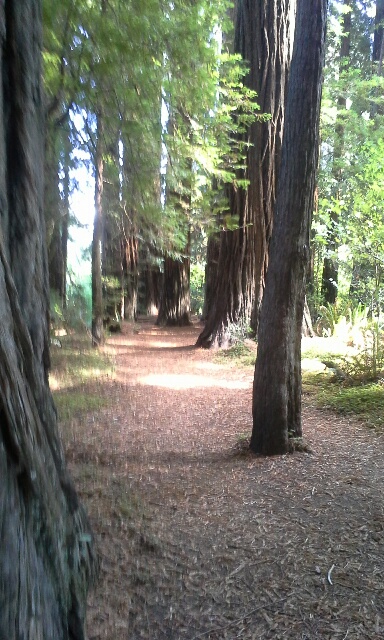
I didn’t make it to the touristy Stout Grove as I intended — the bridge across the creek came down on the 1st of September — nor did I find the trail to a secret grove where some of the forest’s biggest and oldest trees hold court, but I did find one lovely grove of giants among giants. I would have taken a photo, but those trees were so large, all that showed up in the viewfinder was a part of the trunk.

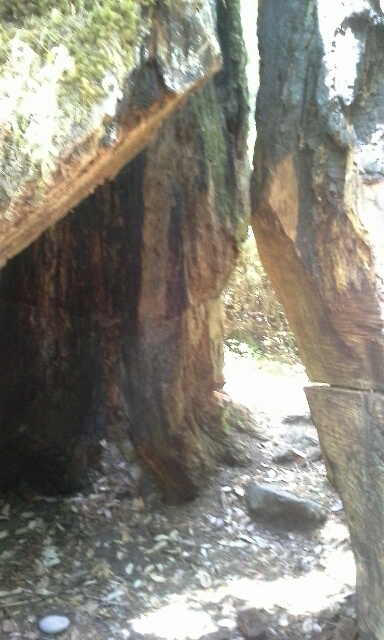
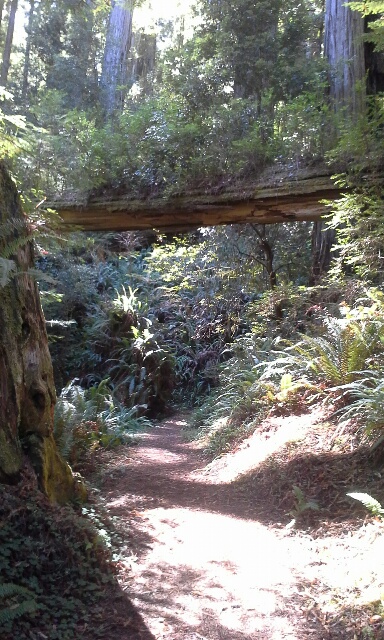
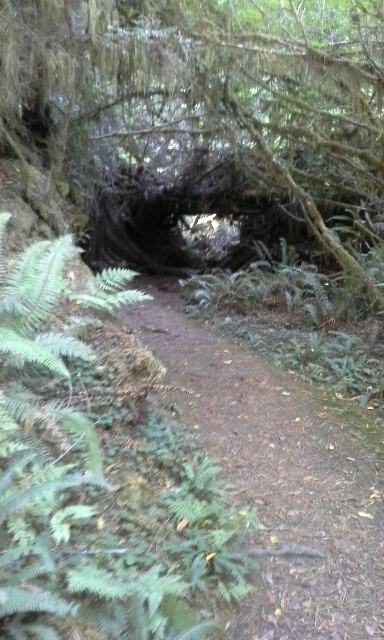
And that grove was only one of the wonders of this final redwood journey. The trail went through a tree trunk (the photo looks like light passing between two trunks since I couldn’t step back far enough to get a photo of the single tree). The trail went under a floating forest (all sorts of trees and plants grow on fallen tree trunks, and this fallen tree never had reached the ground). It passed through a bizarrely awesome tunnel with a fallen redwood creating a 300-foot wall on one side of the trail and deciduous trees on the other side forming a canopy over head.

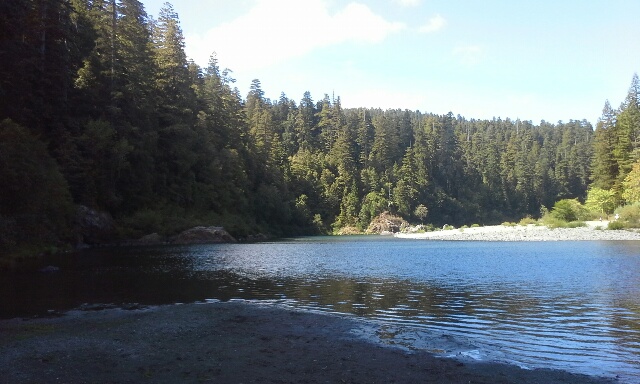
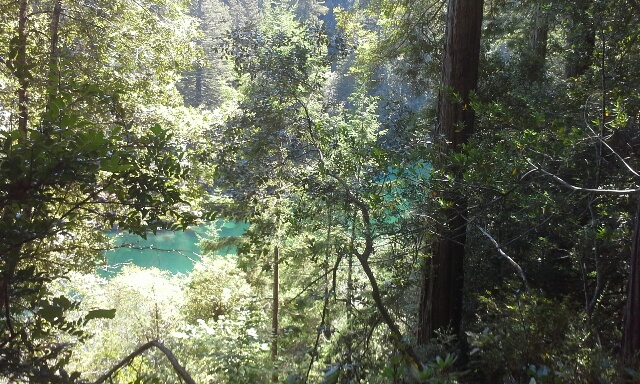
I saw the green of the Smith River far beneath me, and when I came out of the forest onto the riverbank, I took a photo of the forest from which I had emerged, and I find it impossible to imagine myself hiking in there, a speck compared to those gargantuan specimens. Apparently, although my mind registered what I saw, it cannot acknowledge that I was physically present.

And it is hard to acknowledge. In my mind, I am the eternal bookworm, sitting comfortably and safely, reading about other people’s adventures. In one place, the trail was nearly vertical for two or three yards, and though I know I scrambled up that bank, I don’t exactly know how I did it. Such a strange activity for a bookish woman.

All these experiences seem as hard to believe as my years of profound grief. I sometimes wonder if that woman was really me, that woman who loved a man so deeply that his death all but shattered her. Now I wonder if this intrepid woman is really me. Since neither of these traits — deeply emotional, ardently adventurous — fit with my view of my prosaic self, I suppose it’s time to reevalute my view of myself. Or not. Perhaps I really am just lounging on some cosmic couch, comfortably and safely imagining this life.

But such a vivid imagination is not something I credit myself with, either, which then means I am imagining myself imagining myself . . .

Still, however it happened, whether I believe it or find it impossible to fathom, I hiked in the woods, and I have the photos to prove it.

***

(Pat Bertram is the author of the suspense novels Light Bringer, More Deaths Than One, A Spark of Heavenly Fire, and Daughter Am I. Bertram is also the author of Grief: The Great Yearning, “an exquisite book, wrenching to read, and at the same time full of profound truths.”)

***

Naked Ladies and Other Beauties

I’ve spent most of my life in deserts, first in Colorado, and more recently in a high corner of the Mojave Desert. (Colorado might not seem like a desert since it has tillable soil and no cactuses. What makes it a desert is the lack of surface water. Only Colorado’s white gold — the deep mountain snow — makes the state an oasis. Without water, very little but scrub grows naturally.)

It seems odd then, after a lifetime’s experience of how difficult it is to grow anything, to find myself in an area where things grow almost by accident.

In my walks about town, I see naked ladies everywhere. These pink lily-like flowers of the amaryllis are so named because the flowers grow on naked stems, long after the leaves are gone. But knowing the name doesn’t make these foliage-free flowers any more lovely, especially since I’ve never seen them before.

Nor have I ever seen azaleas, and now a lovely red bloom greets me every morning.

Most surprising, considering my total inability to cultivate rhododendrums, I’ve seen the bounteous bushes growing in the woods.

But everything seems to grow in this fertile place, holly and ivy and a lushness of greenery growing upon other greenery.

And oh, did I forget to mention wild blackberries? Most are not ripe yet, but even so, I manage to find few luscious berries on almost every trek.

What an incredible world we live in. So much diversity! I can only stand in awe, and give thanks.

***

(Pat Bertram is the author of the suspense novels Light Bringer, More Deaths Than One, A Spark of Heavenly Fire, and Daughter Am I. Bertram is also the author of Grief: The Great Yearning, “an exquisite book, wrenching to read, and at the same time full of profound truths.”)

***

Ghost Highway Adventure

It seems odd to me that after all these years of talking about my desire for adventure, I no longer have reason to talk — I’m doing. My excursions might not seem all that adventurous to the truly adventurous, but for now they satisfy my inner cry for something more, and to be honest, they are all I can handle, or maybe I should say they are all my feet can handle. (Right now my feet are so sore I can barely stand, so I am taking it easy.)

Yesterday I headed out on a 7.2 mile hike, starting on what was called The Damnation Creek Trail. After about three-fourths of a mile I took a turn onto the Coastal Trail. This section of the Coastal Trail lay inland on what was the original Redwood Highway. The highway had been built in the 1920s and abandoned in 1935 because of the difficulty in maintaining it — it kept crumbing and was beset with rockslides. (Ironically, on the drive to the trail head, my friend talked about recent discussions to move the current road further inland because it too is crumbling.) In spots, the pavement with the white center line showed through, and even a few of the original mile markers remained.

I’d felt a moment of trepidation before I got out of the car — since there was no phone signal at the trail head, I would not be able to turn back if things got rough because there would be no way to call my friend for a ride back to town. But as soon as I got onto the trail, my trepidation vanished to be replaced by a smile. My smile widened when I turned onto the old road. Pure magic. Not a hike so much as a perfect walk in the woods. I could swing along, enjoying the day, the scenery, the forest without having to worry about where I was placing my feet. I saw a couple of people toward the beginning of the trail, but for three hours I saw no one. Just me and the magical place.

In spots, the road all but disappeared, leaving a narrow trail crossed with fallen trees or buried under rock, but those places were quickly navigated. Somewhere along the way, the old highway disappeared altogether. I think it was right after the viewpoint where I stopped to take a photo of the bay far below. (In the photo, the ocean is barely visible beneath the fog. In fact, from that point forward, my journey was accompanied by the lonesome call of the foghorn.)

The narrow trail along the bluffs began with a steady half-mile climb that had me panting. Halfway up, I found a fallen tree that had been sawed to pieces to remove it from the trail, and the thick logs had been cut into seats. I figured that was a good place for a snack. Unfortunately, so did the mosquitoes. Before I could sit down they began snacking on me (despite the citronella bracelet I wore that was supposed to repel the bloodthirsty critters), so I continued on my way. I felt good. No aches or pains. No tiredness. Then, toward the end of my journey, came the toll for the magic trek along the ghost highway. (Magic always comes with a price. Everyone who has ever read a fairy tale knows that.)

I began a long downhill stretch. Steep and gnarly, the path was still easy enough to navigate. Not fun, exactly, but not gruelling, either. Then I turned a corner. The trail became even steeper, but worse than that, it was all loose dirt with looser rocks. Oh my. I wished I had a second trekking pole, but the time for magic had passed, and my wish wasn’t granted. So I set off downhill. Slowly. Very slowly. The rocks under my feet kept sliding, taking me with them. I lost my balance several times but managed to stay on my feet. When I saw a switchback up ahead, I figured the terrible trail was about to end. It didn’t.

On every hike, there comes a moment when I realize I am way out of my depth (or way over my head — choose your cliche) and all I can do is endure. So I kept going. One exhausting step at a time. After about a half hour of this, I saw a young man climbing toward me. He said I was almost to to the end, and asked if I’d come from the highway (where the trail had started). When I said yes, he responded, “Props to you.” Whatever that means.

I continued downhill on that treacherous path, heartened by the thought that the ordeal would soon end, but it didn’t end. I did. I was just standing there, unable to move another step, when a man climbed up the trail. As he passed me, he said, “You’re almost down. The trail flattens out after the next curve. The parking lot is on the left.”

But it didn’t flatten out. Still, I knew the end would come, so I kept descending. And yes, that terrible path did end. Eventually. But the parking lot was still a half mile away on a gentle incline that was almost too steep for my shaking legs to climb.

Writing this, I find myself smiling. Not about the final descent (it lost 1000 feet of elevation in a half mile) or my aching feet but about walking the ghost highway. There were times I could hear the sounds of automobiles passing. I’m sure the sounds came from the nearby modern highway. Well, almost sure.

Pure magic.

***
(Pat Bertram is the author of the suspense novels Light Bringer, More Deaths Than One, A Spark of Heavenly Fire, and Daughter Am I. Bertram is also the author of Grief: The Great Yearning, “an exquisite book, wrenching to read, and at the same time full of profound truths.”)

***