Prevailing

A friend who follows astrology told me that March 20 (yesterday) begins a time of great change for me, and although no astrological prediction pertaining to my life has ever come true, this one almost did.

After yesterday’s dance class contretemps (hey! I spelled contretemps right without needing spellchecker to correct it for me, though I did need spellchecker to check the spelling of spellcheck), I’d had enough. I simply did not want to play in that sandbox anymore (and sometimes, it does feel as if we are in preschool rather than postschool), so I called my dance teacher and told her I was taking time off.

A long silence, then, “How much time are you taking off?”

“I don’t know,” I said. “Ten days. Ten years. I just can’t do it any more.”

She said I was too good a dancer, and she refused to accept my resignation. I’m sure part of her consideration was the performance we will be doing at the beginning of June, but also as a good friend and a lifelong dancer, she has some inkling of what dancing means to me, though it’s hard to explain.

It’s not for exercise — I get plenty of exercise on my own, and would do even more if I weren’t going to class. It’s not for camaraderie, because I’m reverting back to my hermitic ways, and being around people exhausts me. It’s not for fun or enjoyment, though the stress-free classes give me both. It’s more of a thing of energy, of nourishment for my spirit, and too often lately a black miasma hangs over the class that others sometime respond to, but apparently only I can feel.

Still she does know of a lot of the byplay between me and the other characters, and she told me not to let anyone take dance away from me.

I agreed to stay. For a while. So the big change — not taking dance classes anymore — did not happen. But I also firmed  my decision to step up my training saunters with the backpack to allow for a different sort of change.

In the middle of all this, I realized something — no matter what happens, I will prevail.

Did you notice above where I called my classmates “characters’? I meant characters in a book, which they all are — characters in Madame ZeeZee’s Nightmare. It seems to me that a lot of what happened in Madame ZeeZee’s Nightmare is happening in a sort of parallel reality in class, with the Deb character playing out her solitary (and totally inexplicable) feud against Pat and pulling those who don’t know the truth in to her mind-set of “Oh, poor me. Look what Pat’s doing to me.”

It’s entirely possible I am the villain — writers don’t always recognize the truth of their characters. But I do know one thing — no matter what happened (happens) to any of the other characters in the story, at the end, Pat did prevail.

***

Pat Bertram is the author of the suspense novels UnfinishedMadame ZeeZee’s Nightmare, Light BringerMore Deaths Than OneA Spark of Heavenly Fireand Daughter Am IBertram is also the author of Grief: The Great Yearning, “an exquisite book, wrenching to read, and at the same time full of profound truths.” Connect with Pat on Google+. Like Pat on Facebook.

Ain’t Life Grand

I often use this blog as a way to organize my thoughts and try to figure out how to deal with problems, but after such posts, I sometimes go through a period of embarrassment for laying my not-so-admirable self bare.

To my amazement, my online community, both the readers of this blog and my Facebook friends, have never exacerbated the embarrassment by pointing out how childish I am. Instead, they’ve been supportive, probably because we have all been in situations with bewilderingly self-centered folks who treat us badly for no reason we can fathom.

In a recent blog post, The Nature of Dilemma, I said I felt as if I’d conjured up my nemesis because she was the personification of the character Deb in Madame ZeeZee’s Nightmare.

One fellow writer commented: Oh dear. I shall now be warily looking for characters from my stories too. And I’m wondering if you now have a very intriguing plotline growing from this.

I hadn’t looked at the problem from that angle, but what a great story that would be — a writer creates a character who comes alive. Although the character torments her, the writer can’t do away with her literarily because the character has already met her fate in the book, so the writer has to . . .

Now if I can only figure out what comes next in the story, maybe I’d know what to do in real life!

I suppose I could out-nice her, as one friend suggested, by being sweet and standing my ground in a nice, kind, way, not letting her ‘get in my space’ or steal my joy of dancing. Or I could be rude and tell her to stop being “up herself,” as the Aussies say. As satisfying as those suggestions might be, holding my tongue as long as possible is more my speed. (But I do have to consider that my speed isn’t very effective, though to be honest, I doubt anything will get through to her.)

Another friend sent me this quote: When a toxic person can no longer control you, they will try to control how others see you. The misinformation will feel unfair, but stay above it, trusting that other people will eventually see the truth, just like you did.

I think others are beginning to see the truth (although, unfortunately, we all also see the truth of her and her unhappy life, and so feel sorry for her, which complicates the issue), but still I need to stay above the situation or at least find a way to ignore that which I cannot control.

Life! Ain’t it grand.

Actually, irony aside, life is grand — pitfalls, toxicity, tragedy, and all — especially when you have supportive friends.

***

Pat Bertram is the author of the suspense novels UnfinishedMadame ZeeZee’s Nightmare, Light BringerMore Deaths Than OneA Spark of Heavenly Fireand Daughter Am IBertram is also the author of Grief: The Great Yearning, “an exquisite book, wrenching to read, and at the same time full of profound truths.” Connect with Pat on Google+. Like Pat on Facebook.

The Nature of Dilemma

I walked out of dance class yesterday. I can’t even remember the last time I walked out of anything in anger. Now that I think about it, though, I wasn’t really angry. Just fed up.

I’ve mentioned before that I have problems with one of the women — a total narcissist. I get tired of the almost constant sound of her voice and the way she makes everything about her, but more than that, I get tired of how she treats me.

And yesterday I’d had enough.

It’s my own fault, really. Sometimes we as writers have the power to make things happen. When I was writing A Spark of Heavenly Fire, I always saw a silver Toyota Tacoma in the grocery store parking lot. I used the vehicle for the book, and oddly, after the truck was stolen in the story, I never saw that Tacoma again. Made me wonder if somehow I managed to get it stolen in real life.

Then, when I was writing Madame ZeeZee’s Nightmare, I didn’t want to use her real car — a PT Cruiser — since it could identify her, so I changed her vehicle to a Kia. A couple of days after I gave her the pseudonymous car, she drove to the studio in her new Kia.

Such things are common occurrences for me, but never before have I conjured up a person.

Those of you who read Madame ZeeZee’s Nightmare are familiar with a character named Deb. This character started out being based on the idiosyncrasies of a couple of women in class, but I skewed the character far from those women to fit the needs of the story. This skewed character seemed to see herself in competition with the narrator (whose name, coincidentally, is Pat), and this competition, one way though it might have been, fueled the story.

When I was able to return to class after my various surgeries, lo and behold, there was Deb. Her name and physical description are not the same as my fictional Deb, but the rest of it is pretty darn close, perceived competition and all.

Did I conjure her? I doubt it, but still, whether her emergence is my fault or not, this woman is in my life, or rather, in my life as long as I continue to take dance classes. It’s only two months until my trip, which will give me a break from all that has been bedeviling me, so I’ve been trying to ignore the woman, stay as far away from her as possible, and to hold my tongue to keep the peace, but yesterday I simply did not want to have to deal with her anymore.

As I was going out the door after the incident that fueled my need to leave, she continued with her unwanted comments. I just wish narcissists would understand that not everything is about them, that other people have their own lives and needs separate from theirs. But then, if they understood that, they wouldn’t be narcissists.

Unfortunately, it’s too late to rewrite the story to make Deb nicer and less of a narcissist, and it’s too late to make her vanish since her fate was already written. (And anyway, when I write things on purpose hoping they will happen, they never do.)

So I have the dilemma of getting her out of my life and missing out on the good parts of dance class or keeping the status quo.

Not a fun dilemma. But isn’t that the very nature of dilemma? If the choice were easy, it wouldn’t be a dilemma.

For now, I’ll continue going to class. Maybe something will happen to tip the scale one way or another.

***

Pat Bertram is the author of the suspense novels UnfinishedMadame ZeeZee’s Nightmare, Light BringerMore Deaths Than OneA Spark of Heavenly Fireand Daughter Am IBertram is also the author of Grief: The Great Yearning, “an exquisite book, wrenching to read, and at the same time full of profound truths.” Connect with Pat on Google+. Like Pat on Facebook.

Weight Shaming

I’ve read a lot about ultra lightweight backpacking, and it makes sense — the less weight you have to carry, the easier it will be. Sounds good, right? But ultra lightweight gear is generally absurdly expensive, and in some cases, those who desire to go ultra light end up with gear that seems counterproductive. For example, some ultra lightweight backpacks are ultra lightweight because they leave off the hipbelt (making the shoulders take all the weight) or making the pack a lot smaller. (Small ultra lightweight packs hold as little as 35 liters, which makes me laugh, thinking about the fellow at REI who refused to sell me a 38 liter pack because it wouldn’t hold enough for a long trek.) And some people don’t carry important emergency items in order to make their packs lighter because they don’t think they will ever need them.

The real issue is the weight shaming that so many of these elitist backpackers indulge in. They look down on, and make fun of people who carry a heavier pack. Some go in for body shaming, too, mentioning the absurdity of heavy people trying to cut back the weight of their pack rather than their body weight, but most shaming goes toward the pack base weight. (Pack base weight is the total weight you carry including the pack but minus food, water, and fuel.)

Apparently, the motive for the ultra lightweight hikers is to chew up the miles. Their method is hike, eat, sleep, repeat. That’s it. They seem to believe there is no reason to take anything to read or to write with because they say if you have energy left at the end of the day, you’re not doing it right. (Apparently, although these folks spout the hiker’s mantra, hike your own hike, they don’t mean it.) The latest thing I’ve been hearing is the importance of cutting back on tent weight (for these folks, often a tarp is enough) and sleeping pad. They say it’s better to be comfortable walking than comfortable sleeping.

Even without checking to see who these folks are, I would bet they are youngish males. No older woman would ever consider the idea that being too uncomfortable to sleep is better than carrying a couple of extra pounds in her pack, even if it means she has to go slower.

The real issue with the weight shamers seems to be the same issue that shows up in any other inter-human relationship — the inability to understand that others might have different values than you. They don’t consider that maybe people are out there to do other things besides simply walk. Writers need to write about their experiences while the feeling is fresh. Photographers want to indulge in their artistry. Readers might find comfort in the familiarity of words in the vastness of the night. Aesthetes need time to appreciate. Nature lovers need time to commune with the world around them. Pilgrims have to search for spiritual meaning in the quest.

So many reasons to embark on a long hike. So many reasons to put other considerations before pack weight.

I don’t know what my base weight is since I have not yet gotten to that point, but the weight of my “big three” (pack, tent, sleep system) is a mere ten pounds, though it’s still considered heavy by some. Regardless, that weight is about as light as I can get it unless I want to invest in an ultra lightweight tent and a lighter backpack that together will cost about a thousand dollars. Even so, the most weight I can save by spending all that money is two or three pounds. (I can’t go lighter on my sleep system or there will be no sleep!)

And anyway, my goal is not to hike, eat, sleep, repeat. It’s to experience whatever I can as deeply as I can. And if that means carrying a bit of extra weight in my pack, so be it.

Actually, the biggest weight in anyone’s pack comes from food (some hikers eat four thousand calories a day) and water if there is no water source. (Water weighs a bit more than two pounds a liter, and we need at least that much every day.) If we could learn to get our food and water from the air, just think how light our packs would be!

Something to aim for?

***

Pat Bertram is the author of the suspense novels UnfinishedMadame ZeeZee’s Nightmare, Light BringerMore Deaths Than OneA Spark of Heavenly Fireand Daughter Am IBertram is also the author of Grief: The Great Yearning, “an exquisite book, wrenching to read, and at the same time full of profound truths.” Connect with Pat on Google+. Like Pat on Facebook.

Grief’s Gravity

I’ve had requests to continue writing about grief, but the truth is, it’s hard to write about something I no longer particularly feel. And yet, whether I write about it or not, grief is still part of my life.

It’s been almost a year since my last real upsurge in grief, and though I’m just as glad not to have to deal with the horrendous sorrow and the bleak outlook that comes from grief, I feel that something is missing — not just Jeff, because of course he is missing from my life, but also a wildness that came from grief.

I had never experienced anything as massive as grief before Jeff died, except perhaps falling in love. Grief is an all-consuming state that seems to swallow you whole. In addition, if you have been deeply connected to the deceased loved one, you often feel as if you are straddling the line between this life and eternity, as if part of you went to the other side with him, and part of you remains here. Gradually, you move away from the abyss, but that feeling of being on the edge of eternity, as much as the death itself, leaves its mark.

Whenever I have to explain what my life is like, I usually mention how little I have to anchor me to the world, with no house, no children, no living parents, no place I really want to be, and no mate. The other day a woman told me, “You say Jeff is gone, but he is still in your life.” This wasn’t a patronizing remark; it was said more as an observation.

The truth is, he is gone from my life in any real concept of the term — I cannot touch him, cannot hear his voice, cannot see his smile, cannot take care of him, cannot be comforted by him.

His absence, however, is in my life. His absence bounds my life.

If I were still with him, I would never have come to the desert, never have taken dance classes, never have gotten the madcap idea of an epic hike or even a short backpacking trip. I wouldn’t be searching for something to fill the hole in my life because there would be no hole. I wouldn’t be looking to experience “something more,” because I probably wouldn’t know there was more.

It’s grief that taught me about “more.” If there is such an awe-full and awful state as grief that we humans can experience, a state that changes our very being, perhaps there are other unknown states to experience. Love, of course. But could there be more?

A downside to this lingering phase of grief, for lack of a better term to describe it, is difficulty in putting up with some people’s spirit-draining chatter and their perpetual self-aggrandizement. Even if their narcissism comes from a sense of their own inadequacy, I can understand and sympathize, but in no way do I want to have to deal with their negativity. Because if there is more, I don’t see why I should have to settle for so little.

To be honest, no one — grief-stricken or not — should have to settle for less than pure wonder. There is a whole lot of world out there to experience. If you can walk, you don’t even need to go to other countries, don’t need to do tours and such to see the wonders. Every step shows you a new marvel, every turn of the path gives you a new view to contemplate.

What it comes down to is that even though I’m not exactly grieving anymore, not trapped in the wild center of the whirlwind we call grief, I am still caught in the outer fringes by grief’s gravity.

And chances are, I always will be.

***

Pat Bertram is the author of the suspense novels UnfinishedMadame ZeeZee’s Nightmare, Light BringerMore Deaths Than OneA Spark of Heavenly Fireand Daughter Am IBertram is also the author of Grief: The Great Yearning, “an exquisite book, wrenching to read, and at the same time full of profound truths.” Connect with Pat on Google+. Like Pat on Facebook.

The Moments We Are Given and the Moments We Make

Ever since I started researching trails and such, Facebook has been posting ads on my feed about hikes. Which is nice. I like to know about new trails. The problem is that so often the ad is a “you pay me” deal. For example, one of today’s offerings was about hikes for people over fifty. For a whole heck of a lot of money (most of the ones I have checked out cost thousands of dollars), you can take one of their hikes.

Huh? If you want to hike, just hike. It costs nothing. There are hundreds of thousands of miles trails in the USA alone, trails of all levels of difficulty and distance. Pick a trail. Go. Put your right foot in front of the left, switch your weight, then put the left foot in front of the right and repeat for as long as you wish to hike.

That’s it. That’s all you have to do.

If you don’t want to hike alone, there are thousands of hiking groups to join. And if you don’t know anything about hiking, most of the people in those groups are willing to help.

Or you could come hike with me. Several people I know have already expressed an interest in joining me on an adventure. Apparently, my mission, to the extent that I have a mission, is changing from encouraging people to embrace their grief to encouraging them to embrace their wildness.

I can live with that.

I believe we are all too tame. Too used to comfort and relative safety. Too used to thinking we control our environment. A walk on the wild side is good for the soul. Meeting the challenges of an adventure is good for the mind. Just being outside when everyone else is inside is good for the spirit.

Last night, I woke after only three hours of sleep, and as I lay there, I found myself fretting. (It’s not something I am proud of because it’s so childish, but I have a hard time dealing with one woman in dance class who talks incessantly. You know how you get a song stuck in your head? I get her voice stuck in my head. And I don’t know how to resolve the problem. So I fret and ponder and try to find a way to accept the situation, but so far, I haven’t been able to find a solution short of quitting, and I don’t want to do that.)

And suddenly I remembered: lunar eclipse!!!

I put on slippers and a jacket and went outside. Although the moon was supposed to be already in the penumbra of the earth, I only saw that very bright full moon. The next time I checked the moon (still more than an hour from totality), I saw only a crescent of brightness beneath the red. So I stood out there and watched the blue moon become a blood moon. (Odd, isn’t it, that this month’s blue moon is actually red?)

The wonder of that sight is with me still, and has eclipsed my very mundane (and so unadmirable) problem.

Of such moments are adventures made. There’s no need to spend a fortune. We just need to be present in the moments we are given and the moments we make.

So simple, yet so hard to do.

***

Pat Bertram is the author of the suspense novels UnfinishedMadame ZeeZee’s Nightmare, Light BringerMore Deaths Than OneA Spark of Heavenly Fireand Daughter Am IBertram is also the author of Grief: The Great Yearning, “an exquisite book, wrenching to read, and at the same time full of profound truths.” Connect with Pat on Google+. Like Pat on Facebook.

The Truth of Me

Once I saw a plaque that said, “What others think of you is none of your business.” At first, I recoiled in disagreement, then I thought of the various ways that what other people think of us is our business, and now, finally, half a decade later, I have come to agree with the sentiment.

During the past few years, different friends have accused me of various heinous character traits. One accused me of being negative, one often told me I was contradictory, and one, more recently, said I was cruel. And somewhere in there, a relative more than once called me an ungrateful bitch.

I’m sure, along the way, others have called me other not-so-nice things, which luckily, I don’t remember. No one (unless of course, she is a negative, contrary, cruel, ungrateful bitch) can bear thinking she is such a ghastly person. I don’t suppose it will come as any surprise that I seldom have anything to do with any of those people any more — it’s too hard to live down to their expectations.

And truly, what they think of me is none of my business. Those adjectives reflect more their own experiences at the time than mine.

On the other hand, I do tend to believe people when they say I am kind, or special, or very interesting. While I am lapping up the accolades, a small voice in the back of my mind whispers, “if you ignore the bad things people say about you, shouldn’t you also ignore the good?”

Ah, but it is easier to live up to the nice things since I do think I am kind. Or at least, I try to be. And I do want to be special and interesting even if those traits are more of a reflection of the speaker’s specialness and interestingness than mine.

So what’s the truth of me? I was going to list what I thought were my not-so-admirable traits along with the good ones, but decided that maybe what I think of me is none of my business, either.

I’ll just be. And leave the thinking to others.

***
Pat Bertram is the author of the suspense novels UnfinishedMadame ZeeZee’s Nightmare, Light BringerMore Deaths Than OneA Spark of Heavenly Fireand Daughter Am IBertram is also the author of Grief: The Great Yearning, “an exquisite book, wrenching to read, and at the same time full of profound truths.” Connect with Pat on Google+. Like Pat on Facebook.

Fabulous Fall

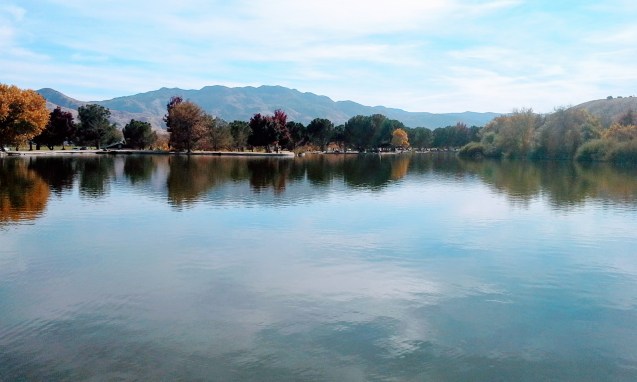
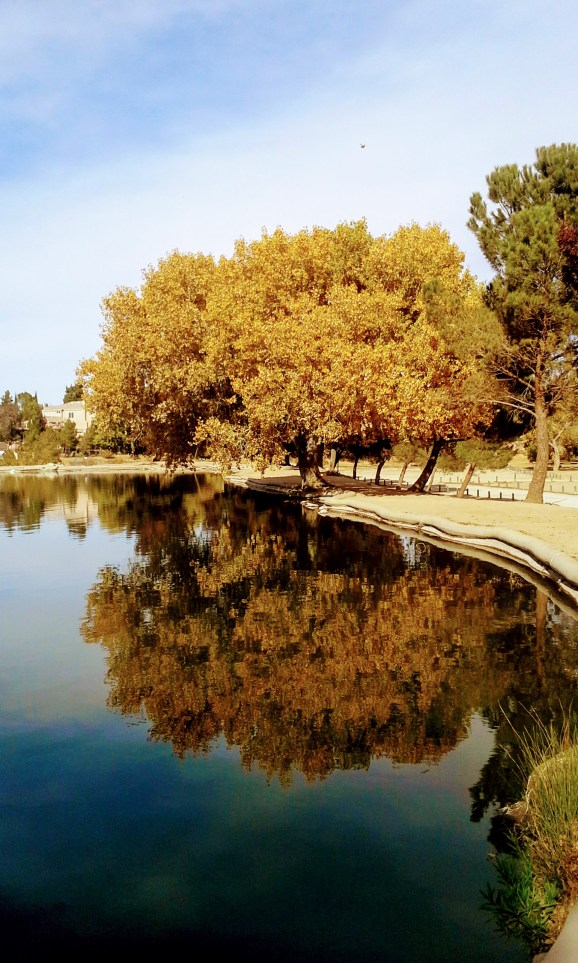
Today was an astonishingly beautiful day, the sort that makes up for the summer days of blistering desert heat.

20171121_123627.jpg

It was an especially nice day because I was able to share it with a friend I haven’t seen in over a year. There’s been too many traumas for both of us, which shouldn’t surprise me since trauma was always something we had in common. We met at a grief group at the absolutely worst times of our lives. I still remember the look on this woman’s face the first time I saw her — absolutely disbelieving, eyes wide with indescribable pain,  clutching the arm of a friend as if afraid grief would swallow her.

20171121_121500.jpg

Well, grief didn’t swallow either of us. And today, the sparkle in her eyes along with her easy smile was, I am sure, matched by my own.

And the day smiled at both of us.

We walked twice around “our” lake, the place we’ve most often gotten together, and afterward promised each other we’d do it again.

It might even be so.

20171121_123112.jpg

***
Pat Bertram is the author of the suspense novels UnfinishedMadame ZeeZee’s Nightmare, Light BringerMore Deaths Than OneA Spark of Heavenly Fireand Daughter Am IBertram is also the author of Grief: The Great Yearning, “an exquisite book, wrenching to read, and at the same time full of profound truths.” Connect with Pat on Google+. Like Pat on Facebook.

Grocery Story

I cried at the grocery store yesterday. It wasn’t an unprecedented occurrence — anyone whose life partner has been claimed by death knows the triggers lurking in those well-lit aisles — but in this case, the tears had nothing to do with me.

I was standing at the protein bar section, picking out a couple of Lara bars when a younger woman approached and asked if I knew which ones would help her gain weight. Apparently, her family and friends think she looks like a drug addict, and she thought if she gained ten or twenty pounds, they’d leave her alone. I looked her up and down, and shrugged. I said she looked fine to me. She was very thin, but mostly because she had a delicate (though not frail) frame. She wasn’t emaciated, and in fact had average to good muscular development. And her eyes were clear and bright with intelligence.

I said, “Tell your family I said you looked great.”

She replied, “I’ll say you were a perfect stranger.”

“I am perfect,” I said, and we smiled at each other.

That moment of connection opened her up, because next thing I knew, she was telling me her story. She had been a drug addict, but that very day was her third anniversary of being clean. Those seven lost years had changed her metabolism, and now she couldn’t gain weight.

She went on to tell me that ten years ago her three-year old daughter had been run over and killed, and the next day, her husband went out into the desert and shot himself because he couldn’t handle the pain. That, of course, was when my tears came, and I hugged her. The death of a child or a partner is excruciating, but to have to deal with both at once? Oh, my. The poor woman. No wonder she shrouded herself in drug-induced numbness. Now that she’s clean, she has to learn to cope with her grief as if it was still new.

Even worse, she is fighting not to be racist. The guy who ran over her child was of a minority, and the judge who let him off was of the same minority. And last week, two fourth-graders of that same minority choked her six-year-old son in the school bathroom. (I hesitate to mention the races of both her and her various adversaries because in today’s climate, even that could be considered racist.) She doesn’t want to hate, so she is fighting that feeling, too.

It amazed me that instead of seeing this woman’s honor, strength, and courage, her friends and family saw someone with a weight problem. Admittedly, they were probably worried about her, and afraid that she had picked up her old ways, but still, we are much more than the weight we carry, whether too much or too little.

I hugged her again and wished her happiness, then we went our separate ways.

But her story haunts me, and now whenever I am in that particular grocery store aisle, I will think of her and hope she is still okay.

***

Pat Bertram is the author of four other suspense novels: Light Bringer, More Deaths Than One, A Spark of Heavenly Fire, and Daughter Am I. Bertram is also the author of Grief: The Great Yearning, “an exquisite book, wrenching to read, and at the same time full of profound truths.” Connect with Pat on Google+. Like Pat on Facebook.

Eve of Seven Years of Grief

1:40 AM tonight marks the seventh anniversary of when my life mate/soul mate died. If it is true that our bodies are renewed every seven years, then this anniversary is another death — the death of whatever remains of him in me. When two people live together for an extended period of time, in our case thirty-four years, you not only exchange ideas and energy, you also exchange atoms and molecules, and DNA via benign viruses, so for all these years I carried a bit of him with me. And now he is truly gone. (I still have his cremains, haven’t decided yet what to do with them, but that is another story.)

A month ago, I entered a spate of grief so profound, I felt almost the same as I did at the beginning, as if parts of me were being amputated. Could that be when the last iota of him in me died? As romantic as the notion is, I have a hunch the upsurge of grief was simply that — an upsurge. Generally the month leading up to the anniversary is much worse than the anniversary itself, and I expected the past month to be a horror of pain. During that grief upsurge though, I wrote him a letter, and also printed out a photo of him to hang on my wall. (My photos are all packed away in a storage unit, and since I cannot drive because of my arm, they are not available to me.) Because of this renewed connection, as ephemeral though it might be, or maybe just because after all it’s been seven years since he died, the past month has not been a horror of grief, but rather a time of relative tranquility.

I still don’t understand life, death, grief. Don’t understand why some people are allowed to live out their lives with a special person, and others are fated to go into old age alone. It used to bother me, this unknowing, and sometimes it still does, but generally I try to live in the moment, to take from the day what I can and leave the immortal questions for another time.

I do know I will always be grateful he shared his life with me, even though memory of that life is fading behind newer memories of my life alone. And I know I will always miss him. We shared a special bond, not like a long married couple, not even like soul mates, though that is how I describe our relationship — more like cosmic twins. For most of our life together, I thought the bond was so strong it would pull me into death when he went, and I resented his having five years more of life than I would. As it turns out, something in me did die that day but other things were born, such as a determination to live, and I have now lived two years longer than he did. I resent the extra years on his behalf, though I hope he is beyond caring.

I don’t know where the next seven years will lead me — no one knows what the future will bring, of course. Will it end with me sitting at my computer telling you about the 14th anniversary of his death? By then, I will be elderly. No, I don’t want to even think about that. I’m still afraid of growing old alone, still afraid of being old alone. But today, living in the moment, there is no fear, just a sense that . . . I don’t know . . . maybe that my life is unrolling as it must.

There probably won’t be room for tears tomorrow. I have pre-op doctor and lab appointments that will take up much of the day. (As of now, the surgery to have the external fixator removed from my arm is scheduled for April 4th.) And I am packing one handed for a move to a nicer room and a nicer neighborhood.

Changes.

So much has changed in the past seven years. For a long time, I lamented that his death and my grief did not change me, but looking back, I no longer know who that woman was who clung so firmly to life when all she loved was swept away.

One thing has not changed — a great yearning to see him one more time. To see his smile that so often warmed me. To see the light in his eyes when something interested him.

And one other thing has not changed — disbelief. I can’t believe he’s been gone so many years. Can’t believe I survived.

And yet, changed,/ unchanged, here I am.

***

(Pat Bertram is the author of the suspense novels Light Bringer, More Deaths Than One, A Spark of Heavenly Fire, and Daughter Am I. Bertram is also the author of Grief: The Great Yearning, “an exquisite book, wrenching to read, and at the same time full of profound truths.”) Connect with Pat on Google+. Like Pat on Facebook.