We Are Not All Created Equal

Despite what the U.S. Declaration of Independence states, all men are not created equal. Nor are all women. Ideally, people are equal under the law, but even that is a specious claim since so often rich folk who can hire high-priced attorneys with dozens of partners and associates are more equal than those who have to make do with overworked public defenders.

But this bloggery isn’t about such grand matters. It’s more about the little things that makes us so very different from one another.

People who love Mexican food are often perplexed by my dislike of cilantro. “How can you not like cilantro?” a friend asked me in accusatory tones, as if she thought I were being contrary by choosing to dislike something most people loved. I retaliated by asking her what cilantro tasted like to her. She said it tasted citrusy, slightly bitter and very refreshing. But that is not how it tastes to me. To me, it tastes like soap. Cilantro contains chemical compounds called aldehydes, which are also present in soaps and other cleaning agents, and apparently I don’t have the enzyme that breaks down the soap-like compounds of the herb into a tasty seasoning, so I get the full soap taste.

Regardless of what she seemed to think, I was not being contrary. Just unequal.

A similar situation happened when I drove a friend to her mountain home this weekend. In a couple of instances, I had to drive down very steep roads that made me feel as if I were free falling down an elevator shaft. She made a few comments about my nervousness, and she didn’t seem to believe me when I told her I wasn’t nervous, that it was a physical reaction. I explained it using the example of a level. Some people are born with something similar to the bubble in their center, so they always know where they are in relation to the earth. These people can turn cartwheels, ride roller coasters, descend steep slopes, and never lose their equilibrium. I on the other hand, have no bubble, so I never know where I am in relation to the earth. (It’s an inner ear thing, or so I have heard.) I remember once as a very small child, maybe 5 or 6, I took tumbling lessons, and I couldn’t do what the other kids did. I got too disoriented, and feared I would break my neck. (They always say kids that young don’t know there is such a thing as necks breaking, but I bet others who lack an inborn plumb bubble also were aware of the possibility.)

Again, I wasn’t being contrary by repudiating her calling me nervous, I was simply explaining our inequalities. Some things I can do, others can’t, and some things others can do, I can’t. It’s that simple.

I’m not sure that being equal is an important matter, anyway. We all wish to be treated the same as others in similar circumstances, and we should be. But other than that, it’s the ways we are unequal that make us who we are, and that is something to celebrate.

***

Pat Bertram is the author of the suspense novels Light Bringer, More Deaths Than One, A Spark of Heavenly Fireand Daughter Am I. Bertram is also the author of Grief: The Great Yearning, “an exquisite book, wrenching to read, and at the same time full of profound truths.” Connect with Pat on Google+. Like Pat on Facebook.

I Am Truly Blessed

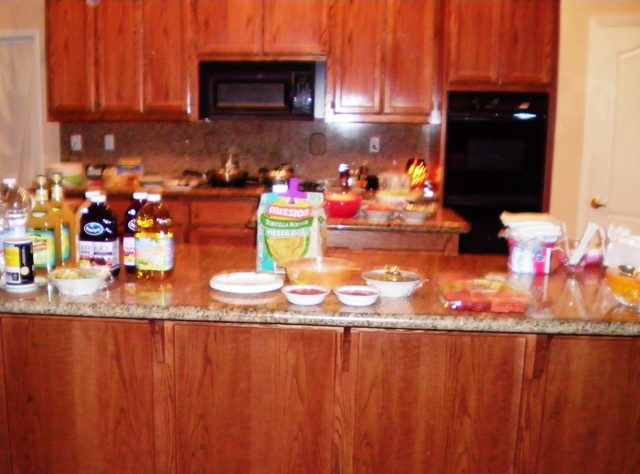
As I was setting up for my party last night, cooking the various taco fillings, chopping the many garnishes, and arranging everything in a pleasing and practical manner, I thought about all the people I had invited, and what they meant to me.

First were the people from my grief group. When I came here after the death of my life mate/soul mate, I joined a grief group to be with others in the same hideous and incomprehensible situation, and they helped me get through that awful time. I’m still friends with some of those folks, though I don’t see them very often, and it was nice to think of seeing them again.

Then there was the group I went walking with. Through the hugs we shared and the stories we exchanged during the three-mile walks, these friends helped see me through the torments of dealing with my dysfunctional brother and dying father.

And finally, the dance group, especially our teacher, who helped me see that life was still worth living, that there were still things to be learned and much joy to be experienced.

Although I hadn’t planned the party to be anything other than a simple get-together with friends, it turned out to be more than that — a chance for me to say thank you and to let everyone know how much they meant to me.

While I was making my little speech to my guests, I realized the truth: that although the past five years as I lived them seemed to be one trauma after another, in retrospect, because of these people, those years seem pretty damn wonderful.

I am truly blessed.

???????????????????????????????

***

Pat Bertram is the author of the suspense novels Light Bringer, More Deaths Than One, A Spark of Heavenly Fire,and Daughter Am I. Bertram is also the author of Grief: The Great Yearning, “an exquisite book, wrenching to read, and at the same time full of profound truths.” Connect with Pat on Google+. Like Pat on Facebook.

Phones and Other Connections

When did talking to someone on the phone become something that people did while doing something else?

I have a friend who calls me only while she is walking. I have another friend who calls me only when driving. I just talked to someone who put me on the speaker so she could make her bed while we chatted. I know several people who play computer games while on the phone. In other words, no one really talks to anyone anymore. They justphone seem to be filling in what might otherwise be almost-empty time.

I no longer feel slighted by this disregard as I once did, but I am egotistical enough to want people to want to talk to me, to want them to want to connect on a more personal level rather than using me to keep from being boring by mundane activities. (Or — perish the thought!! Could they be doing those other things to keep from being bored by me?)

I do realize time is at a premium in this insanely busy world, that sometimes people can only converse during barely-used moments, but still, it would be nice to feel as if what I have to say — or what people have to say to me — is important enough to experience unaccompanied by the huffs and puffs of the walkers, by muttered comments to other drivers, by computer beeps and dings.

We’ve come a long way from the days of being tethered to stationary phones, but still, it seems as if we’ve gone too far. Just because we can drive and talk on the phone, or walk and talk on the phone, play games or do housework and talk on the phone, it doesn’t mean that we should.

Or maybe I’m being too unrealistic and should be grateful for any moment of another person’s attention, no matter how divided.

***

Pat Bertram is the author of the suspense novels Light Bringer, More Deaths Than One, A Spark of Heavenly Fire, and Daughter Am I. Bertram is also the author of Grief: The Great Yearning, “an exquisite book, wrenching to read, and at the same time full of profound truths.” Connect with Pat on Google+. Like Pat on Facebook.

As Long As We Are Alive, We Are Alive

During the last months of my life mate/soul mate’s life, his brain was so riddled with cancer, he lost the ability to hold a thought long to enough to have a conversation, so his communications seemed more like lectures than exchanges. I remember bristling during those lectures — gritting my teeth and clenching my fists. It seemed as if he were being paternalistic, as if he didn’t trust me to take care of myself.

I knew he was ill, of course, though at the time, I didn’t know how bad off he really was. He’d been ailing for so long, I thought that’s the way it would always be, his getting weaker and weaker, maybe for many more years. But he died, shocking me to my core. And then guilt and regret descended on me. How could I not have listened to every single word he spoke during the time of his dying? How could I not have treasured his concern for me? How could I have been so impatient, so irritable, so resistant to what he had to say?

In the five years since Jeff’s death, I’ve worked through my guilt and regrets, even came to the realization that it wasn’t he I was resisting but his dying. Still, it wasn’t until my father’s death when my personal history repeated itself that I truly understood the dynamics of what had happened between Jeff and me. (In the case of my father’s last days, he wasn’t lecturing me so much as expecting to be waited on, and I simply did not want to do for him what he could do for himself.)

In my writing, I’ve been calling the last months of both men’s lives “the time of his dying,” but it was only their “dying” in retrospect. It was actually still a time of living for them, which makes my less than perfect behavior understandable. We were still involved in our relationships and roles, and it was only death that made my reactions seem horrific. If they both had continued to live, of course I could not have tolerated spending many years being lectured to or being expected to wait on someone who was able to do things for himself. These are just normal conflicts of living. And though they dying, they were still alive. Still living. And so was I.

I remember crying to the hospice social worker after Jeff died, lamenting his ill health. “He never had much of a life,” I wailed. She said, “He had a life. Being sick was his life.”

It seemed like such a terrible thing to say, but now I understand what she meant — that he was alive until he wasn’t.

This is one case where understanding can’t change anything. If I am ever thrust into such a situation again, I’d still do the same thing — carry on as if the person were alive and going to be alive for a long time. The one change will be that I won’t have regrets. Although my regrets over Jeff loomed large, I have no regrets over anything I did or did not do for my father. We were involved in playing out our roles the best way we could up to the end. And there is nothing to regret in that, nothing to feel guilty about.

I did learn something from both men, though, and that is to live until the very end. As long as we are alive, we are alive.

***

Pat Bertram is the author of the suspense novels Light Bringer, More Deaths Than One, A Spark of Heavenly Fire, and Daughter Am I. Bertram is also the author of Grief: The Great Yearning, “an exquisite book, wrenching to read, and at the same time full of profound truths.” Connect with Pat on Google+. Like Pat on Facebook.

Tears. Again.

If you’re sick of hearing about my sorrow, you can leave. I don’t mind. I’m sick of my grief and tears, too, but I’m stuck with them.

Ever since my father’s death two months ago, I’ve been in a strange state. Not only has his death brought back the memory of the death that devastated me (the death of Jeff, my life mate/soul mate), it’s set in motion a whole new set of changes in my life. I came to look after my father after Jeff died, and now that they are both gone, I have to look to my own life and figure out where I want to go and what I want to do.

Do you really think I want to walk the Pacific Crest Trail, live a nomadic life in some sort of camper/van, or any of the other things I blog about? Of course I don’t. But the one thing I do want — to go home to Jeff, the Double Rainbowonly person who truly understood me — is forever denied me. And so I try to find new wants, which isn’t easy because I’m not a person who wants. (I never wanted anyone, either, but like a mythical being clothed in light, Jeff appeared in my life one incredible Saturday morning in August thirty-eight years ago. And then, almost five years ago, he left to go back from wherever he came.)

I’m fine most of the time. Really, I am. But today, I was with friends watching a movie — Patrick Swayze’s The Last Dance — and one woman piped up, “Divorce is so much worse than death.” I’d heard her make that same stark remark many times before, but today, I couldn’t let it pass. I said, more sharply than I intended, “You keep saying that, but it’s not necessarily true.” She went on her normal spiel about how when someone is dead, they don’t keep coming back, and I again spoke sharply. “Don’t you think I would give anything if Jeff came back? Your ex-husband has finally left you alone, but Jeff is still dead.” Her response was her oft-repeated, “But you didn’t have to deal with him rejecting you.”

I could have told her about the thousands of rejections one has to deal with when someone is dying, how they leave you every single day, how they have no time to think of you because their own concerns loom so large, how your heart breaks and breaks and breaks with the constant rejection until finally you don’t feel anything any more. I could have said a lot of things, but I wasn’t able to continue the conversation. I’d started crying when I spoke the simple words, “Jeff is dead,” and I couldn’t stop.

I pulled myself together to take my leave after the movie, but I cried all the way home, and I’m crying still.

How is it possible that almost five years later, I can be pulled back to the pain of his dying so quickly? Sometimes I wish I were as stoic as I once thought I was — I presumed I’d take his death in stride — but grief is more than simply feeling sad or rejected. It’s even more than those insipid 5 (or 7) stages of grief that everyone seems to believe in. Sure, we feel shock, denial, anger, guilt, sadness, depression, and acceptance, but most of us also feel anxiety, frustration, loneliness, confusion, despair, helplessness, panic, questioning (both as a need to know why and as a cry of pain), loss or gain of faith, loss of identity, loss of self-esteem, resentment, bitterness, isolation, inability to focus, suspended animation, waiting for we know not what, envy of those who are still coupled or who have yet to suffer a loss. And we suffer myriad physical symptoms such as queasiness, dizziness, sleep problems (too much or too little), eating problems (too much or too little), bone-deep pain, inability at times to breath or swallow, exhaustion, lack of energy, restlessness, and seemingly endless bouts of tears. (Yes, I know, those who get divorced also feel many of these things, and I empathize with them, but they do not have to deal with the angst of death, which adds a whole other layer of pain to the equation.)

My grief has mostly wound down since I’ve dealt with so many of the various aspects of grief, but still, days like today remind me that I will never be over Jeff, never stop missing him. And so I try to be tolerant of other’s condescension, try to create new possibilities, try to want something enough to make a life out of it.

And yet, no matter what I do for the rest of my life, he will still be dead. Nothing will ever change that — not my thoughts of an adventurous future and most certainly not my tears.

***

Pat Bertram is the author of the suspense novels Light BringerMore Deaths Than OneA Spark of Heavenly Fireand Daughter Am IBertram is also the author of Grief: The Great Yearning, “an exquisite book, wrenching to read, and at the same time full of profound truths.” Connect with Pat on Google+. Like Pat on Facebook.

Channeling My Mother

I’ve been channeling my mother the past couple of days. Not channeling her in the séance sense, just in the sense that I have been doing what I so often saw her doing, and so I feel the continuation of her life.

My mother’s parents came from Poland. It was a shock to me when I realized as an adult that my mother was a first generation American who grew up speaking a language other than English. I always knew that, of course, but as a child you accept your mother for who she is without seeing her in the afternoon teabroader context of life. We often think of first generation Americans as people who have a rough time speaking English (or who speak rough English), but she spoke impeccable English with no hint of that other language in her voice.

Two things she did carry over from her heritage, the Christmas wafer and pirogi. The tradition of the Christmas wafer dates back to the tenth century, and is a celebration of family. In our family, on Christmas Eve, each person got a small rectangular white wafer, paper thin and flavorless. We would hold out our wafer to each in turn, wishing each other Merry Christmas. Each person broke off a piece of the proffered wafer, ate it, then offered theirs in return. This custom in our family ended with the deaths of my mother and her sister.

We children never really appreciated the custom of the Christmas wafer, but pirogi. Now that is a different matter, and much appreciated. I make them once in a great while. A childhood favorite, it reminds me of . . . well, good food, good times, even warmth maybe. A few days ago, I had sampled some pirogi that were indifferent at best, which gave me a craving for my mother’s pirogi, so I went out and purchased the few simple ingredients. As I cut squares of thinly rolled dough, dropped a handful of a potato/cheese mixture into the center and pinched the edges, I could almost feel the shadow of my mother doing the same thing.

I must have made these treats with my mother a hundred times, but it wasn’t until now that I wondered what impelled her to make them when she did. Was it a yen for the connection with her mother? A desire for a taste of home? Perhaps, like me, she simply wanted the treat, or maybe she knew we did. I’ll never know, of course. She is beyond such questions, but it was nice visiting with her if only through memory.

This is the recipe she gave me when I left home:

6 cups flour
4 eggs
1 t salt
milk

6 or 8 large potatoes; boil till soft; mash with 1/2 lb longhorn cheese, salt, pepper paprika.

Roll dough thin, fill, boil, fry.

Not exactly the sort of recipe a neophyte can follow, but it makes perfect sense to me.

If you’re in the area and want a sample, leave a message here or give me a call. I’ll be delighted to have you come for tea and a pirogi or two. I have plenty.

***
Pat Bertram is the author of the suspense novels Light Bringer, More Deaths Than One, A Spark of Heavenly Fire, and Daughter Am I. Bertram is also the author of Grief: The Great Yearning, “an exquisite book, wrenching to read, and at the same time full of profound truths.” Connect with Pat on Google+. Like Pat onFacebook.

This Thing Called Communication

Whenever I start patting myself on the back for my ability to write, something happens to make me realize how very difficult is this thing called communication.

Today I texted someone to give my opinion about a course of action he was planning to take that would affect me. I immediately received a call from him chastising me for my anger. I was taken aback because I wasn’t angry. I was being direct, or at least thought I was.

phoneI got upset with the situation, and remarked this was always happening to me — I say something that seems unadorned and direct, and the recipient reads it as anger. My communicant today responded, “If it always happens, maybe the problem is with you.”

Perhaps it is. If so, how would I know? I only know what it is I think I am saying, not what it is people hear when they read my words. But come to think of it, even if I were angry, what difference does it make? I’m allowed my own reaction, especially when it comes to things that affect me.

Today, because of his call, we were able to smooth things over. Both of us apologized for the misunderstanding, but that ease of voice-to-voice communication is not always possible. And when that happens, things drag on, with the situation getting ever more complicated. I try to explain myself in subsequent emails but end up only deepening the misunderstanding, because each explanation seems as if I’m refueling the anger.

When we write fiction, we write to evoke emotions — anger, nostalgia, humor — but people don’t always respond the way we want them to. Sometimes the humor falls flat, the romance seems uninspired, the pathos insipid, but we as writers don’t end up in imbroglios because of the miscommunication. In fact, we seldom even know where it is we lost those particular readers, or if they even care. Maybe they felt something completely different and just as meaningful as what we intended.

But real life isn’t as easy. We leave people with impressions we don’t want to make, and no matter how precise we think we’re being, we end up causing confusion. Case in point: I sent this text to the executor of my father’s estate: “I’ve got a note on the cable box that it has to be returned to the company.” And I do have a note taped to the box. I put it there as a reminder to return the box when the house is sold. I just wanted to make sure it didn’t get forgotten or thrown out in the flurry of post-sale activity. But the executor thought I meant that I received a note from the cable company about the box. Eek.

Considering all the misinterpretations that are possible as words slip from one mind to another, it’s amazing that we can communicate at all.

***

Pat Bertram is the author of the suspense novels Light BringerMore Deaths Than OneA Spark of Heavenly Fireand Daughter Am IBertram is also the author of Grief: The Great Yearning, “an exquisite book, wrenching to read, and at the same time full of profound truths.” Connect with Pat on Google+. Like Pat on Facebook.

You Matter

I received this letter yesterday:

Dear Pat,

Give more than presents this holiday season, share the gift of caring with those who matter to you most!

With the holidays around the corner, the USC School of Social Work believes that there is no better time to encourage random acts of kindness. The simple act of telling someone why they matter could have a bigger impact than you know. For that reason, you’re invited to participate in You Matter, a grassroots campaign designed to foster well-being and bring back some much-needed human connection. We are on a mission to spread as much positivity as possible, and we hope that you’ll join us!

There are four easy steps to participate in #YouMatter:

1) Download a Care Card from the MSW@USC blog.

2) Write a message with someone in mind.

3) Snap a picture of your card and share on social media using the hashtag #youmatter and tag us @youmatterbc to inspire others.

4) Give the Care Card to someone and make that person’s day!

There’s never a better time than now to show others that that they matter in this world. If you love this campaign as much as we do, we ask that you please pay it forward by featuring #YouMatter on your blog.

Wishing you a wonderful and safe holiday season,

Gaby Acosta

####

Sounds like an interesting campaign, even if she did neglect to tell me I matter!

If you’re interested in participating in this project, here is a “you matter” template to use. (Just right click and “save image as…) I was going to fill in the template, but in the end decided there was no “because.” You matter. It’s as simple as that.

you matter

***

Pat Bertram is the author of the suspense novels Light Bringer, More Deaths Than One, A Spark of Heavenly Fire, and Daughter Am I. Bertram is also the author of Grief: The Great Yearning, “an exquisite book, wrenching to read, and at the same time full of profound truths.” Connect with Pat on Google+. Like Pat on Facebook.

Thank You, My Friend

Of all the things I am grateful for today and every day, my friends (both online and off), rank the highest. You, my friend, have made these years of transition a special time for me, showing me that grief isn’t just about sadness and broken connections, but about growth, wonder, and new links to life.

Table settingIt’s odd to think about, but if my currently deceased life mate/soul mate were somehow to return whole and healthy, I’m not sure I’d go back to him — I’d be leaving too much behind. Oh, heck, who am I kidding? I’d go back to him in a minute! But the truth is, I’m glad I don’t have to make that decision. I still have dances to learn, friends to enjoy, places to go, adventures to undertake.

I panic at times about the uncertainty of my future, but even that uncertainty is something to be grateful for — uncertainty hides a plethora of undiscovered joys, friends as yet unmet, and untold possibilities. More than that, by your friendship, you have taught me that the future is not an unfriendly place. Once upon a time, you were part of an unknown future of mine, and now you are a significant presence in my life.

Thank you, my friend, for the blessings you have bestowed on me.

Wishing you a very happy day of thanksgiving, even if you don’t celebrate the American tradition of Thanksgiving Day.

***

Pat Bertram is the author of the suspense novels Light Bringer, More Deaths Than One, A Spark of Heavenly Fire, and Daughter Am I. Bertram is also the author of Grief: The Great Yearning, “an exquisite book, wrenching to read, and at the same time full of profound truths.” Connect with Pat on Google+. Like Pat on Facebook.

Grieving in the Desert

It’s been a while since I went walking in the desert. A couple of months ago, I started taking extra dance classes, so I felt as if I needed to rest in the evenings and on the weekends to make sure I had the strength to dance, but lately it’s more because of . . . well, because of laziness, I guess.

After last night’s upsurge of grief for all my losses, I wanted to talk to Jeff (my deceased life mate/soul mate). During the past four-and-a-half years since his death, I’ve felt the closest to him out in the desert away from the traffic and commotion of the city. But he wasn’t there today. Of course, he’s never been there except for the part of him that used to be a part of me, but today even that tenuous connection was missing.

Bell MountainI used to worry that my grief kept him tied to me so he couldn’t go wherever he needed to go, though I’ve believed from the beginning that when he died, he went far beyond my influences, back to the higher reaches of radiance he came from. (At the same time, oddly, I believe he is gone, obliterated, oblivious. This second belief seems to be the result of my logical mind, while the first is more intrinsic.) I have no true belief as to what happened to him — either way, he is gone from my life with only his very pronounced absence still making him present to me.

At the moment, I have his photograph standing on a table where I can see it frequently, though sometimes I put it away or lay it face down depending on my current state of dependency. During the time of my dysfunctional brother’s nearness and my father’s decline, I needed to keep the photo handy to remind me that my life wasn’t always such a horror. Eventually, I’ll pack the photo away and not look at it much if at all — I’m not sure it’s a good thing to keep reminding myself of our past. The past is past, and only shows itself in what I have become because of it, anything else seems to be . . . I don’t know. Wallowing maybe. Irrelevant perhaps.

It does seem strange to think he isn’t relevant to my life anymore. For thirty-four he was relevant to everything I did, said, thought. Now my life is mine alone. I still wish I could go home to him, but though I seldom admit it even to myself, I know I would chafe under the life his illness forced us to live. I remember how numb I was that long year of his dying, and I don’t have that sort of defense any more. His death and my ensuing grief killed that particular mechanism in me — now I feel everything, as if my emotional tuning fork is poised to thrum at the slightest disturbance.

Sometimes, when I am at my most mystical, I feel as if my life’s journey is just beginning. That everything up to now has been prologue. (That sounds familiar. Didn’t Shakespeare write, “What’s past is prologue”?) So I won’t say prologue. Maybe school. My life does have a bit of that “almost graduation” feel to it, along with the panic/excitement of what is coming — whatever that might be. I’m trying to follow the advice of a very sage woman and not give too much thought to the future, but my mind does seem to wander/wonder at times.

I will make one plan for the near future, though. I’m planning to walk in the desert again tomorrow. Even though Jeff might be absent, I was very much present, and that’s what mattered.

***

Pat Bertram is the author of the suspense novels Light Bringer, More Deaths Than One, A Spark of Heavenly Fire, and Daughter Am I. Bertram is also the author of Grief: The Great Yearning, “an exquisite book, wrenching to read, and at the same time full of profound truths.” Connect with Pat on Google+. Like Pat on Facebook.