Grieving for the Dead

The conventional wisdom is that we grieve for ourselves, not the person who died, but as with any other idea most people have about grief, it is only partly true. When it comes to a soul mate, we often grieve for him as much as we grieve for ourselves. During our shared time, we cared as much about him, his well-being, his happiness as we did about our own, and that caring does not stop with death.

Many people still feel their soul mate’s presence, sometimes in a beneficial way, as a blessing or as a helping hand, but others feel their mate’s unhappiness. One woman, whose husband spend his last months connected to gastric tubes and other painful devices, continued to feel his anger long after he died. He’d been furious with her for agreeing to procedures that prolonged his suffering, and she was ridden with guilt because of it. (Though what other decisions about his care could she have made? He could not talk, and the doctors assured her he would get better if they performed those operations.) For more than a year after his death, she could still feel waves of anger directed at her. Perhaps the anger was a symptom of her guilt, but perhaps part of him still harbored those feelings. We hope our loved ones are at peace, but what if they’re not?

One of the great agonies of losing one’s soul mate is not knowing where he is, how he is, if he is. I found comfort in believing that my life mate/soul mate wasn’t suffering any more, that he, at least, wasn’t having to deal with the pain of our disconnect, but then one day it struck me that I didn’t know that for sure. Since I had no sense of his continued presence in my life, I had no conception of what he might be experiencing. What if he were feeling just as lost and lonely and bereft as I was?

I had to put such thoughts out of my head because I truly could not bear to think of him in pain. I was still grieving for all the suffering to which he’d been subject during his final days, weeks, months, still grieving for his hopes that never came to fruition, still grieving for the dreams that died with him. Perhaps it was silly of me to grieve for him, since it’s entirely possible he wasn’t grieving for himself, but still, those thoughts were there, complicating my grief.

It’s been a few days more than three years since he died, and sometime during those grief-filled months, I began to disconnect from him, to understand that whatever relationship we had, however much we shared, no matter how much it felt as if we were cosmic twins, we were still two separate people on two separate journeys. This is an important realization and a necessary step to mental health and eventual happiness, but the habit of thinking of him is still strong, and I wonder where he is, how he is, if he is.

I hope he is happy, fulfilled, challenged, radiant. I wish those things for myself, and I can wish no less for him.

***

Pat Bertram is the author of the suspense novels Light Bringer, More Deaths Than One, A Spark of Heavenly Fire, and Daughter Am I. Bertram is also the author of Grief: The Great Yearning, “an exquisite book, wrenching to read, and at the same time full of profound truths.” All Bertram’s books are published by Second Wind Publishing. Connect with Pat on Google+
Designated Daughter

The problem with having a star-studded weekend is that resuming real life can be difficult. Sunday evening, on the way back from the airport, I found myself dreading the return to my life. It’s not that I would have wanted to keep up the frantic pace of wonderful waterside seafood restaurants, Ferris wheels, merry-go-rounds, limousines, champagne, and fabulous shows, but that until I was away from it for a while, I hadn’t realized how depressing my current living situation is. (I am the “designated daughter,” looking after my 96-year-old father.)

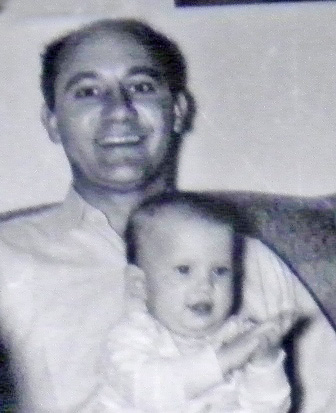
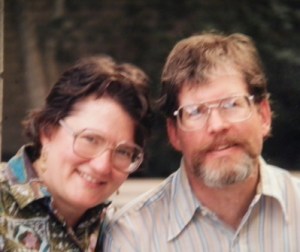
Dad and me

Dad and me

When I came here three years ago to be with my father, he was still mostly strong and vital, which gave me the opportunity I needed to grieve for my deceased life mate/soul mate without having to deal with the minutiae of daily life or my father’s medical condition, but this changed as my father declined. And now, I’m back where I was for so many years, keeping vigil while someone close to me struggles to live (or die. Sometimes I’m not sure which is harder for them.)

My father is doing well (he even insisted I leave him by himself while I was gone instead of getting someone to stay with him) but still, he is suffering from congestive heart failure, and it’s hard watching someone decline, especially when it’s someone you have a complicated relationship with. He vacillates from being the authoritative father when he is well to needy child when he isn’t, which makes a complicated situation even more problematic. And for the most part, I am his main contact with the outside world, which at times adds an additional burden.

I thought I was doing okay, accepting this new direction in my life, but now I see that this situation only adds to my sorrow. But it is what it is, and there’s not much I — or anyone else — can do to change things, though life itself will eventually make the change for me. Until then, I’ll muddle through the best I can, and try not to give in to depression.

***

Pat Bertram is the author of the suspense novels Light Bringer, More Deaths Than One, A Spark of Heavenly Fire, and Daughter Am I. Bertram is also the author of Grief: The Great Yearning, “an exquisite book, wrenching to read, and at the same time full of profound truths.” Connect with Pat on Google+

Three Years of Grief

Today is, unexpectedly, a day like any other. So far, on this, the third anniversary of the death of my life mate/soul mate, I’ve experienced no great upsurges of grief, just that perpetual thread of sadness that bastes my life together.

During those first months of grief, my focus was completely on him, on his absence, on the horrendous feeling of goneness that his death left me with. It was as if by thinking of him, by holding him close in my thoughts, by reliving the horror of his final weeks, that somehow I could undo what had happened to him. But the years have taught me what logic didn’t — that he is gone and nothing I do or think or say or hope or pray will bring him back.

During his last days, he became childlike in his needs and actions (as if the combination of the cancer that spread to his brain and the drugs that kept the pain at bay killed the man, leaving only the inner child behind), which confused the issue in my mind. For a long time after his death, I panicked, wondering how he could take care of himself, wishing I could be there to calm his fears and his restless spirit, longing to hold him in my arms and keep him safe.

It’s only recently that the truth hit me. He was an adult, not a child, and except at the end, was more than capable of taking care of himself. Besides, if he does still exist somewhere, he is ageless, timeless, beyond any need of me and my feeble ministrations. (Feeble because nothing I could do erased a single moment of his pain or kept him alive one more day.)

There is an element of blank to my grief — an incomprehension of what it’s all about. I remember how grief feels, though I’m far enough along in the grief process that I have a hard time believing I was that shattered woman so lost in pain. But I don’t know the truth of life and death, and I’m not sure we humans are capable of understanding. And maybe that’s the way it’s supposed to be. It keeps us focused on our lives and not on . . . well, whatever else is out there.

Although time has insulated me from the rawness of my grief, and although my grief work has brought me to the point where I can once again see possibilities and feel hope, there is one thing I will never lose — that great yearning to see him one more time. To hear his voice. See his smile. To hold him tightly as if I would never let him go. But I have let him go. I let him go three years ago, not allowing my needs to bind him to his life of pain.

And I need to let him go now.

Well, here it is — the upsurge in grief I didn’t feel when I started writing this post. Tears are running down my face. I know I need to let him go, to let go of the grief that binds us together still, but not today. Today I will remember. And grieve.

***

Pat Bertram is the author of the suspense novels Light Bringer, More Deaths Than One, A Spark of Heavenly Fire, and Daughter Am I. Bertram is also the author of Grief: The Great Yearning, “an exquisite book, wrenching to read, and at the same time full of profound truths.” All Bertram’s books are published by Second Wind Publishing. Connect with Pat on Google+

The Eve of My Third Anniversary of Grief

In just a few hours, it will be three years since the death of my life mate/soul mate. It seems impossible I’ve survived so long. It seems impossible he’s been gone so long. Sometimes I feel as if we just said good-bye, as if I could call him up and see how he is doing, as if when I am finished caring for my father, I could go home again. But of course, those are just tricks of the ever-changing grief process.

I’ve been doing well recently, keeping busy, not letting myself get too caught up in the past. The present is complicated enough with my father’s growing dependency (though he has been doing well the past week or so, taking more of an interest in his own care). And the future is becoming more real, not quite as bleak as it has seemed during the past few years.

020smallFor all these months of grief, I’ve been worried about what will happen to me when my present responsibilities end. Oddly, during my mate’s long dying, I never really thought of the future. I just presumed I’d be okay. He told me things would come together for me, and I believed him. But now that I know how life feels with him gone, I’ve been afraid of stagnating, drowning in loneliness, living as quietly and unobtrusively as I’ve always done. The realization that I don’t have to find a place and settle down but can live on the go if I wish destroyed those fears with one clean stroke, and I’ve spent the past week figuring out the logistics of such an adventurous life. It won’t be easy since I have few financial resources and strong hermit tendencies, but the alternative — stagnation — makes such a future seem possible.

Because of all that is occupying my mind, I thought I’d sail right through this anniversary without an upsurge of grief, (though I always miss him; that’s a given) but grief will not be denied. If I don’t acknowledge my loss and sorrow, grief will acknowledge me. A couple of nights ago, I dreamed I was grieving for him. Dreamed I wanted to go home to him. Dreamed I cried for him. And when I woke, I was crying still.

I guess it’s just as well that the next stage of my life’s journey could be a long way off. Apparently I have grieving left to do. Chances are, I always will grieve to a certain extent, but now I’m more concerned about what to do with my life despite the grief. I’d hate to meet him again some day and have to admit that I spent my life awash in tears. He would be disappointed in me, and to be honest, so would I.

But three years. Has it really been so long since I last saw his smile? Last heard his voice? Last felt his arms around me? It’s hard for me to believe, but the calendar doesn’t lie.

***

Pat Bertram is the author of the suspense novels Light Bringer, More Deaths Than One, A Spark of Heavenly Fire, and Daughter Am I. Bertram is also the author of Grief: The Great Yearning, “an exquisite book, wrenching to read, and at the same time full of profound truths.” All Bertram’s books are published by Second Wind Publishing. Connect with Pat on Google+

I stand united against rape because . . .

I received an interesting request from a Facebook friend yesterday. This woman has been very supportive during my time of grief, helping me to believe that life will become new again. Because of this, she’s become not yet an offline friend, but more than most of my faceless Facebook friends, so I would have been inclined to grant her any favor.

As it turns out, responding to her request was easy and hard at the same time.

She wrote:

I am now the National Director of Public Relations for UniteWomen.org, a non-partisan women’s rights organization with a social media reach of over twenty million people around the world, and we are about to embark upon our “Unite Against Rape” campaign, which will involve posting an array of memes with short quotes taking a stand against rape. Some of these quotes will be from celebrities, and some will be from everyday men and women. We are hoping to get as much “star power” as we can at the kick-off of the campaign, and I thought of you and your books and I thought maybe we could use you in the campaign as a novelist. I am hoping you might like to participate by completing the statement “I stand united against rape because…” for an Internet meme.

Your quote would only need to be a sentence or two, and we would be incorporating it into a graphic that includes a photo of you (high resolution and from the waist up).

It is time to change the collective mentality and show that we are united against rape, and that we will stand up and speak out about it. If you would be willing to lend your name and likeness to UniteWomen.org’s “Unite Against Rape” campaign, I think it would be good for our campaign and give you some additional exposure for your blog.

Of course I said yes, that was the easy part. The hard part was the “because.” I stand united against rape because . . .

It is so self-evident that rape is wrong that I simply could not come up with a response. I thought of mentioning that rape is illegal, morally wrong, demeans all of us, steals our humanity. I thought of saying that such a barbaric custom has no place in the twenty-first century, but all of that is obvious. I mean, really — who is for rape? I bet even rapists would come out against rape since they probably don’t see what they do as rape.

In the end, all I said was, “I stand united against rape because rape is wrong. It’s as simple as that.”

***

Pat Bertram is the author of the suspense novels Light Bringer, More Deaths Than One, A Spark of Heavenly Fire, and Daughter Am I. Bertram is also the author of Grief: The Great Yearning, “an exquisite book, wrenching to read, and at the same time full of profound truths.” All Bertram’s books are published by Second Wind Publishing. Connect with Pat on Google+

Pat Bertram “Appreciation Weekend” Extravaganza

I received a most wonderful packet in the mail today from my sister. She is very appreciative of all that I do for our father, and to show that appreciation, she is treating me to a gala weekend in Seattle. Chateau W is, of course, her lovely art-filled home, the only place I’ve ever been that makes me realize how wonderful a house really can be.  And the chef? Her husband, a professional chef. A lovely home and a chef husband. She knows how to live! And she knows how to appreciate. Here is the itinerary she sent me in that packet.

________________________________________________________________________________________

Pat Bertram
“Appreciation Weekend” Extravaganza
Seattle, Washington
March 29 – 31, 2013

———————————————————————————————————————————————————

champagne

Friday, March 29, 2013

~Travel: Alaska Airlines, Arrives Seattle WA 1:22PM

~Arrival: Curbside pick-up at Sea-Tac International Airport 1:30 PM

~Accommodations: Two nights lodging at Château W, featuring private Bed & Breakfast suite and 24/7 on-call Personal Chef Services

chateau

*

Saturday, March 30, 2013

1:00 PM          Limousine service arrives at Château W for transport to Seattle Center

limousine

1:30 PM          Arrival at McCaw Hall, Seattle Center

2:00 PM          Shen Yun performance begins

Bringing to life 5,000 years of Chinese civilization through classical Chinese dance and music in an exhilarating show you will never forget.

SY

shenyun

5:00 PM          Limousine arrives at McCaw Hall, Seattle Center for transport to Ray’s Boathouse

5:30 PM          Dinner Reservations at Ray’s Boathouse
                           Amazing NW seafood, an award-winning wine list, and spectacular water views!

restaurant

7:30 PM          Limousine arrives at Ray’s Boathouse for transport back to Château W

 *

Sunday, March 31, 2013

Morning:         Breakfast to Order (upon wakening)

Noon:              Chateau W shuttle to SeaTac International Airport

Night:              Alaska Airlines, Leaves Seattle WA 2:50PM

flowers

We are honored to serve as your weekend hosts, and we look forward to seeing you!

___________________________________________________________________________

It should be an incredible adventure. I can hardly wait!

***

Pat Bertram is the author of the suspense novels Light Bringer, More Deaths Than One, A Spark of Heavenly Fire, and Daughter Am I. Bertram is also the author of Grief: The Great Yearning, “an exquisite book, wrenching to read, and at the same time full of profound truths.” All Bertram’s books are published by Second Wind Publishing. Connect with Pat on Google+

A Thousand Miles From My Cool Green Home

Three or four times my life mate and I packed up everything and moved without any idea of where we were going. I remember the looks of non-comprehension mixed with envy I’d get when I’d tell my new acquaintances how we ended up where we did, especially if those people were dreaming of leaving that very place. Perhaps it did seem a bit strange that we were so foolish or so daring to move from a place with no destination in mind and no clear plans of what to do when we arrived, but we always hoped for a better life for us. Those hopes were not fulfilled, at least not in the way we wanted, so it amazes me we took the leap so many times.

I don’t think I’ll ever forget how free I felt when we left a place behind and set out for an unknown future. It felt as if the whole world lay ahead of us, and anything was possible. Once we spent the night in a motel at the truck stop in Nephi, Utah. We had no worries at the moment, nothing to do, nowhere to go, and we talked about how much fun it would be to live there at that truck stop. (Sort of like an upscale version of Bagdad Café, though this was long before the movie was filmed.) Staying wasn’t practical at the time, and so we found a place back in Colorado to settle down for a while. And the web of everyday life began to entrap us once again.

Eventually we stopped taking those trips into the unknown, though we’d still occasionally look for that ideal place. One planned trip took us to eastern New Mexico. We were standing in the middle of a dusty town — no more than a crossroads, really — and he seemed unexpectedly peaceful as he looked around that wide empty space. There were no places to rent, of course, and nothing for sale, and even if we had found a place, the nearest grocery store and library were a long way away, which would have made living there a logistical nightmare, and so we returned home. By then, all the trees and bushes we’d planted had grown up and leafed out. Our place looked cool and green, and the blue Colorado light seemed soothing after the yellowish glare of that little town.

We never moved again. His illness eventually trapped us, and then he was gone.

I am now a thousand miles from that cool green home, and a million miles from him. He no longer has a say in what I do, but still, I wonder what he would think of my plans to live a nomadic life — living nowhere and everywhere. Would he remember the times of freedom when we were temporarily untethered, and be glad for me? Or would he think of my being rootless and alone and be sad for me? I know he’d tell me to be careful, to be smart, to be alert.

I just wish I could hear him give his warnings in person, but then, if he were here to advise me, I wouldn’t need to be considering such an adventure, such a leap into the future.

***

Pat Bertram is the author of the suspense novels Light Bringer, More Deaths Than One, A Spark of Heavenly Fire, and Daughter Am I. Bertram is also the author of Grief: The Great Yearning, “an exquisite book, wrenching to read, and at the same time full of profound truths.” Connect with Pat on Google+

Countdown to One Hundred and One Adventures

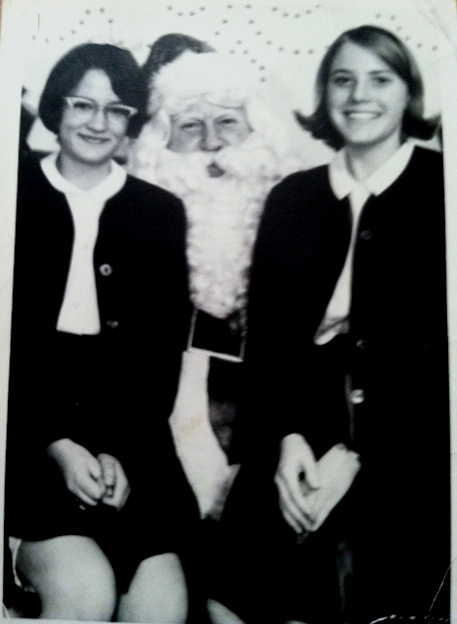
I’m on the left side of the photo

Things are settling down in my life and revving up all at once. My father finally was able to start his breathing treatments and now is more alert, has a bit more energy, and shows more interest in food, so we’re settling back into our quiet life without alarums and excursions. (Hospital excursions, that is.)

My headlong rush into life slowed this past year — I didn’t really do much to embrace life except yoga lessons for a while and walks in the desert. In an effort to revitalize my life, I promised myself to seek one hundred and one adventures, but the promise didn’t give me the push I expected because life got in the way of my embracing life. (I guess, though, as long as I am present even in the unsettling times, I am embracing life, which is an adventure in itself.)

But now I’m on track, at least for this month, with two great adventures planned. Tomorrow night or Thursday morning, depending on when she gets here, I will be meeting my best friend from high school for the first time in decades. The whirlwinds of life flung us in different directions, but now those same winds are bringing us back together. I doubt I will recognize her, but voices seem to be the last things to change, so I should at last recognize the sound of her voice. (Now that I think about it, it seems odd that we’ve only emailed sporadically this past year and never once talked on the phone, so I have an only an assumption that she still sounds the same.) After all this time, will we have anything to say to each other? Will we like each other, or will we take each other in aversion? It should be interesting to find out. (Besides . . . of course she’ll like me. What’s not to like, right?)

Then at the end of the month, I’m heading to Seattle for a gala weekend. My sister and brother-in-law are treating me to a showing of Shen Yun. 5,000 years of Chinese music and dancing, limousines, champagne, a wonderful dinner. Sounds like an adventure fit for Cinderella.

Even if rags and an out of season pumpkin are all that await me at the end of the Seattle trip, well, there is still a matter of the other 99 adventures I promised myself. I wonder what I will do next?

***

Pat Bertram is the author of the suspense novels Light Bringer, More Deaths Than One, A Spark of Heavenly Fire, and Daughter Am I. Bertram is also the author of Grief: The Great Yearning, “an exquisite book, wrenching to read, and at the same time full of profound truths.” Connect with Pat on Google+
Making End of Life Decisions

Some of the hardest decisions to make when taking care of a person who is nearing the end of life are not dire life/death decisions, such as taking him off a respirator, but simple decisions that continue to haunt you long after the person is gone.

The hardest decision I had to make when it came to the end days of my life mate/soul mate was whether to take him to the hospice care center. The nurse suggested the move to give me time to rest (he had what is called “terminal restlessness” and kept getting out of bed; considering how unsteady he was on his feet, I had to get up with him.) He wasn’t ready to go, wasn’t ready to face the ending of his life, and yet knowing the truth of the matter — that he wouldn’t be coming home again — he still agreed to go. I, on the other hand, believed the nurse when she said he would be away just a few days to give me time to rest, but still, I felt horrible about agreeing to take him. Afterward, that decision haunted me. I wished I’d let him stay home one more day, especially since I didn’t sleep anyway.

The decision I face now in taking care of my father is even less dire, but infinitely more complicated. Until about a week ago, my father still answered the phone, eager to talk to anyone who called, but now we’ve unplugged the phone in his room because he doesn’t like to be awakened.

He spends most of his time sleeping, getting up a few times a day to eat something — an egg or a bit of jello or a few canned peach slices. He is willing to talk to his children during those times, so that’s not a problem, but he doesn’t want to see anyone. He is very fragile, and so I have been honoring his wishes. However, some of my siblings want to make sure they see him one last time, and this is where the decision lies.

When is the cut-off point where his wishes become secondary and the wishes of his children come first? When it’s close to the end, I suppose, and I don’t think he’s there quite yet. Although he doesn’t eat much and has developed an aversion to most of his favorite foods, he does still have an interest in eating, which is a good sign. He’s also alert when he’s awake, so he hasn’t quite begun removing himself from life. (He has no interest in reading the newspaper anymore, but I don’t consider the newspaper “life”.)

I hope I’m doing the right thing by continuing to honor my father’s wishes, and that the decision to do so won’t come back to haunt me. I hope, if I make the wrong decision (or make a wrong assessment about how much time my father has left), my siblings will forgive me.

***

Pat Bertram is the author of the suspense novels Light Bringer, More Deaths Than One, A Spark of Heavenly Fire, and Daughter Am I. Bertram is also the author of Grief: The Great Yearning, “an exquisite book, wrenching to read, and at the same time full of profound truths.” Connect with Pat on Google+

A Sweet Tale or a Horror Story?

breadOn Valentine’s Day, a Facebook friend posted an anecdote that I can’t get out of my mind: A man made his wife toast on their anniversary, and she got upset. “For 50 years,” she said, “you have given me the end pieces and I am sick of it. I hate the end piece!” The man was stunned by her outburst and quietly responded, “But that is my favorite piece.”

Everyone who commented on the anecdote thought it was a sweet story, but all I could see was the horror of fifty years of misunderstanding. In fifty years, she never once told him she hated the end piece? Never once, when she got upset at him for some other hurt, did she bring up the matter of the toast? Never once did he bother to find out what she liked? Never once did he watch her make toast and see that she didn’t fix the end piece for herself?

This anecdote does not portray a loving relationship. She is long-suffering and uncommunicative, unable to find a way to express her wants until the frustration overwhelms her and she bursts out in anger. It’s even possible the problem isn’t the end piece at all — if the only thing he does for their anniversary is make her toast, then maybe she is upset at the lack of flowers or gifts or a meal in a nice restaurant, and mentioning the toast was simply a way of letting him know she wasn’t happy. He, on the other hand, is self-absorbed and arrogant, assuming that just because he likes something, so does she. He also seems smug in his belief that by giving her his favorite piece he is doing something loving, when in fact he is disregarding her by not considering her wishes.

Somewhere along the line, every new couple runs into such a situation, where one repeatedly does something the other doesn’t like, and so they compare notes about likes and dislikes and the expectations each has of the other. Something as simple as toast preferences should have been mentioned long before it became an emotional issue. If a couple can’t find a way around this sort of misunderstanding in the first few years of being together, then their problems run much deeper than who likes what piece of toast.

Love is seeing the truth of each other. Love is witnessing each other’s lives. Love is being present to each other. If after fifty years he did not know what she wanted, it shows how little he saw of her. If after fifty years, she did not know why he gave her the end piece, it shows how little she saw of him. It seems like a cold relationship at best.

On the other hand, loving or not, apparently they deserve each other, and maybe that’s what kept them together all those years.

This anecdote illustrates one other thing — the value of showing rather than telling. If this anecdote were developed into a scene as part of a story, it would be a great way of showing the problems of the couple’s relationship rather than simply saying that they misunderstood each other. Or it could be an example of how much he loved her, as the anecdote was meant to be. That’s the beauty of showing — the writer merely presents the story. Readers interpret it through their own experiences, deciding whether it is a horror story or a sweet tale, and hence make the story their own.

***

Pat Bertram is the author of the suspense novels Light Bringer, More Deaths Than One, A Spark of Heavenly Fire, and Daughter Am I. Bertram is also the author of Grief: The Great Yearning, “an exquisite book, wrenching to read, and at the same time full of profound truths.” Connect with Pat on Google+