What Makes a Novelist?

All it takes to be a writer is to write, and going by the proliferation of blogs on the Internet, almost all of us are writers.

Being a novelist is something completely different. You need to be a writer, certainly, but you also need to know the elements of storytelling, how writingbto create characters that come alive, how to describe a scene without losing the momentum of the story. And then you need to put it all together into a cohesive whole that engages the reader’s attention.

But most of all, you need to actually write the novel, to put your idea into words and get it down on paper or into your word processor. That takes discipline. So does rewriting the same novel perhaps a dozen times until you get it right. Because, as we all know, there are no great writers, only great rewriters.

You do all that, and then one day your novel is finished. You’re proud of yourself for having accomplished something many people only dream about, then the terrible truth comes crashing into you with all the force of a linebacker’s tackle: no one cares. Perhaps your family and friends will care, but even from them you will hear the same self-absorbed comments you get from strangers.

You know the comments I mean:

  1. I could have written a book, but . . .
  2. I always thought my life would make a good book . . .
  3. I wrote a book: My diary.
  4. I’ve written a book; it’s all up here in my head, I just have to get it down on paper.
  5. So? I’ve written a hundred books; they’re all packed away in my closet.

Taking their lack of support in stride, you send out your opus to find you’ve reached another level of indifference. On this level, you are not the only person who had the discipline, the ability, perhaps even the talent to have written a good novel; you are one of hundreds of thousands, perhaps millions. And the agents and editorial assistants who have to plow through those mountains of words don’t care; they haven’t the energy.

If you are lucky, one day your manuscript will be on the right desk at the right time, or maybe you’ll decide to forget the traditional publishers and self-publish. And then you really hit that wall of indifference because in this new world of the published, every single person has written a book.

Being published does not make you a novelist. Even the most rudimentary novels can be published nowadays so there is no special accolade to being published, no special sign that you have passed into the realm of being a novelist. Nor does becoming a success make you a novelist since some of the most execrable fiction on the market — bad writing, paper-doll characters, and scenes that hang lifelessly in the background like dusty drapes — make their authors a fortune.

So what does make a novelist? Maybe caring about the craft. Maybe caring to get it right rather than just writing something and throwing it out there in the hopes that no one will notice the lack of skill. Maybe writing the story only you can write and not setting out to be a King/Koontz/Clancy clone.

Maybe just . . . writing.

***

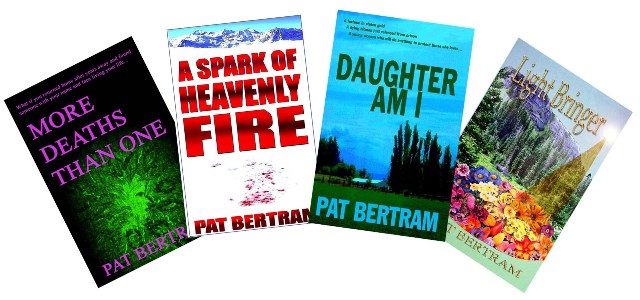
Pat Bertram is the author of the suspense novels Light Bringer, More Deaths Than One, A Spark of Heavenly Fire, and Daughter Am I. Bertram is also the author of Grief: The Great Yearning, “an exquisite book, wrenching to read, and at the same time full of profound truths.” Follow Pat on Google+. Like Pat on Facebook.

What advice would you give other novelists about book promotion?

I don’t generally give advice about book promotion since so many authors are better at selling books than I am, but if I had to, I’d tell other novelists to have patience, stamina, and willingness to give up part of their writing time for promotion. Unless a writer has the benefit of a major publisher’s publicity department, and sometimes even then, he/she will have to spend time promoting their book. It’s not enough to have a blog dedicated to self-promotion or to add thousands of friends on Facebook. You have to give people something to get something — write interesting articles, comment on articles other people write, get to know your Facebook connections. And most important of all, check out Book Marketing Floozy. http://marketingfloozy.wordpress.com It’s an indexed blog with how-to articles on every facet of promotion.

Here are some responses from other authors about advice they would give to other novelists about book promotion. The comments are taken from interviews posted at Pat Bertram Introduces . . .

From an interview with Debra Purdy Kong, Author of “The Opposite of Dark”

I’d advise writers to use patience and not expect too much right away. Promotion means engaging with others and building a rapport with potential readers. It means building a solid, longterm platform through social networking, blogging, and designing your website. It can seem daunting, but if you limit your time each day, then you won’t risk burnout. And burnout is a big factor for writers who are also actively promoting!

From an interview with Joylene Nowell Butler, Author of “Broken but not Dead”

If you’ve gone to all the trouble of writing and revising and querying, why not market? Why not spend hours blogging and visiting other blogs and establishing a connection to like-minded writers? I’m still astonished when authors tell me they don’t have time to blog and they certainly don’t have time to visit other blogs. They just want to fill your inbox with news of their book and why it’s important for you to buy it. They’re targeting the wrong people. Writers write, readers buy books. Yet how many emails do you receive in a week telling you why you should buy their book?

Promotion is about creating a presence online. But it’s also about getting out and doing readings, signing copies, writing related articles, doing online, radio and newspaper interviews, joining evening events where the opportunity to read arises. It’s about fairs, bazaars, contests, giveaways, and anything else you think will put you and your book in the public eye.

What about you? What advice would you give other novelists about book promotion?

(If you’d like me to interview you, please check out my author questionnaire http://patbertram.wordpress.com/author-questionnaire/ and follow the instruction.)

***

Pat Bertram is the author of the suspense novels Light Bringer, More Deaths Than One, A Spark of Heavenly Fire, and Daughter Am I. Bertram is also the author of Grief: The Great Yearning, “an exquisite book, wrenching to read, and at the same time full of profound truths.” Follow Pat on Google+. Like Pat on Facebook.

Progress?

Once upon a time there was a single phone company in the USA. This company was hated for many reasons, though I never quite understood why. They provided a service that was almost universal, and it was cheap. When the minimum wage was $3.25, a typical basic phone bill was about nine dollars, though mine was $3.50 because I was enrolled in a special “low volume” plan since I made few phone calls. Normally, for the basic rate, you could make unlimited local calls, your phone was provided free, and you got a phone book. Long distance rates were expensive, perhaps thirty cents a minute, but if you called at night and on weekends, that rate was lowered to about ten cents a minute. The voice at the other end was crystal clear, there was little interference if any, and only the person making the call paid.

When the phone company was broken up, people cheered (I actually saw people screaming in joy, clapping and dancing around), though the truth is, the phone company wanted to be broken up. As a monopoly, it was only allowed to provide a single service, and they phonesaw the glimmers of new technologies and possibilities on the horizon. They, being brilliant tacticians, kept the lucrative long-distance business and parceled out the money draining local service. Phone rates went up and up and up. These new companies restructured their businesses so that towns even a few miles away were considered “local long distance.” And you had to buy your own phones.

Then things got really bizarre in the phone business, and now there are untold numbers of phone providers. With cell phones, we have to put up with terrible conditions that were unheard of in the old days. We have to put up with dropped calls, spotty service, horrendous basic rates, and both the person making the call and the one receiving the call have to pay. Of course, our phones go with us everywhere, which is rather a mixed blessing.

And we get six different phone books, all published by different companies, instead of just one. And not one of those phone books is complete for some odd reason. Some businesses don’t show up in all of them, though all businesses show up in some of them.

Progress?

Yeah, I know. This isn’t my usual sort of post, but I got a call this morning from “Card Services” about my non-existent credit card, and even though I hung up right away, a minute was subtracted from my allowable minutes. It just got me thinking about how far we had come. Or not.

***

Pat Bertram is the author of the suspense novels Light Bringer, More Deaths Than One, A Spark of Heavenly Fire, and Daughter Am I. Bertram is also the author of Grief: The Great Yearning, “an exquisite book, wrenching to read, and at the same time full of profound truths.” Follow Pat on Google+. Like Pat on Facebook.

Rubicon Ranch: Secrets — The Story Continues!

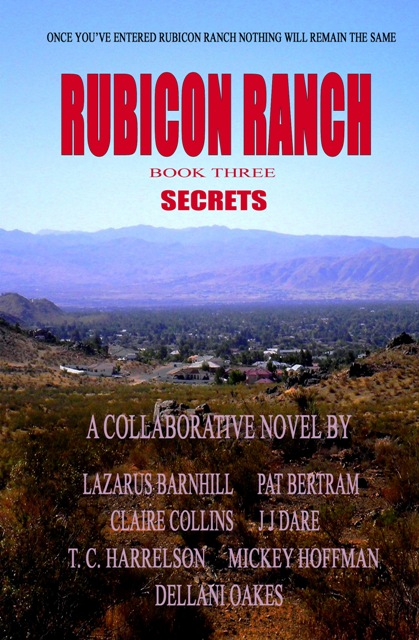
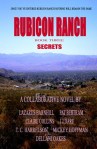
RRBookThreemidsizeRubicon Ranch is a collaborative and innovative crime series set in the fictional desert community of Rubicon Ranch and is being written online by the authors of Second Wind Publishing. The very first chapter of the very first book (Rubicon Ranch: Riley’s Story) was posted on October 24, 2010, and we are still going strong! In fact, we are getting better and better. Seven authors, including me, are involved in the current story — Rubicon Ranch: Secrets, which is shaping up to be a psychological thriller.

The  body of a local realtor is found beneath the wheels of an inflatable figure of a Santa on a motorcycle. The realtor took great delight in ferreting out secrets, and everyone in this upscale housing development is hiding something. Could she have discovered a secret someone would kill to protect? There will be suspects galore, including a psychic, a con man, a woman trying to set up an online call-girl service, and the philandering sheriff himself. Not only is the victim someone he had an affair with, but he will also have to contend with an ex-wife who has moved back in with him and a jilted lover, both with their own reasons for wanting the realtor dead.

Although some of the characters were introduced in Rubicon Ranch: Riley’s Story, the first collaboration in the series, and further developed in Rubicon Ranch: Necropieces, Rubicon Ranch: Secrets is a stand-alone novel, so don’t worry if you are new to Rubicon Ranch. A new chapter will be posted every Monday on the Rubicon Ranch blog. Normally I only write the character of Melanie Gray, but the authors who wrote the possible suspects seemed to have so much fun with their villains, that I am doing a second character, Lydia Galvin, the sheriff’s jilted lover.

We hope you will enjoy seeing the story develop as we write it. Let the mystery begin! Whodunit? No one knows, not even the writers, and we won’t know until the very end! If you don’t want to miss further chapters, please go to the blog and click on “sign me up” on the right sidebar to get notifications of new chapters.

(If the Christmas theme seems unseasonal, well . . . considering how long it takes to write a book at the rate of a chapter a week, in a few months, the season will catch up to us!)

Chapter 6: Lydia Galvin
by Pat Bertram

Sunday, December 22, 11:55pm

Lydia Galvin stood like stone behind the partially closed plantation shutters in her bay window. From this spot, she had a good view of her front yard where Nancy Garcetti’s body had been found. Lydia had remained vigilant for hours, beginning even before that Melanie person had stumbled on the scene, and she’d heard enough to know who all the players were in her own private police drama.

But now, the body had been cleared away, the crime scene technicians had packed up their evidence, the department photographer had decamped, the sheriff had come and gone. All that remained was lurid yellow crime scene tape draped around the deflating figure of Santa on a motorcycle . . . and the two deputies in charge—Lieutenant Rosario Frio and Deputy Kelvin Midget. Lydia could hear snatches of their conversation. They were comparing notes about canvassing the neighborhood, but they spoke so softly she couldn’t hear many details. And then, as if he knew she was within earshot, Deputy Midget raised his voice.

“I’ve knocked on the door several times,” he all but shouted. “Maybe nobody lives here.”

“But why would someone bother to put up decorations at an empty house?” Frio responded in a voice just as loud.

“Who knows what anyone does in this ghoulish neighborhood.”

Lydia thought she saw Midget wink at Frio, perhaps in acknowledgment that he himself now lived in Rubicon Ranch, but the wink could have been a trick of the moonlight.

Would it surprise them to know that putting up the decoration had merely been a whim? She’d found the silly figure in the garage of the rental house, and it had somehow seemed fitting considering the rebellious atmosphere of the neighborhood.

“I’m surprised Seth doesn’t do anything to clean up the area, especially since she lives here,” Frio said.

Lydia knew the “she” Frio referred to was Melanie Gray, the very woman who inadvertently brought her here. In newspaper articles, television coverage, online stories and blogs about the Rubicon Ranch murders, Melanie Gray had earned as much space as Seth himself. Only one or two photos showed the two of them together, but their images had been placed side-by-side often enough to make it seem as if they were a couple. And Melanie Gray seemed just Seth’s type—smart, remote, vulnerable, and ripe for sweet words that soothed the soul. But in the two months Lydia had been watching Melanie, hoping to catch Seth in action, the sheriff never once put in an appearance. Even the brief phone calls she’d heard on the tapped line had been strictly business.

“Do you think the people who live here are hiding from us?” Midget asked.

“It’s possible,” Frio said. “But I don’t know why. The innocent never have anything to fear.”

Lydia almost snorted, but caught herself before she made a sound. The innocent had nothing to fear from the cops? Who was Frio trying to kid? The innocent had everything to fear since they had only their innocence as protection, and innocence was tissue-paper thin.

“Maybe one of residents killed the woman,” Midget said, still playing the naïf.

“And dragged the body under the wheel of their own Christmas decoration? No one is that stupid.”

Maybe it wasn’t smart, Lydia admitted to herself, but it had almost done the trick. Melanie found the body as Lydia had hoped, but the woman left before Seth arrived. How could she have known when she arranged the tableau that Seth would be with his wife Monica—Nic—instead of rushing to the scene? He detested Nic almost as much as Lydia did. The only good thing about this situation was that Seth finally got a taste of what it felt like to suffer. And he deserved it after what he put her through.

He’d fed her and bedded her. Treated her as if she were the most special woman in the world. She’d been leery of him at first, knowing his reputation, but when he’d looked her in the eye and said with a sad little boy sigh, “I’ve been more open to you than I’ve ever been to any other woman,” she was lost. She had the feeling they’d found refuge together, he from his demanding wife and she from her abusive husband, but when she discovered the romancing had all been part of his come-on, her heart broke.

She hadn’t really expected him to leave his wife when she suggested it. She just wanted a bit of assurance that she came first, at least part of the time, but he turned on her. Called her a vituperative bitch. Whatever that meant. She’d never intended to confront Nic, but Seth must have believed she would and confessed the affair to his wife, making Lydia out to be the villain. Seth brought Nic to her house and stood there while his wife told her to be content with what she had with Seth and just let the rest go, that the affair was messing up all their lives. Her husband overheard the conversation, and later that night, he beat Lydia, smiling with every lash.

And it had all been Seth’s fault. If he had only left her alone. . . . It was bad enough getting abuse from her husband, but she couldn’t bear to be treated badly by the man who once called her the love of his life. She told their captain of the affair, insisting Seth had misused his power. Although a disciplinary action had been filed, Seth got off, of course, but both of them lost their jobs.

On their last day, she found him standing in the police department parking lot, watching the custodian paint over his name. Her heart had gone out to him. They hurt each other badly, but still, she could feel a connection.

“Can’t you understand how much I love you?” she’d said softly, tearfully.

He’d just stared at her with the icy non-caring eyes of a predatory bird and said, “I’m still licensed to carry a sidearm in California and if you come near me again I’m going to shoot you between the eyes.”

What was left of her broken heart turned to stone. And she’d been stone ever since.

She hadn’t felt anything when she left that day even though she’d lost both her last chance at love and her hard-won spot as a lieutenant in the police department. She hadn’t felt anything when she didn’t find another job while Seth, golden boy still, had landed himself a great position. She hadn’t felt anything when her husband ended up murdered, leaving her with enough money to get her through the coming empty years.

And she didn’t feel anything now when Frio and Midget marched to her entryway and banged on the front door.

“This is the sheriff’s department. Open up,” Frio shouted, sounding authoritative. If Lydia hadn’t once practiced such a voice herself, she might have been intimidated enough to answer the door. But all she did was stand and wait for Seth’s two deputies to give up and drive away.

Even if the deputies suspected that someone lived in the house, they couldn’t prove it as long as no one saw her. Only Nancy Garcetti knew she lived there. Nancy owned the house, one of the many she’d purchased at a steal because of the declining real estate market in Rubicon Ranch, and she’d rented it to Lydia for a bundle of cash and a promise of no paperwork work or records.

Now Nancy was dead.

Seth and Nic were together.

And Lydia was stone.

***

Pat Bertram is the author of the suspense novels Light Bringer, More Deaths Than One, A Spark of Heavenly Fire, and Daughter Am I. Bertram is also the author of Grief: The Great Yearning, “an exquisite book, wrenching to read, and at the same time full of profound truths.” All Bertram’s books are published by Second Wind Publishing. Connect with Pat on Google+

The Wild Heart of the Desert

I met an old friend out in the desert today. It was nice seeing the Mojave green rattlesnake again since I hadn’t seen one for a couple of years. I didn’t even notice it at first. I was walking down the middle of a sandy path, minding my own business, when a hiss and a whirring rattle startled me. I stopped, looked around, and there it was, about eight feet away, sunning itself beyond the shadows of a creosote bush.

I edged away from the rattler, and it inched away from me, back into the protection of the bush. And then I continued my walk, a smile on my face. I don’t know why such encounters make me feel good, perhaps because it’s nice to know that there is a wild heart still beating beneath the calm veneer of the desert.

I also got to rediscover the truth: I am not afraid of snakes, just healthily wary, and rightly so. The Mojave green rattlesnake will not attack, but if disturbed or cornered, they will defend themselves. Apparently, bites occur if people accidentally step on a snake or purposely harass it, so if people are careful, they can keep from being bit.

I know people who will run down snakes if they see them in the road, and sometimes they even go hunting for them on the assumption that the only good snakes are dead snakes. The only time that makes sense to me is if the snakes leave the wilds of the desert for the tames of our neighborhoods, but that doesn’t happen very often.

Nor does it happen very often that I get to see such a fearsome creature, so meeting up with it has made my day.

***

Pat Bertram is the author of the suspense novels Light Bringer, More Deaths Than One, A Spark of Heavenly Fire, and Daughter Am I. Bertram is also the author of Grief: The Great Yearning, “an exquisite book, wrenching to read, and at the same time full of profound truths.” Follow Pat on Google+. Like Pat on Facebook.

The Truth About Writing

I happened upon an article yesterday by an author who claimed he wanted to tell the truth about writing. He says that although most writers talk about the fun of creating characters and devising diabolical schemes to get those characters in trouble, these authors don’t tell the other side of the story — that writing is work, and seldom fun. He talked about delving deep into his psyche to show his fears, and he talked about the sacrifices that writers need to make, most notably, taking time away from their families so they can write.

This disclosure didn’t sit well with me. If writing isn’t fun, why do it? There are millions of books published every year, thousands every day. Believe me, yours will not be missed. Perhaps you are one of the very small percentage of writers who actually make a living by writing, in which case, you shoGoose familyuld set aside regular work hours so that you have time for your families. But if you don’t have a contract to fulfill (either with your publisher, your landlord, or your mortgage holder), and you aren’t having fun, and you are having to sacrifice family time, what’s the point?

Those of us who have lost someone vital in our lives know a deeper truth — that time spent with loved ones is the only time there is. Well, maybe not the only time, but it’s not worth sacrificing that all-too-brief time for something as silly and self-indulgent as writing.

And yes, writing is silly and self-indulgent, and only important in a make-believe world such as ours where food does not have to be gathered or hunted in the wilds, and the only predators are other humans.

I can see you bristling and can see the words coming out of your mouths like cartoon dialogue bubbles: “But I’m compelled to write.” “Life is not worth living if I don’t write.” “I need that time for me.” “I write to explore my mind.” “I write to make sense of life.” I understand all that, because I too write to explore my inner world and to make sense of life, but I also put life first, otherwise there would be no life to make sense of. But I don’t suffer for my craft, and I do not make sacrifices. For example, as self-indulgent post as this post might be, I am not sacrificing anything. My life mate is dead, and my 96-year-old father (my current responsibility) is taking a nap. And I’m having fun with this little rant.

Parents, mates, children die. At the very least, children grow up, and while you are suffering for your writing, they are suffering for your attention. Of course you have dreams of being a great writer, or at least being a selling writer, but if you’re sacrificing family to attain that dream, then you are sacrificing the one thing you can never get back — those precious moments of being connected to another human being, those moments that give meaning to your life and your writing. And that’s the truth.

***

Pat Bertram is the author of the suspense novels Light Bringer, More Deaths Than One, A Spark of Heavenly Fire, and Daughter Am I. Bertram is also the author of Grief: The Great Yearning, “an exquisite book, wrenching to read, and at the same time full of profound truths.” Follow Pat on Google+. Like Pat on Facebook.

A New Permutation Of Grief?

The months keep passing. Thirty-seven of them have come and gone since the death of my life mate/soul mate.

I never imagined I would continue to be so affected by his absence after all this time. And back at the beginning of this bereft life, I never imagined I would survive to this point. The pain and shock of new grief was so vast that it took my breath away. (Grammar Check has underlined that phrase “took my breath away” as being trite. They want me to change it to “astounded me.” Yes, the pain astounded me, but the truth is, it literally took my breath away. I remember gasping for air, unable to suck enough oxygen into my lungs to make them inflate.)

Even now, all these months later, the thought that he is dead still has the power to steal my breath.

I am doing as well as anyone who has lost the one person who connected them to the world, and perhaps a bit better — or worse — than some in my “grief age group.” (Though this is not a contest. We have all lost, and we keep on losing every day they are Low tidegone.) I can get through the days, sometimes quite peacefully. I am lonely, of course, and even more than that, I am lonesome for him, but still, I do okay. I keep busy, both online and off, and I am getting used to his absence. Sort of.

But . . . when I remember the reason that he is absent — that he is dead, gone from this earth, forever beyond the reach of my arms — I again forget how to breathe. I gasp for air that somehow doesn’t make it beyond the tears that are blocking my throat.

Tears always seem to be pooling deep inside, even when I am at my most content, and they spill over at the least provocation. I find myself crying at losses (my own and other people’s, especially if they have lost a soul mate). I cry at changes, including change of season. (I’m not crying because the seasons changed, of course, but seasonal changes create corresponding hormonal changes in the body, and those changes bring on the tears.)

And I cry at movies. I’ve been going through my mate’s movie collection, and it’s rare for me to get through an entire movie without tears. I cry when a character leaves, because it reminds me that he left. I cry when a character returns because it reminds me that he never will come back. I cry at the moments we used to turn to each other and smile in shared enjoyment. The last time I watched these movies, I watched them with him, and sometimes I weep when the movie is over, no matter what the ending, because never again will I watch it with him.

This oversensitivity and tears might be a new permutation of grief (others who have lost their mates around the same time I did are also dealing with this same tendency to weepiness). Or it could be that my grief has changed me in some fundamental way, and now tears are a way of life.

Whatever the reason, this hypersensitivity is just something else to deal with as the months — and years — of this grief journey slip by.

***

Pat Bertram is the author of the suspense novels Light Bringer, More Deaths Than One, A Spark of Heavenly Fire, and Daughter Am I. Bertram is also the author of Grief: The Great Yearning, “an exquisite book, wrenching to read, and at the same time full of profound truths.” Follow Pat on Google+. Like Pat on Facebook.

How do you juggle the promotional aspects with the actual writing?

RRBookThree SecretsI haven’t been juggling the promotional aspects with the actual writing. I’ve been concentrating mainly on promotion. I have a one-track mind, and for now I am focused on figuring out how to get my books to really take off. I don’t see why millions of people can’t enjoy my books (though so far, they don’t seem to agree). What writing I do falls under the category of promotion, such as blogging and keeping up with my chapters in Rubicon Ranch, the mystery serialization that several of us Second Wind authors are collaborating to write online. You can find the ongoing story here: Rubicon Ranch.

Here are some responses from other authors about how they juggle promotion and writing. The comments are taken from interviews posted at Pat Bertram Introduces . . .

From an interview with P.I. Barrington, Author of Isadora DayStar

Promoting and writing? That’s the REAL trick of publishing today. Writing takes time, but for me at least, promotion is constant and at times overwhelming!

From an interview with Beth Groundwater, Author of “A Real Basket Case”

Promotion is something that is ongoing, and which ramps up around the time of each release (every spring and fall for the next two years, at least). I try to focus on the writing and editing I need to get done each week first, then work on promotion later in the day or later in the week after I’ve finished the writing I need to do to meet my deadlines. I have to be very organized and give myself weekly goals to stay on track..

From an interview with Dale Cozort, Author of “Exchange

I tend to do marketing in blocks of time rather than trying to do it at the same time as writing. I have writing days, editing days and marketing days. That fits my somewhat obsessive personality. I’m not sure if it’s the most effective way to get things done.

From an interview with Christine Lindsay, Author of Shadowed in Silk

The marketing and promotional aspects are awful. I love talking to people and making friends, but it’s not easy to always be talking about myself. The phrase “I must decrease in order for Him (the Lord) to increase”  is running through my head quite a bit these days as I try to do my part in the marketing of my novel. It’s not just me that it affects, so I must do my part. But I hope I never sound pushy, but that I encourage someone in everything I say or write.

What about you? How do you juggle the promotional aspects with the actual writing?

(If you’d like me to interview you, please check out my author questionnaire http://patbertram.wordpress.com/author-questionnaire/ and follow the instruction.)

***

Pat Bertram is the author of the suspense novels Light Bringer, More Deaths Than One, A Spark of Heavenly Fire, and Daughter Am I. Bertram is also the author of Grief: The Great Yearning, “an exquisite book, wrenching to read, and at the same time full of profound truths.” Follow Pat on Google+. Like Pat on Facebook.

What advice you would give to an aspiring author?

My advice to aspiring authors varies depending on how cynical I am about the book business on a given day.

When I’m philosophical, I tell aspiring writers:

A book begins with a single word. Many novice writers get intimidated by the thought of writing an entire book, but all you ever need to write is one word. I know that’s not much of a goal, but in the end, it is the only goal. That’s how every book all through the ages got written — one word at a time. By stringing single words together, you get sentences, then paragraphs, pages, chapters, an entire book.

When I want to be encouraging, I tell aspiring writers:

Write your book. Rewrite it. Edit it Re edit it. Study the publishing business. Learn everything you can about good prose, story elements, promotion. With so many millions of people out there who have written a book or who want to write a book, the competition is fierce. A writer does not attain maturity as a writer until he or she has written 1,000,000 words. (I’m only halfway there.) So write. Your next book might be the one that captures people’s imaginations and catapults you into fame and fortune. Not writing another book guarantees you will never will reach that goal. It also keeps you from doing what you were meant to do.

When I’m cynical, I tell aspiring writers:

If you aspire to be a writer, write. That’s all it takes.

If you aspire to be a good writer, write — and read. Read how-to books about writing and read good books to absorb good writing.

If you aspire to be a bestselling writer, write, read — and gather luck. Less than 1% of 1% of writers ever attain that status.

Here are some responses from other authors about advice they give to aspiring writers. The comments are taken from interviews posted at Pat Bertram Introduces . . .

From an interview with Polly Iyer, Author of “Hooked”:

You’ve heard it before. Keep at it. Period.

From an interview with Sandy Nathan, Author of Tecolote: The Little Horse That Could

You’ll make more money as a brain surgeon.

From an interview with S. M. Senden, author of “Clara’s Wish”

Write from a place of knowing. Bring your experiences to what you write; be willing to invest a piece of yourself in your writing so it will be real to the reader.

From an interview with Tom Rizzo, Author of “Last Stand At Bitter Creek”

Read—not only for enjoyment. Treat your reading as a study lab, taking note of how the writer lures you into the story, how characters are introduced, and what makes you like or despise them. Reading soaks the brain with ideas and possibilities. And write, of course. Don’t wait for inspiration. Just write.

What about you? What advice would you give to aspiring writers?

(If you’d like me to interview you, please check out my author questionnaire http://patbertram.wordpress.com/author-questionnaire/ and follow the instruction.)

***

Pat Bertram is the author of the suspense novels Light Bringer, More Deaths Than One, A Spark of Heavenly Fire, and Daughter Am I. Bertram is also the author of Grief: The Great Yearning, “an exquisite book, wrenching to read, and at the same time full of profound truths.” Follow Pat on Google+. Like Pat on Facebook.

How Long Does it Take to Edit a Novel?

If you have an editor, the editor pretty much decides how long it takes to edit a novel, but if you’re self-editing, it takes as long as it takes for you to get it right, But more than that, it depends on what you’re editing for. Are you editing it for content, to make sure that every scene, every character, every bit of dialogue is the ablsolute best you can do? Are you editing for story flow? Or are you simply copyediting to remove typos? Each of my books took a year to write, then I set it aside for several months. When I went back to the book, I could read it as if I hadn’t written it and so could find many areas where the story bogged down. Then I re-edited it again in another few months, and then another few months later, and ended up spending as much time editing as writing. This was especially true of my first novel, More Deaths Than One because I had to learn to write as I went along. Each deskediting session was more of a rewrite session — the published novel is completely different from the first draft, and yet it’s exactly what I was aiming for. In the end, it took about four years from first draft to finished manuscript. (In the interim periods, I wrote other books, so More Deaths Than One was the first novel I wrote, also the third, fifth, and seventh.)

I start out editing my books for content and flow, making sure that every scene, every character, every bit of dialog is the best I can do, and that every word, paragraph, chapter flows seamlessy one into the other without taking the reader out of the story, then I edit for individual words. Each of us has pet words and phrases, and the overuse of these constructions echo in readers ears, so I search for such duplication, and rewrite the appropriate passages. I also look for wishy-washy words and qualifiers that take the authority from my writing such as “I guess,” “a little,” “quite.” (In case you’re interested, here is the list of words I seek and destroy: Self-Editing — The List From Hell.) I do one final copy-editing session, then send the book to my editor, and finally my publisher.

The problem with most books on the market is that people rush to publish without giving themselves time to let the book rest before editing it with fresh eyes. Of course, this is a different market from the one I was writing for. Even as early as ten or twelve years ago, there were only a certain number of books on the market, and each had to be as good as possible to compete with the demands of the profession. Things have changed radically since then. With millions of people self-publishing, the key is quantity, not quality. Many authors publish three to four books a year just to keep their names fresh, and in such a disposable book world, editing is the first casualty.

I was appalled the first time I heard that someone had spent a week or so polishing the book they wrote during November’s National Novel Writing Month — how can anything written so fast have any depth? Such writers do find massive followings, though, so perhaps my way of “thinking” my books into reality (I spend way more time thinking about what to write than I do writing) is more out of step with today’s book world than those who simply dash off a book, do a slapdash job of editing, and then foist it on the reading public.

So, in the end, how long it takes to edit a novel depends on what you are looking for — quantity or quality. And before you start arguing that you can have both — the truth is you can’t have both unless you have a good editor on call who will do the editing for you. Writing is like driving. Everyone thinks they are a good driver, but all the bad drivers on the road show that a lot of those “good drivers” are mistaken.

***

Pat Bertram is the author of the suspense novels Light Bringer, More Deaths Than One, A Spark of Heavenly Fire, and Daughter Am I. Bertram is also the author of Grief: The Great Yearning, “an exquisite book, wrenching to read, and at the same time full of profound truths.” Connect with Pat on Google+