Where My Books Originated

Last night, while working on an online interview to be posted in a few weeks on a book interview site, I had an interesting epiphany. (Interesting to me, anyway.) I’ve written one non-fiction book about grief and four suspense novels, which at first glance are all completely different from one another. I did know the four novels had similar themes, but since the grief book was a personal account of my first year of grief rather than an imaginative story, I didn’t think it had anything in common with my fiction, but it does.

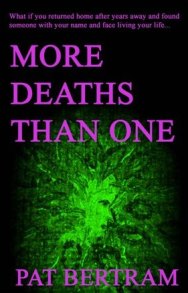
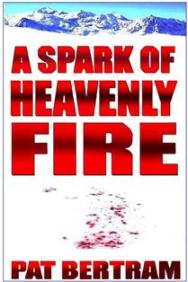
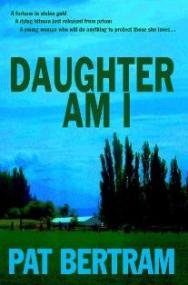
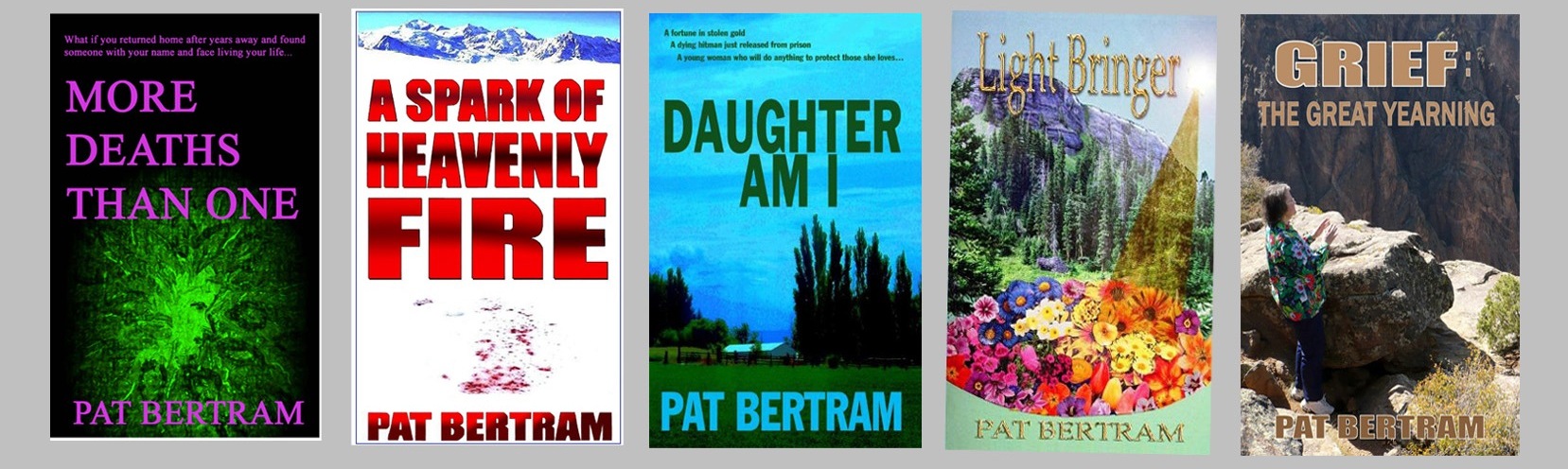
The unifying theme in all of my books is the perennial question: Who are we? More Deaths Than One suggests we are our memories. A Spark of Heavenly suggests we are the sum total of our experiences and choices. Daughter Am I suggests we are our heritage. Light Bringer suggests we are otherworldly. And Grief: The Great Yearning suggests we are what we love.
Untitled-1b

I’m also a bit of an iconoclast, and my books reflect that character.

Both More Deaths Than One and A Spark of Heavenly Fire debunk much of what we know about our shared past, especially when it comes to government control and human experimentation. (We have entrusted our lives to men and women who have not only not protected us from willful harm but instead have sold us out for . . . quite frankly, I’m still not sure what they sold us out for. Cash, in some cases, I’m sure. Power and political position, probably. The good of the whole at the expense of the few, possibly.)

Daughter Am I debunks some of the gangster myths that have been propagated by Hollywood.

Light Bringer debunks UFO myths, while at the same time postulates a greater UFO mystery.

And Grief: The Great Yearning debunks many of the myths about grief we have come to accept as truth.

The grief stages that Kübler-Ross proposed often don’t hold true for someone who has suffered a grievous loss, such as a child or a soul mate. In fact, those stages represented what she observed in terminal patients grieving for themselves and their own life. The final stage is acceptance, and acceptance of one’s own death is completely different from acceptance of another’s. I can learn to live without my soul mate and even accept it. I can admit that death relieved him of his suffering, but it is not my place to accept his death, since acceptance carries a connotation of it being okay, and I will never believe that it is okay for him to be dead. (For articles about the real stages of grief, see: The Mythic Stages of Grief, Grief and Lingering Feelings of Resentment, and Why “Grief: The Great Yearning” is Important.)

I suppose it makes sense that the same themes appear in all my books, no matter what the subject matter is since they all originated in the same place: a questioning mind that has often pondered the questions: Who are we? and What is life all about?

***

Pat Bertram is the author of the suspense novels Light Bringer, More Deaths Than One, A Spark of Heavenly Fire, and Daughter Am I. Bertram is also the author of Grief: The Great Yearning, “an exquisite book, wrenching to read, and at the same time full of profound truths.” All Bertram’s books are published by Second Wind Publishing. Connect with Pat on Google+

Taking a Leap Into the Impossible

leapOnce you make the mental leap from where you are today to where you want to be, then suddenly, the impossible seems possible.
Several times when things in my life became untenable, I considered getting rid of everything and just living day by day, but there have always been obstacles, some quite out of my control, such as taking care of someone who is ill or dying, and some only in my mind and personality. I’m basically a creature of habit, and when I move somewhere I tend to stay where I end up even if I hate the place. (Staying is not always about habit; sometimes staying is about not being able to find a better place or not being able to face the upheaval, expense, and aggravation of a move if you do find a place.)

Ever since the death of my life mate/soul mate, I’ve been afraid habit will trap me in a life of loneliness and stagnation, and I simply cannot bear for that to be true.

In various blog posts, I’ve tried to figure out what to do next, and I’ve often talked about settling somewhere and then taking trips. But the other day it occurred to me that I don’t have to settle anywhere. I can simply store my stuff and live on the road. (Figuratively speaking, that is. I wouldn’t actually live on the road. That’s a sure way of ending up as road kill.) The beauty of such a plan is that I could stay as long as I want in one place and then move on with relative ease.

At first this idea was just another cerebral meandering, but now it has taken hold. I’ve made the mental leap into such a lifestyle, and suddenly it seems possible.

I’ve been considering the logistics of what I’d need to bring for six months to a year of travel, including emergency supplies and of course boxes of my published books, and I’ve come to see that such a trip is doable. (Financing it might be a problem, but that’s the “wits” part of being a “wanderer, living by wits and whim”.) These past three years of taking care of my father, when most of my stuff has been in storage anyway, has shown me what I use and what I don’t. And I don’t use many things at all.

Moving from place to place could be a mental adjustment, leaving me feeling as if I were dangling in space, unconnected to the world (not an unfamiliar sensation since my mate’s death gave me that same feeling), but this would be one time where habit would be a good thing. I could continue my morning routine of floor exercises and weights, (luckily I’ve just been using dumbbells because carting around my barbells and weight bench would be a bit much), a long walk, and a protein drink for breakfast. This routine would help me feel “normal.” I could also bring a few small items that had no value other than that they would connect me from place to place, such as a photo of my deceased life mate or a silly figurine or my dictionary and thesauruses — something to make the place feel familiar. And then, of course, I’d have my computer. I’ve looked at this same screen for seven years now, and many friends lie beyond the images I see. To a certain extent, my life on the road would be the same as it is now, but there would still be plenty differences to savor.

I don’t know if I would ever be able to make the leap if I were mired somewhere, but in the not too distant future, my life will be turned upside down once more, and I will be forced to make a choice. And I will take the leap.

***

Pat Bertram is the author of the suspense novels Light Bringer, More Deaths Than One, A Spark of Heavenly Fire, and Daughter Am I. Bertram is also the author of Grief: The Great Yearning, “an exquisite book, wrenching to read, and at the same time full of profound truths.” Connect with Pat on Google+

Pick a Shamrock and See What Ebook You Won!

Pick a shamrock and win a free ebook from Second Wind Publishing! Each number represents a Second Wind novel — even numbers for romance and chick lit; odd numbers for mystery, mainstream, and adventure. So, do you feel lucky? Go the the Second Wind blog (just click on the photo) and follow the directions. You won’t win a pot of gold, of course, but you will get a coupon for a free ebook in the format of your choice. Who knows, you might even win one of my books! (Hint: mine would be an odd number.)

shamrocksbb copy

Best of luck to you!

Offer ends March 24, 2013.

Finding My Place in the Publishing World

UntitledpI’ve been reading promotional materials (again!) looking for ways to increase book sales, and one of the articles, in a rehash of the idea of positive thinking, said that if you’re not satisfied with the way your writing career is going, don’t ever let it be known but speak and act as if you were a bestselling author.

In other words, don’t ever let people know the truth, and that goes against the spirit of this blog. I suppose it isn’t smart of me to talk about my struggles to find my place in the publishing world because it probably does show me in a negative light. In fact, one friend emailed me and said, “If you want to stop writing and pity yourself because you think you are a failed author, go ahead. That’s your choice.”

Regardless of how I come across, I am not negative or pessimistic. I have every intention of making my living as a writer, and if I thought claiming I were a bestselling author would get me there, I’d do it. Or maybe not. There are so many authors out there claiming to be more than they are that the world doesn’t need another one.

Despite the contention of my friend, I do not consider myself a failed author. In fact, I am a successful author. I’ve written five books that I’m proud of and that many people love. I just haven’t been able to turn them into financial successes yet.

I see myself on a writer’s journey, though I admit I’m going through a crisis of faith, struggling to find reasons to write. (I’m also struggling to find reasons to live, but that doesn’t make me a failed human being.) For some writers, writing is their reason for living, but although that isn’t my reason for living (I am not compelled to write; it’s something I choose to do), I have a hunch that my reason for living is tied up somehow with my reason for writing. (Writing fiction, that is. I do write every day for this blog, partly for the discipline of it and partly to help me figure out my place in the world, the world of grief, and the publishing world.)

I began writing fiction more than a decade ago as a means of bringing my dying life mate/soul mate in close. Someone who is dying drifts away until finally he begins to disconnect himself totally from life, and I couldn’t bear to let the disconnect from me happen sooner than it needed to. For several years, until he drifted too far away, I wrote at night, then read the passages to him in the morning, and he’d let me know if I nailed the scene, usually with a small, impish smile. If I didn’t get a passage quite right, I didn’t get a smile, but I got help figuring out where I went wrong.

That’s why I used to write — to see his smile. And that’s why writing has become such an angst-ridden subject for me. My reason for writing died when he did.

A friend (the same friend mentioned above now that I think of it) once sent me a snippet of a poem:

A voice calls, “Write, write!”
I say, “For whom shall I write.”
And the voice replies,
“For the dead whom thou didst love.”

—John Berryman

Maybe someday writing for the dead whom I didst love will be reason enough to write, but for now, I’m still searching for my place in the world and the publishing world. And if the search — or my angst — comes across as negative, so be it. Besides, when I start acting as if I am a bestselling writer, I want it to be for real.

***

Pat Bertram is the author of the suspense novels Light Bringer, More Deaths Than One, A Spark of Heavenly Fire, and Daughter Am I. Bertram is also the author of Grief: The Great Yearning, “an exquisite book, wrenching to read, and at the same time full of profound truths.” Connect with Pat on Google+

What Is Luck?

luckI mentioned to a non-author friend my idea that book promotion is what we authors do until luck finds us, and she asked, “What is luck?” That brought me up short because I had no answer to her question. It seemed self-evident to me — luck is luck. But what is luck really? So I went searching for an answer.

Merriam-Webster says that luck means 1a) a force that brings good fortune or adversity; 1b) the events or circumstances that operate for or against an individual; 2) favoring chance.

The Free Dictionary says that luck means the chance happening of fortunate or adverse events; 2) good fortune or prosperity; success; 3: One’s personal fate or lot:

Wikipedia says that luck means fortune (whether bad or good), which occurs beyond one’s control, without regard to one’s will, intention, or desired result.

Google says that luck means success or failure apparently brought by chance rather than through one’s own actions.

Some people believe in luck as a separate entity or force that they can control by using various lucky charms. (Supposedly, Michael Jordan spent his entire NBA career wearing his old University of North Carolina shorts under his team shorts for good luck. Various politicians, including the current president, carry an array of objects in their pockets for luck.) To these people, luck is faith. They believe that the talisman will help make things go a bit better for them than circumstances might dictate.

My friend suggested that there is no such thing as luck, that what happens is the result of choices we make. And perhaps that is true, or at least partly true. You cannot win the lottery if you do not choose to buy a ticket, but winning the lottery is a matter of chance as far as I know.

Most of us believe that luck is being in the right place at the right time, but perhaps such a confluence is not so much a matter of luck as a matter of choices — ours and everyone else’s — a cascade of decisions and events that brings us to that particular place in time. Since we have no control over all those choices and events, we call the outcome luck. Perhaps if we were privy to the algorithms that control the universe, we would see that on a cosmic level, such fortuitous happenings as being in the right place at the right time are not chance at all. But on a personal level, since they are beyond our control, we call them luck.

Some people don’t believe in luck at all. They say it doesn’t exist. That, as in my example of being in the right place at the right time, “lucky events” are only those that exist beyond our ability to predict. This idea skirts close to determinism, which according to Wikipedia is “a metaphysical philosophical position stating that for everything that happens there are conditions such that, given those conditions, nothing else could happen.” There is no luck then, just something that has been ordained by circumstances. Of course, if any one of those circumstances had not come about, then the outcome would have been different, and that sounds a lot like luck to me.

So, does any of this change my idea that promotion is what we authors do until luck finds us? Not really. So much of the book business, and especially what will strike a chord with the reading public is beyond anyone’s ability to predict. (If the major publishers were better at it, they wouldn’t be in the financial mess they are, paying high advances to authors whose books don’t warrant the cash outlay.) Some writers follow trends and manage to write books that make it big, such as the myriad vampire books that followed on Twilight’s coattails and Fifty Shades of Gray, which stemmed originally from the Twilight series. But what about Twilight itself? Was it luck that the book appeared when people were receptive to such a thing? Perhaps it wasn’t vampires that people were fascinated with but the bondage issue, which could be why so many vampire writers who expected to make it big didn’t. They missed the broader picture.

Those of us who write the books only we could write rather than trying to write books to fit trends or to fit what a reading pubic might like are more subject to the whims of chance and circumstance, especially if those books don’t fit into a prescribed genre. (I was appalled to read where one reviewer downrated a well-written book she loved only because it didn’t follow many genre conventions.)

If we struggling authors had been different, if we had had a different outlook on life, if the books we chose to write hadn’t been so dear to our hearts, if we’d been more outgoing or aggressive or innovative when it came to promotion . . if, if, if. All those ifs help create the circumstances of our books, and since most of those circumstances and characteristics are beyond our control (we can only be who we are after all), we are dependent on luck for our eventual success.

We will continue promoting until luck finds us. Perhaps by doing so, we will change our circumstances and so have no need of luck. But of course, luck itself could bring about that change in circumstance.

***

Pat Bertram is the author of the suspense novels Light Bringer, More Deaths Than One, A Spark of Heavenly Fire, and Daughter Am I. Bertram is also the author of Grief: The Great Yearning, “an exquisite book, wrenching to read, and at the same time full of profound truths.” Connect with Pat on Google+

My Favorite of the Books I Have Written

A friend asked me if I had a favorite of the books I have written. The truth is, each is a favorite in it’s own way.

More Deaths Than OneMore Deaths Than One is my favorite because of all the rewrites. I rewrote it four different times, each time making it better, and so I learned to rewrite and to edit. I also liked the ironies that showed up in the book.

Click here to read the first chapter: More Deaths Than One

***

A Spark of Heavenly FireA Spark of Heavenly Fire is my favorite, because halfway through I realized I’d learned how to write, and because it is a solid, classic story of life and love in impossible times.

Click here to read the first chapter of: A Spark of Heavenly Fire

***

DAIDaughter Am I is my favorite because of the fun we (my mate and I) had coming up with the great characters, and because it was the fulfillment of a desire to write a “hero’s journey” story.

Click here to read the first chapter of: Daughter Am I

***

Light Bringer is my favorite because it’s the culmination of a lifetime of research, combining modern and ancient myths into a plausible whole, and because some of the descriptions were stunningly beautiful.

Click here to read the first chapter of: Light Bringer

***

Grief: The Great Yearning is my favorite because writing it helped me get through the worst year of my life, and because unwittingly, it turned out to be the story I always wanted to write, the story of a love that transcended time and physical bonds, told with wisdom and sensitivity.

***

Pat Bertram is the author of the suspense novels Light Bringer, More Deaths Than One, A Spark of Heavenly Fire, and Daughter Am I. Bertram is also the author of Grief: The Great Yearning, “an exquisite book, wrenching to read, and at the same time full of profound truths.” Connect with Pat on Google+

Is Blogging Dead? Do You Care?

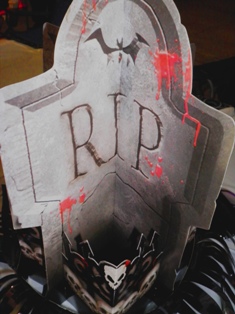
RIPLately I’ve been seeing a lot of articles that talk about blogging being dead. These are blog articles, mind you, which seems to prove the point that blogging is not dead. I don’t even know what that means: “blogging is dead.” I have a hunch it refers to long form blogging, since Twittering and Facebook status updating are short form blogging, and posting photos or videos is visual blogging. Maintaining a web log is all about making a presence on the internet, keeping a record of one’s progress or ideas or everyday life. The form the log takes is constantly changing, but the need people have to tell the world “I am here and I matter” will always find a voice.

People do seem to be losing interest in reading long form blogs. Supposedly they don’t have the attention span it takes to read five hundred or so words. Supposedly they prefer snippets of information they can scan, photos they can glance at, videos they can watch, especially if those posts are funny. The sort of thing that goes viral is not a lengthy dissertation on why blogging is dead but a short video of cats trying to figure out the meaning of a treadmill, or a humorous caption on a photo of a singing dog.

Me? I have no interest in such things. I don’t like videos — it’s much easier for me to scan an article to pick out the salient points than to watch one or two people discussing something for five minutes only to find the relevant issue buried in bantering, small talk, or hype. I don’t particularly like photos, either, partly because I am verbally rather than visually oriented, and partly because . . . (dare I admit it?) . . . I have no interest in sappy pet photos or photos of people I don’t know doing things I don’t care about.

Perhaps the sky-is-falling attitude about blogging stems from the way mobile devices are changing how people connect with others and the internet. It’s easier on a phone to send in a tweet or a comment on a Facebook status than to write a blog or even to leave a comment on a blog. (Or so people say. The only web-related activity I do on my phone is checking my email, and I want to get out of the habit of doing that.)

I started blogging as a way of promoting my books, and even after I found out how little effect blogging has on my sales, I continued. For me, blogging is a discipline, a way of writing when I don’t have the focus to write a novel, a means of helping me think. It’s possible I’d get more views if I posted silly photos, but views are not all I want. I tend to be a thinker (or maybe “brooder” would be a better description) with a need to talk about the important issues of life and death and finding a place in the world, a need to connect with people on a deeper, truer, and more fundamental way than the simple exchanges that usually take place online. And often, I do find that here in my own corner of the blogosphere.

So, is blogging dead? I don’t know, and I don’t particularly care (as long as WordPress is around, that is. If WordPress becomes defunct, then blogging really would be dead). What’s important to me is that this blog is very much alive, that it continues to satisfy my need for expression, and that sometimes people respond to what I have to say.

***

Pat Bertram is the author of the suspense novels Light Bringer, More Deaths Than One, A Spark of Heavenly Fire, and Daughter Am I. Bertram is also the author of Grief: The Great Yearning, “an exquisite book, wrenching to read, and at the same time full of profound truths.” Connect with Pat on Google+

My Wish List

Wish lists, such as things you want to accomplish before you turn thirty (or forty or fifty) or things you want to do before you kick the bucket (I finally figured out that’s what a bucket list is!!), seem to be perennial favorites as blog topics, so I though I’d share my list:

1.

Yep that’s it. A total blank. Looking back, there are only two things that were ever on my mental list of things I wanted to do with my life when I grew up: read and write. For most of my life, I indulged my habit of reading rather than doing something that might have been more lucrative, such as striving for a high-powered career. I also tried to write a novel when I was young and it was one of the regrets and sadnesses of my life to discover that I had no talent for fiction, yet eventually, I did become an author. (Proof that you don’t need an innate talent for writing but can learn how to tell a story in a compelling way, which in itself is sort of a talent.)

There are things that I would have added to a life list if I had been aware that I would experience them. I would have wanted to be deeply connected to another human being, to have the privilege of being there at the end of his life, though I had never aspired to doing either of those before they happened. I would have chosen to experience for a brief time such disparate places as a mesa in the high plains of Colorado, the edge of the north woods of Wisconsin, the high desert of California, but again, those are not things I would ever have added to any list since I’m not easily uprooted. I would have also wanted to reconnect with my best friend from high school, and now I’ve done that. (The visit was wonderful, by the way, and wonderfully strange considering all the years that have passed since I last saw her.) Besides, now that I’ve done these things, I would have crossed them off any list anyway, and the list would still be blank.

A couple of times I tried to do the creativity stimulation exercises in Julia Cameron’s The Artist’s Way, and I generally stuck with the morning pages (three pages every morning to write whatever came to mind) and the artist’s date (a weekly date with yourself) but always, when I got to the part about making lists, the excercises screamed to a halt. There are various exercises in the book involving lists: What would I try if it weren’t too crazy? What would I do if it weren’t too selfish? What five things would I never personally do that sound like fun? What do I wish for?

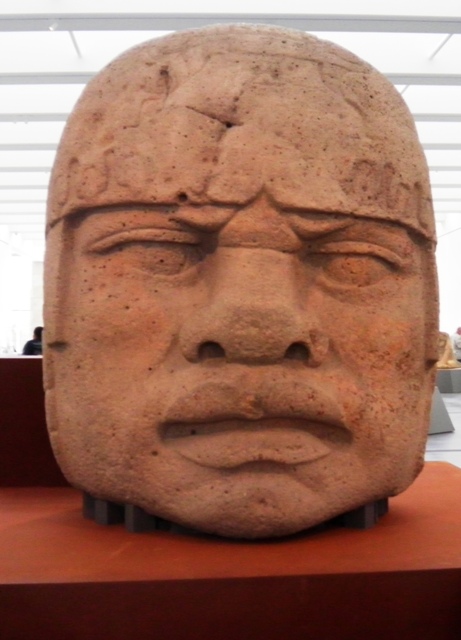
I’d like to be able to make a living with my books, of course, but other than that, no wish comes to mind. I’ve never had any desire to go to Paris or London, never had any desire to travel to exotic locales to see ancient ruins, though I wouldn’t mind seeing such places if I could figure out a way of simply being there without having to make the long trip. I did have a desire to see the Olmec heads, and one came visiting at a museum nearby, so I satisfied that desire.

I’m not sure it’s possible for me to become a wisher. I used to want things, of course, but too often I didn’t get what I wanted, so I learned not to want. I know it’s important for a character to want something — it’s what makes them compelling. But is it important for us to want things? Or is it better for us to be more zen in our approach, to accept what comes our way? This is where I am now, stuck somewhere in the middle of those two questions.

Maybe this could be my list?

1. Find something to wish for.
2. Wish for it.

***

Pat Bertram is the author of the suspense novels Light Bringer, More Deaths Than One, A Spark of Heavenly Fire, and Daughter Am I. Bertram is also the author of Grief: The Great Yearning, “an exquisite book, wrenching to read, and at the same time full of profound truths.” Connect with Pat on Google+

For Now . . . Just Write.

writingbIn an online writing discussion, one writer said that the first nine chapters of her book went through a readers review and most of the readers agreed that the first paragraphs really grabbed their interest, but then her editor suggested placing the opening sequence later in the book to make the beginning more appealing to guys. The writer wanted to know if she should follow the editor’s advice, or go with the original beginning.
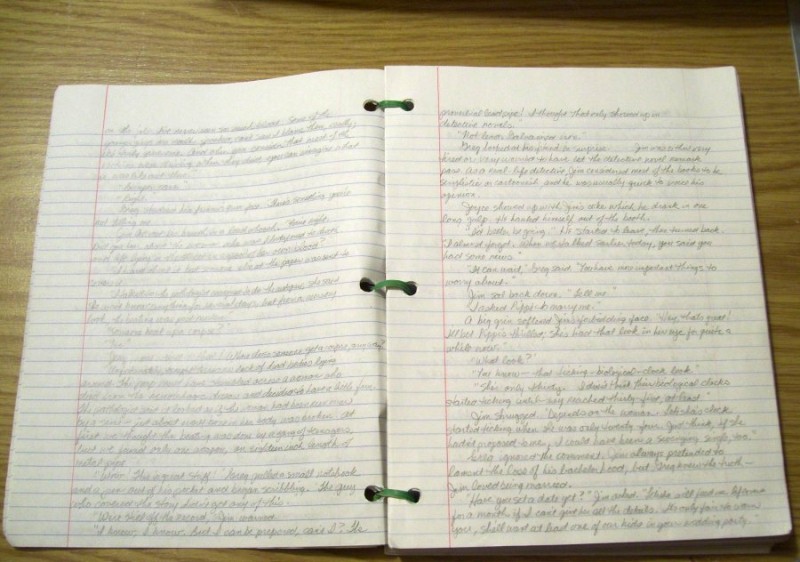

To be honest, the question confused me. Why would a writer have an editor if the writer didn’t want to follow the editor’s suggestions? And who are the readers? (And what the heck is a readers review? Do I need one, and if so, where do I get one?) What stake did this “readers review” have in the book? If the readers were family and friends, then it doesn’t make any difference what they say. And, if the readers only read the original beginning and did not have the editor’s suggested revised beginning to compare, it seems to me that the readers’ opinions don’t really account for much.

Even more confusing, why is the writer having someone edit the book when she has only nine chapters? Every writer knows that a novel takes so long to write that by the time it’s finished, either the writer has changed or the focus of the book has changed, sometimes both. It’s entirely possible that by the time the author finishes writing the book, the story would have strayed from the original premise, becoming stronger and more vibrant, in which case that first chapter would be superfluous, and any discussion about keeping the beginning or changing it would have become irrelevant.

To spend any time debating the beginning of a book before the entire thing has been written puts too much emphasis on something that is unimportant for now. The beginning sequence of a work in progress is merely a starting point for the writer, a place to anchor the story while s/he is writing it. In many cases, especially with new writers, a story will be stronger without that first chapter, but no one — not the writer, the editor, or the readers — will know that until the entire book is finished.

All an author has is his or her vision to see the way through to the end of a story. When a book becomes a committee project, then it is no longer the writer’s vision but the vision of anyone who happens to have an opinion. Sometimes new writers seek readers early in the process because they are unsure of themselves, but the way to become sure of yourself is simply to write. And sometimes writers want to make certain they are on the right track, but even the wrong track is sometimes the right track since everything you write helps you become the writer you were meant to be. (I’ve heard it said that you don’t become a master at the craft until after you have written a million words. I’ve also heard that it takes four million words. In other words, you need to write a lot of words!)

If you too are in the middle of your book and are pondering whether to change the beginning — don’t. For now, it is serving its purpose. When the book is finished and you are reviewing every minute detail, then you can decide how to improve the beginning to foreshadow the premise of the book and hook readers into wanting to continue exploring your vision. But for now . . . just write.

***

Pat Bertram is the author of the suspense novels Light Bringer, More Deaths Than One, A Spark of Heavenly Fire, and Daughter Am I. Bertram is also the author of Grief: The Great Yearning, “an exquisite book, wrenching to read, and at the same time full of profound truths.” Connect with Pat on Google+

Today I Am Officially a Writer

First draft of A Spark of Heavenly Fire

First draft of A Spark of Heavenly Fire

I got serious about writing a little over a decade ago. That’s when I started writing novels as well as researching the craft of writing and the publishing industry. I finished writing my novels about seven or seven years ago, then concentrated on rewriting and polishing the manuscripts to make sure they were as good as I could possibly make them. Meantime, I sent out hundreds of query letters in an effort to find an agent or publisher.

You’d think all those years focused on the craft of writing, rewriting, editing, proofing, querying would qualify me to call myself a writer, but it was just something I did, not something I was, so I never gave myself the title.

Even after my first two books were published by Second Wind Publishing in 2009, I still didn’t identify myself as a writer, except in relation to the books. For example, Pat Bertram, author of More Deaths Than One. I now have five books published — four suspense novels and one book about grief — but I still didn’t call myself a writer. It seems sort of silly and, considering all the millions of writers who have a book listed on Amazon, makes me not the least bit special. And anyway, I don’t make a living off writing, which would, I think, be a major qualification to list “writer” as one’s occupation.

Today, I had to go to the bank to fill out some paperwork, and they asked my occupation. Oddly, the only thing that came to mind was “writer.” I laughed to myself and said sotto voce, “What the heck.” Then, louder, I told the clerk, “I am a writer.” (It’s a good thing they didn’t need to ask what my income was. They’d probably have laughed in my face.) Still, “writer” sounded so much more interesting than shrugging off the question about occupation with a brief comment about taking care of my father.

So now it’s official. I am a writer.

***

Pat Bertram is the author of the suspense novels Light Bringer, More Deaths Than One, A Spark of Heavenly Fire, and Daughter Am I. Bertram is also the author of Grief: The Great Yearning, “an exquisite book, wrenching to read, and at the same time full of profound truths.” Connect with Pat on Google+