
Rubicon Ranch ~~ Prepare for Mayhem!

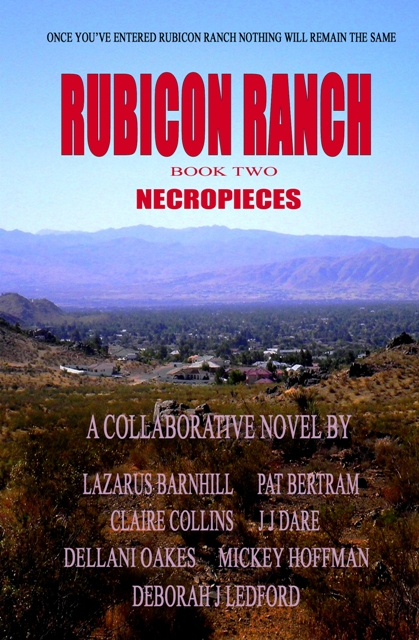
Rubicon Ranch: NecropiecesI enjoy finding out how other writers approach their craft, and especially how they develop their characters. J J Dare, author of False Positive and False World, delights in creating evil characters. As a fellow collaborator in the Second Wind serialization, Rubicon Ranch, J J Dare created the monstrous victim in Rubicon Ranch: Necropieces, the second book of the series, along with a couple of his offspring.  In her blog post Bad Wasps, J J Dare said of her two POV characters:

They’re bad. Bad to the bone. Bad in ninety-five percent of their molecular makeup. If an ice-cream flavor was named after them, it would be “Vinegar and Vinegar” and it would taste just as sour as it sounds.

They are evil, narcissistic, self-centered, selfish and plain mean. Both characters think nothing of climbing over the living and dying bodies of anyone in their way. They are Bad Wasps.

So, why did I write them this way? It’s not a reflection of me. I’m fairly mild, with only a bit of flair once in a while. And I’ve never wanted to murder my parents.

I’m glad she added those last two sentences. Someday J J and I will meet, and I’d hate to have to go to the meeting prepared for mayhem.

Seeing how much fun J J Dare has with her evil characters, I’d considered exchanging my character for a bad wasp (or perhaps revealing a waspish side, which I might someday do), but my character, Melanie Gray still has so much work to do that I can’t just dump the poor woman. She needs to find out who killed her husband and why, and she needs to resolve her feelings for the misogynist sheriff.

J J’s characters might not reflect her, but Melanie Gray is a lot like me. She’s a writer dealing with grief, she wanders in the desert, she’s fairly calm and passive though she can be riled. Even though she started as an alter ego (but younger) she turned out to be a world traveler, which I am not, and she has a penchant for finding dead bodies, which I don’t. Thank heavens for that! Being some sort of human cadaver dog has never been an aspiration of mine.

If you have not yet checked out Rubicon Ranch, now would be a good time. You can download the first book free in the ebook format of your choice here: Rubicon Ranch: Riley’s Story and you can follow the second book as we finish writing it here:  Rubicon Ranch: Necropieces. And you will have to prepare for mayhem!

***

Pat Bertram is the author of the suspense novels Light Bringer, More Deaths Than One, A Spark of Heavenly Fire, and Daughter Am I. Bertram is also the author of Grief: The Great Yearning, “an exquisite book, wrenching to read, and at the same time full of profound truths.” Connect with Pat on Google+
Striving For Clarity in Writing

stageThere seem to be two vociferous groups of writers nowadays:


1. Self-published writers who insist that they can do everything their way without regard to grammar rules, publishing conventions, and even readers.

2. Writers who want to be published by the major publishing houses, and who scrupulously follow every dictate in the hopes it will bring them the acclaim they strive for.

The first group of writers often strive for originality at the expense of readability. They take the easy way out by choosing limp words that demand to be propped up with adverbs and adjectives. Or they throw out grammar rules, which comes across not so much as being creative but as being too lazy to learn the right way. Grammar is not a straightjacket but a garment that flows softly around readers, keeping their attention on the story rather than the structure. If readers have to read and reread a paragraph to try to make sense of it, then the author has not done her job.

Some of these authors believe that readers should have to work to make sense of their story, that it’s okay if readers are pulled out of the story to look up an unfamiliar word, or to admire a particularly well-turned phrase, but readers for the most part want to be immersed in a story. If you’re watching a play, you want to see the characters, the action, the set. You do not want to be shown the backstage bickering or the ugly scaffolding. You simply want to be immersed in the play. (Unless, of course, the play is Noises Off, in which case all the bickering and scaffolding are part of the story.) And the same goes for books.

The second group of writers strives for perfection at the cost of originality, especially originality of style or voice. These writers are often too assiduous in their dislike of “was”,  “it”, “ly” adverbs, adjectives, or any number of words that make our writing seem amateurish. Yes, an abundance of such words does make our writing seem amateurish and even hard to read, but removing every single was or it or modifier makes for a stilted style.

The truth of good writing lies somewhere in the middle of those two groups.

As I read in an old book called The Practical Stylist by Sheridan Baker: “Clarity is the first aim; economy the second; grace the third; dignity the fourth. Our writing should be a little strange, a little out of the ordinary, a little beautiful with words and phrases not met everyday, but seeming as right and natural as grass.”

***

Pat Bertram is the author of the suspense novels Light Bringer, More Deaths Than One, A Spark of Heavenly Fire, and Daughter Am I. Bertram is also the author of Grief: The Great Yearning, “an exquisite book, wrenching to read, and at the same time full of profound truths.” Connect with Pat on Google+

It Takes Courage to Grieve

People have often mentioned how courageous I’ve been by writing about my grief, but the truth is, for the most part, it didn’t take any courage. At the beginning, I was in such incredible pain and bewildered by all I was feeling, that I tried to make sense of all the emotions and physical symptoms the only way I knew how — by writing.

There were two times, though, where it did take courage. The first time was when my grief continued far beyond what I had expected, and I was afraid people would think I was weak or self-pitying or self-indulgent, unable to move beyond the tragedy. I am moving, but at my own pace.

The truth is, when you lose your mate, you lose not only the person who meant more to you than any other, the person who connected you to the world, you also lose your best friend, your confidante, your support, your sense of self, your hopes and dreams, your shared world, your faith in a universe that makes sense. The changes are so vast and so sudden, it can take years to process them all.

I’d been honest about everything I’d been feeling, so I continued telling the truth about my grief even when I thought it made me seem pathetic. No one wants to show a weak side to the world, but someone has to explain how grief works, to show the ramifications of a certain type of loss. We are steeped in a culture of couplehood. Many songs and movies extol the joys of meeting the one person who makes life worth living, yet when you lose that person, you are expected to continue as if it didn’t matter. Well, it does matter. And it matters more when you lose that person to death. It’s almost impossible to fathom the absence of a person who once breathed the same air you did, who was there through every crisis and triumph, and who now is simply . . . gone. (Well, if I’m going to tell the truth, then I should tell the truth. It’s not almost impossible. It’s totally impossible.)

I’m past worrying about how people see me and my grief, so I’m back to not needing courage to write about how I am doing. I’m just continuing to chronicle the journey of a woman who is trying to rebuild her life after an immeasurable loss, both the steps forward into hope and the steps backward into sorrow and tears.

The second time I needed courage was when I published Grief: The Great Yearning, the story of my first year of grief. It’s one thing to write about grief in the backwaters of the blogosphere, and a completely different thing to put my grief out there for the whole world to read. Well, the whole world isn’t reading the book, so that’s not an issue, but more importantly, those who do read my story find they are reading their own story. Although grief is unique to each person, the pain and angst and bitter losses are the same. And so is the way we make this unwanted and terrible journey . . . one step at a time.

And that takes courage.

***

Pat Bertram is the author of the suspense novels Light Bringer, More Deaths Than One, A Spark of Heavenly Fire, and Daughter Am I. Bertram is also the author of Grief: The Great Yearning, “an exquisite book, wrenching to read, and at the same time full of profound truths.” Connect with Pat on Google+

Are Book Trailers a Good Idea?

rainbowSomeone asked me for advice on how to get people to see his book trailer and then called me negative when I explained how difficult it would be. I admit I’m burned out when it comes to promotion. I’ve spent the past five years researching book promotion in all its many facets, tried hundreds of different things, and I still don’t know how to turn a sleepy seller into a best seller, though I know a lot about what doesn’t work, or at least what doesn’t work for me. Other people do the same sorts of things I’ve been doing and find a pot of gold at the end of the promotion rainbow, but I’m still searching for the rainbow.

Book promotion is a lot like the house that Jack built. You have a book you want to sell, so you create a video trailer to promote it. Then you have to promote the video that promotes the book you want to sell. Then, you join Facebook to get more viewers for your video, so now you have to promote your FB page that promotes the video that promotes the book you want to sell. And on and on and on.

Some people can just throw a book out there and make a fortune on Amazon, but the rest of us have to promote. Have to find a way to get people interested in us and then in our books. As I said in What Works When It Comes to Book Promotion?, the first authors to blog or use the various social networking sites to promote their books found a strong readership, but now all of those means of promotion are so common that they are simply an expected part of being an author.

It’s the same with book trailers. The first people who created book trailers to promote their books did well, but now video promos are just an expected part of being an author. Even if the video is great, the problem is getting people to see the video.

Sometimes people will stumble across a book trailer when they are surfing Utube, but it’s not as if people by the thousands will be searching for his book trailer. I wanted to hear Madonna’s “Playground” the other day, so I used the search function to find it since I knew what I wanted to listen to, but what if I didn’t know there was a song out there I’d like to hear? How do I find it?

The problem is, you have to promote the book trailer as assiduously as you promote the book. If I knew how to get people to see his trailers, I’d be good enough at promotion that I’d be selling millions of books.

Still, book trailers are a good idea, and the better they are made, the better they will do. I don’t want to discourage him from making his video because . . . who knows? His might catch people’s attention and go viral. At the very least, it will give him something other than the book itself to promote.

***

Pat Bertram is the author of the suspense novels Light Bringer, More Deaths Than One, A Spark of Heavenly Fire, and Daughter Am I. Bertram is also the author of Grief: The Great Yearning, “an exquisite book, wrenching to read, and at the same time full of profound truths.” Connect with Pat on Google+

Excerpt from LIGHT BRINGER by Pat Bertram

Description of Light Bringer:

Becka Johnson had been abandoned on the doorstep of a remote cabin in Chalcedony, Colorado when she was a baby. Now, thirty-seven years later, she has returned to Chalcedony to discover her identity, but she only finds more questions. Who has been looking for her all those years? Why are those same people interested in fellow newcomer Philip Hansen? Who is Philip, and why does her body sing in harmony with his? And what do either of them have to do with a shadow corporation that once operated a secret underground installation in the area?

Excerpt from Light Bringer:

Where am I? A new foster home?

Philip supported his throbbing head in his hands and wondered if he’d live to adulthood.

Tamping down the pang of self-pity, he raised his head, and everything came clear. Or almost everything.

He knew who he was: the thirty-eight-year-old Philip, dressed in yesterday’s clothes. He knew where he was: the foldout bed in Emery Hill’s den. But he didn’t know how he got there. He remembered being in the car with the creature, flinging himself against the door—no wonder he felt so bruised—and the icy touch on his neck. Had it brought him back here?

He stood, rocking until he caught his balance, then staggered off in search of the coffee he could smell brewing.

When he entered the kitchen, Emery started and dropped the mug he had been removing from a cabinet. It came to rest at Philip’s feet. Wincing, Philip bent to pick it up.

“Jeeminy Christmas!” Emery exclaimed. “You about scared the intellect out of me. What are you doing here? I thought you went back to Denver. See what you’ve done? I’m already turning into a blithering idiot.”

Philip laughed, then cut it off and clutched his head.

“What’s wrong? Hangover?”

“Feels like it, but I haven’t been drinking.” Getting a mug for himself and pouring a cup of coffee, he wondered if he’d been drugged. He took a sip of the brew, which seemed strong enough to soften a stone, and barely refrained from spitting it out. “Tomorrow I make the coffee.”

“Fine,” Emery said absently, regarding Philip with narrowed eyes. “I always know when one of my students is in trouble. It’s time you told me what’s going on.”

“I was never one of your students.”

Emery waved away the remark. “Between the two of us we should be able to solve your predicament.”

“I’m not sure there is a solution. Right before I came here, two NSA agents came to my apartment.”

Emery shook his head as if to clear it. “I must have misunderstood. I thought I heard you say NSA agents.”

***

Where to buy Light Bringer:

Second Wind Publishing

Amazon

Barnes & Noble Nook

iStore (on iTunes)

Palm Doc (PDB) (for Palm reading devices)

Epub (Apple iPad/iBooks, Nook, Sony Reader, Kobo)

A Sweet Tale or a Horror Story?

breadOn Valentine’s Day, a Facebook friend posted an anecdote that I can’t get out of my mind: A man made his wife toast on their anniversary, and she got upset. “For 50 years,” she said, “you have given me the end pieces and I am sick of it. I hate the end piece!” The man was stunned by her outburst and quietly responded, “But that is my favorite piece.”

Everyone who commented on the anecdote thought it was a sweet story, but all I could see was the horror of fifty years of misunderstanding. In fifty years, she never once told him she hated the end piece? Never once, when she got upset at him for some other hurt, did she bring up the matter of the toast? Never once did he bother to find out what she liked? Never once did he watch her make toast and see that she didn’t fix the end piece for herself?

This anecdote does not portray a loving relationship. She is long-suffering and uncommunicative, unable to find a way to express her wants until the frustration overwhelms her and she bursts out in anger. It’s even possible the problem isn’t the end piece at all — if the only thing he does for their anniversary is make her toast, then maybe she is upset at the lack of flowers or gifts or a meal in a nice restaurant, and mentioning the toast was simply a way of letting him know she wasn’t happy. He, on the other hand, is self-absorbed and arrogant, assuming that just because he likes something, so does she. He also seems smug in his belief that by giving her his favorite piece he is doing something loving, when in fact he is disregarding her by not considering her wishes.

Somewhere along the line, every new couple runs into such a situation, where one repeatedly does something the other doesn’t like, and so they compare notes about likes and dislikes and the expectations each has of the other. Something as simple as toast preferences should have been mentioned long before it became an emotional issue. If a couple can’t find a way around this sort of misunderstanding in the first few years of being together, then their problems run much deeper than who likes what piece of toast.

Love is seeing the truth of each other. Love is witnessing each other’s lives. Love is being present to each other. If after fifty years he did not know what she wanted, it shows how little he saw of her. If after fifty years, she did not know why he gave her the end piece, it shows how little she saw of him. It seems like a cold relationship at best.

On the other hand, loving or not, apparently they deserve each other, and maybe that’s what kept them together all those years.

This anecdote illustrates one other thing — the value of showing rather than telling. If this anecdote were developed into a scene as part of a story, it would be a great way of showing the problems of the couple’s relationship rather than simply saying that they misunderstood each other. Or it could be an example of how much he loved her, as the anecdote was meant to be. That’s the beauty of showing — the writer merely presents the story. Readers interpret it through their own experiences, deciding whether it is a horror story or a sweet tale, and hence make the story their own.

***

Pat Bertram is the author of the suspense novels Light Bringer, More Deaths Than One, A Spark of Heavenly Fire, and Daughter Am I. Bertram is also the author of Grief: The Great Yearning, “an exquisite book, wrenching to read, and at the same time full of profound truths.” Connect with Pat on Google+

Daughter Am I and The Hero’s Journey

DAIthumbI fell in love with the concept of the mythic quest when I read Christopher Vogler’s book The Writer’s Journey, so much so that I knew I had to write my own quest story. I’m not one for fantasy, either in real life or genre fiction, so I decided to use the hero’s journey structure for Daughter Am I, my contemporary novel of a young woman — Mary Stuart — who goes on a journey to learn about her recently murdered grandparents. Accompanying her are six old rogues — gangsters and con men in their eighties —  and one used-to-be nightclub dancer.

Developing so many characters at one time is difficult under normal circumstances, but the mythic journey archetypes helped me create the characters and keep them focused on their roles. Whether gangster or wizard, hit man or Darth Vader, the archetypes — and the power of the archetypes — are the same.

The hero is the one who grows the most in the story, who gains knowledge and wisdom. Heroism, in the mythic journey sense, is connected to self-sacrifice, risk, and responsibility. The hero must perform the decisive act of the story, though at the beginning, before their transformation, heroes often need to be goaded into action. Mary starts out only wanting to learn about her grandparents, and ends up becoming intensely loyal to the elders in her charge, which changes all of their lives.

A herald gets the hero started on the journey. Kid Rags, a dapper forger forced into retirement by computer technology, eggs Mary on, challenges her to find out more about her grandparents. Kid Rags is also a mentor, giving guidance and gifts, a role he shares with Teach. Teach is a con man who believes everything is a con, and he is not hesitant about sharing his vision.

Every mythic journey needs a trickster, a character who embodies the energies of mischief and a desire for change, and who provides comic relief. The trickster in Daughter Am I is played by Happy, an ex-wheelman for the mob. Happy wants to be on the move, is always urging action, and he peppers his talk with morose and unanswerable pronouncements about death. Did I mention that he carries a gun, but that his hands shake too much to be able to aim it properly? Poor sad Happy.

The shapeshifter is Tim Olson, Mary’s romantic interest. He doesn’t actually change shape, but he appears to change constantly from Mary’s point of view. He tempts, dazzles, confuses her, and makes her question his loyalty.

The shadow represents the energy of the dark side, the villain, and in the case of Daughter Am I, the villain truly is a shadow — Mary and her band of feisty octogenarians never even get a glimpse of him until the very end. Iron Sam, a dying hitman, is also a shadow. Although he is not a villain who has to be vanquished, he represents the dark side of Mary, a sinister balance to her guilelessness.

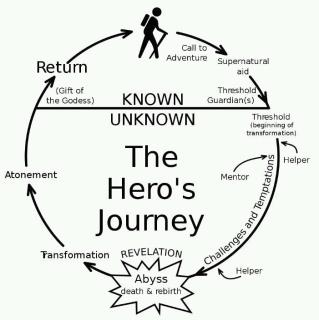
The story of Daughter Am I lightly follows the stages of the mythic journey, from a glimpse into Mary’s ordinary world, to the call for adventure (her own curiosity as to who her grandparents were and why they were murdered), her reluctance to commit to the journey, meeting her mentors, deciding to take a chance and just head out to talk to others who might have known her grandparents, undergoing tests and ordeals, and ultimately returning home, knowing who she is and what she wants to do.

Although Daughter Am I takes the same “hero’s path” that worked for such disparate stories as The Wizard of Oz, Star Wars, and Tin Cup, the journey is Mary’s own, not a rehash of any of any other quest story.  That is the beauty of the hero’s journey — the structure is infinitely malleable, giving any story a mythic undertone without overshadowing the story itself or confining it into a strict formula.

***

Pat Bertram is the author of the suspense novels Light Bringer, More Deaths Than One, A Spark of Heavenly Fire, and Daughter Am I. Bertram is also the author of Grief: The Great Yearning, “an exquisite book, wrenching to read, and at the same time full of profound truths.” Connect with Pat on Google+

The Mythic Stages of Grief

Joseph Campbell was the first person to write about the motifs and archetypes underlying myths, stories, and spiritual traditions. Christopher Vogler, in The Writer’s Journey, further developed this idea of the “hero’s journey,” making it applicable to writers, both in their stories and in their lives.

The hero’s journey is an endlessly fascinating structure because it is endlessly malleable, able to fit any character, any story, any life. We are all on our own mythic journey through life, but our lives are so much more complicated that the life of a character in a novel because we are dealing with quests within quests within quests rather than a single straightforward journey.

Growing up, falling in love, marrying, parenting, writing, making art, growing old are all quests of their own, though each quest is a but a step on our journey though life.

My most recent mythic journey has been the journey through grief. Grief has been, perhaps, the most mythic of all my quests, each of the stages clearly delineated. (In fact, these mythic stages of the hero’s journey are much more applicable to grief than Kübler-Ross’s stages.)

All of us who embark so reluctantly on this journey through grief are true heroes. It takes a hero’s courage and commitment to deal with everything grief bombards us with and come out on the other side stronger, wiser, and accepting of whatever comes our way.

The mythic stages of our heroic journey through grief:

1. Ordinary World. A hero’s journey begins with the normal world, and in the grief quest story, the normal world is the life we shared with our life mate/soul mate.

2. Call to Adventure. His (or her) dying calls us to grief’s adventure, though death is too traumatic an event to be dismissed as a simple call to adventure. There’s no warble of a bugle call; it’s more like the shriek of a smoke alarm that cannot be silenced.

3. Refusal of the Call. We are frozen with grief, reluctant to continue life alone, refusing to see that perhaps continuing alone could be an adventure.

4. Meeting with the Mentors. We go to grief groups for support, and we talk to others who have also lost their mates. Some of us go to bereavement counselors or read about grief to learn how to deal with this horrifying new world.

5. Crossing the threshold. We commit to grief, to whatever changes will come because of it. We allow ourselves to feel without blocking out the pain because we know that is the only way to find our way through the angst to a more peaceful time.

6. Tests, Allies, Enemies. Grief encompasses all these aspects. Grief tests us, our strength, our commitment to life, our beliefs. Grief is an ally, changing us so we can become the person we need to be in order to survive in this new world. And grief is an enemy, bringing more pain than we could have ever imagined.

7. Approach to the Innermost Cave. Grief takes us further away from our ordinary world of a shared life. This is a stage where we regroup. We find a respite from grief for a few days or weeks, leading us to believe that perhaps we can do this after all.

8. Ordeal. Although all of grief is an ordeal, at this particular stage of grief’s journey, the greatest ordeal is accepting that we are alone, that although he is dead, we have to continue living. We thought getting through the initial raw pain of grief was our greatest agony, but now grief throws us even more anguish with the realization that he is never coming back. This new life without him is forever.

9. Rewards. There are many rewards for going through grief. We seize the sword of courage, we find the elixir of patience, we discover the crucible of greater insights. There are consequences, of course, and generally we pay for any rewards with a huge upsurge of grief.

10. The Road Back. The road back is not easy, especially when it comes to grief. Although we can never return to the ordinary world from which we came since that world was shattered forever by his death, we do return to an ordinary world, a world where grief is a companion that merely shadows us, rather than being the trickster that taunts us, the enemy that torments us, the shapeshifter that bewilders us.

11. Resurrection. The hero faces death and is resurrected, and in the case of grief, we face the death of who we once were. We realize we are separate from our life mate/soul mate, that he has his journey and we have ours, and hence we are reborn into a new life. A life that is ours alone.

12. Return with the Elixir. We all bring back from grief certain gifts, whether wisdom or patience or simply the knowledge that we survived the worst ordeal of our lives, and often we share this gift with others. Many of us end up taking care of aged parents, exhibiting a patience we never knew we had. Some of us write or paint to show the world our truth. Some of us go into grief therapy to help others. My magic elixir — my gift, my blessing — has been the unexpected ability to decode grief and write lyrically about the process, such as recognizing the mythic stages of grief and writing this post describing grief as a heroic journey and quest. A strange gift, indeed.

And so life’s journey continues . . .

***

Pat Bertram is the author of the suspense novels Light Bringer, More Deaths Than One, A Spark of Heavenly Fire, and Daughter Am I. Bertram is also the author of Grief: The Great Yearning, “an exquisite book, wrenching to read, and at the same time full of profound truths.” Connect with Pat on Google+

Great Blog Resources for Writers

There are some phenomenal blogs and resources for writers that can help you take your writing to a more polished, compelling, or profound level. These are just a few of the links I have collected over the years:

Ageless Wisdom & The Hero’s Journey lists the mythic and archetypal principles embedded in the structure of stories, along with the twelve stages of the hero’s journey. You don’t have to write fantasy to use such mythic elements. My contemporary novel, Daughter Am I, was written with these principles in mind.

The Editor’s Blog is the best resource for new writers who wish to learn the basics of writing and the best resource for experienced writers who wish to polish their work into a perfect gem. Whatever you want to know — hooking a reader, dialogue, action, conflict, editing — you will find great advice from freelance fiction editor Beth Hill.

The Bookshelf Muse has various fascinating thesauruses, such as the Emotional Thesaurus to help you show your characters emotions, Physical Attribute Thesaurus, Character Traits Thesaurus, Weather & Earthly Phenomena Thesaurus, Color, Textures and Shapes Thesaurus, Setting Thesaurus, and the Symbolism Thesaurus. (These are listed on the right sidebar.)

Guide to Grammar and Writing takes the mystery out of grammatical issues and English usage

Cliched, Overdone, or Boring Plotlines helps you find out if your brilliant idea really is as really as fantastic as you think it is, or if it is merely a rehash of a story that has been done a hundred times before.

100 Best First Lines from Novels might help you figure out how to write a first line that is every bit as compelling as those listed.

The Food Timeline helps you keep track of what foods your characters might be eating, especially if you write historical fiction.

Book Marketing Floozy is an indexed blog of sixty-five different articles by various writers about book promotion.

***

Pat Bertram is the author of the suspense novels Light Bringer, More Deaths Than One, A Spark of Heavenly Fire, and Daughter Am I. Bertram is also the author of Grief: The Great Yearning, “an exquisite book, wrenching to read, and at the same time full of profound truths.” Connect with Pat on Google+

Giving Readers a Stake in Your Story

jockeyI don’t like stories about gambling. They set my teeth on edge because of the inevitable slough of despair the character falls into when the addiction gets the better of him. Despite that, Let It Ride is one of my favorite movies, probably because although the story takes place at Hialeah amid the horse racing culture, it is not a movie about gambling. It’s the story of how the forces of the universe align to give Jay Trotter (Richard Dreyfuss) one perfect day, and how he had the courage to accept the gift.

My favorite lines are when Pam (Teri Garr) says, “I don’t know why people have to gamble. Why can’t they just watch the horses run?” Trotter responds, “Without gambling, there is no horse racing.”

I’m with Pam — someday I’d like to go to a racecourse and watch the horses run, but I can also see why there is no horseracing without gambling. First, there would be no income, and second, no one but those directly involved — racecourse owners, horse owners, trainers, and jockeys — would have any stake in the matter. Gambling gives anyone who has the price of a bet a stake in the outcome of the race.

This is similar to writing — if an author doesn’t give readers a stake in the outcome of the story, then there is no reason for anyone to read the book. Since there is no gamble when it comes to a book (well, except for the gamble of whether the reader will enjoy it or whether they will feel cheated for having wasted the money) the stake has to be an emotional one. For example, Kendra, the main character in Mickey Hoffman’s mystery, School of Lies, is a special education teacher in an inner city school. The book’s true-to-life atmosphere is appealing to anyone who enjoys mystery and mayhem, but it’s especially appealing to special education teachers. Special education teachers — or any teacher — who have been in similar schools and situations perhaps wish they could have said the same things or done the same things Kendra did, which gives them a stake in the outcome of her dilemma. Of course, anyone who ever went to high school would also have a stake in the story, if for no other reason than to see the truth of what they suspected — that much intrigue was going on behind the scenes.

For this same reason, a popular main character in many books is a mother juggling home life and career, which immediately gives a large section of the population a stake in the story. You see the same thing dozens of times a day in your sidebar ads — “mother in (the name of your city, which supposedly gives you an added stake in the matter) gets skinny”; “mother discovers secret to youthful skin”; “mother earns a fortune working at home.”

Your choice of characters and their predicament are not the only ways to give readers a stake in the outcome of your story. You can make readers a part of the story by giving your characters characteristics that people can identify. You make readers involved by stirring up their emotions. You show them what is happening instead of explaining every detail, and let their own reactions to the action become part of the story.

Giving people a stake in your story is not exactly the same thing as getting them to bet a bit of cash on a horse race, but getting them to pony up a bit of emotion while reading your story will give them greater winnings in the long run.

***

Pat Bertram is the author of the suspense novels Light Bringer, More Deaths Than One, A Spark of Heavenly Fire, and Daughter Am I. Bertram is also the author of Grief: The Great Yearning, “an exquisite book, wrenching to read, and at the same time full of profound truths.” Connect with Pat on Google+