Character as Fate and Fate as Character

Heraclitus believed that a person’s character is their fate. Character — the sum total of a person’s traits — influences the choices a person makes, and the consequences of those choices ultimately become that person’s destiny. Or not. Much of life is luck, happenstance, and totally out of our control, though we tend to believe we have much more control over our lives than we really do. But that’s not an issue here because this is a writing discussion, and in our story worlds everything is under our control, and what our characters do determine their own fate.

This is most obvious in a tragedy — a character comes to an unhappy end because of a flaw in his or her own character, though in today’s stories, because readers like a more optimistic ending, that fatal flaw is often balanced by a special strength. But character/fate works for other types of stories, such as a thriller where a character becomes obsessed with finding the truth, and that obsession leads to both the character’s fate and the end of the story.

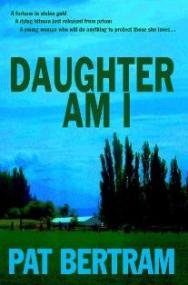
For example, In Daughter Am I, a young woman is determined to find out the truth of who her grandparents were and why someone wanted them dead. That determination overrides her usual placidity and takes her on a journey that eventually leads her home again, changed forever. She really did find her destiny because of her character.

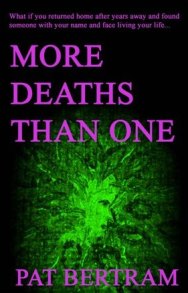
I wonder if the opposite is more true (if truth has degrees), that destiny is character. Does what happens to us, both the actions under our control and those beyond our control, determine who we are? Determine who our characters are? This was a theme I explored in More Deaths Than One. So much happened to my poor hero Bob that was not under his control, yet what was under his control — how he handled his fate — made him the man he became.

Any discussion about fate and writing would also have to include the question: does the writer’s fate affect the character’s fate? None of my books have totally happy endings. There is always a pinprick of unease in the background, but the book I am now contemplating — the story of a woman going through grief — is going to have even less of a happy ending. Perhaps because I know the ending of my own love story? Not my story, obviously, since I’m still here, but the story I shared with another. Except for my work in progress (the one that’s been stalled all these years) the stories I’m thinking about writing now all end up with the characters alone.

When I wrote the first draft of my novel More Deaths Than One (and the second draft and the third) I had the hero Bob meandering around his world trying to unravel his past all by himself, and it was boring. Did I say boring? It was moribund. The story went nowhere because there was no one for Bob to butt heads with.

In the fourth draft of More Deaths Than One, I gave Bob a love interest, a waitress he met at a coffee shop. (Hey, so it’s been done before. The poor guy spent eighteen years in Southeast Asia, and didn’t know anybody stateside. How else was he supposed to meet someone?) That’s when the story took off. He had someone to butt heads with, someone to ooh and aah over his achievements, someone to be horrified at what had been done to him.

From that, I learned the importance of writing scenes with more than one character. And yet here I am, once more falling into the black hole of writing characters alone because I can’t visualize them ending up with anyone.

Which leads me to my final question: could the fate of the character also influence the writer’s fate? If so, maybe I should decide where I want to go from here, and write my destiny. Or  I could just wing it and see where destiny takes me and my characters.

***

Pat Bertram is the author of the conspiracy novels Light Bringer, More Deaths Than One, A Spark of Heavenly Fire, and Daughter Am I. Bertram is also the author of Grief: The Great Yearning, “an exquisite book, wrenching to read, and at the same time full of profound truths.” Connect with Pat on Google+

You Finished Writing Your Book. Now What?

I recieved an email yesterday from a friend telling me she finished writing her book, and then she asked for advice about how to proceed in getting her book published. She said she is open to all venues — self-publishing, independent presses, agents and major publishers.

If you are in the same situation, the first thing you do is make sure you’ve edited the book, copyedited it, found people to read it to see if there are any obvious lacks, and made it the best book you possibly can.

What you do next depends on your goal. If you want to try to do it on your own without going through agents or  publishers, there are plenty of self-publishing platforms to choose from such as Create Space, Amazon/Kindle, Lulu, Smashwords, Barnes & Noble/Nook. Do a bit of research to find the platform(s) that suits your needs. You don’t need an ISBN number for Amazon/Kindle or Barnes & Noble/Nook, though you do need one for most other venues.

If you want to try for a major publisher, research agents. You can find them at places like Preditors and Editors and Association of Authors’ Representatives. Look for agents who are interested in your genre. Once you have names, check out their websites to find submission requirements, and follow those requirements. If they say query letter only, don’t send samples of the manuscript. If they ask for the first three chapters, don’t send the whole manuscript.

If you decide to go with a small publisher, you can find a listing at Preditors and Editors and similar sites. Generally, you don’t need an agent for such publishers. Follow the same instructions as for agents, checking out their submission requirements and following them.

The query letter is your most important tool. Try to fit your letter to the particular agent or publisher. Always send to a particular person. Never use “Dear Sir” or “To Whom it May Concern.” Send a few letters out at a time (start with agents and publishers who will accept email submissions to save time and money). By doing only a few at a time, you can rewrite your query letter and synopsis as you get rejections. (Keep in mind a rejection at this stage only means they rejected your letter, not your manuscript.) The better your letter is, the better chance you have of getting someone interested in looking at your manuscript.

Click here to find out How to Write a Query Letter.

This is the query letter I wrote for More Deaths Than One. It got me an agent, but the agent couldn’t find a publisher. I found a publisher on my own when the agent’s contract expired.

Dear (Name):

The painting is of a pond with no ripples, surrounded by forest. Very serene. As Bob studies the painting, however, disquiet begins to creep over him, and he can almost see the monstrous thing that lives in the slime deep down at the bottom of the pool.

“I was trying to paint what’s in here,” he says, tapping his chest with a fist. Then he gestures to the painting. “I don’t know how that happened.”

When Bob Stark returns to Denver after almost two decades in Southeast Asia, he finds that, like his painting, nothing is as it seems. Not only does the city of his birth seem alien; the mother he buried years before has died again. Even worse, two men who appear to be government agents are hunting him for no reason that he can fathom.

Set in 1988, this novel, More Deaths Than One, explores what it is that makes us who we are. Is it our memories? Our experiences? Our natures?

Enclosed please find a synopsis and the first three chapters of this suspense novel. The finished manuscript of 80,000 words is available upon request.

Sincerely, 

Pat Bertram

***

Pat Bertram is the author of the conspiracy novels Light Bringer, More Deaths Than One, A Spark of Heavenly Fire, and Daughter Am I. Bertram is also the author of Grief: The Great Yearning, “an exquisite book, wrenching to read, and at the same time full of profound truths.” Connect with Pat on Google+

Does One Have to be a Coffee Drinker to be a Writer?

I do author interviews on my Pat Bertram Introduces . . . blog, I have a constant feed of authors’ status updates in my Facebook feed, and I participate in several online discussion groups for writers. And always, one word seems to come to the fore: coffee. Coffee seems to be part of the writing ritual, and many authors claim to find inspiration in a cup of coffee. Hmmm. I don’t drink coffee. Am I missing a vital part of the writing process?

Here are some responses to the question of what writers drink while writing. The comments are taken from interviews posted at Pat Bertram Introduces . . .

From an interview with: J. Conrad Guest, author of Backstop and One Hot January

My morning sessions start with a pot of coffee and a trip to my humidor to select a cigar.

From an interview with: Coco Ihle, author of She Had to Know

I have a wonderful 16 oz. thermos mug that keeps my coffee hot, so I don’t have to get up so often for a refill. My right hand seems to be permanently crooked into the mug holding position.

From an interview with: P.I. Barrington, Author of Isadora DayStar

Coffee and Diet Coke are my working poisons. If I could get them both via an IV drip I would, lol!

From an interview with: John Paul Allen, Author of “Monkey Love”

Lots of coffee — two or three pots are a must.

From an interview with: Millicent Borges Accardi, Author of Injuring Eternity

I typically drink Peet’s coffee when I am writing or at my computer.

From an interview with: T. C. Isbell, Author of “Southern Cross”

Coffee, I drink vast mounts of coffee while I work.

From an interview with: Dr. Dorothy McCoy, Author of “The Manipulative Man”

I fix a cup of superb, fresh ground coffee (one should not skimp on coffee).

From an interview with: Jetta Stone, Author of “Silver Moon”

Chocolate and a cup of steaming strong brewed coffee.

From an interview with: Tom Rizzo, Author of “Last Stand At Bitter Creek”

Coffee. Is there any other?

From an interview with: Steven Hart, Author of “We All Fall Down”

Coffee. Oh yes — coffee.

See what I mean? Coffee. What about you? Do you have a favorite beverage that you drink while writing?

(If you’d like me to interview you, please check out my author questionnaire http://patbertram.wordpress.com/author-questionnaire/ and follow the instruction.)

***

Pat Bertram is the author of the conspiracy novels Light Bringer, More Deaths Than One, A Spark of Heavenly Fire, and Daughter Am I. Bertram is also the author of Grief: The Great Yearning, “an exquisite book, wrenching to read, and at the same time full of profound truths.” Connect with Pat on Google+
Is it Your Business What Others Think of You?

Occasionally I see a saying that seems to bring a moment of enlightenment, but the more I see it, the murkier its truth becomes. And so it is with this little gem: What others think of you is none of your business.

To a certain extent, the saying is true. You can’t live your live trying to figure out what others think of you and then work your life around their opinions. You have to consider what you think of you and live your life accordingly. This also works in reverse — what you think of someone is none of their business. So often, we feel the need to tell others what we think of them — simply to help them, of course — but if what we think of them is none of their business, we might as well keep our opinions to ourselves. (And perhaps save a friendship in the process.)

But . . . (by now, I’m sure you’ve read enough of my blog to know there is always a but somewhere in my posts.)

What a child thinks of his parents is often a key to his emotional health, so what the child thinks of his parents is definitely the parents’ business. If the child is overly attached to his parents or is angry at them for no apparent reason, the child could be having emotional problems. On the other hand, if the child is embarrassed by his parents (beyond normal bounds) or if the child finds it hard to be around them for some reason, maybe the parents are the ones with the problem.

If you are in a romantic relationship, a marriage, or some other long-term coupling, what your loved one thinks of you is definitely your business. If you think yours is a love match and the other thinks it’s a lust match, you need to know that so you can make informed decisions about your future. If your husband no longer loves you and has developed a roving eye, you certainly need to know how he feels about you so you take appropriate actions, such as getting couple’s therapy. (Unless, of course, you prefer not knowing.) If you’re in a relationship and are ready “for the next level” (whatever that is), and your partner in the relationship wants only your money, you need to know the truth before things go to far.

And of course, if your neighbor hates you enough to want to kill you, that most certainly is your business.

There must be many other examples where this particular saying doesn’t pertain, but you get the point: sometimes a clever message is simply clever and not a great truth.

***

Pat Bertram is the author of the conspiracy novels Light Bringer, More Deaths Than One, A Spark of Heavenly Fire, and Daughter Am I. Bertram is also the author of Grief: The Great Yearning, “an exquisite book, wrenching to read, and at the same time full of profound truths.” Connect with Pat on Google+
You Are Invited to Participate in a Blog Chain — “The Next Big Thing”

I accepted an invitation to participate in a blog chain called “The Next Big Thing,” and since I don’t like to artbitrarily tag people, I’m extending an invitation to anyone who would lke to participate.

The idea is to answer 10 questions about your WIP or a new project and in turn “tag” 5 other writers who will write posts on their blogs.

My post will be up on this blog during the week of 11/26 – 12/02, so yours (which I’d link to) would be any time the following week, 12/03 – 12/09. You’d then invite 5 authors to do the same thing you’re doing, & link to their blogs, as well as back to mine (as the one who invited you to partake). Obviously, I’ll be linking to your blogs rather than the specific posts since those won’t be up yet when I post mine.

In step form:

1. I write a blog answering the interview questions, and put links to your blog (and 4 others whom I invite). I also credit the blogger who invited me.

2. You write a blog answering those questions and put links to 5 others of your choice, as well as linking back to my blog. (All our blogs will follow the same format, so when mine is posted, you will be able to see how to format yours.)

You are now finished!

3. The 5 authors you invite answer the questions; each one puts that blog up the week after yours goes up (yours would post the week of 12/03 – 12/09; theirs go up the following week) and each one credits you as the inviter & puts a link to your blog.

4. They in turn, tag 5 other authors, & the cycle continues.

So, you’re done once you put your own blog up and list your 5 authors.

The idea is that each person gets shouted out a) as an invited author, and then b) 5 times as the one who invited.

Would you be interested in taking part? The questions are below.

Ten Interview Questions for the Next Big Thing:

What is your working title of your book?
Where did the idea come from for the book?
What genre does your book fall under?
Which actors would you choose to play your characters in a movie rendition?
What is the one-sentence synopsis of your book?
Will your book be self-published or represented by an agency?
How long did it take you to write the first draft of your manuscript?
What other books would you compare this story to within your genre?
Who or what inspired you to write this book?
What else about your book might pique the reader’s interest?

Leave a comment with your blog address if you’d like to take part in this blog chain. Nothing dire will happen to you if you don’t participate, of course, since this isn’t anything like a chain letter, but saying yes might get you a few new readers.

***

Pat Bertram is the author of the conspiracy novels Light Bringer, More Deaths Than One, A Spark of Heavenly Fire, and Daughter Am I. Bertram is also the author of Grief: The Great Yearning, “an exquisite book, wrenching to read, and at the same time full of profound truths.” Connect with

Why Are Periods and Commas Put Inside Quotation Marks?

Why are periods and commas put inside quotation marks and exclamation points and question marks put outside the quotation marks?

I’d never pondered this question until recently — I just followed the punctuation rule — but now the rule so often seems illogical.

For example: Did you read my short story “The Willow”? This is the logical placement of the end punctuation, right? The title of the short story (which is published in the Change is in the Wind anthology, by the way) has no period in the title, but if I rephrase the sentence to make it a statement, it seems as if there is a period after the title. I hope you read my short story “The Willow.”

Apparently, this rule of placing periods and commas inside quotation marks is only practiced in the USA. In Britain, they do things differently, but since my books and blogs are mostly read and rated by those in the USA, that’s the rule I have to follow, even if it’s (sometimes) against my inclination.

It is an outdated rule. Apparently, when type was set by hand for printing, if the period and comma were placed outside the quotation mark, the delicate pieces were in danger of getting bent out of shape, knocked out of place, or broken off, and so were placed inside the quotation marks for protection. With electronic type, there is no danger of punctuation marks wandering astray, but still the rule lingers.

No one seems to care one way or another about this anachronistic placement, but since it’s one of those rules so many people don’t seem to remember, I have a hunch period and comma placement will become a non-issue, with everyone simply doing as they please.

***

Pat Bertram is the author of the conspiracy novels Light Bringer, More Deaths Than One, A Spark of Heavenly Fire, and Daughter Am I. Bertram is also the author of Grief: The Great Yearning, “an exquisite book, wrenching to read, and at the same time full of profound truths.” Connect with

Introducing Mike Pettit, Author Extraordinaire

One of the most fascinating people I have met online is Mike Pettit. His  nightly “Goodnight America” is worth waiting for. His books covers are wonderfully nostalgic, reminding us of an earlier age of publishing. His  comments are a bit too amusing to be truthful (except for his political  comments, which are a bit too truthful to be amusing.) I’ve wanted to interview Mike for a long time for my interview blog, and he has finally agreed to answer some of my questions. Below is an excerpt from the interview, outlining Mike’s Three P Plan for selling books. (You can find the entire interview here: Mike Pettit, Bestselling Author of “The Key West Smackdown.” I hope you stop by to read the interview. You won’t be sorry you did.)
PB. Do you ever feel like you are lost among the thousands of other Kindle authors?

MP. Absolutely not. I treat my writing as a business. Here are my steps to selling books. I call it the Three P Plan (I should publish this and make a fortune…oh wait, that’s been done).

PRODUCT: Write the best book you can, edit the best you can, have the best cover you can.

I consider myself a good storyteller, but I am not a five star writer. If stars were grade averages I would be a C+ or B- writer, and that‘s OK. So, be realistic with your expectations. Average authors sell books, trust me.

I use the Flisch-Kinkaid comprehension scoring method to determine my writing / reader comprehension. I write to a reading audience at the 8th to 10th grade level of comprehension. This by the way is what the F-K scoring states as the reading level of most fiction-reading adults in America today. As a comparison, Obama’s State of the Union address was written to the 7th grade level of comprehension, The Wall Street Journal just dropped their Comprehension level from 12th grade to 10th grade level.

It might make you feel better knowing this the next time someone writes a bad review on your baby and gives it a two-star D rating. This does not mean you did badly. It means the reader should have read something on a higher comprehension level. That’s why I say you must know your audience …and write to them.

PRICING: To thine own self be true. You must price your book at a reasonable price. The big guys that work for the Big Six publishing houses command $25.00 and up per pop. That’s nuts, but they get it.

E publishing is growing with more and more readers coming over to the light, soon the big publishing houses and agents will be begging for us little guys to sign up with them.

My strategy is that I write and price my books to fit my audience. I am not greedy nor am I swollen headed. I know that I am a C+ writer and what I have to offer is a damn good quick read for a couple of bucks. The reader is happy with the read and the price and he’ll come back for more. You’ll make your money on volume sales

PUBLIC RELATIONS / MARKETING: Never stop pushing your book. I sell on Kindle and Nook. I use every social network platform I can find. I have Face Book, Twitter, Google +, a large FB and Twitter friend base. Look for “Friends that fit your target audience and talk to them…constantly.

This is just me, but I don’t spend a lot of time talking with other authors. If you aren’t talking to your customers, someone else is.

***

Mike Pettit’s newest book is The Key West Bounce. Check out Mike on Amazon, Facebook, and his action/mystery blog.

I am a Victim of Content Scraping

I’d never even heard of content scraping until yesterday when I found my article Why I Write About My Grief posted on two other blogs. The other blogs did not quote the article, nor did they reblog it. (When an article is reblogged, only the first paragraph or so shows up on another blog, with a link back to the original blog.) They stole the entire thing. One of the blogs was hosted by WordPress, so WordPress suspended the blog for violation of services. The other blog was not hosted by WordPress (it’s a self-hosted blog powered by WordPress, which is a completely different matter) so I have no recourse except legal means. Sometimes courts will take action against a “scraper,” but more often than not, if it is an automated theft by special programs rather than copy and paste by humans, there’s not much that can be done since the site will simply disappear and reappear under another name.

Apparently, search engines cannot distinguish between scraped content and original content, so the plagiarized content (let’s call it by it’s real name) shows up first in search results since it is the newer content, which makes the theft even more of a problem. If you are the victim of scrapers, there are some things you can do to fight back. First, take the steps outlined in this article from WordPress Support: Content Theft – What to Do. Second, you can follow the suggestions in this article: Content Scrapers – How to Find Out Who is Stealing Your Content & What to Do About It. Third, ignore the situation but take steps to make sure you get the credit.

If you decide on the third option, the easiest way to get at least partial credit for future plagiarized material is to use a link to your own site in your content, such as the link to my grief in article in the first sentence of this blog. Even better, add a promo to the bottom of the blog so that no matter where the article appears, information about you as the author will go along with it. That’s what I decided to do: add a promo to the bottom of my blogs. Regular readers will forgive the intrusion (I hope), new readers will learn a bit about me, and any bot that steals my content will also spread the word about me and my books.

***

Pat Bertram is the author of the conspiracy novels Light Bringer, More Deaths Than One, A Spark of Heavenly Fire, and Daughter Am I. Bertram is also the author of Grief: The Great Yearning, “an exquisite book, wrenching to read, and at the same time full of profound truths.” All Bertram’s books are available both in print and in ebook format. You can get them online at Second Wind Publishing, Amazon, B&N and Smashwords. At Smashwords, the books are available in all ebook formats including palm reading devices, and you can download the first 20-30% free. Print books can also be ordered from your favorite bookstore.

Sample Sunday

If you’ve been wanting to check out my books, now is your chance to read the first chapter of each novel online.

More Deaths Than OneBob Stark returns to Denver after 18 years in SE Asia to discover that the mother he buried before he left is dead again. At her new funeral, he sees . . . himself. Is his other self a hoaxer, or is something more sinister going on?

Click here to read the first chapter: More Deaths Than One

***

A Spark of Heavenly FireIn quarantined Colorado, where hundreds of thousands of people are dying from an unstoppable, bio-engineered disease, investigative reporter Greg Pullman risks everything to discover the truth: Who unleashed the deadly organism? And why?

Click here to read the first chapter of: A Spark of Heavenly Fire

***

DAIWhen twenty-five-year-old Mary Stuart learns she inherited a farm from her recently murdered grandparents — grandparents her father claimed had died before she was born — she becomes obsessed with finding out who they were and why someone wanted them dead.

Click here to read the first chapter of: Daughter Am I

***

Thirty-seven years after being abandoned on the doorstep of a remote cabin in Colorado, Becka Johnson  returns to try to discover her identity, but she only finds more questions. Who has been looking for her all those years? And why are those same people interested in fellow newcomer Philip Hansen?

Click here to read the first chapter of: Light Bringer

***

Pat Bertram is the author of Light Bringer, More Deaths Than One, A Spark of Heavenly Fire, and Daughter Am I.All Bertram’s books are available both in print and in ebook format. You can get them online at Second Wind Publishing, Amazon, B&N and Smashwords.  At Smashwords, the books are available in all ebook formats including palm reading devices, and you can download the first 20-30% free!

Should You Spend More Time Writing or More Time Promoting?

A few month ago, The Taleist Survey of 1007, a survey of 1007 self-published authors made the rounds. That survey tried to explain why some self-publishers make a living by writing and how they do it, but the survey only complicates matters.

The survey says that 2/3 of the top earners (those who make a living by writing, which, incidentally, was less than 10% of the total), are women, leaving the impression that women were better at self-publishing than men, but the truth is, women write romance more than men do, and romance sells more than mystery and science fiction and way more than literary fiction.

It also says that “respondents who’d had their work rejected by traditional publishing and then opted to self-publish it were among the lowest earners,” but that “32% of the top Earners tried and failed to get a traditional publishing deal before self-publishing, but now make a living from selling their work.” Huh? What’s the difference between being rejected and failing to get a traditional publishing deal? Even more confusing, 29% of the top earners had an agent. Why? I thought the point of self-publishing was to bypass the traditional route. Or maybe they hope the agent will get them a traditional publishing contract? If so, then apparently, the top earners still aren’t earning enough.

The report also said that the average top earner spent 69% more time writing than the average author outside of the top earners group. The top earners group spent more time writing than they did marketing, and those in the group who spent the least time marketing were making the most money. Out of all respondents, those who spent the most time marketing earned the least.

Bewildering, isn’t it? The survey leaves out a lot of important information, such as: did the top earners promote at the beginning, and once their careers took off, stop promoting in favor of writing? And if they never promoted, how did they sell books without marketing? The only self-publishers I have met who managed to get on the bestsellers lists without doing any promotion at all (they just posted their ebooks on Amazon and waited for sales) were romance writers and some mystery series writers. Romance readers seem to be voracious consumers of books, and the more they buy, the more Amazon will recommend. And it stands to reason that the more books you write the more you will sell.

Once you get in the Amazon loop, you can spend your time writing and let Amazon take care of your marketing, but those writers who don’t hit that particular jackpot have no other option but to promote. Some writers who eschew marketing in favor of writing are publishing more books but still not making money.

So yes, the top earners spend more time writing, but that does not mean that if you spend more time writing you will earn more.

The survey also says that those who get reviews from top reviewers on Amazon make more money than those who don’t get such reviews, but the top reviewers seldom review newly self-published books from unknowns, so again, the question is, which came first — the financial success or the reviews?

Although I am not a self-published writer, such matters interest me. Those of us who are published by small presses have many of the same concerns as the self-published since for the most part neither group has a has a publicity departments helping us get better known. But this survey has no answers for us, just more questions.

Should we spend more time writing and less time promoting? Or do we need to spend more time promoting and less time writing? Or maybe we should simply spend less time reading such surveys.