Who gave you the best writing advice you ever received and what was it?

The best writing advice I ever received I read in an old book called The Practical Stylist by Sheridan Baker: “Clarity is the first aim; economy the second; grace the third; dignity the fourth. Our writing should be a little strange, a little out of the ordinary, a little beautiful with words and phrases not met everyday, but seeming as right and natural as grass.”

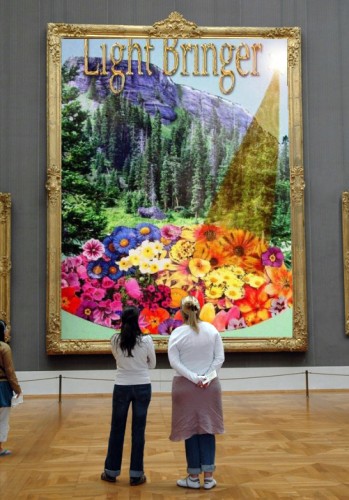
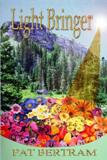
Isn’t that beautiful? I paid particular attention to that advice when writing Light Bringer. I wanted the style itself to show that the characters were a little strange, a little out of the ordinary, a little beautiful. For example, “And then there it was, spread out before her in a shallow thirty-foot bowl. A lake of flowers — chrysanthemums and tulips, daisies and daffodils, lilies and columbines and fuchsia — all blooming brightly, all singing their song of welcome.”

Here are some responses from other authors about how the best writing advice they ever received. The comments are taken from interviews posted at Pat Bertram Introduces . . .

From an interview with Sheila Deeth, Author of “Flower Child”

I met Jane Kirkpatrick shortly after we moved to Oregon. She told me to keep writing. In fact, she’s told me several times to keep writing. It’s probably the most valuable piece of advice I’ve had.

From an interview with Eric Wasserman, Author of Celluloid Strangers

Frederick Reiken’s literature course on the short story was my very first graduate school class. The very first thing he said to all of us was, “If you’re not willing to submerge yourself in the world of reading fiction, give up now on being a serious writer of fiction.” I wrote this down the moment he said it, went back to my dingy Boston studio apartment that evening, and taped it across the screen of my TV.

From an interview with Sandra Shwayder Sanchez, Author of “The Nun”

The best advice I ever received was from J.R. Salamanca (Lilith, A Sea Change, Embarkation, Southern Light and more) who said the permanence of the written word has more influence on readers than spoken words and to take that influence seriously and try to create a good influence and that is the advice I would give aspiring writers.

What about you? Who gave you the best writing advice you ever received, and what was it?

(If you’d like me to interview you, please check out my author questionnaire http://patbertram.wordpress.com/author-questionnaire/ and follow the instruction.)

A Place Where I Can Connect With Myself And The Mystical World

It’s amazing we ever manage to communicate with each other, considering that different words mean different things to different people. We do have common ground, though, so perhaps that keeps us connected. We know basically what words mean, such as “desert,” “reading,” “writing,” but we also imbue the words with our own connotations, and that’s where it gets interesting.

For most people around where I am staying, “desert” means a place of rattlers, a place to ride dirt bikes, ATVs, and other noisemaking machines, a place to honk their dogs. (That’s what I call it anyway. They let their dogs run free and drive behind them, honking to keep the animal from straying too far.). But for me, “desert” means a place away from the bustle of everyday life, a place where i can connect with myself and the mystical world around me, a place where I get in touch with the truth inside me (the truth that resides in all of us.) Even those who do see the desert as a place away from every day life, see it as a place to run, all the while connected to an ipod or whatever is connected to those wires coming out of their ears.

For most people, “reading,” fiction, in particular, means entertainment, a way to kill a few hours, an indulgence in fantasy. There’s nothing wrong with that, of course — it makes people happy and fuels the book industry — it’s just not what reading means to me. For me, “reading” means a place away from the bustle of every day life, a place where I can connect with myself and the mystical world of books, and get in touch with the truth inside me. It came as a real shock when I discovered that’s not what reading means to others. It’s often true that people see reading as a place away from the bustle of every day life, but for most people it’s an escape from themselves, not an escape into themselves.

Writers each have their own meaning for the word “writing.” Most often it’s the same as reading — to entertain, to communicate with readers. Sometimes they don’t know what it means to them, except that it fulfills a need. Occasionally, it means a way of making money. It should come as no surprise that writing, for me, means a place away from the bustle of every day life, a place where I can connect with myself and the mystical world of my own story, and get in touch with the truth inside me. Writing bloggeries, such as this one, helps me figure out what I think, but writing fiction puts a “face” on what is inside me, creating a metaphor or a parable for my thoughts and experiences.

I’ve never been one to count words since the number of words don’t count. What counts is what the words say, what they mean. I’ve never been one to inform others of how my writing is going since the writing is for me. Once the book or bloggerie is published, however, it becomes something else, not something that was written so much as something to be read. Does that make sense? I might have walked too long in the desert this morning, and brought some of its mysticism back with me.

Writing the Tough Stuff (Or Killing the One You Love)

Please welcome my friend, fan, and fellow author, Aaron Paul Lazar, who will be discussing killing the one you love — metaphorically and literarily speaking, that is. Aaron writes to soothe his soul. An award-winning, bestselling Kindle author of three mystery series, Aaron enjoys the Genesee Valley countryside in upstate New York, where his characters embrace life, play with their dogs and grandkids, grow sumptuous gardens, and chase bad guys.  Aaron says:

It’s not easy writing a scene where you kill the one you love.

Of course I don’t mean your actual spouse or lover. I mean the wife, husband, or sweetheart of your main character.

I’ve done it in FOR KEEPS. Thinking about it tears my heart out every single time.
That’s what I mean by “writing the tough stuff.” Sam Moore—a retired family doctor who is our resident hero in Moore Mysteries — is very much like me, except he’s twelve years older and retired with enough money to putter around in his gardens all day. Let me repeat that. All day!

I hate him for that.

Okay, so maybe that’s a little extreme, considering he’s fictional. Shall we say, I am exceedingly jealous of his lifestyle? Although Sam was a family doctor and I am an engineer, we’re still a lot alike. We both love to plunge our hands into the soft earth and grow things. We both love our grandkids so much it hurts. And we both have spouses with multiple sclerosis. There are plenty of differences, too. I cook, I write, and I take photos. Sam doesn’t. But of course, it’s not a competition. At least I don’t think so…

In spite of the fact that he’s not real (at least not in the traditional sense, LOL), I relate to this man and feel his pain when he’s hurting. Sure, you say, writers should feel ALL their characters’ pain. We have to, to get into their heads and nail the characterization. Don’t we?

But I’ll bet some characters are closer to your heart than others.

Sam’s wife, Rachel, shares many qualities with my dear wife, Dale. They both endure MS, they both love to read, they are both chair-caning artists. Some of their symptoms are the same, but that’s where they split apart. Rachel loves to cook (that’s my job in our marriage), she’s in a wheelchair, and she stays pretty upbeat, considering her challenges. They both adore their grandchildren and both love to read. Rachel’s a tribute to Dale, in all honesty. But she also has morphed into her “own woman,” too, and I love her deeply. Er . . . through Sam, of course. (Honey, don’t be jealous!)

In the first two books of theMoore Mysteries series, Rachel sticks by Sam’s side, supports him when he’s overcome with grief and is plagued by strange paranormal events, and loves him deeply enough to keep him sane.

That’s why it really hurt when I had to kill her.

In For Keeps, the third book in the series, life takes an awful turn. When Rachel is murdered by a serial killer, it puts Sam back in the psych ward, the same place he was thrown when his little brother disappeared without a trace fifty years earlier. Desperate to fix things, he calls on the power of the green marble, the talisman his little brother Billy controls from afar that whisks him back and forth through his past.

Unlike those of us in real life, Sam gets a “do over.” He flies back in time to desperately try to fix the problems that lead to this gruesome act, and over and over again, he attempts to tweak the past to bring his dear Rachel back to life.

How do you write such a scene without losing it? How do you make it feel authentic to your readers? How much is too much? And how can you be certain that your character’s reaction will ring true?

It’s not easy. Matter of fact, since I loosely base Rachel on my own wife, and since Sam and I are really quite alike, it was close to torture.

I called upon my darkest, most powerful emotions experienced when my father died and also when my own dear wife almost died several times in the past few years. I’ll never forget the time the nurse in the ER called the nun on duty to bring me to a little room where no one would see my reaction to her impending news that Dale might not make it. She carried a box of Kleenex under one arm and a bible in the other. She was so sweet. Yet it was one of the scariest moments of my life. Thankfully, my wife pulled through and is doing okay today.

That hollow-gut, black-sludge-in-your-heart feeling is horrible when you lose someone dear to you, isn’t it? It’s all encompassing. Sometimes you just want to deny that awful truth, and pull away — far away — like Sam does in the following excerpt. (Click here to read the Excerpt From “For Keeps” by Aaron Paul Lazar.) I tried to channel those feelings when getting inside Sam’s head.  Let me know if you think it worked.

For Keeps is book #3 in Moore Mysteries, and is now available through Twilight Times Books and Amazon.com. The series can be read in any order.  Free dates of “For Keeps”: Sept 14, 15, 16th and October 12, 13th.

copyright 2012, Aaron Paul Lazar
Unfriending Facebook Un-Friends

I’ve been doing a series of posts on the effectiveness of Facebook as a promotion tool for authors, based on my research and my experiences. Some people have taken these as complaints and negativity, but I’m just trying to make sense of a confusing world.

There are four billion users on Facebook, yet most authors seem to be shunted off into a corner of the FB world with other writers. While I’ve gotten to know a lot of great authors this way, I’ve found few readers, which makes sense when you think of it. Authors want something — readers — so we frantically add friends in an effort to reach readers. Readers, on the other hand, don’t frantically friend unknown authors. Most readers stick with previously read authors, or find books by word of mouth, blog reviews and book websites, local bookstores, online stores, the library. (This information is from an informal poll I once did: How Do You Choose the Books You Want to Read?)

When I first joined Facebook, I was guilty of adding as many friends as I could since I thought that was the purpose of social networking. In fact, I almost reached the cut-off point of 5,000 friends. (I’m sure you’ve noticed that some people have more than 5,000 friends. That’s probably because of inactive accounts. I go through my friend list periodically and delete inactive accounts. The only serve to swell numbers and make FB even more unwieldy than it already is.)

When I realized that social networking is about being social, I stopped sending friend requests, and started trying to get to know the people I am connected to. In the process, I am gradually culling my friend list. If someone has four or five thousand friends and has never once bothered to respond to anything I have done on Facebook, I unfriend them. If someone whose friend request I have accepted (I have not sent a friend request to a stranger in over three years, so I know that any friends made in those years are at their behest) spams me or ignores me, I unfriend them. If they are multi-level marketers or any other such blatant scammers, I unfriend them.

This sounds harsh, doesn’t it? But if Facebook hasn’t created a mass of readers for me, then it’s mostly for fun, and if it’s mostly for fun, there is no point in being connected to people who do not enrich my life. (I hope you don’t think I am unfriending everyone. I still have almost 2,000 friends, a good percentage of whom I actually talk to.)

Of course, some people think unfriending is silly, because what difference does it make how many friends you have, especially since you see so few of them anyway, but it does make a difference. When I had close to 5,000 friends, every time I tried to individually invite friends to an event, it crashed my computer. (Except for the Suspense/Thriller Writers Self-Promotion Extravaganzas on Saturday, I don’t bother to do events any more. Where hundreds of people used to respond, now only a handful do.)

Also, too many friends clogs the news feed with posts I have no interest in. It is possible to hide those posters from my newsfeed, but if I have no interest in people’s posts, why am I connected to these un-friends? Why not just unfriend them? So I do.

People do the same to me. One woman told me she unfriended me because I never participated in any of her events. It was a valid observation. At the time, I had 4,000 friends, and couldn’t keep track of them all. All I did on Facebook at the time was keep my writing discussion going, so the people I was most interested in were the people who participated in my discussions. (I hate to admit it, but I still don’t participate in other people’s events; there are simply too many. And anyway, I still prefer to spend most of my time with my discussion group. It’s a small space of sanity in the choatic FB world.)

Perhaps none of this matters. Perhaps unfriending is just a game or a phase I am going through. But the truth is . . . hmmm. I don’t know what the truth is. Maybe I don’t like being ignored. Or maybe I have had a surfeit of inanity and negativity. (What many people consider as positive thinking, I often see as inane, and inanity feels to me like negativity.) Or maybe I’m fighting a system I have no way of beating. Or maybe I’m getting curmudgeonly. Or maybe I’m trying to do FB over, and do it right this time. Or maybe, just maybe, I’m positioning myself for success, making room for the thousands of new friends I am going to make through my writing.

Trying to Be Heard Above the Facebook Noise

I’m sure it seems as if I’m obsessed with Facebook, considering all the posts I’ve been writing about the site lately, but the truth is, it confuses me. What’s the point of having thousands of friends if only a few of those “friends” show up in our news feeds, and our posts show up in only a few of theirs? Why do we have to post silly sayings and quotes by other people to attract attention to our own writing? Why are we supposed to upload colorful images and share cute pet photos? What does any of that have to do with our books? Shouldn’t the books be enough to attract attention?

I do know the answer to that last question. If you are James Patterson, mention of a book is news, but if you are Pat Bertram, it’s blatant self-promo.

There is so much noise on Facebook, with everyone screaming “Looka me, looka me,” like kids on a playground, that it’s almost impossible to hear the quiet writers who just want people to check out their books.

I thought if I posted intelligent questions, I’d attract intelligent friends, and the ones I interact with are exceedingly intelligent. The trouble is, they are in the same position I am in — looking for quiet readers in a noisy world.

I’m a writer, right? I should be able to think of witty things to say that will make people want to get to know me and my books, but my wit deserts me when it’s most needed. When I do think of something witty, it’s at three o’clock in the morning. I’m not about to wake fully, turn on the light, write down my witticism, and then lie there for hours, waiting in vain for sleep to return. (My wit centers more on puns, anyway, such as: Waiting in vein. Is that what vampires do? Well, maybe “wit” is a bit of an exaggeration.) So what passes for wit, passes with the night, and in the morning I don’t remember. (Probably just as well if “waiting in vein” is the best I can do.)

One of my favorite people on Facebook, who manages to be intelligent and witty and post cute pet photos, is Malcolm R. Campbell. (He also happens to be a darn good writer.) Malcolm once said that he’s written more to promote his books than he did to write them. (See? I told you he was witty. Or at least truthful.)

It’s kind of pathetic when you think about it — you rip out your heart and throw it into your book, and then you have to take what’s left of you and spent it on sites like Facebook. Is it worth it? I’m not sure. For a long time, I thought it was. I was having fun, and there was always the hope of hitting some sort of friending jackpot. But now? It seems like . . . noise. Something to block out.

Still, wit aside, I do have a modicum of intelligence, a bit of computer savvy, a tinge of knowledge about the workings of the human psyche, so I should be able to make my voice heard above the noise, right? But in the back of my mind is the small question, what then? My books aren’t the next erotic vampire bondage serial killer novelty, so will my being heard make any difference?

Feeding the Facebook Beast

Yesterday, I talked about how Facebook is not the great promotional tool we authors had been led to believe, and yet some people do exceedingly well on the site. The truth is, Facebook is a beast that feeds on content. It needs a never-ending source of funny, inspiring, informative, controversial, topical, and brief posts that engage users and keeps them liking, sharing, and commenting. The more a post is shared, liked, and commented on, the more visible the post becomes. (Facebook uses something called EdgeRank to keep track of all this, which seems similar to Amazon’s algorithms. Amazon, like Facebook, rewards those who are doing well with additional visibility. In the same way, rich celebrities who already have everything they need, get free perks just because they are rich celebrities.)

When someone interacts in any way with a post on a fan page, for example, it shows up the feed of their friends, but the originator of the content gets the credit. And so the content provider gets more reach, and because they get more reach, Facebook will ensure that this continues by letting more and more fans see the posts, which increases the page reach of the content provider. Because, of course, without content, FB will starve since its users will go where they can find funny inspiring, informative, controversial, topical, and brief posts — places such as Twitter, Tumblr, Pinterest, or whatever the next big thing will be.

If you don’t have such engaging posts, then even if you have 1500 fans, only about 1% will ever see what you post. If you want to know what attracts attention, look no further than your own feed. What do you see that has been shared a hundred times, a thousand times? What have you laughed at, commented on, shared? Photos with funny, inspiring, informative, controversial, topical, and brief commentary, that’s what. (Well, you do unless you’re a curmudgeon like me, and then such content simply annoys you. If I see one more animal with baby-talk captions, acting like a human, I will probably scream so loud, it will reverberate through the center of the earth and cause earthquakes on the other side of the world.)

All this research the past couple of days into the workings of Facebook has given me a few ideas of what to do with my fan page — contests, questions, quotes from my books, even . .  gasp . . . photos with captions.

Why Facebook is Not the Great Promotional Tool It Once Was

Are you one of those authors who joined Facebook, hoping to find fame and fortune, and have only found . . . Facebook?

After my books were accepted for publication, and while I waited for them to become available, I spent a lot of time researching how to promote online. The first unanimous suggestion was to get a website, the second was to maintain a blog, and the third, of course, was to create a presence on social networking sites. I’d already done the first two, so that left the third option. How hard could networking be? Add the maximum number of friends, post status updates and blog links, create discussion groups as a way to get to know other authors. Sounded like fun.

At first, it worked the way it was supposed to — I made a lot of friends, had some great discussions, promoted my online release party via Facebook and MySpace. I even sold some books.

And then . . . nothing. Sure, I still had friends, but sales dropped off, and when my next release party came around, almost no one stopped by. (By then, MySpace was practically defunct — everyone I met on MySpace had migrated to Facebook.)

Many authors have had the same experience as I did. So what happened? Why, after all those articles about how great Facebook was for promotion, didn’t we get the results we hoped for? Because of the ever-changing face of Facebook, that’s why.

When I joined Facebook, it was at the tag end of the free-for-all, where anyone could post anything and all of your “friends” would see it. Events and requests to “like” a page weren’t hidden in your notifications as they are now, but were almost impossible to miss. You pretty much had to respond one way or another. Groups were much more effective than they are now. Group administrators could send a message to everyone in the group, and there were group discussions boards (which is what I used the group messaging for — to announce the weekly discussion).

One by one, all the functional parts of Facebook (those that worked best for promotion, that is) have disappeared, to be replaced by . . . not much of anything, actually. If you post something on your fan page, it shows up in the news feed of only a small percentage of people. They say 10%, but it’s more like 2%. My current reach — the maximum number of people per week who could have seen my posts — is 285. Considering that I post something every day, that means FB shows each post to only about 40 people a day, which is a very small fraction of my 1487 “likes.” If I want more people to see my posts, I can pay to get more views. Bizarre, isn’t it?

I don’t know the statistics for profile views since they aren’t posted on the site, but going by my own feed, not many people at all see anything — just the same few people every day. And now that anyone has the ability to shut off the posts of anyone they want, you could be seeing their posts, and they won’t see anything of yours.

Apparently, Facebook read the same books and articles we did about how to promote on the site, and they are doing everything they can to prevent our promotion efforts from being very effective. (They want to be the only ones making money.)

The first self-published millionaire who subsequently wrote the book about how to make a million via FB, cheated by maxing out multiple accounts — you can only have 5000 friends, so he had more than one account going at the same time. But that should come as no surprise now that he has been outed as having purchased scads of reviews.

So, if you are not getting the results you hoped for by promoting your books on Facebook, don’t be too hard on yourself. It’s not your fault at all. It’s the fault of all those who came first and scammed the system before you had a chance.

How Will the Unfulfilled Dreams of Today’s Youth Create the World of Tomorrow?

Progress is fueled by the dreams of the young, especially dreams that did not come true. Children born into loveless riches will sometimes go to extraordinary lengths to find the love they crave. Children born into poverty will often accomplish impossible tasks in order to have the security or possessions they desperately want. (Me . . . I only wanted to be left alone so I could read. Not exactly a great motivator to become hugely successful.)

I am connected to thousands of people all over the internet who had unfulfilled youthful dreams of being published writers. The sheer mass of people past their first youth (and second and third) who are now pursuing that dream could be the juggernaut that crashed through the boundaries established by the corporate publishers, bypassed the gatekeepers (agents), and helped create a whole new industry to service self-publishers. (If there is a need, there will always be someone out there willing to make a buck fulfilling that need.)

The present generations growing up won’t have those unfulfilled dreams of being published authors because they can sit down right now, write what they want, and publish it. They don’t have to strive for the dream of publishing — they can get it immediately. So how is that going to affect the future of publishing? It’s possible that the human need for storytelling will continue to fuel the book industry. It’s possible the unfulfilled dreams of the young will center more on making a fortune from writing, and so in later years, they will go chasing after corporate publishers. (Despite the myth of being able to make a fortune self-publishing, only a very small percentage of writers ever achieve that goal, and often the fortune comes when the self-publishers end up signing a contract with the corporate publishers.) It’s also possible the world will be completely different when the present generation of nineteen year olds reaches that age when their children are grown and they can indulge their dreams.

I don’t have a clue what this generation is like. Well — I have a smattering of a clue. In a recent article, You’ve lost that lovin’ feelin’?, Paul Eisentein mentions that nearly a third of American 19-year-olds haven’t bothered to get their driver’s licenses yet. Some have no interest in cars, some can’t afford the payments, some have desire to deal with the outside world since they can find all the companionship they want via their various electronic appendages such as cellphones and Ipads. Whatever the reason for abandoning this automotive rite of passage, there is a huge difference between this generation and previous ones. They are just starting their journey, and the world will change to meet their needs. With as rapidly as things change, the gadgets that will run our lives twenty years from now have not yet even been imagined.

If you’re expecting me to provide a response to question in the title, “How Will the Unfulfilled Dreams of Today’s Youth Create the World of Tomorrow?” you’re out of luck. I don’t have an answer. I was hoping you did.

Who Decides What Books are Worthwhile?

I watched Incognito the other day, a story about an art forger. One of the most interesting bits of dialogue was when a gallery owner says (screams it, actually) that whatever he says is art, that is art. The comment caught my attention because lately I’ve been blogging about the publishing industry, the writing community, and where (or how) I fit into this modern world of books. And a big part of that equation is the meaning of art as it applies to writing.

I have no fondness for the corporate publishers. For the most part, the books they’ve been publishing for a long time now seem boring and trivial, and hold no real truth for me. I am not one who can read the zillionth book in a series and still maintain my interest in the characters. The writers I have always liked are non-literary authors, such as David Westheimer and Nevil Shute, who wrote stand-alone books that did not fit into any particular genre. (To me a literary author is one who is more focused on how something is said than on what is said, and who is more focused on what is said than on the story itself.) In fact, the very reason I decided to write my own books was that I could no longer find the sort of novels I liked to read.

On the other hand, I have no special fondness for self-publishers. Many write the same sort of drivel that the major publishers put out — trivial books that lack individuality and truth. Even worse, many are badly written, and the plethora of errors shows a complete disregard for readers. Originally, I assumed these writers who go it alone were better than those published by the corporations, since the major publishers seem to specialize in a high degree of mediocrity, but unfortunately, the reverse is too often the case. Worst of all, in an effort to get noticed and make a living, many authors write a book every three or four months. Without time to think, without the grueling months of rewriting, editing and copyediting, authors will be foisting increasing numbers of less than stellar books on the market.

In this avalanche of books, what distinguishes one from another? Who decides what is worth reading? Who decides what books will succeed? The critics? Just because they say a book is worthwhile doesn’t mean that it is. Some of the books that have won major awards stun me with their ghastliness. The corporate publishers? The books they choose aren’t picked for worth; they are chosen for salability. The masses who self-publish? The masses who read? (I hate using the word “masses,” because really, who among us ever considers themselves one of the masses? But I can’t think of a better one to describe huge numbers of people who do the same thing as everyone else.) Look at the self-published books that have achieved icon-hood — few have little value as literature or art, few have a modicum of “truth.”

So who is to decide what is art or literature? My books are published by a small press, and so are the books by many writers I have met online. Someday, maybe, these small presses will provide a literary haven between the two extremes of self-publishing and corporate publishing, but the truth is, no one has to decide what books are art, which books have merit. It doesn’t matter.

In the beginning, stories were told wherever humans gathered. It is one of the very few things that separate us from any other species — our ability to tell stories. It is what makes us human. Perhaps even what makes us divine. We are a species of mythmakers, telling ourselves the story of our lives, telling each other the stories of other lives, both real and imagined.

The pen was the first great technological advance in story telling, followed by the printing press. The printing press allowed certain businesses to control what stories were told, and that control held true for centuries. Now, in this electronic age, the control is gone, and anyone can publish anything, no matter how terrible. This puts a burden on readers since often they get stuck buying something that is poorly written and badly edited, if edited at all, but this is the way things are going to be for a long time to come.

And perhaps the situation is not such a bad thing. We could be moving away from literature as art (as defined by self-styled critics) and returning to our very beginnings . . .

Storytellers.

Blogging is Writing, Too

I always hated the saying “A writer writes . . . always.” No one does anything “always” except maybe breathe. And anyway, the very fact of having written five books and getting them published makes me a writer, even if I write . . . whenever.

But it turns out the joke is on me. I do write always, or as nearly always as possible. I’m either writing an article for this blog, or trying to think of a topic, either planning what I am going to say when I do think of a topic, or experiencing things which I will later write about. I don’t know why I tend to think that “writing” means fiction writing, perhaps because fiction comes hard for me and blogging easy, but the truth is, blogging is writing, too.

On September 25, 2011, I accepted a challenge to blog for 100 days. (I found out about it two days late — the challenge was actually to blog the last 100 days of the year, and it started on the 23, but I figured I’d add the missing two days on the back end.) I hadn’t been writing much, just an occasional blog post, and I was drifting, not doing much of anything except struggling with an upsurge of grief (still don’t know why 18 months after a grievous death is so hard, but it’s part of the grief pattern). So much I had counted on had disappeared — my life mate/soul mate, our way of life, some of the friends I made after his death— that I felt as if I were disappearing too.

I thought writing every day would give me something to hang on to, and it must have worked, because after the challenge ended, I didn’t quit. I never actually made the decision to stick with daily blogging — I just did it — and to my surprise, I find myself less than a month away from completing an entire year of daily posts.

I’ve come a long way in the past 341 days, turned several corners, came to many realizations, but most of all, I found peace. Or rather, I made peace. I made peace with the death of my mate, with my place in the universe, and with my place in the world of books. Even without the daily blogging, I might have come to the same realizations at the same time, but writing gave focus to my thoughts, and daily writing gave focus to my life. I’d planned to stop the daily posts after my one-year anniversary, but now . . . who knows. I might keep going. (Though one person suggested — facetiously, I hope — that I should give my poor blog readers a break.)