Balm to a Writer’s Bruised Psyche

Not only do I not understand this new publish-anything world, I don’t understand this everyone-is-a-reviewer world.

It used to be that professional reviewers (I am including reviewers employed by newspapers and magazines in this category) pretty much decided what were considered worthwhile books, and readers either paid attention to those recommendations and bought the books or ignored the recommendations and bought whatever they felt like. Today, anyone is a reviewer, whether s/he is qualified or not. All it takes is an opinion. The thing is, readers who see those reviews don’t take them as an opinion. They give them the same credence they gave the professional reviewers.

To be honest, I don’t know if it’s better to have a certain literary elite passing judgment on the books or if it’s better to have casual readers doing it. Either way, people are “grading” books based on nothing more than a whim. And those whims can destroy a writer’s career, or at least keep people from buying her books.

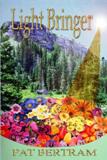
Light Bringer is my magnum opus, the result of twenty years of research into myths, both ancient and modern. I created an entirely new worldview based on these myths, one that could very well be true if the Sumerian cosmology and today’s conspiracy theories are true. According to the editors and agents who rejected the manuscript, it was unsellable. It had too many science fiction elements to be commercial and not enough science fiction elements to be science fiction. Because of this, I purposely did not send Light Bringer out for review. People generally hate books they can not categorize, and at best, Light Bringer has a narrow niche. Still, a few readers have given the book glowing reviews, so when a reviewer contacted me recently asking for a copy of the book to review, I sent it to her.

I don’t know why she wanted to review Light Bringer.  As it turns out, she’s a romance reviewer, and Light Bringer is not a romance and was never promoted as such. Even worse, she hadn’t a clue what the book was about. To be fair, she is used to paranormal romances she can quickly skim through, but I don’t want to be fair to her since she wasn’t fair to me. She wrote a terrible review and posted it on the review site. Why? What’s the point of posting a terrible review of a book you don’t understand? It’s not as if I asked her to review the book. She asked me. Adding to the insult, the review doesn’t even make sense. If it didn’t have the name of my book on it, I would never have recognized it as my story.

On the other hand, some people do understand Light Bringer and they honor the book with their poetic descriptions.

Sheila Deeth wrote:

Pat Bertram’s novel soars in her descriptions of mystery and scenery. The song of the rainbow flows through the characters, binding them together, while the silence of the great unknown drives them and pulls them apart.

The unknown, when finally revealed, is satisfyingly strange, though, unlike many of the characters, I maintain a healthy respect for the integrity of scientists and science. Romantic subplots are simultaneously lyrical and down-to-earth; dialog is natural and sometimes laugh-out-loud fun; secrets of history and astronomy are intriguing; and the whole is a fascinating read — a touch of old-fashioned sci-fi, blended with modern magic and corporate greed, shaken, stirred and conspired against, then woven into beautiful words.

Aaron Paul Lazar wrote:

I’m already a fan of Pat Bertram’s books. I’ve read them all and loved them deeply. But LIGHT BRINGER was something completely new and surprising… surprising in its freshness, originality, its genre bending brilliance. Part thriller, part fantasy, part sci fi, part mystery…its plots were large and complex, encompassing themes that plague us every day; offering social and world commentary blended with weather trend observations (where ARE all those tornadoes and tsunamis coming from??) I do believe Bertram has defined a new genre, and it is a pure delight. Fresh. Original. Riveting. The characters are real and engaging. I particularly enjoyed the bit of romance between Luke and Jane — yes, another subplot. I couldn’t put it down and extend my highest compliments to Ms. Bertram for her supremely smooth writing — there are no hiccups in this book. Very highly recommended.

Ah, balm to a writer’s bruised psyche.

Three Things Television Tells Us About The Future of Writing by Dale Cozort

Please welcome Dale Cozort, the author of Exchange, published by Stairway Press. I met Dale during a contest on Gather.com before either of us was published, and we still hang out at The Writin’ Wombats, a writers’ discussion/support group on the site. Dale writes science fiction; time-blending, mind-bending, brain-teasing novels and essays. These mashups of alternate history, science fiction and mystery realistically reshape the past and create new worlds that never were. Dale is one of the smartest people I have ever encountered — a real thinker — and I am honored that he is a guest here on Bertram’s Blog today.

_

Three Things Television Tells Us About The Future of Writing
By: Dale Cozort

Book publishing is going through a transition with an uncertain endpoint. The trends of the last few years in television may give us insights on the future of books, in three areas. As in TV, the transition will involve flattening the pyramid, writers and audiences franticly searching for one another, and increased competition with the past.

I’m showing my age a little when I say this, but when I was very young we had three television networks, each with about three hours of prime-time programming per night. I watched cable television turn those three channels into ten channels and then fifty and then over five hundred. I looked forward to each expansion, thinking that it would free up huge amounts of latent creativity and give me the freedom to watch programs I really liked instead of generic programs intended for a wide audience. That sort of happened, but with some downsides that can help us predict how a similar but even bigger expansion in the number of ways to get a book to the public will play out.

Expanding the ways to market will flatten the pyramid. In the old days of three network channels, TV writers, actors, directors and other creative types formed a steep pyramid. At the top were the stars, directors and writers in hit shows. Below that were the less successful actors, writers and directors who were actually on television or had a show on TV. Below that were a mass of people aspiring to get there, combining bit parts and day jobs to keep up the dream. Aspiring actress often meant waitress. Aspiring screen writer often meant administrative assistant.

The opening up of television meant that while most of those aspiring television types still couldn’t quit their day jobs, more of them could, a lot more. More TV channels meant a flatter pyramid, with more people making a living or coming close to it at the bottom end. That also had a downside of sorts: the top of the pyramid wasn’t quite as high. As the major networks lost market share, few programs reached the kind of audiences that programs routinely reached in the heyday of the three networks. Smaller markets made it more difficult for the networks to justify the kinds of expenses and production values that they could routinely use earlier.

Until recently, the major New York publishers have played somewhat the same role as the three networks, though they’ve never had as complete a control of the market for books as the networks had over television. Funneling writing through the major publishers resulted in the same kind of income pyramid we saw in television, though with much lower incomes throughout the pyramid. In terms of income and exposure, there are a very few rich and successful writers at the top, a few more writers who earn a moderate to upper-middle class income, and a huge number of people who never come close to earning an income from writing.

Opening up the publishing process will probably flatten the pyramid for writing, just as it did for television. As in TV, the base should grow; should make it possible for more people to make money writing. At the same time, more publishing venues fighting over a static or declining audience will make it more difficult for people who aren’t already at the top of the pyramid to reach the kind of audience size and financial security that existing big name authors enjoy. In other words, it will get easier to earn a few hundred or a few thousand dollars a year writing, but it will be more difficult to be the next Steven King, or even the next moderately successful writer earning a living wage, simply because there will be more competition for reader attention.

Frantically searching for your audience: Television also gives us a preview of the challenge most writers will face in a world with more publishing channels: finding your audience. If I turn on my TV and flip through the channels, I find very little of interest. A lot of times I end up turning off the TV because there not only isn’t anything on I want to watch, but there isn’t even anything on that I can stand to watch, not even as background. At the same time, I come across quite a few shows that I would have loved, but they came and went before I found them. Finding new programs to watch among five hundred channels is a challenge. Finding new authors to read is already challenging. It will get more challenging as the publishing channels broaden. Finding the people who love would love to read what you write is going to be the biggest problem new writers face as they try to establish themselves.

Competing with the past: If you flip through the five hundred television channels on your cable, you’ll notice that an awful lot of them are reruns, with whole networks devoted to bringing you the best TV shows of past decades. E-books especially bring somewhat the same theme to book publishing. There are decades worth of out-of-copyright books out there that can easily go on a Nook or a Kindle. Readers can go directly to Gutenberg Project, or pay a dollar or two to get collections with better organization and extras. Old television competes with new shows for TV-watching audiences. Old books also compete with new ones for reader audiences, and the easy availability of those books on e-readers makes the competition more direct.

As writers who aren’t at the top of the pyramid, most of us want to get at least far enough up it to make a living writing. E-books and the ease of self-publishing give us new routes to that, but there are downsides, as we’ve seen. The new routes to publication mean more competition, readers having more difficulty finding compatible writers and vice versa. The changes aren’t all good or all bad, but they are inevitable and writers need to try to understand and adapt to them.

See also:

Click here to read: Excerpt From “Exchange” by Dale Cozort

Click here for an interview with: Dale Cozort, Author of “Exchange

“Just Right” and The Power of Three

I don’t like to get too personal on this blog (well, except for the whole grief thing, though that’s beginning to seem less personal and more mythic) but today something happened that is making me veer off my normal track.

I needed an antibiotic for a gum infection, and when I went to pay for the order, they told me it would be $67.99. My poor sore tooth about dropped out of my mouth. I’d recently picked up a prescription for antibiotics for someone else, and it came to $11.95. The last time I needed antibiotics, the prescription was $18.50. The pharmacist today said this particular brand was stronger than the others, but when I asked if it was fifty dollars stronger, he wouldn’t give me a straight answer. So I called my dentist’s office. They agreed that this particular brand was strong, but that another, slightly cheaper one would do as well.

I went back to the pharmacist to pick up the new prescription. I was expecting a twenty- or thirty-dollar transaction, but this time the bill came to $4.00. Say, what? A four-dollar drug gives the same result as a sixty-eight dollar drug? I asked the pharmacist if I should stick with the stronger one. Again, no straight answer, just a bit of mumbling about teeth needing a special antibiotic due to the teeth’s connection to the heart.

So, I called my dentist again. Asked if this cheap antibiotic would work as well as the more expensive one. She said, “It should.” Um. Should? Not exactly the answer I was looking for. Finally she admitted they should have prescribed the cheaper one in the first place. So. Here I am with my $4.00 antibiotic that seems as underpriced as the first seemed overpriced, and it makes me itchy. Where’s the third option, the “just right” one?

“Just right” is the rule that is ingrained in us. We learned the power of three as kids via the story of the three bears. First too much, then too little, and finally, just right. The story would have been completely different and had little appeal if, after trying the papa porridge and finding it too hot, Goldilocks tried the mama porridge, found it too cold, but ate it anyway. Or if, after she lay down on the papa bed and finding it too hard, she tried the mama bed, found it too soft, but fell asleep anyway.

See what I mean about the just right? The antibiotic I’m now taking probably will work, but with the final third of the formula missing, I’ll never feel quite right about taking such a cheap medication. And that is exactly what many drug companies count on. A lot of them arbitrarily raise their prices so that they are between the highest and the lowest, knowing it will make us feel just right even if the stuff is no different than the cheaper version. And darn it! It works, even when we know better. Such is the power of three.

(I was checking my blog archive for when I’ve previously mentioned The Three Bears and the power of three, and I came across this remark I wrote in September, 2009: Someone asked me recently if I ever considered writing a novelization of my life, and I just laughed. There is no story in my life – nothing noteworthy ever happened to me, and I never did anything that millions of others didn’t also do. A bit ironic considering that in just a couple of weeks, a book about me and my grief journey will be published. Now that I think about it, I was right. I never did do anything that millions of others didn’t also do, but that’s the beauty of Grief: The Great Yearning. My journey is universal. And, unfortunately, it isn’t a novelization. It’s the truth.)

As a Reader, What Would You Like to Ask a Publisher?

My interview blog Pat Bertram Introduces . . . is really taking off. I post author interviews and character interviews, and someone suggested I post publisher interviews, too. Sounds like an interesting idea, especially since I’d like to do more to support small independent royalty-paying presses that publish books by a variety of authors. (Like Second Wind Publishing, the company that publishes my books.)

Before I can do the interviews, I have to compile a list of questions such as my author questionnaire or my character questionnaire. Some of the author questions might be applicable, but I’m more interested in getting behind the scenes of the publishing companies to help readers learn more about small presses. And I don’t want to ask writer-oriented questions such as submission policies and what royalties they pay because I’m trying to steer readers their way.

So, as a reader, what would you like to ask a publisher? What genres they publish, of course, and the criteria they use to choose the books they decide to publish. How they decided to become a publisher might be a good question. What else?

[If you are a publisher who would like to be interviewed, please leave your name as a comment/reply. If you are an author who would like to do an interview for me or have your character do an interview with me, please go to either the  author questionnaire or character questionnaire (or both!) and follow the directions.]

I Wish I Was, I Wish I Were

I’m implementing the edits to Grief: The Great Yearning my last couple of readers suggested, and I was doing fine until I hit this passage:

I’m trying to find comfort in knowing he is no longer suffering, and for a moment yesterday I even envied him. I wish my pain were over, too.

Both readers said “were” should be “was.” Since they are readers, not editors or grammarians, I ignored the suggestion, especially since MS Word grammar check agrees with me. Still, something niggled at me, so I spent an hour online reading various articles comparing I wish it were vs. I wish it was. And this is what I found:

http://www.grammar.net/iwishiwere says: “Was” is used in situations where the statement might once have been or could be a reality. This verb mood is called “indicative”. These subtle differences once enabled a speaker to “indicate” something without using more words to spell it out.

“If I was home, I would be sitting on the couch eating chips.” The speaker indicates with subtlety that he intends to go home, and potato chips will be involved.

“Frank’s not here yet, but if he was, that blueberry pie would be gone.” Because “was” is used, even if it read, “If Frank was here, that pie would be gone,” readers can assume that Frank will show up eventually, and the pie is in danger.

In an unknown situation, it is admissible to use “was”.

“If Betty was smart, she’d go hide that pie.” Even if there is proof that Betty is NOT smart, it is certainly more polite to indicate she might be!

“If it was Friday, I don’t blame her for taking a short lunch.” “Was” is intended to emphasize “Friday” and that it was a fact.

How fun it is that certain things can be hinted at, if the listener can catch the subtleties. Can you think of any other words or parts of speech that change only slightly but definitely alter meaning?

I thought that was the solution to my quandary, change were to was. When I wrote the sentence twenty-one months ago, I deliberately used were. I thought it impossible that the pain of those early days would ever diminish. And yet, though I still have bouts of pain at his being dead, I don’t feel the total and constant agony I felt in the beginning. So if  was connoted hope rather than futility, it would be the better choice.

Unfortunately, wishes always take “were”s. When making a statement that is not factual, the verb is in the subjunctive mood, and the subjuctive of verb “to be” is “were” in the past tense, regardless of what the subject is.

So, despite my change in attitude, the sentence needs to remain as I originally wrote it.

I’m trying to find comfort in knowing he is no longer suffering, and for a moment yesterday I even envied him. I wish my pain was over, too.

Someday, perhaps, it will be.

My Grief Book is One Step Closer to Publication

Grief: The Great Yearning is one step closer to publication. Today I received what might be the final copyedits. One of my fellow bereft volunteered to proof the book for me (actually, a mutual friend volunteered him, and he was kind enough to go along with the suggestion), and he turned out to be a phenomenal copyeditor. Found mistakes that all the rest of us missed. We don’t even have the excuse that we couldn’t see the words for the tears, since he had the same problem.

Very few people have managed to get through the book dry-eyed. Even though each person’s grief is different, there are enough similarities that this book speaks to everyone. It’s been called powerful, profound, exquisite, wrenching, raw, real. One woman wrote me, “I really like your book. When my husband died I devoured books about loss of spouse…maybe 30-40. The ones that were most helpful were similar to yours in that they recounted the journey. NONE were as complete as yours and that is what I wanted.”

Some people think the book will be best as a companion to those who are grieving. Some people think it will be best as a book to give their friends and relatives to help their loved ones understand what the bereft is going through. Some people think it should be required reading in classes for would-be therapists. Some people think it should be handed out to everyone whose spouse signs up with hospice so they are not shocked and bewildered when grief hits.

I never set out to write a book about grief. I merely cried out to an unfeeling void, looking for whatever comfort I could, trying to understand what had happened to him and me and our shared life. Apparently all that chaotic feeling ended up on paper, and now those emotions are tidily packed away into a book. Well, packed away until someone opens the book; then emotion explodes out of the binding.

Writing fiction comes hard to me. I have to drag every word out of my depths, but the words in this book came gushing forth. Of course, I was writing for me, not for others, and I didn’t have to create emotion out of nothing. I had emotion to spare.

Perhaps the time is right for this book. Perhaps it won’t mosey along like my novels, but will burn up the atmosphere when it takes off. Perhaps I really did write an important book. What a strange thought.

How to Make Transitions From Scene to Scene in Fiction

At it’s most simplistic, a scene is an action sequence that begins with a character trying to attain a goal, is further developed when someone or something tries to prevent the character from attaining the goal, and ends when either the goal is reached or disaster ensues. Either way, we should learn something new about the character by the end of the scene.

A novel is a seamless flow of story from scene to scene without interruption. At least it should appear that way. In actuality, time sometimes passes between one scene and the next, and it’s the way the writer handles transitions that makes the story flow.

Authors used to write long pieces of narrative and exposition linking scenes, but that isn’t necessary, and in today’s fast-paced world is a serious drawback. Readers want to plunge immediately into a new scene without being distracted by boring discourses.

One of the easiest and perhaps most effective ways of making a scene transition is simply to skip a space and start the new scene. (Or rather, start in an interesting place in a new scene.) “I’m dead,” Scott said. He lay in bed under the blue patchwork comforter Gracie had made him, his head turned toward the window.

Another easy way is to start with the grandmother of all scene transitions: Later. Just that one word. Or you can add a bit of time, A month later, Scott fell from a high beam.

Another good transition word is After. For example: After Scott had been pronounced dead, after he had been cleaned and shrouded in a white blanket, after he’d been hauled away in a purple body bag like so much garbage, the hospice nurse remained to comfort Gracie.

Or you can use seasons: In the spring, she buried Scott’s ashes beneath the dead willow.

On Facebook, a writer asked if it was okay to jump forward six months in a novel. My response: ‘It’s perfectly acceptable to jump ahead, and in a lot of cases, it’s the best thing for the book as long as you do the transition right. That way you keep hitting the high points of the story. If nothing significant happens in those six months (and you need the time to pass) then it’s better to jump ahead rather than bore your readers to death with unimportant events and dialogue. It’s easy enough to do — just start the chapter with “Six months have passed since such and such happened, and now, etc.” Might not be elegant, but it gets the point across.’

Other authors disagreed with my transition suggestion, saying it was too much author intrusion, that it would pull people out of the story, but I do know it wouldn’t pull people out of the story as much as six months worth of nothing happening.

This isn’t the exact wording as my inelegant response, but it’s basically the same thing: During the following spring, as the second anniversary of Scott’s death drew near, Gracie realized . . . again . . . he would never come back. He was gone forever, and since grief hadn’t killed her, much to her shock, she knew she’d have to do something to get her life back.

These are just a few ways I made the transition from scene to scene in a short story I recently wrote for an anthology that Second Wind Publishing will release this spring. Since my 2,100-word story spanned twenty-five years, I needed a lot of transitions. Without the transitions taking me from scene to scene, all I would have had is a long, boring narration of an uneventful marriage that ended in death.

So let’s talk about scenes and transitions from scene to scene. How do you personally write scenes and make transitions?

It Makes It Seem as if It has too Many Its

“It” is an invisible word. We use it so frequently and are so used to seeing it, that we barely notice its use when we read it or write it. It takes a good editor to look beyond the expected to what is and find the “it”s that make our writing so hazy. See all my “it”s? Makes me seem like a lazy writer, and normally that would be true, but it was very difficult using so many “it”s in such a short time, but I needed all these “it”s to make a point. “It” has its place, but most often, a more specific word would make the writing come alive.

I wrote a short story for Change is in the Wind, the Second Wind Publishing anthology that will be released this spring. I write so little fiction now that I expected red marks to litter the pages when I got the draft back from my editor, but surprisingly, the story worked. Or the piece would have worked except for those annoying “it”s.

For example, I wrote, Unshed tears filled her chest and lungs. For a few seconds she thought she’d die, right there in her kitchen, leaning against the granite counter. She finally managed to draw first one breath, then another, but it hurt so horribly it didn’t seem worth the effort. And Scott wasn’t there to comfort her.

These sentences show a grieving woman, and there is nothing wrong with them, but the description of her pain is so much better when detailed words replace the “it”s. Unshed tears filled her chest and lungs. For a few seconds she thought she’d die, right there in her kitchen, leaning against the granite counter. She finally managed to draw first one breath, then another, but her chest hurt so horribly, the inhalations didn’t seem worth the effort. And Scott wasn’t there to comfort her.

There’s not a lot of difference between the two examples, but in a short story, where every word counts, precise words are better than place-holding pronouns such as “it.”

On another page I wrote: A touch of green against the dry brown of the tree trunk caught her attention. She went still. Could that really be what it looked like? She leaned closer to the tree and studied the willow shoot sprouting out of the base of the trunk.

And this is the final version: A touch of green against the dry brown of the tree trunk caught her attention. She went still. Could she really be seeing a renewal? She leaned closer to the tree and studied the willow shoot sprouting out of the base of the trunk.

A single word-change made this climactic scene pop. And that’s the point of paying attention to vague words like “it” and replacing them with more exacting words. Details make good writing burst into life.

First Look at the Cover for My Grief Book!

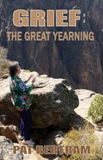
It seems odd to be pleased over the imminent release of my grief book, as if I’m trying to capitalize on grief, but the grief is a done deal. That particular sadness is here whether the book gets published or not. I do think it’s something to be pleased about, though. It will be a helpful book, both as a companion for people who are dealing with a grief that few of their family or friends understand, and for people who want to understand what their bereft loved one is going through.  It also seems odd to be a cover girl — That certainly was never one of my ambitions! — but I couldn’t imagine a better photo for the cover than this one of me at the Black Canyon of the Gunnison. It was a completely spontaneous photo. My hands were supposed to be on the rock, but I started turning at the last minute. (Much to the chagrin of my brother who took the photo. He made me do it over, but the do-over wasn’t as evocative as this one.)

Perplexed by the Anything-Goes Publishing World (Part II)

Yesterday I wrote about how this new wild frontier, this stampede to publish and be damned (or not) of the new publishing world and how it could be lowering literacy standards because of the almost blythe acceptance of errors in books. The prevailing attitude is that as long as the writer is satisfied with the book, that’s all that matters. Neither they nor their readers seem to care if their story is derivative, if the editing is slipshod, if typos litter the pages.

To add to the confusion of this anything-goes publishing world, books that do well are seldom the best. Often, these successful books are the result of a very aggressive promotion campaign or the result of luck — by being chosen by Amazon for an aggressive promotion campaign or by hitting the right market at the right time.

It seems as if the world is a poorer place if good books are destined to remain undiscovered simply because the author is a wonderful writer and a mediocre promoter. Since we reward wonderful promoters who are mediocre writers with huge numbers of sales, the whole book business becomes even more skewed than it already is. People think that good books will rise to the top, that such books will automatically find a readership, but that is not always the case. And shrugging off the conundrum as “survival of the fittest” doesn’t help matters.

Some people think readers are screaming for quality, that readers are lost in the stampede, but when you consider the vast number of sales made by a few mediocre but bestselling traditionally published authors, most people are not screaming for quality. They are screaming for . . . comfort, perhaps. Predictability. A community of like-minded readers.

To make the situation even more complicated, publishers are not taking responsibility for marketing the books they publish. They want their authors to do that.

I recently read an article by a publisher who said that a publisher’s role was simply to prepare a book for market and to make it available. That’s it. Learning how to promote, navigating the insanely competitive book market, marketing one’s book, paying for book tours and conferences — all of that is the responsibility of the author. So then why does an author need a publisher at all? With Create Space, Lulu, Smashwords, and now Goodreads getting into the epublishing business, authors can prepare their own books for market. And what they can’t do, they can hire done, and keep all the profits. And authors by the millions are doing that very thing.

Maybe the problem I’m having coming to terms with this new wild frontier stems from a life-long respect for books, a sense that books are somehow sacred. Maybe it’s time for me to give up that old-fashioned attitude and treat books like any other temporary reading commodity, such as a blog post or a cereal box.