Perplexed by the Anything-Goes Publishing World (Part I)

In a recent discussion on Facebook, someone mentioned the case of a self-published story that was being offered for sale on Amazon. A woman posted a review, stating her opinion that the work was far from ready for publishing, and she gave the writer several examples of how to improve, but the writer took these comments as insults. What ensued was a protracted argument between the writer and the reviewer.

The Facebooker who brought this exchange to our attention asked who was right and who was wrong. I thought the reviewer brought up some excellent points, gave wonderful suggestions for redoing the story without getting disrespectful about it. (And the reviewer could have gotten nasty. The story really was atrocious.)

I can’t imagine arguing with a reviewer as the author did, though. A couple of times I have privately asked a reviewer to remove a spoiler that gave away the ending (and the reviewers graciously complied) but the writer in this case had a terribly unprofessional and arrogant attitude. She more or less said she could publish whatever she wanted, it didn’t have to be perfect, and too bad if people didn’t like it. Unfortunately, there are millions like her, which leaves me continually perplexed by the entire book business today.

The major publishers have had control of publishing standards for way too long. I certainly have no love for conglomerates or corporate thinking, so I don’t object to a lessening of their control. On the other hand, many writers now think they don’t need any standards at all. They say they can write whatever they wish, however they wish. The prevailing attitude is that as long as the writer is satisfied with the book, that’s all that matters. They don’t care if their story is derivative, if the editing is slipshod, if typos litter the pages.

Some of these writers even manage to sell a significant number of copies of their books.

Self-published writers seem to be a militant lot, demanding the same respect as authors whose books are published by a traditional or an independent press, yet self-published authors adhere to no one’s standards but their own, while a book that was accepted by and released by a publishing company has had to live up to at least the publisher’s standards. But some self-published writers do adhere to a high standard of literacy while some bestsellers released by the major publishers have an appallingly low standard of literacy.

Does any of this matter? With texting and twittering, leaving out letters of words to shorten them or using number for letters is standard. (AFAIK, u cn rd this. Me 2. LOL) Eek. Whole novels have been written in such shorthand.

Do kids today learn grammar in school? Do they need to know grammar? With spell check and grammar check on their computers, probably not. So, if books today have grammar mistakes, punctuation mistakes, typos, do most people even notice? Those of us who have spent a lifetime reading do notice, but do we count? We value language, but is language important? Language is an evolving organism, so perhaps those of us who quail at poorly written and poorly copy written books are running a race that has already been lost. A new generation grows into adulthood every year along with a new generation of electronic toys and tools and together they spawn a new generation of idioms. A new language.

I don’t know why this new anything-goes publishing world perplexes me. Most writers seem thrilled with the new order of doing book business. They don’t have to take the time to research the business, finding out which agents will accept their genre and which publishers they can submit to without an agent. They don’t have to learn how to write query letters or learn how to write a description and a hook. They don’t need to learn to deal with rejection. And especially, they don’t need to learn how to improve their work to make it as near perfect as possible. They simply decide to publish. That’s all it takes.

And most readers seem thrilled to find myriad books to download to their new ereaders.

So perhaps it’s just me who worries about a lessening of standards. Perhaps this new frontier, this stampede to publish and be damned (or not) is what everyone else wants. It’s certainly not the first time in my life the world didn’t act in accord with what I thought was the right direction for it to take, and it certainly won’t be the last.

See also: Perplexed by the Anything-Goes Publishing World (Part II)

Book Bits #114 – Kudos to Beauty & the Book, Roald Dahl stamps, William Gibson, Queen Elizabeth

Three reasons to read Malcolm R. Campbell‘s Book Bits #114

1. It’s the best compendium of book information orbiting the blogosphere

2. It has a link to my Pat Bertram Introduces blog where I interview Benjamin Cheah, an author from Singapore

3. It has a link to the incomparable Beth Hill’s latest article for her The Editor’s Blog.

Book Bits #114 – Kudos to Beauty & the Book, Roald Dahl stamps, William Gibson, Queen Elizabeth.

(If you would like to do an interview for my Pat Bertram Introduces blog, you can find the questions and instructions by clicking here: Pat Bertram Introduces . . . )

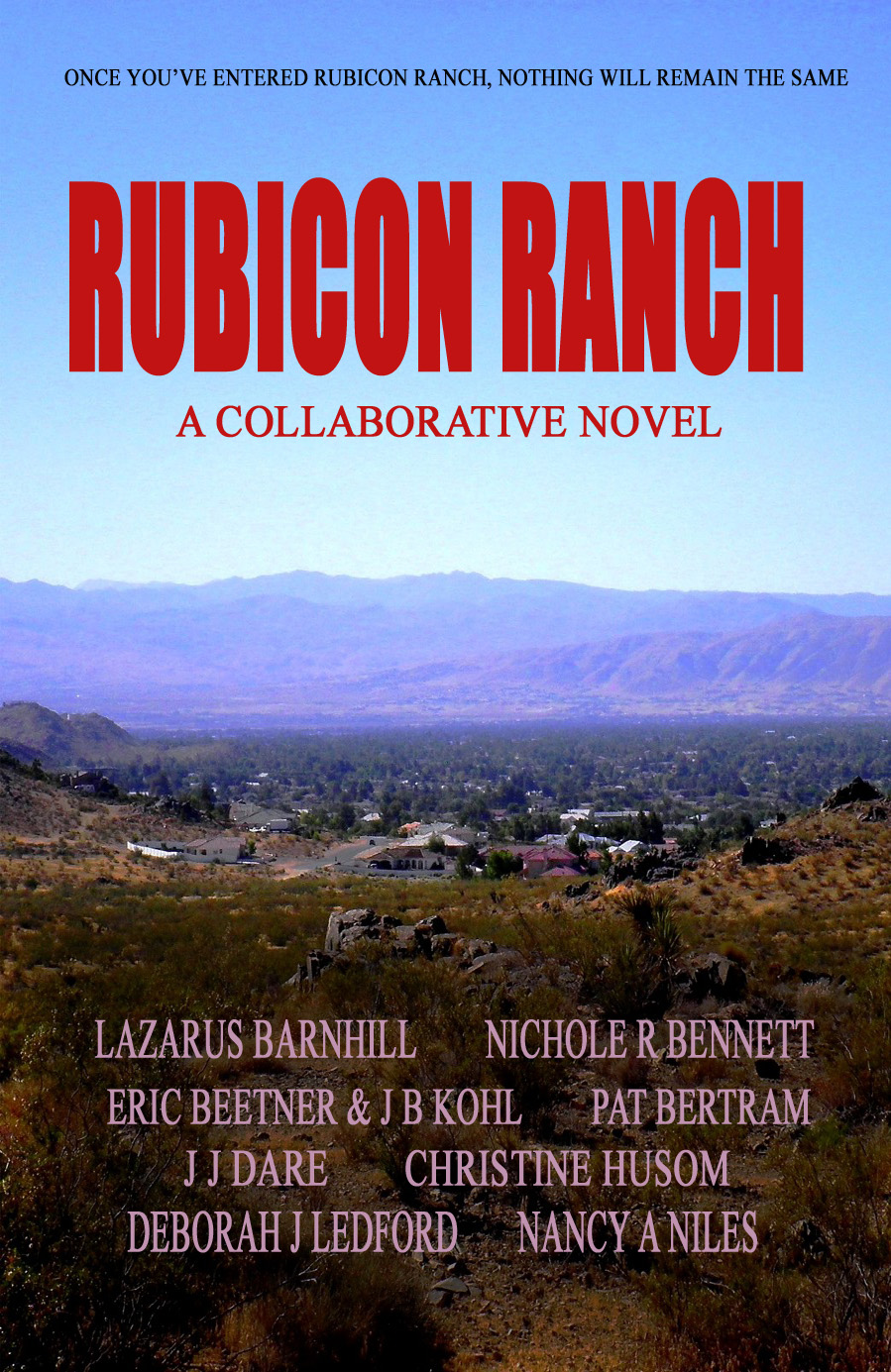
Rubicon Ranch: A Collaborative Novel

I am involved in a wonderful project with eight other Second Wind authors. Rubicon Ranch is an ongoing collaborative novel that we are writing online. It is the story of people whose lives have been changed when a little girl’s body was found in the wilderness near the desert community of Rubicon Ranch. Was her death an accident? Or . . . murder! But who would want to kill a child? Everyone in this upscale housing development is hiding something. Everyone has an agenda. Everyone’s life will be different after they have encountered the Rubicon. Rubicon Ranch, that is.

Each of us writers is responsible for the development of our own characters. My character is Melanie Gray. She has traveled the world with her husband, a world-renowned photographer. Together they authored many coffee-table books (she did the writing, he the photographs). One of the books told about mountains of the world, one about rivers, one about oceans, one about forests, and now they have a contract to do deserts. After they rented a house in Rubicon Ranch to begin their in-depth study of the southwestern deserts, he died in a car accident.

Now, not only does Melanie have to deal with the pain of losing her husband and figuring out what she’s going to do for the rest of her life, she needs to fulfill the publishing contract or she’ll have to reimburse the publishers, which she cannot do because the advance is all but spent. Since she is not a photographer, she roams the desert bordering on Rubicon Ranch, taking hundreds of photos, hoping that a few of them will accidentally end up being as brilliant as her husband’s photos always were. She finds the child’s body and takes photos of the scene after calling 911. At first she is a suspect but once the Sheriff has ruled her out, he requests her help in reading the desert and desert-related clues. Still, the sheriff does not trust her completely, thinking she is hiding something.

Chapter 26: Melanie Gray — by Pat Bertram

Fury, like wildfire flashed through Melanie. Fury at the sheriff for paying his silly games when people were dead, fury at herself for playing his fool.

She’d been flattered that he thought she could help with his investigation, but apparently the only thing he’d been investigating was her and how to get in her panties. And she’d fallen for it. Cripes, what an idiot! All her resolve not to let him get to her had been for nothing.

And that whole seduction scene—”So maybe, when I need you to help me, I won’t have to bully you. You’ll cooperate with me because you understand that getting my job done honestly is the most important thing to me.” Did he believe his own drivel? And anyway, how could she help when he wasn’t doing anything? It had been two days since Riley died. Didn’t they say that if they didn’t catch a killer within the first forty-eight hours that chances are he or she would never be caught? And the sheriff had wasted those precious hours trying to seduce her.

She’d fallen for Alexander’s crap and apparently she hadn’t learned anything, because here she was again, playing straight-woman for another unprincipled clown. Alexander, at least, had offered her adventure and marriage, and for a while he had even been faithful. But Seth? What did he have to offer? Nothing. He was married, and he was a taker. He’d take everything she had, which wasn’t much, just her integrity, and she’d be damned before she let him tarnish that with a tawdry affair. She’d seen the look in his eyes when he’d said “And I know you’d rather claw out my eyes and slash my throat than let me touch you.” And that look had belied his words. He seemed to think all he had to do was pretend to know her and she’d fall into his oh, so understanding arms.

“What?” he said, sounding as if he didn’t know exactly what was going through her mind. How could he not? He, Sheriff Seth Bryan, the great detective.

“As if you don’t know.” Melanie spit the words from between clenched teeth.

Seth’s brows drew together in an almost believable though comic look of confusion. “That’s such a typical womanish remark. I thought you were different.”

“You thought I was gullible and naïve. You thought since I put up with Alexander’s philandering, I’d put up with yours, too, but that is not going to happen. Only a fool gets involved with a married man, and whatever you think, I am no fool.”

Seth held up his hands, palms toward her. “Whoa.”

“Being a widow does not make me ripe for the plucking. I don’t need to be serviced like a bitch in heat. Believe me, the last thing I need in my life is a man, especially a married man. Calling it separate maintenance does not make you any less married.”

He flashed his teeth. “So you do like me. You’re protesting too much.”

“Not protesting enough, apparently, or else you wouldn’t have that silly grin on your face.”

He lost the grin. “What’s going on here? I thought we were having a nice meal while we went over the case.”

“You should be going over the case with your deputies. They, at least, seem to understand how inappropriate it is for you to include me in your investigation. Unless I’m still a suspect and you’re trying to get me to let down my guard and confess?”

“I told you, you were never a suspect.”

“As if playing with me, gigging me as you called it, is any better. So let’s discuss the case. What were the results of the autopsy? Was Riley murdered or was it an accident? If she was murdered, how was it done and who did it? Were there drugs in her system? Have you interrogated her parents yet to find out what they’re hiding? Have you found out who the dead man is and what, if anything, he has to do with Riley’s murder? You pretty much ignored me when I said he looked liked Riley, but then, that’s understandable. I never got a good look at the girl. All I saw was her jaw line, her nose, and her eyebrows, so whatever I blurted out after seeing the man’s corpse has to be discounted. Did the same person kill both of them? Or were there two different killers? Or . . .” Melanie paused to grab the thought that flitted through her mind. “Did he kill Riley and someone else kill him?”

Seth picked up his sandwich, dipped an end in the au jus, bit off a piece, and chewed slowly.

Melanie nodded. “That’s what I thought. You’re all talk.” She deepened her voice and mimicked him. “‘We have to solve these murders.’ Yeah, like there really is a we. Well, there was a we, but that was Alexander and me. You and I will never be a we.” A cough shuddered through her torso. She took a long drink of water, hoping she wasn’t coming down with a cold but was merely dehydrated from the strong air-conditioning and her rare monologue.

Seth gave her a searching look, opened his mouth and then closed it again with what sounded like a resigned sigh. She wondered what he’d been going to say and why he thought better of it, then she let out a sigh of her own. It didn’t matter. She had enough to do with grieving and fulfilling her book contract. She had nothing left for the sheriff and his investigation. Whatever he might think, she really didn’t know anything. Well, that wasn’t strictly true. She did know one thing.

She threw her napkin on the table and stood, ready to flee.

Seth gaped at her. “What’s going on?”

“I’m going home, Sheriff Seth Bryan. I’m through with your games. You lied about investigating Alexander’s accident. I saw the photos in the newspaper and I visited the scene of the accident. There was nothing there to indicate that the crash had been anything other than an accident. Perhaps someone had tampered with the car, but the only way to find that out was to investigate the vehicle itself. And you didn’t care enough to check it out.”

***

An additional chapter of the book will be posted every Monday. Please join in the adventure — it should be fun! We don’t even know whodunit and won’t know until the end. You can find the earlier chapters here: Rubicon Ranch

Writing a Book I Didn’t Know I Was Writing

In Style: Writing as the Discovery of Outlook, Richard M Eastman says: “You don’t begin to write with a complete message or experience already imagined, which is then to be wrapped in language as a means of sending it to your readers. Writing isn’t so much communication as creation. In a real sense, you don’t have an outlook on anything without first having written on it. This outlook comes into being through the dozens of tests, choices, and unexpected chances which turn up as you write on some engaging topic; and most writers agree that the final creation isn’t anything you could have precisely anticipated when you first set pen to paper.”

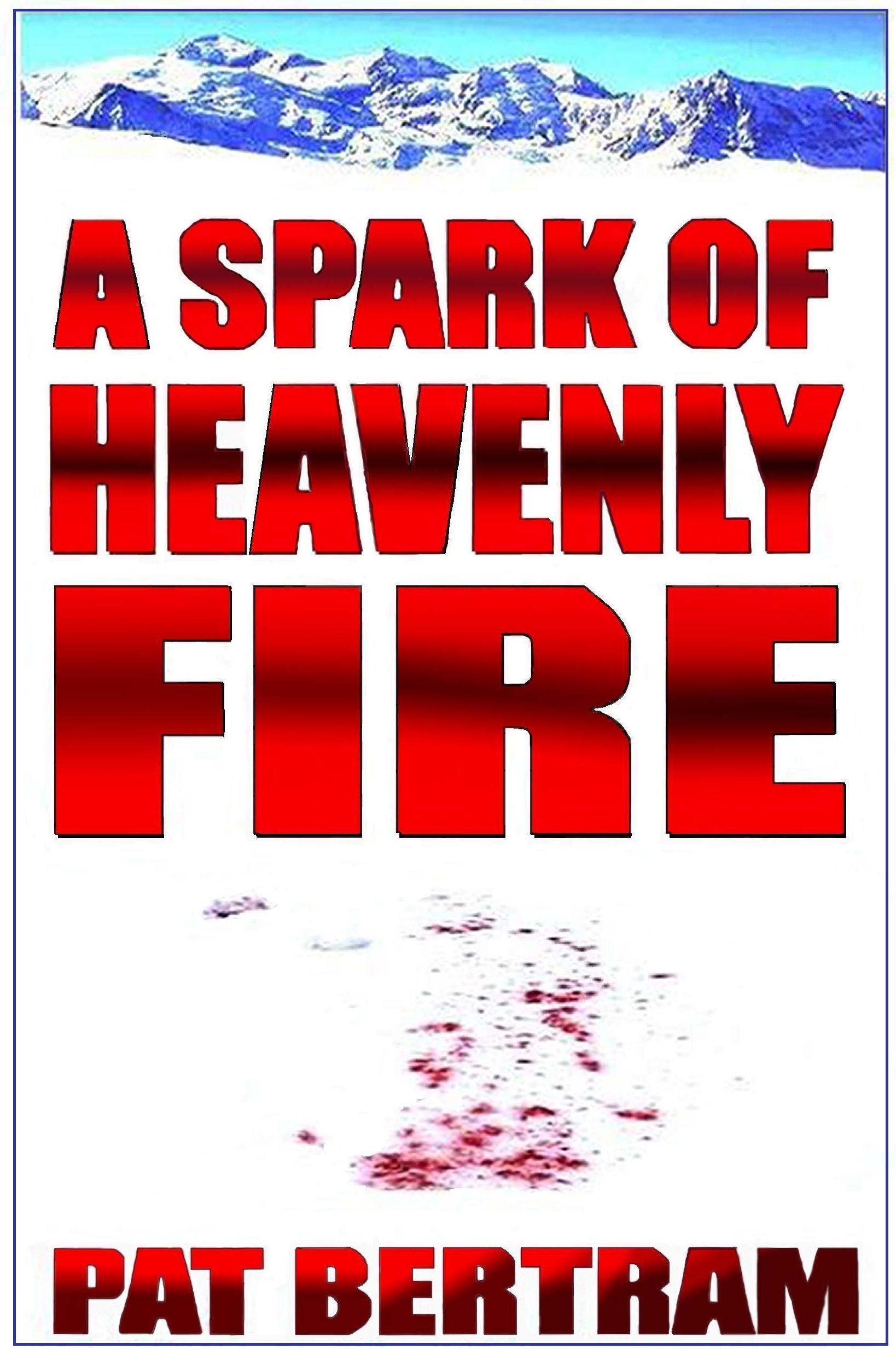
Eastman’s discovery of outlook holds true for my fiction.  I know the story when I begin, I know the ending, and I know a few important scenes, which should mean that I know the whole story, but I don’t. I am not the same, my outlook is not the same, when I finish writing the story as when I began, so the story is not exactly as I intended. The creation process itself creates the change in outlook. Writing is all about the choices we make, and continue to make, all through the creating, editing, proofing. Sometimes I find that I’ve written a book I didn’t know I was writing. A Spark of Heavenly Fire was supposed to be the story of women who could barely cope during times of prosperity when everyone else was doing just fine, but they came alive and dazzled during dark times when everyone else could barely cope. That story is still there in A Spark of Heavenly Fire, but the overriding story is the story of love in all its guises: self-less love, self-love, friendship, romantic love, parental love, obsession.  This theme of love came about through the various elemental choices I made during the course of the book, and it makes novel strong, much stronger than it would have been if it remained simply the story of women who come alive in times of hardship.

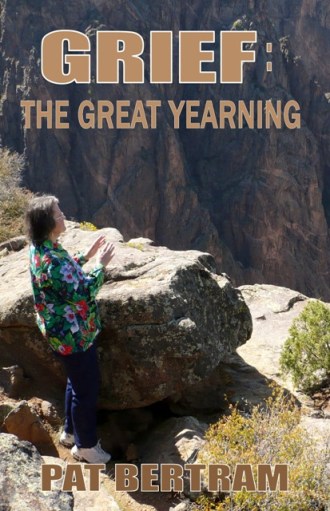
And Eastman’s discovery of outlook especially holds true for my non-fiction. I wrote a book about grief, a book I didn’t know I was writing. After the death of my life mate/soul mate twenty-one months ago, I found solace in writing about his death and my grief, in blogging about it, in writing letters to him. And now, some of those writings have coalesced into a book that people have called “exquisite,” “profound,” “raw and real.” I wrote to help me come to terms with the soulquake I experienced after he died and with my continued grief. But what the book ends up being is a great love story, the story of a love that transcends time and physical bonds. He might be dead, my love for him is still strong.

I know what you’re going to ask, but no, the book isn’t published yet, but it should be released in March 2012. I’m putting the finishing touches on the book now, adding the few photos I have to further illustrate our life, and then it heads back to my publisher so they can add a cover and get it published.

One unintended benefit of getting the book published is that afterward, this blog will not be quite so schizophrenic. Part of the time I write about writing, the rest of the time I write about grief. The book will pull both parts of this blog together, and it will become a cohesive whole. I wonder if the book will do the same for me, help pull me together somehow, bridging two very different parts of my life — the part where I once shared a life,  and the part where I’m left alone to pick up the pieces of that shattered life.

Are You Playing The Kindle Game?

People keep saying that Kindle, even more than other reading devices, has revitalized the book industry, making books affordable and reading more accessible. They say the market is expanding, that people who never read are now interested in books. But is this true? Are they interested in reading, or are they interested in playing the Kindle game, downloading books as fast as possible to fill their new toy?

One reason people always gave for not reading is that they don’t have time. Do people suddenly have huge extra blocks of time to read, to get into a book, to explore new ways of thinking and experience new ways of being? I think not. It seems that reading is now part of the multi-tasking generation, where you read while doing something else. Is this reading? People say that reading is not a solitary activity any more, that new enhanced reading apps make it social. If so, is this really reading?

The other half of the Kindle game is the author game, where selling as many books as possible, is all that matters. Whether people actually read the book is immaterial. Of course, the major publishers started this game a long time ago, this game of sales records, and now it’s been taken to the people where anyone can play. But that doesn’t mean the books being sold then or now are worth reading.

When I mentioned in a comment to a fellow blogger that Amazon was a major publisher, she corrected me and said it was a sales platform, like using WordPress. It’s a perfect analogy, and it explains an unusual phenomenon — my rapidly increasing blog rating. It always used to hang around 3,500,000 on Alexa.com, but suddenly, for no reason I could see (my readership is growing, but not enough to explain a leap in rankings), my blog began increasing in rank, and now it’s at 929,990 (out of 346 million sites). Are blogs disappearing (or falling off the scale) because people are now uploading things for Kindle that they once posted on their blogs? If so, then books are being devalued to the level of a bloggerie.

Makes me wonder if I’ll ever take up writing again.

But for now, if you are playing the Kindle game, all my books are available both in print and in ebook format. You can get them online at Second Wind Publishing, Amazon, B&N and Smashwords. Smashwords is great! The books are available in all ebook formats, including palm reading devices, and you can download the first 20-30% free.

This is the third post where I’ve been mulling over the current state of the book business. The other two are: Is the Book Business Dying? and First the Bread Wars, Now the Book Wars.

First the Bread Wars, Now the Book Wars

Before a certain well-known bread was manufactured, people bought their bread fresh every day from a local bakery. When bread was first mass-produced and packaged in a colorful wrapping, people were hesitant to buy because they didn’t believe it could be fresh since it hadn’t been baked that very morning. So, what did the bread manufacturer do? They had people drive up and down the streets handing out loaves of their bread to everyone they saw. Who could pass up a free loaf of bread? Not many people, that’s for sure. One free loaf wouldn’t have made an impact. That brand of bread would have become just one choice among many. But . . . the company kept giving away the bread, day after day after day. Soon people began to expect free bread. They stopped buying bread from their local bakers, and eventually, those bakers went out of business. The manufactured bread became the only choice in town, a price was attached, and the price went up and up and up. And people had no idea this coup d’état had taken place or that they had been pawns in a major cultural revolution.

That story might sound like a fairy tale, but it happened. And it’s happening again, though this time it’s about books. There is a war going on between Amazon and the major publishers to determine the course of the book business, and we are all pawns. People laugh at the entrenched publishers, saying they don’t have a clue where the book business is going, but the truth is, they do know, and they are fighting back. It’s a war of price — what to charge readers to buy an ebook (most people who own kindles seem to believe they paid their price of admission by buying the kindle and that anything they download should be free or pretty close to it). And it’s a war of literary value. Dinner and a movie costs a small fortune now, and the pleasure is fleeting. The movie is forgotten, but even before that, the food becomes waste. Why should a book, especially a thoughtful, well-written book be valued less than human waste?

Make no mistake about it. Books are being devalued at this very minute. People think they are in the vanguard of a fight for the people’s right to write and publish whatever they wish without having to kowtow to the old publshing standards. But who are they working for? Amazon. With all the free books people are uploading onto Amazon, Amazon doesn’t even have to manufacture a product like the bread company did. People are standing in line, begging to give them product, hoping to be one of the chosen few who makes a mint selling books. And Amazon is playing them like a violin, choosing certain books to promote, showing everyone that yes, it is possible. But only if you give Amazon the keys to your literary kingdom.

Perhaps people do have the right to write and publish whatever they like, good or bad. The major publishers certainly didn’t do a good job of it, shoving crap down our throats and expecting us to like it, but once upon a time, there were standards. Sure, some good books were rejected out of hand, but others were published, polished, promoted. It was a golden age of reading, but it came to an end because of corporate greed and the first devaluation of books. Bottom line became important, quality was slashed, books were chosen not so much on merit but what a person standing in a grocery story line would be apt to throw in their cart. People didn’t seem to care since there were so many other entertainment choices vying for their spare change.

So now, books are being devalued even more. Amazon is spewing out bestsellers as fast as the major book publishers are. It sounds nice, doesn’t it: let readers decide what they want to read. But it doesn’t happen that way. Readers are inundated with constant demands to “buy my book!” Dross is being over-promoted at both ends of the spectrum — the traditionally published books and the self-published kindle books. The books that come to the general reader’s attention are those the various book publishing companies choose to push (and make no mistake about it — Amazon is a publisher in a major way), and the books that the relentless and shameful marketers are bringing to your attention. Of course there are good books at both ends of the spectrum. But the vast majority are books that any discerning reader couldn’t stomach.

There is a third player in this war, though so far they seem to be standing by, bewildered by the onslaught. These are the small, independent, royalty paying publishing companies who follow the traditional publishing model to the extent that they accept submissions but choose to publish only the best.

People assume I am a kindle author because I am so visible in various places on the internet, but I am not. My books were chosen out of a slushpile, and were accepted by Second Wind Publishing. It would be nice if, after the gunsmoke clears away, that we few, we chosen few, are still left standing.

Is the Book Business Dying?

Is the preponderance of self-published books killing the book business? I’ve been reading articles about how Amazon is promoting self-published ebooks — a few people have been picked by Amazon arbitrarily, and Amazon promoted these books constantly for a week and made them best-sellers. I’ve seen a couple of these best-selling self-published ebooks, and they are so poorly written, I can’t see why anyone would buy them, but since people do buy them, it must mean readers don’t care about good writing or good story-telling. I’ve also seen books go viral for absolutely no reason I can fathom. (And often, the writer has no clue, either.) Most often, these books go viral only on Amazon, with no bleed-over into other ebook formats, which means Amazon has an amazing control of the book business.

There seems to be a movement going on to erode the traditional means of determining a worthwhile book, with vast numbers of people saying book standards are dead and they can write however they choose, without regard to grammar or story-writing skills. Which apparently is true, since such books find a market. (And often, these books get 5-star reviews, which says more about the reviewer than the book.) There is also a growing militancy among self-publishers. If you say anything against the practice, there is a huge backlash of disapproval.

I’m not saying all self-published books are poor quality — some are well written and well-edited and deserve their acclaim. Nor am I saying that traditionally published books are good quality — most are not worth reading. But with books on both ends of the spectrum selling millions of copies, is there any place for those with well written, unique, and perhaps thoughtful books who aren’t self-published and who don’t have a major publisher behind them to push the books? Or have the people spoken and said they have no use for such books?

When books are so prevalent, especially when vast numbers of readers seem to have no ability to determine what is worthwhile, books become devalued. Albert Nock, in the 1930s, disagreed with universal literacy. He contended that when everyone can read, books will be written to appeal to the least common denominator, and there is no doubt that during the subsequent decades, books were published based on their ability to appeal to the most readers possible. If there is any truth that book quality declined with universal literacy, wouldn’t it be even more true if there is universal publishing?

Historically, whenever one product or category of products dominated the market, it presaged the end of that product. If you are old enough, you remember when the streets were clogged with VW Beetles, and now you seldom see one. Is the preponderance of books on the market today the beginning of the end?

Letter to Book Reviewers

Dear Book Reviewers:

I love your enthusiasm for my books, I appreciate your support, and I’m especially thankful you took the time out of your busy day to review the books and post the reviews, but . . . must you give away so much of the plot? A review is not a synopsis and readers do not need you to reveal every major plot point of the book. And they especially do not need (or want) you to tell them how it ends. What people want is a reason to read the book, and if you tell them too much, you have taken away any reason for them to read it, in which case you have done us all a disservice. And I am sure that was never your intention.

I don’t mean to sound harsh or ungrateful, but I spend a lot of time mapping my books, slowly revealing the truth, each new revelation dependant on the one that comes before, so that by the end of the book, people end up believing (at least for the moment) that the story is true. If surprises are revealed out of sequence, it breaks the chain of evidence. So not only will readers know what to expect, they will be robbed of the unique experience of believing something foreign to their everyday lives.

As a general rule, if you must, you can mention things that happen in the first fourth of the book, and for sure you can hint at what will happen in later chapters without mentioning specific events, but anything beyond that is a spoiler and should be noted at the beginning of the review. (For example: “This review contains spoilers.”) Those who don’t like surprises will continue reading your review. Those who do like surprises can choose not to read it.

Recently I’ve asked a couple of you to remove spoilers from your reviews, and you kindly and graciously agreed, and for that, I thank you. Others of you refused to change a word, saying you stand by what you said. I did not ask you to change your opinion. I merely asked you to remove the spoilers, which did not merit the abusive reply.

For those of you who don’t like my books, that’s fine, but please don’t write a dismissive review based on what the books are not. My books are not romances, (though all contain a romance of sorts) so do not expect them to follow the genre conventions for romance novels. My books are not apocalyptic, so do not expect them to follow the conventions for such stories. If you need a tag for the novels, call them thrillers, call them suspense, call them conspiracy novels, or you can call them “typical Bertram.”

As Malcolm Campbell said of Light Bringer, it is “typical Bertram: plots within plots, multiple characters with multiple agendas, fast moving, more than enough mystery and intrigue for everyone.”

Respectfully,

Pat Bertram
author of Light BringerMore Deaths Than One, A Spark of Heavenly Fireand Daughter Am I. All are available for Kindle on Amazon.

Thinking Through My Fingers

Writing, to me, is simply thinking through my fingers. — Isaac Asimov

The art of writing is the art of discovering what you believe. — Gustave Flaubert

Occasionally, after writing about grief, I get concerned messages from readers or facebook friends suggesting that I might want to see a therapist. Or I get messages of pity, which is strange — why should they feel sorry for me when I don’t feel sorry for myself? The very word — grief — scares people, and worries them, and my use of the word gives people the wrong impression of me. Although I’m on a journey through grief, I don’t spend my days in bed crying my eyes out. I don’t shrink from life or hold myself stiff against onslaughts of pain. I haven’t numbed myself into unfeelingness. In fact, I live normally. I’ve come through the worst of the pain stronger (though not much wiser, at least not yet). I do still have grief bursts, but mostly I’m just . . . journeying.

The problem with continually putting my thoughts and feeling out there for anyone to see is that readers draw their own conclusions based on their own experiences, and sometimes those conclusions don’t reflect my truth. I don’t always like seeing myself through pitying eyes, so periodically I decide to stop writing about grief, and sometimes I do stop for a week or two, but I always come back to it because my message is an important one:

Grief is normal. If a friend or loved one is grieving, and it bothers you, get over it. It is not your problem. Give them the respect they deserve and the space they need to find their way through grief in their own time. (Admittedly, a small percentage of people have trouble and get stuck in one place, but if a person’s grief is fluid — continually changing — chances are she is doing just fine.)

Besides, whether I’m actively grieving or just processing what I’ve learned, writing about grief is a way for me to learn the truth. (And, as I explained yesterday, in my Grief is a Gift post, I have always been a truth-seeker.) So why should I let anyone’s “concern” stop me from thinking with my fingers and discovering what I believe?

Sometimes the discoveries surprise me. In a post a few days ago, What Do You Say to Someone Who is Grieving at Christmas?, I wrote: “Nothing you can ever say will bring the bereft what they most need: life to make sense once more. (That might not be what we most want, but it is what we most need.)” I didn’t realize this before I wrote those words, but it’s the truth. And in this post, I discovered something. I didn’t know until I saw the words, “my message is an important one” that I had a message, had something I wanted to impart with my grief posts.

So, as I continue on my journey through grief, I will still write about it — or not — depending on how I feel, not how anyone else feels.

When You’ve Seen One Shopping Center . . . You’ve Seen a Mall.

I went to a mall today to do an errand for someone. This was only the second time I’ve been in a mall in over ten years, and I walked around in amazement. What did anyone want with any of that . . . stuff? What did they do with it? Why would they even want it?  I saw tons of things (several tons, actually) but not one item caught my eye.  That’s not true. Two things caught my eye — a mannequin in a store window with a huge Christmas bow in place of her head and a sign outside another store that said: The entire store is buy one get one free. Such a great sale — if I had the money to buy one store, I’d get a second absolutely free!! Did that include the merchandise,  or just the name and empty shelves? Alas, I could find no answer to my query, only blank stares

The title of this blog post came from an email that’s going around, and if you are another lexiphile (lover of words) like me, you will get a kick out of my punting this list around. (Did you catch my cleverness? Two word plays in one!! Kick and punt, and pun-ting because most of these are puns.) I can already hear your groans, either because you’ve seen these before, or because you haven’t.

Lexiphile’s list:

You can tune a piano, but you can’t . . .  tuna fish.

A dentist and a manicurist married. . . . They fought tooth and nail.

To write with a broken pencil is . . . Pointless.

When fish are in schools they sometimes . . . Take debate.

A thief who stole a calendar . . . Got twelve months.

The professor discovered that her theory of earthquakes . . . Was on shaky ground.

The batteries were given out . . . Free of charge.

A will is a . . . Dead giveaway.

If you don’t pay your exorcist . . . You can get repossessed.

With her marriage, she got a new name . .. . And a dress.

Show me a piano falling down a mineshaft and I’ll show you . .. . A-flat miner.

You are stuck with your debt if . . . You can’t budge it.

Local Area Network in Australia : . . . The LAN down under.

A boiled egg is . . . Hard to beat.

When you’ve seen one shopping center . . . You’ve seen a mall.

Police were called to a day care where a three-year-old was . . .. Resisting a rest.

Did you hear about the fellow whose whole left side was cut off? . . . He’s all right now.

If you take a laptop computer for a run you could . . . Jog your memory.

A bicycle can’t stand alone; . . .. It is two tired.

In a democracy it’s your vote that counts; in feudalism, . . . it’s your Count that votes.

When a clock is hungry . . .. It goes back four seconds.

The guy who fell onto an upholstery machine . . . Was fully recovered.

He had a photographic memory . . . Which was never developed.

Those who get too big for their britches will be . . . Exposed in the end.

When she saw her first strands of gray hair, . . . She thought she’d dye.

I wondered why the baseball was getting bigger . . . . Then it hit me.