All the Elements of “Daughter Am I” Meld into a Life-like Drama

I don’t often get fan mail, so when I do get a personal message, it really perks me up. And when I get a message like the following, it makes my day:

Hi Pat –

I have a confession to make, and this has nothing to do with the fact that you plan to read my book. No ulterior motives.

Normally I avoid buying/reading books by friends online because 80% of the time (a conservative figure) I find myself stuck with a real clunker, then feel frustrated as to what to “report” when the “writer” friend wants my opinion. I don’t like being dishonest but, you know how it is. Underwhelmed is one thing, but having to read a bumbling, disjointed, retch-worthy error-filled story resembling an eighth grader’s essay makes me nuts. So I tend to run the other way.

Discounting my modesty about my writing side, I will freely admit to being a terrific reader. No reason for shyness or modesty there. I know what I like and can tell the difference between the work of a hack and a real talent. Pat — you have talent.

I’m not sure why I broke my own “rule” when I bought Daughter Am I yesterday — but the book hasn’t disappointed me. It’s a great story. The characters are believable, identifiable, purposeful, & entertaining. The scene description is just enough — not undercooked or burnt to a crisp. And the plot moves, holds attention & makes the reader (me) anxious for more. You certainly understand how to make all elements of a story meld into a life-like drama. There you have it — my unsolicited opinion. I’m really impressed with Daughter Am I and thought I’d say so.

Have a great day.

These words brought tears to my eyes. That someone liked my book so much they felt compelled to write me was an unexpected and most gracious Christmas present.

Quite coincidentally, I am being interviewed on my publisher’s blog today about this very book. If you’d like to know more about the novel and its cast of entertaining characters, please click here: Interview With Pat Bertram, Author of “Daughter Am I”

All my books are available both in print and in ebook format, perfect for holiday gift giving. You can get them online at Second Wind Publishing, Amazon, B&N and Smashwords. Smashwords is great! The books are available in all ebook formats, including palm reading devices, and you can download the first 20-30% free! 

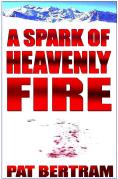
“A Spark of Heavenly Fire” Embodies the Essence of Christmas

Washington Irving wrote: “There is in every true woman’s heart a spark of heavenly fire, which lies dormant in the broad daylight of prosperity; but which kindles up, and beams and blazes in the dark hour of adversity.” As I read these words several years ago, I could see her, a drab woman, defeated by life, dragging herself through her days in the normal world, but in an abnormal world of strife and danger, she would come alive and inspire others. And so Kate Cummings, the hero of my novel A Spark of Heavenly Fire was born. But born into what world?

I didn’t want to write a book about war, which is a common setting for such a character-driven story, so I created the red death, an unstoppable, bio-engineered disease that ravages Colorado. Martial law is declared, rationing is put into effect, and the entire state is quarantined. During this time when so many are dying, Kate comes alive and gradually pulls others into her sphere of kindness and generosity. First enters Dee Allenby, another woman defeated by normal life, then enter the homeless — the group hardest hit by the militated restrictions. Finally, enters Greg Pullman, a movie-star-handsome reporter who is determined to find out who created the red death and why they did it.

Kate and her friends build a new world, a new normal, to help one another survive, but other characters, such as Jeremy King, a world-class actor who gets caught in the quarantine, and Pippi O’Brien, a local weather girl, think of only of their own survival, and they are determined to leave the state even if it kills them.

The world of the red death brings out the worst in some characters while bringing out the best in others. Most of all, the prism of death and survival reflects what each values most. Kate values love. Dee values purpose. Greg values truth. Jeremy values freedom. Pippi, who values nothing, learns to value herself.

Though this book has been classified by some readers as a thriller — and there are plenty of thrills and lots of danger — A Spark of Heavenly Fire is fundamentally a Christmas book. The story begins on December 2, builds to a climax on Christmas, and ends with renewal in the Spring. There are no Santas, no elves, no shopping malls or presents, nothing that resembles a Christmas card holiday, but the story — especially Kate’s story — embodies the essence of Christmas: generosity of spirit.

(Why does A Spark of Heavenly Fire begin on December 2 instead of December 1? Glad you asked that. All through the writing of the book, I kept thinking: if only people could get through the first fifty pages, I know they will like this book. So finally came my duh moment. Get rid of the first fifty pages!! With all the deletions and rewriting, I couldn’t make the story start on December 1 as I’d originally intended, but that’s okay since it didn’t end on December 25 as I had hoped. The story overgrew it’s bounds, but the symbolism still held since it ends around Easter.)

Amazon: http://www.amazon.com/Spark-Heavenly-Fire-Pat-Bertram/dp/1935171232/ref=ntt_at_ep_dpt_4

Smashwords: http://www.smashwords.com/books/view/1842 (You can download the book in any ebook format, including a format for palm held reading devices!! Even better, you can download 30% absolutely free to see if you like the story.)

Barnes and Noble: http://www.barnesandnoble.com/w/spark-of-heavenly-fire-pat-bertram/1100632312?ean=9781935171232&itm=2&usri=pat+bertram

Introducing Joylene Nowell Butler, author of “Dead Witness” and “Broken But Not Dead”

Someone left a comment on my blog the other day, then apologized for intruding where he didn’t belong. This worried me. I wondered what I had done to make anyone feel unwelcome. Then it occurred to me that I have made so many friends here that perhaps it seems like a private blog. When you talk about the important things in life (writing, grief, life itself) you connect quickly, even though the commenters might live in such mythical places as Canada, New Zealand, Australia, and Georgia (USA).

Joylene Nowell Butler was one such commenter who has now become a friend. We have never met, might never meet (though I would like to), but the connection is very real. She eased a terrible time in my life with her wisdom and sympathy, with her steadfast presence. I’m ashamed to admit, I am remiss about returning the favor and visiting her blog, A Moment At A Time On Cluculz Lake, though I intend to get over there more frequently. She has insightful posts, wonderful guests, and gorgeous photos of Cluculz Lake in Canada.

Joylene is the author of suspense thrillers Dead Witness and Broken But Not Dead. In honor of our friendship and the publication of her second book, I am gifting her with a mini blog tour.

I am interviewing her today on another of my blogs. Click here to find the interview: Pat Bertram Introduces . . . Joylene Nowell Butler, Author of “Broken but not Dead.” I always enjoy hearing (seeing) how other authors view writing and the writing life. Don’t you?

Click here to read an excerpt from: “Broken but not Dead” by Joylene Nowell Butler

More than three years ago, I posted an invitation to interview characters, and she was one of the few who took me up on my offer. It impressed the heck out of me! (That was how and where we met.) Here is that interview: Pat Bertram Introduces . . . Valerie McCormick, Hero of “Dead Witness” by Joylene Nowell Butler

Click here to read an excerpt from: “Dead Witness” by Joylene Nowell Butler

Thank you for everything, Joylene. I hope you have a fantastic New Year, filled with hope and peace and many wonders.

Make Every Character Count by Dave Ebright

Tonight I’m posting an article by an author friend of mine. I don’t know where I met him — perhaps here on this blog — but now we’re connected at various sites. He’s quite a character, this Dave Ebright, and he penned an award-winning pirate story for young adults called Bad Latitude. (Even the title cracks me up.) Dave’s second YA novel, Reckless Endeavor is on its way to me right now, probably spending the night in a lonely USPS outpost somewhere. I can hardly wait to read it! Adventure, the haunted town of St Augustine, and dead pirates. What’s not to like?  Here is what Dave has to say:

I was participating the other night on Pat’s forum at GATHER, No Whine, Just Champagne (which is a very worthwhile place to hang out & chat about the craft of writing on Thursday nights at 9PM EST — not a paid commercial message) & made a comment that got me in deep trouble with my friend & our awesome moderator. So here I am, making amends & torturing Pat’s readers with … gulp … an opinion. Here’s how it all started (unedited):

(ME) “I actually wrote a blog post on a writerly topic about making every character count — then I realized — Who the heck am I to be writing something about writing? — so I deleted it.

(PAT) “Um . . . Dave? What are you talking about? Why shouldn’t you write about a writerly topic? If you’ve seen half the crap out there about writing that I have, you’d understand that you have more right than most. Did you save any of the post about making every character count? If not, can you rewrite it? I’d love to post it on my blog if you don’t want to post it on yours.

So, here is my writerly blog post.

_________________________________________________________________________

Make Every Character Count by Dave Ebright:

Google the phrase “Make every word count.” Writers & teachers use it repeatedly in articles, on blogs, in classrooms & as part of ‘how to’ seminars. Great advice but there could be a Part B which should read – make every character count.

Recently, while reading a bestseller’s novel, the need for another form of economy in writing all but screamed from the pages. The book contained so many characters it needed an accompanying playbill for reference. It was difficult to follow & by the mid-point, the slog was on. The plot faltered, confusion set in & my interest waned.

I have written two books, both part of a YA series, with another on the way. As most writers discover (& hopefully strive for), the writing improves from one effort to the next. Word economy can be one result, as well as the decision-making. There are twenty-four characters in my first book. Five of them make only minor contributions to the story. The second book has but fifteen & all play vital roles, affecting the action, enhancing the humor or taking center stage for relevant scenes. Limiting the number of characters was intentional, the result of lessons learned, but I was determined that every character would serve a purpose.

Now forget the “writerly” approach, I’m not comfortable with it anyway. Try this.

The characters are part of your book’s team. You want to pick the best players to participate. You coach & develop them via edits & rewrites to become interesting, memorable, funny or evil. Since it’s your team (book), you decide on who gets the playing (plot) time. Anyone given the privilege to make your team has to contribute or they’re benched, or jettisoned to the bilge of a pirate ship. Whew! Now that sounds more like me.

Writing for only four years hardly qualifies me as an expert but as an avid reader who happens to write, character fillers performing busy work are distractions. Sure, make every word count, but take the same approach with your characters.

Okay – I’m gettin’ back to doin’ what I do best now.

Feel free to chop, edit or delete altogether, Pat – no hard feelings.

I didn’t chop, edit or delete a single word. I was right — this writerly discourse by Dave Ebright deserved a better fate than ending up in the recycle bin. Dave made a good point, one that is often overlooked: make each character count. He made another good point: No Whine, Just Champagne is a great place to hang out on Thursday nights. We’ve been having some wonderful chats about writing and the writing life. Here is a link to the most recent discussion, the one that inspired this post, Maximum Capacity — No Whine, Just Champagne Writing Discussion #170

Is There too Much Promotion on Facebook?

I got a message from a woman on Facebook the other day asking if I’d be willing to write a post about too much promotion on sites like Facebook. At first, I thought this would be an easy task. I detest all the self-promotion that goes on at the site, especially in the groups.

Some promotion is understandable. Pages, of course, are all about “soft sell” promotion, and so any promotion that goes on there is part of the package.  Mostly I use my fan page for announcements, such as kindle sales, and for discussions. (You can find the current discussion here: Do your characters always act at maximum capacity? Should they?)

What people post on their own profile, of course, is up to them. Self-promotion is sometimes the least offensive thing they post on their profiles. How many times can the same dang too-annoyingly-cute-for-words animal video or cloyingly sweet sentimental photo/saying be shared? Sometimes the same thing shows up in the feed day after day after day after day. . . But I digress.

I thought I did a lot of promoting on my profile, in which case I would be the last person to talk about too much promotion on Facebook, but here is a list of the last twelve things I posted on my Facebook profile:

  • Two posts were about Malcolm’s Book Bits and Notions, a great compendium of links to publishing/writing/book news, which everyone in the industry should subscribe to.
  • Two posts were brags — 1) I just posted my 700th blog post!!! and 2) My blog is ranked 177,350 of all blogs and websites in the United States. People stay an average of 4 minutes. And based on internet averages, ptbertram.wordpress.com is visited more frequently by females who are graduate school educated and browse this site from work. At least according to Alexa.com
  • Two posts were pithy observations: 1) At the grocery store today, I saw a book written by someone I met here on facebook when they were first starting out. An odd commentary of our times when hitting the grocery store endstacks means hitting the big time. 2) I doubled my memory!! Facebook works faster now. I don’t.
  • One was an announcement for my live chat on gather.com: Maximum Capacity — No Whine, Just Champagne… | Gather (Same discussion as on my facebook page, but with different participants, and different comments and conclusions)
  • One was an announcement of an article (written by me) that was published in Angie’s Diary: Rhythm in Writing | Angie’s DIARY
  • One was an announcement of the Second Wind Publishing Short Story contest: Short Story Contest. No Entry Fee!
  • The remaining three were links to my blog posts.

Does any of that constitute promotion? In some respects, all of it does, but it’s not blatant. At least I don’t think it is. Maybe you have a different opinion on the matter.

Nor do I promote in the groups I moderate. I post links to interviews I do with other other authors, I welcome new members to the group, and sometimes I post questions to get people to talk. Mostly what I do as moderator is delete everyone’s promotions. The group decided to ban self-promotion except on Saturday because they were sick of it, but apparently everyone assumes that self-promotion is what everyone else does, not what they themselves do. So they continue to post links to their books, links to reviews of their books, requests to “like” their page, and all the other blatantly self-promoting things that we all do on occasion but hate when anyone else does.  Instead of just turning everyone loose on Saturday, I’ve turned Saturday into a self-promotion extravaganza, which has become a lot of fun, and maybe people sell a few books from it, but still, it’s promoting to other authors. We need to be promoting to readers, not each other. This is a concept many authors don’t seem to get. Nor do they seem to understand that being generous and promoting other authors does not take sales away from themselves. I keep plugging away, though, trying to build a kinder, more giving group, one that is not so deep into self-centered promotion.

So, when the woman asked me to write an aritcle, I thought I knew what to say: that there was too much self-promotion on Facebook. Anything interesting gets buried beneath the constant barrage of “Look at me! Buy my book!” But . . . and here’s the sad truth . . . for some people, this constant self-promotion is catapulting them into star status on Amazon. Just because I think there is too much promotion on Facebook, doesn’t mean that there is too much from other people’s points of view.

Recently I’ve been reading a lot of articles about promoting on Facebook, looking for the magic ingredient that I seem to be missing. The only thing I can see that I am missing is a willingness to constantly and blatantly plug my books. One guy maxed out five profiles and made a fortune.  (Of course, that fortune came from the money he made off his book telling how to max out your profile, but it was still a fortune.) I was near maximum capacity on my profile once, but didn’t want to have to switch solely to a page — I like the interaction on the profile — so I unfriended all the blatant promoters such as the multi-level marketers, the people trying to sell me self-improvement books, people urging me to buy their book that will tell me how to make money on facebook, the people who had maxed out their profiles or were about to, and I was left with about 2,000 friends. I’m trying to make friends with my friends, to see if in the long run that will help sell books. And if it doesn’t? I’ve still gained a lot of online friends.

This has turned out to be a rather lengthy post when in fact all I wanted was to get your opinion. Do you think there is too much promotion on Facebook? What would an acceptable form of promotion be? Do you mind all the promotion? Do you do a bit (or a lot) of promotion yourself? If so, what do you do to promote yourself?

Short Story Contest. No Entry Fee!

Now that you’ve blogged about what you are thankful for and stuffed yourself with Thanksgiving goodies, now that you have finished your NaNoWriMo entry and celebrated your success, now that you have survived your Black Friday shopping and have not yet gotten into the Christmas mood (or have already gotten out of it)…

Think Spring!!

Second Wind Publishing is sponsoring a short story contest. The theme is . . . you guessed it! Spring. Spring and renewal to be exact. Your stories do not have to be light and uplifting (which should be welcome news for all of you writers who pen dark fiction), but they do have to fit the theme. The story should be your own work, no more than 5,000 words, and must not have been published anywhere, not even on your own blog.

There is no entry fee.

The contest is open to anyone in the world, 18 or older, though the entry must be written in English. The deadline is December 31, 2011. The best entries will be posted on the Second Wind Contest Blog for everyone to read and comment.

The winning entry will be published in the upcoming Second Wind anthology, Change is in the Wind. This anthology is a collection of stories by the authors of Second Wind, so the winner will be in good company. (Since I’m a Second Wind author, I will be writing a story for the anthology. Well, I will as soon as I figure out what I want to write.) The winner will also receive a coupon from Smashwords.com for an unlimited number of free downloads of the anthology for one month. The coupon can be sent to as many people as you wish during that month. The winner will also be able to purchase an unlimited number of print copies of the anthology at half price plus shipping costs. And the winner will receive a one year free VIP account from Angie’s Diary, the online writing magazine to help you get even more exposure for your writing. ($99.95 value).

So what are you waiting for? Encouragement? Then here it is: you can write a wonderful short story! I know you can! So please send your story as a Word .doc or .docx to secondwindpublishing@gmail.com.

For more information, click here: Second Wind Contest Blog.

Have You Ever Seen a Goose Do Anything Silly?

Why is a goose silly? The ancient hieroglyphic for foolish fellow is a goose, so obviously this disparagement of geese goes back to the origins of language. I’ve met a few geese recently, and I have yet to see one do anything silly. They look arrogant (as you can see from the photo I took today). They seem very goal-oriented (when food is in the offing, they hasten to get their share). And they are a bit intolerant of other species of fowl who might also be after that food. But silly? No. In fact, they are very smart and loyal. They fly in a V-formation, which is the most efficient way to travel. The lead geese do the hard work, breaking wind resistance so the geese trailing behind get a bit of rest, and they rotate positions, so none get too tired or too lazy. They also mate for life, which is more than you can say for a lot of humans. So why silly as a goose? Why not silly as a seal? Or silly as a dolphin? Or silly as an otter? All of those creatures are subject to antics, though of course, that might be our human perspective rather than the truth.

Why is an owl wise? Though portraying an owl as wise may be complimentary, it’s every bit as inane as calling a goose silly. What does an owl ever do to make humans perceive it as wise? Perhaps because, except for a few ambiguous hoots, an owl keeps his beak shut. Humans who don’t talk much are often considered wiser than they are, and perhaps they really are wiser than the rest of us. At least they are wise enough to keep their yaps shut so they can’t stick their feet in their mouths. (While we are on the subject — have you ever stuck your foot in your mouth? Perhaps tripped on a faux pas and landed in that awkward position? Not me, but then, I’m not very bendy.)

Why is a dog sick? They aren’t particularly sick now, not when they eat specially formulated foods and are given specially formed treats to keep them satisfied. It used to be that dogs ate what humans didn’t, ate whatever they could scrounge, and such scroungings often made them sick. Hence the expression, which oddly, we still use today though it has no more meaning than silly as a goose or wise as an owl.

Why is a clam happy? Why not? No job. No bills. Sunny days on the beach. What more could a mollusk want? High tide, apparently. Clams can only be dug at low tide, so a clam is especially happy at high tide when they are free of human interference. Happy as a clam is a shortened version of the original simile “happy as a clam at high tide.” Never having seen a clam at either low or high tide, I can’t vouch for its state of mind, can’t even vouch that it has a mind, so I will have to take the clammers word for this.

Why is a berry brown? Chaucer was the first to use this simile, and he used it at least twice: “His palfrey (horse) was as broune as is a bery” and “Brown as a berry, short, and thickly made.” Authors today still use this term, most often to describe suntanned children for some inexplicable reason. Maybe Chaucer’s “bery” was a typo? (Or a quillo if he used a quill pen.) Maybe he meant brown as a bear. Or brown as a wheatberry. There are some brown berries, but were they ever so common as to prompt Chaucer to use the simile multiple times?

The true mystery of all these phrases is not their origin, but the mystery of why we are still mindlessly using these out-dated similes today.

Action Scene from “A Spark of Heavenly Fire”

Here is an action sequence from A Spark of Heavenly Fire. I worked hard on this particular scene. Rewrote it about a dozen times. Took out all extraneous words. Removed most of the character’s thoughts. Condensed the descriptions. Shortened the sentences. I wanted the action to zing! And maybe I accomplished my goal. Today a woman told me that A Spark of Heavenly Fire was so intensely emotional and so tightly written that she had to pause to rest while reading it. She said was glad of the breaks because it stretched the book out longer. Made me feel good to know the book meant that much to her.

Pippi watched the two boys come nearer. With their eyes alit with laughter, they looked young and innocent, like children playing a game.

The larger boy stopped, raised his rifle to shoulder height. All at the same time, she felt something whizzing by her face, heard the crack of the rifle, and saw a piece of bark flying off the tree next to where she stood.

She stayed rooted to the spot. She knew she should run, wanted desperately to run, but her body refused to cooperate.

Jeremy grabbed her coat and yanked her behind a thicket of bushes, where they stood ankle-deep in leaves.

“Listen,” he said urgently. He tugged at her coat. “Are you listening?”

With robotic jerkiness, she turned her head to look at him.

“Yes,” she answered, marveling at how far away her voice sounded.

He lay face down on the ground. “Cover me with leaves.”

She gazed at him, not comprehending.

“Cover me with leaves,” he said harshly. “Now! Do it now.”

She dropped to her knees.

As she scooped the wet, soggy leaves over him, he said, “As soon as you’re done, I want you to start running. Zigzag through the trees. Make a lot of noise so they think we’re both running away. And whatever you do, don’t look back.” He turned his head and looked up at her. “Got it?”

Pippi nodded, but refused to meet his eyes. How could he talk to her like that? Blinded by tears, she finished covering him with leaves, then took off running.

The binoculars banged against her chest, branches tore at her hair, rocks tripped her, and still she ran.

She stopped for a moment to massage a stitch in her side. To her horror, she saw the boys up ahead, coming straight at her.

She looked around in confusion. Seeing the thicket of bushes and the mound of leaves covering Jeremy, she realized she had come full circle.

She glanced at the boys; they leered at her and licked their lips.

Her skin prickled.

The smaller boy, whose hair had been dyed a deep crayon blue, thrust his pelvis forward and cupped his crotch with his hand. The larger boy, blond ponytail swinging, flailed his arms and legs in a gross burlesque of a woman running.

The boys convulsed with laughter.

Still laughing, the blond boy raised his rifle. With his finger crooked on the trigger, he aimed it at her.

Suddenly the mound of leaves at the base of the bushes erupted. A creature—barely recognizable as Jeremy, with his tensed body and his rage-distorted face—sprang toward the young blond rifleman.

The boy didn’t even have time to turn his head.

Dressed in camouflage clothes as Jeremy was, it looked as if the very leaves reached out, grabbed the blond ponytail, pulled the boy close, and made three rapid sawing motions across his throat.

Blood spurted in a bright red arc from the boy’s neck.

It happened so fast that when Jeremy tossed the blond aside, the blue-haired boy was still cupping his crotch and laughing.

Jeremy turned to confront him. The grin slid off the boy’s face. He dropped his rifle and raised his hands. His eyes, the irises rimmed with white, were riveted on the bloody knife.

Read 30% free at Smashwords: http://www.smashwords.com/books/view/1842

Kindle Edition $4.99 http://www.amazon.com/Spark-Heavenly-Fire-Pat-Bertram/dp/1935171232/ref=cm_cr_pr_product_top

Giving Thanks for Words

Every day I find something to be grateful for, even if it’s only that the sun is shining, that the pain of loss is muted, that I once had a great love, that I have open spaces to explore (both in my head and in the world). Even when all else seemed bleak these past nineteen months, even when I had no hope, there was always something to be grateful for (most often that my mate was no longer suffering), so I don’t need to set aside a special day of thanksgiving.

Still, during this season of giving thanks, there is something I am especially grateful for, something worth celebrating . . . words.

Words convey thoughts, ideas, hopes from one person to another. They connect us from continent to continent, enabling us to bond with like-minded people all around the world. I have exchanged words — and friendship — with people from New Zealand, Australia, Canada, the Nederlands, India. And for this I am grateful.

Words allow us to read and to write, to find entertainment and enlightenment in worlds created out of nothing but letters strung together. Words allow a story, concocted in one mind, to come to full realization in another. For most of my life, these worlds of words have been my life, or at least a major part of it. Now that I too am a world-creator, I am grateful for the words with which I build my stories.

Words give comfort, especially when distance (either geographic or emotional) does not allow a touch of commiseration. I am especially grateful for all the words of encouragement you (the readers of this blog) have given me during my time of grief, words that touched me. I hope some of my words touched you.

Words mean hope. With words, there is always the hope that we will be able to come to an understanding of each other, and perhaps find peace. (Of course, people would have to shut up long enough to listen to each other’s words; one-way words cause conflict and confusion.)

Words mean community and continuity. Words, both spoken and written, presuppose that there is someone to listen, and that is community. Telling our his-stories and her-stories to each other creates both community and continuity. They tell us who we were, who we are, and who we hope to become.

If there were no one to hear our words, if we existed solely in ourselves, we’d still need words to communicate our feelings and ideas to ourselves. This ability to put our thoughts into words gives us the power to know ourselves and to understand greater truths.

So this week, whether you celebrate the U.S. Thanksgiving or not, stop for a moment to give thanks for words. They are we.

Can Characters Really Change?

A couple of days ago I wrote a blog postulating that Without Changes, You Have No Story, and I stick to that premise. Characters need to change, the relationships of the characters to each other need to change, story expectations need to change, the direction of the story (and each scene) needs to change. But there was a discussion on that blog post centered on what degree it is possible for characters to change, and if they truly do change, and that made me think.

Some psychologists say we never change in any basic way, that our characters and essential personalities are our foundation, that we can only change in small ways, such as changing our habits or changing our focus. This is at odds with books about writing, which claim characters must do a complete about face, a 180° turnaround to show how the events of the story affected the characters. I thought I’d created strong character arcs for each of my characters, with my characters ending up different from the way they began, but now that I consider it, I don’t see that my characters change in any fundamental way. They become more of who they were, perhaps, but not recognizably different.

In More Deaths Than One, we see a gradual change in Bob Stark, the hero, see his current concept of himself eroded until he becomes what he once was and now will always be. (A bit cryptic, I know, but since this is the crux of the story, I don’t want to spoil it in case you haven’t yet read the book.) But he didn’t really change. He only seemed to change.

In A Spark of Heavenly Fire — which was inspired by a Washington Irving quote: “There is in every true woman’s heart, a spark of heavenly fire, which lies dormant in the broad daylight of prosperity, but which kindles up and beams and blazes in the dark hour of adversity.” — Kate Cummings seems to change in response to the red death and the resulting martial law that is destroying Colorado, seems to kindle up and beam and blaze in the dark hour of adversity, but there are hints in the story that she was always like that. Her spark of heavenly fire — her generosity — was merely hidden from herself and from us until a life-altering event stripped her to the core.

In Daughter Am IMary Stuart never truly changes, though she also seems to change. She was unsure of herself, unsure of what she wanted, unwilling to make a commitment of any kind even to a job, until she set out to discover who her grandparents were, who wanted them dead, and why her parents lied about their existence. It wasn’t out of character, perhaps, for her to drive halfway across the country in search of the truth because she only went along with what others wanted. At least in the beginning. As the journey progressed, she learned the truth she was seeking, and an even greater truth — who she is. She is granddaughter, daughter, and herself. Mostly herself. But that isn’t a change. It’s a discovery. A coming home.

In Light Bringer, neither Becka nor Phillip change. Again, they just discover who they are, a truth that had been kept from them their whole lives. In all my books, but Light Bringer especially, what changes is the reader’s perception of who the characters are. The truth is slowly revealed, and each revelation seems to show a change in the characters, but in the end they simply become what they always were.

How very odd to learn this so long after having written the books.

(Click on a title to read the first chapter of the book.)