Dellani Oakes, A Denizen of My Online World

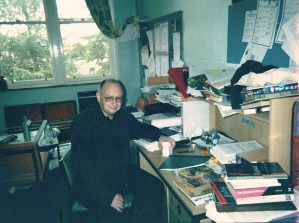
I’d like you to meet Dellani Oakes, a wonderful writer, great blogger, Facebook friend to thousands of readers and authors, blog talk radio host, fabulous reviewer. Hmmm. I think I listed everything. Nope — forgot to mention the most important thing of all: she’s also an indefatigable writer. Her two published novels are Indian Summeran historical romance and Lone Wolf, the first novel in a new science fiction series. Both were published by Second Wind Publishing. (Click on the title link to read the first chapter of each book.) She has 54 works in progress at last count  and a notebook with hundreds of  other ideas for short stories and novels. When asked recently how she thought of all those stories, she replied: “There are more ideas in my head than I can get written down in one lifetime. I’ll have to live forever.”

We can only hope to have her around so long!

You can meet Dellani at Dellani’s Choice, the new blog she recently started to post author interviews and reviews of books she has read. Or you can meet her at Writer’s Sanctuary, her original blog. She’s been collecting author’s book titles & their links as a holiday guide for people who want to find great gifts. So be sure to check out Writer’s Sanctuary.

Click here for an interview with: Dellani Oakes, Author of Lone Wolf

Click here for an interview with: Wil VanLipsig from Lone Wolf  by Dellani Oakes

Click here for an interview with: Manuel Enriques, Hero of Indian Summer by Dellani Oakes

Click here to friend Dellani on: Facebook. Tell her Pat sent you.

Without Changes, You Have No Story

Change is the reason for a story. Without change, you have an anecdote, perhaps a description of a life or a time, but no story.

Whenever there is change during the course of the story, and — more immediately — during a chapter, a scene, a page, even a paragraph, it advances the story. These changes should be interesting and compelling in themselves, but they should also worsen or improve the status of a character, raise new questions in readers’ minds as to the story’s outcome, and prepare for scenes to come.

Changes can be major alterations in a character’s life, such as the death of a loved one, or they can be as subtle as the touch of a hand. Changes can jolt the reader or give them a false sense of security so you can hit them with a major change later to better effect.

We often put characters through changes we want to explore. Lately, the only fiction I can write (to the extent that I write fiction, which isn’t much) is if my main character experiences a grievous loss. Apparently, I need to explore this change in my life any way I can, hoping to find a more appealing outcome. Perhaps that’s why I’ve been sticking to blogging and an occasional (very occasional) piece of short fiction — I can’t find a more appealing outcome to the changes in my life, can’t even imagine any appealing outcome, so I can’t write it.

In quest stories, the hero has to transform herself into the person who can bring about the necessary outcome, so maybe I’m still undergoing my transformation, and eventually, this transformation will change the outcome of both my story and the stories I write.

Writing doesn’t just happen, nor does it happen in a vacuum. Our stories change us every bit as much as we change our stories, in an every tightening spiral. We create episodes of change so that the characters will change which in turn change the plot, which in turn change the whole focus of the story, which in turn changes our relationship to the story.

While writing A Spark of Heavenly Fire, I was researching Pingfan and the human experiments that were being done there (some on American POWs) and I thought I’d found something that few others knew. Afterward, in every novel I picked up, there was a mention of Pingfan, so I had to change the focus of the book, which in turn changed the characters and how they got to the end. (The end was a given — I’d written that chapter about halfway through — I just needed to find a way to get there.) Many of the conversations I had about this Pingfan oddity ended up in the book, which gave the story an added depth.

Some psychologists say we never change in any basic way. That our characters and essential personalities are our foundation. We can only change in small ways, such as changing our habits or changing our focus. This is at odds with writing coaches who say that a character must do a complete about face. That about face is possible if it is motivated, if there is a reason for your character’s basic change. Normally, a smart person doesn’t become stupid overnight and a stupid person doesn’t become smart, though abnormal situations can create such changes. Flowers for Algernon, for example, or Regarding Henry.

Although change is important, many characters don’t change — take detective novels, for example. Most of the classic detectives were the same from the first page to the last. But other characters in the stories changed, and the situations changed, which kept the detectives changing direction and focus. So while they themselves didn’t go through any sort of metamorphosis, the stories still seemed to be about change.

Sometimes a character’s inability to change is the story. For example, if a character was tortured and despite the horrors, never changed, it would tell you a lot about the character, and how his non-change changed the world around him. (This was the theme of several movies, though I can’t remember a single title. Can’t remember the movies, either. Perhaps this isn’t as compelling a scenario as I thought.)

Almost anything can bring about a change. Lies can bring about change, the truth can bring about change, a knock on the door, a trip. Even something so simple as losing weight. I once had a friend, a lively teenage who was quite obese. Everyone kept telling her she would be so pretty if she lost weight. She did lose a lot of weight. Started before school let out and spent the whole summer being active and eating right. She wasn’t more attractive. And she wasn’t more popular. About broke her heart. Became sullen and morose. And depressed. And regained all the weight. Which is an example of another type of change — where the character changes but ends up the same as at the beginning.

Some questions to ask yourself if you need to delve deeper into the changes that occur during the course of your book:

What changes do your characters undergo?
Do you keep the changes coming at an ever dizzying rate or do you throw small changes at your characters, changes that add up over time?
Are your characters the same at the end of all these changes? Is their situation the same?
Is the final outcome a major upheaval for the character or merely a change in focus?
Do all your characters change, or just the main character?
How do you bring about the changes?
Are the changes an intrinsic part of the story or just thrown in for the sake of change?

The Miraculous Resurrection of the Suspense/Thriller Writers Group on Facebook

A few days ago I talked about how when I first joined Facebook, I hadn’t a clue what to do, and how quite by accident, I became a moderator of an almost defunct writing group called the Suspense/Thriller Writers. I was trolling around the site, looking for groups that might interest me, and I stumbled on that particular group, which had but eight members. On the right sideboard was a button that said, “become a moderator of this group.” I was curious what becoming a moderator would entail, so I clicked the button. And that’s how I became the moderator of the group. To make it a viable group, rather than a typical Facebook group where people just posted book covers and other promotional bits, I decided to have weekly discussions.

We had some great discussions about improving our craft, but facebook, in it’s infinite wisdom (that is irony, in case you didn’t catch it) decided to get rid of the discussion boards. Without the discussion board and the help we offered each other, any serious discussions rapidly disappeared beneath the steady stream of self-promotion. So all we could do was post information about our books, and in doing so, we lost many of those serious about writing.

On Sunday, something miraculous happened. The members of the group began talking about what they wanted from the group and what they didn’t want. Mostly, what they didn’t want was blatant self-promotion, and especially from members who never bothered to participate in any group activities. So, we decided to limit such promotion to Saturday (and I’m hoping to make that a fun day where everyone gets together to talk about their books).

This is the first time in a very long time I’ve felt any excitement at being on Facebook. Not only did we reclaim our group, but I made new friends and reconnected to some long-time facebook friends who had disappeared from my newsfeed.

And today, something else miraculous happened. I found the link to our original discussion board!!! It’s still viable, just not linked to the group, so I don’t know if  it’s worth using, but all that great information is not lost, and losing the information worried me most of all.

So where did I find the link? Here on my blog!! I have a terrible habit of blogging about everything in my cyberworld, and once (or twice or who knows how many times!) I blogged about my facebook activities.  Three years ago exactly (well, minus one day — the post was November 14, 2008) I asked people to join the Suspense/Thriller Writers group, and listed some of the links. And darn if those links don’t still work! Wow!

So, if you’re interested in learning more about writing, meeting writers, networking, join the Suspense/Thriller Writers. All writers (and readers) are welcome. If you don’t think you write suspense, think again. Whatever genre you write, you still write suspense. Suspense at its most basic is making readers worry about what is going to happen to your characters. If they don’t worry, they have no reason to read. Besides, all genres make use of the same basic story elements: plot, characterization, scenes, description. So, see you on Facebook.

Speaking of facebook, you can friend me here: Pat Bertram, but if you want to friend me, be sure you tell me why (say you saw me on my blog or some such). I don’t friend everyone who asks, though I once did. I want to actually get to know the people I know. Also, you can “like” me here: Pat Bertram. I hope you do. “Like” me, I mean.

Here is My Point: There Needs to be a Point When it Comes to Writing

I saw an indie movie yesterday that was so indie it could actually be considered self-produced. Well, truthfully, it was self-produced — and it went straight to video without a big screen debut, which is something you should all be thankful for. The only reason I watched it was that it was filmed near where I am staying, and I had fun trying to figure out where all the scenes had been filmed. There was no other reason to watch it. The actors were terrible. (I’d read once that a good actor was one who acted natural on the screen. These folk were so unnatural as to make paper doll cut-outs seem life-like in comparison.) The plot was derivative. (You know the story — drug dealers, undercover cops, only one cop left alive at the end and you wish he’d died along with all the rest.) The camera work was appalling — looked as if it had been filmed with a cell phone (as one of my fellow movie watchers put it).

So, here’s my question. Why did they make that particular movie? What were they thinking — “Let’s make a movie that’s been made a zillion times before, but let’s see how bad we can make it”? I know they weren’t trying to showcase talent — there wasn’t any. They weren’t trying to have fun with dialogue — it was stilted and silly at best. They didn’t show the drug dealer vs. cop conflict in any new light. So, what was the point? I still don’t know.

This is the same question I ask myself about many of the books I read, and I get the same response — I don’t know what the point is.

But here’s my point — there has to be a point, especially when it comes to books, because if there is no point, why would anyone read it? A writer can write for herself, of course, which might be the point of writing the book, but we readers need a reason to read it. Even if it’s a light romance or a cozy mystery written only to entertain, there still has to be a reason for it. People do read for entertainment, but if a book gives a reader nothing new — no new experience, no new understanding, no interesting character or situation, no wit or humor, just a rehash of what has been written too many times already — there’s not even any entertainment value in it.

I recently read a well-touted book from a debut author, someone I had met on facebook.  I looked forward to the book since this woman posted such interesting and witty remarks that I thought for sure her book would be as interesting. It was, to a certain extent — it was well-written, the dialoque was sort-of snappy (though it often came across as contrived) and the story was okay. But it was only okay, nothing special. There was no spark of originality, no reason to care about the character, nothing that explained why hundreds of people wrote glowing reviews. I might be getting to be a bit of a curmudgeon, since obviously I was one of the few who found the book disappointing, but the truth is, I was disappointed. All the way through, I kept thinking, “Why am I reading this? What’s the point?”

Books don’t need to have a message — in fact, books with messages are often not worth reading — but there has to be a reason for the book to exist beyond an author’s imagination, even if it’s just for us readers to see what happens to a character we care about.

Introduction to Beth Groundwater, Author of “A Real Basket Case”

When I first joined Facebook, like many new members, I hadn’t a clue what to do, so I became a moderator of an almost defunct writing group called the Suspense/Thriller Writers. Sounds ho-hum, doesn’t it? But it was that simple. I was trolling around the site, looking for groups that might interest me, and I stumbled on that particular group. It had eight members at the time. On the right sideboard was a button that said, “become a moderator of this group.” I was curious what becoming a moderator would entail, so I clicked the button. And that’s how I became the moderator of the group. To make it a viable group, rather than a typical Facebook group where people just posted book covers and other promotional bits, I decided to have weekly discussions.

Brazen me, I picked people from the group at random (after an active membership drive I had over 1,500 members because those were the days authors were signing up for facebook  in droves. Or do I mean signing up in murders — you know, like a murder of crows. What else do you call a convocation of mystery writers?) and asked if they’d like to host a discussion. That was my introduction to Beth Groundwater. Three years ago — November 13, to be exact — I asked if she’d host a discussion, and she said yes. (One of the many strangenesses of Facebook is that the email discussion about the discussion is archived for all times, which is how I know the date, but the discussion itself, which took place on November 18, 2008, has disappeared into the great maw of Facebook’s yesteryear.)

It was an apropos discussion, too, considering all the changes Facebook has made. To lead off her discussion, Beth said, “I’d like to see the members of this group help each other figure out how to effectively use the features of Facebook to promote themselves and their books without turning off members of the network.” Today, without the discussion board and the help we offered each other, any serious discussions rapidly disappear beneath the steady stream of self-promotion. So all we can do is post information about our books, probably turning off the members of the network in the process.

The discussions may have disappeared from the group, but Beth is still there and still a class act.

The title of this post is Introduction to Beth Groundwater, Author of “A Real Basket Case,” but all I did was natter on about me and my running battle with Facebook. So, I’ll tell you what — if you click the link below, it will take you to my other blog where I am interviewing Beth. And that interview is all about her. I promise.

Click here for an interview with: Beth Groundwater, Author of “A Real Basket Case”

Do Blogs Need to Have a Single Topic?

untitle

Most articles about blogging mention that you need to pick a topic for your blog and all your posts need to center on that topic. Is this really necessary? I suppose if you are a literary agent who sets himself up as an interpreter of the publication industry (explaining what one needs to do get published, for example), you’d need to stick to your topic, otherwise you’d lose your readers. Or if you are a marketing coach who is trolling for clients, it would be a good idea to stick to the topic at hand. But what about the rest of us? Specifically, what about us authors? Is it necessary for us to stick to a single topic? And if so, what should that topic be?

I have two fairly well-received blogs that are topic-oriented — Book Marketing Floozy, which is an indexed blog of book marketing tips and hints written by various authors, and Pat Bertram Introduces . . ., which is a blog for interviews with authors and their characters.  (Ahem! You know this because, of course, you have already submitted an interview, right?! If you haven’t yet submitted your interview, you can find the instructions and questions here: Author Questionnaire. I’ll be waiting for it!!)

I also have a third blog that isn’t as highly rated as those two, but it is rated (if an Alexa rating of 21,000,000 passes for a rating.) That third blog, Dragon My Feet, went through several metamorphoses from a blog to talk about all the things I did while procrastinating from writing (which I never used because when I was procrastinating from writing, I wasn’t even writing blog posts) to a blog highlighting excerpts from books as part of my ongoing effort to promote others while I learn to promote myself. You can find submission requirements for that blog here: Let me post your excerpt!

Which brings me to the blog at hand, the one you are reading, the point of the discussion. This blog started out as a place to talk about my efforts to get published, my efforts to get noticed once I was published, and what I learned along the way. I’d talk about reading and writing, and over the years I ended up with some pretty impressive views on some of my articles about writing.  “Describing a Winter Scene,” for example, has almost reached 10,000 views for that article alone, and it spawned a couple of other posts with good ratings: “Describing a Winter Scene — Again” and “Describing a Winter Scene — Again. And Yet Again.” And all of those winter scene articles descended from the grandmommy of them all: “Describing a Scene in an Interesting Way.” But continuing to write such articles would get boring after a while, both for me and my poor readers, most of whom know more about writing than I do!

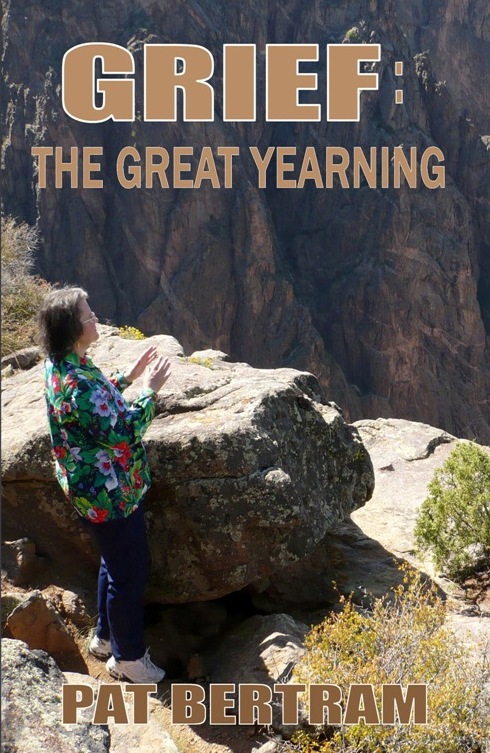
Before boredom set in, Death intervened. Not my death, of course, but it was a significant event in my life nontheless, and so I started writing about grieving. Partly, I couldn’t think of anything else but my sorrow, and partly I got so furious at novelists who didn’t seem to understand the first thing about grief that I wanted to set the record straight. Well, I accomplished that to a certain extent, and now I have a book about my grief that will be published next year. So, in a way, all that talk about grief was still within the parameters of this blog — all part of writing.

But now I’m coming out of the worst of the fog. I’ve said most of what I wanted to say about grief and most of what I wanted to say about writing (I mean, how many articles about describing winter can one person write?) and now I’m at a crossroads. I’ve been talking about the various things I’ve been doing to put my life back together, such as “Halt and I’ll Shoot! (Adventures With Firearms)” and “Proving to Myself That I’m Real,” but eventually I’ll move beyond that, and then what? I’ll have to decide on a topic for this blog. Or do I? Is “life, writing, and the writing life” a specific enough topic? Is it better for an author to write about whatever catches his or her interest so readers (hypothetical though they may be) can better get to know you? Is it enough simply to blog?

Short Story Contest!!!

Second Wind Publishing invites you to submit an entry to their short story contest.

Stories are to be about spring or renewal, at least, that’s what the contest rules say, though that does not mean the stories have to be upbeat or happy. You can work against the theme — contrasting a disaster that takes place in the spring with the beauty of the season, perhaps. Of course, up beat is good, too, it’s just that most of the writers I know (including me) don’t do upbeat.

My grief book, which will be published early next year, begins: Death came in the spring. And the end of the introduction says: The spring of death gave way to the summer of grief, and grief flowed into the fall and winter of renewal. See? Who says spring has to be about happy upbeat things?

You have until December 31, 2011 to submit an entry.

Go to the Second Wind Contest Blog for rules and how to enter.

Best of luck!!

Let’s Talk About Rhythm in Writing

A story that whips you through scene after scene is as exhausting as a story that drags you through the intervals between scenes at an excruciatingly slow pace. An experienced storyteller knows when to ramp up the tension and when to slow it down, when to take away a reader’s breath and when to let the reader take a breather, when to run through the drama or wander through the background. This alternating of ups and downs, successes and failures, satisfactions and woes is as rhythmic as music and can be as compelling as a drumbeat.

A steady pace of ups and downs can lull a reader into a feeling of complacency, but a syncopated rhythm, with ups and downs coming at uneven intervals can create an underlying sense of unease that gets beneath a reader’s skin. Even a small shift in pace can have a dramatic impact by making a minor defeat seem catastrophic or making a big victory seemed doomed.

Humorous moments, especially in tense scenes, can create a change of pace, lightening the mood and causing the reader to be more shocked by subsequent horrendous events. Sex scenes can create a change of pace, either as a diversionary tactic or as a quiet time between hectic scenes. A sex scene can even be a fast-paced action scene to get the reader’s blood roiling. (What it can never be, incidentally, is a scene thrown in there just because you thought it was time for a sex scene. Such scenes need to be as germane and as necessary as a plot twist or a revelation. If the scene can be removed from the book without leaving a hole, it should be removed or rewritten.)

A change in rhythm can be subtle, such as a shift in the dynamics between two characters, a change in focus or mood, or simply a preparation for future conflicts. Or it can be as blatant as a murder.  The rate of change in a story can affect the rhythm, too. A lot of changes coming rapidly, one right after the other, create a hectic pace. A few changes after intervals of stasis can make the pace seem slower, even bucolic.

How you present dialogue can change the pace. To speed up the pace you can use quick exchanges with few speaker tags. To slow the pace, use longer speeches and/or more detailed speaker tags.

This example from Light Bringer uses short speaker attributes:

Emery regarded Philip with narrowed eyes. “I always know when one of my students is in trouble. It’s time you told me what’s going on.”

“I was never one of your students.”

Emery waved away the remark. “Between the two of us we should be able to solve your predicament.”

“I’m not sure there is a solution. Right before I came here, two NSA agents came to my apartment.”

Emery shook his head as if to clear it. “I must have misunderstood. I thought I heard you say NSA agents.”

“I did. That’s who they identified themselves as, any-way. They told me they were concerned about the books I’ve been checking out of the library.”

Emery froze. “They said that?”

“Yes.” Philip paused to reconsider, then heaved a sigh. “No. They told me they wanted to speak to me. I suggested they were there because of the books I read.”

Emery scowled at him. “Have I taught you nothing? Never volunteer. If you don’t know what’s going on, keep your mouth shut until you find out.”

And this example from the same book uses longer speaker attributes which sets a more leisurely pace:

As the cowboy approached, she wondered why a man like him worked in a coffee shop instead of punching cows or whatever men like him usually did.

In a slow, deliberate voice that stopped short of being a drawl, he said, “What can I get for you?”

“Coffee.”

He ushered her to a table. “How about some pie to go with it? Or a muffin? Mabel from the bakery sent over a fresh batch of whole-wheat blueberry muffins.”

“A muffin sounds good.”

He loped around behind the counter. A minute later he returned and set a mug of coffee on the table along with a muffin almost as big as a cake.

“I don’t believe I’ve seen you here before,” he said.

Jane tore open a packet of sugar. “Just passing through.” She dumped the sugar in her coffee and stirred it. Thinking that, next to bars, her sister liked to hang around places like this to get local color, she considered asking the cowboy if he knew where she could find Georgy.

“Hey, Luke,” one of the old men called out. “Bring me a muffin, too.”

Jane sipped her coffee, grateful for the interruption. Georgy would never have forgiven her for inquiring about her, and there would go any hope of getting a loan.

“Holler if you need anything else,” the cowboy said, then ambled off.

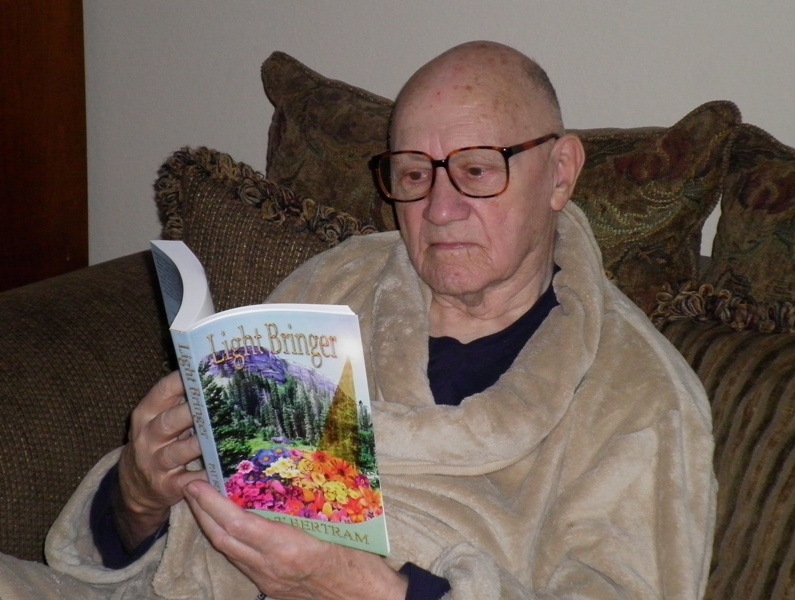
These dialogue samples also show one of the contrasts in the book, the the fast-paced action/conspiracy story commingling with the slower-paced cowboy story. Then there were the ethereal characters contrasting with the down to earth ones. Lots of scope for pacing in Light Bringer!! (Which, incidentally, is on sale for $1.99 for the Kindle edition on Amazon until November 8, 2011.)

So, let’s talk about rhythm. Do you pay attention to the rhythm of your story? Do you use the rhythm to create a mood or a change of pace? How do you create the rhythm of your story? What devises do you use? Do you make sure that even your story’s quiet moments are necessary to the story? Do you use words or sentence structure to help create the rhythm? (Short words and sentences give the scene a feeling of speed and immediacy. Longer sentences and words create a more relaxed pace.)

Kindle Sale! Get Any of My Books for Only $1.99!!

Have you been wanting to get one of my books? Well, now is the perfect time! The Kindle edition is only $1.99 on Amazon from now until November 8, 2011. Happy reading!

***

ASHFIn quarantined Colorado, where hundreds of thousands of people are dying from an unstoppable disease called the red death, insomniac Kate Cummings struggles to find the courage to live and to love. Her new love, investigative reporter Greg Pullman, is determined to discover who unleashed the deadly organism and why they did it, until the cost — Kate’s life — becomes more than he can pay. This is a story of survival in the face of brutality, government cover-up, and public hysteria. It is also a story of love: lost, found and fulfilled.

Click here to read the first chapter of: A Spark of Heavenly Fire by Pat Bertram

$1.99 Kindle sale! Click here to buy: A Spark of Heavenly Fire by Pat Bertram

***

Bob Stark returns to Denver after 18 years in Southeast Asia to discover that the mother he buried before he left is dead again. He attends her new funeral and sees . . . himself. Is his other self a hoaxer, or is something more sinister going on? And why are two men who appear to be government agents hunting for him? With the help of Kerry Casillas, a baffling young woman Bob meets in a coffee shop, he uncovers the unimaginable truth.

Click here to read the first chapter of: More Deaths Than One by Pat Bertram

$1.99 Kindle sale! Click here to buy: More Deaths Than One by Pat Bertram

***

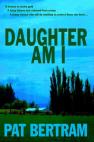
When twenty-five-year-old Mary Stuart learns she inherited a farm from her recently murdered grandparents — grandparents her father claimed had died before she was born — she becomes obsessed with finding out who they were and why someone wanted them dead. Along the way she accumulates a crew of feisty octogenarians — former gangsters and friends of her grandfather. She meets and falls in love Tim Olson, whose grandfather shared a deadly secret with her great-grandfather. Now Mary and Tim need to stay one step ahead of the killer who is desperate to dig up that secret.

Click here to read the first chapter of: Daughter Am I by Pat Bertram

$1.99 Kindle sale! Click here to buy: Daughter Am I by Pat Bertram

***

Becka Johnson had been abandoned on the doorstep of a remote cabin in Chalcedony, Colorado when she was a baby. Now, thirty-seven years later, she has returned to Chalcedony to discover her identity, but she only finds more questions. Who has been looking for her all those years? Why are those same people interested in fellow newcomer Philip Hansen? Who is Philip, and why does her body sing in harmony with his? And what do either of them have to do with a shadow corporation that once operated a secret underground installation in the area?

Click here to read the first chapter of: Light Bringer by Pat Bertram

$1.99 Kindle sale! Click here to buy: Light Bringer by Pat Bertram

Wishing You a Happy, Horrible Day

Once upon a time,
Long ago and far away,
Lived the queen of the witches,
Griselda the Gray.
If you think all witches are tall and thin,
You are wrong about that.
Griselda the Gray was short
And she was extremely fat.
Like everyone else,
Griselda tried to be good.
Griselda never did anything bad
Like normal witches should.
This upset the other witches
Because they had to copy their queen.
They had to be nice
When they wanted to be mean.
So they all got together
And mixed up a brew.
They gave it to Griselda
When they were all through.
The brew was so rotten
Griselda had a fit.
She screamed and yelled
And hollered and bit;
She howled and cackled
And made such a noise
That the other witches were happy
And began to rejoice.
“Griselda is bad
And we are glad.
Griselda is ghastly
So now we can be nasty.
Oh, what a happy, horrible day!
Hurrah for our queen, Griselda the Gray!”

The moral of this story is that witches should
Never try to be very good.