The Man Who Married a Bridge

Imagine my surprise when I came to the end of a romantic story (not my normal reading choice, but the book was free and so was I. What else need I say?) and found this paragraph:

Few present had ever seen anyone so radiant, they declared, and they may even have been right. Certainly her new husband thought so. He seldom took his eyes from her, it was almost as if he didn’t quite believe in her presence, so that he had to keep looking back to assure himself she was real. But then, few bridges had such creamy ivory skin to complement a creamy silk gown, and few still had such luxuriant midnight-black hair. 

Hmmm. An odd-looking bridge she was, to be sure. No wonder the groom had to keep looking back to assure himself she was real.

For the most part I am indulgent of an error or two or ten in a book. It’s the norm now in a publishing world where the bottom line is more important than the written line, and I know how hard it is to check every single word, but this typo was such a doozy it rated a comment. To be fair, the misspelled word was on the second to last line of the page, and was the last word in the line, and those are notoriously hard places to check. When you copy edit, as when you read, your eyes focus on the center of the page, so any words around the edges (the first and last lines, the first and last words in a line), end up in the hazy field of peripheral vision.

So, if you’re copy editing your manuscript or proofing a book, make a special trip around the edges of your pages, looking for misplaced brides and other anomalies.

Another way to check for typos is to temporarily reset the margins or type size so that the words that would normally appear at the top or bottom of the page end up in the middle. It gives you an entirely new perspective of your book. On the other hand, perhaps you like your grooms marrying bridges. I must admit, it does have an interesting ring to it. (Yeah, I know. Bad pun. But I couldn’t resist.)

Describing the Nondescript

Lately I’ve been coming across the word “nondescript” in novels. “Nondescript” is a perfectly ordinary word and shouldn’t raise my hackles, but it does. Most recently, I found this: “He caught a glimpse of a man running out of an alley, dressed like a local in nondescript clothes,” and what should have been a tense moment turned into one of cogitation. What are nondescript clothes? Since this story was taking place in Brazil, are Brazilian nondescript clothes the same as those in Thailand or Canada or the United States? Was he wearing baggy white cotton pants and a loose-fitting top?  Was he wearing jeans and a tee shirt? Shorts and a polo shirt? A suit and tie?

The author was a writer (not as much of an oxymoron as one might think since celebrity authors so often have someone else do their writing) and should have been able to come up with some way of describing the nondescript. Perhaps she could have said, “he was dressed like a local in loose white clothes.” Or she could have said, “He was dressed like a local in jeans and a bright-colored shirt.” Or he was dressed like a local in . . . well, no need to go on. You get the picture. Which is exactly the problem with “nondescript.” You don’t get a picture. You get a weasel word that fills space but gives you no idea of what to imagine.

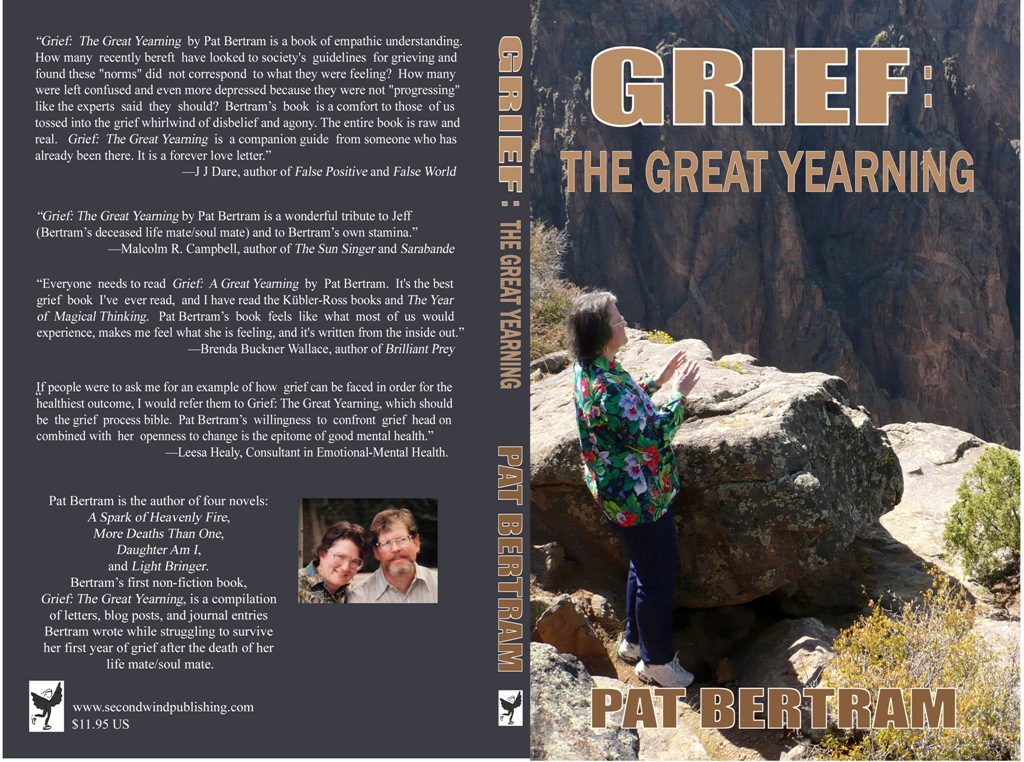
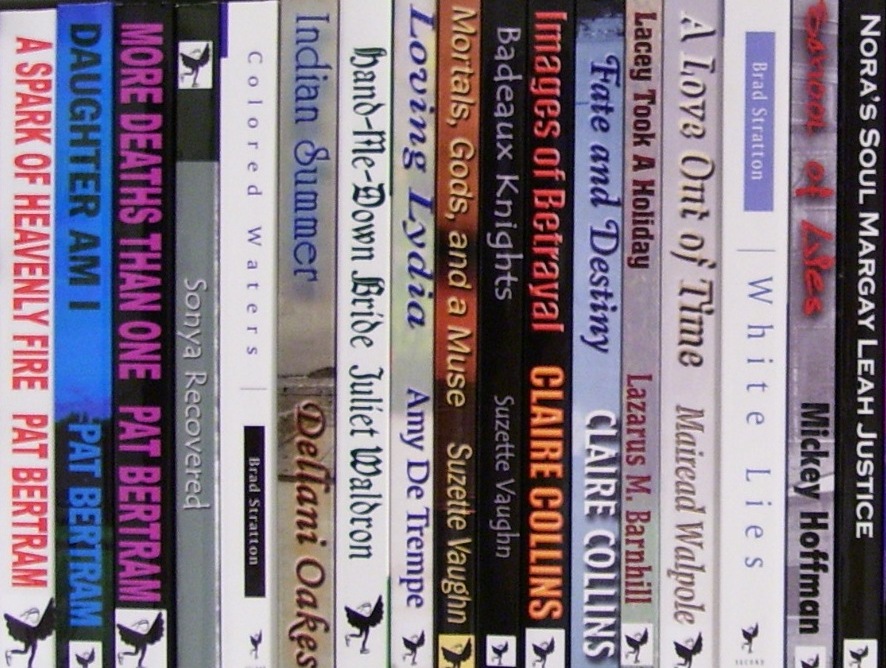
I checked my manuscripts, and to my chagrin, I discovered I used “nondescript” twice. In Daughter Am I, I wrote, Mary glanced from Iron Sam to Tim then back at the road, goose bumps stippling her arms. How odd to think this nondescript bit of tarmac bound the three of them together. Actually, that’s not a bad use of nondescript, because how does one describe a stretch of tarmac on a interstate? Perhaps “ordinary” would have been a better word choice. Or perhaps I could have left off the adjective and just said, How odd to think this bit of tarmac bound the three of them together.

In A Spark of Heavenly Fire, I wrote: The bartender, a lank-haired individual with grooves of discontent etched on his otherwise nondescript face, continued to polish a glass. Hmmm. There is a bit of an image here, but still, I could have found some bit of description for his face. Or maybe not. Faces do tend to blend one into the other. Still, “undistinguished” would have been a better word choice.

At least I got rid of “nondescript car.” My hero in More Deaths Than One bought an old beat-up Volkswagen, and I called it nondescript. At one time such a car might have been nondescript, but now? Yikes — such a car would have attracted attention. Better for him to have bought a white sedan that looked like half the cars on the road.

So, this is my point: if you’re a writer, rethink “nondescript.” I’m sure you can come up with a bit of description to show that the nondescript isn’t so nondescript after all.

Angie’s Diary — A Great Site For Readers and Writers

Continuing my series of introductions to the residents of my online world, tonight I’m spotlighting Angie’s Diary. I met Angelica Pastorelli on Facebook (see, fb really is good for something!!) and now I am a regular contributor to Angie’s Diary, an online writing magazine to help authors get read.

Most recently I’ve posted a few interviews:

Interview With Deborah J. Ledford (Snare and Staccato)

Interview with Mickey Hoffman (School of Lies)

Interview with Dellani Oakes (Lone Wolf)

Interview: Malcolm R. Campbell (Sarabande)

and these articles:

How to Use a Character Profile

Will Traditional Ways of Selling Books Remain Effective?

Why Do People Get Married?

I’ve also posted a few other articles, including some from last year that are still available in the archives, and I hope to continue posting articles and especially interviews. Interviews are good — I get to promote people I admire, and I don’t have to think of something entertaining or interesting to say.

Another Great Blog to Bookmark!

If you haven’t checked out the Second Wind Blog, you’re missing out on a treat. With more than fifteen writers posting articles, there is something for every taste, from Noah Baird’s hilarious take on life to JJ Dare’s more philosophical bent, from Sherrie Hansen’s inspirational articles to Norm Brown’s blend of mysticism and reality. Here you can find contests, interviews and excerpts. You can even find me occasionally!!! So what are you waiting for? Stop by Second Wind Publishing Blog and check it out. Here are a few great articles to get you started:

DO YOU GESTALT? by Nancy A. Niles talks about role playing to get to know your characters.

Traveling Thoughts by Mairead Walpole talks about the magic of the Florida sun.

Top of the World at Just the Right Moment by Norm Brown talks about a stunning moment when he was in the right place at the right time. And check out his classic Do Not Lean, which was “Fresh Pressed” here on WordPress.

The Trouble With Birthdays by J. Conrad Guest is a celebration of life, baseball, and summer. And If the Novel is Dying, What’s That Say About Imagination? is a celebration of reading.

Writer Beware–POV Confusion/Character Overload by Juliet Waldron explains the dangers of too many point of view shifts.

Chemistry and Subtext by Lucy Balch tells how writers can enhance the budding romances in their books.

How living in Germany Helped Me Become a Better Writer by Coco Ihle talks about the importance of detailing subjects familiar to the author, but possibly unique or unconventional to someone else.

The Joys of Lying to Children by Noah Baird I had a hard time choosing which Noah Baird post to highlight, but lying to children is perhaps even funnier than Vasectomies For Beginners by Noah Baird. Or not.

Compelled to Compare by Sherrie Hansen talks about appreciating what she has, both as a woman and a writer, but my favorite is Don’t Keep Me Hanging Too Long!

Are You Happy? by J J Dare talks about being happy and feeling heated rush the assassin feels right after he pulls the trigger. Um, yeah. You’ll have to read the post. Or this read this one instead: Goodbye, Mr. Phobia by J J Dare.

Writing what you know by Nichole Bennett talks about writing what you’re comfortable with and researching the rest.

On Butt Glue, Diplomacy, and Lying: Lessons Learned by Laura Wharton talks about the lessons she learned in her first year as a published writer.

Isabella’s Smile and the Miracle in Dakota Park — by Calvin Davis is a delight parable for writers and everyone who needs a bit of assurance that sometimes the impossible is really possible.

Excuse me? What? by Dellani Oakes talks about the ways in which writing is like childbirth. If you’re an author, you will probably agree.

Killer Cocktail Events in Minnesota by Christine Husom talks about the Midwest Booksellers Association annual trade show. Be sure to stop by and tell her about trade shows you’ve gone to.

Interview With Deborah J Ledford, Author of Snare and Staccato

Excerpt From “School of Lies” by Mickey Hoffman

and don’t forget the Second Wind Short Story Contest!! The deadline is December 31, 2011, so you still have plenty of time to enter.

The Editor’s Blog — A Remarkable Resource for All Writers

I’m almost hesitant to post this, because once you have found this remarkable resource for writers, you won’t need me anymore. (Well, except for friendship, of course!) Beth Hill, who maintains this blog is both writer and editor. Her editing focus is on long fiction, primarily novels. Beth says, “I love the written word, the ability we have to create worlds and emotions with well-chosen phrases. It’s my intention to share tips and insights and encouragement with writers at all levels, to help you craft  stories that will entertain and satisfy your readers. That will help satisfy you as writer as well.”

So, be sure to bookmark her blog, The Editor’s Blog, where you will find everything you need to know about writing and writing well. Here is the current list of her articles:

What Does Not Destroy Us Makes Us Stronger. Or Weaker. Or More Fearful

Nietzsche said, “What does not destroy me makes me stronger.” I’m not sure if that is strictly true. Sometimes that which doesn’t destroy us makes us makes us weaker because it makes us fearful of living, fearful of more trauma, fearful of fear itself.

Eleanor Roosevelt said, “You gain strength, courage and confidence by every experience in which you really stop to look fear in the face. You are able to say to yourself, ‘I have lived through this horror. I can take the next thing that comes along.’ You must do the thing which you think you cannot do.”

In life, we often have to do the thing we think we cannot do. Too many times during the past eighteen months I’ve felt that I can’t survive the pain of losing my life mate (we were together for 34 years). Panic kept washing over me, as if I’d been set down in the middle of an alien world with no idea how to deal with all the horror being thrown at me. I feared every new step, every change. I’d been especially fearful of growing old alone. Sometimes I still am. I’ve seen what dying can do. It’s a terrible way to end one’s life, and it seems even more terrible when one has to face it alone. Of course, there’s a chance that it will be decades before I have to face the grim reaper, and who knows what will happen until then?!

Well, I do know one thing that will happen: this discussion about life, writing, and the writing life!

So, what do you fear? How do you deal with your fear?

If you are a writer, how does that fear work its way into your stories? What do your characters fear? How do they deal with the fear? Is the fear a plot driver, something that drives the story forward or is it more of a subplot, a way of developing your character? Is the fear justified? Is the fear realized? (I mean, does the thing the character fear happen, and if not, why not?) How does the character deal with the fear? How does the fear change the character? How does facing his/her fear change the character?

Does Curiosity Automatically Create Conflict?

In an online writing discussion the other day, someone asked if curiosity automatically presented conflict. I had to think about that. If the curiosity isn’t at odds with the character in any way, if nothing is stopping the character from following their curiosity, there is no conflict. Curiosity, in that case, is about doing what comes naturally, going with the flow. And going with the flow is not conflict. Conflict is going against the flow.

Curiosity can lead to conflict, of course, since curiosity can get our characters into trouble, and trouble does present as conflict. Or perhaps the character is tempted to follow his curiosity but he needs to resist since his curiosity always gets him into trouble, and that temptation/resistance is conflict. In fact, curiosity is a great reason for a character to get into trouble, which moves the story along (especially if you’ve shown that your character is apt to follow his/her curiosity no matter what.)

As a plot driver or as a motivation for your character’s actions, curiosity may not have the emotional power of love, hatred, vengeance, anger, fear, but it has a power all its own. This drive to know new things, to find out about life’s mysteries, both major and minor, is one we can all understand. If we find a locked box, don’t we all want to know what is inside? If the box belongs to our spouse, do we have a right to open it? Do we look for the key? Do we open it? In real life, we might resist the urge out of respect or loyalty, but if we read a book where the character finds the box, we sure keep reading to find out how the character satisfies his/her curiosity . . .  and ours. For that is the crux of a story — as readers, it is our curiosity to find out what is going on that keeps us turning pages. If we didn’t care, if we had no curiosity about what is happening in the story world, we’d toss the book aside and find other things that arouse our curiosity, such as what’s on television, or who’s online.

So, even though curiosity doesn’t automatically create conflict, it might lead to conflict, and for sure will keep us reading.

Oddly, curiosity can also bring peace, which is the direct opposite of conflict. If a character has suffered greivous trauma, if the character as no other reason for living, their natural curiosity might give them a reason. Sometimes all one has to hold on to is curiosity as to what the future holds. And that realization brings peace of a sort. At least, it does bring peace until you start throwing more trauma at your character, because peaceful characters are not necessarily compelling characters.

More Names Than One: Fiction Made Real

The other day I was getting gas when a truck pulled up next to me. It looked familiar in a dream-like way, but I didn’t think anything of it. It wasn’t until I started driving away that it dawned on me what I was seeing. A truck delivering Singha beer. I’d needed a Thai beer for my novel More Deaths Than One and just picked the name out of a guidebook, but somehow it didn’t seem real. At least not until I saw that truck. Here is the excerpt from the novel where I mentioned the beer:

In his short-sleeved shirt imprinted with red, green, and yellow parrots, Bob felt like a tourist. He even found himself gazing around as if he’d never visited the place before.

He saw a couple of the other regulars, a German and an American—both mercenaries—but most of the people were strangers to him, including the four men sitting at the next table. They seemed to be Americans of the right age to have fought in Vietnam. A man in a Yankees baseball cap waved his arms for emphasis.

“I did my job,” Bob heard him say. “Then I got out and continued on with my life. Everything’s great. My life is full. It happened so long ago. I don’t understand what the big deal is.”

The haunting strains of “Hey Jude” filtered through the room.

“What are you going to have?” Kerry asked.

“A Singha in honor of Harrison. It’s a local beer he liked. Also a hamburger with fries.”

When a giggling young waitress approached, Kerry ordered hamburgers, fries, and Singhas for both of them.

Hamburger Dan brought their drinks.

Setting them on the table, he gave Bob a penetrating glance. “It is you. I wasn’t sure at first. How’ve you been—”

Before Hamburger Dan could speak his name, Bob said quickly, “Gandy. I’m Rick Gandy and this is Julie Walsh.”

Hamburger Dan’s eyebrows rose. “I see. Does this have anything to do with the two men sitting in the booth across the room?”

Bob lifted his drink to his lips and gazed over the top of the mug. The men in question leaned back in their seats with studied nonchalance, but their eyes were hard and way too alert—cop’s eyes.

“My supposed friends?” Bob asked.

“Right. They’ve been in and out for the past six weeks or so, but after you called they started spending a lot of time here.”

“Something you should know. Your phone is tapped.”

Hamburger Dan stiffened. “What’s going on? What are you involved with?”

“I have no idea, but I’m looking into it.”

“You?” Hamburger Dan had the grace not to smile, but Bob could sense his incredulity.

Seeing the light of battle in Kerry’s eyes and her mouth opening to come to his defense, Bob laid a hand on her knee. She closed her mouth, but her jaw remained set.

The waitress brought their hamburgers. The delicious aroma of grilled meat made Bob’s stomach growl with hunger.

“I’ll leave you to your food,” Hamburger Dan said. “I shouldn’t stay here too long anyway, don’t want to draw the attention of your friends.”

Kerry’s gaze followed him as he moved off, then it shifted to Bob.

“How come he talked to you like that? Doesn’t he know you’re the Bob Noone character in Dark Side of Heroes?”

“I doubt it. Now that Harrison’s gone, you’re probably the only one who knows. And if by chance Hamburger Dan does know, he still wouldn’t be impressed. He’d think Noone was a wimp.”

“Oh.” She took a big bite of her hamburger and ate it slowly. “How did you come up with the names Rick Gandy and Julie Walsh?”

“They slipped out. I decided we shouldn’t advertise the names we’re traveling under.”

“Good thinking.” She chewed on a French fry. “I’m beginning to have as many identities as you. It’s confusing.”

Bob nodded. Munching on his own hamburger, he let his glance fall on the other bar patrons.

“Mike seemed like a brother to me,” the man in the Yankee baseball cap said, tears brimming over. “I tried to save him, but there was nothing I could do.”

The men with the cop’s eyes stood, took a final look around, then sauntered out of the bar, still main-taining their casual air.

Bob felt his shoulders sag with relief.

As he continued to eat, he could hear the gaunt man playing “Let It Be.”

More Deaths Than One is available at Amazon, Smashwords, and Second Wind Publishing.

Life Needs a Laughtrack

While reading Nancy Cohen’s blog post “Cut That Wimpy Dialogue!,” I thought about how much smoother and more interesting dialogue in books is in comparison to normal conversation. In real life, we stutter and stammer, repeat words, interrupt each other, talk while another is still speaking, and we tell long drawn out stories that go nowhere. Such idiosyncracies would bore us to tears if we read them in a book, but we’re used to them in real life, perhaps because we’re more interested in our connection to the people we are talking to than the actual words we are using, or perhaps we are more forgiving because we know none of us can rewrite our spontanous speech to make it vigorous and decisive as we do in our books.

I used to be more congnizant of what I was saying. I would hear the wrong words as they came out of my mouth, and I tried to correct them before they hit the air, but that just made me sound like a stammering fool. Now that I don’t listen to myself as much, I talk smoothly without stammers, but still, my conversation is normal. In other words, if my life were a book, most of my words would be edited out.

Since most conversations in real life are less than scintillating (since most of life itself is less than scintillating) maybe what we need are laughtracks. Laughtracks — especially loud and raucus laughtracks — are prevalent in television comedies that have little humor and less wit, but the laughtrack gets your adrenaline going and makes you think you are watching something special. Or at least makes you think you have some connection to the story, which makes you feel less foolish for watching the silly show. Inane comments on a comedy without a laughtrack leave us cold. So why shouldn’t we each come with our own private laughtrack? If we say something that falls flat, canned laughter floats around us and our listeners, making us seem brilliant and witty. And if what we said was really inane, the laughtrack would rise to a crescendo, drowning out the echo of our words still hanging in the air, making it impossible for anyone to remember them.

On the other hand, the constant sound of raucus laughter could get on our nerves. Maybe it’s best to leave things the way they are, and save our wit and wisdom for writing where we can edit the words until they are so perfect there would be no need of a laughtrack for distraction.

The Not Quite Good vs. the Not So Evil

“The story must be a conflict, and specifically, a conflict between the forces of good and evil within a single person.” — Maxwell Anderson, American playwright (Actually, he said, “The story of a play must be a conflict . . .” and that can lead to the first question of tonight’s discussion. Does a story/novel differ from a play in other ways besides simply the format?)

The best stories are, of course, conflicted, and internal conflict deepens one’s knowledge of a character and raises the stakes for the outcome of the story. But . . . does the conflict need to be between good and evil? If a character is battling it out internally between such disparate forces, then there’s a chance the story will end up being comic bookish and the character end up resembling Linda Blair in The Exorcist.

Perhaps it’s better for the internal conflict to be a bit narrower? Say between one’s need to do the right thing and one’s tendency to be selfish?

I just read an article that said most people don’t particularly want to be good. They’d rather devote their efforts to other things such as being happy, successful, smart, attractive, healthy. Sounds like the makings of a good conflict. Battling one of these urges in order to do something selfless would make a character more real than one who has to battle their evil nature, because who of us is truly evil? Most of us are thoughtless, selfish, petty, pettish, angry, given to telling small lies and committing small dishonest acts, none of which are evil. Just human.

According to that same article, goodness is about a person’s character — integrity, honesty, kindness, generosity, moral courage. A story person with such qualities would seem shallow and uninteresting and too good to be true. On the other hand, some characters who are supposed to be on the side of good do as much bad as the characters who are supposed to be evil. In other words, in a fictional world, it’s okay to be evil as long as your intentions are good. That would make a good conflict, too — a battle between a character’s good intentions and what the character really does. But such a battle is still not a conflict between the forces of good and evil in the same person.

So, do you agree with Maxell Anderson? Do your characters have a massive internal conflict, or do their internal conflicts tend to be less dramatic? What are your characters internal conflicts? Does the internal conflict reflect or contrast the major conflict in the story? As for your villains — are they also conflicted but perhaps lose the battle to their less than stellar side?

If you’d like to discuss this topic live, you can find me at the group No Whine, Just Champagne on Gather.com on Thursday, October 15, 2011 at 9:00pm ET (8pm CT, 7pm MT, 6pm PT). Otherwise, we can just chat here.