The Healing Power of Stories

I attend a bereavement group every week, which surprises me, considering that I’ve always been a do-it-yourself sort. I only started going to the meetings because I wanted to know how to survive the terrible agony of grief I experienced after the loss of my mate. I didn’t learn how — it’s something no one can teach another — but I learned that one could survive those first unbelievably painful weeks when I met people who had survived them. I keep going to the group because of those same people. We have something in common, a shared understanding, a survivor’s respect. And now, after five months, I am one of those who, just by being there, show the newly shell-shocked bereaved that one can learn to live with the devastation of a major loss.

Each meeting begins with a lesson, and today’s lesson was about the importance of stories and how they help us heal. The people who attended the meeting today all happened to be women who had lost their mates after decades of being together, and the counselor asked each of us to tell the story not of our mates’ deaths, but of how we met. We all knew the end of each of our love stories — over the months we have told the story of our grief many times. But this is the first time we talked about the beginning of our love stories, and in those stories we found hope, comfort, smiles, a reconnection to our past.

According to the handout we were given, the benefits of telling stories are:

  • Searching for wholeness among our fractured parts
  • Coming to know who we are in new and unexpected ways
  • We can explore our past and come to a more profound understanding of our future direction
  • We can seek forgiveness and be humbled by our own mortality
  • We can discover the route to healing lies not only in the physical realm, but also in the emotional and spiritual realms.

An unexpected result of today’s lesson was a new understanding of the importance of writing. For me, anyway.

These past months, I’ve spent a lot of time reading. I have always tried to lose myself — and find myself — in fictional worlds during periods of trauma, but this time it’s not working the way I hoped. I’m not finding healing in current books. The authors seem to be going for the shock effect of not-so-good versus unbelievably-outrageous-evil, for story people who have identifiable characteristics but no character, for fast-paced stories with little substance or truth. How does one find wholeness in such stories? How do we come to know each other or come to a more profound understanding of our future in trite mysteries and unrealistic thrillers?

Perhaps it’s not important. Maybe entertainment is all that counts when it comes to fiction, but I want something more. And I especially want something more when it comes to my own writing. I don’t know where grief is taking me — it is changing me in ways I cannot yet fathom — but I hope I will end up writing stories of truth, of understanding, of healing. I hope I will make people smile. I hope my words will matter.

Sucker Punched by Grief

After the first excruciating months, dealing with a major loss is like being in the ring with an ever-weakening opponent. The feeble jabs inflict little pain, and you start feeling as if you can go the distance. Gradually, as the blows come further and further apart, you let down your guard. You even welcome the blows that do land, because they remind you why you are fighting. Then . . .

Wham!

Out of nowhere comes the knockout punch.

My knockout punch came after a restless night. I finally fell asleep in the early morning hours, and I dreamt.

I dreamed that my life mate was dead, but I woke to find him alive and getting well. It was wonderful seeing him doing so much better, and a quiet joy seeped over me.

I started to wake. In the seconds before full consciousness hit, I continued to feel the joy of knowing he still lived. Then . . .

Wham!

The truth hit me. I couldn’t breathe, couldn’t move. Then, like an aftershock, came the raw pain, the heartbreak of losing him . . . again.

I’d only dreamt about him once before, and that was at the beginning when my defenses were still in place. In that first dream, I told him I thought he’d died, but deep down I knew the truth, and there was no shock when I awoke, just a feeling of gladness that I got to see him once more. But this time, I had let down my guard. I even felt a bit smug that I was getting a grip on my grief so early in the process, and so the dream caught me unaware. In the depths of my being, I believed that he hadn’t died.

I cried on and off for two or three days (I lost count; grief tends to override time) but now I’ve regained my equilibrium — at least until the next time.

A friend who counsels the bereft told me, “In my experience with grief, a healthy person, such as yourself, is going to grieve in a gradually diminishing way for two years.”

Two years??!!

If so, I have a very long way to go. I’d planned to stop blogging about grief. I don’t want people to think I am eliciting sympathy, nor do I want to seem pathetic, grieving long after the non-bereft think I should be done with it. But if I’m going to have bouts of pain for many months to come, I might as well share them and let others take whatever comfort they can from my learning experiences.

This episode with the dream taught me to be patient with myself. I’ve been thinking that I’m mostly healed, and I’ve been feeling like a slacker, just taking life a moment at a time, not doing anything to prepare for the rest of my life, not doing much of anything but reading, walking, writing a little (a very little), taking photographs, and going through my mate’s collection of movies. Now that I know the power of the sucker punch, and how easily it can gain the upper hand, I understand this simple life is all I can expect of me right now. And perhaps that’s the way it’s supposed to be.

Sorry For Your Loss

Cops, social workers, therapists, just about anyone who deals with death in any capacity, learn to give an automatic, “I’m sorry for your loss,” to the bereaved. At first, this condolence by rote bothered me. It came across as insensitive and . . . well, automatic. Besides, it seemed to reduce the death of my mate to the level of a lost sock. I don’t mind as much now. Even though I have been born into the world of grief, I still don’t know what to say to someone who is grieving. Besides, grief is about loss, and not just the primary loss of a loved one, but also multiple secondary losses.

In my case, when I lost my life mate, I lost my home (my mate was my home even more than the house we lived in, but I lost that too when I had to move away). I lost the future we planned. I lost the hopes we had. I lost my best friend. I lost my partner. I lost my lifestyle. I lost the one person who knew everything about me and liked me anyway. I lost the person I could depend on to be there when I needed him. And most of all, I lost myself.

It’s not so much that I saw myself as an adjunct to him, or that my identity depended on him, but he was the focus of my life for more than three decades. By his very being, he gave my life meaning. Before we met, I always wondered about the meaning of life. I wanted to live a significant life, to make sure my life meant something. After we met, I didn’t worry about such things — at least, not much. It was important that we were together, that we faced the world together. Only after his death did I realize how much “togetherness” mattered to me. And the loss of that togetherness is something to mourn.

Now that I am alone, I have to find meaning in “aloneness,” to find significance in that aloneness. And I don’t know if I can. I feel fractured, as if bits of me are scattered all over the universe, and I haven’t a clue how to put myself together again. Oddly enough, I had no real interest in spending my years with anyone until he entered my life. And now I am back where I started. Sort of.

I feel a bit foolish (and self-pitying) at times for all the tears I shed. I always thought I was more stoic than this, able to take life’s big dramas in stride. Yet the deletion of him from the earth is impossible for me to fathom. It affects every single aspect of my life. I haven’t found the bedrock of my new life — the thing, the idea, the place, whatever that bedrock might be — that gives me a firm footing and allows me to get on with my life. He’s been gone for twenty weeks (is that a lot or a little? I no longer have any sense of time) and everything is still resettling. If I get a grip on one facet of my loss, another secondary loss rises to the surface. And so his absence (and my loss) becomes more profound as time passes.

I’ve been trying to write again, and even in such an exercise that epitomizes aloneness, I feel his absence. I used to read what I wrote to him. He didn’t always have a suggestion or a comment, but sometimes he’d get a little smile on his face when I hit the scene just right. And that smile is just one more loss for which I am sorry.

add to del.icio.us : Add to Blinkslist : add to furl : Digg it : Stumble It! : add to simpy : seed the vine : : : TailRank : post to facebook

Comes the Dawn

Someone recently sent me a version of this poem. Turns out there are several versions and several author claimants. The two most likely authors are Veronica Shoffstall or Judith Evans, though the person who sent it to me has had it for many decades, so it could be older than any of the self-professed authors. Still, whoever wrote it, the poem has brought comfort to a lot of people.

Comes The Dawn

After a while, you learn the subtle difference
between holding a hand and chaining a soul.
And you learn that loving doesn’t mean leaning
and company isn’t security.
(Kisses aren’t contracts and presents aren’t promises.)

After a while you begin to accept your defeats
with your head up and your eyes open,
with the grace of a woman, not the grief of a child.
And you learn to build your roads on today
because tomorrow’s ground is too uncertain
and the inevitable has a way of crumbling in mid-flight.

After a while you learn that even sunshine burns
if you stand too long in one place.

So, you plant your own garden and decorate your own soul
instead of waiting for someone else to bring you flowers.
And you learn you really can endure,
that you really do have worth.
You learn that with every good-bye comes the dawn.

***

Pat Bertram is the author of Grief: The Inside Story – A Guide to Surviving the Loss of a Loved One. “Grief: The Inside Story is perfect and that is not hyperbole! It is exactly what folk who are grieving need to read.” –Leesa Healy, RN, GDAS GDAT, Emotional/Mental Health Therapist & Educator.

Write for the Dead Whom Thou Didst Love

 A voice calls, “Write, write!”
I say, “For whom shall I write.”
And the voice replies,
“For the dead whom thou didst love.”

—John Berryman

I read a novel the other day where the main character was a grieving widow with a young daughter, but neither character showed any symptoms of grief — at least not what I have come to know as grief. The only indication of their grief was a conversation about how the two needed to be strong and not cry.

If this is the way the non-grieving public learns about grief, no wonder so few of us understand what grieving means until we find ourselves immersed in this strange new world. Because of the lack of characters who grieve properly, I’ve been toying with writing a book about a grieving woman, even going so far as to write a few scenes while the emotion is still fresh in my mind (though I can’t imagine ever forgetting what it feels like to grieve for a soul mate — every single day in a thousand ways, I am reminded once again that he is gone).

After having written those few scenes, I now understand why it’s almost impossible to write a grief-stricken character. All the tears, the pain, the nausea, the inability to focus, the not sleeping or sleeping too much, the not eating or eating too much add up to a character who appears as a wimp and a whiner. We are so used to invincible characters who manage to fight despite grievous wounds or agonizing pain, that a normal character living a normal — though grief-filled life — comes across as a weakling. Another problem is that a character who cries at her own pain, who feels everything herself, eliminates the need for readers to feel that pain, and so they dissociate from the character. But the very nature of grief is feeling pain. It’s by embracing the pain, by letting the tears spill over, by giving in to the grief that we come to terms with it.

Perhaps that’s the way I should write the character — have her actively participate in her grief. Instead of being brave and not crying, she should embrace the pain, make grief a part of her life. And in doing so, she will show her strength.

Nor All Your Tears . . .

The Moving Finger writes, and having writ,
Moves on: nor all your Piety nor Wit
     Shall lure it back to cancel half a line,
Nor all your tears wash out a Word of it.

When I started writing, I often thought of the above quatrain from the “Rubaiyat of Omar Kayyam.” It made me smile to reflect that this warning about the moving finger does not hold true when it comes to writing. We writers can — and should — rewrite and rewrite until the story turns out exactly the way we want it to turn out.

When it comes to real life and especially death, however, there is no rewriting. If the story does not turn out the way we want, too bad. And tears, as I now know from experience, will not wash away a single moment of what has already happened.

No matter how much I cry, my mate is still dead.

I worry sometimes about talking so much about my crying for him (and for me). Perhaps people will see me as weak since people often equate tears with spinelessness and immaturity. There is certainly something babyish about crying for that which one cannot have, for wailing against that which one cannot change. Sometimes I think I should be braver about this traumatic turn my life has taken, or more stoic. Still, tears are the only way I have of momentarily relieving the terrible ache of his absence. And this reason for tears is true not only for me.

I met a woman who cannot cry over the death of her husband, though she wants to. People have suggested that she cut onions to stimulate tears, but research shows that tears released by such irritations are different from those released because of emotion. Dr. William Frey, a biochemist and director of the Dry Eye and Tear Research Center in Minneapolis, says that people “may be removing, in their tears, chemicals that build up during emotional stress.” So crying is not a sign of weakness. Abstaining from crying is not a sign of bravery.

Tears are simply that — tears — though I wish with all my heart they were more, that they had the power to wash away the past and bring my mate back to me, healthy and happy.

Rewinding My Life

I ended my last blog post with: And so I trudge the hills of grief, and treasure the moments of comfort I find. I meant it both figuratively and literally — I spend a couple of hours most days wandering in the desert hills near where I am staying.

I feel at times as if I am rewinding my life, our life. When the man I was to spend more than three decades with first came into my life, it was such an awesome change, that I felt restless. I would walk for hours trying to get used to this new vision (or version) of me. I wrote. And I read copiously. Now that he has left my life, it’s such a traumatic change that I feel restless. I walk for hours trying to get used to this new vision/version of me. Instead of walking through the tree-shaded parks and parkways of Denver, however, I tramp through the desert a thousand miles from where I started. Instead of poetry, I write prose. And I read copiously. These are the bookends of our shared life.

During the years of his illness, when I tried to imagine how it would be to live alone again after his death, I never imagined, never could imagine, the sheer void of his absence and with it, the absence of meaning. 

Before I met him, I used to wonder about the meaning of life. Now, once again, I am wondering about the meaning of life. I hadn’t realized until after he was gone that during all those years we were together, I didn’t worry about meaning. We were together. That was all that mattered. Now that I am alone once more, the void of meaningless haunts me. Where am I going? And why?

I did have a bit of revelation out in the desert the other day. Instead of a stroke of clarity, I might have had heat stroke, but the end result is still the same. I walked for hours along a path because I was curious where it went, curious to see what was around the next bend, and it occurred to me that this experience could be a metaphor for my life. Perhaps finding meaning isn’t important. Perhaps it’s enough simply to follow the days and see where they lead.

(If you’re interested in seeing the photos I take on my mystical walks, you can find them here: Wayword Wind.)

I Am a Three-Month Grief Survivor

Grief plays tricks with time. The past three months have passed in the blink of an eye, and they have lasted forever. I never thought I’d last three weeks let alone three months — at times the pain was so unbearable I wanted to scream. So I did.

Yet here I am, a thousand miles from where I started, and generally I’m doing okay. Grief grabs me a couple of times a day, but doesn’t hang around long, mostly because I take long walks and look at life through the lens of a camera. I find solace there, and peace.

This morning, however, I woke in tears because of this new milestone — three months since his death. I needed to scream, to be alone with my pain, so I headed out for a walk. Wandered in the desert. Cried in the wilderness. And screamed. Haven’t had to do that for a while — I’ve been keeping myself too busy to feel much, so it was good, in a strange and agonizing sort of way, to reconnect with my grief.

I’m still going to a grief support group. It does help to be around people who understand this journey, to hear how others are handling their loss. (Loss. What a odd way to describe death, as if the person is simply misplaced, like a ring, and will soon be found.) Each week there is a special focus of attention, a lesson. The lesson for the grief support group last week was about finding a sense of purpose:

 “Each phase in my grief journey allows me to explore where I am right now. By accepting that I am where I must need to be, I am free to live today. The place I am today can become friend instead of foe. The journey into my loss has already created change, and the present and future will create more. Now may be the time to examine my expectations of myself, and accept that I am where I need to be for now.”

I’m not sure that I am where I need to be, either mentally or geographically, but that sentiment hit a chord with me. I am trying to trust in the rightness of my path, and that I will know what to do when the next step comes. What bothers me is that by trusting in the rightness of the path, both mine and my soulmate’s,  it means that it was right for him to be sick and die, and that I cannot accept. But maybe it’s not up to me to accept the rightness of his path, only the rightness of mine. 

As for change? If I were writing a novel about a character who has gone through what I have these past months — first the diagnosis of his illness, then his too quick death, then sorting through the accumulation of decades, and moving from the house where we spent the past twenty years — she would have grown stronger perhaps, or wiser, and changed in some fundamental way, but I don’t feel any different. I’m still the same person, though my situation is completely different than it was six months ago.

But perhaps it’s still too soon for any change to appear. In the world of grief, I am still a toddler.

Wisdom of the Wombats

I belong to an online group called The Writin’ Wombats — a convivial group of writers, readers and critics supporting each others’ work and sharing news, gossip, rants and triumphs. (You can join, too. Everyone is welcome.) The Wombats have been supportive of me in my grief, encouraging me with wise words and virtual hugs. I would like to share with you a comment one of the Wombats left for me on the last thread. It helped me, and perhaps it will help others who are also grieving the loss of a loved one.

“Pat B–Love is so awesome, so overwhelming and filling and all-encompassing. So, too, is grief. It touches all those same places touched by love. When that love was every place in you, you can’t help but be attacked by grief in those same places. And so the grief is overwhelming and filling and all-encompassing as well. But it can’t overpower the love. It can overshadow it. But it doesn’t have the same strength, the same staying power, that love holds. After the grief eases, the love will again shine. No, you won’t have J. And that’s the cruelest, cruelest loss. But you will have his touch all over you, through you, from where his love lived with yours. And it once again will be good.” — E. A. Hill

I’ve come to realize that hate is not the opposite of love, grief is for the very reasons that Ms. Hill stated. Love and grief are the bookends of a relationship. The two clearest memories I have of my mate are the day I met him and the day he left me. After almost thirty-four years, I barely remember who I was before we met, and I don’t yet know who I am now that he’s gone. So much of my life was intertwined with his that it could take the rest of my days to pick the pieces of myself out of  the “us” that we created. And maybe it can’t be done. But as time passes, and I experience things we can no longer share, I will become more of me and less of us. Yet the love will remain. And I hope, as Ms. Hill says, that once again it will be good.

Until then, and long afterward, I’ll be soaking up the wisdom of the wombats.

Making Sure Our Novels Are Worth Reading

I’ve been reading a lot lately. It’s what I do when I am convalescing or when I feel like pampering myself, and right now I feel like I’m doing both. I haven’t read anything particularly good or particularly bad, but reading is like breathing to me, so it doesn’t really matter.

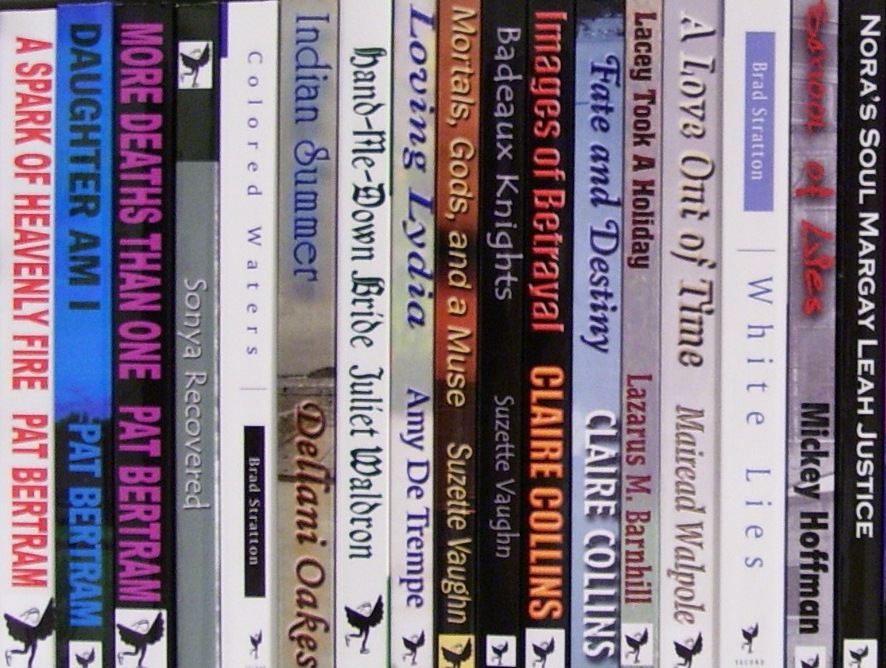
One of the books captured my interest, though, mostly because it reminded me of my novel, More Deaths Than One. It had many of the same elements as my story: both books dealt with people who’d been given false memories, both had a theme of human experimentation (in fact, this other book used some of the very same examples of past experimentation that I did), and both were, at least obliquely, about assassins. The set-up in this other book was even more elaborate than mine, and much more gruesome. I don’t understand why the experimenters had to “deglove” the victim/hero’s face to get to his brain and implant the controlling device (in other words, they pulled off his face — yuck.)

Like many such elaboriate thrillers, the end did not justify the long and convoluted way of getting there. For example, people with machinery lived in the next apartment, controlling him, which is what the implant should have done.

It turns out that the whole reason for the mind control was so that the victim/hero could — all unkowingly — turn another character into an assassin. The experimenters were killing off all the world leaders they didn’t like. Ho-hum. As I said, the end did not justify the set-up. If they wanted to kill those leaders, all they had to do was hire an assassin and then kill the assassin afterward, which is the way it’s been done for thousands of years. It’s simple, cheap, effective. (We’re not talking morality here, just story.)

I try to make sure the endings of my novels are satisfying — even if readers guess the story, there is still a pay-off that comes as a surprise. In More Deaths Than One, his reaction to what happened to him is vastly more important than the deed itself.

Oddly enough, the book I read right before this assassin one also had a similar plot to another of my novels — A Spark of Heavenly Fire. Both of these books were (loosely) about women finding happiness during an epidemic. Her disease was called the Phoenix Flu, mine was the Colorado Flu. Or at least that’s what people outside of Colorado called it. Those in Colorado called it the Red Death.

So what’s the point of this bloggery? Perhaps that we need to make sure we tell our stories with our own particular slant so that if by chance others have a similar idea, our novels are still worth reading. Perhaps that we need to make sure our endings fit the set-up. An elaborate set-up with a cliched ending could be just as ridiculous as a cliched story with an elaborate ending. (I’ve read a couple of books lately where the ending came out of nowhere without even a hint of foreshadowing.) Or perhaps the point of this bloggery is that I need to read less and write more.