The Long and Winding Road of Grief

The problem with grief (not counting the primary problem of having lost a loved one) is that so many emotions attack you all at once that you feel you can never get a grip. And then, for no fathomable reason, you hit an emotional trough where you feel nothing, and you begin to think that you can handle your grief, and then pow! Out of nowhere, it returns and slams you in the gut.

I was never a wildly emotional person, but now I am buffeted by more different emotions in a single day than I used to experience in a month. The emotions are not all negative, either. This morning, I woke up feeling a tingle of excitement — I’d planned to go on a long ramble, camera in hand, and for the first time in months, perhaps years, I felt alive. I’ve always taken long walks, but for the past couple of decades I’ve lived on a .3 mile lane between a dead end and a busy highway, so I used to walk up and down the lane, always looking for anything different to make the trek interesting. Now, I don’t have to look for those differences — I have a brand new world beneath my feet, before my eyes, and something in me is responding.

But still, side-by-side with my new awakening, is the sorrow that my mate is no longer with me. About fifteen minutes before I returned from my walk today, the thought that he was not waiting for me at the end doubled me over with pain. After such a bout, when the immediacy of the pain passes, when the tears finally dissipate, I’m left with the inexplicable feeling that he is away, perhaps getting well, and one of these days he will be calling, telling me I can come home. But he won’t be calling. And I won’t be going home.

And so I continue walking the long and winding road of grief.

Surprised By Life

I have relocated, and am now staying with my 93-year-old father. We’re muddling on okay together, we two virtual hermits who have lost our mates. He keeps to his schedule, and I keep to mine, though my schedule is less structured than his. I try to take a walk most days, and I bring my camera with me to see capture whatever beauty I might see. It’s a practice I started a couple of years ago to help me with my writing, a way to replenish my creative wells.

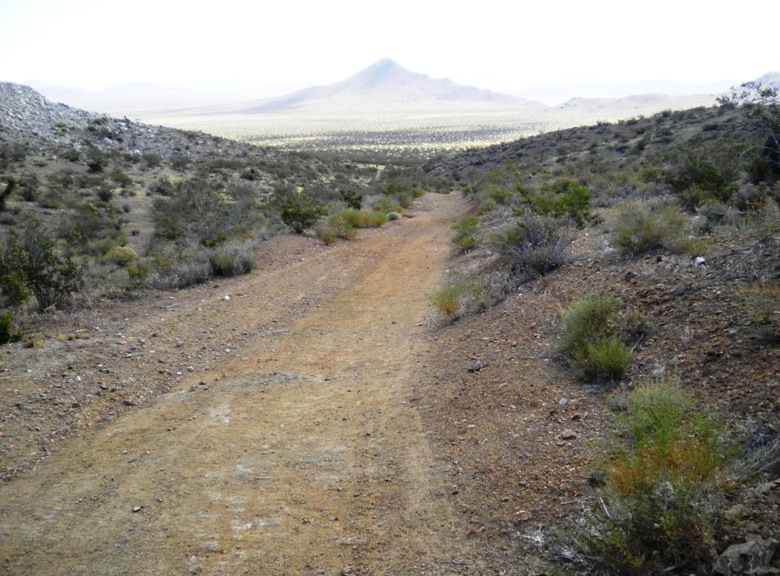
I had forgotten that this valley, like the mesa where I had been living for the past two decades, is surrounded by mountains, so mountains still form the backdrop of my life, making me feel a bit more at home than I expected from such an alien place. And it is alien — high desert rather than high plains, and city rather than country. I’d expected to have to walk along suburban streets, getting lost in the labyrinth of subdivisions, but on one of my first treks, an arroyo beckoned — sort of an alley way between houses — and I took that untraveled path. (Well, not exactly a path, more like a place for flash flood waters to run off. Good thing the day was clear and dry.) And then there I was — in the middle of the desert. Yup. Just me and mountains and knolls and sandy roads. And a few very tiny flowers struggling to live in the bleak sand and heat. (Seems like a good metaphor for my life right now.) Surprised the heck out of me.

Life has held many surprises for me lately, most of which were not good, and since I don’t know what I’m doing or where I’m headed, I’m sure life will continue to surprise me.

(These yellow flowers are those on the bushes in the other photos.)

Yes. I Can.

It seems as if it’s been a lifetime since I wrote an article for this blog, and perhaps it has been. I thought my move away from the house I lived for the past two decades with my life mate would be the start of a life change — a real journey. I expected to be different at the end of my trip to my new location than I was at the beginning, but in truth, the change had already begun.

During these past months, I’ve had so much thrown at me that I was overwhelmed. First my mate’s death, then arranging his cremation, packing and shipping the stuff I’m going to keep, doing a yard sale, cleaning out his things, disposing of all the detritus one accumulates during a shared life time, preparing for my journey. All this I did alone while dealing with overwhelming grief. During each agonizing step of the way, I’d cry and wail and scream, “I can’t do this!” So much pain. So much loss. So much change in such a short time. And I had no idea how to cope.

My last morning at the house, I got up early, cleaned out the few remaining items I’d been using, packed my car, and took one more look around the house. I walked through the rooms, remembering with what hope we had moved there, remembering the good times, remembering the more frequent bad times. Remembering his last hug, his last kiss. His death.

As I was shutting the door, I thought of all that lay ahead of me, and I cried, “I can’t do this.”

Then, it dawned on me: Yes. I can. Because I did.

I got out my camera, and went through the house one last time, taking photos of the empty rooms to prove to myself that all those things I thought I couldn’t do, I did. I know there will still be much for me to have to deal with — learning how to live without him, learning who I am now that I am not part of a couple, finding a way and a reason to live – and through it all, I might continue to wail, “I can’t do this,” but this truth is, I can. And that was the real journey, the real discovery. The trip turned out to be just a trip.


Tempest Tossed

I’m going to be without the internet for a couple of weeks, so don’t worry if I don’t post for a while.

I’d always planned to follow the conventional wisdom and not move for at least a year after my life mate died, but here I am, two months into my grief, and I am moving — not by choice, but circumstance. Right now I’m rattling around in an empty house, filling it with tears. Though I’m mostly moved and packed and the house cleaned, I am not ready to go — it is way too soon. But even if I could stay, it wouldn’t change anything. My mate would still be dead. And I’d still be homeless — he was my home, not this house.

Despite my declaration (after having to throw away so much stuff these past weeks) that I would never buy anything again (except electronics) I did buy a new camera (a cheap little thing, but it works, and besides, a digital camera is electronic, right?). I took pictures of this place today: our cars parked next to each other, the bushes we planted that enclose the house and give it privacy, the hybrid bush/tree I borrowed for my soon to be published novel Light Bringer (which will always be tinged with sadness for me since he never got to read it). I don’t know if I will ever be able to look at the photos without weeping, but at least I have them if I want to take a peek.

From what I’ve heard about the loss of a mate, as hard as the first months are, the second year of grieving sometimes is even worse. I cannot imagine that. But then, I never could have imagined the pain I am feeling now. I don’t know why, but occasionally the loss hits me anew, as if it just happened. Which is what I am feeling today. And, apparently, that too is normal. It still happens to some people even a decade later.

Our life together — his and mine — is receding, even in memory, as if it’s a fantasy, a dream, a mirage. When he was alive, the past always seemed present. Now it seems so very past (passed?). That’s one more loss to add to so many.

I feel tempest-tossed. As if I am unmoored. Swept away on an emotional storm. Besides all the other emotions that beset me, I find I panic easily. I took up the mat on the floor of the driver’s side of my car where my feet rest (I was cleaning the car, getting it ready for the trip), and I discovered . . . rusted-out holes. Yikes. I’m about to go on a long trip with holes in my car? Panic! There is no such thing as ER for car bodies as I discovered after a spate of phone calls, so when I calmed down, I patched the floorboard using aluminum foil, metal tape (way cool stuff!), oven liners, and cardboard. Should last as long as my car.

I’m sure I will be okay, eventually. Just not yet.

I Am a Two-Month Grief Survivor

I have now survived two months without my life mate — not easily and not well, but I have managed to get through all those days, hours, minutes. The absolute worst day, though, was last Thursday. You would think it would have been the day he died, but that was a sadly inevitable day, one I actually had looked forward to. He’d been sick for so long and in such pain, that I was glad he finally let go and drifted away. After he died, I kissed him goodbye then went to get the nurse, who confirmed that he was gone. She called the funeral home, and I sat there in the room with him for two hours until they finally came for him. (They came in an SUV, not a hearse. And they used a red plush coverlet, not a body bag.) I might have cried. I might have been numb. I don’t really remember. All I know is that I sat there with him until almost dawn. I couldn’t even see his face — they had cleaned him and wrapped him in a blanket — so I just sat there, thinking nothing.

But last Thursday I spent all day cleaning out his closet and drawers, and going through boxes of his “effects.” He had planned to do it himself, but right before he could get started, he was stricken with debilitating pain that lasted to the end of his life, and so he left it for me to do. I did know what to do with most things because he had rallied enough to tell me, but still, there were a few items that blindsided me, such as photos and business cards from his first store (where we met). Every single item he owned was emotionally laden, both with his feelings and mine, and I cried the entire time, huge tears dripping unchecked, soaking my collar.

How do you dismantle someone’s life? How do you dismantle a shared life? With care and tears, apparently.

A couple of days later I started cleaning out my office (I have to leave the place we lived for the past two decades, as if losing him isn’t trauma enough). I didn’t expect any great emotional upheaval — it was my stuff after all — but still it turned out to be an emotional day, though nowhere near as catastrophic as Thursday. This is the first move as an adult I will make alone. It will be the first move I ever made with no real hopes, no lightheartedness. I’m going to a place to write and to heal, not to settle down for good. And my mate will not be there.

Part of me is glad to be getting away from this house, this area — our life here started our with such hope and ended in such despair. Part of me feels as if I’m running away from the pain of losing him, but I have a hunch the pain will always be with me. At least I will never again have the agony of clearing out his things. Oh, wait! I’ve sent several boxes of his stuff to be stored, the things I cannot yet get rid of. Eventually I will have to dispose of the things I can’t use, but perhaps I can wait until it won’t be such a traumatic event. I never want to live through another day like last Thursday. I’m surprised I lived through it this time.

Misconceptions About Grief

I attended the grief support group today, my sixth time for that particular group, but I’ll need to find another group when I get relocated. It’s good to be able to talk about my grief and my lost mate without fear of boring people. And I am beginning to fear that very thing. It seems as if I’m standing in place while the rest of the world moves on, which adds to my feeling of isolation. I had no problem talking or blogging about my grief at the beginning — it was new to me and to those I encountered. But now that I know I could still be dealing with these same feelings long after everyone else has forgotten — it could be a year, perhaps even two (and sometimes, or so I’ve heard, the second year is worse than the first as the reality settles into one’s soul) — I’ve been hesitant to mention my bereftness lest I incur impatience in others. Or even worse, lest I seem as if I’m milking my personal tragedy for attention.

I asked the group today how they handled the situation (the others were almost two years into their bereavement), and they said they stopped talking about their loss except to the group. To everyone else they’d use phrases such as “I’m coping,” or “I’m doing okay all things considered.” When I asked if I should hide my grief, the counselor said no — too many people hide their grief, and it’s important to let others know what grief is, how it affects a person and her life.

So here, on my blog, I’m going to continue talking about the experience, continue to share what I learn. Grief is so not what I thought it was. I assumed from what I’d read and seen that the bereft felt sad and lonely, perhaps empty and lost. It is that and so much more. It affects us physically, spiritually, mentally. It creates a void in the body that disease, accidents, and violence hasten to fill. (The death rate for a person grieving her mate increases by 27%.) It affects our self esteem and our sense of place in the universe. It makes us question our values and the meaning of our lives. It changes us forever, and we need a long time to intergrate the loss and pain into our personal identity.

There are many misconceptions about grief such as:

  • All losses are the same
  • All bereaved people grieve in the same way
  • It takes two weeks to three months to get over your grief
  • When grief is resolved, it never comes up again
  • It is better to put painful thoughts out of your mind
  • Anger should not be part of your grief
  • You will have no relationship with your loved one after death
  • It is best to put the memories of your loved one in the past and go one with your life
  • It is best to get involved and stay busy so there is no space to feel pain
  • Crying doesn’t solve anything

I’m not sure about the last miconception. Crying doesn’t seem to solve anything, but it does have a place. Without tears and yes, I admit it, screams, the pain has no place to go but deeper inside. I’m also not sure about having a relationship with my loved one after his death, but I like the idea. I just don’t know how to do it. I’ll let you know when I figure it out. Or you can let me know. I need all the help I can get.

Blogs I Never Wrote

I was cleaning out my desk today and found a bunch of notes for blog articles. There were some great titles with no indication of what I intended to say: “Pot Holes and Plot Holes”, “Plotting vs. Plodding”. Maybe someday I’ll write those articles, assuming, of course, I can think of anything to say.

I found a note to answer the questions I collected from readers for an interview about Facebook back in  . . . gasp . . . January. Has it really been that long? Eek.

I found a note to write a blog about the gatekeepers — those who are still working diligently to make sure that no one from a small press gets the same advantages as those published by the majors. Both the Romance Writers of America and Mystery Writers of America have rules which exclude us from entering contests and other activites since our publishers don’t yet meet their criteria for an approved publisher. Click here: for the Requirements for inclusion on MWA’s list of Approved Publishers.

I found a note about writing: The finished product is public but the process of getting there is intensely personal and different for everyone. Someday I might write that blog, but it seems that sentence summarizes it nicely.

I found a note for March 25 to celebrate the anniversary of my book release, and as part of the festivities, I planned to write an article on what I learned about book promotion during that first year of publication. Life intervened preventing me from doing that blog, but I can tell you now what I learned: absolutely nothing. I’ve sold fewer books than some fellow authors who did relatively little promotion, so apparently I have no idea how to promote. I’m still hoping to learn, though, and when I do find out, you will be the first to know.

And last but certainly not least are several notes on examples from books about editing properly. For example: She didn’t notice the motion behind her. Since the story was from her point of view, how could she have noticed the motion so as not to notice it? Another example from the same book: The light tinted her face green. How did she know that her face was green? It would have been better to say the light tinted her hands green.

These examples of wordiness came from another book: Inside him he felt a gnawing frustration. Where else does one feel frustration except inside? Unless, perhaps in a horror story where Frustration is the name of a beast with great teeth that gnaws on the outside of a person’s body. And what about this bit of baffling dialogue: “To a certain extent, you are entirely correct.” To what extent? Either one is entirely correct or one isn’t. And this one is the worst of all: He became convinced in his own mind that  . . . If anyone can tell me how you can be convinced in any one else’s mind, then I’ll let that one pass, but you can’t. If you think I’m being too picky, there were instances of such wordiness on every page. Ugh.

Since I’ve been on a hiatus from the internet while I deal with my traumatic offline life, my blog readership has slipped to almost nothing, so it seems that when I finally get a grip on my new life, I will have my work cut out for me, both to regain my blog readership and to gain a book readership. I hope it will be as rewarding the second time around.

Personal Totem Pole

Totem poles told stories, recounted historic events, celebrated cultural beliefs, symbolized a person’s life. Some were simply artistic presentations. The most important symbol went on top, the least important on the bottom. (Of course you knew this because of the saying “low man on the totem pole.”)

An animal was often used to represent a person. For example, a raven stands for introspection, courage, and self-knowledge. I just picked “raven” randomly, but oddly enough, that seems to be a good totem for me (at least I hope it is — I still have my doubts about the courage). And, coincidentally, my last name means “bright raven.” Since a raven is a bird, it could also mean that I am ready to try my wings. Or I will be someday.

My totem would also include a rose hip. A rose hip grows after the rose has died, and it becomes the source of a new life. (Okay, that may be a bit fanciful, but that’s the point of this particular exercise.)

A pen would be a part of my totem. So would an aquamarine — it protects health, and since I am at high risk because of grief, I need all the protection I can get. I could include a seesaw because I always seem to second-guess myself, but I will leave it off since I would want my totem to represent hope for the future.

If you were to create a personal totem pole, what would you include to represent your life, your dreams, your beliefs? What would your totem animal be? (You can find your totem animal here: Native American Totems and Their Meanings.)

Coming of Age in Middle Age

Coming of age novels chronicle a young person’s transition from childhood to adulthood, and often (in movies anyway) the term refers to the first sexual experience. In a broader sense, however, coming of age refers to a young character’s growth during the course of a story, either by losing innocence, assuming responsibility, or by learning a lesson.

It is not only in youth that one has to deal with such growth. Every transition in life leads to a new coming of age, and the death of a mate is probably the greatest of these events. Death is undoable. Irrevocable. By middle age or late middle age, we have all lost people who are dear to us, but losing a mate is different because not only is the person gone, so is the life you shared and the plans you made. Adding to the difficulty, everything you do, everything you eat, everything you see is a reminder that he is gone. Forever. That is a bit of innocence that can never be recouped. A bit of hurt that can never be repaired. A true coming of age that makes one’s adolescent transition seem trivial by comparison.

I have not written fiction for a very long time. Perhaps the story I was meant to write had not yet been lived, so I had nothing to say. But now I do have something to say. I am steeped in grief still, but when I can step away from myself for a moment and am not involved in the pain, it strikes me as such an all-encompassing experience that I would like to explore it in a novel. It is a story that needs to be written — it is so little understood, this coming of age in middle age.

Consuming Words

According to a new report, the average American consumes 34 gigabytes and 100,000 words over the course of about 12 hours every day. Nearly half of that time is spent watching television; about a quarter on the computer; and the rest on radio, print media, telephones, computer games, recorded music, movies and other sources. Maybe those average Americans need to go on a word diet. Many of those words are superfluous. (If you consider the inanity of most television shows, radio programs, newspaper and magazine articles, music lyrics, movie scripts, telephone calls, and blog posts — this one included — perhaps most words are superfluous, but for the purposes of this article, I will pretend that word gluttony adds meaning to your life and hence has some value.)

For example: In this headline, the removal of one word would cut down word consumption (of this particular phrase anyway) by 20%: Nursing Student Mysteriously Vanishes. Um . . . yeah. Seems as if “vanishing” implies mysterious. Have you ever heard of a vanishing that wasn’t mysterious? Unless the nursing student had planned to vanish, called all her friends together, and said, “Good-bye. I’m going to vanish now.” Still, that in itself would be mysterious. How would she do it, and more importantly, why?

Or what about this headline: Imagine how ‘revolted’ he must have felt when daughter Erin Andrews told him what happened between sobs. I guess it’s more of a blurb than a headline, still, there are superfluous words here. Perhaps “between sobs.” Perhaps “revolted.” At the very least, there is a comma missing. Truly, what could happen between sobs? There isn’t much time to do anything between sobs except perhaps take a breath.

And speaking of consuming words — I took the total number of comments people left for my Blogmania giveaway, went to random.org and had them pick a number. The winner was the person who left the 177th comment — Wanda Hughes. Lucky Wanda will be consuming a great number of words — there are about 88,000 in Daughter Am I, though I did put it on a diet and got rid of at least 5,000 superfluous words during the final editing. Happy consumption, Wanda!

add to del.icio.us : Add to Blinkslist : add to furl : Digg it : Stumble It! : add to simpy : seed the vine : : : TailRank : post to facebook