When Chaos Rains

Yeah, I know — the expression is when chaos reigns, but lately it seems as if chaos is raining down on me like an acidic shower that erodes everything it touches. Maybe things aren’t that bad. It’s possible I simply no longer have any perspective on the way things should be.

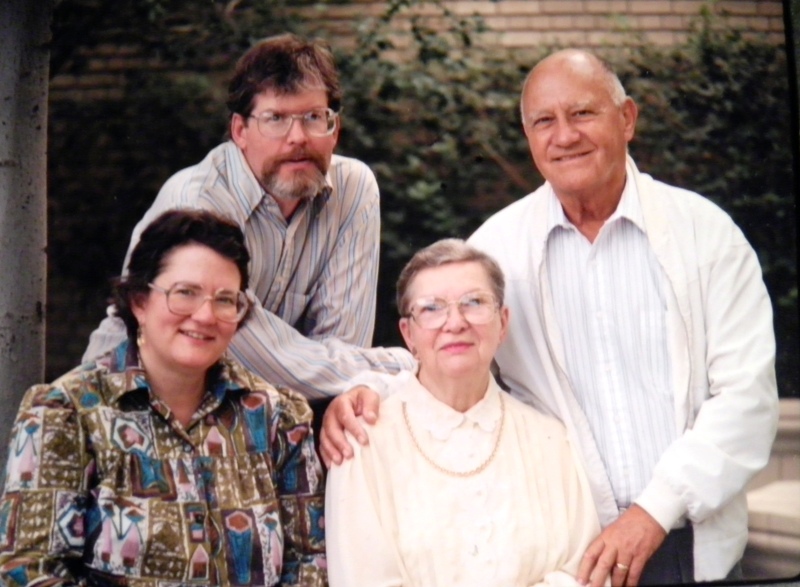
Take today for example. My car broke down last Wednesday, and every day since then the mechanic has promised to have the car ready for me. Normally, this wouldn’t be a problem except that my 97-year-old father is going through a medical crisis, and I’ve had to beg for rides to pharmacies for his medications, to doctors appointments, to and from the hospital. A lovely woman squired us around today, taking us not only to the doctor but to the hospital afterward when the same doctor who didn’t want to admit my father last Thursday decided my father needed hospital care after all.  My friend waited for me for arain while, then when I got tired of watching my father sleeping in the emergency room because they didn’t have a bed for him, we went out to dinner. Afterward, she took me back to the hospital so I could check on him once more, and it’s a good thing because they hadn’t fed him. And he was cold.

I got that straightened out, then my friend drove me home only to be met my demented brother who screamed obscenities at her. Cripes, she didn’t deserve that. Well, neither do I, of course, but her only “sin” was doing a good deed. She is used to dealing with the problems of the aged, so she understood what I was going through with my father, but now I feel bad for even asking her.

Luckily she, like everyone else in my life, knows the truth, so she didn’t believe brother dearest’s accusations that I’m killing the old man. (Where does he get this stuff?)

Perhaps I will get my car back tomorrow (with a hefty repair bill, I might add), but it’s no longer critical. I don’t need to worry about getting my father to the doctor’s office or to the hospital since he is already there. Well, sort of there. He’s parked in the emergency room with minimal care because even if they did have a bed for him, they don’t have the staff to man and woman it. Still, he’s right next to the nurse’s station, and she just got on duty and isn’t bored with the day yet, so he should be okay.

Me? I am so not cool. I lost my temper and screamed at my brother . I feel as if I should be above such base activities, but I am not always the person I want to be. Someday, perhaps . . .

***

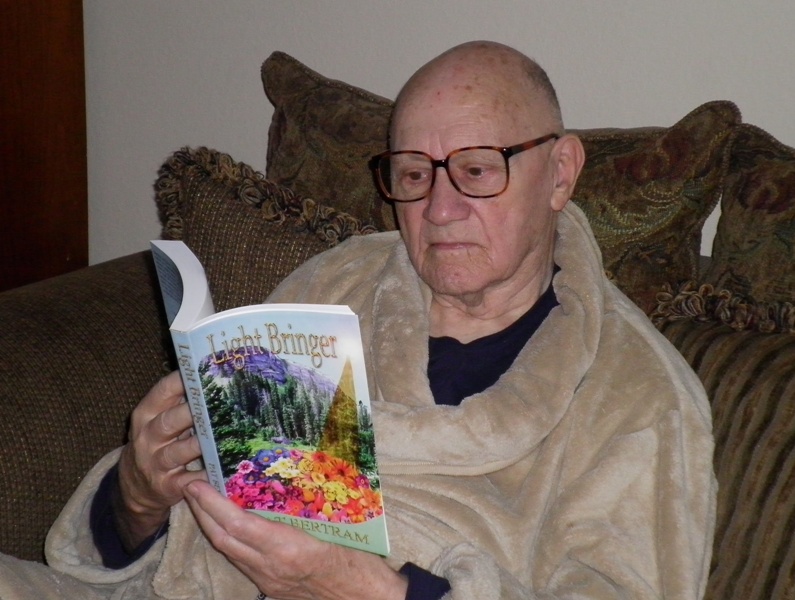
Pat Bertram is the author of the suspense novels Light Bringer, More Deaths Than One, A Spark of Heavenly Fire, and Daughter Am I. Bertram is also the author of Grief: The Great Yearning, “an exquisite book, wrenching to read, and at the same time full of profound truths.” Connect with Pat on Google+. Like Pat on Facebook.

Doing Something Nice for Myself

Since my life continues to be traumatic and chaotic, a friend suggested I do something nice for myself. My car is in the shop, which is part of the chaos — my father is going through a medical crisis, and my not having a car only adds to the stress. Without a vehicle, I am pretty much stuck with what is in my immediate environs for that something nice. So I spent a few relaxing moments putting together a fake flower arrangement. It gave me my first smile in several days, so apparently it’s working. Hope it brings a smile to your life, too.

***

Pat Bertram is the author of the suspense novels Light Bringer, More Deaths Than One, A Spark of Heavenly Fire, and Daughter Am I. Bertram is also the author of Grief: The Great Yearning, “an exquisite book, wrenching to read, and at the same time full of profound truths.” Connect with Pat on Google+. Like Pat on Facebook.

Sheep Peach by Any Other Name . . .

Have you ever wondered about the origins or kiwifruit or where it got its name? I didn’t think so. Neither did I. But when I read that the plant was renamed with an eye on the American market, I had to look into the matter.

Kiwis — the fruits, not the slang word for New Zealanders or the name for the fuzzy bird — is a native of China where it was known as yang tao, roughly translated as “sheep peach.” It was also known as monkey peach, macaque pear, vine pear, sun peach and wood berry. (Wood berry makes most sense since the fruit is a berry of a woody vine genus that is widespread in Asia.) Recently, the Chinese name for “strange fruit,” a translation of kiwifruit, has become common in Taiwan and Hong Kong. (I’ve heard it said that what goes around comes around, and apparently this is true of cultivated fruit and fruit names as well as the rest of human activities.)

When yangsheep tao seeds were brought to New Zealand in the early part of the twentieth century, the new cultivators renamed the fruit “Chinese Gooseberries” or “melonettes.” At the beginning, it was mostly a novelty plant for gardens and small markets. Through cultivation, the fruit became bigger and sweeter, and its appeal grew. In the nineteen fifties, the growers wanted to expand their sales to the United States, but neither of these names were acceptable for the American market. They couldn’t call the fruit “Chinese Gooseberry” because the United States was in the midst of a cold war, and anything smacking of Communism was immediate death. Nor could they call it “melonette” because the United States had high tariffs for melons. Someone (several people claim the honor so there’s no point in naming names) came up with the label “kiwifruit” after the small brown fuzzy New Zealand bird, which distanced the fruit even further from its Chinese past. As I’m sure you’ve figured out, the ploy worked, and now kiwis are a staple of most people’s diet, but not mine. I don’t particularly like the fruit, no matter what its name. It seems to me the fruits are again becoming small and not very sweet, but most people still buy it.

Now that I think about it, the original appellation of “sheep peach” is a good name for the fruit. Like sheep, we were herded where the marketers wanted us to go.

***

Pat Bertram is the author of the suspense novels Light Bringer, More Deaths Than One, A Spark of Heavenly Fire, and Daughter Am I. Bertram is also the author of Grief: The Great Yearning, “an exquisite book, wrenching to read, and at the same time full of profound truths.” Connect with Pat on Google+. Like Pat on Facebook.
Planning Epic Transcendental and Mystical Journeys

I am so beyond stressed out from taking care of my father’s latest medical crisis, my brother’s continued mental problems, and my own lack of sleep because of caring for them that I can no longer find comfort in planning epic transcendental and mystical journeys. But here is an update for those of you who have expressed concern about my idea of walking up the Pacific Coast to Seattle.

Although I would take precautions, there is no doubt such a walk could be dangerous, but for now, that is not something I want to consider. In the past eight years, I’ve watched three people die slowly and painfully from cancer, and now I am watching my 97-year-old father die even more slowly from old age. Not taking the trip because of possible dangers would be merely saving myself for even more probable trauma in the future. Life itself is a danger. It does terrible things to people, taking everything they have until there is nothing left but a husk of skin and bones.

Despite all my thinking and blogging about an epic adventure, there is a chance this walk is merely a fantasy. I am not sure I have the physical capabilities of walking so far or spending so much time outside. I am not sure I can carry enough water and emergency supplies. And to be honest, I’m not sure I really want to do it — the thought could simply be a means of mentally escaping an untenable living situation. Still, if I take the trip, or try to take it, I will be as prepared as possible without carrying the whole world on my back. I’m looking into such things as mylar emergency blankets, down vests, bear spray (I figure if it can ward off a bear, the spray could ward off any human predator, too). I am also researching the best way of carrying things, and no, it isn’t on the back, it’s on the head, but that I won’t even consider. I want to look as if I am on a walk, not backpacking through the wilderness or trekking around East Africa.

The walk is only one possible adventure I am considering. I started out planning an extended cross-country road trip, perhaps visiting the national parks, sometimes camping out with full camping gear and sometimes staying in motels to catch up on civilization’s offerings, and this is still a possibility, especially if my car is running. (If I were to walk up the coast, I’m not sure what I would do with the vehicle during the year I would be gone.) Another possibility is to somehow use my ancient VW as a means of promoting my books, maybe painting it by hand to attract attention or letting people who buy a book sign my car while I am signing their boobedk. (Although I like that idea, I’m not sure how to market it. Marketing, unfortunately, is not my forte.)

And it’s possible I wouldn’t want to stop taking dance lessons, in which case I would take shorter long walks to prepare for the epic walk or go on weekend camping trips to gain experience in the outdoors. (Besides, my dance teacher says she doesn’t want me to stop, and it’s been a long time since someone wanted me around just for me, not for what I could do for them.)

In other words, despite all my blogging, thinking, talking, I have no idea what I will do when my responsibilities end.

Well, I do know one thing. I will sleep, or at least try to. Being responsible for others’ care is exhausting.

***

Pat Bertram is the author of the suspense novels Light Bringer, More Deaths Than One, A Spark of Heavenly Fire, and Daughter Am I. Bertram is also the author of Grief: The Great Yearning, “an exquisite book, wrenching to read, and at the same time full of profound truths.” Connect with Pat on Google+. Like Pat on Facebook.
A Three-Letter Word for Freedom

I don’t drive a lot — less than 150,000 miles in 42 years — but still, a car is important to me. Our society is set up where a vehicle is essential to go the long distances our daily lives seem to require. It’s a way of carrying all the food and equipment we need, a way to keep in touch with far-flung families and friends, a way of extending our reach and renewing the views forming the backdrop of our lives. But even more than that, a car spells freedom.

My car conked out the other night (actually, it was the fuel pump that conked out), and so I’ve been without transportation, having to rely on friends to get me and my father to his various appointments and to round up the medications he needs. I’ve been without a car before when it’s been in the shop, sometimes for several days, and I used to revel in the freedom of not having to care for such a large and needy object. Often I would go weeks without driving since I prefer traveling on foot when possible. But today, I’ve been antsy, waiting for the mechanics to call and tell me the car is fixed.

Even though I might not have driven today since my father needs me here, I feel trapped not having the car around in case I felt the urge to escape my life for just a few minutes. A car is a promise that we can go farther and faster than ever our feet could carry us. It’s a promise that life awaits beyond the confines of our responsibilities. It’s a promise of adventure, fun, freedom.

The irony of this situation is that I’ve been thinking about walking up the coast to Seattle, a trip that might take me a year, and the thought of not having to deal with a car and whatever mechanical and maintenance issues that might arise on a long trip has been refreshing. And here I am fretting over the absence of my car. (I know I’m overusing the word “car,” but it’s too old and bedraggled to merit the appellation of “vehicle.”)

So here I wait.

Is that the phone I hear? No, just my imagination calling me.

***

Pat Bertram is the author of the suspense novels Light Bringer, More Deaths Than One, A Spark of Heavenly Fire, and Daughter Am I. Bertram is also the author of Grief: The Great Yearning, “an exquisite book, wrenching to read, and at the same time full of profound truths.” Connect with Pat on Google+. Like Pat on Facebook.
Danceless

Today I missed dance class for the first time since I began taking lessons, and I feel bereft, as if I misplaced something I can never get back. I can go back to class, of course, but today’s classes were special in the way that all moments are special — each is a treasure, a singular occasion, that will never happen in exactly the same way twice.

More than that, dance is currently my savior, helping me get through the daily traumas of my life, and there have been more traumas than usual lately, especially the past 22 hours, so I needed those classes more than ever.

And yet, here I sit . . . danceless. Even if I wanted to practice the dances I’ve learned, I couldn’t. I’m exhausted.

tugofwarI know you’re dying to know what this is all about, so I’ll tell you — it’s just life.

More specifically, my car stopped running as I started out on my way to meet up for the Sierra Club walk last night. No gas seemed to be getting to the engine, which leads me to assume the fuel pump broke down. Not a problem, really, since I have emergency road insurance, and they will tow the car to be fixed.

What was a problem is that a few minutes after I coasted back down the hill and into the garage (how resourceful am I!), my father went through a minor medical emergency. I was up all night dealing with both him and my brother who seemed to sense the chaos. Early this morning my father decided he needed to go to the hospital via ambulence. I spent hours at the emergency room with him, but they didn’t want to admit him, so the rest of the day was spent begging rides from the hospital for both of us, rides to the pharmacy for his antibiotics, and then to another pharmacy because the first had no pharmacist on duty. (How can a major pharmacy not have a pharmacist on duty? Strange, that.) And to top it off, I had to forgo a treat I was looking forward to.

I sound selfish, don’t I? Well, that’s life, too.

Temporarily, all is quiet. Both men seem to be resting, and me . . . I’m here on this blog, trying to make sense of it all.

***

Pat Bertram is the author of the suspense novels Light Bringer, More Deaths Than One, A Spark of Heavenly Fire, and Daughter Am I. Bertram is also the author of Grief: The Great Yearning, “an exquisite book, wrenching to read, and at the same time full of profound truths.” Connect with Pat on Google+. Like Pat on Facebook.
My Polarized Life — The Profound and the Profane

I’m sitting here trying to think of something uplifting to say. It’s not that today is a bad day, it’s just that like all my days, it’s too polarized — from the profound experience of learning to dance to the profane experience of life in my father’s house.

My father is 97 years old and is doing well — he gets up and can walk around by himself, can even take off the oxygen for a few minutes if he needs to go beyond the tether of the tubing. He mostly looks after himself, but the every day aspects of life are beginning to defeat him. He has a hard time concentrating and remembering, though these lacks are due to congestive heart failure and age, not Alzheimer’s. (He recently took and passed an Alzheimer’s test.) Still, there are always personal things that he needs me to take care of, such as shopping and cooking what few cooked foods he eats. There are frequent house matters for me to take care of such as bad television, phone, and computer reception. And there is my dysfunctional homeless brother who is currently camping out in the garage.

For some reason — perhaps because I am here — my brother delights in tormenting me, calling me childish names such as “Porky” and “Lard Ass” as well as more adult-rated names. He is obviously suffering, and I am trying to be kind to him, even when he graffities car and bangs on my windows for hours at a time, but I have no idea what he really wants. Even if I did know, I’m not sure I could do anything for him. His problems are way out of my ability to comprehend. His relationship with his problems is even harder to fathom. He likes his “evil” side. He thinks it’s the best part of him, and perhaps it is. His core personality seems to be humble and self-effacing, helpless, even, like a bewildered little boy stuck inside a grown man’s decaying body. For sure, he has no interest in getting help to balance himself out.

danceI sometimes think of moving on and leaving my father and brother to fend for themselves, but I’m not sure I want to be the sort of person who can walk out on her aged, increasingly confused father and leave him to care for himself. (My brother sure couldn’t do anything to help. He doesn’t seem to be able to recognize that anyone but himself needs help.)

Besides, if I moved on, I’d have to give up dancing. The irony is that by being here in this bizarre household, I have the freedom to indulge my newfound love of dancing. If I left, I’d have to get a job, which would leave me no time or energy for dance classes, and for now, dancing is important to me. It feels like a pilgrimage, a spiritual journey. It has lessons to teach me beyond the discipline of the basic steps and the joy of the choreographed dances I am learning, though I’m not sure what those lessons are. I might never know since much of dance is subliminal, needing the focus of both the body’s mind as well as the mind’s mind and perhaps even the soul.

As Shirley MacLaine said, “Dance is an art that impends on the soul. It is with you every moment, it expresses itself in everything you do.”

Whatever lessons I learn from dance will be with me long after the memories of this household have faded. Dance is that important. And so I continue this polarized existence, paying for the profound privilege of dancing with the profanity in the rest of my life.

***

Pat Bertram is the author of the suspense novels Light Bringer, More Deaths Than One, A Spark of Heavenly Fire, and Daughter Am I. Bertram is also the author of Grief: The Great Yearning, “an exquisite book, wrenching to read, and at the same time full of profound truths.” Connect with Pat on Google+. Like Pat on Facebook.

When Life and Writing Overlap

Many writers claim they feel compelled to write. I am not one of them. I either write or don’t write depending on whether there is anything “real” going on in my life or not. Most of the time, real life is going on, so I feel no need to write. (Except for blogging, of course. I do that every day no matter what.)

There is one thing that does compel me to write fiction and that is when a story gets in my head and writing it is the only way to clear it out of my mind.

I’ve been planning to write a story about my exercise group, and I can’t write it until I’ve finished another, non-writerly project. (I am so not a multi-tasker!) Meantime, the story goes round and round in my head as I try to figure out the logistics of the plot. For example, I thought I knew who the murderer is, but he turns out to be a secondary gunman, someone who will writingbe caught up in the police investigation. I did figure out what the victim was doing at the studio, how she got inside, when she was killed, and why she was wearing what she was wearing. The murderer is still up for grabs.

Besides trying to figure out the story, I’ve been researching what will happen to those of us who find the body. Will the cops simply take names and contact information? Will they keep us near the scene? Take us down to the police station? It’s amazing how many mysteries are from the POV of cops or the cozy little old (and sometimes cozy young) woman who is playing amateur detective. Little is written about the moment-to-moment demands on the would-be witnesses. In movies, TV shows, books, you see the witnesses, bystanders, body watchers/catchers/snatchers or whoever already talking to the cops. How did they get to that point?

I know it’s time to write the story to get it out of my head when strange thoughts start ricocheting around in my brain, thoughts like, “I don’t have to do the research to find out what will happen to us witnesses. When the cops come to the studio after the murder, I’ll be able to see first hand what they do to us.”

Yesterday I even heard myself thinking, “I better clean the house. If the cops come here, I don’t want them to know how messy I am.”

I’m sure some of these thoughts are showing up because real life will overlap fiction. The women in my dance class are all part of the story and I . . . well, I am the narrator, a suspect, possibly the amateur detective. (Someone even suggested I should be the killer. It’s a clever twist, but Agatha Christie already used the ploy in The Murder of Roger Akroyd and besides, it felt like a betrayal when she did it, and I don’t like cheating my readers.)

Whatever the reason for the stange thoughts, I’ll be glad when it’s time to start putting the story on paper and out of my head. It’s getting just a bit confusing.

***

Pat Bertram is the author of the suspense novels Light Bringer, More Deaths Than One, A Spark of Heavenly Fire, and Daughter Am I. Bertram is also the author of Grief: The Great Yearning, “an exquisite book, wrenching to read, and at the same time full of profound truths.” Connect with Pat on Google+. Like Pat on Facebook.

A Tale of Two Insects

I watched an old CSI show the other day where Grissom told a story about a guy who found a spider swimming in his toilet. For a couple of mornings the guy watched the spider struggling to survive the maelstrom of flushing. One morning, the guy decided to rescue the spider. He took it out of the water and set it on the floor. The next day, he found thspidere spider dead. “Why,” Grissom asked, “did the spider die? Because one life impinged on another.”

In my case, it’s ants I find, and my tale is about ants in the microwave. At this time of year, ants are an epidemic, so it’s difficult to keep on top of the infestation. (I’m telling you this so you don’t think the microwave is filthy. It isn’t.) I don’t like killing anything, not even insects, but if you don’t keep on top of the little critters, they go home and tell all their friends about a great party house they found, and the next thing you know, you have ants boogieing all over the place, even on your body when you sleep. Not a pleasant way to be awakened, that creepy-crawly sensation. (Cinnamon sprinkled in corners, by doors, and under windows usually keeps ants away, but a few manage to find other ways into the house.)

The same day I watched CSI, I opened the microwave door after heating some food and found a couple of Pharoah ants scurrying around inside. (Pharoah ants are more commonly known as sugar ants because they are attracted to sweets and greasy foods. Sounds like most of us, doesn’t it?)

Obviously, the ants were inside when I started the oven, so they should have been nuked, but they weren’t.

A bit of research explained why they survived. Microwave ovens don’t heat evenly, so ants can hide in the cool corners. Ants have a relatively small amount of water inside their bodies compared to their outside surface, and apparently it’s the water that heats up in a microwave. This large body surface compared to their volume helps cool them down, so if they make a mistake and end up in a hot spot, their heat dissipates quickly.

So here we have a tale of two insects, one whose life was impinged on by another, and one whose life remained unimpinged.

The moral is . . . I don’t know. Perhaps that we have to live our lives the best way we know how, and if we impinge on other lives, so be it. It could even be that impinging is what life is all about.

***

Pat Bertram is the author of the suspense novels Light Bringer, More Deaths Than One, A Spark of Heavenly Fire, and Daughter Am I. Bertram is also the author of Grief: The Great Yearning, “an exquisite book, wrenching to read, and at the same time full of profound truths.” Connect with Pat on Google+. Like Pat on Facebook.

Finding Something to Blog About Every Single Day

Today I celebrate my 1010th consecutive blog post. (I’ve published a total 1,629 posts, but the first 519 were before I started daily blogging.)

When a friend expressed amazement that I’m able to blog so much, I explained that it’s easier to blog if you write every day or at least on a regularly scheduled basis rather than doing it whenever you find something to say. If you blog sporadically, you feel as if your articles need to be important, so you don’t write. If you blog regularly, you relate a significant detail of your day, make your articles important by relating them to you, or find the youseetimmy in your topic.

(In the movie Speechless, Michael Keeton tells rival speechwriter Geena Davis that her speeches lack a youseetimmy. He explained that at the end of every episode of Lassie, Timmy’s father sat him down and explained the lesson of the tale, “You see, Timmy . . .)

Somedays, onumbersf course, it’s hard for me to find a topic — no event of the day and no thought frittering around in my head seems worth focusing on, so I just write something, anything in the hopes of stumbling upon an interesting idea. I fail often, of course, in the interest department, but sometimes what I think is uninteresting captures the attention of the Google gods and I get a lot of views. Since apparently I have no idea what others will find appealing, by blogging every day, I increase my chances of saying something profound or maybe even popular.

Although blog experts stress the necessity for sticking to a single focus for a blog, I’ve not been able to do that since my foci have changed over the years. At first I wrote about finding a publisher, then I wrote about finding readers. For a while I wrote about writing but I quickly gave that up when I realized how pathetic it was for a neophyte author to be giving tips on how to write. Too many writers who haven’t a clue what they are doing tend to parcel out advice as if they were dealing out doughnuts. For example, one self-published author explained how to write a grieving character, and proceeded to show the character going through all the so-called stages of grief in one brief bit of dialogue. Not only was this person dispensing erroneous information about writing, the person was also dispensing erroneous information about grief. Eek. I’m not a neophyte author any more, but still, the idea of publishing writing tips seems pathetic. The only people who would be interested in such posts are other writers, and they are busy publishing their own writing tips.

Finally, I started writing about me — my grief, my life, my dreams, my plans, my activities — so now the focus of this blog is me. You don’t get a narrower focus than that! I mean, out of the 7,237,175,306 people in the world as of today, there is only one of me.

On the days when I have nothing to say or no inclination to say what I do have to say, discipline keeps me going. I’ve been blogging every day without fail for almost three years — 1010 days to be exact. Not to blog would be a significant disruption of the pattern of my days, and hence would give me something to blog about. Ironic, that.

Still, there will come a time when I forget to blog because my mind is elsewhere or a time when I cannot blog because my body is elsewhere.

Until then, here I am — finding something to blog about every single day.

***

Pat Bertram is the author of the suspense novels Light Bringer, More Deaths Than One, A Spark of Heavenly Fire, and Daughter Am I. Bertram is also the author of Grief: The Great Yearning, “an exquisite book, wrenching to read, and at the same time full of profound truths.” Connect with Pat on Google+. Like Pat on Facebook.