“If I could invent one thing to make the world a better place . . .”

Google is running a doodle contest for young artists — “If I could invent one thing to make the world a better place . . .” Of course, since it’s a Google contest, the doodle needs to incorporate their logo, which seems oxymoronic. What does Google have to do with the world? Google certainly doesn’t make the world a better place, it just makes online life easier to navigate, which makes me wonder if Google thinks the internet is actually “the world.”

peaceIt seems to me that the real, offline world works fine just the way it is. Earth spins on its axis, travels around the sun, and hurtles through space in an orderly manner. The sun comes up in the east every morning and sets in the west every evening. (Well, no, the sun doesn’t actually rise and set except from our perspective. To the earth’s perspective, the sun is always “up.”)

There are deserts and rain forests, mountains and oceans, lakes and rivers galore, which all make the world a wonderful place. The soil is fertile (or would be if we didn’t over use it) and water is plentiful. Skies are blue when the sun is shining, and vivid reds and oranges when it sets. Sometimes, there is even a flash of green in the tropical sky or vast waves of colors in the northern hemisphere.

Can anything invented by a human make any of this better? If humans really wanted to invent something that would make the world a better place, they would have to invent something that removed humans from the world. The world exists just fine without us. It is we who need the world. There is a story about a Native American shaman who almost forgave the white men for the terrible problems they brought because they also brought horses, and horses make the landscape more beautiful. Has anyone ever said that humans out in the open make the landscape more beautiful? (I’m talking bodies here, not gardens.)

I admit I’m being picky. I presume Google’s contest is about inventing something to make the human situation better, and even then, I don’t know if there is anything we could invent that would make our world a better place. I don’t know if there ever has been anything . . . well, except for indoor plumbing and toilet paper. Energy that doesn’t destroy the earth has already been invented (or discovered, rather.) There are ways of pulling energy right from the earth, but the problem is the energy purveyors have yet to figure out how to make money off such energy. There would be no wires or conduits, no meters, just a simple and inexpensive piece of equipment, similar to a small television satellite dish.

It would be nice if someone could invent a pain pill that actually worked, that had no side effects, and wasn’t addictive, but if someone invented ways of preventing pain and ill health and death, the earth would soon be so overrun with humans, someone need to invent something that would gradually remove humans from the world.

It’s a good thing I don’t have to invent anything that would make the world a better place, because I wouldn’t. All that the major inventions did was allow for bigger buildings, more genetically modified food, more vehicles, more incursions into once isolated lands, and in the end, more humans. What would make the world a better place is if people were kinder to each other, but that’s not something we can invent. All we need to do is do it. So today, be kind to someone and make the world a better place.

***

Pat Bertram is the author of the suspense novels Light Bringer, More Deaths Than One, A Spark of Heavenly Fire, and Daughter Am I. Bertram is also the author of Grief: The Great Yearning, “an exquisite book, wrenching to read, and at the same time full of profound truths.” Follow Pat on Google+. Like Pat on Facebook.

Visualizing a Life of Joy

When a fellow grief survivor once told me about a woman she knew — an old woman who had lost everyone she had ever loved — and how the woman was the most joyful person she had ever met, I could only marvel. At the time, I was in the midst of unfathomable grief for my life mate/soul mate, but even before my terrible loss, I’d never been a candyparticularly joyful person. I couldn’t understand how, in the midst of the traumas and dramas life doles out like Halloween candy, anyone could find joy. And yet, and yet . . .

If you’ve read any of my posts about my current situation, looking after my 97-year-old father and dealing with my dysfunctional brother, you might think I’m in the throes of despair, but oddly, there is a feeling of . . . could it be joy? . . . deep within me. It’s as if something — my psyche, my inner child, my soul — is smiling.

When my brother is relentlessly demanding my attention, particularly late at night when I’m exhausted, or when I’ve had to explain something for the tenth time to my bewildered and hearing impaired father, I wonder how I’ll ever make it through another moment, but in the quiet times, I’m finding peace and an illusive joy. I feel as if I am letting go of ties that kept me bound to an unhappy past and a burdensome present.

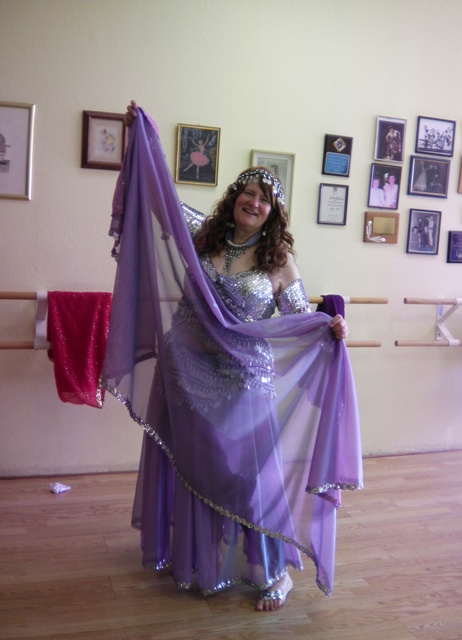
What helps is that I’ve found refuge in new friends and new activities that make me feel alive, especially exercise classes that stretch my body and my mind. Like yoga, these classes make me aware of possibilities I had never considered, and teach me to reach further, imagine more, dream deeper. They make me feel beautiful and graceful, even though the mirror quite clearly shows I am many years past such an ideal. Or not. My teacher skews the whole age curve, making seventy-seven look like fifty. For so long, I’ve been afraid of growing old alone, worrying about dragging a decrepit body through long and solitary decades, and while such a scenario is possible, it’s not necessarily true. The exercise teacher’s radiant smile and still sensual movements show what is possible if someone keeps active, has a great attitude, and is blessed with a bit of luck.

I don’t know what life has in store for me, of course, but for the first time in I don’t know how long — maybe forever — I can visualize a life of joy.

The very thought makes me smile.

***

Pat Bertram is the author of the suspense novels Light Bringer, More Deaths Than One, A Spark of Heavenly Fire, and Daughter Am I. Bertram is also the author of Grief: The Great Yearning, “an exquisite book, wrenching to read, and at the same time full of profound truths.” Follow Pat on Google+. Like Pat on Facebook.
Narcisstic Rage

I grew up in an angry family. Any disagreement between parents and children seemed to escalate into epic battles, ending only in violent punishments. Not surprisingly, I have always been afraid of anger, my own included. In my experience, anger is a destructive force that quickly becomes unfocused and wreaks havoc on the innocent and guilty alike, so I learned early in life not to do anything to anger anyone, and to keep my own anger reined in.

This fear of anger is one of the holds my dysfunctional alcoholic brother has on me. He is such an angry person, it’s as if he’s caught in a whirlwind of powerful energies and furies he cannot control. His anger bombards me with such force sometimes it feels as if I am soaking up his anger. Some of his anger is understandable, given his upbringing in such an angry family, but some of the anger is alien, especially when it is centered on me. Have I really done so much to offend him? Am I really the evil bitch he thinks I am? It’s possible, I suppose — our ability to deceive ourselves seems boundless at times — and yet, I am not quite as isolated as he seems to think, and since other people don’t see me as evil, I have some sense of the truth.

His mental issues are undiagnosed, but I’ve been doing online research in an effort to find a way to diminish his demands on me. (I realize finding a name for his illness won’t change anything, but it might help me figure out a way to deal with his relentless demands for attention.) He exhibits many symptoms of bipolarism, alternating between depression and anger. (One thing that is characteristic of bipolar anger is spitting, and the sound of his spitting tells me when he’s ready to go into rage mode. When I asked him why he spits, he told me it was to get rid of the poison in his system.) He also exhibits many symptoms of narcissistic anger. When someone with narcissistic personality disorder feels even a tinge of slight, they go into rage overdrive, as does my brother.

This list of narcissistic personality disorder symptoms exactly describes my brother:

•Turns every conversation to himself.
•Ignores the impact of his negative comments.
•Constantly criticizes or berates me; thinks he knows what is best for me.
•Focus on blaming me and others rather than taking responsibility for his own behavior.
•Expect me to jump at his every need.
•Is overly involved with his own addictions, ignoring everyone else’s needs.
•Has high need for attention.
•Is closed minded about his own mistakes. Can’t handle criticism and gets angry to shut it off.
•Becomes enraged and has tantrums when his needs are not met or if he thinks he’s been slighted.
•Has an attitude of “Anything you can do, I can do better” — he hates that I am a published author, and is constantly telling me (screaming at me) that he is an artist who has written 400 songs, that he knows how to write and I don’t, (though he hasn’t read a single word I have ever written).
•Forgets what I have done for him yet keeps reminding me what I “owe” him today — he says he wants to leave here and that I’m not helping, but won’t tell me what I can do to help.
•Has a vast sense of entitlement.
•Sees himself above the law.
•Does not expect to be penalized for bad behavior.
•He cannot see the impact his selfish behavior, and if he could see, he wouldn’t care.
•Projects himself onto me, telling me I need help, that I am out of control, selfish, devious, manipulative.

mirrorWith as many self-centered people there are in the world, you’d think there’d be a high rate of people with narcissistic personality disorder, but oddly, it affects less than 1% of the population. (Bipolarism is much more widespread.) There is treatment for such a disorder, but the person has to want to undergo psychotherapy, medication, self-help, and even inpatient care, but narcissists seldom see any need for treatment since in their world view, everyone else is at fault.

From what I have read, narcissistic rages don’t last for several days as my brother’s seem to, so who knows the truth of him. The result of all this research is . . . very little, actually, just the realization that nothing I say or don’t say, do or don’t do will change him. He will always see slights where none were intended, will always feel entitled, will always be enraged when he doesn’t get what he believes he deserves.

I can change me, however. This association with my brother is teaching me to deal with my fear of anger, both mine and other people’s. It’s teaching me to reach for what I want and not expect anyone else to give it to me. It’s teaching me that I am my own person, both connected to the world and separate. I might be my brother’s keeper, at least temporarily, but I am not him and I do not have a stake in his wants or needs.

And most especially, it’s teaching me that I can never be free of the past, but that I can learn to deal with it gracefully and carry the burden lightly, and that is no small thing.

***

Pat Bertram is the author of the suspense novels Light Bringer, More Deaths Than One, A Spark of Heavenly Fire, and Daughter Am I. Bertram is also the author of Grief: The Great Yearning, “an exquisite book, wrenching to read, and at the same time full of profound truths.” Follow Pat on Google+. Like Pat on Facebook.

Destination: Joy

I’ve been writing about my problems dealing with my emotionally unstable brother, and the writing has been helping me find peace and sanity in the madness of my current life. Normally, my brother wouldn’t be a major issue, but he is currently camping out in my father’s garage and seems to think I am here for his convenience, to be his scapegoat / sounding board / disciple. When my brother goes into one of his demanding (demented?) states, he continually bangs on my windows for attention. I usually respond to the first few raps, but when he gets abusive, I ignore him. bookHe does not like being ignored, and will pound on my windows until I respond. If I don’t respond, he keeps rapping. Relentlessly.

I’ve been keeping a journal of his actions. The other night he rapped forty-one times. Actually, it was more like 123 times since each time he tries to get my attention, he knocks on three different windows in two different rooms. Finally, he got so angry at being ignored, he broke a window. This panicked me. I was afraid that the patterns of childhood would repeat themselves, and he would be punished unmercifully for his actions.

I’m ashamed to admit, I screamed at him. Until he came here with all his emotional baggage, I haven’t screamed at anyone since childhood, hadn’t even known that it was still in me to raise my voice in such a manner, but I was furious, fearful, faithful to old conditionings I only vaguely remembered. My father had said that if my brother broke a window, he’d have my brother arrested, but when I told my father about the broken window, he just shrugged the matter off, which gives me hope that some of the old patterns of fear and punishment are finally being destroyed. At least in me. I truly do not know if there is hope for my brother because he doesn’t seem to see a need for change.

I came here to my father’s house to look after my aged parent, of course, but I also came for redemption, though I’m not sure what or whom I am trying to redeem. I just know I didn’t want to be carrying the same patterns of thought throughout my entire life, and I somehow felt that looking after my father and allowing him to be as independent as possible would help close the circle of the past. If the universe is unfolding as it should, it might not be an accident that my brother showed up here, too. (In fact, he has often told me he doesn’t know why he is here.) He is a big part of the puzzle of my youth. I’ve always felt torn between my brother and my father, as if I were the rope in their tug-of-war. Each seemed to want my total loyalty, though neither ever really did anything to warrant such loyalty.

The shackles of the past seem to be diminishing rapidly now. Oddly, I woke up this morning with an inward smile that has been with me the whole day. It could be that I really am doing some good here, perhaps even finding that redemption I am seeking, maybe even finding a bit of freedom.

I used to think that freedom came from being unencumbered by the past, that I could only be free when both my father and brother were out of my life, but now I see that one can be free even while cumbered. It’s a matter of gracefully and lightfully carrying one’s past and present as one travels into a more joyful future.

A friend sent me this quotation by Danielle La Porte in response to yesterday’s blog, I Come From a Narcissistic Family:

Freedom does not come from a checklist, and a ‘zero inbox’ is not a life aspiration.
If liberation is a chore, it’s not really liberation.
You can’t contract your way to freedom.
You can’t punish your way to joy.
You can’t fight your way to inner peace.
The journey has to feel the way you want the destination to feel.
Let me offer this again, in reverence to your life force:
The journey has to feel the way you want the destination to feel.
And again, with respect to your potential:
The journey has to feel the way you want the destination to feel.

Since my destination is joy (I didn’t realize until this very moment that joy is in fact, my destination), my journey also has to feel like joy. And my inner smile is telling me that it is possible.

***

Pat Bertram is the author of the suspense novels Light Bringer, More Deaths Than One, A Spark of Heavenly Fire, and Daughter Am I. Bertram is also the author of Grief: The Great Yearning, “an exquisite book, wrenching to read, and at the same time full of profound truths.” Follow Pat on Google+. Like Pat on Facebook.

I Come From a Narcissistic Family

As a member of a narcissistic family, my childhood was skewed. The following list is from The Narcissistic Family: Diagnosis and Treatment, by Stephanie Donaldson-Pressman and Robert Pressman, and it perfectly describes the dynamics of my early years. The list is taken whole from the Pressman book, but the comments in double parentheses are mine:

_____ I was not allowed to have feelings that might upset my parents.

_____ As a child, I had to meet the emotional needs of my parents.

_____ I learned early on that my needs weren’t valued so stopped trying to get them met.

_____ I felt that I had to act in ways that pleased my parent(s) to avoid being abandoned. ((When I was a teenager, they did kick out a couple of my brothers, so this was a very real fear.))

_____ Our family had to look good to outsiders, so I was required to keep the family secrets. ((It’s not so much that we had to look good to outsiders but that we had an unspoken agreement to keep the secret, which was that we were not the close knit family we seemed. In fact, I am a bit nervous writing about this even now. As if I am doing something wrong. As if I’m “tattling”.))

_____ At times my parent’s need to look good to others did help me get some positive attention. ((I remember my father telling me once that I had to do what he said because he wanted to be able to be proud of at least one of his children.))

_____ I was expected to read my parent(s) mind and give what they wanted without their asking.

_____ If I tried to set limits and boundaries, they were overrun by my parent(s.)

_____ I was not allowed to make mistakes or change my mind.

_____ The less emotional support I got from my parent(s), the more fearful I was that I’d lose it. ((This was true until, as a young teenager, I realized they would never give me the support I needed and gave up expecting it.))

_____ I learned to be super responsible to please my parent(s.) ((Second oldest and oldest girl of a large family. Talk about super responsible! By five, I knew how to do laundry, iron, cook simple meals, wash and dry dishes, sew and embroider.))

_____ The rule in my family was that parent(s) got to do selfish things because it was their right.

_____ I have had life-long problems making and keeping intimate relationships. (Actually, this is not true as far as I can tell. I had an intimate relationship for thirty-four years that ended only when he died. At times, though, our relationship seemed more like a mutual support group since he also was the child of a narcissitic family. He’s the one who helped me to finally see the truth. Apparently, our family secret was so secret, it was even secret from me!)

_____ In relationships, I worry about the other person finding out how defective I am. ((Not any more. My relationship with my now deceased life mate/soul mate taught me that even if someone knew the real me, I could be loved. As for friends, after a lifetime of thinking people didn’t like me, it recently dawned on me that people really did like me. That was an incredible revelation, and has made a big difference in my relationships and in my life.))

_____I have an overwhelming need for external (outside of myself) validation. ((I don’t think this is true so much any more since I am learning to validate myself, but it was true when I was a child and even decades afterward. And for all I know, it could still true. When I did a personality profile for one of the dating sites I signed up for, it said I was looking for “someone who’ll always strive to make me feel attractive, desirable and loved with undivided attention and a sense of physical security. Someone who’ll make me feel young and alive with a flirty manner around you, and who’ll renew my passion for life by opening my eyes to new experiences and opportunities.” Sounds about right.))

_____ I learned to achieve early on to bring glory to my family OR Even though I did well in school, my parent(s) ignored my achievements. ((Yep!!! Straight “A” student here. Never so much as a single metaphorical pat on the head.))

_____ I became fragmented trying to figure out what my parent(s) wanted from me.

_____ It was dangerous for me to recognize and express my own power as a child. (I didn’t recognize I had any power. I’m still struggling with empowerment.

_____ I had no inherent value other that what I could do for my parent(s.)

_____ My parent(s) became hurt or angry when criticized so I learned not to rock the boat.

_____ I had to give up my own sense of self to survive in my family.

The strange thing to me is that even as a very young child I knew that my parents were doing the best they could. I knew they had their own problems stemming from their own dysfunctional backgrounds, so I didn’t blame them for the situation. It wasn’t until I was in my forties that anger at my upbringing erupted. I was the child, for cripes sake! They were supposed to figure out what was best for me; I wasn’t supposed to figure out what was best for them.

Writing about my narcissistic family background isn’t so much about airing family secrets or putting the blame on anyone as it is an attempt to understand the dynamics of my current situation: looking after my 97-year-old father and doing the best I can for my dysfunctional, homeless, and highly narcissistic older brother.

This is the first in a series of posts where I will be trying to find the pieces to the puzzle, if for no other reason than to free myself from my past and allow me to run headlong into the future.

***

Pat Bertram is the author of the suspense novels Light Bringer, More Deaths Than One, A Spark of Heavenly Fire, and Daughter Am I. Bertram is also the author of Grief: The Great Yearning, “an exquisite book, wrenching to read, and at the same time full of profound truths.” Follow Pat on Google+. Like Pat on Facebook.

Upgrading to a Smartphone

My poor old dumb phone finally decided it had enough of being at my peck and call, and it quit working. Although I have never wanted a smartphone, that’s what I ended up with, and oh, my. I thought the internet consumed time, but that phone could pretty much eat up my days if I wanted it to.

For starters, it took a long time to find my way around and get it the way I wanted. It’s not that the actions were complicated, but in many cases, it was hard to find the instructions.

One of the things I didn’t like was that all texts ended up in the inbox of one of my online email accounts. Yikes. It wasn’t bad yesterday when I had only a couple of texts, but some family members cphoneorrespond with me strictly via text, and I had visions of spending hours deleting such items from my inbox. Also, all contacts from certain email accounts ended up as contacts on my phone, and most of those people I’m not close to. I certainly don’t want to be carrying them with me wherever I go.

And then there was Facebook. I downloaded the app, got it all set up, even downloaded the app for Facebook pages, then went to add something on the calendar on my phone and found it flooded with events and birthdays from people on FB I don’t even know. I found a way to empty the calendar, but it immediately filled up again. It wouldn’t be a problem since I have never used ecalendars (I’m not always on the computer when I need to check my schedule), but I thought I’d try the one on the phone. I found no way to unsync all the FB info, so when it turned out to be a choice between FB or the calendar, I chose the calendar. So I uninstalled the FB app. If you’re one of my FB contacts, you won’t be inundated with silly status updates. Aren’t you glad?

I found a cool calculator that works like its unvirtual counterpart, and a colorful game — Blendoku. I have always loved the way colors shade and fade into each other, so the game is a natural for me.

I’m sure there are hundreds of other apps that I would find fascinating — for example, I saw an app that supposedly identifies stars and such in the night sky — but for now, I’m limiting myself. The whole thrust of my current life is to live the real world, not the electronic one (though apparently, the so-called real world is also just a series of electrons connecting us one to another).

Still, I will be using the phone for more than making calls. I just wanted to let you know in advance that any errors in my posts and emails are due to the phone. I, of course, don’t make errors. 🙂

***

Pat Bertram is the author of the suspense novels Light Bringer, More Deaths Than One, A Spark of Heavenly Fire, and Daughter Am I. Bertram is also the author of Grief: The Great Yearning, “an exquisite book, wrenching to read, and at the same time full of profound truths.” Follow Pat on Google+. Like Pat on Facebook.

Spring in January

It seems strange that a time when the rest of the country is undergoing what must seem like eternal winter, here in my temporary abode in the high desert, spring has come. Yesterday was a lovely day, clear skies, still air, 80 degrees (just for a few minutes — it quickly dropped back to a frigid 78). Today was a bit cooler with cloudy skies and breezes strong enough to make me go chasing after my hat a few times, but still, the high of 65 was well within spring temperatures.

The forsythia are already blossoming

forsythia

And even a few narcissus are preening themselves in readiness for the glory of the coming days.

narcissus

There is a new moon tonight, ushering in a time of rebirth, so that even if you’re bundled up against freezing temperatures, know that spring will soon be peeking around the corner.

Until then, keep warm, enjoy what moments you can, and try not to be too envious of me in my weather bliss since that’s the only bliss in my life right now. (After ten days of cordiality and even friendliness from my dysfunctional brother, he is back in hyper mode, keeping me awake most of the night and making me as crazy as he is.)

I will use the power of this new moon to break free of the ties of bad relationships, liberate my mind, and hope freedom will follow.

Wishing you an early spring.

***

Pat Bertram is the author of the suspense novels Light Bringer, More Deaths Than One, A Spark of Heavenly Fire, and Daughter Am I. Bertram is also the author of Grief: The Great Yearning, “an exquisite book, wrenching to read, and at the same time full of profound truths.” Follow Pat on Google+. Like Pat on Facebook.

Things Are Tough All Over…

Even Santa has to downsize and economize.

Santa's sleigh

***

Pat Bertram is the author of the suspense novels Light Bringer, More Deaths Than One, A Spark of Heavenly Fire, and Daughter Am I. Bertram is also the author of Grief: The Great Yearning, “an exquisite book, wrenching to read, and at the same time full of profound truths.” Follow Pat on Google+. Like Pat on Facebook.

On Writing: Clean Up Your Mess

One of the biggest problems writers have is editing their work. It’s difficult to see awkward phrases, sentences, even paragraphs since we know what we want to say and so believe we have said it, though readers might have difficulty trying to figure it out. The best way to find such ambiguities is to ask someone to read your book (someone other than me, that is) and have them mark any passages that make them pause or that jerk them out of the fictive dream.

cleanOther edits, though, are less subjective, and writers should be able to find and correct the errors themselves. The most common non-subjective problem I see in even the most polished works are wrongly used participial phrases that end in ing. According to The Elements of Style by Strunk and White, “a participial phrase at the beginning of a sentence must refer to the grammatical subject.”

The example in the book is: Walking down the road, he saw a woman accompanied by two children. Who is walking? He is, of course, since he is the subject of the sentence, and the ing phrase always refers to the subject. If the woman is walking, you have to rephrase the sentence: He saw a woman, accompanied by two children, walking down the road. You, I’m sure, would never have to worry about who is walking because you’d never use such an ambiguous sentence in the first place!

The other examples of wrong participial phrases Strunk and White give are humorous and show why it’s important to follow the rule:

Being in dilapidated condition, I was able to buy the house cheap.
Wondering irresolutely what to do next, the clock struck twelve.
As a mother of five, with another on the way, the ironing board was always up.

In case you don’t know how to rephrase the above sentences to make them grammatical and remove the silliness (the first sentence, for example, says that you were able to buy the house cheap because you were in a dilapidated condition), here are my quick efforts:

Because of the dilapidated condition of the house, I was able to buy the place cheap.
As I wondered what to do next, the clock struck twelve.
A mother of five, with another on the way, I was never able to put the ironing board away.

Another ing problem comes from simultaneous actions, when an author has a character do something that’s physically impossible. For example: Pulling out of the driveway, he drove down the street. He cannot be pulling out of the driveway at the same time he is driving down the street. He pulled out of the driveway, then drove down the street.

Such sentence structures do slip into our writing, no matter how careful we are. It’s up to us to clean up the mess and make it easy for readers to stay riveted in our stories. (This is primarily a post about “ing”s, which is good since I seem to be reverting to clichés. That, I know, is something you never do.)

Authors often shrug off the necessity for self-editing because either they believe they have the right to write however they please, or they leave the work to their editors, but the truth is, it is up to authors to get their manuscripts as clean and clear as possible before self-publishing or submitting their book to an editor. As someone who has edited one heck of a lot of manuscripts, I can tell you that having to point out the same error page after page after page gets tiresome.

So, do what you were taught as a child — clean up your own mess.

See also:
Grammar Guide for Self-Editing
Self-Editing — The List From Hell
The Editor’s Blog — A Remarkable Resource for All Writers

***

Pat Bertram is the author of the suspense novels Light Bringer, More Deaths Than One, A Spark of Heavenly Fire, and Daughter Am I. Bertram is also the author of Grief: The Great Yearning, “an exquisite book, wrenching to read, and at the same time full of profound truths.” Follow Pat on Google+. Like Pat on Facebook.

A Retrospective of Grief

Another 27th. This is the 46th twenty-seventh of the month I have survived since the death of my life mate/soul mate death on March 27, 2010. At the beginning of my grief, each minute, hour, day seemed unfathomably long. I felt as if I lived years during that first month. I still don’t understand how I made it through that eon. The pain started out unbearable and got progressively worse. Each breath took such effort that it seemed as if it would be easier to stop breathing altogether. And yet I continued to breathe, one agonizing gulp of air at a time.

For the first three years, I could feel the grief surging as each twenty-seventh crept up on me, but today I only knew the date by the calendar. Even so, I might not have noticed if I hadn’t advanced his perpetual calendar.

perpetual calendarAbout a month before he died, he told me he wanted me to keep the calendar. It was special to him — a family heirloom and a relic of his childhood — and he didn’t want me to throw it away with the rest of his effects. Which I probably would have done. I thought such calendars silly because if you don’t remember to advance the calendar each day, the calendar loses its effectiveness. He, of course, had the discipline to advance the calendar. No matter where we lived, no matter the state of his health or the stresses of our life, he always advanced the calendar first thing every morning.

And now so do I. It has become a way of honoring his life, of remembering him, of being connected to him in a small way. For a long time, I felt connected to him through grief. (Odd, that. It was the feeling of being disconnected from him that grieved me in the first place.) Now that my grief has waned, there is nothing to connect me to him. Unlike many who have lost someone important to them, I have never had a visitation, a sign, any indication that he still exists somewhere. He is simply gone — gone from my life, anyway.

The tears are gone, too.

It seems strange now that I grieved so deeply. I can barely remember loving someone so profoundly that his death tore me apart. Can barely remember that shattered woman who screamed her pain to the uncaring winds. Was that really me or simply a character in the book of my life? (I meant this as a metaphor, but I did write a book about my life, or rather my life of grief. That seems strange, too.)

We live each day as it comes, deal with each pain and sorrow, and somehow, through the years, we become something other than we were. I am no longer a schoolgirl dealing with the small dramas of grades, cliques, unacceptance. No longer a young woman desperately and radiantly in love with a man. No longer an adult struggling to live while her soul mate was dying. No longer a grieving woman.

At the moment, I am thrust in the role of caregiver for my 97-year-old father and homeless brother, but someday, I won’t be this woman, either. I don’t know what will become of me, don’t know what I will become (other than older), but chances are, I still will be advancing that ancient calendar in honor of the life that meant so much to me.

***

Pat Bertram is the author of the suspense novels Light Bringer, More Deaths Than One, A Spark of Heavenly Fire, and Daughter Am I. Bertram is also the author of Grief: The Great Yearning, “an exquisite book, wrenching to read, and at the same time full of profound truths.” Connect with Pat on Google+. Like Pat on Facebook.