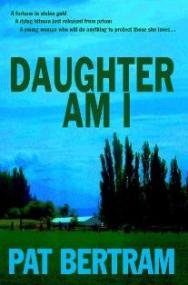
Daughter Am I and The Hero’s Journey

DAIthumbI fell in love with the concept of the mythic quest when I read Christopher Vogler’s book The Writer’s Journey, so much so that I knew I had to write my own quest story. I’m not one for fantasy, either in real life or genre fiction, so I decided to use the hero’s journey structure for Daughter Am I, my contemporary novel of a young woman — Mary Stuart — who goes on a journey to learn about her recently murdered grandparents. Accompanying her are six old rogues — gangsters and con men in their eighties —  and one used-to-be nightclub dancer.

Developing so many characters at one time is difficult under normal circumstances, but the mythic journey archetypes helped me create the characters and keep them focused on their roles. Whether gangster or wizard, hit man or Darth Vader, the archetypes — and the power of the archetypes — are the same.

The hero is the one who grows the most in the story, who gains knowledge and wisdom. Heroism, in the mythic journey sense, is connected to self-sacrifice, risk, and responsibility. The hero must perform the decisive act of the story, though at the beginning, before their transformation, heroes often need to be goaded into action. Mary starts out only wanting to learn about her grandparents, and ends up becoming intensely loyal to the elders in her charge, which changes all of their lives.

A herald gets the hero started on the journey. Kid Rags, a dapper forger forced into retirement by computer technology, eggs Mary on, challenges her to find out more about her grandparents. Kid Rags is also a mentor, giving guidance and gifts, a role he shares with Teach. Teach is a con man who believes everything is a con, and he is not hesitant about sharing his vision.

Every mythic journey needs a trickster, a character who embodies the energies of mischief and a desire for change, and who provides comic relief. The trickster in Daughter Am I is played by Happy, an ex-wheelman for the mob. Happy wants to be on the move, is always urging action, and he peppers his talk with morose and unanswerable pronouncements about death. Did I mention that he carries a gun, but that his hands shake too much to be able to aim it properly? Poor sad Happy.

The shapeshifter is Tim Olson, Mary’s romantic interest. He doesn’t actually change shape, but he appears to change constantly from Mary’s point of view. He tempts, dazzles, confuses her, and makes her question his loyalty.

The shadow represents the energy of the dark side, the villain, and in the case of Daughter Am I, the villain truly is a shadow — Mary and her band of feisty octogenarians never even get a glimpse of him until the very end. Iron Sam, a dying hitman, is also a shadow. Although he is not a villain who has to be vanquished, he represents the dark side of Mary, a sinister balance to her guilelessness.

The story of Daughter Am I lightly follows the stages of the mythic journey, from a glimpse into Mary’s ordinary world, to the call for adventure (her own curiosity as to who her grandparents were and why they were murdered), her reluctance to commit to the journey, meeting her mentors, deciding to take a chance and just head out to talk to others who might have known her grandparents, undergoing tests and ordeals, and ultimately returning home, knowing who she is and what she wants to do.

Although Daughter Am I takes the same “hero’s path” that worked for such disparate stories as The Wizard of Oz, Star Wars, and Tin Cup, the journey is Mary’s own, not a rehash of any of any other quest story.  That is the beauty of the hero’s journey — the structure is infinitely malleable, giving any story a mythic undertone without overshadowing the story itself or confining it into a strict formula.

***

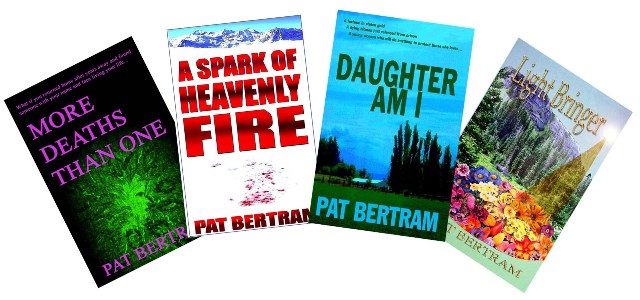
Pat Bertram is the author of the suspense novels Light Bringer, More Deaths Than One, A Spark of Heavenly Fire, and Daughter Am I. Bertram is also the author of Grief: The Great Yearning, “an exquisite book, wrenching to read, and at the same time full of profound truths.” Connect with Pat on Google+

The Mythic Stages of Grief

Joseph Campbell was the first person to write about the motifs and archetypes underlying myths, stories, and spiritual traditions. Christopher Vogler, in The Writer’s Journey, further developed this idea of the “hero’s journey,” making it applicable to writers, both in their stories and in their lives.

The hero’s journey is an endlessly fascinating structure because it is endlessly malleable, able to fit any character, any story, any life. We are all on our own mythic journey through life, but our lives are so much more complicated that the life of a character in a novel because we are dealing with quests within quests within quests rather than a single straightforward journey.

Growing up, falling in love, marrying, parenting, writing, making art, growing old are all quests of their own, though each quest is a but a step on our journey though life.

My most recent mythic journey has been the journey through grief. Grief has been, perhaps, the most mythic of all my quests, each of the stages clearly delineated. (In fact, these mythic stages of the hero’s journey are much more applicable to grief than Kübler-Ross’s stages.)

All of us who embark so reluctantly on this journey through grief are true heroes. It takes a hero’s courage and commitment to deal with everything grief bombards us with and come out on the other side stronger, wiser, and accepting of whatever comes our way.

The mythic stages of our heroic journey through grief:

1. Ordinary World. A hero’s journey begins with the normal world, and in the grief quest story, the normal world is the life we shared with our life mate/soul mate.

2. Call to Adventure. His (or her) dying calls us to grief’s adventure, though death is too traumatic an event to be dismissed as a simple call to adventure. There’s no warble of a bugle call; it’s more like the shriek of a smoke alarm that cannot be silenced.

3. Refusal of the Call. We are frozen with grief, reluctant to continue life alone, refusing to see that perhaps continuing alone could be an adventure.

4. Meeting with the Mentors. We go to grief groups for support, and we talk to others who have also lost their mates. Some of us go to bereavement counselors or read about grief to learn how to deal with this horrifying new world.

5. Crossing the threshold. We commit to grief, to whatever changes will come because of it. We allow ourselves to feel without blocking out the pain because we know that is the only way to find our way through the angst to a more peaceful time.

6. Tests, Allies, Enemies. Grief encompasses all these aspects. Grief tests us, our strength, our commitment to life, our beliefs. Grief is an ally, changing us so we can become the person we need to be in order to survive in this new world. And grief is an enemy, bringing more pain than we could have ever imagined.

7. Approach to the Innermost Cave. Grief takes us further away from our ordinary world of a shared life. This is a stage where we regroup. We find a respite from grief for a few days or weeks, leading us to believe that perhaps we can do this after all.

8. Ordeal. Although all of grief is an ordeal, at this particular stage of grief’s journey, the greatest ordeal is accepting that we are alone, that although he is dead, we have to continue living. We thought getting through the initial raw pain of grief was our greatest agony, but now grief throws us even more anguish with the realization that he is never coming back. This new life without him is forever.

9. Rewards. There are many rewards for going through grief. We seize the sword of courage, we find the elixir of patience, we discover the crucible of greater insights. There are consequences, of course, and generally we pay for any rewards with a huge upsurge of grief.

10. The Road Back. The road back is not easy, especially when it comes to grief. Although we can never return to the ordinary world from which we came since that world was shattered forever by his death, we do return to an ordinary world, a world where grief is a companion that merely shadows us, rather than being the trickster that taunts us, the enemy that torments us, the shapeshifter that bewilders us.

11. Resurrection. The hero faces death and is resurrected, and in the case of grief, we face the death of who we once were. We realize we are separate from our life mate/soul mate, that he has his journey and we have ours, and hence we are reborn into a new life. A life that is ours alone.

12. Return with the Elixir. We all bring back from grief certain gifts, whether wisdom or patience or simply the knowledge that we survived the worst ordeal of our lives, and often we share this gift with others. Many of us end up taking care of aged parents, exhibiting a patience we never knew we had. Some of us write or paint to show the world our truth. Some of us go into grief therapy to help others. My magic elixir — my gift, my blessing — has been the unexpected ability to decode grief and write lyrically about the process, such as recognizing the mythic stages of grief and writing this post describing grief as a heroic journey and quest. A strange gift, indeed.

And so life’s journey continues . . .

***

Pat Bertram is the author of the suspense novels Light Bringer, More Deaths Than One, A Spark of Heavenly Fire, and Daughter Am I. Bertram is also the author of Grief: The Great Yearning, “an exquisite book, wrenching to read, and at the same time full of profound truths.” Connect with Pat on Google+

Great Blog Resources for Writers

There are some phenomenal blogs and resources for writers that can help you take your writing to a more polished, compelling, or profound level. These are just a few of the links I have collected over the years:

Ageless Wisdom & The Hero’s Journey lists the mythic and archetypal principles embedded in the structure of stories, along with the twelve stages of the hero’s journey. You don’t have to write fantasy to use such mythic elements. My contemporary novel, Daughter Am I, was written with these principles in mind.

The Editor’s Blog is the best resource for new writers who wish to learn the basics of writing and the best resource for experienced writers who wish to polish their work into a perfect gem. Whatever you want to know — hooking a reader, dialogue, action, conflict, editing — you will find great advice from freelance fiction editor Beth Hill.

The Bookshelf Muse has various fascinating thesauruses, such as the Emotional Thesaurus to help you show your characters emotions, Physical Attribute Thesaurus, Character Traits Thesaurus, Weather & Earthly Phenomena Thesaurus, Color, Textures and Shapes Thesaurus, Setting Thesaurus, and the Symbolism Thesaurus. (These are listed on the right sidebar.)

Guide to Grammar and Writing takes the mystery out of grammatical issues and English usage

Cliched, Overdone, or Boring Plotlines helps you find out if your brilliant idea really is as really as fantastic as you think it is, or if it is merely a rehash of a story that has been done a hundred times before.

100 Best First Lines from Novels might help you figure out how to write a first line that is every bit as compelling as those listed.

The Food Timeline helps you keep track of what foods your characters might be eating, especially if you write historical fiction.

Book Marketing Floozy is an indexed blog of sixty-five different articles by various writers about book promotion.

***

Pat Bertram is the author of the suspense novels Light Bringer, More Deaths Than One, A Spark of Heavenly Fire, and Daughter Am I. Bertram is also the author of Grief: The Great Yearning, “an exquisite book, wrenching to read, and at the same time full of profound truths.” Connect with Pat on Google+

Let It Ride — The Philosophy of Luck

luckWe do not all see the same story even if we watch the same movie or read the same book because we each bring our own feelings and philosophies and perceptions to the experience. I’ve always known this, of course, but now that the internet allows everyone to be a critic, it’s becoming a lot more obvious.

For example, professional critics panned the movie Let It Ride, calling it disjointed and only sporadically funny. The screenwriter herself didn’t like it, and had her name removed in favor of a pseudonym. Nonprofessional critics — those who posted reviews on the Internet Movie Data Base — generally liked the movie. In fact, the majority thought it was one of the all-time most underrated films. Even people who hated it didn’t have much bad to say about it other than it was simplistic and predictable.

In their reviews, the nonprofessionals talked about the great cast, the humor, the gambling. They talked about it being a feel-good film and mentioned how great it was to see an underdog win. And they said fans of thoroughbred racing would love the film, calling it the best horse racing comedy ever.

All that might be true, but it does not reflect the movie I see. To me, the movie is a philosophical gem about luck, about recognizing luck when it makes an appearance, trusting the luck and having the courage to go where it takes you.

Trotter (Richard Dreyfuss) lucks into a hot tip on a race. He has a hundred dollars he’d stashed away for such an occasion, but instead of betting the whole thing, he shares it with the friend who gave him the tip, which makes me wonder about the nature of luck. If he hadn’t been so generous, propitiating the gods of chance with his generosity, would his luck have died right there? (Well, obviously, his luck would have been whatever the writer decided it was, but since this is my version of the movie, I tend to believe that originally luck might have given him a small nod, but his generosity made good luck smile on him.)

His friends and friends-for-the-day envied him his luck, but when he offered to pool his money with theirs and bet it all, they backed off. Although they recognized Trotter’s luck, they didn’t trust it. Or perhaps they simply didn’t have the courage to trust it. It’s this lack of follow-through on their part, this variation on the theme, that helps give the movie its depth, and keeps the story from being as simple as it seems.

One thing I especially like about this movie, and what helps earn its appellation of being simplistic, is that there is no third act where everything goes wrong. I hate such third acts, and the lack of one in this movie keeps the story focused on the premise of a guy courageous enough to trust his luck.

The philosophy of luck interests me. I’ve never considered myself lucky, but overall, I’m not sure I’m particularly unlucky, either. I am aware that much of success in life is luck — being in the right place at the right time, perhaps — but what I don’t know is if we can create luck. Lucky people say yes, and of course they would since lucky people seldom see themselves as lucky — they take their largess as their due, as payment for their work, and refuse to see that others have put in at least as much effort without getting the same results. Unlucky people say we can’t create luck — we are either lucky or we aren’t.

Some people don’t believe in luck — either good or bad — because they believe that we decide before we are born into this life what traumas and situations we will have to deal with in order to learn certain lessons. Perhaps that is true, but what do I know? I’m having a hard enough time negotiating the steep rocky path of this life without worrying about what might have come before or what will come after.

To confuse the issue of luck, perhaps there is a different kind of good fortune, a sort of negative luck that makes us lucky even if we don’t seem to be lucky. In one scene of Let It Ride, Trotter is mistakenly arrested before he can bet what he thinks is a hot tip. And the horse loses. So what seems like bad luck is actually good luck.

Considering my interest in the philosophy of luck, it makes sense, then, that I would see the luck theme in Let It Ride, where others would see merely the wonderful comedy, the great cast, or the racing aspects.

So what does this philosophical vision of the movie teach me? Perhaps that luck — and life — should be taken as it comes, we should trust ourselves, and beyond that, we should just let it ride.

***

Pat Bertram is the author of the suspense novels Light Bringer, More Deaths Than One, A Spark of Heavenly Fire, and Daughter Am I. Bertram is also the author of Grief: The Great Yearning, “an exquisite book, wrenching to read, and at the same time full of profound truths.” Connect with Pat on Google+

A Palliative for the Brokenhearted

warriorThree years ago, a yoga teacher and fitness instructor living in Holland got tired of the cold, and so her husband put in a transfer to a warmer climate.

Three years ago, I was living a thousand miles away from the high desert in another state, watching my life mate/soul mate die.

Six months ago, that teacher’s life and mine crossed paths. A friend asked me to accompany her to an introductory therapy yoga class (a class geared toward each person’s abilities and disabilites), and there I met the woman from Holland, who was teaching the class. (She wasn’t from Holland originally. She was actually from California, but she’d living all over the world for the past two decades.)

At that yoga class, I began to come alive. Grief pulls you into yourself, huddling you against the pain, and the thrust of her classes was to open us up to the universe, to new experiences, and to ourselves. My friend dropped out after those introductory classes, but I was hooked. Coincidentally, all the women who remained in the class were in various stages of recovering from the deaths of their husbands, and we formed a bond with each other and with our globetrotting teacher. It was a rare and magical experience, the electric highlight of my week, but magic has a way of dissipating. The teacher was offered a wonderful job in another city that used all of her skills (and paid her a phenomenal amount of money), and she couldn’t turn it down.

Although I felt devastated when she made her announcement, I am trying to consider the ending of the class as a graduation. When a student is ready, a teacher appears, or so it said, and in my case it was true. So perhaps it is also true that when the student is ready, the teacher disappears. Perhaps I have learned from her what I need to know to continue on to the next stage of my life.

But this is all prelude to what I really want to talk about. Whenever I have mentioned how distressed I was at the loss of this class, the response has universally been, “Find another yoga class.” Ummm. Yeah. Find another confluence of people and events that come together from thousands of miles away to create a magical, electric, and life-affirming moment. Sure, I’ll get right on it.

This seems to be the response for every loss. Get a new class, a new life, a new soul mate. Is it really that easy for people to do? Or is it simply that it’s easy to say, a palliative for the brokenhearted?

I realize that soon I will need to find a new life, but as I’ve mentioned in a previous post, it’s not as if I can go to the mall and search the aisles at Lifes ‘R’ Us until I find a new life that fits properly and looks good. I’ve never really wanted anything or anyone, but out of the blue, my life mate/soul mate dropped into my life, bringing (for a while anyway) radiance and excitement, and then later companionship, but now that he’s out of my life, I’m back to not wanting anything. If I did want something, I’d go after it, but I don’t want what is out there to get. (Or maybe I mean I don’t want what I know is out there to get. For example, I’d never considered doing yoga, had no interest in it whatsoever, and yet out of the blue, the yoga teacher dropped into my life.)

Mostly I’m taking the need for a new life in stride. Whatever happens, happens. Wherever I go, there I go. It doesn’t seem to really matter — something will drop into my life or it won’t. Either way, I’ll deal with it.

The only thing I know (or rather, suspect) is that I will not remain here in the high desert. Because of the yoga teacher and her class, for the first time I’d been contemplating staying in the area so I could continue taking instruction from her, and her getting a new job seems to be a clear sign that my future doesn’t lie here. But then again, I don’t really believe in signs . . .

***

Pat Bertram is the author of the suspense novels Light Bringer, More Deaths Than One, A Spark of Heavenly Fire, and Daughter Am I. Bertram is also the author of Grief: The Great Yearning, “an exquisite book, wrenching to read, and at the same time full of profound truths.” Connect with Pat on Google+

Giving Readers a Stake in Your Story

jockeyI don’t like stories about gambling. They set my teeth on edge because of the inevitable slough of despair the character falls into when the addiction gets the better of him. Despite that, Let It Ride is one of my favorite movies, probably because although the story takes place at Hialeah amid the horse racing culture, it is not a movie about gambling. It’s the story of how the forces of the universe align to give Jay Trotter (Richard Dreyfuss) one perfect day, and how he had the courage to accept the gift.

My favorite lines are when Pam (Teri Garr) says, “I don’t know why people have to gamble. Why can’t they just watch the horses run?” Trotter responds, “Without gambling, there is no horse racing.”

I’m with Pam — someday I’d like to go to a racecourse and watch the horses run, but I can also see why there is no horseracing without gambling. First, there would be no income, and second, no one but those directly involved — racecourse owners, horse owners, trainers, and jockeys — would have any stake in the matter. Gambling gives anyone who has the price of a bet a stake in the outcome of the race.

This is similar to writing — if an author doesn’t give readers a stake in the outcome of the story, then there is no reason for anyone to read the book. Since there is no gamble when it comes to a book (well, except for the gamble of whether the reader will enjoy it or whether they will feel cheated for having wasted the money) the stake has to be an emotional one. For example, Kendra, the main character in Mickey Hoffman’s mystery, School of Lies, is a special education teacher in an inner city school. The book’s true-to-life atmosphere is appealing to anyone who enjoys mystery and mayhem, but it’s especially appealing to special education teachers. Special education teachers — or any teacher — who have been in similar schools and situations perhaps wish they could have said the same things or done the same things Kendra did, which gives them a stake in the outcome of her dilemma. Of course, anyone who ever went to high school would also have a stake in the story, if for no other reason than to see the truth of what they suspected — that much intrigue was going on behind the scenes.

For this same reason, a popular main character in many books is a mother juggling home life and career, which immediately gives a large section of the population a stake in the story. You see the same thing dozens of times a day in your sidebar ads — “mother in (the name of your city, which supposedly gives you an added stake in the matter) gets skinny”; “mother discovers secret to youthful skin”; “mother earns a fortune working at home.”

Your choice of characters and their predicament are not the only ways to give readers a stake in the outcome of your story. You can make readers a part of the story by giving your characters characteristics that people can identify. You make readers involved by stirring up their emotions. You show them what is happening instead of explaining every detail, and let their own reactions to the action become part of the story.

Giving people a stake in your story is not exactly the same thing as getting them to bet a bit of cash on a horse race, but getting them to pony up a bit of emotion while reading your story will give them greater winnings in the long run.

***

Pat Bertram is the author of the suspense novels Light Bringer, More Deaths Than One, A Spark of Heavenly Fire, and Daughter Am I. Bertram is also the author of Grief: The Great Yearning, “an exquisite book, wrenching to read, and at the same time full of profound truths.” Connect with Pat on Google+

Embracing My Inner Crone

My sister claims I must have a lot of karmic debt to pay off since the past five years of my life have been mostly spent taking care of the sick, dying, and aged — first helping with my mother, then my life mate/soul mate, now my father — but I have a hunch it’s more that I’m going through my crone stage a bit earlier than normal. Although “crone” has become a pejorative term, crone is one of the mythological stages of a woman’s life (maiden, mother, crone). Crones cared for the dying and were spiritual midwives at the end of life, the link in the cycle of death and rebirth. They were healers, teachers, way-showers, bearers of sacred power, knowers of mysteries, mediators between the world of spirit and the world of form.

Sounds wonderful, doesn’t it? Something to look forward to becoming — a wise woman — and yet crone is a word few women embrace, and no wonder since over the centuries, crone has come to mean “ugly old woman.”

It seems strange that there are so many derogatory words for ugly old women — witch, hag, crone, harridan, battle-ax, beldam, shrew, termagant — yet not a single derogatory to word to describe ugly old men. (At least, I can’t think of any.) And why are such wise women considered ugly, anyway? Apparently, after men have had their way with young maidens, then used up their youth in bearing and rearing children, they somehow expect women to still be attractive. Nowadays, of course, with creams and lotions and make-up and hair-dyeing and all the other beauty treatments available, most women do retain at least a semblance of their youthful looks. And yet those ancient terms for “wise old woman” still retain their pejorative connotations.

But no matter what she looks like or what she is called, a woman who calmly listens to the crotchets of the old folks, who patiently sits by the bedside of the dying, who deals with life’s unpleasant chores with a minimum of complaint, has an aura of beauty. I would be willing to be that no one who is ministered to by one of these “crones” thinks she is ugly. I bet her beauty shines through to them, if no one else.

I also bet she isn’t aware of her beauty. Like me, she is probably simply doing what needs to be done as calmly as possible.

It seems odd that so many of us who have lost our mates end up taking care of aged parents, but perhaps we are the ones who have the patience for dealing with the slow and inexorable ways of age and death.

***

Pat Bertram is the author of the suspense novels Light Bringer, More Deaths Than One, A Spark of Heavenly Fire, and Daughter Am I. Bertram is also the author of Grief: The Great Yearning, “an exquisite book, wrenching to read, and at the same time full of profound truths.” Connect with Pat on Google+

Bloody Valentine Blog Hop

A. F. Stewart is hosting this blog hop to celebratate heartbreak, love gone wrong, romantic mayhem and tragedy, hopefully with that little splash of humour and blood. There is no blood in the following short story of mine, but there is plenty of hearbreak in only 100 words.

The Kiss (100-Word Story) by Pat Bertram

When Jack entered her flower shop, all Jen could do was stare. It had been years since she’d seen him, years she’d spent regretting their final quarrel, yet she still felt the same attraction. His heavy-lidded gaze told her he felt it, too.

He held out a hand, and she let him draw her close for a kiss that spanned the years. She snuggled into his embrace. Everything would be perfect now that they were together again.

“How did you know I was here?” she asked.

“I didn’t. I just came in to buy flowers.”

“For me?”

“For my wife.”

***

“The Kiss” and five more of my 100-word stories were published in the Second Wind Publishing anthology Love is on the Wind, which you can download free from Kindle or Smashwords today.

I hope you will check out these other blogs participating in today’s Bloody Valentine Blog Hop. There should be plenty of mayhem to satisfy your both your romantic and unromantic desires.

Valentine Logo

A Diamond In The Dark

GetYourBookNoticed

A Bloody Kind of Lust

Keith Pyeatts Horror with Heart Blog

Musings of Papa Zen

The Cult of Me

Bestiary Parlor: The Musings of a Zoologist

Sheila Deeth’s Blog

Ash Kraftons Demimonde

GMTA UK

Yours in Storytelling

Author JCooper

Laughing for a Living

Lift You Up

Spoiler Princess

The Curse Books

Worldbinding

Pagan Spirits book blog

Random Babble

Exile on Peachtree Street

A. F. Stewarts Blog

Celebrating the Sweet and Sour Sides of Valentine’s Day

This Valentine’s Day, Second Wind Publishing is celebrating romance with an ebook giveaway. If you have not yet shot cupid’s arrow to get your romance ebook in the ebook format of your choice, click on the target and it will take you to the game where they will give you what you want this Valentine’s day — romance, tender sentiments, and true love. The rules are simple, and everyone wins!

valentine

If you’re expecting to win one of my books, though, I’m sorry to disappoint you. Although each of my novels has romantic elements, none of them are romances. More people tend to die in my books than fall in love, which is why tomorrow I will be participating in A. F. Stewart‘s Bloody Valentine Blog Hop to celebratate heartbreak, love gone wrong, romantic mayhem and tragedy, hopefully with that little splash of humour and blood.

Valentine Logo

I hope to see you at one of these events!

***

Pat Bertram is the author of the suspense novels Light Bringer, More Deaths Than One, A Spark of Heavenly Fire, and Daughter Am I. Bertram is also the author of Grief: The Great Yearning, “an exquisite book, wrenching to read, and at the same time full of profound truths.” Connect with Pat on Google+

Becoming the Vibrant Person You Will Remember Being

I woke feeling tired today. Even though I would just as soon have lounged around all morning doing nothing, I got dressed, took a walk, and now I’ve turned on the computer to work on this blog post. After having watched my life mate/soul mate push through the impossible exhaustion of dying from cancer in order to do something, anything each day and now watching my father dealing with the infirmities of old age, including being unutterably weary all the time, I understand the truth. No matter how tired I feel today, in twenty years, I will look back on this time in my life as one of strength and vibrancy, and in thirty years, I will look back at this time as one of incredible youthfulness.

As I mentioned in a previous post, current research by Harvard psychologist Daniel Gilbert shows that while we can see how much we have changed in the past, we never think we will change in future. But this isn’t always true. There does come a time when we know that our advancing years will bring many changes. We know we will not always be feeling the way we do today.

Someone who is dealing with an enervating illness or the weariness of old age, for example, will no longer have an interest in physical activities such as bungee jumping. (Of course, it won’t take old age to rid me of such interests since I don’t have any to begin with. Even if I wanted to participate in such daredevilish activities, my body has a strong sense of self-preservation that simply would not let me step into nothingness.)

Dwelling on the future is as futile as dwelling on the past and brings about as much satisfaction — none. And even if you know what changes will be coming, they probably will not be exactly as you imagined (and maybe you won’t be exactly as you imagined, either), so there is no point in thinking about it. But. . . being aware of a future where you will look back on the person you are today as one who is vibrant and youthful has its advantages. It allows you to do what you want to (or need to) despite your tiredness, and in so doing, become the vibrant person the future you will remember being.

***

Pat Bertram is the author of the suspense novels Light Bringer, More Deaths Than One, A Spark of Heavenly Fire, and Daughter Am I. Bertram is also the author of Grief: The Great Yearning, “an exquisite book, wrenching to read, and at the same time full of profound truths.” Connect with Pat on Google+