Why Are Periods and Commas Put Inside Quotation Marks?

Why are periods and commas put inside quotation marks and exclamation points and question marks put outside the quotation marks?

I’d never pondered this question until recently — I just followed the punctuation rule — but now the rule so often seems illogical.

For example: Did you read my short story “The Willow”? This is the logical placement of the end punctuation, right? The title of the short story (which is published in the Change is in the Wind anthology, by the way) has no period in the title, but if I rephrase the sentence to make it a statement, it seems as if there is a period after the title. I hope you read my short story “The Willow.”

Apparently, this rule of placing periods and commas inside quotation marks is only practiced in the USA. In Britain, they do things differently, but since my books and blogs are mostly read and rated by those in the USA, that’s the rule I have to follow, even if it’s (sometimes) against my inclination.

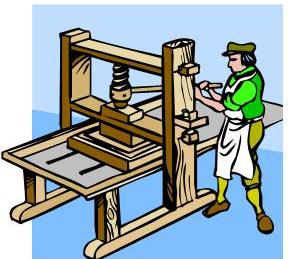
It is an outdated rule. Apparently, when type was set by hand for printing, if the period and comma were placed outside the quotation mark, the delicate pieces were in danger of getting bent out of shape, knocked out of place, or broken off, and so were placed inside the quotation marks for protection. With electronic type, there is no danger of punctuation marks wandering astray, but still the rule lingers.

No one seems to care one way or another about this anachronistic placement, but since it’s one of those rules so many people don’t seem to remember, I have a hunch period and comma placement will become a non-issue, with everyone simply doing as they please.

***

Pat Bertram is the author of the conspiracy novels Light Bringer, More Deaths Than One, A Spark of Heavenly Fire, and Daughter Am I. Bertram is also the author of Grief: The Great Yearning, “an exquisite book, wrenching to read, and at the same time full of profound truths.” Connect with

Introducing Mike Pettit, Author Extraordinaire

One of the most fascinating people I have met online is Mike Pettit. His  nightly “Goodnight America” is worth waiting for. His books covers are wonderfully nostalgic, reminding us of an earlier age of publishing. His  comments are a bit too amusing to be truthful (except for his political  comments, which are a bit too truthful to be amusing.) I’ve wanted to interview Mike for a long time for my interview blog, and he has finally agreed to answer some of my questions. Below is an excerpt from the interview, outlining Mike’s Three P Plan for selling books. (You can find the entire interview here: Mike Pettit, Bestselling Author of “The Key West Smackdown.” I hope you stop by to read the interview. You won’t be sorry you did.)

PB. Do you ever feel like you are lost among the thousands of other Kindle authors?

MP. Absolutely not. I treat my writing as a business. Here are my steps to selling books. I call it the Three P Plan (I should publish this and make a fortune…oh wait, that’s been done).

PRODUCT: Write the best book you can, edit the best you can, have the best cover you can.

I consider myself a good storyteller, but I am not a five star writer. If stars were grade averages I would be a C+ or B- writer, and that‘s OK. So, be realistic with your expectations. Average authors sell books, trust me.

I use the Flisch-Kinkaid comprehension scoring method to determine my writing / reader comprehension. I write to a reading audience at the 8th to 10th grade level of comprehension. This by the way is what the F-K scoring states as the reading level of most fiction-reading adults in America today. As a comparison, Obama’s State of the Union address was written to the 7th grade level of comprehension, The Wall Street Journal just dropped their Comprehension level from 12th grade to 10th grade level.

It might make you feel better knowing this the next time someone writes a bad review on your baby and gives it a two-star D rating. This does not mean you did badly. It means the reader should have read something on a higher comprehension level. That’s why I say you must know your audience …and write to them.

PRICING: To thine own self be true. You must price your book at a reasonable price. The big guys that work for the Big Six publishing houses command $25.00 and up per pop. That’s nuts, but they get it.

E publishing is growing with more and more readers coming over to the light, soon the big publishing houses and agents will be begging for us little guys to sign up with them.

My strategy is that I write and price my books to fit my audience. I am not greedy nor am I swollen headed. I know that I am a C+ writer and what I have to offer is a damn good quick read for a couple of bucks. The reader is happy with the read and the price and he’ll come back for more. You’ll make your money on volume sales

PUBLIC RELATIONS / MARKETING: Never stop pushing your book. I sell on Kindle and Nook. I use every social network platform I can find. I have Face Book, Twitter, Google +, a large FB and Twitter friend base. Look for “Friends that fit your target audience and talk to them…constantly.

This is just me, but I don’t spend a lot of time talking with other authors. If you aren’t talking to your customers, someone else is.

***

Mike Pettit’s newest book is The Key West Bounce. Check out Mike on Amazon, Facebook, and his action/mystery blog.

Twisting Time is Here: The Power of Saying Yes

A few years ago I developed a new philosophy: say yes. When people ask me to do something or invite me somewhere or suggest a course of action that I would not normally have considered, I try to say yes instead of immediately dismissing the idea as I once would have done. I’d hoped that by opening myself to diverse activities, I would spark new interests, maybe even twist off my usual path onto a new path of living. So, far, that hasn’t happened. I still don’t have much life in my life or spring in my step, though I don’t know whether these are lingering effects of grief or simply a sign that I haven’t yet found something to be passionate about.

One of my most recent yeses lead to yoga classes, something I had absolutely no interest in, especially since I had no interest in twisting myself into uncomfortable positions. The point of these particular classes is to open oneself up, to breathe, to be, which falls right in line with my latest outlook, which I found interesting. I’ve been pausing in my desert walks to do a few of the breathing exercises (the standing ones), opening myself to the universe, and then saying my affirmation: “I am happy. I am being me. I am where I am supposed to be.” And for a while, I am happy, or at least at peace.

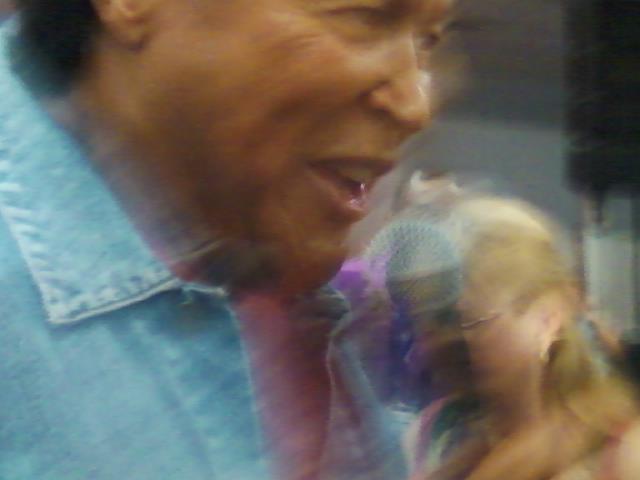
Another yes landed me at twist party for Chubby Checker’s 71st birthday. It was actually a concert, but everyone danced in the aisles, and a couple of times Chubby Checker came down off the stage and joined us. We also sang happy birthday to him, and I found singing to a singer corny enough to be amusing. (Amazing — 71 and still able to perform for 75 minutes and more.)

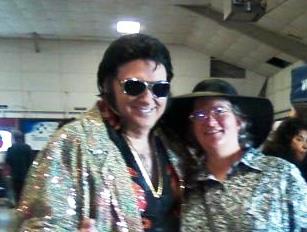
Other recent yeses took me to see the top-rated Elvis tribute artist in the world and a war dance demonstration.

None of these yeses twisted my life around, changed my thinking, or added anything besides an hour or so of diversion, but still, I’ll keep saying yes. Anything can happen, and perhaps that possibility is the real value of saying yes.

***

Pat Bertram is the author of the conspiracy novels Light Bringer, More Deaths Than One, A Spark of Heavenly Fire, and Daughter Am I. Bertram is also the author of Grief: The Great Yearning, “an exquisite book, wrenching to read, and at the same time full of profound truths.”

Being is Reason Enough for Living

I saw the 1993 movie Indian Summer the other day, and one scene still haunts me. Alan Arkin takes Diane Lane, whose husband has been dead a year, to see a house on the lake. He tells her the owner died fifteen years previously and, abiding by the old guy’s wishes, he dropped the guy’s body in the center of the lake. The guy’s wife continued to live in the house, and fifteen years later, when she died, Arkin “buried” her next to her husband. Arkin say he should simply have dropped the wife in the lake when the husband died as a not very subtle way of telling Lane to get on with her life.

Oddly, the reinforcement of the idea that after a year we bereft are supposed to set aside our grief and get on with our life (get a guy, in other words) didn’t bother me as much as the implication that the old woman wasted her life by living at the lake alone.

Is living alone a waste? Not everyone gets to be with someone, and even those who do get to be with someone for a while don’t always get to live out their life with that person. So does that mean their lives are a waste? Not everyone is gifted with friends or has the gift of making friends. Does that mean the lives of the friendless are a waste? We’re told repeatedly in songs, movies, stories, poems, greeting cards, that love makes the world go round. But if love doesn’t come to you, does that mean you should just get off the world and let it go round without you?

If living alone is a waste, does that mean every minute you’re not with someone, anyone, you’re wasting your life? Of course not. So what is the break off point? It’s okay to be alone for a day or two? A week? A year? Is it better to be with someone you hate just so that you’re not alone? I don’t believe that, and I hope you don’t either.

Maybe Arkin’s character thought that being isolated made the old woman’s life a waste. As long as her husband was alive, apparently living by the lake was okay, but when he died, what was she supposed to do — give up her cherished home, the clean air, closeness to nature for a dubious life in the city? And if she did move, what would keep her from being even more isolated? Some of the loneliest people are those who live in the midst of others.

Or maybe Arkin’s character assumed the woman was unhappy, though sadness isn’t a reason to think her life was worthless. Happiness itself doesn’t make life worthwhile — it only feels that way.

I don’t suppose this scene would have bothered me so much if I weren’t struggling with these questions in my own life. There is a good chance I will live out the rest of my life alone. That doesn’t mean — can’t mean — my life has no worth. It would be a pathetic state of affairs if being with someone is the only thing that makes life worthwhile.

Being is reason enough for living (which Alan Arkin’s character, the supposedly wise old Unca Lou should have known). Even if we are blessed with love and friendship, the truth still remains: our only obligation to life is to live the best we can for as long as we can — to simply “be.”

***

Pat Bertram is the author of the conspiracy novels Light Bringer, More Deaths Than One, A Spark of Heavenly Fire, and Daughter Am I. Bertram is also the author of Grief: The Great Yearning, “an exquisite book, wrenching to read, and at the same time full of profound truths.”

The Wonder of Us

A friend told me that she almost died in her early twenties. She said she thought she had been spared because one of her as yet unborn offspring (my word, not hers) or their offspring would do something vital. Perhaps, for example, her young granddaughter will grow up to be president. (Frankly, I think she shouldn’t set her sights so low.) It made me sad that she thought her importance to the world lay not in herself, but in her grandchildren, and it got me to thinking about what makes us important.

Most of us will never be known outside of our circle of family and friends, will never even have fifteen minutes of fame. Most of us will never change the world or make an earthshaking discovery. Most of us will never be wildly successful, though many of us will be quietly successful — at living, if nothing else. Most of us will never satisfy all our dreams, though we will be mostly satisfied with the dreams that do come true. In other words, in the eyes of the world, most of us will never be important.

And yet . . .

We unimportant folks are people of peace. We don’t start wars, don’t start fights, and seldom start arguments. We give more than we take. We nurture more than we smother, help more than hinder, solve more problems than we generate. We create more than we destroy. We try to do the right thing, though we don’t always know what that might be. We appreciate more than we denigrate. We are often kind and seldom mean. We usually give credit where credit is due and don’t demand more credit than we deserve. We are seldom prejudiced, and if we are, we never let our bias get in the way of how we treat others. We are grateful more than we are regretful.

We value a rich life more than we value a life of riches. We care for this world and for the creatures that depend on it. We feast on beauty, though we might not always agree on what is beautiful. (Besides sunsets. We all see the beauty in sunsets. Not one of us has ever looked at a sunset and said, “oh, how hideous.”)

We love more than we hate.

So, even though most of us will never be considered important, we are probably more important to the world than those who are considered important. And that is the wonder of us.

***

Pat Bertram is the author of the conspiracy novels Light Bringer, More Deaths Than One, A Spark of Heavenly Fire, and Daughter Am I. Bertram is also the author of Grief: The Great Yearning, “an exquisite book, wrenching to read, and at the same time full of profound truths.”

I am a Victim of Content Scraping

I’d never even heard of content scraping until yesterday when I found my article Why I Write About My Grief posted on two other blogs. The other blogs did not quote the article, nor did they reblog it. (When an article is reblogged, only the first paragraph or so shows up on another blog, with a link back to the original blog.) They stole the entire thing. One of the blogs was hosted by WordPress, so WordPress suspended the blog for violation of services. The other blog was not hosted by WordPress (it’s a self-hosted blog powered by WordPress, which is a completely different matter) so I have no recourse except legal means. Sometimes courts will take action against a “scraper,” but more often than not, if it is an automated theft by special programs rather than copy and paste by humans, there’s not much that can be done since the site will simply disappear and reappear under another name.

Apparently, search engines cannot distinguish between scraped content and original content, so the plagiarized content (let’s call it by it’s real name) shows up first in search results since it is the newer content, which makes the theft even more of a problem. If you are the victim of scrapers, there are some things you can do to fight back. First, take the steps outlined in this article from WordPress Support: Content Theft – What to Do. Second, you can follow the suggestions in this article: Content Scrapers – How to Find Out Who is Stealing Your Content & What to Do About It. Third, ignore the situation but take steps to make sure you get the credit.

If you decide on the third option, the easiest way to get at least partial credit for future plagiarized material is to use a link to your own site in your content, such as the link to my grief in article in the first sentence of this blog. Even better, add a promo to the bottom of the blog so that no matter where the article appears, information about you as the author will go along with it. That’s what I decided to do: add a promo to the bottom of my blogs. Regular readers will forgive the intrusion (I hope), new readers will learn a bit about me, and any bot that steals my content will also spread the word about me and my books.

***

Pat Bertram is the author of the conspiracy novels Light Bringer, More Deaths Than One, A Spark of Heavenly Fire, and Daughter Am I. Bertram is also the author of Grief: The Great Yearning, “an exquisite book, wrenching to read, and at the same time full of profound truths.” All Bertram’s books are available both in print and in ebook format. You can get them online at Second Wind Publishing, Amazon, B&N and Smashwords. At Smashwords, the books are available in all ebook formats including palm reading devices, and you can download the first 20-30% free. Print books can also be ordered from your favorite bookstore.

Sample Sunday

If you’ve been wanting to check out my books, now is your chance to read the first chapter of each novel online.

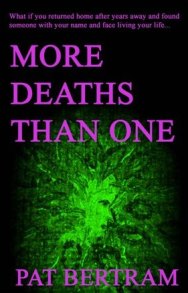
More Deaths Than OneBob Stark returns to Denver after 18 years in SE Asia to discover that the mother he buried before he left is dead again. At her new funeral, he sees . . . himself. Is his other self a hoaxer, or is something more sinister going on?

Click here to read the first chapter: More Deaths Than One

***

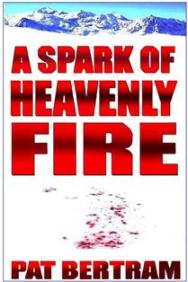
A Spark of Heavenly FireIn quarantined Colorado, where hundreds of thousands of people are dying from an unstoppable, bio-engineered disease, investigative reporter Greg Pullman risks everything to discover the truth: Who unleashed the deadly organism? And why?

Click here to read the first chapter of: A Spark of Heavenly Fire

***

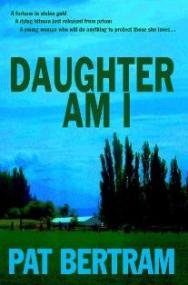
DAIWhen twenty-five-year-old Mary Stuart learns she inherited a farm from her recently murdered grandparents — grandparents her father claimed had died before she was born — she becomes obsessed with finding out who they were and why someone wanted them dead.

Click here to read the first chapter of: Daughter Am I

***

Thirty-seven years after being abandoned on the doorstep of a remote cabin in Colorado, Becka Johnson  returns to try to discover her identity, but she only finds more questions. Who has been looking for her all those years? And why are those same people interested in fellow newcomer Philip Hansen?

Click here to read the first chapter of: Light Bringer

***

Pat Bertram is the author of Light Bringer, More Deaths Than One, A Spark of Heavenly Fire, and Daughter Am I.All Bertram’s books are available both in print and in ebook format. You can get them online at Second Wind Publishing, Amazon, B&N and Smashwords.  At Smashwords, the books are available in all ebook formats including palm reading devices, and you can download the first 20-30% free!

Why I Write About My Grief

I started writing about grief not only to make sense of my own feelings, but also as a rebellion against a society that reveres happiness at all costs. I’d never heard of the sort of all-consuming grief that I experienced except for those who were considered unstable, but I knew I was completely well adjusted, so anything I felt had to be normal.

To be honest, I never had any intention of getting personal in this blog. I launched it to establish an online presence for when I got published. (After starting this blog, it took a year to find a publisher, although I’d already been on the quest for several years. After acceptance, it took another six months for my books to be published, but I made it!) Those first years of blogging, I wrote about my efforts to get published, what I learned about improving my writing, the novels I read and what I learned about writing from their inadequacies.

After my life mate/soul mate died, everything changed. I’d intended to keep my grief to myself and continue writing innocuous little posts, but I kept stumbling over people’s ignorance of grief. I found this ignorance in people I knew. (I will never forget those blank looks of incomprehension in people’s eyes when, sobbing, I told them about my loss. Sometimes they looked at me as if I were an alien species, or some kind of strange bug.)

And I found this ignorance in books I read.

One novelist dismissed her character’s grief at the death of his wife with a single sentence, “He went through all the five stages of grief.” Anyone who has gone through the multi-faceted grief of losing a soul mate knows that there are dozens of stages of grief (or none at all). You spiral round and round, in a dizzying whirl of emotions, not just shock and anger and sadness, but frustration, bitterness, yearning, hope, helplessness, confusion, loneliness, despair, guilt, questioning, angst over loss of faith, and you keep revisiting each of these emotions, hanging on the best you can, until ideally, you reach a place of peace and life opens up again.

Another novelist had her widow cry for a night then put aside her grief and get on with her life. Believe me, you can’t put aside such grief. It’s not just emotional but also physical, a ripping away of his presence from your soul, a deep-seated panic when your lizard brain realizes that half of your survival unit is gone, a body/mind bewilderment so great you can barely breathe. You don’t control raw grief. Grief controls you.

Not only did I discover that few people had any idea of the scope of such grief, most people selfishly urged the bereft to get on with their lives because they couldn’t bear to see their mother/sister/friend’s sadness.

There is something dreadfully wrong with a society that expects the bereft to hide their grief after a couple of months simply because it makes people uncomfortable to see outward shows of mourning. Seeing grief makes people realize how ephemeral their lives really are, and they can’t handle it (which leaves the bereft, who already feel isolated, totally alone with their sorrow.) It also cracks the facade of our relentlessly glass-half-full society.

Although I am a private person, not given to airing my problems in public, I thought it wrong to continue the charade that life goes on as normal after losing the one person who makes life worth living. So, over the past two-and-a-half years, I have made it my mission to tell the truth about grief. Even though I have mostly reached the stage of peace, and life is opening up again, at least a little bit, grief is still a part of my life. There is a void in my world — an absence — where he once was, and that void shadows me and probably always will. Although his death changed the circumstances of my life, thrusting me into an alien world, grief — living with it, dealing with it, accepting it — changed me . . . forever. It has made me who I am today and who I will become tomorrow — strong, confident, and able to handle anything that comes my way.

Would I prefer to have him in my life? Absolutely. But that is not an option. All I can do, all any of us can do, is deal with what lies before us, regardless of a society that frowns on mourning. It takes three to five years to find a renewed interest in life after such a grievous loss, so the next time you see your mother, father, sister, daughter crying for her/his spouse, deal with it. Just because you’re no longer tearful, be aware that even though you have lost the same person, you have not lost the same connection. If it makes you sad to see her mourning, think how much sadder it is for her to experience that sorrow. Hug her, be there for her. Don’t hurry her through grief. She’ll find her way back to happiness in her own time.

***
Pat Bertram is the author of the conspiracy novels Light Bringer, More Deaths Than One, A Spark of Heavenly Fire, and Daughter Am I. Bertram is also the author of Grief: The Great Yearning, “an exquisite book, wrenching to read, and at the same time full of profound truths.” All Bertram’s books are available both in print and in ebook format. You can get them online at Second Wind Publishing, Amazon, B&N and Smashwords. At Smashwords, the books are available in all ebook formats including palm reading devices, and you can download the first 20-30% free. Print books can be ordered from your favorite bookstore.
Meeting the Challenges of the Third Year of Grief

The challenges we face during the first year after the death of a life mate/soul mate (or any other significant person in our lives who connects us to the world), are too great to enumerate. It’s all we can do to cope with the seemingly endless chores of laying our beloved to rest while dealing with the emotional shock, the physical pain, the psychological affront that are our constant companions. Sometimes the first anniversary of his death is one of peace when we realize that we managed to survive the worst year of our life, but then we wake up to the second year and find a whole other set of challenges to meet.

The five main challenges we face during the second year after the death of a life mate/soul mate are:

1. Trying to understand where he went.
2. Living without him
3. Dealing with continued grief bursts.
4. Finding something to look forward to rather than simply existing.
5. Handling the yearning.

There are other challenges, of course, some unique to each individual, but all the challenges are dealt with the same way: by continuing to feel the pain when it erupts rather than turning away from it to satisfy the concerns of those who don’t understand; by taking care of ourselves even when we don’t see the point; by trying new things.

In other words, we meet the challenges of the second year by living. It sounds simple, but nothing about grief for a life mate/soul mate is simple. By living, we begin to move away from our pain, but we also move away from the person we loved more than any other. For some bereft, this feels like a betrayal of their love — how can you continue to live when life on this earth is denied him? For others, it seems like a betrayal of themselves — how can you become the person you need to be without betraying the person you once were?

The third year of grief seems to be a year of transition with only one new challenge — beginning to rebuild our lives. (We still have upsurges of sadness, still miss our loved one, still yearn for him, but these feelings are not as prominent as they once were.) Most of us no longer feel that continued life is a betrayal of our love because we understand that we had no choice in the matter, either in his death or in our continued life. Nor do we feel we are betraying the person we once were — we are no longer that person, though we have not yet developed into the person we are to become. Most of us are still trying to figure out who that person is and what that person wants and needs.

Many of us third-year bereft are caught in circumstances beyond our control — we are taking care of aged parents, new mothers, grandchildren. Although this transition between our old coupled life and our new life alone seems to be a time of stasis, we are still rebuilding our lives day by day, becoming who we need to be. We are also beginning to look beyond this transitional stage to what will come after, which is a sign of life and hope for the future even if we are not yet feeling hopeful.

By now, some bereft are ready to be in a new relationship, and they too seem to be in a transitional stage — not yet in a relationship but looking for possible partners. In other words, dating. I can’t even begin to go into the challenges such bereft face; it seems an impossible task, to go from where they are to where they want to be.

A few people jump into a relationship too soon, and then have the added grief of an aborted love affair. Some find that while they want emotional intimacy, the would-be partner only wants physical intimacy. Complicating the typical adult dating woes of ex-wives, grown children, incompatible schedules, is the date’s incomprehension of the bereft’s grief. Too often, he doesn’t want to hear about the deceased, which leaves the bereft dangling in an emotional limbo, because how can you have a meaningful relationship with someone who denies that which once gave your life meaning?

Others in this third year of grief are not looking for a new relationship, though they wouldn’t turn love down if it came their way.

Whatever the challenges we bereft have to deal with in this third year of grief, we will meet them as we did all the other challenges we have faced: with courage, perseverance, and strength.

***

Pat Bertram is the author of Grief: The Inside Story – A Guide to Surviving the Loss of a Loved One. “Grief: The Inside Story is perfect and that is not hyperbole! It is exactly what folk who are grieving need to read.” –Leesa Healy, RN, GDAS GDAT, Emotional/Mental Health Therapist & Educator.

Like Pat on Facebook.

Should You Spend More Time Writing or More Time Promoting?

A few month ago, The Taleist Survey of 1007, a survey of 1007 self-published authors made the rounds. That survey tried to explain why some self-publishers make a living by writing and how they do it, but the survey only complicates matters.

The survey says that 2/3 of the top earners (those who make a living by writing, which, incidentally, was less than 10% of the total), are women, leaving the impression that women were better at self-publishing than men, but the truth is, women write romance more than men do, and romance sells more than mystery and science fiction and way more than literary fiction.

It also says that “respondents who’d had their work rejected by traditional publishing and then opted to self-publish it were among the lowest earners,” but that “32% of the top Earners tried and failed to get a traditional publishing deal before self-publishing, but now make a living from selling their work.” Huh? What’s the difference between being rejected and failing to get a traditional publishing deal? Even more confusing, 29% of the top earners had an agent. Why? I thought the point of self-publishing was to bypass the traditional route. Or maybe they hope the agent will get them a traditional publishing contract? If so, then apparently, the top earners still aren’t earning enough.

The report also said that the average top earner spent 69% more time writing than the average author outside of the top earners group. The top earners group spent more time writing than they did marketing, and those in the group who spent the least time marketing were making the most money. Out of all respondents, those who spent the most time marketing earned the least.

Bewildering, isn’t it? The survey leaves out a lot of important information, such as: did the top earners promote at the beginning, and once their careers took off, stop promoting in favor of writing? And if they never promoted, how did they sell books without marketing? The only self-publishers I have met who managed to get on the bestsellers lists without doing any promotion at all (they just posted their ebooks on Amazon and waited for sales) were romance writers and some mystery series writers. Romance readers seem to be voracious consumers of books, and the more they buy, the more Amazon will recommend. And it stands to reason that the more books you write the more you will sell.

Once you get in the Amazon loop, you can spend your time writing and let Amazon take care of your marketing, but those writers who don’t hit that particular jackpot have no other option but to promote. Some writers who eschew marketing in favor of writing are publishing more books but still not making money.

So yes, the top earners spend more time writing, but that does not mean that if you spend more time writing you will earn more.

The survey also says that those who get reviews from top reviewers on Amazon make more money than those who don’t get such reviews, but the top reviewers seldom review newly self-published books from unknowns, so again, the question is, which came first — the financial success or the reviews?

Although I am not a self-published writer, such matters interest me. Those of us who are published by small presses have many of the same concerns as the self-published since for the most part neither group has a has a publicity departments helping us get better known. But this survey has no answers for us, just more questions.

Should we spend more time writing and less time promoting? Or do we need to spend more time promoting and less time writing? Or maybe we should simply spend less time reading such surveys.