What’s Next? Updating My Life.

It’s hard for me to believe, but exactly a week from now, the Scribbler’s Retreat Writers’ Conference will be over, my speech will all but be forgotten, and I will be on an airplane, probably over Kansas somewhere, heading back here.

I’m not sure what to think about that. I’ve used this conference as a beacon, something to light my way through the darkness of my grief, and soon I will have to figure out what to do when the conference is over. I’ll work on my grief book, of course, and I’ll have to figure out what to do with all my facebook groups. For some reason, they are “new and improving” them to the point of unusability, at least for my non-nefarious purposes. We had some great discussions, and the discussions will no longer be available. Don’t know what the point of that is. All of that collected wisdom just  . . . gone. I also can’t procrastinate too long in upgrading the groups, or I will lose all the members. Sheesh. What a mess.

To a certain extent, it’s the impetus I’ve needed to rethink my promotional efforts both for me and for my publisher, Second Wind. To that end, I will be doing something I’ve never considered — emailing lists. At least they are something I would have control over. Don’t worry — I won’t be adding anyone who doesn’t want to be on the list. (Unless you responded to giveaways, and most of those had a note to the effect that your email address could be used to notify you of future giveaways and contests.)

But after that? Haven’t a clue. I was talking to someone today about the conference, and she asked if I’d ever taught before “other than on the internet”, and it occurred to me that in a roundabout way I have been teaching writing all along. So perhaps I’ll do writing workshops here on this blog. It wouldn’t be that much different from my various online discussion groups, but it would be more structured. Perhaps post a tutorial every Sunday night? And something similar to my presentation for the conference — creating incredible but credible characters — would be a good place to start. Besides, I need a new focus for this blog.  Grief only goes so far.

I’m not in the throes of grief anymore, at least not much — I keep myself too busy. I figure, if my life mate doesn’t want me to be thinking about him, he shouldn’t have died. Can you detect a hint of anger here? He used to tell me I needed to keep a pilot light of anger. He said it would fuel without consuming me. And what do you know — there it is. And it does help.

Funny how life coalesces at times. Everything of my old life (both online and offline) seem to heading for another turning point. Of course, that could be an illusion (or a delusion), but it’s true that this is another time of many changes.

I’ll keep you posted. And for sure I’ll get photos of the conference.

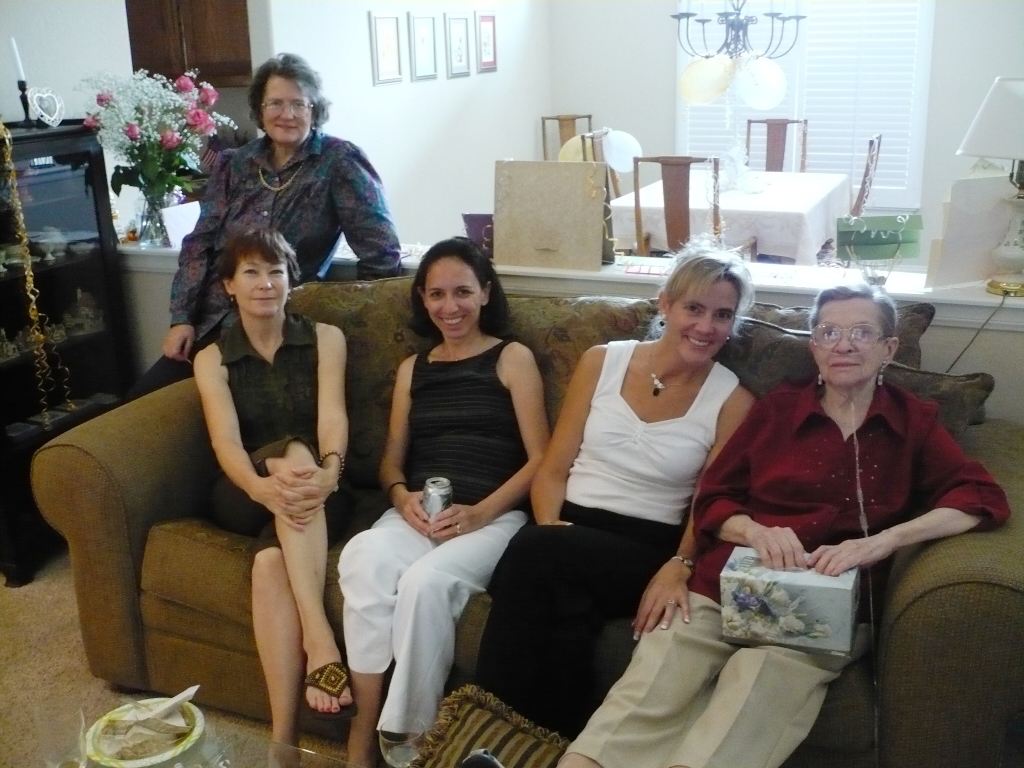
Speaking of photos, you’ve all seen the rather blurry photo of me I use as an icon. The photo accompanying this post is the picture it’s cropped from — my parent’s 60th wedding anniversary party, just a couple of months before my mother died. Happy mother’s day, Mom. Hope you’re at peace.

Grief Update: Looking For Adventure and Whatever Comes My Way

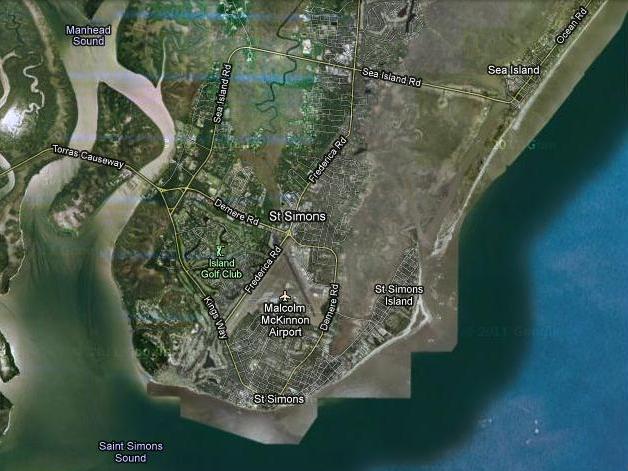
In exactly one week, I will be on my way to St. Simon’s Island, GA to speak at the Scribbler’s Retreat Writers’ Conference. It’s been a long time coming — I was originally scheduled for last August, but I had to postpone due to the illness and then the death of my life mate. These past months I’ve been looking to this conference as a borderline of sorts, a life-changing experience, maybe because it’s something concrete to plan for rather than a hazy future of aloneness to drift into.

And now the conference is only a few days away.

Several people asked me recently if I’m excited, others asked if I’m scared, but the truth is, I’m just tired. I’m tired of grieving, tired of trying to make sense of life, and most of all, I’m tired of shopping.

Shopping? Yep. Of all the subjects I never expected to discuss on this blog, shopping would head the list. I’ve never liked shopping for clothes, and the truth is, I never had to. When one is a virtual hermit, one doesn’t need very much. But a world-class author (according to the Scribbler’s Retreat people, anyway) does need more than a simple top to throw over comfortable slacks when she is being introduced at a banquet, giving a presentation, attending a reception. I’ve been lucky in that a couple of weeks ago, two friends took me shopping to pick out the clothes they think I look best in, and then this past week, my sister came and picked the things she liked on me. This leaves me with a wardrobe that is not me. Or at least not the pre-death me. Perhaps it’s who I’ll become — a bit classy, a bit dramatic, a bit arty. Not a bad image if I can pull it off. And there’s no reason I can’t. I’ve survived fifty-eight weeks of grief. I can do anything.

It’s strange to think I’m going somewhere my life mate never visited, stranger to think I’m going without a single article of clothing he ever saw. There will be nothing on this trip (except my lingering sadness) to remind me of what I lost. There will be just me, heading out on an adventure, accepting whatever comes my way.

Scribbler’s Retreat Writers’ Conference

Scribblers’ Retreat Writers’ Conference
St. Simon’s Island, Georgia
May 12-14, 2011

Through the years, the abundant beauty of the Georgia coast has inspired artists of every stripe, including poets, novelists and playwrights. You too can find inspiration on this beautiful island while enjoying fellowship with other writers and students. During the two-day conference, ten world-class authors, editors, publishers and other literary professionals will impart their own wisdom in a classroom setting.  Each conference begins with an Opening Ceremonies Banquet Thursday evening and ends with an Evening with the Authors cocktail reception Saturday evening. An added bonus — I’ll be there! As you can see, I am one of the speakers.

Phillip Margolin – How to Write a Novel in Your Spare Time 

June Hall McCash – Writing Historical Fiction

Victor DiGenti – Revving Up Your Narrative Drive

Dr. Anya Silver – Writing Poetry: The Enchanted Craft

Denise Tompkins – Effective Query Letter Writing

Ricki Schultz – Online Presence-Building, Made Easy

Jane Wood – Schools, A Niche Market

Pat Bertram – Creating Incredible, but Credible, Characters

Chuck Barrett – Who’s Point of View is It Anyway? How Not to Confuse Your Reader

 www.scribblersretreatwritersconference.org
800-996-2904
King and Prince Beach & Golf Resort

I Am a Thirteen-Month Grief Survivor

Yesterday at my grief support group we were asked to complete the sentence, “After he died, I was surprised that . . .” Everything that happened in the thirteen months since the death of my life mate — my soul mate — has surprised me. No, not surprised me. Shocked me.

I was shocked that the end came so quickly. He’d been sick such a very long time, his health fading slowly, that his dying became our way of life. When he was finally diagnosed with inoperable kidney cancer, we were told he had three to six months to live. He had only three weeks. And those weeks seemed to evaporate in just a few hours.

After he died, I was shocked by the very presence of grief. My brother died four and a half years ago, and my mother died a year later. I handled both deaths well, so I thought I could cope with the death of my mate. I didn’t know, had no way of knowing, that one didn’t grieve the same for every loss. I didn’t know, had no way of knowing, that there was a physical component to the death of a long time mate, that it would feel like an amputation.

After he died, I was shocked by the depth and breadth of my feelings. During the last year of his life, and especially the last six months, he’d begun withdrawing from the world and from me. This withdrawal, this lessening of a need to be with others is a natural part of dying, and my response to his withdrawal was just as natural — an increased determination to live. He might be dying but I wasn’t, and I had to untangle our lives, find a way to survive his dying and his death. I thought I had successfully completed this task, but his death rocked me to the core of my being.

After his death, I was shocked by his sheer goneness. Because I’d spent so much time alone that last year, I thought life without him would feel much the same, but it isn’t like he is in another room or another city or another country — it’s like nothing I’d ever experienced before. I still have no words to describe the finality, the undoableness, the vacuum of death. He was part of my life for thirty-four years. We breathed the same air. We were connected by our thoughts, our shared experiences, the zillion words we’d spoken to each other. And then he was gone from this earth. Erased. Deleted. I still can’t wrap my mind around that.

After his death, I was shocked that I felt so shattered. So broken. And I am shocked that I still feel that way at times. I am shocked that no matter how strong you are, how well you are healing, grief can slam into you at any time, especially after a good day when you’re not expecting it, and the pain feels as raw as it was at the beginning.

After his death, I was shocked by the scope of grief. You grieve for the one who died and you grieve for yourself because you have to live without him. You grieve for all the things you did and the things you didn’t do. You grieve for what went wrong in your shared life and what went right. You grieve for the past and you grieve for the lost future. You grieve for all the hopes and dreams and possibilities that died with him. It’s amazing that anyone can survive all that pain, but we do, and that shocks me, too.

After his death, I was shocked by how complicated human emotions can be. You can feel sad and unsad at the same time. You can be determined to live, yet not care if you live or die. You can know in your depths he’s gone, but still listen for him, still yearn for him, still worry about him.

Mostly I’m shocked that I am still the same person I was before he died. Such emotional trauma should have changed me, made me stronger and wiser perhaps, yet I’m still just me. Sadder, but still recognizably me. Well, there is one change. I’ve always been a worrier, but now I try not to fret about the future, try not to wonder how I’m going to cope with growing old alone. After his death, I am no longer shocked that life can remain the same year after year. Nor am I shocked that it can change in an instant.

Advice to Aspiring Writers

I just got an email from my high school, requesting my participation in a Q&A for a magazine that goes to parents and alumni. The question they want a response to in 60 words or less is, “What advice would you give to aspiring writers?” Of course I said I’d participate. The only hard part is distilling ten years of research and experience into so few words.

I could go with a single word: “Write!”

I could be cynical and say, “Don’t write unless you have to. It’s a heartbreaking business.”

I could be business-like and say, “Learn everything you can about good prose, story elements, query letters, promotion, and publishing because the competition is fierce — millions of people have written a book want to write a book. But no matter what happens, keep writing.”

I could be philosophical and say, “Start with a single word. That’s how every book through the ages was written — one word at a time. By stringing single words together, you get sentences, then paragraphs, pages, chapters, an entire book.”

I could be more story-oriented and say, “Ask yourself: what story do you want to write? Why? What do your characters want? Why? How are they going to get what they want? Who is going to stop them getting what they want?”

I could plunge into the action and say, “Sometimes it’s hard to find the confidence to bring complex scenes to life, to juggle the many elements that comprise a compelling scene, so plunge headfirst into action. Write fast and fearlessly; let the words fall where they may. You can always clean up the mess in rewrites.”

So, what advice would you give to aspiring writers? What was the best advice anyone ever gave you? What was the most helpful advice you ever read?

Grief: Blindsided by Lilacs

Who knew I would find lilacs in this desert community?

My life mate — my soul mate — loved lilacs. We once saw a house with lilacs lining the long driveway, and he wanted to live there, but we couldn’t afford such luxury. Shortly after we moved to the house where we were to spend the rest of his life, we dug up the lilacs that blocked a gate and replanted them around the perimeter of the yard. When we moved to that house, it was like living in an aquarium — there was absolutely no privacy. By the time he died, it was such a lush environment, it was like living in a terrarium — and there was total privacy. And the gate was once again blocked with lilacs. Apparently, we’d left just enough rootstock that the bushes grew back.

We planted all sorts of bushes and trees in addition to those lilacs, and the thrill of watching our seedlings grow to adulthood was another thing we shared in a twinned life that was all about sharing. It should have been hard leaving the place, but I was in such grief over his death that one more loss didn’t really make much difference to my sorrow.

I still don’t miss the place, or not that much. A place is just a place. I am homesick, but homesick for him. He was home. I miss him. I miss our life together. If he were to call and tell me he was waiting for me, I’d go to him wherever he was — mountains or desert, city or country, there I would be. But he’s never going to call. For months after I came here to the desert to try to figure out what comes next, I’d listen for the phone, hoping he would call and tell me that he was well and I could come home. That feeling is finally fading, but the loss of that feeling just makes me sadder — he is gone and I have to deal with the vicissitudes of life by myself.

I have minor upsurges of grief a couple of times a day, but I try to be upbeat. I have a new book published. I am getting new clothes, trying to reinvent myself from the outside in. I have made new friends (mostly people who have lost their mates. It’s amazing how quickly you can get to know someone when you cry together). I’ve been handling myself well.

And then . . .

Today, strolling around the neighborhood (it was too windy to walk in the desert), I happened to smell lilacs, and instantly, I was back in full-fledged grief mode. People keep telling me one never gets over grief, you just learn to live with it, and that appears to be true. Grief seems to lurk in dark places, ready to gush forth when one is least expecting it. And I was not expecting it today. How could I have known I would encounter lilacs growing in this desert community?

Wonderful Review of Light Bringer

I just received the most wonderful review of Light Bringer, my speculative fiction thriller. You have to love a review that talks about the author’s “broad knowledge and brilliant imagination.” The author, in this case, being me. 

The reviewer, Sandra Shwayder Sanchez from BookPleasures.com, also says: “The plot, replete with secret sinister underground corporate experiments, extraterrestrial creatures, a couple of budding romances, could have been the stuff of trendy comic books or yet another television series but the author’s excellent characterizations make it real, original, the stuff of literary fiction. Stylistically the author is adept at moving between lyrical poetic descriptions of nature, wryly funny dialogue and perfectly paced suspenseful writing.”  Yep, she’s talking about me again. Wow.

I can’t tell you more because of copyright infringements, but you can go to Book Pleasures to read the whole review: Pat Bertram’s Light Bringer Reviewed By Sandra Shwayder Sanchez of Bookpleasures.com

To download the first 20% of Light Bringer free at smashwords.com, click here: Light Bringer

To read the first chapter of Light Bringer online, click here: Light Bringer

On Writing: Tell, Don’t Show

In Description, Monica Wood commented: Don’t enslave yourself to showing. “Show don’t tell” is a guideline, not a rule. Sometimes telling is more effective and thrilling as long as the prose is interesting and engaging.”

As a reader, one of my pet hates is when one character is talking to another, and they retell the entire story up to that point, so as a writer, when I get to a place where one character has to tell another what the reader already knows, I write something like, “and Sam told Sally about the woman who tried to kill him and how he ran off instead of trying to find out who it was.” Avoiding repetition is one reason telling is so much better than showing at times. Makes the story move faster. Might not be immortal prose, but it moves the story along.

The worst offenders of the tell, don’t show suggestion are lawyer books. They spend the first half of the book laying out the story, then the second half repeating that story in a courtroom setting. If a reader can skip a whole slew of chapters and not miss a moment of the story, the writer has not done his or her job. If the writer wants to do the courtroom scene, then make sure what is shown is new. Otherwise, simply tell what went on in a few short sentence and get to the good stuff.

Another time telling is better than showing is if a scene has no conflict, no surprises, no twists. If a character sets out to do something and accomplishes it without any problems, then showing is a waste. Just tell it. Don’t build up to  . . . nothing.

A way to know if it’s better to show or to tell is to decide what you want to accomplish with a scene. If the immediacy of a scene is important, show it. If the reactions of a character who was not involved in the scene are most important, then it’s possible to have one character tell the other what happened and then show the character’s emotion.

When writing More Deaths Than One, I worried that I was cheating readers by doing the big disclosure  at the end via letter (in other words, telling), but the importance of the scene lay not in finding out the truth of who Bob was but in the different ways Bob and Kerry reacted to the truth. It was about them and their relationship more than the deeds themselves. It was also about the emotion of the person writing the letter and how that emotion bound all of them together. So basically, the letter was all about telling rather than showing the disclosure, and showing rather than telling the emotion it evoked.

When do you tell instead of show? (I mean you personally, not writers in general.) How do you make it effective and thrilling?

Lincoln, the Quintessential Politician

People ask me how much truth is in my books, and I have to admit that I base a lot of my story on little known facts (or those that once were little known). Truth is not only stranger than fiction at times, it’s often more compelling. Yesterday I posted a bloggery about the history and myths of the American Civil War that were included in my new novel Light Bringer, and today I’m posting some of the data supporting the claim that the civil war was about preserving the Union at all costs.

In his inaugural address, Lincoln said, “Apprehension seems to exist among the people of the Southern States that by the accesson of a Republican administration thier property and their peace and personal security are to to be endangered. I have no purpose, directly or indirectly, to interfere with the institution of slavery in the states where it now exists. I believe I have no lawful right to do so, and I have no inclination to do so.”

in 1861, after the war began, Lincoln said, “My paramount object in this struggle is to save the Union, and it is not either to save or destroy slavery. If I could save the union without freeing any slave, I would do it.”

In a debate with Senator Stephen Douglas, Lincoln said, “I am not nor every have been in favor of bringing about the social and political equality of the white and black races. I am not nor ever have been in favor of making voters or or jurors of Negroes.”

G. Edward Griffin, in The Creature from Jekyll Island, wrote: “When conscription was initiated by Lincoln in 1863, people in the north were outraged. They protested. Federal troops eventually had to be called in to put down anti-draft riots in Ohio and Illinois. In New York City, mobs stormed the draft offices and set fire to the buildings. The riots continued for four days and were suppressed only when the Federal Army of the Potomac was ordered to fire into crowds. Over a thousand civilians were killed or wounded. They also imprisoned protesters without formal charges or trial. Thus, under the banner of opposing slavery, American citizens of the north not only were killed on the streets of their own cities, they were forced into military combat against their will and thrown into prison without due process of law. In other words, free men were enslaved so that slave could be made free. Even if the pretended crusade (against slavery) had been genuine, it was a bad exchange.”

Bruce Catton wrote: “Technically, the Emancipation Proclamation was absurd. It proclaimed freedom for all slaves in precisely those areas where the United States could not make its authority effective, and allowed slavery to continue in slave states under Federal control.” It was strategy, pure and simple, and doomed the South to defeat, because no European government could takes sides against a country that was trying to destroy slavery.

In 1921, Otto Bismark, Chancellor of Germany, admitted: “The division of the United States into federations of equal force was decided long before the Civil War by the high financial powers of Europe. The bankers were afraid that the United States, if it remained in one block and as one nation, would attain economic and financial independence, which would upset their financial domination over Europe and the world. Of course, the ‘inner circle’ of finance, the voice of the Rothschilds prevailed. They saw an opportunity for prodigious booty if they could substitute two feeble democracies, burdened with debt to the financiers, inplace of a vigorous republic sufficient unto herself. Therefore, they sent their emissaries into the field to exploit the question of slavery and to drive a wedge between the two parts of the union. The rupture between the North and South became inevitable; the masters of European finance employed all their forces to bring it about and turn it to their advantage.”

The South lost, but so did the North. We no longer own our dollars — world financial institutions own us . . . oops. I mean our money.

Myth and History of The American Civil War

Light Bringer is being touted as science fiction, and I am exploiting that by guest blogging at a science fiction blog, Grasping for the Wind, but the truth is, my new novel is just as much history (or alternate history, if you believe what you were taught) as it is science fiction.

Light Bringer includes a couple of scenes where a group of conspiracy theorists argue about who is really orchestrating world events, who the secret leader(s) is/are, and how far back that secret leadership extends. The story hints that this so-called conspiracy can be traced to our very roots as humans. If one follows the trail of secrecy to ancient history, especially the history we call myth, this “leadership” takes on the appearance of science fiction. But is Light Bringer science? Or myth? Or history?

Midst my characters who might or might not be fully human, midst all the technological talk of UFOs and IFO (identified flying objects), midst talk of additional planets in our solar system and of the origins of human life, are passages of history, such as this excerpt culled from a meeting of my conspiracy buffs:

“Emery,” Rena said, “what did Scott mean earlier about the truth setting you free?”

Brian, Faye, and Scott groaned.

Rena frowned. “What? What did I say?”

Brian smiled at her, as he had been doing most of the evening. “Nothing. It’s just that any mention of it sets Emery off, and we’ve heard the lecture a thousand times.”

“I don’t lecture,” Emery said loftily.

Hoots of laughter greeted the remark.

Rena turned to Philip. “Do you know what Scott meant about the truth setting Emery free?”

Philip nodded. “He used to be an American History professor, but they fired him for teaching the whole truth instead of sticking to the text book.”

“I don’t get it. Isn’t history about truth?”

Realizing that all eyes were focused on him, Philip squirmed in his seat. “It should be, but it isn’t. For example, Emery taught that states’ rights was the main issue of the Civil War, and that’s frowned on in today’s political climate.”

Fatigue etched Emery’s face. “They accused me of being a racist because I said Lincoln used slavery as a tool to get people to fight an unpopular war, and they called me a conspiracy theorist because I taught that the war extended beyond our borders—part of a world-wide pattern.

“Modern education consists of subject matter broken into small and separate units of study to keep the students from seeing the big picture, and I didn’t agree with that. The sweep of history can only be seen if you’re looking at the big picture.

“In a single decade, 1861 to 1871, the serfs were emancipated in Russia, Italy was unified, Canada was unified, the German Empire was proclaimed, the Austria-Hungary Dual Monarchy was established, Thailand was reorganized, the Meiji Restoration in Japan gave power to a western oligarchy, and Das Kapital, a philosophy for the New World Order, was published. Global movements of such magnitude do not rise independently of one another. Someone, or a group of someones, rebuilt Europe along with large chunks of the rest of the world.

“Against this panorama of history, you can see the truth about the American Civil War. It was all about states’ rights. Were we to remain a federation of powerful independent states loosely unified by a weak federal government as was originally intended, or were we to become a nation of weak states dependant on and subservient to a strong central government that could be more easily controlled by the international power elite?

“The irony is that by doing whatever necessary to keep the states unified, Lincoln managed to destroy the very nation he tried to preserve.”

The above is a simplistic explantion, of course, since a discussion about legal plunder didn’t really fit in this novel. According to G. Edward Griffin in The Creature from Jekyll Island, Northern politicians had passed protective legislation putting import duties on industrial products, forcing the south to buy from the north at higher prices than they were paying to their European sources. Europe retaliated by curtailing the purchase of American cotten. That hurt the south even more, and they wanted out. Moreover, a divided USA would be susceptible to European expansion. Says Griffin, “The issue of slavery was but a ploy. America had become the target in a ruthless game of world economics and politics.”

Myth? Or history? Does it matter? You already know what you think, and what I think doesn’t make a bit of difference.