Red Hat and White Trees

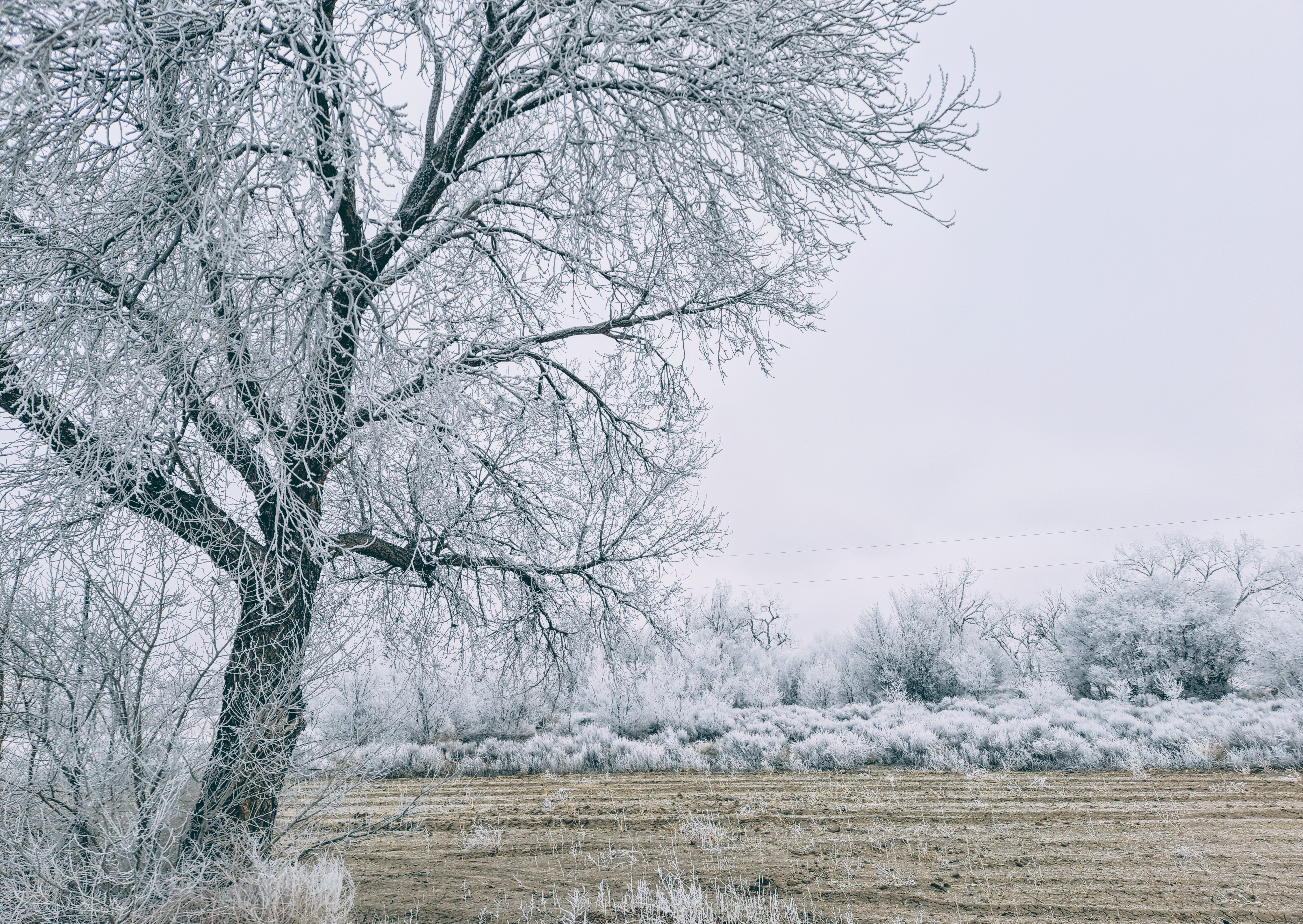
Yesterday while I was taking photos of the fog-frozen trees, a friend snapped my picture. Normally, I don’t like my picture taken when I’m unaware, but I can see why this image intrigued her. I probably would have done the same if our positions were reversed because the contrast between the red hat (actually, red with black polka dots) and the the white background really is stunning.
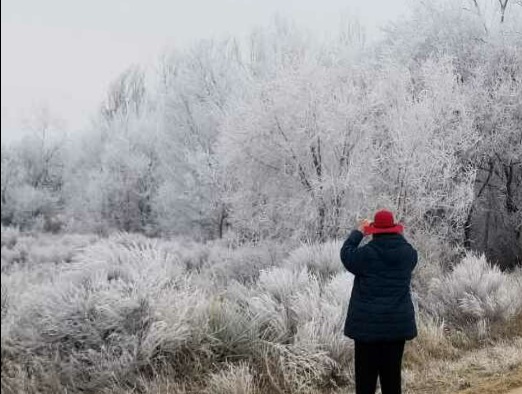
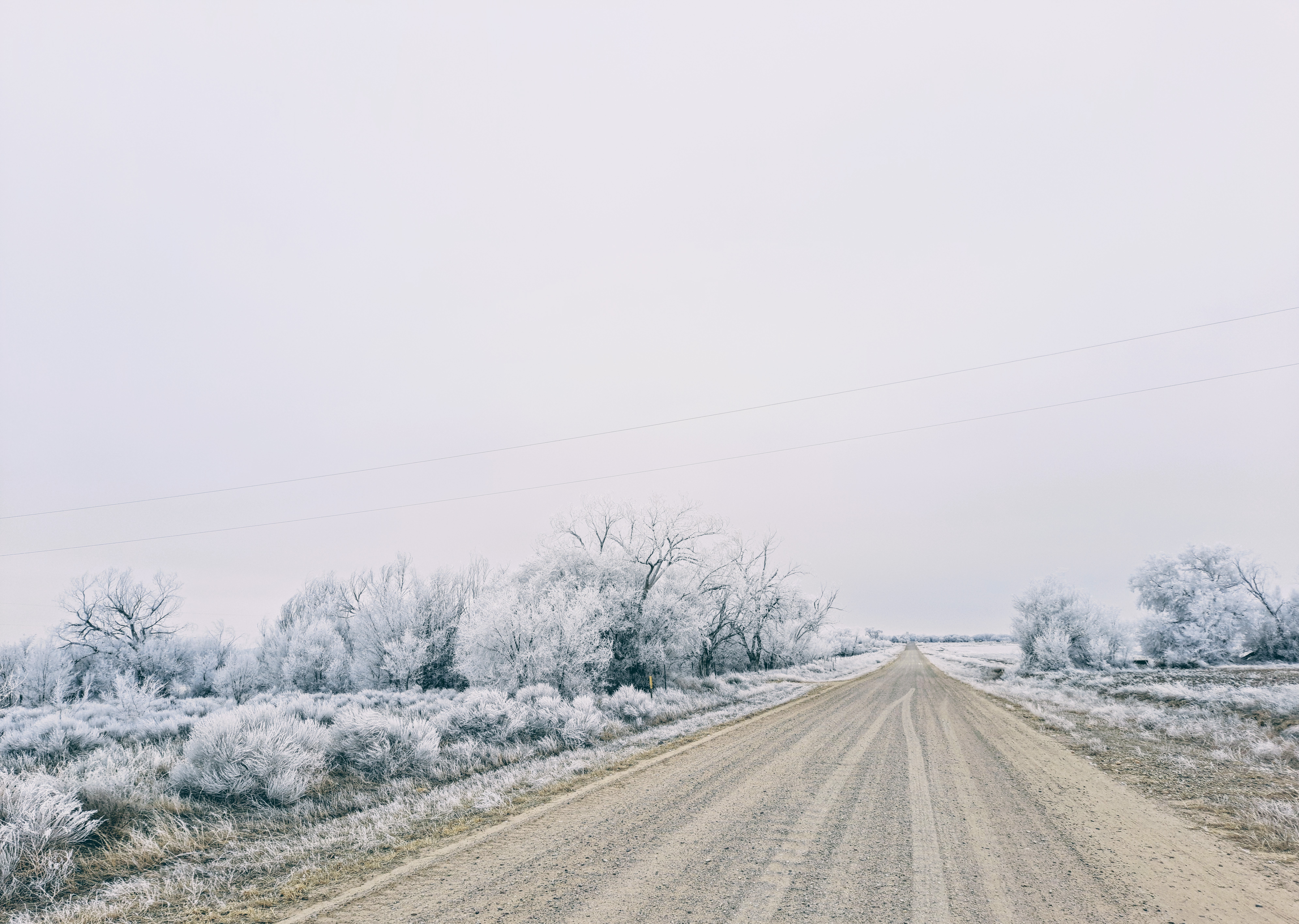
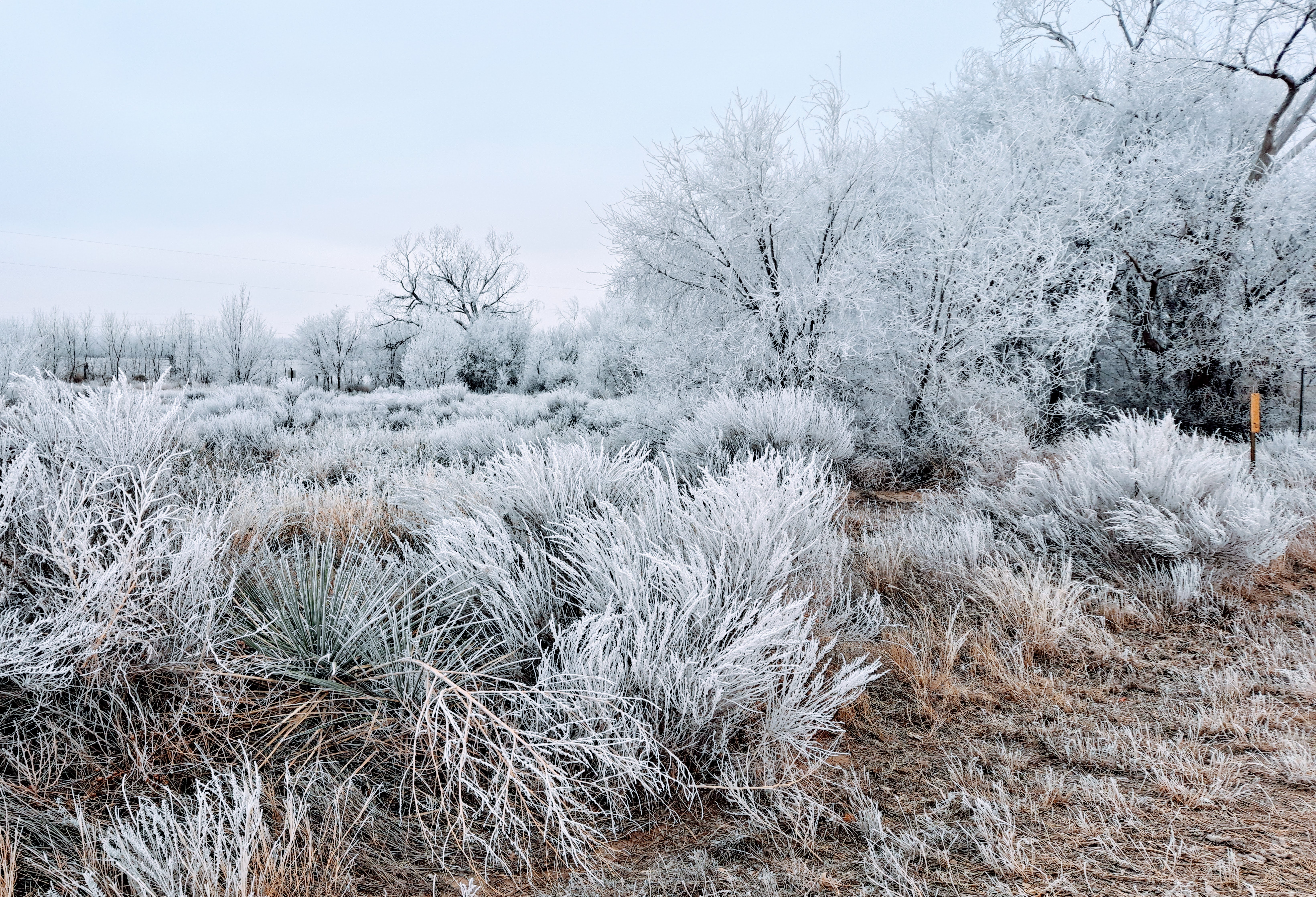
The trees remained white for several days, and in fact, the frost grew thicker each day. This is odd for the lower elevations of Colorado. Frost tends not to hang around for very long because of the heat of the sun on even the coldest days. But the sun seems to be absent for now.

It’s interesting how people remember things differently. My brother remembers the years in our youth when snow lay on the ground all winter. I remember the year when we didn’t have to wear coats on Christmas because of the heat, but had to bundle up at Easter because of the snow. Mostly, though, I don’t remember much about the weather back then; the only reason I remember the year of the sun at Christmas and the snow at Easter is because I remember telling someone that’s what I liked about Colorado — the contrary weather.

Well, I am certainly getting contrary weather this year! Colorado advertises itself as a place that gets more than 300 days of sunshine a year, but this year (or this month, anyway) it’s fooling us with one dreary day — one dreary cold day — following another.

People did warn me at the beginning of this winter that February was the coldest month. (Where Jeff and I lived on the western slope, December or January were the coldest.) And yep. Here we are! At least, I hope this is the coldest month. By this weekend, we’ll be lucky to get above zero. Brrr!

I’m still hoping by next year, I’ll be more acclimated to the winters, but for now, I’m mostly staying inside, going out only when necessary. And when I do go out, as you can see from the photo, I bundle up.

***

What if God decided S/He didn’t like how the world turned out, and turned it over to a development company from the planet Xerxes for re-creation? Would you survive? Could you survive?

Click here to buy Bob, The Right Hand of God

Mixed Feelings

Today was a day of mixed feelings — happy, sad, shocked, sublime. I hadn’t been going anywhere or seeing anyone for a while, so when I found out the art guild was meeting today, I decided to attend. The town seems to be picking up the pieces of life, with various events that have been cancelled the past year being scheduled once again. For me, it mostly means coming up with another historic murder mystery scenario, but I have several months to think about it.

I was happy being around people, happy to do a project (we made small valentine banners), but I was shocked and oh, so saddened to hear about the death of one art guild member’s husband. My heart goes out to this friend. I’m just like everyone else when it comes to not knowing what to say, so I merely hugged her and said I was sorry. I also let her know I would be available if she ever needed anyone to talk to, which I think she appreciated, but I tend to think she’s still too shaken to be able to put her chaotic thoughts about her loss into words.

The sublime part of today (and the past couple of days) was the frozen fog. I don’t remember if I’d ever seen frozen fog before, though perhaps I did when I was young because the scene has a familiarity about it. I certainly hadn’t seen anything like it when I lived in the desert of California or the high plains of Colorado, so I enjoyed the whiteness. The white trees and shrubs, the white sky, the white . . . everything. It looks like snow, but it isn’t — we haven’t had snow for a couple of weeks. Apparently it’s cold enough (and yes, it is cold, though not as cold as it’s going to be this weekend; they’re talking about a high of zero on Sunday) to freeze the fog in the air and the moisture on the flora.

I’m still on hiatus from work, so it was nice seeing people, but it will be equally nice tomorrow when I stay inside and enjoy the frozen fog from the warmth of my rooms.

***

Pat Bertram is the author of Grief: The Inside Story – A Guide to Surviving the Loss of a Loved One. “Grief: The Inside Story is perfect and that is not hyperbole! It is exactly what folk who are grieving need to read.” –Leesa Healy, RN, GDAS GDAT, Emotional/Mental Health Therapist & Educator

Do the Loneliness and Tears Ever Stop?

A friend who became a widow about a year ago asked me if the loneliness and tears ever stopped. I always hate to have to tell the truth that so many of us discovered — that it takes three to five years to find some sort of renewed interest in life, but even then, tears still come, though not as often or for as long as they once did, and the loneliness can continue to be a problem.

It took me ten years and a major life change — moving to a new town and buying a house — before I settled into a feeling of normalcy. I do still tear up at times, but that’s all it is — a momentary tearing up without enough moisture to escape my eyes, and I do still get lonely, though again, it’s more of a blip than a barrage of feelings because after all these years (it will be eleven years in seven weeks) I am used to being alone.

I still marvel that we can get to the point of feeling any sort of normalcy because the truth is, no matter what happens in our lives, they are still gone.

I remember having lunch with a woman who asked me how I was. This had to have been about four years after Jeff died, because I was mostly doing okay, which is what I told her. I would never even have mentioned him except that she asked, which is why her subsequent lecture on how I must really get over it and move on seemed so unfair. It’s not as if I brought up the subject or even bemoaned my fate. My response was just a simple, “I’m doing okay.” She eventually changed the subject back to herself, and this is where things really got bizarre. Her husband was gone for the weekend on a fishing trip, and she spent the rest of our time together talking about how much she missed him and how lonely she was.

I could only gape at her. Her husband had been gone but a day, would be home in another day or two, and their lives would continue as before. Jeff had been gone years, and would never return. It simply did not occur to her to correlate the two situations. Somehow it was okay for her to miss her husband, but not okay for me to miss Jeff. It was as if in her mind, death had erased him, not just in the present, but in the past, so that whatever we had shared was gone, eradicated from the record of my life, and for me even to think of him was an affront.

You’d think as the years pass, our loneliness and missing them would escalate because every new day is another day piled on the heap of days we’ve already spent missing them, but the miracle of grief is that although those feelings are still there, they become subsumed into the depths of our being, and so they don’t demand as much attention.

And so our lives continue.

But for most of us, getting to that point takes years.

If you are still in the midst of the hard years, I am truly sorry, but there is hope. Most of us who manage to claw our way out of the chaos of grief do find renewal of some sort. For me, first it was dance classes, and now it’s my house and home. For so long, Jeff was my home, but now I have an actual place I can call home. It’s not the same, of course, but considering the circumstances of my life, it’s pretty amazing that I got here.

This renewal isn’t unique to me. Many of us find ourselves, ten years after the death of a spouse, life mate, soul mate, in a completely different place, sometimes geographically, sometimes mentally or emotionally, sometimes spiritually, sometimes all three.

It doesn’t in any way make it okay that they are gone, doesn’t eradicate them from our lives, but it does make it easier for us to embrace life once more, to move away from the edge of the abyss where we teetered for so long.

Meantime, in your loneliness, know that at least one person understands, at least to some extent, what you are going through.

***

Pat Bertram is the author of Grief: The Inside Story – A Guide to Surviving the Loss of a Loved One. “Grief: The Inside Story is perfect and that is not hyperbole! It is exactly what folk who are grieving need to read.” –Leesa Healy, RN, GDAS GDAT, Emotional/Mental Health Therapist & Educator

A Trusting Species

I was standing in an aisle at the grocery store today, reading a label, when it struck me that for all our vaunted skepticism, we are a trusting species. There is no way to know for sure that the ingredients listed on the label are the only ingredients in the product, in fact, there’s a better than average chance that there are things in the product that aren’t listed on the label. For example, a certain amount of pesticides are allowed by law to be ignored when a product is advertised as “organic.” Many ingredients, not just pesticides, are actually included in the definition of certain foods, so even though a food my advertise itself as “sugar free,” that is not necessarily the case. And yet, we still read labels, still buy things according to what we read.

Because we are a trusting species.

Oddly, while we insist on full disclosure when it comes to food (even though we don’t always get it) we don’t demand the same sort of itemization with drugs. We take what the doctors prescribe (and they prescribe what the drug companies suggest they prescribe) because, evidence to the contrary, we trust that those people have our best interests at heart.

When it comes to doctors, survey after survey shows that people don’t trust the medical establishment, don’t trust doctors, yet when asked specifically about their doctor, they trust her (or him) implicitly. Which is a weird sort of syllogism. If all doctors are untrustworthy, and if everyone’s doctor is trustworthy, it somehow comes out meaning that all doctors are trustworthy.

Logically, it doesn’t make sense, but it does if you realize — ta da! — that we are a trusting species.

I think nowhere is this trust so apparent as in drug commercials. Commercial after commercial shows happy, laughing people, so thrilled to have taken the drug of choice (which almost always has three syllables, and one of the letters in one of those syllables is frequently a Q, X, or Z) yet while we watch these happy people, and while that oh-so-catchy drug name is oft repeated, there is a running commentary about all the horrible things that drug could do to you if you take it. And yet people not only agree to take it, they sometimes go running to their doctor (the only doctor in the world who is trustworthy) and ask for the drug by name.

Because we are a trusting species.

The trouble is, we cannot simply go by our own senses, believing only what our eyes, ears, and nose tell us, because those senses are basically lying to us. What we see is not what actually exists (which to the best of anyone’s knowledge or belief are various wavelengths of energy that somehow disappear into uncertainty and then perhaps into nothingness the more they are studied). Instead, what we see is what our brains decide to show us as they interpret that energy.

And we believe because . . . yep, because we are a trusting species. We have to believe our eyes and other senses. Otherwise, we’d be just streams (or strings or bundles) of energy interacting with other bundles of energy.

It’s not our fault that we are a trusting species — it’s how we were made. We have to trust, though to be honest, some of us have a harder time trusting than others do. We’re the sort who stand in grocery store aisles and wonder what the truth is about the ingredients listed on the product we are holding in our hand.

***

What if God decided S/He didn’t like how the world turned out, and turned it over to a development company from the planet Xerxes for re-creation? Would you survive? Could you survive?

Click here to buy Bob, The Right Hand of God

Nothing in My Head

This is one of those days when I have nothing to say, when there’s nothing in my head that needs to be put into words. I’m not sure if it’s a good thing, signifying that I’m at peace with my world, or if it’s a bad thing, signifying . . . actually, I don’t know what it would signify. That I’m stagnating? I just checked for synonyms for stagnating, and the words that showed up — festering, rotting, deteriorating — seem to indicate a lot of activity, and there really isn’t much activity of any kind going on in the thought department.

Oh, there is that conspiracy tale I’m playing around with but don’t really want to get involved with writing — you know the one where a certain disease that virologists were enhancing to be more damaging escaped from a lab. In my scenario, they do it on purpose, though what that purpose is, we won’t find out to the end of the story. As the story progresses, it turns out that the disease the citizenry are told that is causing the pandemic is something quite different from what it actually is, but since the official story blames a variant of a common virus, one that has been known for decades, a large percentage of those who are tested get positive results for that particular virus rather than the true one. As more and more people get sick, the various populations of the world start clamoring for a vaccine, which, of course, is what the perpetrators of the pandemic want. They have something they want to inject into the world’s population — perhaps some sort of tracking chip, though I haven’t yet figured out exactly what it is they want to inject — and they know people won’t accept the injection without a reason, so, they created the reason: the pandemic. Hence, millions of people swarm to get injected while the perpetrators look on with satisfaction.

Yeah, that conspiracy tale.

As I said, I’d never write it because part of it hits too close to home, and I generally stick with stories of government shenanigans based on events that happened decades ago, but it does make me wonder how much of that which we are told is true really is true. How would we know? In this case, we know people who got sick, even know someone who died, but beyond that, what actually do we know on our own without someone putting thoughts into our heads? (Which, of course, would be the sub story of this particular tale.)

Come to think of it, it’s probably a good thing my mind is mostly empty. I wouldn’t want to start believing my own story and get paranoid about all the changes going on in the world because of this misbegotten parasite. (Apparently, viruses are classified as microscopic parasites since they cannot live for long or reproduce outside a host body.)

In retrospect, since I’m mostly staying away from any news source, it makes sense that I have no deep thoughts about anything right now since I am purposely restricting what goes in. And, of course, nothing can come out if nothing goes in.

***

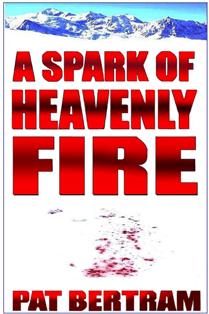
If you haven’t yet read A Spark of Heavenly Fire, my novel of a quarantine that predated this pandemic by more than ten years, you can read the first chapter online here: http://patbertram.com/A_Spark_of_Heavenly_Fire.html

Buy it on Amazon here: https://www.amazon.com/gp/product/B0024FB5H6/

Download the first 30% free on Smashwords: https://www.smashwords.com/books/view/1842

Alone Again . . . Naturally

Because of a change in the situation of the woman I have been working for, I am on a hiatus from work. Whether this is a permanent furlough or just temporary, I don’t know, but for now, I’m back to being fairly isolated. I’m hoping the weather cooperates so the workers can come and finish some of the jobs they’ve started, such as digging the dirt away from the house and repairing the cracks in the foundation, because having them around the place makes me feel less isolated.

Even though it’s getting cold again, I am trying to take a walk every day, bundling up against the chill winds, so at least that helps me feel more a part of the world. I can also make an appointment to get more books from the library, and if I get desperate, I can watch the few hand-me-down DVDs I’ve collected. All those things make me feel less isolated, though they don’t really do anything to actually make me less isolated. I don’t suppose it matters, though, and won’t for a while longer. I do well on my own since I have hermit tendencies, though I’m not sure how healthy such isolation is in the long run.

After Jeff died, I made sure to keep active, to make friends, to be involved in various groups and to do new things because I was afraid of becoming stagnant. I redoubled those efforts once I moved because I knew what a challenge it would be making new friends, but all that effort went by the wayside with The Bob restrictions, so I have a hunch I am now at the stagnant stage. It’s possible that spending so much time alone is skewing my perceptions and that I have not yet become torpid, but it’s hard to tell because . . . well, because I am alone so much.

I suppose I could do what so many people are doing — get involved in activities with a small group of friends, but unfortunately, just because people have received the vaccine, it doesn’t mean they won’t still spread The Bob. After all, the vaccine is only 90% effective (and less so when it comes to new variants) while isolation is 100% effective.

And truly, does it really matter if I’ve become stagnant, especially if I don’t know the truth of the matter? And so what if I become the crazy cat lady sans cats? If I’m the only one around, who will know?

***

Pat Bertram is the author of Grief: The Inside Story – A Guide to Surviving the Loss of a Loved One. “Grief: The Inside Story is perfect and that is not hyperbole! It is exactly what folk who are grieving need to read.” –Leesa Healy, RN, GDAS GDAT, Emotional/Mental Health Therapist & Educator

A Cluster of Crises

I hope all of you are doing okay. I don’t know what’s happened this year, but it seems as if the earth was zapped with a whole lot of negative energy. I’m fine, but so many people surrounding me are dealing with various crises, such as accidents, falls, cracked bones, radiation treatments, poor health prognoses, and the death of a loved one. My only crisis is a financial one — the incredible rate increase for my already astronomical house insurance (the rates in this area are among the highest in the country — because of wind and hail damage, I’ve been told), but the solution there is an easy one: find a different insurance company or find ways to be more economical so I pay the bill and worry about next year’s insurance when next year comes.

There’s not much I can do about other people’s problems but be there if they need something. It does seem odd, though, that so many things are going wrong in such a short period of time. I hate the thought of being grateful that so far I am on the caregiving end of the situation rather than the care needing end because it seems so . . . smug or complacent or arrogant or somesuch, but I am grateful that, as of now, I am healthy and able to help where I can.

I have no words of wisdom in the situation. In fact, I’m hurrying up to get this finished so I can go be with a woman who needs help, but I wanted to write something so as not to break my blogging streak, and this cluster of calamities is on my mind.

Take care of yourself! There are enough ills in the world without our adding to it.

***

Pat Bertram is the author of Grief: The Inside Story – A Guide to Surviving the Loss of a Loved One. “Grief: The Inside Story is perfect and that is not hyperbole! It is exactly what folk who are grieving need to read.” –Leesa Healy, RN, GDAS GDAT, Emotional/Mental Health Therapist & Educator

Tooting My Own Horn

Today is my 500th day in a row of blogging. I can’t say that I’m proud of everything I’ve written, but I am pleased that I have managed to keep to the discipline of a post a day for so long.

It is also my 222nd day of taroting. I know that’s not a word, but I’m not exactly studying the tarot, nor am I doing what is considered a reading. I am simply picking a card, making a note of all the various interpretations of each card so that when I use a tarot deck where the instructions are in an archaic form of Italian (as a couple of the decks are), I will be able to check my own notes for what each of those cards might mean.

If you don’t know why my interest in the tarot, it’s that I ended up with my deceased brother’s tarot collection, and I started my card-a-day practice as a sort of memorial to him. (In case you missed the posts where I talked about his decks, I have about four dozen different decks, some collectables, some common, some esoteric, and each month I pick a different deck to use to see if there is any one that will speak to me. So far, I haven’t heard a word from any of them.)

And today I’ve folded my 140th origami crane. My intent was to do one a day, thinking that by the end of three years I will have made my senzaburu (1000 origami cranes), but I find myself folding cranes whenever I have a few free minutes because the idea of all those cranes has captured my imagination. The legend is that anyone who folds a thousand origami cranes will have a wish come true or happiness and eternal good fortune. Since I have no particular wish (except to sell thousands of copies of Bob, The Right Hand of God), I’m aiming for eternal good fortune. Though to be honest, I tend to think I have that now, for which I am grateful.

Still, it doesn’t hurt to hedge my bet. Actually, I think the benefit comes in the folding rather than the finished senzaburu, but since it’s early days yet, I don’t know for sure.

I’ve also folded various other birds just for fun. Those I’m thinking of hanging in my garage to let me know where to stop and park.

This is all I have to toot about. These things are nothing special, really, except that I am doing them, and they all add up to a daily discipline, proving . . . I don’t know . . . perhaps that I’m alive and kicking and still going strong.

***

What if God decided S/He didn’t like how the world turned out, and turned it over to a development company from the planet Xerxes for re-creation? Would you survive? Could you survive?

Click here to buy Bob, The Right Hand of God

The Sweeping Sun

The house Jeff and I lived in was had a long view of the horizon, with Grand Mesa off to the side. Since nothing impeded our view from the living room window, we could watch the sunset every night as it swept from the far southwest in the winter to the far northwest in the summer. I knew the exact notch in the Mesa where the sun seemed to hover for a few days before it began its journey south again, and it really shook me up one year when the final sunset of winter took place several notches beyond the norm, as if the earth were lurching on its axis. Besides that year, though, the sun swung back and forth with an even beat.

It almost feels like that now, though I have no long view — no view of any sunset, actually — just trees and houses across the street impeding the horizon. What I do have, this year, is my nightly walk home from my job. I was just settling down into the dark, enjoying the rare night walk, when, one day at a time, the light crept up on me. And now I’m walking home in the pre-dusk dimness, which is almost as bright as midafternoon.

I didn’t get to feel this gentle change of the light at the beginning of the sun’s journey into winter because of daylight savings time. One day I walked home in the bright sunshine, the next time I walked home it was dark.

Now, though, I can feel the subtle changes as the days get perceptibly longer. In no time at all, it will be spring!

Actually, it felt like spring today — the last snow has melted, and the temperature got up near seventy. Tomorrow will be the same, but then the temperatures will drop to the more seasonal low of 7.

But whatever the weather, the days will be getting longer and lighter, and though I can’t see the sun setting, I know it is sweeping inexorably toward the northwest.

***

What if God decided S/He didn’t like how the world turned out, and turned it over to a development company from the planet Xerxes for re-creation? Would you survive? Could you survive?

Click here to buy Bob, The Right Hand of God

Changing Foods

So many foods taste different from what I remember them tasting in my youth. Although people say it doesn’t matter where things are grown, it makes a huge difference. When I was young, most of our fruits and vegetables were grown in the United States, and were only available when they were in season. But oh, they were so worth waiting for! Oranges so sweet they put sugar to shame. Tomatoes so juicy and tangy and sweet it was easy to understand they were basically a fruit and not a vegetable. And now? Oranges that come from south of us are bitter, tomatoes are tasteless, and all manner of foods have depleted nutritional value.

Oddly, it works the other way, too. I first had kiwi fruits from New Zealand, and they were fabulous, but those grown in the USA are rather bland. Same with Granny Smith apples; when they came from New Zealand, they were sweet and tangy and crisp; often those grown in the USA are mealy and sour.

One thing that is vastly different from my youth is Hershey’s cocoa powder. Back then, because of the high cocoa butter content, the powder couldn’t be dissolved in a liquid. To make hot chocolate, you had to heat sugar and cocoa and a bit of milk, stirring constantly, to make a syrup, and then gradually add the rest of the milk, still stirring. I tend to think it’s one of the reasons powdered hot chocolate mixes became so popular — you just dumped the mix into a mug, add hot water, and instant hot chocolate! Now, cocoa is so devoid of fat that it is instantly dissolved in milk. It’s also much blander and the color is a lot paler.

My mother made a meat dish that I dubbed “black meat” when I was very young because of its intensely brown color. (When I asked her how to make it, she told me to “slice any cheap beef into thin strips, roll in butter mixed with paprika, salt, and garlic powder. Brown the meant, and a little water, finely chopped onions, 1 teaspoon cocoa, a dash of cloves, and a bit of leftover coffee. Then cook forever.”)

The last time I made this, the meat tasted sort of the same, but the color was a regular gravy color. The cocoa powder simply is not the same. I thought perhaps they’d been adding an alkali to neutralize the natural acids like a Dutch processed cocoa, but apparently not. Oddly, Dutch processed cocoa is supposed to be darker than the more acidic cocoas, but when I was young, it was the opposite — you could always tell the Dutch processed cocoas because they were lighter in color.

That’s the problem with having lived so many decades — too many things are vastly different, and the people who write the articles now to explain those differences don’t go back far enough, probably because they aren’t very old and can’t imagine the world being any different before they set foot upon the earth.

A brief stint on Google showed me a bunch of gourmet brands that have a high fat content and are darker in color that grocery store cocoa, so I might shop around and see if I can duplicate the taste and texture of the old Hershey’s cocoa. But for the other foods, such as real oranges and real tomatoes? I’m out of luck.

***

While sorting through her deceased husband’s effects, Amanda is shocked to discover a gun and the photo of an unknown girl who resembles their daughter. After dedicating her life to David and his vocation as a pastor, the evidence that her devout husband kept secrets devastates Amanda. But Amanda has secrets of her own. . .

Click here to buy: Unfinished