Going Along for the Ride

Life takes odd twists and turns. It seemed to me, when my life-mate — my soul mate — was dying of inoperable kidney cancer, that our lives would never change. He’d been sick for so many years, dying cell by cell, that it felt as if we were locked in a horror show of endless, predictable misery. Last year at this time, his disintegration suddenly speeded up, and he started dying organ by organ. And then he was gone.

I’ve made no secret of my grief, of the pain his “goneness” has caused me, but through it all, I’ve been getting on with my life, trying to open myself to new experiences, trying to hope for . . . what? That is the kicker. How do you know what to hope for if you can’t even imagine where you are headed?

A couple days ago I sat in a restaurant, one thousand miles from our home, celebrating my birthday with new friends and acquaintances I’d met through a grief support group. Though all nine of us are trying to deal with the devastating loss of a loved one, we talked and laughed and had a good time. It showed me that there is life after death — we lived despite our loved ones’ deaths. And it showed me something else. That for all of life’s seeming predictability, it can still surprise. A year ago, when my life mate was a couple of weeks from death, there is no way I could ever have envisioned that restaurant scene.

Back then, I knew I’d have to leave our home, to find a temporary haven where I could deal with my grief, but I had no clear idea of where I wanted to go, and somehow I found myself in the desert. And, since I’d been a virtual hermit for years, I could never have guessed that I would make so many friends. Nor had I celebrated my birthday in . . . well, never mind how many years it’s been. And yet, there I was, with new friends in a time and place I couldn’t have even imagined a year ago.

So where am I going? How will I get there? Who will I be? Who will I be with?  There is no way of knowing. I’ll just have to go along for the ride and hope that everything works out when I get there. Wherever “there” is.
Finding Inspiration From Uninspiring Sources

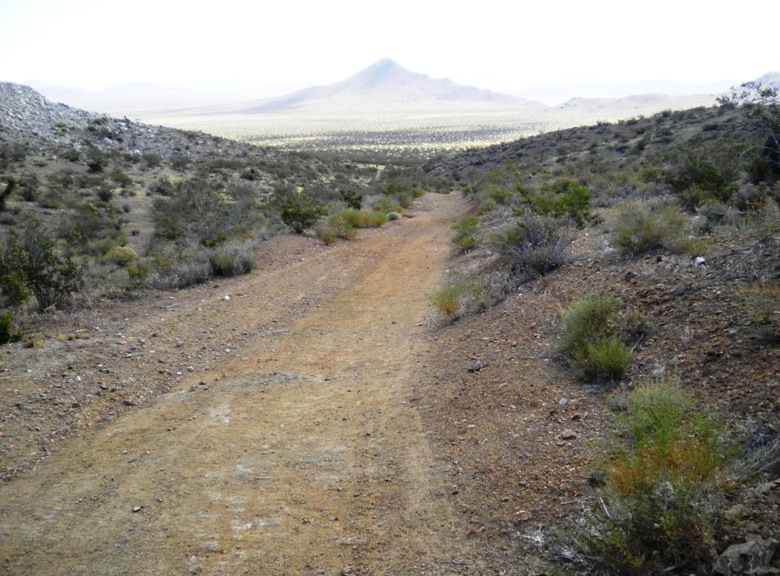
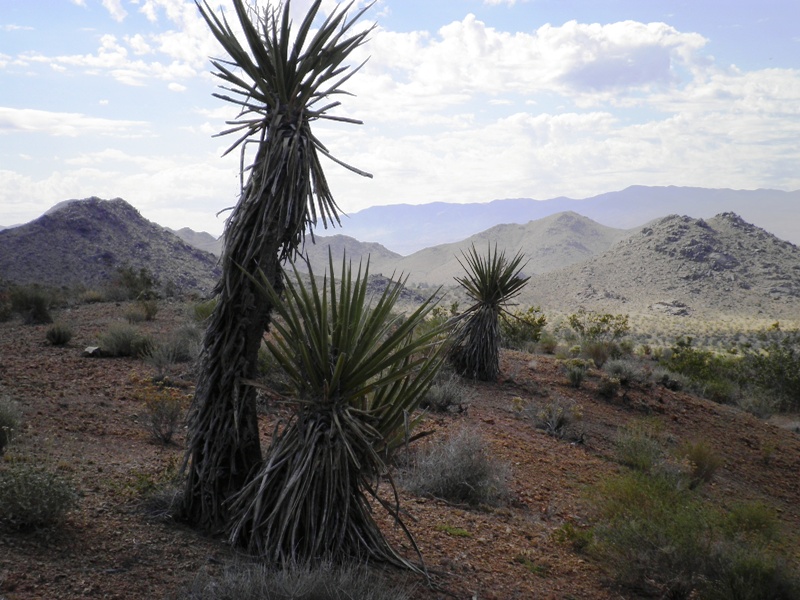
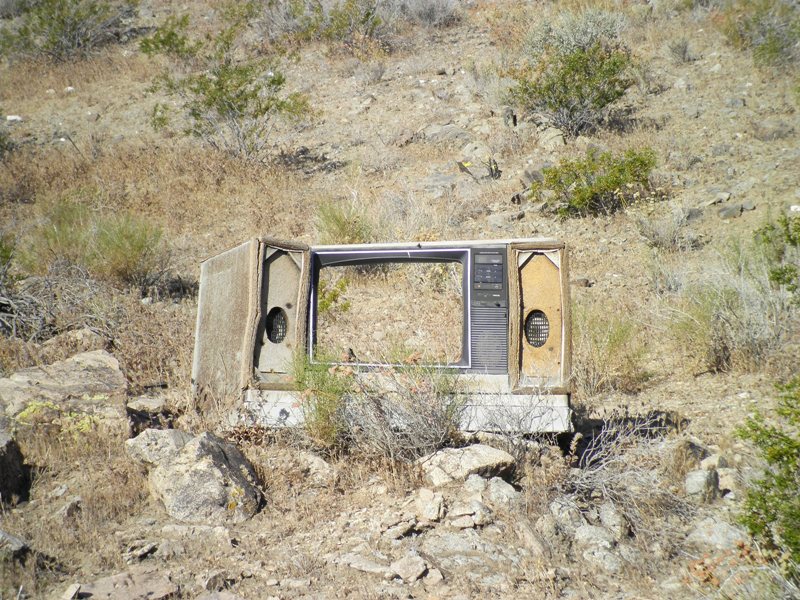
Deserts have traditionally been mystical places where one goes to find inspiration, themselves, the meaning of life, but nowadays people use the desert as a park, a place of recreation rather than re-creation. They whiz by on dirt bikes and all-terrain vehicles, they honk their dogs (let the dogs out of the vehicle and and follow along behind, honking whenever the creatures go to far astray), they have drunken parties, and they dump trash, including old furniture.

I used all of these bits to set the scene for the first chapter of Rubicon Ranch: A Collaborative Novel, a novel being written online by me and eight other Second Wind authors, especially the discarded furniture. I do believe I have seen enough old furniture in my walks to furnish a living room, but the piece that most captured my imagination was the television sitting out in the middle of nowhere. No road led to the television, just a footpath. Yet there it was. And so it appears in my chapter:

She turned around to get shots of the trail she’d just climbed and saw a glint of metal reflecting the sun. She squinted. What was that? A television? She found herself smiling—her first smile since Alexander died. She scrambled back down the trail. The television had been dumped a long time ago judging by the creosote bushes that had grown up around it, but footprints leading to the box suggested it had been visited recently. She took several shots from the trail, about fifteen yards from the television, then moved closer. The television had no screen, and she could see that something had been stuffed inside. A doll? She crept closer. Ten feet away, she stopped to take another photo, and the truth washed over her. Not a doll. Crammed inside the console was a child, a girl, her eyes half-eaten by some desert predator.

We’ve now posted the first six chapters of Rubicon Ranch, the latest one by Christine Husom, author of the Winnebago Mystery Series.  The most fun of a project such as this is that we do not yet know who killed the little girl (if in fact, she was killed) and we won’t know until all but the final chapter has been written. I hope you will enjoy following our story as we write it.

  • Chapter 1: Melanie Gray — by Pat Bertram
  • Chapter 2: Seth Bryan — by Lazarus Barnhill
  • Chapter 3: Jeff and Kourtney Peterson — by J B Kohl and Eric Beetner
  • Chapter 4: Dylan McKenzie — by Nancy A. Niles
  • Chapter 5: Mary “Moody” Sinclair — by JJ Dare
  • Chapter 6: Cooper Dahling — by Christine Husom
  • Grateful Even in Grief

    Mairead Walpole, author of A Love Out of Time posted an article on the Second Wind Publishing Blog entitled “Thanksgiving: A holiday or the trigger for the countdown to Christmas?” I read the article more for her observations than because of an interest in the holidays, thinking I had nothing for which to be grateful, then it struck me how wrong I was. I have a lot to be grateful for despite my continued (though much gentler) grief.

    I am thankful I have a place to sleep, food to eat, desert trails to walk, books to read, words to write.

    I am thankful for the people who have entered my life to give me support during this bleak time.

    I am thankful I had my life mate to love and care for.

    I am thankful my life mate loved and cared for me.

    I am thankful for the emotional security offered by our relationship, which gave me the freedom to try new things.

    I am thankful he shared his life — and his death — with me.

    I am thankful for our added closeness at the end.

    I am thankful he is no longer suffering.

    I am thankful he didn’t linger as a helpless invalid. He dreaded that. 

    I am thankful for his legacy. He faced his death with such courage that he gave me the courage to face my life.

    I am even thankful for my grief. It reminds me that he shared part of this journey called life with me, and it is helping me become the person I need to be to continue my journey alone.

    So, this Thanksgiving, I am grateful even in grief.

    Grief: All Things Considered . . .

    Another Saturday gone, thirty-three of them since my life mate died. Saturday — his death day — always makes me sad. Even if I’m not consciously aware of the day, my body still reacts, as if it’s been marking the passing weeks. For some reason grief hit me hard this past Saturday. Perhaps it was the lovely weather we’ve been having, weather he will never enjoy. Perhaps it was the homesickness for him that has been growing in me again. Perhaps it was just time for another bout of tears to relieve the growing tension of dealing with his absence. Grief doesn’t need a reason, though. Grief has an agenda of its own and comes when it wishes.

    I’ve been mostly doing okay, moving on with my life — walking in the desert, writing, blogging and doing various internet activities, making friends both online and offline — but nothing, not even my hard-won acceptance changes the fact that he is dead. At times I still have trouble understanding his sheer goneness. My mind doesn’t seem to be able to make that leap, though I am getting used to his not being around. I don’t like it, but I am getting used to it. Maybe that’s the best I will ever be able to do.

    Someone asked me the other day how I was doing. “I’m doing okay all things considered,” I responded. His witty and wise response: “Then don’t consider all things.”

    I’ve been taking his advice, and trying not to consider all things — trying to consider just enough to get through the day, especially on Saturday.

    I don’t expect much of myself on Saturdays. Often, I spend the afternoon and evening watching movies my life mate taped for us. It makes me feel as if we are together, if only for a few brief delusional minutes. I try not to consider that he’ll never watch his tapes again. I try not to consider the long lonely years stretching before me. I try not to consider that I’ll never see his smile again, or hear his laugh. I concentrate on the movies, and so Saturday passes.

    By Sunday, I usually regain a modicum of equanimity, but Saturday always comes around again.

    Healing the Split In Ourselves

    I’ve spent many hours walking in the desert during the past few months, which has given me plenty of time to contemplate grief, life, death and anything else that comes to mind. One thought that filtered through my mind was the idea that when my mate died, I split in two. The me that shared a life with him is grieving still, while the other me, the one who was born with his death, continues to live and grow. As long as I am in the person of this second me, I do fine — I’m strong, in control of my emotions, looking forward to what comes to me in life. The problem is that I keep slipping over to the other me, the grieving me, and when I do, the grief is as new as it was when it first hit me. The task is to reconnect the two parts — both the grieving me and the new me.

    This might seem like dissociative personality disorder, though it’s not really a disorder. It’s how we all deal with life. I don’t remember the name of the person, but a psychologist once hypothesized that there are no true moods. What we think of as moods are different personalities. This natural order becomes a disorder when you lose track of yourself during mood swings or when they cease to be a way of dealing with life and become a way of hiding from life. I don’t know the truth of this, nor do I know the truth of my idea of splitting apart, but my idea feels true. I can almost feel the clunk of the gears as I switch from one mode to the other. I don’t switch as often now, which makes me think I’ll eventually be whole again.

    Today, at my grief group meeting, I had a graphic example of how I am moving beyond my grief (at least for the moment. It does swing back and slam me in the gut from time to time).

    During these meetings, there is a lesson — a topic — that we discuss before going on to personal updates. One of today’s lessons started out: Grief brings with it a terrible and lonely loss. Instead of acknowledging the sentiment, and contemplating my terrible and lonely loss as I was supposed to, I looked at the words, and said, “No, it doesn’t.”

    This brought the meeting to a standstill while everyone stared at me.

    “Grief doesn’t bring the loss. Loss brings the grief, ” I said.

    More silence. Eventually, they agreed with me, probably to shut me up and get the discussion going again.

    The point is, I focused on the words, not on the emotion. Of course, this could be more that I’m in writing mode than that I’m moving on with my life, but I took it as a good sign. Because this is the truth: death brings a terrible and lonely loss. Grief is our reaction to the loss, and ultimately it’s how we learn to heal the rift in ourselves brought about by that loss.

    Desert Revelation

    While walking in the desert this morning, I had a vision. Well, not a vision so much as a revelation.

    I’d been thinking about my grieving woman novel, which is shaping up to be the story of a woman in search of herself. She is directionless after her loss, has a lot of unfinished business to take care of, and is trying to figure out who she is now that she is no longer a wife. I wondered if people would accept that this woman is finding out all sorts of things about herself that she didn’t know — after all, a person in her early fifties should have some idea of who she is.

    Then I realized that even if we have a strong identity and know almost everything there is to know about ourselves, it’s still possible and perhaps necessary to revise our self-concept, especially after going through a trauma such as a major loss.

    I saw that our psyches are like nesting dolls or boxes within boxes or doors within doors (choose your cliché). You never see the doors, so you think you know who you are, but a great emotional upheaval can cause a door to open, letting you see more of yourself and what you are capable of, revealing a part of your identity that might have been hidden from you until that moment.

    You get to know who you now are, adding to or changing your idea of yourself, rethinking the past in light of this new awareness. You get comfortable with this revised self-concept and then BAM! More trauma, and another door. You never have to go through the door, of course, but if you do, you might find riches of which you were unaware.

    What can I say? It was the desert. Wandering in the desert is traditionally a place for both sun-induced absurdities and great insights.

    Even Fearsome Creatures Have Enemies

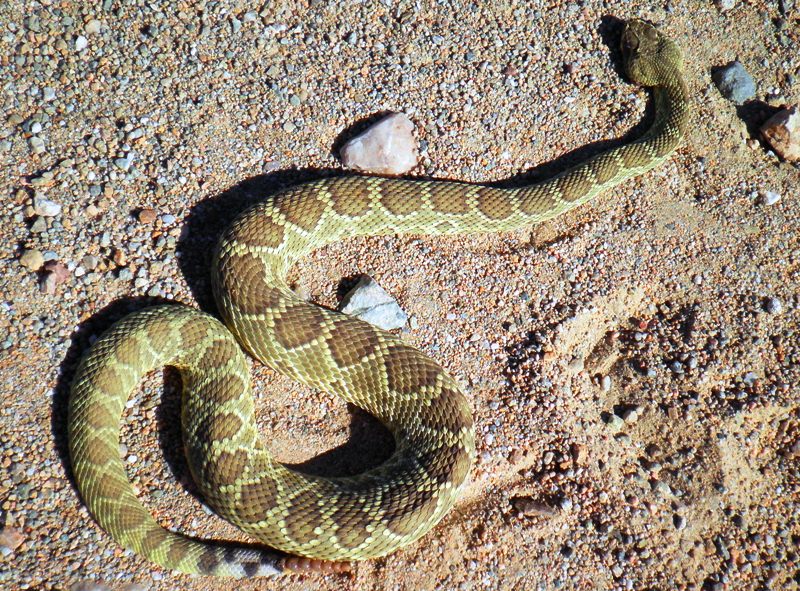
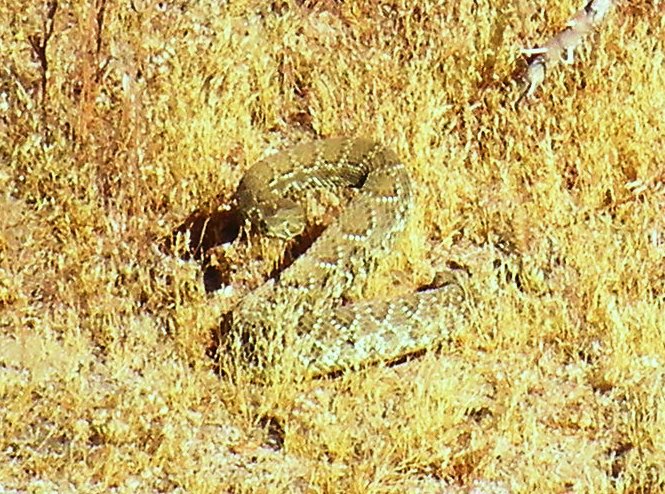
    While walking in the desert today, I saw a dead rattlesnake. I hesitated to take a photo, not wanting to memorialize death, but it was so beautiful lying there, that I went ahead and snapped an image of it. Although it looked vibrant, as if it were sleeping, I could see that it had been run over. This made me think how even such a fearsome creature as that Mojave green rattler had enemies, though its four-wheeled killer was one it could not even imagine.

    And so it is with a story’s villain.

    For a hero to overcome her nemesis, she has to come at the villain from a different direction, not go at the villain from his position of strength. If the villain is the strongest person in the world, he cannot be vanquished by the second strongest person, but he can be vanquished by intelligence, perhaps even middling intelligence. If the villain is strong and smart, he can be vanquished by a determination to win at all costs. If the villain is smart, strong, and equally determined, he can be vanquished by esoteric knowledge, something the villain cannot even imagine.

    My NaNoWriMo project has no villain. My poor character has to deal with her husband’s death, the loss of her home, the loss of her daughter’s respect. Since he had been the focus of her life, his death left her unfocused. Moreover, she finds out he is not who she thought he was, so to find out who she’s been all those years, she has to find out who he was. I’m wondering if her way out of this conundrum is to do or be something she’s never thought of before, something that until now has been unimaginable to her. Like what? I don’t know, but it will give me a direction to follow.

    What about your characters? Do you have a hero/villain situation? What special strengths does your villain have? What special strengths does your hero have?

    Snake in the Grass

    I bet you thought the title was a reference to a metaphor, didn’t you? Well  . . .

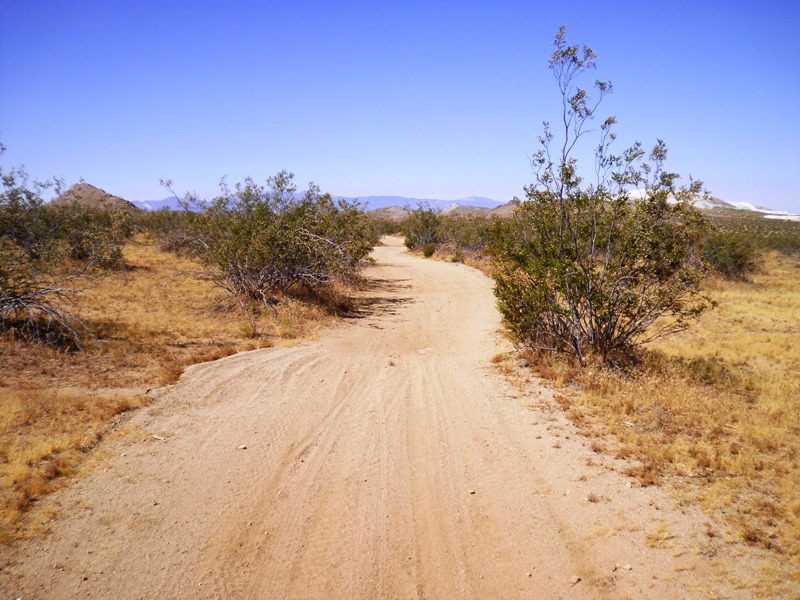
    I encountered my first Mojave green rattler while I was out walking in the desert today. I didn’t even notice it — I was walking down the middle of a sandy path, minding my own business, when a hiss and a rattle startled me.  I looked around and there was this beauty lying in the grass beneath a creosote bush. I moved ten feet away, then stopped and took a couple of photos. Apparently it didn’t like having its picture taken, because as I was aiming for the third, it raised it’s head and rattled at me again. I took the hint and left. Every time I think about this encounter, I smile. I don’t know why it makes me feel good, perhaps because I finally encountered the real desert. I also got to find out what I always suspected: I am not afraid of snakes, just healthily wary. 

    The Mojave green rattlesnake will not attack, but if disturbed or cornered, they will defend themselves. Apparently, bites occur if people accidentally step on a snake or purposely harass it, so if people are careful, they can keep from being bit. Generally, if bit, a person has time to walk out of the desert, since the effects don’t always take place immediately, and only 5% of the bites are fatal.  Supposedly, the only cure for the bite is antivenin at a cost of $18,000 per treatment. Now that’s scary! (But it can’t be right, can it? Seems excessive.)

    Grief’s Milestones

    The first year of grieving is difficult, not just because the wounds to the heart and mind are so raw and the void where the loved one resided so dark, but because it is a year of firsts. And each of these firsts comes with a renewal of pain.

    We — my life mate and I — did not celebrate our birthdays. We merely recognized them as a tally mark for another year gone by. Because of this, I had not expected to feel any deeper sadness today — his birthday — than I felt yesterday or the day before, but grief knows no logic. It doesn’t matter that we never celebrated his birthday — that was his choice. But that he is not here to make that choice does matter, and so I’m dealing with an upsurge of grief. We will no longer be marking his years. He will never grow older. Perhaps next year I will be able to let the day pass without making a big deal of it, but today is a first. One of grief’s milestones. His first birthday after death.

    I know these days of refreshed pain are important. Too often I keep myself busy to minimize the pain, and there is no effective way to get around true grieving but to feel the pain and go through it. Or so I’ve been told. Reconnecting with the pain is also a way of reconnecting to him. The faster I go through the grief process, the further I get from him. The farther I get from him.

    The earth hurtles around the sun at 67,000 mph. The sun hurtles around the galaxy at 140 miles per second. The entire universe is also moving and expanding, so today we are a very long way from where we were when he died. (Considering only the speed of the earth, he died 165,356,000 miles ago.)

    And, considering only the surface distance, I am almost 1000 miles from where we lived. We planted trees and bushes around the house to keep it cool and to give us privacy, and that green world seems a million miles from the desert where I am staying now.

    So, today I am celebrating his birthday, if only with my grief, because it helps me bridge the distance.

    Rewinding My Life

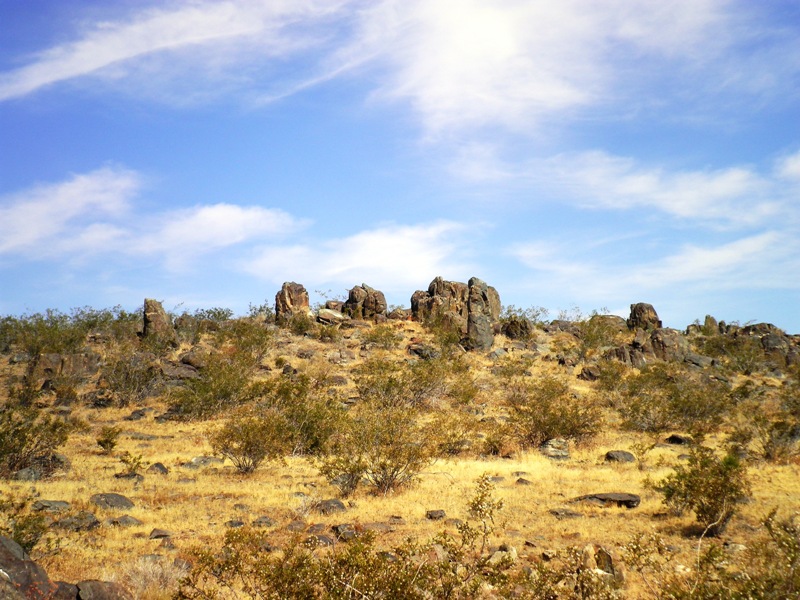
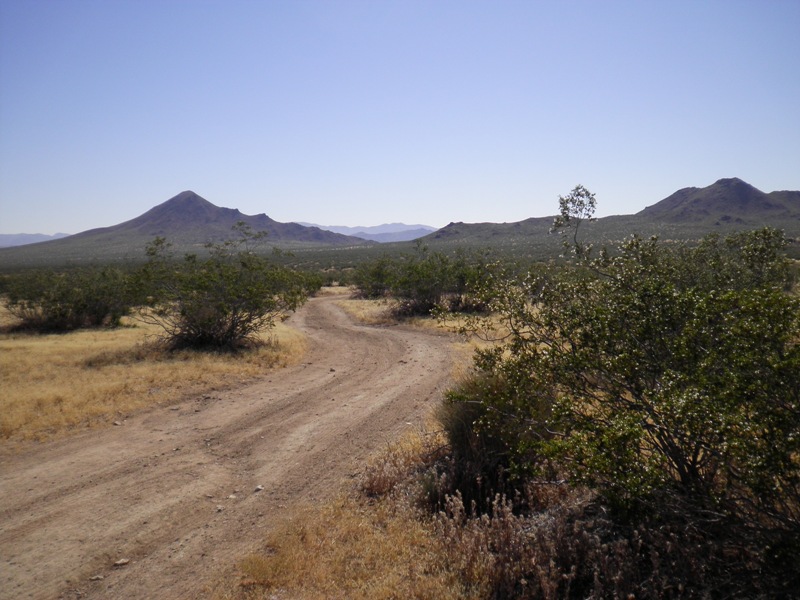
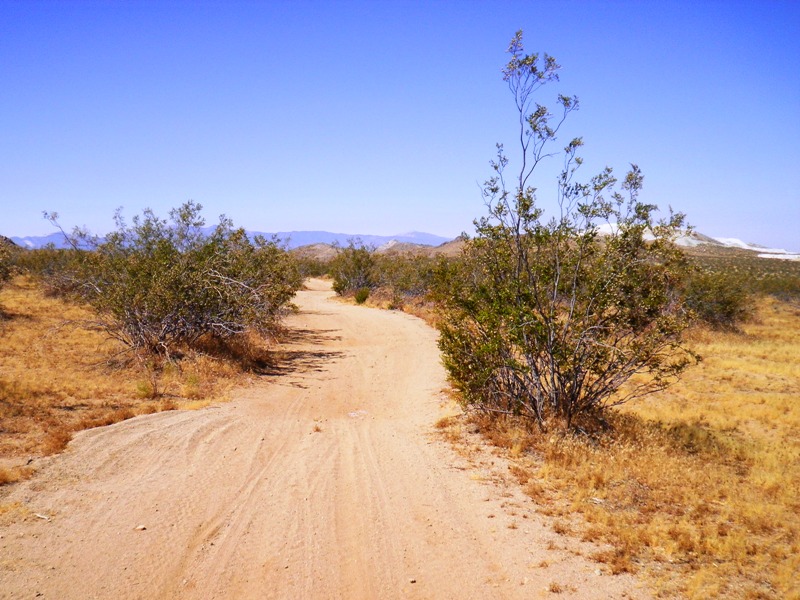
    I ended my last blog post with: And so I trudge the hills of grief, and treasure the moments of comfort I find. I meant it both figuratively and literally — I spend a couple of hours most days wandering in the desert hills near where I am staying.

    I feel at times as if I am rewinding my life, our life. When the man I was to spend more than three decades with first came into my life, it was such an awesome change, that I felt restless. I would walk for hours trying to get used to this new vision (or version) of me. I wrote. And I read copiously. Now that he has left my life, it’s such a traumatic change that I feel restless. I walk for hours trying to get used to this new vision/version of me. Instead of walking through the tree-shaded parks and parkways of Denver, however, I tramp through the desert a thousand miles from where I started. Instead of poetry, I write prose. And I read copiously. These are the bookends of our shared life.

    During the years of his illness, when I tried to imagine how it would be to live alone again after his death, I never imagined, never could imagine, the sheer void of his absence and with it, the absence of meaning. 

    Before I met him, I used to wonder about the meaning of life. Now, once again, I am wondering about the meaning of life. I hadn’t realized until after he was gone that during all those years we were together, I didn’t worry about meaning. We were together. That was all that mattered. Now that I am alone once more, the void of meaningless haunts me. Where am I going? And why?

    I did have a bit of revelation out in the desert the other day. Instead of a stroke of clarity, I might have had heat stroke, but the end result is still the same. I walked for hours along a path because I was curious where it went, curious to see what was around the next bend, and it occurred to me that this experience could be a metaphor for my life. Perhaps finding meaning isn’t important. Perhaps it’s enough simply to follow the days and see where they lead.

    (If you’re interested in seeing the photos I take on my mystical walks, you can find them here: Wayword Wind.)