The Editor’s Blog — A Remarkable Resource for All Writers

I’m almost hesitant to post this, because once you have found this remarkable resource for writers, you won’t need me anymore. (Well, except for friendship, of course!) Beth Hill, who maintains this blog is both writer and editor. Her editing focus is on long fiction, primarily novels. Beth says, “I love the written word, the ability we have to create worlds and emotions with well-chosen phrases. It’s my intention to share tips and insights and encouragement with writers at all levels, to help you craft  stories that will entertain and satisfy your readers. That will help satisfy you as writer as well.”

So, be sure to bookmark her blog, The Editor’s Blog, where you will find everything you need to know about writing and writing well. Here is the current list of her articles:

‘The Top 5 Mistakes I Find as an Editor’ by Smoky Trudeau Zeidel

Please welcome today’s guest. Smoky Trudeau Zeidel is the author of two novels, On the Choptank Shores and The Cabin. She is also author of Observations of an Earth Mage, a photo/essay collection; and two books about writing. You can find Smoky and her three blogs at www.SmokyZeidel.wordpress.com. Smoky writes:

As an editor and as an avid reader, I see a lot of mistakes make their way into print. Many, if not all, of them could be avoided by having a professional edit your manuscript before submitting it to your publisher, or putting it up on Smashwords or Kindle if you ePublish on your own.

You might think you don’t need an editor, because your next door neighbor/best friend/Aunt Thelma offered to do it for free, or because you’ve read and re-read your manuscript a hundred times and just know it’s perfect.

You’d be wrong. First, your neighbor/best friend/Aunt Thelma may spell great, but do they know all the rules of punctuation and style? I doubt it. The Chicago Manual of Style, the go-to book for American publishers for punctuation and style issues, is more than 900 pages long and two inches thick. I doubt your beta readers have that thing memorized. I refer to it frequently, and I am a professional editor.

Second, as the book’s creator, finding your own mistakes is hard. That’s because you see what you thought you wrote, rather than what you actually wrote. Even though I’m an editor, I don’t edit my own stuff. I have my best friend do it—but hold on, before you protest, let me say that my best friend is a professional editor, so she is exempt from the best friend rule.

That said, I know a lot of writers won’t hire an editor. And this really isn’t a pitch to get your business (although, of course, I am always open to that). So since you probably won’t hire me or any of my editor cohorts, I’m going to share with you a list of the five biggest mistakes I see in manuscripts, so you can watch for them, and fix them, yourself.

Mistake #1: Writers don’t place a comma between independent clauses separated with a conjunction. Independent clauses are clauses that can stand on their own as sentences, e.g., “He took the 405 freeway to work, and he exited at the Getty Museum.” Because both “He took the 405 freeway to work” and “he exited at the Getty Museum” are independent clauses—meaning they can stand alone as sentences, you must, must, place a comma before the conjunction, “and.” This is probably the biggest, most common mistake I find in manuscripts and books. Don’t make it. It’s a very easy punctuation rule to remember.

Mistake #2: Writers place commas between independent clauses and dependent clauses. This is probably the second most common mistake I see. A dependent clause is one that cannot stand on its own as a sentence. Let’s take the above example, and change it just a little: “He took the 405 freeway to work and exited at the Getty Museum.” I took the second “he” out. That makes the clause after “and” a dependent clause, because “exited at the Getty Museum” cannot stand alone as a sentence. It is dependent upon the first clause to be understood; thus, no comma should precede the “and.”

Of course, there are other places you need—and don’t need—commas, but this isn’t meant to be a comprehensive study of the comma. If in doubt, look up comma placement in The Chicago Manual of Style or other style manual.

Mistake #3: Writers don’t know their homonyms. In just the last few weeks alone, I’ve seen characters who were unphased, waiving to people, and peaking out windows. The writer’s spellchecker should have alerted her to the fact that “unphased” isn’t even a word. She meant “unfazed.” To waive means to relinquish, to set aside. The word this author wanted was “waving.” And a peak is the highest point of something; one peeks, not peaks, out a window.

Please, unless you are 100 percent sure you are using the right homonym, look it up. The wrong choice could have your characters doing some pretty strange things!

Mistake #4: Writers rely on their spellcheckers. This is a big no-no. If ewe think you’re spellchecker will fined awl yore miss steaks, your wrong. That sentence went through my spellchecker just fine, and there are no less than eight errors in it (“ewe” should be “you”; “you’re” should be “your”; “fined” should be “find”; “awl” should be “all”; “yore” should be “your”; “miss” and “steaks” should be “mistakes”: and finally, “your” should be “you’re”). Homonym spelling errors are the most common type of spelling error I find. Do not rely on your spellchecker. It will let you down every time.

Mistake #5: Writers who make errors in syntax. For example, look at this sentence: “I saw a deer driving to work today.” Uh, no—you didn’t, unless there are some very talented deer in your neighborhood! The correct sentence structure is, “I saw a deer while driving to work today,” or, “While driving to work today, I saw a deer.” Please, don’t put the deer in the driver’s seat!

Here’s another example: “If your toddler won’t drink milk, warm it in the microwave for a few moments.” Warm what in the microwave? You’ve got a choice of antecedents here. Heaven help the toddler if you make the wrong choice! The correct structure would read, “If your toddler won’t drink milk, warm the milk in the microwave for a few moments.”

Of course, if you and I were having a conversation, we’d probably understand each other if we made these syntax errors. But you can’t count on that when people are reading your words. Make sure you have them in the correct order so your meaning cannot be misconstrued.

I cannot list every error I run across while editing manuscripts. To do so would fill a book. But if you watch for these top five mistakes in your writing, your manuscript will be a lot more polished, and you can be more confident about submitting it to your publisher.

Good luck, and happy righting . . . er, happy writing!

***

Click here to read an excerpt from: On the Choptank Shores

Click here for an interview with: Smoky Trudeau Zeidel

Click here for an interview with: Grace Harmon Singer, Hero of On the Choptank Shores by Smoky Trudeau Zeidel

Final Edits, Perhaps

I received the final edits for my novel Light Bringer, which will be published later this month. I had a couple of editors go over the book to look for any problems; when I get the proof copy, I want it to be strictly a copy-editing job — checking for typos, the letter I that mysteriously transforms itself into the numeral one, and other such exacting details. When I sent Donna B. Russell the manuscript to edit, I enclosed a message:

Donna, I hope you enjoy this book as much as you did Daughter Am I. Thirty years of research, about six years of writing from start to finish — it’s my magnum opus, though it won’t be so magnum if no one likes the opus.

When Donna sent the manuscript back with the edits, she replied, 

In your last e-mail, you said, “It’s my magnum opus, though it won’t be so magnum if no one likes the opus.”  I don’t think you have to worry about that because I’m sure Light Bringer is much closer to an “opus” than an “oops.” *S*  You have a good beginning, building tension with Helen driving in the snowstorm and finding a baby on her doorstep, and a superb ending.  The double plot twist at the end was absolute genius — a kind of literary whiplash, but in a good sense.  Your vivid descriptions helped me “see” not only the people, but the scenery and locations.  You made them very real.  You made me care about the main characters, and developed both the good guys and the villains very well.

One of my favorite passages in the book didn’t have to do with the main story, but with Hugh’s father (p. 218):

“His father, who had endured years of agony while dying of pancreatic cancer, had once told him pain created its own reality. He said he could no longer remember what it felt like before the pain began, nor could he imagine what it would feel like when it ceased. Nothing else ever existed, or would ever exist, except the eternal pain.”

You’ve captured exactly how many feel who live with chronic pain on a daily basis.

Below are the line edits and some suggestions.  I hope they are helpful.  I wish you all the best with Light Bringer. — Donna

How can you not feel like a real author when people are going around quoting you! Okay, just one person, but still . . .

Blogs I Never Wrote

I was cleaning out my desk today and found a bunch of notes for blog articles. There were some great titles with no indication of what I intended to say: “Pot Holes and Plot Holes”, “Plotting vs. Plodding”. Maybe someday I’ll write those articles, assuming, of course, I can think of anything to say.

I found a note to answer the questions I collected from readers for an interview about Facebook back in  . . . gasp . . . January. Has it really been that long? Eek.

I found a note to write a blog about the gatekeepers — those who are still working diligently to make sure that no one from a small press gets the same advantages as those published by the majors. Both the Romance Writers of America and Mystery Writers of America have rules which exclude us from entering contests and other activites since our publishers don’t yet meet their criteria for an approved publisher. Click here: for the Requirements for inclusion on MWA’s list of Approved Publishers.

I found a note about writing: The finished product is public but the process of getting there is intensely personal and different for everyone. Someday I might write that blog, but it seems that sentence summarizes it nicely.

I found a note for March 25 to celebrate the anniversary of my book release, and as part of the festivities, I planned to write an article on what I learned about book promotion during that first year of publication. Life intervened preventing me from doing that blog, but I can tell you now what I learned: absolutely nothing. I’ve sold fewer books than some fellow authors who did relatively little promotion, so apparently I have no idea how to promote. I’m still hoping to learn, though, and when I do find out, you will be the first to know.

And last but certainly not least are several notes on examples from books about editing properly. For example: She didn’t notice the motion behind her. Since the story was from her point of view, how could she have noticed the motion so as not to notice it? Another example from the same book: The light tinted her face green. How did she know that her face was green? It would have been better to say the light tinted her hands green.

These examples of wordiness came from another book: Inside him he felt a gnawing frustration. Where else does one feel frustration except inside? Unless, perhaps in a horror story where Frustration is the name of a beast with great teeth that gnaws on the outside of a person’s body. And what about this bit of baffling dialogue: “To a certain extent, you are entirely correct.” To what extent? Either one is entirely correct or one isn’t. And this one is the worst of all: He became convinced in his own mind that  . . . If anyone can tell me how you can be convinced in any one else’s mind, then I’ll let that one pass, but you can’t. If you think I’m being too picky, there were instances of such wordiness on every page. Ugh.

Since I’ve been on a hiatus from the internet while I deal with my traumatic offline life, my blog readership has slipped to almost nothing, so it seems that when I finally get a grip on my new life, I will have my work cut out for me, both to regain my blog readership and to gain a book readership. I hope it will be as rewarding the second time around.

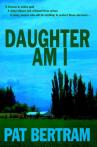
Daughter Am I Is Finished!

DAII received my final proof copy of Daughter Am I, my young woman/old-time gangsters coming of age adventure, and I’ve reluctantly agreed to let it go to the printer.  There is always that moment when you realize this is it — you have to live with any mistakes that end up in the book. If there are any, though, it will be sheer accident. The novel went through several good editings, including a final scrubbing by Deborah J Ledford, fellow Second Wind author and editor extraordinaire. It was also scrupulously copyedited by Donna Russell, (creativemuse1(at)aol(dot)com) a treasure I found on Facebook. So my reluctance is more imaginary than real — the book is as perfect as I can get it.

When I received the final copy edits from Donna, she enclosed a note:

Thank you for the opportunity to edit your book, Daughter Am I.  You certainly put a lot of time and effort into researching all of the historical elements, and did a good job incorporating them into the plot without overwhelming it.  I learned several new things — Hegelian dialect, terms such as “lamster,” and a lot about guns, cars, and the Mafia.  I personally enjoy it when an author sends me to the dictionary or encyclopedia (or Google). There were also many excellent lines in the book. I thought these were especially good:

“The loss of something that never was can be as devastating as any other loss.”

“They thought they could rule by fear, but when fear is around every corner, people lose their fear of the fear.”

“They worked in silence, their excitement so great it seemed to shimmer in the air like a heat mirage.”

“It’s odd—I never used to be aware of old people as real persons. I’m not stupid. I know they weren’t born old, but it didn’t occur to me that heroes and villains, killers and great lovers could be hidden in those feeble bodies.”

I also enjoyed your use of humor, and the way you developed the characters.  It was nice to see Mary grow into a more confident woman, see her influence on the old gangsters, and the way she and they came to genuinely care for one another.  You made me care about the characters.  Have you considered a possible sequel?  I can see the potential for more “adventures.” Anyway, just a thought.

Hmmm. A sequel. Could be interesting, but first I have to sell the original. Luckily, it will be released soon  — maybe in two weeks. Sounds like a good excuse for a party! 

 Daughter Am I will be available soon (!) from Second Wind Publishing, LLC

add to del.icio.us : Add to Blinkslist : add to furl : Digg it : Stumble It! : add to simpy : seed the vine : : : TailRank : post to facebook

Wringing the Ings From Our Things

I know you’re getting sick of hearing how much I hate copyediting, but it’s only my work I hate copyediting. I truly get a thrill out of reading a soon-to-be-published book that one day thousands of people might love. In addition, I get to mark up the manuscript. My suggestions probably won’t make any difference to the success of the work, but they might help keep future readers anchored in the story. It seems that nowadays most readers are also writers, and while we may be a forgiving lot, inconsistencies, word echoes, and improper phraseology easily jerk us out of the fictive dream.

One of the most common problems I’m finding is wrongly used participial phrases that end in ing. According to The Elements of Style by Strunk and White, a participial phrase at the beginning of a sentence must refer to the grammatical subject.

The example in the book is: Walking down the road, he saw a woman accompanied by two children. Who is walking? He is, of course, since he is the subject of the sentence, and the ing phrase always refers to the subject. If the woman is walking, you have to rephrase the sentence: He saw a woman, accompanied by two children, walking down the road. You, I’m sure, would never have to worry about who is walking because you’d never use such an ambiguous sentence in the first place!

The other examples of wrong phrases Strunk and White give are humorous and show why it’s important to follow the rule:

Being in dilapidated condition, I was able to buy the house cheap.
Wondering irresolutely what to do next, the clock struck twelve.
As a mother of five, with another on the way, the ironing board was always up.

In case you don’t know how to rephrase the above sentences, here are my quick efforts:

Because of the dilapidated condition of the house, I was able to buy the place cheap.
As I wondered what to do next, the clock struck twelve.
A mother of five, with another on the way, I was never able to put the ironing board away.

Another ing problem comes from simultaneous actions, when an author has a character do something that’s physically impossible. For example: Pulling out of the driveway, he drove down the street. He cannot be pulling out of the driveway at the same time he’s driving down the street. He pulled out of the driveway, then drove down the street.

I know you know all this, but such sentence structures do slip into our writing. It’s up to us to wring them out of our work.

add to del.icio.us : Add to Blinkslist : add to furl : Digg it : Stumble It! : add to simpy : seed the vine : : : TailRank : post to facebook

De-Was-Ing a Manuscript and Other Editing Woes

I’ve spent the past ten days de-was-ing my third manuscript. It’s quite humbling. I think I’m finally getting the hang of writing, then I take on an editing chore like that and discover I still have much to learn.

First, I never knew there was anything wrong with “was.” (See? Wases proliferate when you aren’t paying attention. And what is the plural of was? Wases or wasses?)

Second, I have a hard time finding replacements. Some wases are easy to remove — change from passive to active voice. For example, this “was” was easy to fix: The gun was aimed at the old men. I merely switched to active voice: He aimed the gun at the old men. Eureka! One sentence de-was-ed. Sounds simple? Perhaps. Unless there are a thousand wases. I’ve found as many as a dozen on a single page, though to be fair, I’ve also found a page or two without any wases.

How many wases are acceptable? There is a philosophy of writing/speaking/thinking called E-prime (for English-prime) that says all form of the verb “to be” should be abolished. Nothing exists “out there” independent of a viewer, and all things are in a state of flux. To say the apple was red eliminates the witness, and not all witnesses see the apple as red. Does a color-blind person? Does a cat? Does a bee? Also, to say the apple was red ignores the stages of growth when the apple was green (unripe) or brown (rotten). But to say the apple looked red or some such makes a person/character sound uncertain about their ability to tell the color of the apple.

I’m not going to bore you with a discussion of E-prime (though if you understand E-prime, feel free to bore me; I’d like to understand it better). I just mentioned E-prime as one of the problems of de-was-ing a manuscript. Eliminating all wases seems impossible, yet which to keep? And how do you eliminate was in a sentence such as: He was a lawyer? You can change it to: He worked as a lawyer but that makes him sound as if perhaps he wasn’t really a lawyer. And how do you say: “When I was young, I liked to ride my bike”? Perhaps: “In my youth, I liked to ride my bike.” But few people talk like that, and it makes dialogue seem stilted and unreal.

So, I gradually de-was my manuscript the best way I know how, and hope that the remaining wases don’t detract from the story.

How do you deal with your wases?
What are your editing woes?

The group No Whine, Just Champagne will be discussing was and woes during our Live Chat on Thursday, March 12th at 9:00 p.m. ET. Hope to see you there! If you can’t make it, feel free to discuss them here.

add to del.icio.us : Add to Blinkslist : add to furl : Digg it : add to ma.gnolia : Stumble It! : add to simpy : seed the vine : : : TailRank : post to facebook

A Spark of Heavenly Fire Update — Copy-Editing Hell

I found additional mistakes to the proof copy of A Spark of Heavenly Fire, so it will be a couple of more weeks before it’s released. I’ve been afraid that I’m going to be stuck in copy-editing hell for the rest of my life, but I’ve decided that perfection at this point really is impossible. I had the idea that single-handedly I needed to eradicate the POD publishers reputation for releasing less than stellar books, but there is a limit to what one (untrained) person can do. I am learning how to copyedit, though, and I do know one thing: however much copy-editors get paid, it is not enough.

The thing with mistakes is that they proliferate when you are not looking. You correct one, and in the process, create another. When I finished my novel, the manuscript was almost perfect — I’d read the thing out loud, so I would be sure to look at every single word, every single punctuation mark. Then . . . I did one final polish, took out all the extra justs and onlys, the particularlys and practicallys, the barelys and hardlys, the began tos, and the wases. The problem is, other words got deleted along the way (don’t ask me how, because I don’t know) and I didn’t catch them. Yikes.

And then there are the choices to be made. Is it ill-prepared or ill prepared? I originally had ill-prepared, but MSword said that was wrong, so I deleted the hyphen. And now I want it back for the simple reason that the hyphen is how it is commonly used. And what about brand new? My dictionary says it’s brand-new, but common usage has it as brand new. So which do I use? I think I’ll leave out the hyphen; that way there will be one less change to make.

Some of the changes  that need to be made entail rewriting a sentence. In the proof copy, smelled is on two lines: smell-ed. Smelled can’t be hyphenated, so now I have to decide how to rewrite the sentence so smelled can fit on one line. I had “He fell silent for a moment, savoring the feel of her tee shirt- and jeans-clad body next to his. She smelled clean and fresh, like cucumber, or melon, or pear.” So how do I change the sentence, so that smelled can fit on one line? “savoring the fell of her thinly clad body”? savoring the feel of her tee shirt-clad body”? Neither of those do it for me. But now, writing this, I see what I can change. I can take out “for a moment”. (Yes, I know that the period belongs inside the quotation marks, but this is proofing, and perhaps whoever is making the changes to the print copy will think the period needs to be taken out.) See what I mean? Copy-editors are not paid enough.

Well, now it’s put up and shut up time. Make the important changes, and try not to sweat the small stuff. I can guarantee, though, that whoever came up with that particular phrase is not a copy-editor. With copy-editing, it’s all about the small stuff.

add to del.icio.us : Add to Blinkslist : add to furl : Digg it : add to ma.gnolia : Stumble It! : add to simpy : seed the vine : : : TailRank : post to facebook

So You Want to be an Author

Today’s guest blogger, Ernie Johnson, author of Destiny of the Divas, says:

If that title don’t grab you, nothing will.

Every once in a while you’ll hear someone say “Hell I can write a book. There’s nothing to it.”

DON’T YOU BELIEVE IT…..!

Anyone who thinks there’s nothing to it, better read this story, from someone who’s been there, done that.

Here’s a story about me, Ernie Johnson, a nobody with an electric typewriter and a friend’s manuscript that had been handwritten to the tune of 750 pages. Mind you, this was not written normally. Normal people will write from left to right. This friend wrote from right to left.

I knew nothing about writing books, but I said I’d try. I started by transposing his words, verbatum, until I had it all typed out – double-spaced 12 point Times New Roman. Then my fun began. I sat down and read it over to see where it needed tweaking, or to put it bluntly, what needed to be added to make it worth publishing.

When you stop to figure, I worked the midnight shift, with my friend, and by the time I got home, I needed to get some sleep, by the time I got to work on his book I only had about three hours a day, during the week with which to work on it. I won’t drag this out, but it took me five years to complete, to what I believed was a good story. By then I’d left the company and was working elsewhere, and hadn’t kept in touch with my friend. I went looking for him, and he’d fallen off the face of the earth. In fact, even the Police didn’t know where he was.

It was during the writing of my friend’s manuscript that I decided I wanted to write for myself, so by 1988 I started with an outline and a subject I knew something about, and began OVERTURNED.

By 1990 I’d received an old computer, and when I say old, it was a relic, but it served the purpose for the time being. I transposed everything from Overturned, and was able to see it on screen. I got involved with a writing group, on line, and it was there that I got humiliated by writers who critiqued my work. That may have been the best advice I was ever given. I wrote the way I talked, and, to be very honest, my use of the English language was not the best. I was, back then, an adverb junkie. Really, and truthfully, I was totally an adverb-a-holic, and it showed dramatically in my writing. That was an example of how I talked, and also the way I wrote. Those critiques, as humiliating as they were, was what I needed to be a better writer.

I went through my entire manuscript and corrected all the needless adverbs. I read and reread my manuscript, each time making necessary changes, like missing commas, etc., until I had that mss as fine-tuned as an Indy Racecar. Now the next step to publishing stardom, is finding a publisher to publuish the mss. Now don’t get me wrong, the old addage “PATIENCE IS A VIRTUE” comes to play here really bigtime, for if you don’t have the patience, this is the wrong profession for you to be in. Submissions after submissions came back rejections after rejections. In between all the rejections, I’d written Mountain of Love and Mountain of Love II – Return to Manhadden.

By late 1993 I’d given up hope of my work every being published. I didn’t have the patience to wait forever. I was so depressed with the process, I gave up writing altogether. I said to heck with it.

In the fall of 2001 I went out with a group of friends who did the karaoke thing once a week at a local watering hole, and we went out for breakfast at a local restaurant that was open 24 hours. While we ate, we talked, and I was talking with a friend who mentioned he’d had an idea for a story, but where he wasn’t a writer, he didn’t know how to go about it. Two days later, at the same restaurant, we were discussing his idea. What it boiled down to was he had the names of four girls, and the instruments they played. He had no beginning, no plot, and no title, so in other words – he didn’t have much. My mind was working overtime developing a story and it took me a while, because I didn’t want just any story, I wanted a best seller. I took my time and developed DESTINY OF THE DIVAS into a strong paranormal, mystery, suspense, drama. Even though all prognosis was in my favor, I still had the hard part, finding a publisher.

I got sidettracked, writing about my book and all, but finding a publisher is JUST AS HARD as finding a needle in a haystack, at least for the new untested author. What do I mean by untested? You haven’t proven your worth to a publisher. Publishers want authors who’ll sell books, lots of them, so a first time author has to prove his worth to a top name publisher.

Some authors bypass the traditional publisher route, by going to a POD (PRINT ON DEMAND) publisher, and today there are a number of them out there, both scrupulous and others who try to do good by the author, and I won’t name names here, but for those of you who are considering this route, check with PREDITORS & EDITORS before you sign any agreement with a POD publisher.

I went with LULU.COM – and published OVERTURNED, MOUNTAIN OF LOVE, KASHMANTOU, LET FREEDOM RING, and THE MISADVENTURES OF THE DEVERS BROTHERS.

You might be reading this, and are thinking, WOW…! He’s published six books. He must be rich and famous. Guess again. Yes I’ve got six published books, but if I’m not out here, seven days a week, marketing my books, they won’t sell themselves. Each book needs me out here marketing them.

Is marketing fun? I think I’d rather wrestle an alligator. No, marketing your book is not fun, but it’s necessary.

Being an Author is more than just writing the words. Being an author is being the conductor of the symphony, being the symphony itself, and being the promoter of the symphony. The better a promoter you are, the larger the audience you’ll attract. Not every author is a good promoter, but every author has to try.

On Writing: Finding Your Style

Most books on writing I’ve read talk about developing a syle, but recently I came across the remark that “style happens.” If style is simply the way you write, how does it come about? In my case, I don’t try for a specific style, such as gritty or sentimental, flamboyant or minimal, sassy or grim or lyrical. Whatever style I have does not even come when I write, but when I edit. In paring away all the excess, I end up with a matter-of-fact style (or so I’ve been told).

I recently entered a contest to rewrite the first 263 words of The DaVinci Code. Dan Brown has a melodramatic style, one that sublimates good writing for effect. (For example, it is a physical impossibility to freeze and turn one’s head at the same time.) In editing his words, I changed the style, but not the basic meaning of the piece.

Here are Brown’s words:

Renowned curator Jacques Saunière staggered through the vaulted archway of the museum’s Grand Gallery. He lunged for the nearest painting he could see, a Carravagio. Grabbing the gilded frame, the seventy-three-year-old man heaved the masterpiece toward himself until it tore from the wall and Saunière collapsed backward in a heap beneath the canvas.

As he anticipated, a thundering iron gate fell nearby, barricading the entrance to the suite. The parquet floor shook. Far off, an alarm began to ring.

The curator lay a moment, gasping for breath, taking stock. I am still alive. He crawled out from under the canvas and scanned the cavernous space for someplace to hide.

A voice spoke, chillingly close. “Do not move.”

On his hands and knees, the curator froze, turning his head slowly.

Only fifteen feet away, outside the sealed gate, the mountainous silhouette of his attacker stared through the iron bars. He was broad and tall, with ghost-pale skin and thinning white hair. His irises were pink with dark red pupils. The albino drew a pistol from his coat and aimed the long silencer through the bars, directly at the curator. “You should not have run.” His accent was not easy to place. “Now tell me where it is.”

“I told you already,” the curator stammered, kneeling defenseless on the floor of the gallery. “I have no idea what you are talking about!”

“You are lying.” The man stared at him, perfectly immobile except for the glint in his ghostly eyes. “You and your brethren possess something that is not yours.”

Here is my edit:

Jaques Sauniere staggered through the vaulted archway of the Louvre’s Grand Gallery, lunged for the Carravagio, and tore it from the wall. He collapsed under the weight.

Fifteen feet away, an iron gate dropped with a thud, barricading the entrance of the suite.

Sauniere lay still, struggling to breathe. The sacrifice of the Carravagio gave him a moment’s safety. But he needed to hide.

He inched from beneath the canvas.

“Do not move.”

He froze. That accented voice was unmistakable. How did the albino find him so quickly?

“Where is it?” the albino demanded.

Sauniere turned toward the hulk on the other side of the gate. His gaze shifted from the silenced pistol in the man’s huge hand to the pink eyes with the dark red pupils. “I don’t know what you’re talking about.”

“You and your brethren are in possession of something that does not belong to you. I want it.”