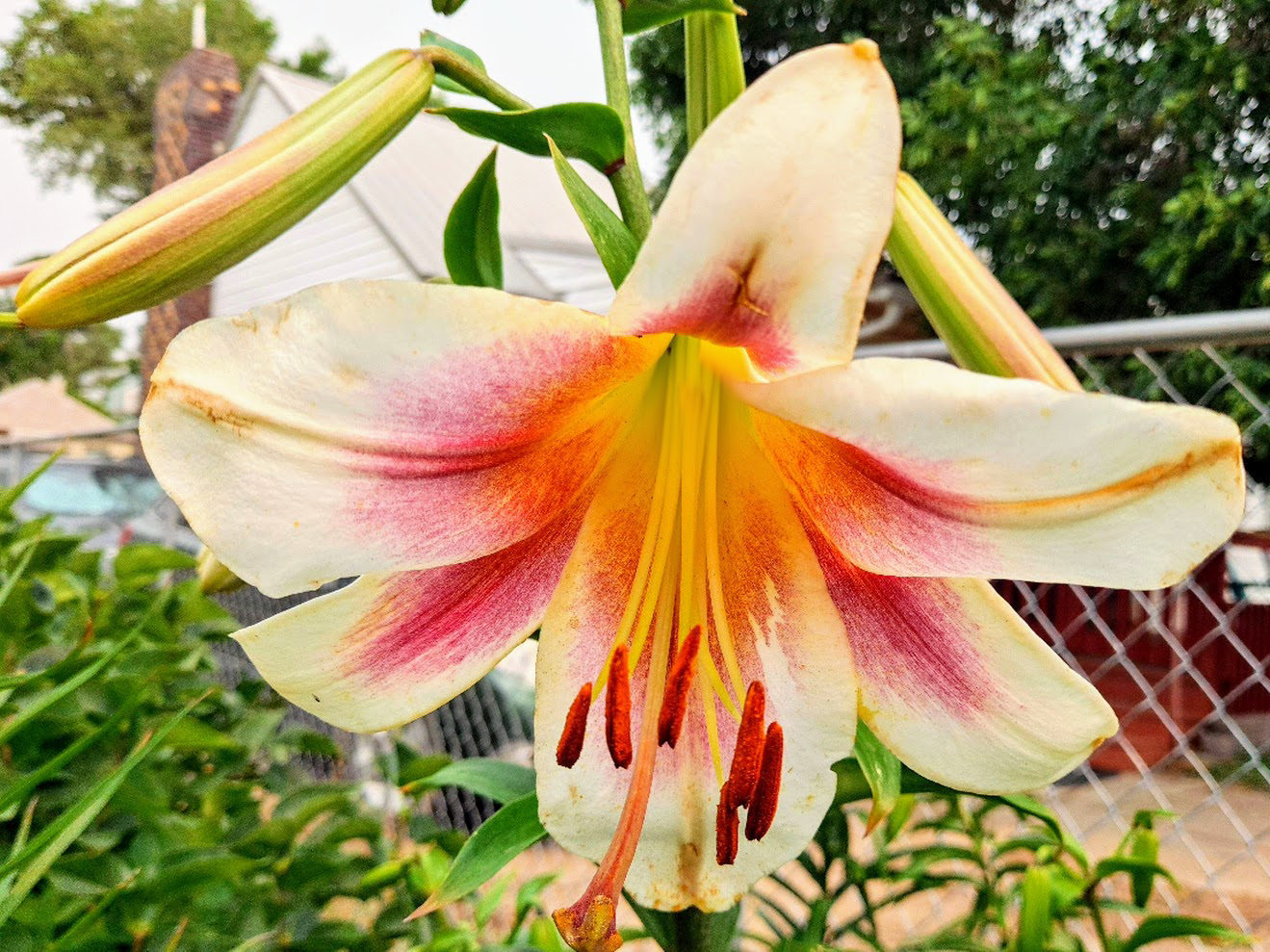
When I first started thinking about a garden, I came across photos of a luscious flower called a tree lily, a hybrid between an Oriental lily and a trumpet lily. (For obvious reasons, they’re also known as Orienpet lilies.) I’d always thought lilies were a rarified flower that only professional gardeners could grow, but apparently not. I loved the idea of a lily tree forest, so I decided to take a chance, even though the bulbs aren’t cheap.
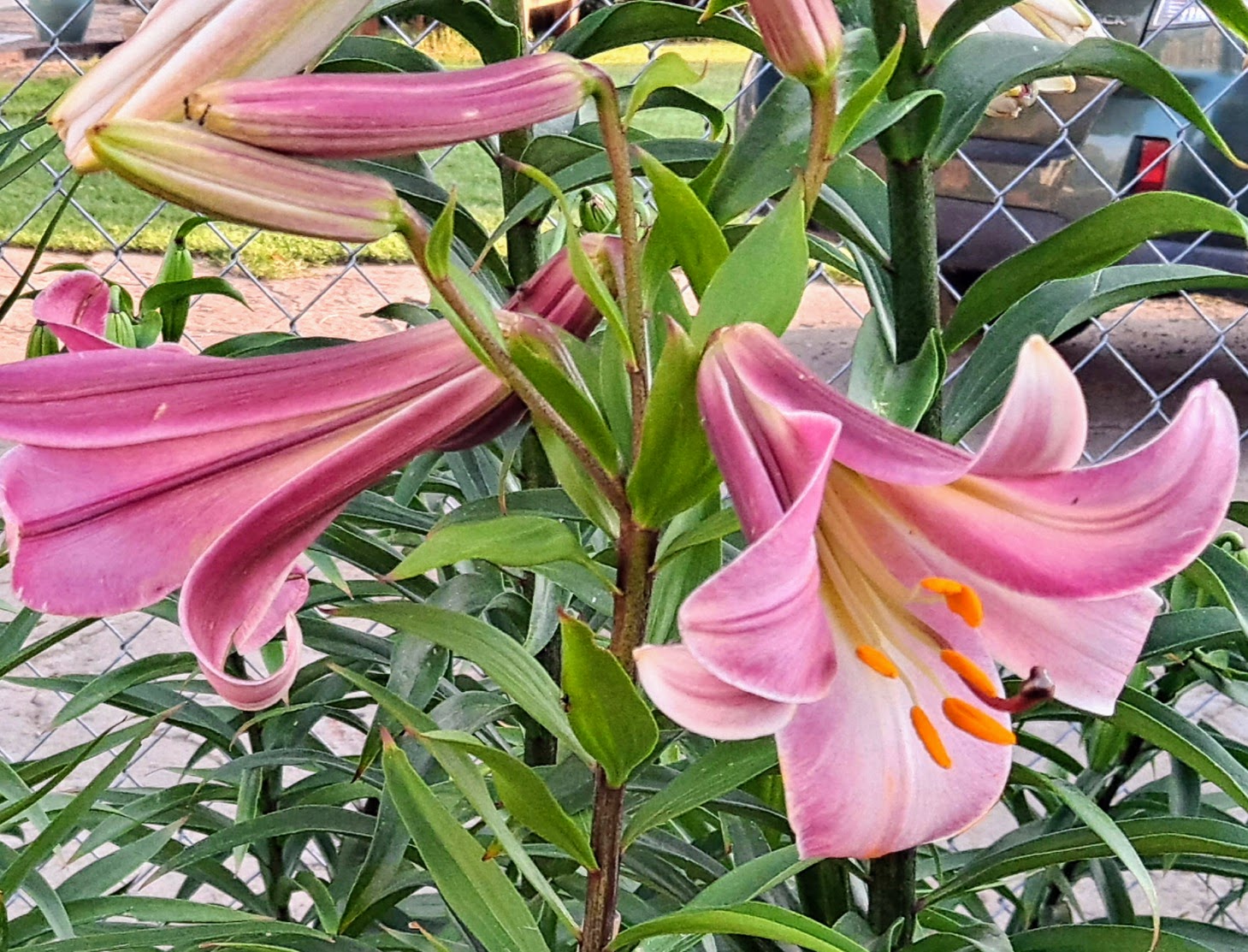
Some of the original bulbs never came up, so the next year I planted a few more. And a few more after that. A couple of years ago, the lilies started to grow tall and to bloom. And oh, how lovely those lilies are! Large than my hand, on stalks taller than I am, they manage to deal with the weather extremes of this area very well. Even the late frost didn’t do much damage.
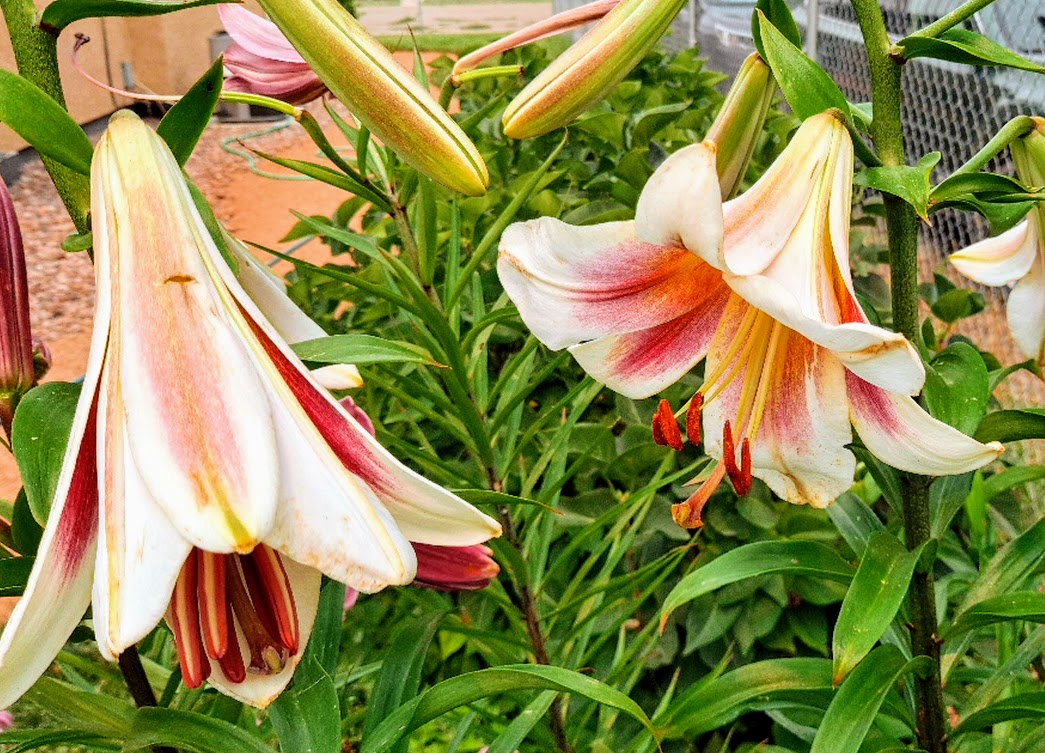
My one nitpick with the plants is that they need to be staked to keep them from growing in crookedly, but how does one stake a six- or seven-foot plant? I do fine when they’re young with my 2-foot metal stakes and the three-foot bamboo stakes, but after that, they’re on their own. I could tie them to the fence, but it would take a lot of plant ties or twine, and I’m afraid I’d forget it was there and trip on it or decapitate myself. Well, not decapite, of course, but something unpleasant anyway.
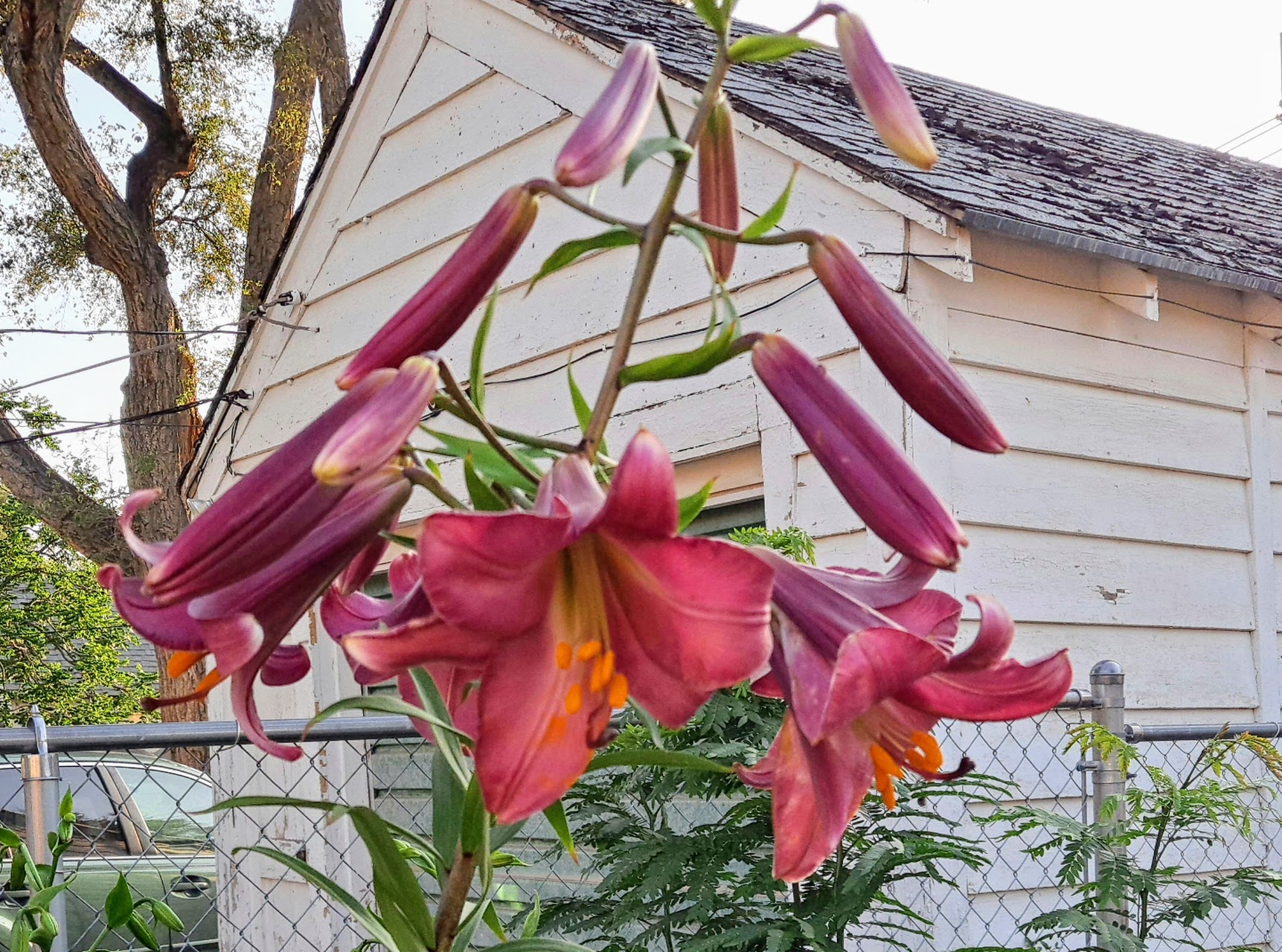
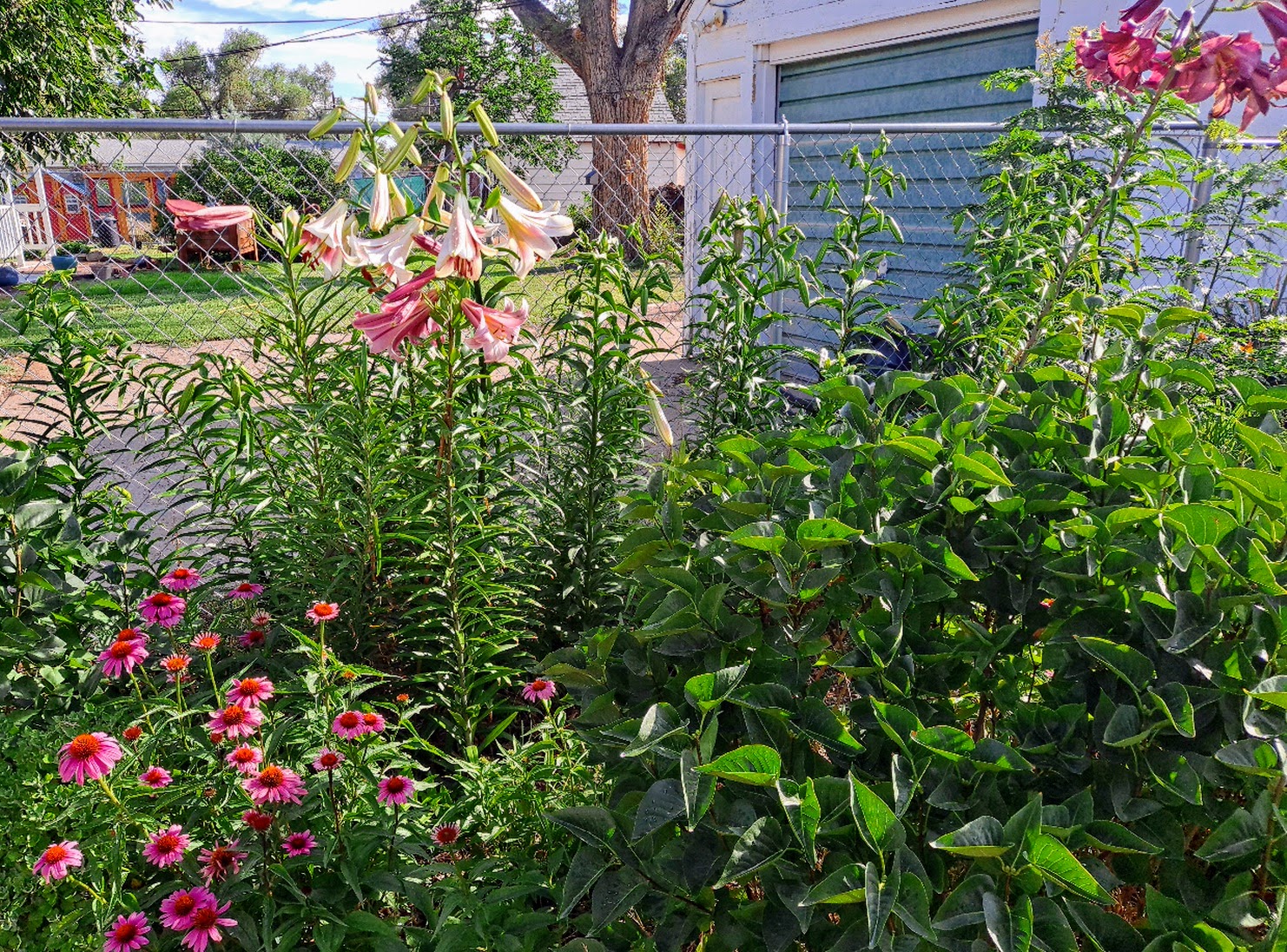
Although the forest looks as if it’s a narrow swath, the tallest lily and the one most needing to be staked is six feet from the fence. Still, leaning or not, my lily forest is awesome. The plants are just starting to bloom, and since each has multiple flowers that bloom at different times, I will have lilies to enjoy for over a month. (The flowers on the lower left-hand side of the photo are purple magnus echinacea.)
It’s amazing what an amateur gardener can do with no expertise but a head full of hopes. I’m still an amateur, of course, but after five years of gardening, I do know a few things, such as water them, remove weeds and weedy grasses, and let them do what they want to do.
Luckily for me, what they want to do is . . . bloom.
***
Pat Bertram is the author of Grief: The Inside Story – A Guide to Surviving the Loss of a Loved One









