Proving to Myself That I’m Real

I’m still struggling with the sense of loss that the death of my long time mate created in me. It’s not just that I lost him — I feel as if I’ve lost a sense of reality, a sense of my reality.

During the first months of almost unbearable pain, I felt that the situation itself was unreal. Part of me couldn’t believe he was dead (though I knew he was — I watched him die). It seems strange now, but accompanying the disbelief was a belief that something wonderful would soon happen to me, perhaps because I needed to believe good would come to balance the unbelievable wrongness of his absence. I no longer hold myself tensed against the reality of his death (though it does still tear through me at times), but I also no longer have that sense of an imminent good. What I’m left with is a feeling of waiting, though I don’t know what I’m waiting for.

This feeling of being in limbo seems to be a common stage of grief for those of us past the first year. So many of us are struggling with it, trying to find . . . a new reality, perhaps.

I’m not a sentimental person. I seldom kept keepsakes and I never chronicled my life with photos, but now I do both to prove to myself that yes, I am alive, and yes, I am doing something with my years. I’ve recently started a scrapbook of paper memories. Perhaps someday I will feel a sense of reality again, but if I don’t, I can look at the book and know the truth of it. I am real.


Codependency or Interdependency?

Several months ago when I was steeped in grief, I found comfort in the thought that my deceased life mate — my soul mate — was at peace, but then it occurred to me that maybe he wasn’t, that if there was some sort of life after death perhaps he felt as split apart as I did. According to one minister I talked to, my mate could be having problems depending on how codependent he was. Whatever that means. I thought a relationship was about being dependent on each other, and we were. At least until our last year together when we began untwinning our lives so we could go our separate ways — he to death, me to continued life. That’s also why my grief shocked me so much—I thought we had untwinned even before he died.

Shortly after that conversation with the minister, a woman who should have known better accused me of being codependent because I was having such a hard time learning to live without my life mate. (The truth is, I knew how to live without him because I was doing it. What I was having a hard time with was wanting to live without him. Life, of course, doesn’t care what we want, and I continued on to where now I am — mostly “healed.” ) But still, there was that C word again.

I can see that people would have questions about codependency considering how bereft I was without him and how lost I felt, but when he was alive, we were never obsessed with each other, though we were connected in so many ways. We were friends, life mates, and business partners. We always wanted what was best for the other. We helped each other grow. We never expected the other to fix our individual problems, though we often took each other’s advice. We didn’t cling, demand, or base our relationship on unrealistic expectations. Together we provided a safe environment where each of us could be ourselves. And we supported each other any way we could. Yes, we were dependent on each other, but isn’t that what life is all about?

Long-term illness, however, does skew a relationship. Over the years, our world kept getting smaller and smaller, trapping us in a terrible situation where neither his nor my needs were being met. To that extent, perhaps, we were codependent, staying together when others might not have, but what is wrong with that? Still, I’ve felt foolish at times admitting my need for him. In this world that prizes independence so much, it seemed immature and self-indulgent.

But, as one commenter on my Grief is NOT Self-Indulgent post said, “There is nothing foolish in dependence. The foolishness lies in the notion that we are not co-dependant on each other. We are a co-dependant vulnerable species who waste a whole lot of time and cause ourselves much suffering by pretending we are not. There are many reasons why we perpetuate this denial but just as we are dependant on the earth for our physical health so are we dependant on each other for our emotional health.

“Personally I feel there is a strong connection between people not understanding grief and those same people not understanding just how precious and vital their relationships are. Every day I see people not recognizing the value of each other. It often amazes me how much we deny our dependence on each other . . .  we don’t even like the word dependant. Perhaps that is why grief is so hard to witness for then our dependence is there in the open smacking us in the face.” (She developed this idea into a blog post The Illusion of Independence at Leesis Ponders.)

Well, I no longer have to worry about whether we were codependent or interdependent. I am independent now. His death freed me, but for what? I still have to figure that out.

Learning How To Occupy Myself

One of the hardest things to accept after losing one’s life partner is that, no matter how unfair or unwelcome, life does go on. It’s been eighteen month since my life mate died, and here I still am. I always thought we’d go at the same time, that our connection was so great that the one who was left behind would be pulled into death along with the one who died. As romantic as that notion is, it didn’t happen (though the death rate for the remaining partner of a couple is exceptionally high, so I suppose, in some cases it does occur).

So much of these past months seem to have been wasted on grief, but now that I see light rising on the horizon, I realize these months were not a waste. In their own way, they were a celebration of life — both his and mine. I gave myself over to the experience, felt every nuance of his goneness, every tug of separation, every heartache and heartbreak. I gave myself over to tears, let them fall hotly and unchecked.

I felt, and in that feeling was life.

Ironically, another thing that is hard to accept after such a loss is the fact of your own mortality. When you accept that your partner is gone from this world forever, the realization that one day you will be also be dead hits you deep in your gut. I can feel the first (and second) twinges of age creeping up on me, but for now, I am still alive, still occupying this body/mind. It seems a waste of his life for me to waste what is left of mine, so I’ve been trying to occupy myself fully.

I dance in my room to celebrate this body, to feel movement and rhythm. I am writing nonsensical bits of prose — just random words, really — to celebrate this mind. I’m exercising so as to use my muscles, to celebrate that I have strength to lift more than a few pounds and to walk more than a couple of miles. I am celebrating the use of my hands, the way my feet connect to the ground, the pull of air into my lungs, the feel of the breeze on my face, the sights that pass in front of my eyes, the sounds of the city that assail my ears and the silence of the desert that brings respite. I am feeling the connectedness of things and people, both in the real world and the virtual world of the internet.

I am being, and being alive.

I am occupying myself.

Grief is NOT Self-Indulgent

I was looking at search terms people used to find this blog, and someone googled “I feel self-indulgent when I think of my deceased partner and I cry a lot.” That got my ire going — not about her feeling that way, but at the way our society handles grief. Thinking about one’s partner and crying are not wrong, but there is something seriously wrong with a society that makes the bereft feel self-indulgent for grieving. What the heck is wrong with crying? With grieving? With talking about one’s grief?

Grief is not something to be shoved under the bed like a box of junk that you don’t quite know what to do with. Grief is how we learn to deal with a world suddenly gone crazy, and tears are how we relieve the tension of that grief. I don’t know how long this particular person had been dealing with her grief, but I’m at eighteen months, and though I’ve gone on with my life, I still have upsurges of grief and bouts of crying. Though these bouts have diminished significantly and I recuperate quite quickly, I’m prepared to go the distance, however long it takes. Some people say it takes a minimum of two years to get over the sadness and tears, some say four years, some say one year for every seven years of togetherness, some say never — that even after twenty years they still have times where the truth of their partner’s death hits them and the tears flow.

Since mourning is considered by the uninitiated to be unacceptable behavior after a month or two, most people quickly learn to hide their grief. Grown children especially get irritated at tears, perhaps because they can’t bear to see their once-strong parent brought low or perhaps because they think their parent is being self-indulgent. A friend of mine lost her partner six months ago, and her son berates her for being a drama queen. Such non-acceptance of a natural process adds more agony to an already agonizing time. As I said, there is something seriously wrong with a society that demonizes grief.

After my partner died, I asked the moderator of a grief support group how I should handle questions about my grief. I didn’t want to bore people with my ongoing emotional traumas, but at the same time I didn’t want to pretend everything was fine. I’d also been blogging about my grief but wasn’t sure I wanted to continue since I didn’t want to seem whiny and self-indulgent. She told me it was okay to tell people I was coping if I didn’t want to go into details, but she suggested I continue writing about grief because people needed to know the truth of it. And I’ve followed her advice even though it was hard at times. I mean, after eighteen months, shouldn’t I have gotten over it? The truth is, you never get over a significant loss — you learn to manage living without him or her.

It used to be that women hid their pregnancies, but now they flaunt their “baby bumps.” Maybe it’s time we brought grief out into the open so that the bereft do not feel as if they are self-indulgent for dealing with loss the only way possible — with remembrances and tears.

Putting a H.A.L.T. to Grief

It’s been eighteen months since my life mate — my soul mate — died of inoperable kidney cancer, and I’m still chugging along. I do okay most days, but still there are times when the thought that he is gone takes away my breath. His death was so final, his absence absolute. He never responds when I talk to him, never sits down to watch a movie with me, never seems to care when I get angry at him for rejecting me. (I know it’s not his fault, but still, death is the ultimate rejection.)

During this past year and a half, I’ve learned a lot about grief. I learned the importance of facing the pain head-on, accepting it as part of the process, and waiting for it to diminish, which mine has — significantly. I’ve learned how to find peace in the sorrow (or perhaps despite the sorrow). I’ve learned that grief cannot be hurried, that months or even years might pass before we bereft find ourselves again. And most of all, I’ve learned the secret of H.A.L.T.

People who make major life changes, such as alcoholics who give up drinking, smokers who give up cigarettes, diabetics who make diet and exercise changes are often urged to watch themselves so they don’t get Hungry, Angry, Lonely, or Tired. That’s what I mean by H.A.L.T. Did you think I actually meant putting an end to grief? You should know by now I’m letting grief wear itself out, whenever or however that might be.

Hunger, anger, loneliness, and exhaustion make us vulnerable, which makes it easy to backslide into old behavior patterns.  I recently noticed that grief often surges when I am tired, so I’ve been trying to steer clear of these vulnerabilites, but the trouble is that all of those states are effects of grief, so exhaustion and loneliness and anger causes grief and grief causes exhaustion, loneliness and anger. A sad cycle. But now that I’m aware of it, I can try to be more careful. Although I’m willing to let grief take its course, I have no intention of letting grief rule the rest of my life. I intend to be as bold and as adventurous as possible, a wildly inappropriate woman who just likes to have fun. But not quite yet. I still have some sadnesses to deal with.

***

Pat Bertram is the author of Grief: The Inside Story – A Guide to Surviving the Loss of a Loved One. “Grief: The Inside Story is perfect and that is not hyperbole! It is exactly what folk who are grieving need to read.” –Leesa Healy, RN, GDAS GDAT, Emotional/Mental Health Therapist & Educator.

Letter to a Grieving Friend

Hello, my friend.

I understand what you said about the continuity of attachment even after death. At the beginning of my grief, I held to the thought that I was sparing my life mate — my soul mate — from ever having to grieve for me since he died first, then it occured to me that if, in fact, we continue to live somewhere beyond this earth, maybe he is feeling as lost as I am, as disconnected, and as lonely. That took away the last bit of comfort I had. My other thought was that even if something of us survives, I will never see him again. When he and I met all those years ago, I had the strange notion that he was some sort of exalted being come to help me find truth and reality (when the student is ready, the teacher will appear, they say). I’m not sure why I thought I was so special, but the time when we met was steeped in mysticism for me. I sometime wonder if perhaps my grief is so difficult because our separation is truly forever, that by the time I die, he will have taken his rightful place somewhere high up in the pantheon of radiance, and I’ll still be muddling along without him. Such strange thoughts that beset us bereft!

I’m beginning to realize that in some way my grief might always be a part of my life. It’s too immense, this thing called death. Too hard to deal with the reality of it. Oftentimes when people mention how the loss of their mate helped them become the person they were meant to be, it makes me cringe, as if the loved one was an adjunct to their life, not a life in itself. But we all deal with life and death the best we can. My grief has two parts: my missing him and his being missing from this world. Both feelings will be with me forever. And through it all, grief really is molding me into what I will become. I thought I’d have arrived at that place of becoming by now, but it’s still a long way away.

Supposedly, people who deal best with the hole in their lives are those who continue to have a connection to the person, such as still talking to them or writing to them. What is the difference between that and a fantasy? Either way, the person has no physical being (except, in the case of the dead, as dust in the ground or pulverized bone — cremains as the funeral business so cutely calls them). But perhaps that attachment even after death is what makes the difference.

I’ve decided that a life of fun and/or adventure is the only thing that will make the coming years tolerable, yet I have no idea how to have fun. Don’t even know what fun is, except perhaps doing new things or learning new things.

I feel as if I am disappearing, though. So many friends, even friends I made after his death, have disappeared from my life, and I worry that I will disappear, too. Perhaps that’s not a bad thing. I’ve been looking at photos of me as a child, and I am no longer that person, can’t even remember what I was thinking or feeling when the photos were taken (can’t even remember having my picture taken) so that youthful “me” has disappeared. Maybe when today’s me disappears, I’ll be not simply old and decrepit, but different somehow, and able to handle the challenges that the future will bring.

I hold to the idea that maybe someday you and I will have a grand adventure together.

Your sister in sorrow,
Pat

S.O.S. — Dance Therapy

A few days ago, I started doing what I call “dance therapy.” I thought it was my own idea, but today I discovered there really is such a thing. It’s been around since the 1940s and was created as a way for the mind and body to work together. Supposedly, by dancing, people can identify and express their innermost emotions, bring those feelings to the surface and create a sense of renewal, unity, and completeness.

But that’s not what my “dance therapy” is about. I know what my feelings are. (And so do you if you’ve been checking in with this blog occasionally.) I’m still grieving the death of my mate of thirty-four years. We were soul mates: partners in life, in business, in ideology, in exercise — in fact, years ago, before he started losing health, we used to do aerobics together, which for us meant free-style dancing around the living room. I continued by myself for a while, but as he got sicker, I had to stop that form of exercise because most song lyrics made me cry. Even happy songs — especially happy songs — brought tears to my eyes, and I couldn’t deal with that. Not being a natural optimist, (maybe as a Wednesday’s child, I really am full of woe) I needed to fight to stay positive, to focus on what I had rather than what I was losing. In my current situation, though, the loss is so great, it’s not a matter of seeing the glass as half empty rather than half full (if you’ll pardon my use of that odious phrase). It’s a matter of trying to glue a shattered glass back together and hope it holds together as I fill it drop by drop.

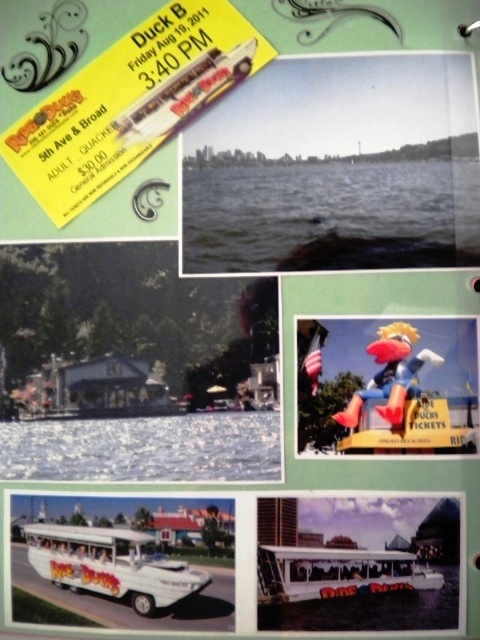
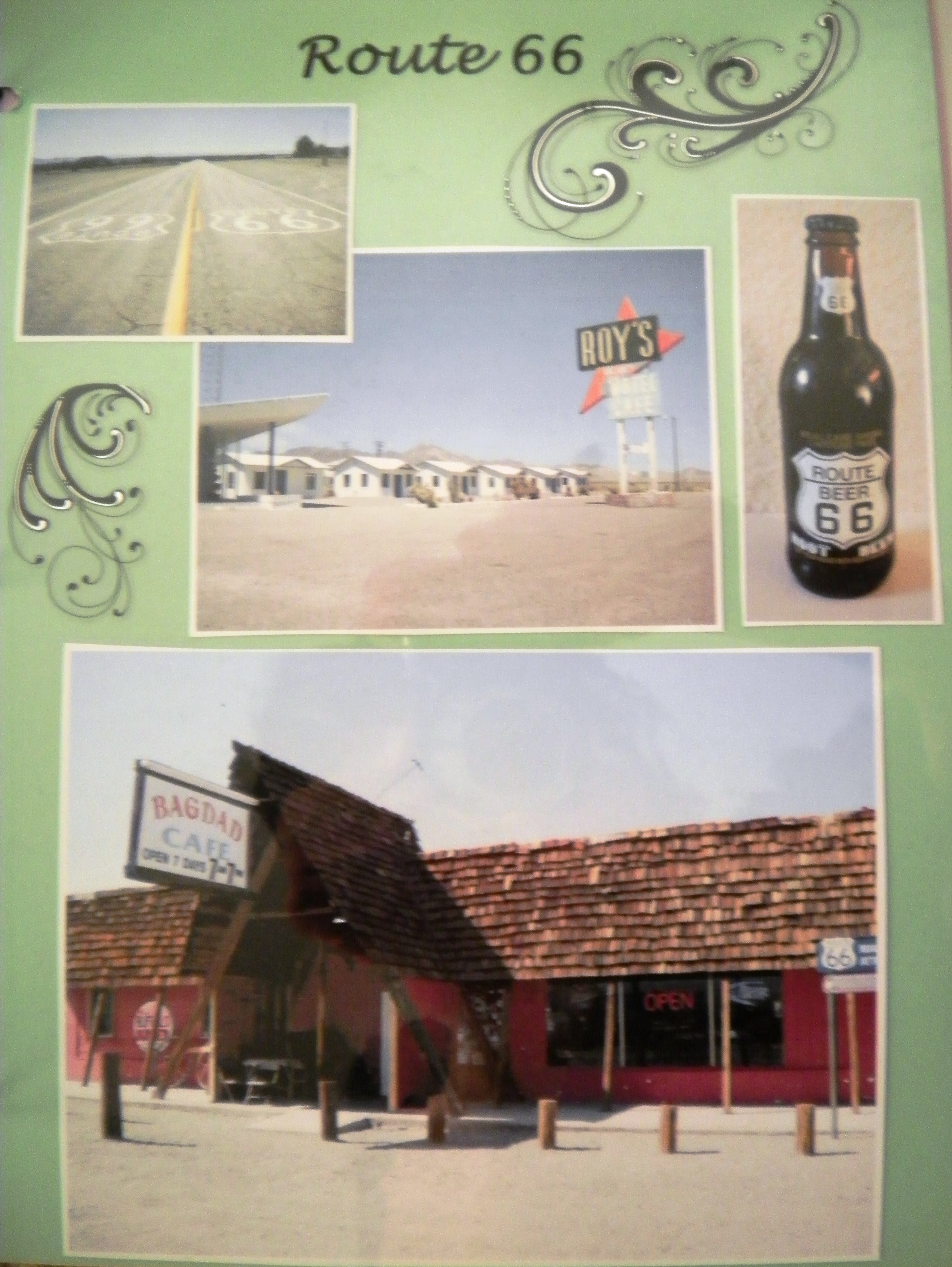
I’m not in nearly as much pain as I was seventeen and a half months ago when he died, but I’m still feeling sad and empty despite the friends I’ve made and the trips I’ve taken. (My most recent excursions included a Route 66 Rendezvous, a couple of major county fairs, and a trip to Seattle — so see, I really am going on with my life.) The world still feels different with him gone. I still feel different, knowing he’s not somewhere in the crowd. I will probably always miss him, always yearn to talk with him, always long for the sight of his smile and the sound of his voice, but I don’t want to — can’t — be enchained by my own sorrow forever.

Most songs still bring tears to my eyes, but it no longer matters since many things make me tearful now. Besides, without a song or a dance, what are we? And so, I’ve begun my version of dance therapy. Today I danced to ABBA. (Why is that more embarrassing to admit than that I still cry at times?) I’m not looking for a sense of happiness or even optimism. Nor am I looking for exercise. (For that, I walk, lift, stretch, air bicycle.) My hope is that by moving in rhythm to a few peppy songs most days, I can train myself to feel lighter in spirit. Maybe even learn to have fun — whatever that is.

It’s the best I can do.

500 Days of Grief

It’s been 500 days since the death of my life mate, my soul mate. It’s sounds pathetic, doesn’t it, to still be counting the days as if I’ve been crying endlessly for more than a year? But grief isn’t always about mourning. A great part of grief is trying to make sense of the senseless, trying to comprehend something the human mind is not geared to understand. Trying to find a way to continue despite the noncomprehension.

The agony and angst of the first months have passed, and I do still cry at times, but the tears come and go quite quickly. (The sadness, however, always remains.) I’m going through a waiting stage right now, letting everything I have experienced settle into my being. Other stages of grief are waiting for me, such as finding a new focus or finding the bedrock on which to rebuild my life. Even if those don’t seem like stages of grief, even if they aren’t accompanied by tears and tantrums, they are still part of the grieving process, still part of learning how to be whole again.

Most of us have grieved the death of a loved one, some of us have grieved many losses, but the loss of someone with whom you have spent every day for decades is especially hard to deal with. Every minute of every day after such a death, that person is absent from your life, and somewhere inside, you continue to search for him or her. I think of him way too much, trying to hold on to him, though I know I can’t do anything to keep him with me. He’s already gone. I yearn to talk with him once more, hear his voice, see his smile, and part of me cannot understand why he isn’t here, cannot make sense of his absence. Cannot understand forever.

People assure me I will see him again in an afterlife, but that is scant comfort. This is the life I have now. This is all I know. And this is the life I have to deal with. If it were just about my missing him, I could deal with that, but I feel sad that his life was cut short. That his dreams never came true and now they never will. Perhaps he is happily ensconced in a new life of radiance, but his death dimmed the light in this world. And this is what I cannot understand. He is gone. And I am still here.

I am filling my days, trying to make each one matter. I’ve been taking trips and making excursions, most recently to a fair (where I did not eat deep-fried Twinkies, deep-fried butter, or chocolate covered bacon, though such delicacies were offered). When my mate and I were together, whatever we did was part of our life, and each day, each event flowed into the seamless whole. Now that I am alone, events such as the fair seem like punctuation marks in my ongoing life rather than part of the text. Perhaps one day, when I’ve lived long enough, done enough, my life will feel like a seamless whole again.

Until then, I’ll continue to count the days of grief.

Following Grief Wherever It Leads

A couple of weeks ago at my grief group, I mentioned that the day I cleaned out my life mate’s effects — his clothes, personal items, and mementoes — was the worst day of my life. I then said the only good thing about it was that since it was the worst day of my life, by definition, every day afterward would be better. The moderator of the group gave me a surprised look and said, “That’s a very positive thing coming from you.” Huh? I didn’t know we were supposed to be positive. I thought the whole purpose of dealing with grief, of talking about it, of learning from it was to feel it, process it, and let it go so that we’d eventually be able to rebuild our shattered lives. Being foolishly positive seems to be a rather negative way to deal with a soul-shattering loss.

After the first painful weeks, most bereft are outwardly optimistic when it comes to sharing their grief because they’ve been taught that dwelling on anything unpleasant is unhealthy. They talk about looking forward to new opportunities, new goals, new hopes, but inwardly they are still reeling from their horrendous loss. (And if they aren’t, chances are they are denying what their loss means to them.) I chose instead to feel my grief, to dissect it, to put it into words for the bereft who couldn’t express what they were feeling. I also wanted to illuminate the experience for those who haven’t a clue what grief really feels like (especially novelists, who so often get it wrong), and to challenge the current myths about grief. If I wanted to, I could have been as optimistic as everyone else, but that was not my self-imposed mission. I don’t need to shore myself up with positive thinking — I’m strong enough to take grief straight. This does not mean I am closing myself off to new possibilities. Eventually I will have to rebuild my life, but I am in a position right now where I can follow grief wherever it leads.

And where it is leading is into the second year of living without my mate.

The first year of grief is all about dealing with the emotional, physical, mental, spiritual shock of the soul quake you experience when a long-time mate dies. That shock protects most of us from feeling the full effect of the truth — that we’ll never see our mates on earth again. After the first year, when we begin to rebuild our lives, to feel that the worst is over, we are hit with the aftershocks, and it’s as if we are experiencing the loss all over again, but this time without the protective effects of the original shock. If we’ve worked through our particular issues — our shoulda, woulda, coulda’s — we are left with pure heartbreak.

Our family and friends (the few who stuck with us) have moved past the loss and they expect us to move on, too. One of my blog readers, a professional consultant in emotional-mental health who has been supportive of my efforts to demystify grief, wrote, “At this time of the journey, (the second year) people are at such risk of going into severe depression, of jumping into relationships they usually wouldn’t enter etc because everyone expects they’ll be ‘moving on,’ ‘creating a new life,’ when in fact the shock is only now subsiding (the emotional shock of losing the loved one is so under appreciated and I believe lasts for at least twelve months).” She hopes I will continue to share my journey, because “the next eight to twelve months will be just as important for folks to read. It seems to me the second year is about another level of acceptance . . .about the recreation of life whilst initially hating that it has to be recreated at all . . . about choosing life and the potential for happiness when death has taken our loved one . . . about choosing to find different lights to shed meaning on our existence.”

She makes good points, and I wouldn’t mind continuing to chronicle my journey into grief (despite the fact that I’ve alienated most of my blog readers). The problem is, I have nothing to say. Or at least, not much. For the most part, my situation isn’t changing. I’m caring for my 94-year-old father (or, to be more accurate, I’m staying with him so that he can keep his independence as long as possible), so I’m not doing much except taking a few isolated trips in an effort to fill the hole my mate left behind. It won’t be until after my father goes (and I could be 94 myself by that time!) that I will be able to start the rebuilding process, try to find a new life, a new place, a new reason for living. I’m still in a holding pattern. Obviously, I’m not totally stagnating, but I’m not moving on in any significant way, and I can’t because of my living situation. I’m not even having any revelations as I walk in the desert. (Of course, the heat could be baking my brain, burning off any thoughts before they form.)

I have no hopes at the moment, but I am not despairing, not weighted with hopelessness. I’m merely waiting for what life throws at me next. Perhaps this waiting is another stage of grief, a hiatus before the real healing begins, and if so, I’ll be ready. Dealing with grief as it comes, without the frill of foolish optimism, has taught me that I can handle anything. (Well, anything but torture, but I have no interest in being a martyr for any cause, so I should be okay.)
The Silent Language of Grief

The so-called five stages of grief are so ingrained that most people think that’s all there is to grief. You deny, you get angry, you feel pain and guilt (and sometimes you bargain for the return of your loved one), you feel depressed, and finally, you accept. Sounds nice, doesn’t it? A brief checklist of stages, and then you get on with your life.

But grief is not that simple. First, those stages were described by Kübler-Ross to show how people come to terms with their own death and perhaps that of a loved one. It bears little resemblance to how people grieve after the death of a long time mate. Sure, we bereft have moments of anger, times of depression, some feelings of guilt, but most of us undergo a completely different set of stages, such as shock, bewilderment, hopelessness, loss of identity, anxiety, panic, isolation, loneliness, yearning. (For most of us, not anger or guilt but a vast yearning to see our mates once more drives our grief.) We also have physical changes to cope with that aren’t addressed in the Kübler-Ross model, such as immune system deficiencies, stress, dizziness, nausea, changes in brain chemistry, hormone disturbances, loss of equilibrium, and a higher death rate from all causes than non-grievers.

Still, whatever stages of grief a person goes through, there does come a time when you accept the truth deep in the marrow of your being — he is gone forever. You think this acceptance signifies the end of your grief, but do you want to know what often lies on the other side of acceptance? Heartbreak and tears. Sure, there are times of peace as you become used to your aloneness, but acceptance feels like another death, and it needs to be grieved. (It’s one thing to know he’s never coming back, and another thing to KNOW it. This acceptance is why the second year of grieving is often worse than the first year.)

Grief is a way of processing information. We know our loved one is absent, but is it possible to comprehend how very gone he is? To understand the nature and finality of death? Perhaps not, but by feeling the pain of separation and releasing it through tears, we can come to accept (however unwillingly) the idea that our loved one is gone from this earth.

It’s been sixty-nine weeks since my life mate — my soul mate — died of inoperable kidney cancer, and I still have bouts of tears. I was always a stoic and believed in facing reality, but this is one reality I cannot comprehend. I try to conjure him up in my mind, but he is forever out of reach. Forever gone.

According to Voltaire, “Tears are the silent language of grief.” When we have no words to describe our loss, when we have no way of comprehending the incomprehensible, all we have left are tears to communicate to us the depth of that knowledge and the depth of our loss. And so I weep.