I Am Not Grieving Inappropriately

I recently received a message from a woman who is concerned that I’m still counting sad Saturdays — she’s worried that my grief for my dead mate is going on too long and keeping me from living. I appreciate her concern and her continued prayers (just as I appreciate the concern and prayers from all of you), but the truth is, except for readers of this blog, no one knows I still have my sad times. I don’t hide myself away from life, I’m not missing from life, and I’m not missing life. I miss him, of course, and I hate that he is missing from this life, but that particular sorrow is something I accept as part of my life.

There is nothing wrong with sad times, and there is no reason to fear sadness. Depression is dangerous, but not all sadness is depression, nor does all sadness lead to depression. Sometimes sadness is melancholic or nostalgic — a seasoning of life rather than a banishment of life, a reminder not to take life for granted. For several months now I’ve been hesitant to continue posting about grief since such posts show me (perhaps) in a pathetic or needy light, but there are too many misconceptions about grief that we accept as truth, and I want people who have lost the most significant person in their life to know that they do not need to put aside their sorrow simply to placate others. It is their grief and they need to feel the sorrow, not ignore it. Experiencing grief and processing it are how we learn to be whole again (or as whole as is possible).

The first year after such a traumatic loss, one struggles to survive the psychic shock. The second year one deals with the effects of the ongoing loss and begins to look ahead more often than one looks behind. Since I am still in my second year, I don’t know what the third and fourth year bring — perhaps occasional upsurges of grief or a continual (though diminishing) struggle to comprehend life and death and loss. People who have been on this journey and come out of it mostly intact, tell me that it takes four years before one completely gets back the joy of living. So I am still within the normal bounds of grief.

For some people, grief is a time of shutting themselves away, of forgetting that they have other people in their life who need them, and if this goes on too long, they might need to seek professional help, especially if there are children involved. For me, though, and for others who are grieving appropriately, this is a time of opening up, of showing our vulnerability, of admitting that life is not always happy or fun. And in doing so, we make connections to help us rebuild our lives.

If I had hidden my sadness, if I had followed my natural inclination to bear my pain in silence, my life would have been much diminished. You and all the people I met since I began this journey nineteen months ago have added so much to my life that it tells me what I already know: I am not grieving inappropriately.

Saturday, My Sadder Day

Another sad Saturday — 83 of them since my life mate died. Even when I don’t remember that it’s Saturday, or that Saturday is the day of the week he died, my body remembers, and my usual muted feeling of sadness becomes more pervasive. It’s not that I want to be sad; the sorrow just comes, especially when the weather is as perfect as today’s — warm, still, clear sky, bright sun, gently cooling breeze. I’d worry more about my continuing sadness except that I tend to be of a melancholic bent. And the sadness does reminds me to pay attention. Since he can no longer make note of a lovely day, it’s as if I need to appreciate it twice — once for me and once for him.

If Saturday is a sadder day than normal, that must be a sign that I am doing okay most of the time (otherwise I wouldn’t feel sadder; I’d just feel sad). The world still feels flawed, I still feel the phantom itch from where he was amputated from my life, and I still yearn to talk with him. Part of me (perhaps that fabled inner child?) cannot understand why I can’t call him to find out how he is doing, to see if he needs anything, to ask if I can come home. This yearning flares up every Saturday, as if he’s closer on this day, and it seems as if I should be able to reach out and touch him. But he’s gone, out of reach of even my sadness.

Oddly, in many respects, my life is much better now, at least temporarily, than it was at the end of “our” life. I don’t have to worry about him any more (though the habit of a lifetime is hard to break, so I wonder if he is feeling as lost and as alone as I sometimes feel). I have a lovely place to stay with proximity to wild spaces. I have a respite from bills and other such annoyances. I have time to indulge myself with small excursions and escapes.

But my heart doesn’t care for such things. It wants what it cannot have, especially on Saturday, my sadderday.

Life Goes On Even if the Whole Thing is Flawed

Today marks the nineteenth month since my life mate — my soul mate — died of inoperable kidney cancer. 580 days of missing him have passed, and there is still a lifetime of such days ahead of me.

It was a quiet day for me today, no big emotional storm — the storm came last month. I can see why there would be a grief upsurge at twelve months — that is a major anniversary and a big step. But at eighteen months? Can’t figure that one out. But, as I have learned, grief has no logic. It comes and goes as it pleases. Most times I do well by keeping busy and focusing on the moment, other times I am overwhelmed . . . again . . . by the realization that he is dead.

I hate that he is gone. The world is so much poorer without him. If he had left me for another person or place on earth, I would probably be furious at him for leaving, but I would not have this feeling of blank. It’s as if something in the middle of the page of my life was erased, and that blank spot remains. I work around the blank spot, fill it with excursions, friends, exercise, online activities, but still, it is there, a major flaw in my life.

He and I used to make tapes of the songs we liked, along with an index of each tape so we’d know what we have. I started going through some of his music tapes, trying to decide what I want to do with them. (I’d like to keep everything I have left of his, but when one leads an unsettled life, extraneous possessions become a burden rather than a luxury.) I was doing fine until I came across a tape marked flawed. I pulled out the paper that listed the songs on that particular tape. He had written in big letters across the top of the page: whole thing flawed. I set both the tape and the index on my work table, and that was the end of that. I haven’t been able to go through any more of his music, nor have I been able to throw away that tape or that paper. So every day I see that message: Whole thing flawed. That’s what life feels like now — it’s continuing on, but with him gone, the whole thing seems flawed.

I still have his tape player, and in the player is one of his tapes. If I rewind the tape a bit, I’ll be able to listen to the last song he ever heard. That’s something else I haven’t been able to do, or wanted to do. I don’t know how I’ll feel. Don’t know if it will make me feel connected to him, if it will set off a storm of tears, or if I will feel as if I were spying on him. So the tape player with that final tape is packed away, along with all his other tapes except the one on my table with it’s stark reminder: whole thing flawed.

I’m Declaring This Blog Reader Appreciation Day

As most of you know, this has been a hard couple of years for me. I watched my life mate (soul mate, business partner, best friend) die slowly of inoperable kidney cancer. I survived months of grueling grief. I left my home to take care of my 94-year-old father. I’ve struggled to keep from being swallowed up in the quicksand of emotion and trauma.

Through it all, you’ve been here for me. I want you to know how much every comment, every word of support, every story you shared has meant to me. Even those of you who have never left a comment (so I was never able to thank you personally) have helped me get through this terrible time because I knew you were there, suffering your own traumas. Your presence made me feel as if we were going through this journey together.

And perhaps we are going through this journey together. We are so often in competition with each other we forget that in some intangible way, we are connected one to the other. The internet, though it does sometimes keep us from connecting in the offline world, keeps us connected in a more ethereal way. The internet and computers are fueled by electrons, and so are we.  Somehow the two streams of electrons manage to collide. How else to explain the very real connections we have made though many miles — sometimes half a world — separate us?

So, thank you. Thank you for holding out a virtual hand and keeping me from sinking. Thank you for reading my blog, for caring, for connecting. Thank you for being part of my stream of electrons.

Proving to Myself That I’m Real

I’m still struggling with the sense of loss that the death of my long time mate created in me. It’s not just that I lost him — I feel as if I’ve lost a sense of reality, a sense of my reality.

During the first months of almost unbearable pain, I felt that the situation itself was unreal. Part of me couldn’t believe he was dead (though I knew he was — I watched him die). It seems strange now, but accompanying the disbelief was a belief that something wonderful would soon happen to me, perhaps because I needed to believe good would come to balance the unbelievable wrongness of his absence. I no longer hold myself tensed against the reality of his death (though it does still tear through me at times), but I also no longer have that sense of an imminent good. What I’m left with is a feeling of waiting, though I don’t know what I’m waiting for.

This feeling of being in limbo seems to be a common stage of grief for those of us past the first year. So many of us are struggling with it, trying to find . . . a new reality, perhaps.

I’m not a sentimental person. I seldom kept keepsakes and I never chronicled my life with photos, but now I do both to prove to myself that yes, I am alive, and yes, I am doing something with my years. I’ve recently started a scrapbook of paper memories. Perhaps someday I will feel a sense of reality again, but if I don’t, I can look at the book and know the truth of it. I am real.


Learning How To Occupy Myself

One of the hardest things to accept after losing one’s life partner is that, no matter how unfair or unwelcome, life does go on. It’s been eighteen month since my life mate died, and here I still am. I always thought we’d go at the same time, that our connection was so great that the one who was left behind would be pulled into death along with the one who died. As romantic as that notion is, it didn’t happen (though the death rate for the remaining partner of a couple is exceptionally high, so I suppose, in some cases it does occur).

So much of these past months seem to have been wasted on grief, but now that I see light rising on the horizon, I realize these months were not a waste. In their own way, they were a celebration of life — both his and mine. I gave myself over to the experience, felt every nuance of his goneness, every tug of separation, every heartache and heartbreak. I gave myself over to tears, let them fall hotly and unchecked.

I felt, and in that feeling was life.

Ironically, another thing that is hard to accept after such a loss is the fact of your own mortality. When you accept that your partner is gone from this world forever, the realization that one day you will be also be dead hits you deep in your gut. I can feel the first (and second) twinges of age creeping up on me, but for now, I am still alive, still occupying this body/mind. It seems a waste of his life for me to waste what is left of mine, so I’ve been trying to occupy myself fully.

I dance in my room to celebrate this body, to feel movement and rhythm. I am writing nonsensical bits of prose — just random words, really — to celebrate this mind. I’m exercising so as to use my muscles, to celebrate that I have strength to lift more than a few pounds and to walk more than a couple of miles. I am celebrating the use of my hands, the way my feet connect to the ground, the pull of air into my lungs, the feel of the breeze on my face, the sights that pass in front of my eyes, the sounds of the city that assail my ears and the silence of the desert that brings respite. I am feeling the connectedness of things and people, both in the real world and the virtual world of the internet.

I am being, and being alive.

I am occupying myself.

Putting a H.A.L.T. to Grief

It’s been eighteen months since my life mate — my soul mate — died of inoperable kidney cancer, and I’m still chugging along. I do okay most days, but still there are times when the thought that he is gone takes away my breath. His death was so final, his absence absolute. He never responds when I talk to him, never sits down to watch a movie with me, never seems to care when I get angry at him for rejecting me. (I know it’s not his fault, but still, death is the ultimate rejection.)

During this past year and a half, I’ve learned a lot about grief. I learned the importance of facing the pain head-on, accepting it as part of the process, and waiting for it to diminish, which mine has — significantly. I’ve learned how to find peace in the sorrow (or perhaps despite the sorrow). I’ve learned that grief cannot be hurried, that months or even years might pass before we bereft find ourselves again. And most of all, I’ve learned the secret of H.A.L.T.

People who make major life changes, such as alcoholics who give up drinking, smokers who give up cigarettes, diabetics who make diet and exercise changes are often urged to watch themselves so they don’t get Hungry, Angry, Lonely, or Tired. That’s what I mean by H.A.L.T. Did you think I actually meant putting an end to grief? You should know by now I’m letting grief wear itself out, whenever or however that might be.

Hunger, anger, loneliness, and exhaustion make us vulnerable, which makes it easy to backslide into old behavior patterns.  I recently noticed that grief often surges when I am tired, so I’ve been trying to steer clear of these vulnerabilites, but the trouble is that all of those states are effects of grief, so exhaustion and loneliness and anger causes grief and grief causes exhaustion, loneliness and anger. A sad cycle. But now that I’m aware of it, I can try to be more careful. Although I’m willing to let grief take its course, I have no intention of letting grief rule the rest of my life. I intend to be as bold and as adventurous as possible, a wildly inappropriate woman who just likes to have fun. But not quite yet. I still have some sadnesses to deal with.

***

Pat Bertram is the author of Grief: The Inside Story – A Guide to Surviving the Loss of a Loved One. “Grief: The Inside Story is perfect and that is not hyperbole! It is exactly what folk who are grieving need to read.” –Leesa Healy, RN, GDAS GDAT, Emotional/Mental Health Therapist & Educator.

Letter to a Grieving Friend

Hello, my friend.

I understand what you said about the continuity of attachment even after death. At the beginning of my grief, I held to the thought that I was sparing my life mate — my soul mate — from ever having to grieve for me since he died first, then it occured to me that if, in fact, we continue to live somewhere beyond this earth, maybe he is feeling as lost as I am, as disconnected, and as lonely. That took away the last bit of comfort I had. My other thought was that even if something of us survives, I will never see him again. When he and I met all those years ago, I had the strange notion that he was some sort of exalted being come to help me find truth and reality (when the student is ready, the teacher will appear, they say). I’m not sure why I thought I was so special, but the time when we met was steeped in mysticism for me. I sometime wonder if perhaps my grief is so difficult because our separation is truly forever, that by the time I die, he will have taken his rightful place somewhere high up in the pantheon of radiance, and I’ll still be muddling along without him. Such strange thoughts that beset us bereft!

I’m beginning to realize that in some way my grief might always be a part of my life. It’s too immense, this thing called death. Too hard to deal with the reality of it. Oftentimes when people mention how the loss of their mate helped them become the person they were meant to be, it makes me cringe, as if the loved one was an adjunct to their life, not a life in itself. But we all deal with life and death the best we can. My grief has two parts: my missing him and his being missing from this world. Both feelings will be with me forever. And through it all, grief really is molding me into what I will become. I thought I’d have arrived at that place of becoming by now, but it’s still a long way away.

Supposedly, people who deal best with the hole in their lives are those who continue to have a connection to the person, such as still talking to them or writing to them. What is the difference between that and a fantasy? Either way, the person has no physical being (except, in the case of the dead, as dust in the ground or pulverized bone — cremains as the funeral business so cutely calls them). But perhaps that attachment even after death is what makes the difference.

I’ve decided that a life of fun and/or adventure is the only thing that will make the coming years tolerable, yet I have no idea how to have fun. Don’t even know what fun is, except perhaps doing new things or learning new things.

I feel as if I am disappearing, though. So many friends, even friends I made after his death, have disappeared from my life, and I worry that I will disappear, too. Perhaps that’s not a bad thing. I’ve been looking at photos of me as a child, and I am no longer that person, can’t even remember what I was thinking or feeling when the photos were taken (can’t even remember having my picture taken) so that youthful “me” has disappeared. Maybe when today’s me disappears, I’ll be not simply old and decrepit, but different somehow, and able to handle the challenges that the future will bring.

I hold to the idea that maybe someday you and I will have a grand adventure together.

Your sister in sorrow,
Pat

S.O.S. — Dance Therapy

A few days ago, I started doing what I call “dance therapy.” I thought it was my own idea, but today I discovered there really is such a thing. It’s been around since the 1940s and was created as a way for the mind and body to work together. Supposedly, by dancing, people can identify and express their innermost emotions, bring those feelings to the surface and create a sense of renewal, unity, and completeness.

But that’s not what my “dance therapy” is about. I know what my feelings are. (And so do you if you’ve been checking in with this blog occasionally.) I’m still grieving the death of my mate of thirty-four years. We were soul mates: partners in life, in business, in ideology, in exercise — in fact, years ago, before he started losing health, we used to do aerobics together, which for us meant free-style dancing around the living room. I continued by myself for a while, but as he got sicker, I had to stop that form of exercise because most song lyrics made me cry. Even happy songs — especially happy songs — brought tears to my eyes, and I couldn’t deal with that. Not being a natural optimist, (maybe as a Wednesday’s child, I really am full of woe) I needed to fight to stay positive, to focus on what I had rather than what I was losing. In my current situation, though, the loss is so great, it’s not a matter of seeing the glass as half empty rather than half full (if you’ll pardon my use of that odious phrase). It’s a matter of trying to glue a shattered glass back together and hope it holds together as I fill it drop by drop.

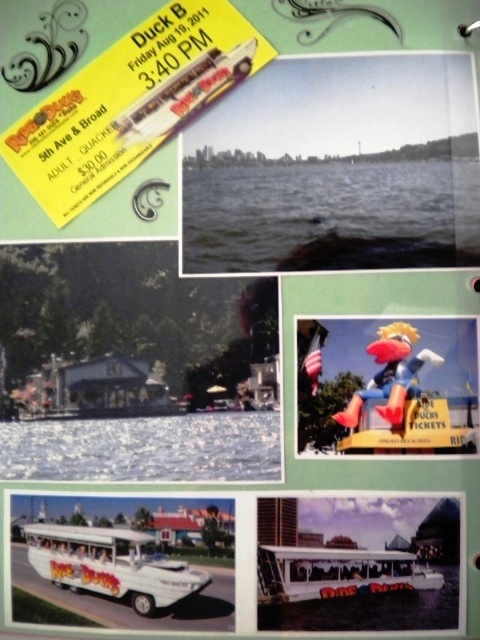
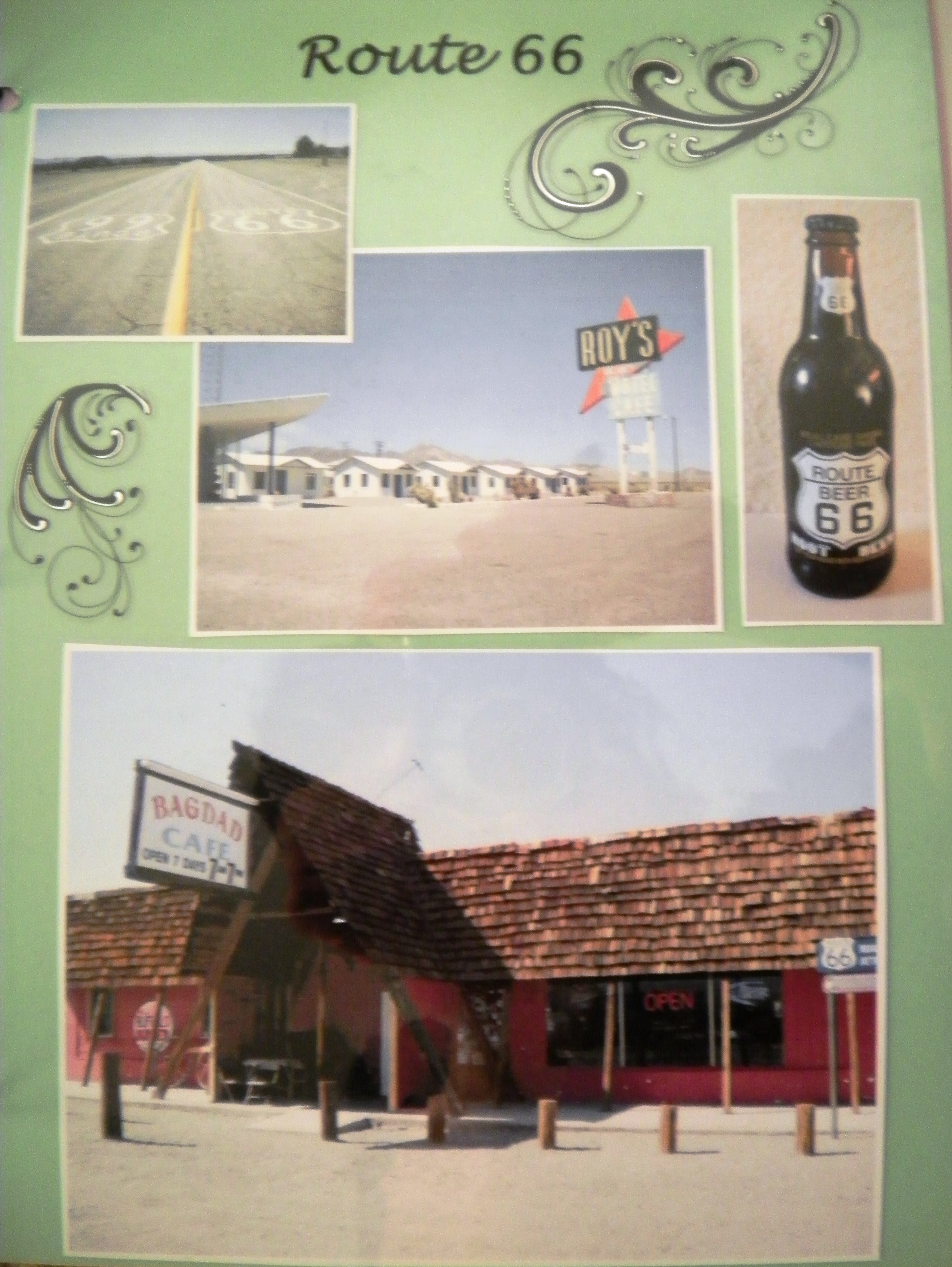
I’m not in nearly as much pain as I was seventeen and a half months ago when he died, but I’m still feeling sad and empty despite the friends I’ve made and the trips I’ve taken. (My most recent excursions included a Route 66 Rendezvous, a couple of major county fairs, and a trip to Seattle — so see, I really am going on with my life.) The world still feels different with him gone. I still feel different, knowing he’s not somewhere in the crowd. I will probably always miss him, always yearn to talk with him, always long for the sight of his smile and the sound of his voice, but I don’t want to — can’t — be enchained by my own sorrow forever.

Most songs still bring tears to my eyes, but it no longer matters since many things make me tearful now. Besides, without a song or a dance, what are we? And so, I’ve begun my version of dance therapy. Today I danced to ABBA. (Why is that more embarrassing to admit than that I still cry at times?) I’m not looking for a sense of happiness or even optimism. Nor am I looking for exercise. (For that, I walk, lift, stretch, air bicycle.) My hope is that by moving in rhythm to a few peppy songs most days, I can train myself to feel lighter in spirit. Maybe even learn to have fun — whatever that is.

It’s the best I can do.

500 Days of Grief

It’s been 500 days since the death of my life mate, my soul mate. It’s sounds pathetic, doesn’t it, to still be counting the days as if I’ve been crying endlessly for more than a year? But grief isn’t always about mourning. A great part of grief is trying to make sense of the senseless, trying to comprehend something the human mind is not geared to understand. Trying to find a way to continue despite the noncomprehension.

The agony and angst of the first months have passed, and I do still cry at times, but the tears come and go quite quickly. (The sadness, however, always remains.) I’m going through a waiting stage right now, letting everything I have experienced settle into my being. Other stages of grief are waiting for me, such as finding a new focus or finding the bedrock on which to rebuild my life. Even if those don’t seem like stages of grief, even if they aren’t accompanied by tears and tantrums, they are still part of the grieving process, still part of learning how to be whole again.

Most of us have grieved the death of a loved one, some of us have grieved many losses, but the loss of someone with whom you have spent every day for decades is especially hard to deal with. Every minute of every day after such a death, that person is absent from your life, and somewhere inside, you continue to search for him or her. I think of him way too much, trying to hold on to him, though I know I can’t do anything to keep him with me. He’s already gone. I yearn to talk with him once more, hear his voice, see his smile, and part of me cannot understand why he isn’t here, cannot make sense of his absence. Cannot understand forever.

People assure me I will see him again in an afterlife, but that is scant comfort. This is the life I have now. This is all I know. And this is the life I have to deal with. If it were just about my missing him, I could deal with that, but I feel sad that his life was cut short. That his dreams never came true and now they never will. Perhaps he is happily ensconced in a new life of radiance, but his death dimmed the light in this world. And this is what I cannot understand. He is gone. And I am still here.

I am filling my days, trying to make each one matter. I’ve been taking trips and making excursions, most recently to a fair (where I did not eat deep-fried Twinkies, deep-fried butter, or chocolate covered bacon, though such delicacies were offered). When my mate and I were together, whatever we did was part of our life, and each day, each event flowed into the seamless whole. Now that I am alone, events such as the fair seem like punctuation marks in my ongoing life rather than part of the text. Perhaps one day, when I’ve lived long enough, done enough, my life will feel like a seamless whole again.

Until then, I’ll continue to count the days of grief.