Genre vs. Traditional Fiction

Yesterday I wrote about traditional stories, the kind of untagged, unlabeled, uncategorized and ungenrefied fiction we grew up on. There used to be certain sections for genres in libraries and bookstores, but most books were shelved alphabetically under “fiction.” I read all types of books without discrimination, but I found the most satisfying books not with the genre stories, but in with the general fiction. And that’s the kind of book I tried to write.

I don’t know why genre became the core of the book business rather than the peripheral it once was, but it’s probably because of marketing — as one editor who rejected Light Bringer told me, “I loved the story, and your writing is excellent, but I don’t know how to sell it. It doesn’t have enough science fiction elements to be science fiction, and it has too much science fiction to be anything else.” (The truth is, Light Bringer was never meant to be science fiction. It a traditional story based on both modern conspiracy theory and the Sumerian cosmology, though I admit, it does have elements that are construed as science fiction. Luckily, I eventually found a publisher who publishes traditional fiction as well as genre.)

I don’t know what came first — readers’ need to buy books that fit into certain categories or book marketers’ need to funnel readers into those categories, but it doesn’t really matter. Either way, this genreization of the book business makes me an outsider, both as a reader and a writer. I have a hard time sorting through the 130,000,000 million books available to find ones I want to read, and I have a hard time fitting my books into the available genres. (When I have to give a category, I say “conspiracy fiction.” That’s not a genre, or at least I don’t think it is, but it gives me a pithy and realistic way of labeling my books.)
The hardest of my books to categorize, besides Light Bringer, is More Deaths Than One. It has many of the elements of a thriller, but the story is not about what happened to the main character (Bob) but who is he and how he reacts to what happened to him. In a thriller, there should be some sort of showdown between the hero and villain, but in More Deaths Than One, that showdown is given to an offscreen character, and Bob hears of it second hand. Some readers think the scene is a cheat. Even I think it’s a cheat, or rather I would think so if More Deaths Than One was a thriller. The hero should always be the one who performs the decisive action in the story, but in this case, the decisive action is not the discovery of the truth, but how Bob and Kerry (the woman he loves) deal with that truth.

I could have had the showdown and then Bob and Kerry’s scene afterward, but then their scene becomes anti-climactic. I could have had the two scenes concurrent — the showdown and their reactions, but there is no way Bob would have opened up to her with a dangerous creature in the room. And most of all, he would never have brought her to the attention of the villain since he would have wanted to protect her at all costs.

You’d think that with the emphasis on the two characters that More Deaths Than One is romantic suspense, but it is far more than that (and far less. Those who have read it for romantic suspense don’t like it because the romance isn’t forefront. Nor is the conflict a romantic one — Bob and Kerry get along from the beginning). More Deaths Than One is traditional fiction — a story that demanded to be written in a certain way, regardless of any genre conventions.

As Mickey Hoffman, author of School of Lies and Deadly Traffic, said, “What are you waiting for? Read this book. Now. More Deaths Than One is much better than any ‘bestseller’ out there. The plot is constantly surprising and intricate, the characters draw you into the tale and the overall writing is top notch.”

***

Pat Bertram is the author of the conspiracy novels Light Bringer, More Deaths Than One, A Spark of Heavenly Fire, and Daughter Am I. Bertram is also the author of Grief: The Great Yearning, “an exquisite book, wrenching to read, and at the same time full of profound truths.” Connect with Pat on Google+

Character as Fate and Fate as Character

Heraclitus believed that a person’s character is their fate. Character — the sum total of a person’s traits — influences the choices a person makes, and the consequences of those choices ultimately become that person’s destiny. Or not. Much of life is luck, happenstance, and totally out of our control, though we tend to believe we have much more control over our lives than we really do. But that’s not an issue here because this is a writing discussion, and in our story worlds everything is under our control, and what our characters do determine their own fate.

This is most obvious in a tragedy — a character comes to an unhappy end because of a flaw in his or her own character, though in today’s stories, because readers like a more optimistic ending, that fatal flaw is often balanced by a special strength. But character/fate works for other types of stories, such as a thriller where a character becomes obsessed with finding the truth, and that obsession leads to both the character’s fate and the end of the story.

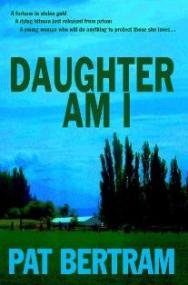
For example, In Daughter Am I, a young woman is determined to find out the truth of who her grandparents were and why someone wanted them dead. That determination overrides her usual placidity and takes her on a journey that eventually leads her home again, changed forever. She really did find her destiny because of her character.

I wonder if the opposite is more true (if truth has degrees), that destiny is character. Does what happens to us, both the actions under our control and those beyond our control, determine who we are? Determine who our characters are? This was a theme I explored in More Deaths Than One. So much happened to my poor hero Bob that was not under his control, yet what was under his control — how he handled his fate — made him the man he became.

Any discussion about fate and writing would also have to include the question: does the writer’s fate affect the character’s fate? None of my books have totally happy endings. There is always a pinprick of unease in the background, but the book I am now contemplating — the story of a woman going through grief — is going to have even less of a happy ending. Perhaps because I know the ending of my own love story? Not my story, obviously, since I’m still here, but the story I shared with another. Except for my work in progress (the one that’s been stalled all these years) the stories I’m thinking about writing now all end up with the characters alone.

When I wrote the first draft of my novel More Deaths Than One (and the second draft and the third) I had the hero Bob meandering around his world trying to unravel his past all by himself, and it was boring. Did I say boring? It was moribund. The story went nowhere because there was no one for Bob to butt heads with.

In the fourth draft of More Deaths Than One, I gave Bob a love interest, a waitress he met at a coffee shop. (Hey, so it’s been done before. The poor guy spent eighteen years in Southeast Asia, and didn’t know anybody stateside. How else was he supposed to meet someone?) That’s when the story took off. He had someone to butt heads with, someone to ooh and aah over his achievements, someone to be horrified at what had been done to him.

From that, I learned the importance of writing scenes with more than one character. And yet here I am, once more falling into the black hole of writing characters alone because I can’t visualize them ending up with anyone.

Which leads me to my final question: could the fate of the character also influence the writer’s fate? If so, maybe I should decide where I want to go from here, and write my destiny. Or  I could just wing it and see where destiny takes me and my characters.

***

Pat Bertram is the author of the conspiracy novels Light Bringer, More Deaths Than One, A Spark of Heavenly Fire, and Daughter Am I. Bertram is also the author of Grief: The Great Yearning, “an exquisite book, wrenching to read, and at the same time full of profound truths.” Connect with Pat on Google+
Sample Sunday

If you’ve been wanting to check out my books, now is your chance to read the first chapter of each novel online.

More Deaths Than OneBob Stark returns to Denver after 18 years in SE Asia to discover that the mother he buried before he left is dead again. At her new funeral, he sees . . . himself. Is his other self a hoaxer, or is something more sinister going on?

Click here to read the first chapter: More Deaths Than One

***

A Spark of Heavenly FireIn quarantined Colorado, where hundreds of thousands of people are dying from an unstoppable, bio-engineered disease, investigative reporter Greg Pullman risks everything to discover the truth: Who unleashed the deadly organism? And why?

Click here to read the first chapter of: A Spark of Heavenly Fire

***

DAIWhen twenty-five-year-old Mary Stuart learns she inherited a farm from her recently murdered grandparents — grandparents her father claimed had died before she was born — she becomes obsessed with finding out who they were and why someone wanted them dead.

Click here to read the first chapter of: Daughter Am I

***

Thirty-seven years after being abandoned on the doorstep of a remote cabin in Colorado, Becka Johnson  returns to try to discover her identity, but she only finds more questions. Who has been looking for her all those years? And why are those same people interested in fellow newcomer Philip Hansen?

Click here to read the first chapter of: Light Bringer

***

Pat Bertram is the author of Light Bringer, More Deaths Than One, A Spark of Heavenly Fire, and Daughter Am I.All Bertram’s books are available both in print and in ebook format. You can get them online at Second Wind Publishing, Amazon, B&N and Smashwords.  At Smashwords, the books are available in all ebook formats including palm reading devices, and you can download the first 20-30% free!

“More Deaths Than One” will leave you breathless

The following is a review of my novel More Deaths Than One, and was written by Dellani Oakes. I didn’t bribe her into saying such nice things. I promise.

***

“More Deaths Than One” by Pat Bertram will leave you breathless—first with anticipation, finally with a contented sigh of a job well done. Set in 1988, this well crafted, fast paced novel of love and intrigue spans the globe from Denver, Colorado to Bangkok, Thailand.

Bob Stark is a quiet man. A Vietnam vet, he’s returned to the states after nearly 18 years in Thailand. He came back to his childhood home of Denver because his life in Thailand couldn’t continue. His friend and mentor, Hsiang-li, left on a personal quest to find a golden Buddha in the jungle—the place where he had to bury his wife and child after they were murdered.

Kerry Casillas works nights in the diner Bob frequents. One night, she introduces herself and they get to know one another. Soon after meeting Kerry, strange things start to happen. Bob and Kerry find themselves embroiled in a mystery far beyond their understanding.

“More Deaths Than One” is an interesting tale of one man’s journey to find the truth. The character of Bob Stark is deep and many faceted. He’s quiet, kind and resourceful, showing abilities even he didn’t know he possessed.

Kerry is a fun loving character and the opposite of Bob in many ways. She’s talkative, outgoing and imaginative. She is the perfect partner and counterpart to Bob. She, too, has hidden talents that surprise and please Bob.

The well-paced plot of “More Deaths Than One”, keeps the reader riveted, waiting to discover the many mysteries in Bob’s past. I enjoyed the fact that though I guessed at all of these secrets, I was right about only a few. Bertram truly kept me hopping as I made my way through the book. I like when a novel isn’t so predictable that I know the end before it arrives.


Choosing Book Titles

The title of a book is important. It’s the first thing a prospective reader sees . . . or at least it used to be. Now the author’s name generally comes first and apparently is a much better selling tool than the title ever was. A title is still important, however. It often sets the mood for the book, it lays out the theme, and it tantalizes readers into opening the book. Think of Gone With the Wind. With such a title, you expect a wide sweep of a story. The title speaks of loss and perhaps survival in the face of broad changes. Even before you open the book, you are primed to find out what is lost and why it disappeared into the wind. Imagine then, how different your feeling would be if the book had been published under its working title. Pansy. Would the book, the movie, the character have ever had such an impact if that had been the name? Of course not.

Another major work with last minute name changes was Catch 22 by Joseph Heller. Originally Catch 18, it was changed because of another book that was coming out at the same time: Leon Uris’s Mila 18. And 1984 was originally 1948. So not the same feeling!

Choosing a title is not an easy task. My novels all had simple working titles: The Red Death, The Chameleon, The Gangster Book, The Alien Book, but except for The Red Death, none of those titles were ever possible for the real title.

For A Spark of Heavenly Fire, I considered using the title The Red Death since my quarantine mirrored the middle ages, though in a hi-tech way, but the name had already been used several times. And anyway, from the very first, I’d planned on using A Spark of Heavenly Fire. That was my inspiration for the book, the Washington Irving quote: “There is in every true woman’s heart a spark of heavenly fire, which lies dormant in the broad daylight of prosperity; but which kindles up, and beams and blazes in the dark hour of adversity.” I wanted to tell the story of ordinary women, women who seemed colorless in ordinary times, but who blazed brightly in dark times. When I found no takers for the book, I thought perhaps the title didn’t reflect the story, so I changed it to In the Dark Hour. And I got an agent. She couldn’t sell the book, so when my contract was up, I changed the title back to A Spark of Heavenly Fire. And that’s the title Second Wind Publishing released it under.
I had to try several times before I got the title of More Deaths Than One right. The working title was The Chameleon but that was never a real contender since I didn’t want to give the story away. So first I used the Law of the Jungle, which amused me since the jungle was so much a part of the story. Also, at one point I had my hero say that the villain might be above the law, but he wasn’t above the law of the jungle. Both the line in the book and the title ended up being deleted because they were too trite, so next I went with Nature of the Beast. It was adequate, and I would have stuck with it despite its triteness, but then I came across a couplet from Oscar Wilde’s “Ballad of Reading Gaol”: He who lives more lives than one/More deaths than one must die. Since my hero appeared to have more lives (and deaths) than one, More Deaths Than One struck me as the perfect title.
Daughter Am I, my gangster book, only had one previous title: Sins of the Fathers, though really it should have been Sins of the Grandfathers. Then I found the Rudyard Kipling quote: “Daughter am I in my mother’s house but mistress in my own.” The quote would have more accurately described the theme of the book if it were “daughter am I in my father’s house,” but I was taken with the title Daughter Am I and decided it was close enough.

Which brings me to my most recent novel, Light Bringer. Sad to say, I haven’t a single story to tell about the title. Even though the working title was The Alien Book, I always knew the title was Light Bringer. Light is the theme of the book, and the Light Bringer (planet X) was the reason for the story.

So, as a reader, what are your favorite titles? As an author, how did you come up with the names of your books?

“Reading Pat Bertram Gets Better and Better”

I got a wonderful review from Glenda Bixler today. She’s a retired professional book reviewer who now writes about books for fun, and she loves my novels!!

Glenda wrote: “I laughed with Pat while reading Daughter Am I, was scared by what happened in A Spark of Heavenly Fire, sighed with Pat’s Light Bringer (Click to read my reviews of the other books!)

“But, Wow! I sat in amazed suspense as I read More Deaths Than One . . . 

“The first reason I was amazed was that each of Pat’s books are so uniquely different,  The second was that, for me, this, last book was a mystery/suspense — my preferred reading — and therefore the most enjoyable . . . so far! I do hope she continues writing! Her imagination and creativity is exciting and diverse — readers may not be able to rely on what each book will cover, but we can be sure that it will be top rate!” (Click here to read the rest of the review: “Reading Pat Bertram Gets Better and Better”)

Ahhh . . . balm to a writer’s soul.

Some people hated the way I ended the book, thinking I should have shown Bob discovering all that had been done to him, but to me, the story has always been about Bob and Kerry and how they dealt with each other during the terrible revelations. If they had interviewed the perpetrator themselves, the relationship would have been between them and the interviewee. Any interaction between the two of them would have been delayed, and hence would not have had the same impact. By using an admittedly passive third party device, I could concentrate on Bob and Kerry and how the truth affected their relationship in the moment.

And Glenda got it. She wrote:

“One decision by the author proved to end this story in a unique way, one that responded to the need to provide a satisfying conclusion without going into the gory details that took place. The surprise ending was not totally unexpected, since the writer had shown us over and over that there was something strange going on . . . But I had no clue what it was until the last major revelation was made . . . Leaving out the action of those final days or weeks, leaves the reader with the romantic suspense as the primary plot line One that is memorable and, at the same time, allows us to get past what actually happened . . . which was too horrendous to dwell on. Kudos to Pat Bertram for effectively presenting this strange but plausible tale! If you’ve already read Bertram, you should consider this a must-read! Highly recommended!”

Click here to read the first chapter of: More Deaths Than One

Can Characters Really Change?

A couple of days ago I wrote a blog postulating that Without Changes, You Have No Story, and I stick to that premise. Characters need to change, the relationships of the characters to each other need to change, story expectations need to change, the direction of the story (and each scene) needs to change. But there was a discussion on that blog post centered on what degree it is possible for characters to change, and if they truly do change, and that made me think.

Some psychologists say we never change in any basic way, that our characters and essential personalities are our foundation, that we can only change in small ways, such as changing our habits or changing our focus. This is at odds with books about writing, which claim characters must do a complete about face, a 180° turnaround to show how the events of the story affected the characters. I thought I’d created strong character arcs for each of my characters, with my characters ending up different from the way they began, but now that I consider it, I don’t see that my characters change in any fundamental way. They become more of who they were, perhaps, but not recognizably different.

In More Deaths Than One, we see a gradual change in Bob Stark, the hero, see his current concept of himself eroded until he becomes what he once was and now will always be. (A bit cryptic, I know, but since this is the crux of the story, I don’t want to spoil it in case you haven’t yet read the book.) But he didn’t really change. He only seemed to change.

In A Spark of Heavenly Fire — which was inspired by a Washington Irving quote: “There is in every true woman’s heart, a spark of heavenly fire, which lies dormant in the broad daylight of prosperity, but which kindles up and beams and blazes in the dark hour of adversity.” — Kate Cummings seems to change in response to the red death and the resulting martial law that is destroying Colorado, seems to kindle up and beam and blaze in the dark hour of adversity, but there are hints in the story that she was always like that. Her spark of heavenly fire — her generosity — was merely hidden from herself and from us until a life-altering event stripped her to the core.

In Daughter Am IMary Stuart never truly changes, though she also seems to change. She was unsure of herself, unsure of what she wanted, unwilling to make a commitment of any kind even to a job, until she set out to discover who her grandparents were, who wanted them dead, and why her parents lied about their existence. It wasn’t out of character, perhaps, for her to drive halfway across the country in search of the truth because she only went along with what others wanted. At least in the beginning. As the journey progressed, she learned the truth she was seeking, and an even greater truth — who she is. She is granddaughter, daughter, and herself. Mostly herself. But that isn’t a change. It’s a discovery. A coming home.

In Light Bringer, neither Becka nor Phillip change. Again, they just discover who they are, a truth that had been kept from them their whole lives. In all my books, but Light Bringer especially, what changes is the reader’s perception of who the characters are. The truth is slowly revealed, and each revelation seems to show a change in the characters, but in the end they simply become what they always were.

How very odd to learn this so long after having written the books.

(Click on a title to read the first chapter of the book.)

Kindle Sale! Get Any of My Books for Only $1.99!!

Have you been wanting to get one of my books? Well, now is the perfect time! The Kindle edition is only $1.99 on Amazon from now until November 8, 2011. Happy reading!

***

ASHFIn quarantined Colorado, where hundreds of thousands of people are dying from an unstoppable disease called the red death, insomniac Kate Cummings struggles to find the courage to live and to love. Her new love, investigative reporter Greg Pullman, is determined to discover who unleashed the deadly organism and why they did it, until the cost — Kate’s life — becomes more than he can pay. This is a story of survival in the face of brutality, government cover-up, and public hysteria. It is also a story of love: lost, found and fulfilled.

Click here to read the first chapter of: A Spark of Heavenly Fire by Pat Bertram

$1.99 Kindle sale! Click here to buy: A Spark of Heavenly Fire by Pat Bertram

***

Bob Stark returns to Denver after 18 years in Southeast Asia to discover that the mother he buried before he left is dead again. He attends her new funeral and sees . . . himself. Is his other self a hoaxer, or is something more sinister going on? And why are two men who appear to be government agents hunting for him? With the help of Kerry Casillas, a baffling young woman Bob meets in a coffee shop, he uncovers the unimaginable truth.

Click here to read the first chapter of: More Deaths Than One by Pat Bertram

$1.99 Kindle sale! Click here to buy: More Deaths Than One by Pat Bertram

***

When twenty-five-year-old Mary Stuart learns she inherited a farm from her recently murdered grandparents — grandparents her father claimed had died before she was born — she becomes obsessed with finding out who they were and why someone wanted them dead. Along the way she accumulates a crew of feisty octogenarians — former gangsters and friends of her grandfather. She meets and falls in love Tim Olson, whose grandfather shared a deadly secret with her great-grandfather. Now Mary and Tim need to stay one step ahead of the killer who is desperate to dig up that secret.

Click here to read the first chapter of: Daughter Am I by Pat Bertram

$1.99 Kindle sale! Click here to buy: Daughter Am I by Pat Bertram

***

Becka Johnson had been abandoned on the doorstep of a remote cabin in Chalcedony, Colorado when she was a baby. Now, thirty-seven years later, she has returned to Chalcedony to discover her identity, but she only finds more questions. Who has been looking for her all those years? Why are those same people interested in fellow newcomer Philip Hansen? Who is Philip, and why does her body sing in harmony with his? And what do either of them have to do with a shadow corporation that once operated a secret underground installation in the area?

Click here to read the first chapter of: Light Bringer by Pat Bertram

$1.99 Kindle sale! Click here to buy: Light Bringer by Pat Bertram

More Names Than One: Fiction Made Real

The other day I was getting gas when a truck pulled up next to me. It looked familiar in a dream-like way, but I didn’t think anything of it. It wasn’t until I started driving away that it dawned on me what I was seeing. A truck delivering Singha beer. I’d needed a Thai beer for my novel More Deaths Than One and just picked the name out of a guidebook, but somehow it didn’t seem real. At least not until I saw that truck. Here is the excerpt from the novel where I mentioned the beer:

In his short-sleeved shirt imprinted with red, green, and yellow parrots, Bob felt like a tourist. He even found himself gazing around as if he’d never visited the place before.

He saw a couple of the other regulars, a German and an American—both mercenaries—but most of the people were strangers to him, including the four men sitting at the next table. They seemed to be Americans of the right age to have fought in Vietnam. A man in a Yankees baseball cap waved his arms for emphasis.

“I did my job,” Bob heard him say. “Then I got out and continued on with my life. Everything’s great. My life is full. It happened so long ago. I don’t understand what the big deal is.”

The haunting strains of “Hey Jude” filtered through the room.

“What are you going to have?” Kerry asked.

“A Singha in honor of Harrison. It’s a local beer he liked. Also a hamburger with fries.”

When a giggling young waitress approached, Kerry ordered hamburgers, fries, and Singhas for both of them.

Hamburger Dan brought their drinks.

Setting them on the table, he gave Bob a penetrating glance. “It is you. I wasn’t sure at first. How’ve you been—”

Before Hamburger Dan could speak his name, Bob said quickly, “Gandy. I’m Rick Gandy and this is Julie Walsh.”

Hamburger Dan’s eyebrows rose. “I see. Does this have anything to do with the two men sitting in the booth across the room?”

Bob lifted his drink to his lips and gazed over the top of the mug. The men in question leaned back in their seats with studied nonchalance, but their eyes were hard and way too alert—cop’s eyes.

“My supposed friends?” Bob asked.

“Right. They’ve been in and out for the past six weeks or so, but after you called they started spending a lot of time here.”

“Something you should know. Your phone is tapped.”

Hamburger Dan stiffened. “What’s going on? What are you involved with?”

“I have no idea, but I’m looking into it.”

“You?” Hamburger Dan had the grace not to smile, but Bob could sense his incredulity.

Seeing the light of battle in Kerry’s eyes and her mouth opening to come to his defense, Bob laid a hand on her knee. She closed her mouth, but her jaw remained set.

The waitress brought their hamburgers. The delicious aroma of grilled meat made Bob’s stomach growl with hunger.

“I’ll leave you to your food,” Hamburger Dan said. “I shouldn’t stay here too long anyway, don’t want to draw the attention of your friends.”

Kerry’s gaze followed him as he moved off, then it shifted to Bob.

“How come he talked to you like that? Doesn’t he know you’re the Bob Noone character in Dark Side of Heroes?”

“I doubt it. Now that Harrison’s gone, you’re probably the only one who knows. And if by chance Hamburger Dan does know, he still wouldn’t be impressed. He’d think Noone was a wimp.”

“Oh.” She took a big bite of her hamburger and ate it slowly. “How did you come up with the names Rick Gandy and Julie Walsh?”

“They slipped out. I decided we shouldn’t advertise the names we’re traveling under.”

“Good thinking.” She chewed on a French fry. “I’m beginning to have as many identities as you. It’s confusing.”

Bob nodded. Munching on his own hamburger, he let his glance fall on the other bar patrons.

“Mike seemed like a brother to me,” the man in the Yankee baseball cap said, tears brimming over. “I tried to save him, but there was nothing I could do.”

The men with the cop’s eyes stood, took a final look around, then sauntered out of the bar, still main-taining their casual air.

Bob felt his shoulders sag with relief.

As he continued to eat, he could hear the gaunt man playing “Let It Be.”

More Deaths Than One is available at Amazon, Smashwords, and Second Wind Publishing.

R.U.E — Resist the Urge to Explain

There is a maxim in writing called R.U.E — Resist the Urge to Explain. Supposedly, if you show your readers the story rather than explaining it to them, it will allow readers to draw their own conclusions, thereby making readers a part of the story.

In some ways, my novel More Deaths Than One is a simple story. A man returns home after eighteen years in Southeast Asia to find the mother he buried before he left is dead again. Or rather, he finds her obituary in the morning newspaper, and when he goes to the cemetery, he sees a funeral party. He also sees someone who appears to be . . . himself. With the help of an unfulfilled and quirky waitress he meets in a coffee shop, he sets out to discover the truth.

Beneath that simple story lies the question of what makes us who we are. Is it our memories? Our experiences? Our natures?

And beneath that is the real story — a mythic tale of a man who reflects the people he meets back to themselves. This is the story I did not explain. I wanted readers to discover it for themselves, yet I’ve learned (by way of less-than-stellar reviews) that not everyone sees this story. One reviewer, who thought that the relationships were developed with too little explanation, couldn’t understand why the waitress would run off with someone she barely knew. I thought as readers got deeper into the story and noticed more of the characters seeing themselves in the hero (good guys saw good, evil guys saw evil, victims saw a fellow victim, the artistic saw the artist, the soulless saw a drone) that it would be apparent the waitress’s adventure-starved soul saw in him the fulfillment of her dreams. I guess not.

It’s too late to rewrite the story, and even if I could, I wouldn’t. But . . . here’s the question: should I have explained more? Should I have resisted the urge to resist the urge to explain?