Opening a Vein

There’s nothing to writing.  All you do is sit down at a typewriter and open a vein.  ~Walter Wellesley “Red” Smith

I always thought the above was a silly, though poetic thought. If a story really does mean that much to a writer, why are so many books barely adequate? They tell a story, but have no depth, demand no blood in response, give no transfusion.

Even from a writer’s point of view, the idea seems rather overblown. Writing is more of an intellectual activity, at least it always has been for me. But not with this NaNoWriMo project, my grieving woman book. For the first time, I understand the sentiment. I feel as if I am opening a vein while writing the story. Or at least picking at scabs. I thought I was moving right along with my grief, handling it well, but yesterday while writing I hit too close to the truth.

I worried about doing this project, wondering if it was too soon to re-immerse myself into the world of grief, even if only through fictional characters, but I jumped in with both feet. And now here I am, crying again.

I have a hunch that the only way out of this writing dilemma is through, so I’ll continue to open my vein of grief. As Ray Bradbury said, “You must stay drunk on writing so reality cannot destroy you.”

These are the final words of the scene that destroyed my equilibrium:

“Do you need some liquid morphine?” Amanda asked.

David looked up at her. “Is it time?”

“You can have the liquid whenever you want it.”

“I don’t want to go to Hollywood and be an actor.

An actor? Amanda tried to decipher his words. His mind seemed to take convoluted paths when the simpler words wouldn’t come. Then all at once she understood. “You won’t become a drug addict. I promise.” She left the second part of her thought unspoken. You won’t live long enough to become addicted.

My Topsy-Turvy Writing Life

NaNoWriMo is good practice for me, this writing without stopping to think.

I’ve always been a slow writer, but I can also see that the way I wrote and the reason I wrote created the slowness. I used to write at night when all was quiet, then the next morning I would read the work to my mate. The piece had to be cohesive, well written, and most of all entertaining because that is why I wrote — to entertain us. That way of writing taught me to pull someone immediately into a scene, to make characters come alive in a few words, to add a hook or reward on almost every page.

I had my reward in his smile. Whenever I saw his lips curve in a secret little smile, I knew I’d hit the scene perfectly.

He and his smile are gone from my life. I’ve had to find a different way of writing and a different reason. For now, meeting the challenge of NaNoWriMo is reason enough. The very nature of the challenge is helping me find a new way to write. Instead of searching for the perfect word, I write any word that comes to mind, trusting that during the rewrites I will find the right one. If no word comes to mind, I leave a blank space and continue with my train of thought.

I also have no need to write a coherent story from beginning to end for there is no one to follow along as I write. I jot down whatever scene is foremost in my mind. I also write in the morning since it’s quietest here then. Also, by writing in the morning, I can come at the task in an oblique way before excuses begin to get in the way.

Some of what I’ve written will need little revision. Other bits read more like notes for a novel than a fleshed out scene and will need to be completely revised. Other parts are redundant and will need to be junked. But I am keeping up with my word count (probably because I am leaving out the hard bits, like descriptions and sensory details), and that is an important achievement.

I’m getting into the rhythm of this topsy-turvy life. From being one of a couple to being alone. From living near the mountains to living near the desert. From writing at night to writing in the morning. From writing beginning to end to writing whatever scene catches my attention.

I’m still writing the same type of book, though — a non-literary literary novel. The way I understand it, a literary novel is a story that addresses the major themes of life, and the way it is written — the choice of words, the sentence structure, the imagery — is more important than what is written. I fail in the second part — I strive for a simple, easy to read style that doesn’t detract from the story — but I do address major themes, especially in this work. Life. Death. Love. Grief. Relationships. The meaning of life. All while telling a good story. At least, that’s the plan.

I’m hoping someday you’ll be able to tell me if I succeeded.

Even Fearsome Creatures Have Enemies

While walking in the desert today, I saw a dead rattlesnake. I hesitated to take a photo, not wanting to memorialize death, but it was so beautiful lying there, that I went ahead and snapped an image of it. Although it looked vibrant, as if it were sleeping, I could see that it had been run over. This made me think how even such a fearsome creature as that Mojave green rattler had enemies, though its four-wheeled killer was one it could not even imagine.

And so it is with a story’s villain.

For a hero to overcome her nemesis, she has to come at the villain from a different direction, not go at the villain from his position of strength. If the villain is the strongest person in the world, he cannot be vanquished by the second strongest person, but he can be vanquished by intelligence, perhaps even middling intelligence. If the villain is strong and smart, he can be vanquished by a determination to win at all costs. If the villain is smart, strong, and equally determined, he can be vanquished by esoteric knowledge, something the villain cannot even imagine.

My NaNoWriMo project has no villain. My poor character has to deal with her husband’s death, the loss of her home, the loss of her daughter’s respect. Since he had been the focus of her life, his death left her unfocused. Moreover, she finds out he is not who she thought he was, so to find out who she’s been all those years, she has to find out who he was. I’m wondering if her way out of this conundrum is to do or be something she’s never thought of before, something that until now has been unimaginable to her. Like what? I don’t know, but it will give me a direction to follow.

What about your characters? Do you have a hero/villain situation? What special strengths does your villain have? What special strengths does your hero have?

Feeling Disconnected to My Characters

I’m sticking to my NaNoWriMo schedule, but I’ve developed an aversion to my character. She sounds whiney and self-pitying, though she’s only grieving, but I need to make her sympathetic, special, someone a reader would care about. She is not coming alive for me.

Often books start with a scene that shows the hero in action, perhaps doing something noble or self-sacrificing, or just being strong and vulnerable. Something that immediately makes the reader feel a connection. But how can I make the reader feel connected, when I don’t feel connected to the character? Which is odd, considering that she is me. Sort of. I only know my grief, so that part of me is part of her. The story, of course, is fiction.

One of my problems is that she carried on a cyber affair when her husband was dying (her daughter caught her at it, which is why the mother and daughter are at odds). I have to make the widow realistic enough so that people will believe that she can be in love with one man (who she hasn’t met yet) while grieving another. In today’s society, loving another negates grief, but from talking to people who have had more than one husband die, grief for one man and love for another can live side by side.

So, what problems are you encountering in your work in progress? How are you making your characters sympathetic, special, someone readers would care about? Do you feel a connection to them? Do you need to feel a connection to write the character?

The Simple Truth

I’m beginning to understand the truth of grief — you never truly get over it. Whenever I think I’ve reached a stage of acceptance and peace, grief has a way of swinging around and coming at me from a different direction, and it always takes me by surprise.

Yesterday was a good day. I started in on my novel for NaNoWriMo (National Novel Writing Month) and managed to write the allotted number of words in just a few hours, which pleased me. I’m such a slow writer, I thought it would take me all day to do it, especially since I piddled around for a while, trying to decide which kind of paper to use, which pencil, which clipboard. (Yeah, I admit it — I still write by hand, mainly because it’s easier on my eyes.)

I also posted a blog for the first day of NaBloPoMo (National Blog Posting Month).

My self-imposed commitments finished for the day, I went walking in the desert. It was perfect weather — blue skies and warm, still air.

Then bam! Out of nowhere, grief socked me in the gut. I wanted so much to see my mate, to talk to him, that I would barely breathe. The pain lasted for hours. And tears? Too many to count.

The novel I started writing for NaNo was about a grieving woman, so perhaps that had something to do with my upsurge in grief. I’ve been worried that immersing myself in the story of a woman who lost her husband be a bit much for me at this stage, but I also know that I won’t want to revisit grief once I’m done with it. (Yes, I know —  one is never done with grief, but the pain does lessen an the bouts of tears come further apart.)

It’s possible any writing would have brought on this re-grief — he was my sounding board (literally a sounding board –I always read to him what I wrote). And it’s possible it was just time. Lately I’ve been distracting myself when the pain crept in, so it could have been building up.

The whys of this spate of grief, however, are not important. It still comes down to the simple truth: He is dead and there’s not a damn thing I can do about it except learn to live with it.

Spontaneous Stupidity or Vision Quest?

There are so many stages to grief one gets dizzy trying to keep up with the changes. I’ve tried to embrace my grief during the past seven months, giving in to the emotion of each stage, but the stage I’m in now is one I will not tolerate — self-pity. Lucky for me, this new manifestation of grief shows up right in time for NaNoWriMo and NaBloPoMo (National Novel Writing Month and National Blog Posting Month, though considering the international aspects of both challenges, they should be called InNoWriMo and InBloPoMo). The nano challenge is to write 50,000 words during November. The nablo challenge is to post a bloggery every day during November, and I signed up for both of them. Yikes. At least I’ll keep myself so busy that I will have no time to feel sorry for myself.

The nano site says: “Writing a novel in a month is both exhilarating and stupid, and we would all do well to invite a little more spontaneous stupidity into our lives.” By doing both NaNoWriMo and NaBloPoMo I’m inviting more than just a little spontaneous stupidity into my life, but I’m looking forward to it.  I’m a very slow writer, so I’ll probably end up writing stream of consciousness, which is a cheat since it’s not exactly writing a novel, but I’m doing this more as a vision quest than a writing exercise. Grief digs deep into one’s psyche, dislodging buried feelings and thoughts — sort of like digging for fossils in a tar pit. I’m hoping that by forcing myself to write an insane number of words the loosened bits will surface, bringing me enlightenment. Or wisdom. Or . . . just about anything other than self-pity.

Nancy A. Niles, author of the upcoming thriller Vendetta, posted an article on the Second Wind Publishing Blog mentioning the three things necessary to maintain good mental health:

  • Challenges, or facing fears
  • Attitude
  • Support system

Well, this month I have the challenges, I have the attitude, and I’m privileged to have a wonderful online support system — people who will help keep me motivated.

I’ll let you know what happens. To be honest, you couldn’t stop me. There’s that small matter of having to fill thirty blog posts during the next thirty days . . .

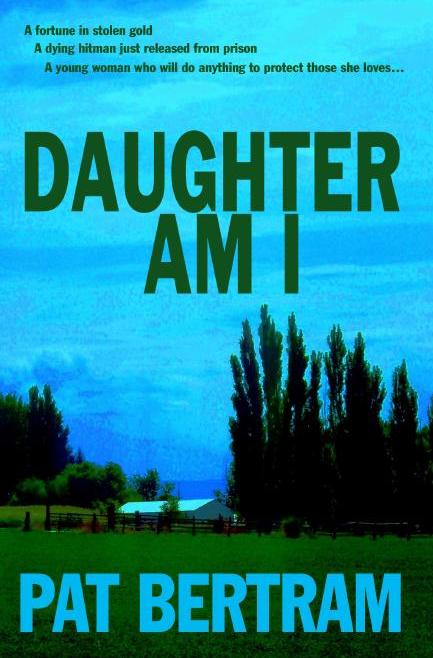
Daughter Am I Blog Tour 2009 Update

Day nine of the Daughter Am I blog tour, and I am still going strong. I actually went to bed before midnight last night, and I’m a bit more rested. Good thing — there is a lot going on today! First, check out “After the Writing Comes the Work.” Great discussion going on at that unscheduled tour stop, and a wonderful compliment about Daughter Am I.

Next, check out “How Best To Procrastinate” on Claire Collins’s blog. It was actually yesterday’s tour stop, but I kept finding other things to do and never got around to telling you about it. (Procrastination humor. Trite, but still amusing. I hope.)

Claire is a guest on my blog talking about “Welcome to the Business of Writing”, and the importance of a mission statement. Mine is: “It is my mission to become so well-known that a traditional publisher will offer me an obscenely large advance. I will turn down the advance because I’d like to show that there is value in being published by a small independent publisher, and because the resulting publicity could be worth more than the publishing contract.” Did you notice that it says nothing about writing? Hmmm.

One of these days I really do have to work on my poor stalled WIP. I’m thinking of doing WriMo — my own slimmed down version of NaNoWriMo. Instead of National Novel Writing Month, I might do simply a Writing Month. Perhaps try to write a sentence or two each day in November to get back into the habit of writing. I did sign up for NaBloWriMo (National Blog Writing Month) and NaBloPoMo (National Blog Posting Month). Since I’ve already contracted to do a blog post every day for the first three weeks in November because of my blog tour, all I need to do is to finish out the month and I win. Win what? you might ask. Nothing, of course. It’s the challenge that counts.

But I am digressing.

Today I am again visiting Joylene Nowell Butler in Cluculz, this time for an interview. I am at Untreed Reads talking about my Rites of Passage as an author. And I am trick-or-treating at the Second Wind blog.

This is turning into an international tour. I’m in Canada today and Wednesday, in Florida tomorrow, and in Australia on Thursday. In the middle of November, I’ll be in South Africa. You gotta love the Internet!

Today’s schedule recapped:

After the Writing Comes the Work
How Best to Procrastinate
Welcome to the Business of Writing
Interview at Cluculz
Rites of Passage
Trick or Treat! Let the Game Begin!

Have fun. I intend to.

DAIClick here to buy Daughter Am I from Second Wind Publishing, LLC. 

Click here to buy Daughter Am I from Amazon.

add to del.icio.us : Add to Blinkslist : add to furl : Digg it : Stumble It! : add to simpy : seed the vine : : : TailRank : post to facebook

Writing Discussion With Cliff Burns — Part III

When I asked Cliff Burns, author of So Dark the Night, if he’d like to guest host my blog, he responded that he’d rather have a discussion. I was thrilled. I enjoy talking about writing, but even more than that, I love learning how other writers approach the craft. This is the third and final part of the discussion.

BERTRAM: National Novel Writing Month is coming up, and its adherents are a heated bunch — they don’t seem to like anyone questioning the process. You’re one of the few I’ve come across who speak out against it. 

BURNS: I know people have really taken me to task for lambasting NaNoWriMo and its adherents. To me, the concept is a stupid one — write a novel in a month, give me a break! It devalues the professionalism of the vocation, the enormous amount of time and energy authors put into learning and developing their craft. Anyone can claim to be an “author” or “artist” — the arts seem to condone this sort of thing. I suppose I’m an elitist and a snob. It took me ten years of daily writing and scores of credits before I was able to call myself a writer without feeling self-conscious and phony. As I wrote in a recent post: you’re not a plumber if you unclog a toilet and you’re not an electrician if you screw in a light bulb. Each of those trades requires training, a lengthy apprenticeship period. Why should the arts be any different? 

BERTRAM: I can’t even imagine what it would take to write a novel in a month. The writing of a novel takes me a year, and some of the research I’ve done has taken more than that. But then, I am not an intuitive writer. I have to drag each word out of hiding and find its place in the puzzle that is a novel. I suppose two types could write 50,000 words in a month — the intuitive writers who spew out words, and the logical writers who have the whole thing outlined before they begin. Me? I fall somewhere in the middle. I so hate tossing aside my hard work that I habitually rework my writing as I write. (Though I have rewritten one of my novels four times, and deleted 25,000 words from another..)

BURNS: My first drafts come out in a huge gout of words — I try to get it all down as quickly as I can.   I think I wrote the first draft of one of my novels in 45 days. But . . . then I spend the next eighteen months (or more) revising, editing, polishing, going over each syllable with painstaking care. I outline a little bit, scribble down character names, some ideas for certain scenes, but that first draft usually becomes the outline I work from. It’s incredibly labour-intensive but the only method that works for me.. I would say only a few words or phrases survive from my first draft by the time I’m finished. It’s only a roadmap, nothing more. And I never grow attached to a character or scene — “everything in service to the story”, that’s my motto. All else is expendable.

BERTRAM:  I was going to ask if you push for a daily word count, but you mostly answered that. So how about: do you write at the same time and in the same place and in the same manner (computer, pen/paper) everyday?

BURNS: My office is right across from our bedroom so it’s the first place I visit in the morning. Moving things around on my desk, gearing up for the day. I play lots of music to get warmed up, start the juices flowing. Commence work when my family leaves for school or work, break for lunch, maybe tea later in the day, popping downstairs when my family returns. We have supper together and then often it’s back to the office to square things away, tie off loose ends and set things up for the morrow.

BURNS: First drafts are almost always handwritten (even my 450+ page novel So Dark the Night) and then tapped into my ancient Mac computer with fingers swollen and aching from arthritis or nerve damage.  Twenty-five years or more of three or four-fingered typing has taken its toll. How does that compare to you? I hope you’re a lot saner in your work habits than I am. You strike me as a pretty levelheaded individual . . . or am I wrong?

BERTRAM: You’re not wrong, but when it comes to writing, I’m not so much level-headed as undriven. Each of the words has to be dragged out of me, an act of will. And sometimes the words are not there. But I don’t sweat it; I edit, I blog, I promote. And when the words come, I’m ready. I also write handwrite my first drafts — I think one reason for the crap published today is that authors lack the brain/finger/pencil/paper flow. I read once that the only place other than the brain where gray matter is found is on the fingertips. May or may not be true. But it feels true.

BERTRAM: When does a writer become an author? I used to think it was when a writer got published, but now that anyone can get published, it’s not much of a criterion. Nor does a writer become an author when they can make a living at it; good writers seldom can. The hacks usually do.

BURNS: A writer writes. That’s it. Every single day. Publication credits are meaningless (especially today) and critical acclaim doesn’t amount to a hill of beans. Sales figures? Well, Dan Brown sold millions, as did Stephanie Meyer and, in my view, their work is sub-literate.  he way you can tell is read it out loud. Just one page, any page will do. If you’re not crying with laughter after a couple of paragraphs, it’s time to get a funny bone transplant.

BURNS: Aspiring authors: apply yourself to the task of writing with discipline and courage and perseverance. I love the quote from Nabokov about “writing in defiance of all the world’s muteness”. Not just scribbling the same thing, working to the same formula but trying to stretch your talent as far as it will go . . .. and beyond. Working outside your comfort zone, writing prose that scares and intimidates you. But it’s the daily practice that, to me, reveals those who are serious and distinguishes them from the wannabes I loathe.

BERTRAM: is possible to become an author people will read even without the “help” of corporate publishing?
 
BURNS: I self-published my first book back in 1990 — it sold out its print run in less than 5 months and earned praise from various reviewers, as well as Governor-General Award-winning writer Timothy Findley. I started my blog, “Beautiful Desolation” 18 months ago and since then I have ceased submitting work to other venues — my work (including 2 novels) now goes directly to my blog and I’ve never been happier. Corporate publishing is dying, the profit margins aren’t big enough and soon the Big Boys will be dumping their publishing arms. The new technologies allow writers to have access to readers around the world–I only wish this stuff had been around ten years ago, it would have saved me a lot of frustration and fury. Kindle? E-books? POD? Why not? Anything that allows the writer to get a bigger slice of the pie is all right with me…
 
BERTRAM: How did you promote your self-published book in 1990? What would you do differently today?
 

BURNS: That was my book Sex & Other Acts of the Imagination and a lot has changed since then. For one thing there are far fewer independent bookstore and those were the folks who sold the lion’s share of Sex. I took copies with me everywhere I went–Saskatoon, Regina, Edmonton, Vancouver, Toronto–approached every indie bookstore I could and sold them (usually on consignment). The vast majority of those book stores are gone now, sad to say. Sex cost $3000 to publish, my second collection, The Reality Machine, cost $6000 in 1997. Nowadays print-on-demand might save me some money–that’s something I’m looking into, likely using Lulu.com. Can’t quote you any price for that (as yet) but I’ll be using my blog and the vast reach of the internet to spread the word..

BERTRAM: Is there one website more than another that brings you readers? Any suggestions for authors just starting to promote?

BURNS: Hmmm . . . well, I try to reach out to sites that discuss writing and publishing and I have a RedRoom authors page. I comment on a lot of blogs, replying to posts that amuse or annoy me for one reason or another. My blog, Beautiful Desolation, is my primary promotional venue, to tell the truth. I’m also on LibraryThing, a place where bibliophiles can hang out and chat. They don’t encourage “blog-pimping” (a term I loathe, by the way), which is ridiculous because often I’ve written a lengthy post on “Beautiful Desolation” regarding a point under discussion. So I refer people to the post anyway and slap down anyone who dares accuse me of self-promotion.

BERTRAM: Thank you for taking the time to talk with me.

BURNS: Interesting the similarities and differences in our approaches and processes, our views toward the life and business of writing. Thanks for the discussion, it helped me better define and synthesize my thoughts.

Writing Discussion With Cliff Burns — Part I

Writing Discussion With Cliff Burns — Part II
Why NaNoWriMo?

I don’t understand the point of NaNoWriMo. If people spew out 50,000 words in a month, how can any of those words be any good? Unless the writers are very talented, in which case why aren’t they already writing? So why do it? To say they did? I’ve been told that anyone trying to write that fast will write drivel, that the question at the end of the month is: Is it salvagable drivel?

For me, the answer would be no. I’ve been playing around this month with writing quantity rather than quality, and I didn’t get anything except flak from my main character who thinks I should be working harder to get him to safety. It wasn’t pretty. This is the end of the conversation. You can see the whole thing at my Pat Bertram Introduces blog.

Bertram: I really want to know. What would be doing if you weren’t talking to me?

Chip: Going home. I have a cat waiting for me. You’ve left us alone so long, it’s probably gone by now.

Bertram: Not yet, he’s still waiting for you. And he’s doing well. He’s quite a self-sufficient creature, you know.

Chip: It. It’s an it, not a he. “He assumes humanness, and it’s a higher life form than any human I’ve ever met.

Bertram: Okay. It’s waiting for you.

Chip: I hear that patronizing tone in your voice. I don’t have to put up with it.

Bertram: Oh, but you do. I’ve pledged to write 2000 words tonight, and since you’re not giving me anything to work with, we’re going to keep at this until you do.

Chip: What do you need from me?

Bertram: Something to make you real in my head so that I can hardly wait to work on your story everyday. Something that excites me so that I can’t stop thinking about it.

Chip: No one can do that. You’ve read so much you’re jaded, and now you expect me to supply the excitement you once found while reading. But at least you’re working again.

Bertram: But the writing is awful. I can’t use any of it for the book.

Chip: So? I thought the point was to write whatever flows out of your mind.

Bertram: I didn’t expect such drivel. I’d hoped for magic.

Chip: We all hope for magic. Few of us get it.

Bertram: Now we’re getting somewhere. Did you hope for magic?

Chip: Maybe.

Bertram: Then you got it, didn’t you? One day your world was the same as it always was, and the next . . .

Chip: It changed. Nothing is the same. Nothing is real.

Bertram: How does that make you feel?

Chip: What are you, my therapist?

Bertram: Just answer the question.

Chip: It makes me feel frightened. Awed. Unsettled. Lonely. Desperate. Excited. Except for the bugs. I can do without those.

Bertram: You have to admit, it’s interesting for a character who professes to love animals to have an aversion to bugs.

Chip: Big bugs. Two-inch beetles. Seven-foot millipedes. Next thing I know, you’re going to have dragonflies with six-foot wingspans.

Bertram: Great idea, but I don’t want to overdo the bug thing.

Chip: Believe me, I don’t want you to overdo it either. Can I go home now?

Bertram: As soon as you give me something to work with.

Chip: Looks like it’s going to be a very long night.

On Writing: Finding the Words

I always thought I would be an author. I loved reading, and I had an affinity for words. I would spend days perfecting a six line poem, finding the perfect word to say what I meant, finding the perfect layout so the visual aspect of the poem adding to the meaning. I also wrote short allegories (that masqueraded as children’s stories). But what I really wanted to do was to write a novel. So I quit my job, stocked up on paper on pens (this was pre-PC), and sat down to write the story of a love that transcended time and physical boundaries, told with sensitivity and great wisdom. To my dismay, I discovered I had an appalling writing style, little wisdom, and absolutely no talent.

Back then I thought that to be a writer, one let the words flow from mind to pen to paper, like a medium transmitting messages from the spirit world. (Puts a whole new meaning on the word medium used as a vehicle for ideas!) But few words came to me. And the ones that did come, conveyed little of the story I wanted to tell.

And then one day no words came. Gone out of my head. Kaput. I lived with that sadness until many years later when I decided that, talent or no talent, I would write. So I did. I put one word on the page and then another. To my surprise, I finished the novel, but it is so terrible that I do not include it when I count the number of books I have written. (It’s a novelized version of my life, written more as therapy than literature, with a single benefit — I no longer have any desire to put myself in any of my books.)

After that, I started to read books about writing, which depressed the heck out of me because I couldn’t understand half of what they said. Rising conflict? Show don’t tell? Beats? The information gradually seeped into my subconscious, and so I learned.

After starting my fifth novel (or sixth if one counts that first autobiographical one) I discovered the internet and so wasted my words on commenting and blogging and emails, which is why I declared October as MyNoWriMo (My Novel Writing Month.) Unlike NaNoWriMo in November, MyNoWriMo does not require me to write 50,000 words in the month. The words do not flow out of me; I have to pull them out one by one. What I do expect from MyNoWriMo is to get back into the habit of writing, to find again the joy in building a story word by word.

And it’s working. Last night, for the first time in months, I felt that excitement of being in the story. I only wrote about 500 words (typical for me) but they are good words. I can hardly wait for tonight!