Utterly Bizarre

Reading my own books is utterly bizarre. I’ll be going along, involved in the story, loving what I’m reading, wondering what’s coming next. Whenever I’d stop to take a breath, it would stun me to realize I wrote the book. How is that even possible? Not the writing — I remember writing and rewriting and re-rewriting More Deaths Than One, for example, but except for a brief synopsis, the same one on the cover — “What if you returned home after years away and found someone with your face living your life . . .” — the story was completely new to me.

I do remember wondering if More Deaths Than One might be a tad amateurish, but I’m not finding that at all. Well, there is the girl with the eyes that sparkle perhaps too often, but even today, I wouldn’t know a different way of showing, from the hero’s point of view, how much he lit up her life. And there is . . . hmm, I don’t know . . . maybe a bit of passive storytelling, but I remember thinking that I wanted the relationship between the boy and girl to be of paramount importance as they discover the truth rather than a thriller-like chase. Whatever the case, I can no longer judge the merits of my books except for the very personal one of getting to read — and enjoy — these books as if for the first time.

I mentioned before that the “Pat Bertram” books were written by someone else, someone I’d been years before. In the case of More Deaths Than One, that someone is the person I was twenty-years ago, before Jeff died, before I went to California to take care of my father, before dance classes, before buying a house, before gardening. There’s been a lot of living in the past twenty years! No wonder there’s such a huge disconnect between the author I was and the reader I am.

Although the books were written in part for a future me, since back then (and still today) I have a hard time finding books that speak to me, I feared reading them again. What if I hated them? What if they struck me as abysmal as most books do nowadays? What if I were embarrassed by non-existent storytelling abilities? But whew! That’s not been an issue. (Well, I am a bit embarrassed by the sex scenes in More Deaths Than One. This is the only Pat Bertram book that has any, and as I’m beginning to see, they are an integral part of the character, but still . . .)

I have found a few changes to my submitted manuscripts (like the ones in Bob: The Right Hand of God that make me look as if I don’t know what I’m doing when in fact it was an editor who made the changes), a few words in both A Spark of Heavenly Fire and More Deaths Than One that mysteriously became hyphenated (more editor’s work, I suppose), and a stray typo or two. Despite those minor imperfections, the books all seem professional to me.

But yes, it’s utterly bizarre to be reading a book I wrote, breathlessly waiting to see what happens next. And it’s even more bizarre to be blown away by the ending. Whooo.

***

Pat Bertram is the author of Grief: The Inside Story – A Guide to Surviving the Loss of a Loved One.
A Very Readable Hoot

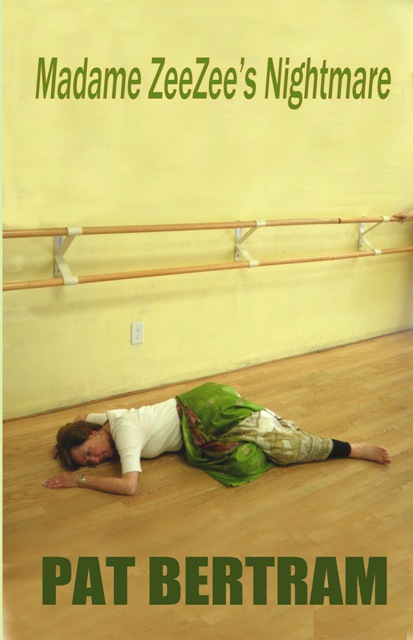
Before I moved back to Colorado, I was living in California and taking dance classes. When one classmate discovered I was a writer, she suggested I write a murder mystery about our class, and she volunteered to be the victim. I wasn’t sure I wanted to kill off someone I knew — words have power, and I didn’t want to unleash that power on even a suspecting victim. Despite my misgivings, I started to follow through, going so far as to take a photo of our lovely victim for the cover of the book. I’d expected to have to take several shots to get the pose I wanted, but she sank to the wooden floor as gracefully as she did everything else, and lay in the ideal pose. Right then I knew I could kill her. She was just too damn perfect.

After a lot of procrastination, I did end up writing the book, though funnily enough, after it was published, she asked “Why did I have to be the victim?”

Another member of the class belonged to a book club, and when it was her turn to choose the book, she chose the book I’d written, Madame ZeeZee’s Nightmare, and invited me to join them for the discussion. I agreed because I thought it might be fun, but when I arrived, I found out that the discussion was to be cut short because of a baby shower as well as a birthday party. They weren’t all that interested in discussing the book, anyway. Nor were they interested in anything I had to say. The only person who actually addressed me asked accusingly if I’d been my own editor. I mentioned that I had several copy editors, and she just made a rude noise and said we’d all done a lousy job because there were more typos than she could count. I did ask her to point them out, but she ignored me. So I thanked them graciously and left.

I’d had a lot of problems with my publisher during the publication process — he insisted on editing the book but ended up making many mistakes. After several heated discussions, he finally agreed to submit the manuscript as I had formatted it, but I had no idea if he had followed through, though when I got the final proof, it seemed okay.

As I’ve mentioned in the previous couple of posts, I’ve been reading my books, though always with a bit of apprehension. This one most of all since I didn’t want to face the “more typos that she could count.”

I also worried that since it was more or less a novelty book, it would seem silly or lacking any depth. But I shouldn’t have worried. After all, it is a “Pat Bertram book.”

As with the other of my books that I recently read, I was astonished by how good the writing was and by how much I liked the book. Except for the brief synopsis, I had completely forgotten the story. I hadn’t even remembered who did the deed, and wow! The ending really blew me away.

I was especially delighted by the sly mention of mystery genre tropes. For example:

The first thing you learn when you set out to write a novel is that you need a strong protagonist. No ditherers. No brooders. And I am both.

And:

I climbed into my ancient VW bug (no, I am not plagiarizing a well-known fictional detective, I really do own such a car—bought it new when I was young and never got another auto) and drove to the gas station.

And:

Like a fool in a bad drama, I stared at my phone. Huh? She expects me to drop everything and drive over there so she can tell me something she could just as easily have told me over the phone? With a shudder, I realized what had just happened. The worst cliché of all. So often in mysteries, someone makes such a call, and when the recipient arrives at the rendezvous, they find the person dead.

And:

In every mystery story, it seems, there comes a time when the author wants a way to present insights, needs to show state of mind, or simply gets bored with a straightforward narrative and plays at being creative, so the storyteller recounts a dream. Since I hate dreams, my own included, I usually skip those parts of a book, so I won’t bore you with the details of my dream.

There isn’t a lot of action in the book, it’s more of a psychological mystery, but it’s a fun story within a story — a writer writes a story about a fictional writer writing a story showing how life follows fiction.

As reviewer Malcolm Campbell wrote, Madame ZeeZee’s Nightmare is “a very readable hoot. In this dandy mystery, everyone has a secret, a reason for covering it up, and a possible motive. The characters are well developed, the introspective protagonist wonders if she inadvertently set the stage for a murder by agreeing to write a murder mystery based on the dance class, and the cops tell her that in real life, most amateur sleuths end up dead or worse. Readers who love mysteries will enjoy this book. Writers who write mysteries will consider being more careful when pretending to kill off their friends in a novel. And those who’ve been thinking of taking a dance class will see the story as a cautionary tale.”

And oh, yeah — there were typos. Three of them. One absent hyphen, one missing “not,” and one extraneous “a.” It’s possible there were translation errors in the ebook, which she had read, but that’s a mystery for another time.

***

Click here to read the first chapter of: Madame ZeeZee’s Nightmare.

New Favorite Author

I have found a new favorite author. I don’t know if you’ve ever heard of her. It’s someone by the name of Pat Bertram.

I was going to continue on that vein, talking about that new author in the third person, but it seemed a bit too . . . cutesy . . . for lack of a better word.

I’ve been reading the books I wrote, and to be honest, I am stunned by what a good writer I was. Admittedly, the books had been written by me (and by extension, for me) so that could account for why I like them so much. They’re also (obviously) the type of books I like, the type that aren’t written any more, such as books that take place in familiar circumstances but that have an otherworldly strangeness about them. Bob: The Right Hand of God is a good example of this kind of book, and Light Bringer is another. They’re a sort of fantasy. A sort of a what-if type of story. A sort of speculative fiction. But not really any of those. They are just (as someone once called them) “Pat Bertram novels.” As if I were my own genre.

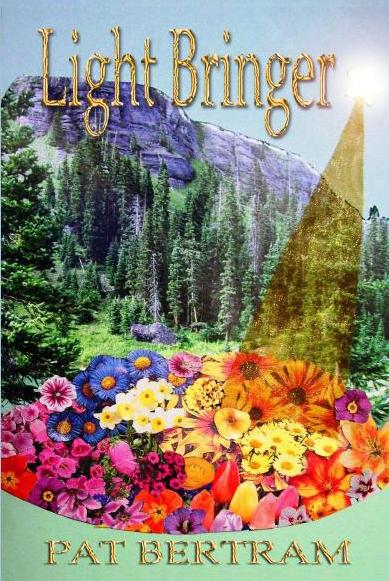
Light Bringer blew me away. Truly. It’s been fifteen years since I looked at it and, except for a general idea of what the book was about, the story came as a complete — and delightful — surprise. So did the more-than-competent writing. I truly had no idea I had used color and sound as a backdrop to the story. I had no idea the depth and beauty. I had no idea the research that had gone into the making of the story — all that talk about harmonics and graviton drives and mind/matter interfaces and laghima was new to me as I read the book. Amazing.

It’s funny, but I used to think that perhaps I deserved the resounding silence my books generated from the reading public, that perhaps my writing was amateurish, but Light Bringer showed otherwise. One problem is that I never found an effective way to promote. Another problem, one that touches on the first, is that I didn’t know how to categorize the books. As I mentioned, there is no genre to most of my books, and if there were, each would be listed as a separate genre, which is frowned on in today’s (and yesterday’s) publishing world. People want to know what they are reading before they even start reading, whether a mystery, a thriller, a romance. None of my books are any of those things. Or maybe they are all those things.

In that, I was an oddity, both as a reader and as a writer. Some of my favorite books were those written by authors with various types of stories to tell. An adventure story, then a science fiction novel, and then maybe a mystery. But those writers are gone. Well, except for me, and I’m all but gone since I don’t write anything but blogs anymore. (Though reading my books does give me an itch to maybe . . .  someday . . .)

One thing I do remember about my books is how much I had to fight my first publisher to keep him from changing my books. Or rather, I had to fight him to change them back to the way I wrote them. I never knew of a copy editor who added typos to a book, but mine did. Each of my first several books degenerated into a such a miserable experience that it made me lose interest in writing. But seeing how good my books are, I now know they were worth fighting for.

Even though I would have liked to become more of a selling author (my first publisher went bankrupt, so no royalties would be forthcoming even if I did become a bestselling author), it’s enough, for today, that I read and loved Light Bringer.

***

Pat Bertram is the author of Grief: The Inside Story – A Guide to Surviving the Loss of a Loved One.