Lily Forest

Ever since I heard of lily trees (a cross between an oriental lily and a trumpet lily) and how tall they grow (an average of four feet), I wanted to grow a forest of lily trees. To that end, I’d been planting a few lily bulbs every year, and this year, they decided to really pop. And oh, my! What a lovely mini forest!

The lilies are large and vibrant, with lots of dark pink

light pink,

white

And even a couple of yellow that just showed up this morning.

Although for the most part, there isn’t a lot of color in my garden this time of year (after I pull up the spring-blooming larkspur, it takes a while for newly planted flowers to grow) the lilies command so much attention, that it doesn’t really matter. And then, of course, there is the purple echinacea that frames the forest. (It’s called purple, though in my garden, it’s actually pink, and can be seen at the bottom of the lily forest photo.

My raised garden is doing well, too. A squash!

A frog house nestled among the cucumbers and tomatoes. Well, tomato.

And contented birds shaded by another tomato plant. Luckily, the real birds are leaving my garden alone, though they tend to roam in the grass. With any luck, they are eating the myriad baby grasshoppers.

It is interesting to me that of all the things I thought of doing after Jeff died, owning a garden with a lily forest never even entered my mind, and yet here I am. Despite times of late-night loneliness, I am doing well. A garden can be such a comfort, at least as long as one concentrates on what is working rather than what is not. Even better, it provides a focus. There is always work to be done, plans to make, views to enjoy, and perhaps even a little food to harvest.

Best of all, it gives me fodder for an occasional blog post!

***

Pat Bertram is the author of Grief: The Inside Story – A Guide to Surviving the Loss of a Loved One. “Grief: The Inside Story is perfect and that is not hyperbole! It is exactly what folk who are grieving need to read.” –Leesa Healy, RN, GDAS GDAT, Emotional/Mental Health Therapist & Educator.

What I Am Doing

Obviously, what I am doing right now is working on this blog post, but beyond this moment, I am sure you can guess what I am doing — working on my yard! And beyond that, I am sure you can guess what else I am doing — recuperating from all the work. I never realize how old I am until I start aching, and then, it’s hard to believe I was ever foolish enough to think that just because I could do some physical work, I wasn’t that elderly. (As an interesting aside, interesting to me, that is, elderly used to mean not yet old, whereas now it means old, frail old, decrepit old.)

In previous years, I would post photos of my yard, specific images that showed the few flowers that were blooming, and let you extrapolate from that how gorgeous my yard was. Or was not, which I often had to admit. This year, however, my yard truly is stunning.

The grass I planted last fall looks great. I’m keeping my fingers crossed that come summer and the enormous heat, the grass will survive. To that extent, I am trying not to water even when the grass looks dry and faded, hoping the roots will dig down deep enough that it will survive the heat blast.

Even though I thought I’d harvested all the larkspur seeds last year, enough blew around that any weedy area became a larkspur field this year.

No matter where the larkspur are, even invading a poppy field, they bring joy to all who see them.

Finally, after all these years, my raised garden is not only built, but filled with dirt. And plants! Flowers and vegetables mixed together in harmony. At least, that’s the hope.

The wild roses are doing well.

I have always loved the look of red and yellow bushes mixed together, but my yellow and red bushes got separated. I’ve been trying to buy yellow roses to plant among the red, but never found any. I have come to believe that the yellow is an aberration. One of my red bushes ended up with a stem of yellow flowers. I also found some yellow flowers on a red branch. And in one case, the red rose had yellow petals, too.

And that’s not all! The columbine I planted last year survived the winter and are now thriving.

Cottage pinks that were planted years ago decided to bloom profusely.

The ice plant is forming a carpet of shimmering beauty.

And petunias. What can I say? Petunias always do well here.

It’s funny, but despite the way the yard looks, I still don’t really know what I am doing. I’ve been told that there is an expiration date for that claim, but it certainly hasn’t arrived yet. The beauty of gardening (in addition to the beauty the eyes can see) is that plants that do well thrive and those that don’t, don’t. Any mistakes simply disappear, so what’s left looks as if it comes from heart of a master gardener even though I am strictly a trial-and-error dilettante.

I am learning, however, to take what comes. Last year, one garden area shone with the golden aura of wallflowers. This year, wallflowers are decidedly absent. Some plants that were supposed to be perennials turned out to be biennials. Some wildflower seeds that should have come up this spring never showed even a touch of green. The tulips that started out so hopefully ended up giving up before spring got underway.

I am going to try to take it easy physically for a couple of weeks so that when the larkspur go to seed, I will have the energy to pull up the plants to harvest the seeds and see what plants that wall of blooms is hiding. And then . . .

But “then” isn’t here yet.

Meantime, I am enjoying the surprises I find every day.

***

Pat Bertram is the author of Grief: The Inside Story – A Guide to Surviving the Loss of a Loved One. “Grief: The Inside Story is perfect and that is not hyperbole! It is exactly what folk who are grieving need to read.” –Leesa Healy, RN, GDAS GDAT, Emotional/Mental Health Therapist & Educator.

What’s to Come

We had a lot of rain Wednesday night, so yesterday morning I took the opportunity to start clearing out some flower beds in preparation for fall and winter. The lilac garden particularly needed work because the tomato plants I’d planted in the large space in front of the bushes went wild and completely buried the still-small lilac bushes. I trimmed back the cherry tomato plants, and then spent an hour or so untangling the bindweed from the lilacs, which I hadn’t been able to do because of the tomato forest.

Surprisingly, despite the neglect and competition, the lilacs are all doing well. I’d planned to plant the tomatoes in my raised garden next year, but now I’m thinking I will plant cherry tomatoes in pots to keep them from taking over the flower beds. Better yet, considering the long, ropy branches, maybe I’ll plant them in hanging pots.

This morning, the ground was still damp enough that I decided to continue my pre-fall cleanup. I hadn’t been able to get to my lilies to weed them because of all the wildflowers that grew in that area, but with most of the flowers spent, I was able to do a lot of clean up — pulling weeds, weedy grasses, and of course, the dying wildflowers.

I need to get grass seed to fill in the spots in the lawn that seem to be dead. There should be plenty of seed left to extend the lawn into the flower bed so that it will be easier to get to the lilies. Since that area is toward the back of the yard, I won’t mind as much if the weedy grasses encroach on the expensive grass — either way, I will be able to mow the area, making it easier to work that flower bed. (And end up with a few fewer feet of ground to weed!)

As I water and weed, I spend a lot of time looking at the garden, trying to figure out what works best for me and what doesn’t, and from a weed-pulling standpoint, I enjoy the bushy flowers like echinacea more than the single-stemmed varieties because they don’t seem to get as weedy as other plants. I must admit, though, that I did enjoy the wildflower gardens and the ever-changing blooms. My problem with the wildflowers was the difficulty in weeding as well as trying to control the foxtail grass that seemed to grow even better than the wildflowers, so perhaps the wildflowers would be best in the raised garden.

And oh, the wild four o’clocks. They never did well, never got the mounds of flowers they were supposed to, but I just found out they didn’t need to be watered much. I was going to move them to a place where they wouldn’t get watered when I watered my grass, but apparently, they don’t do well as a transplant. Considering that the plant went dormant for a couple of years, I’m not sure it’s something to worry about.

I also don’t think I’ll have to worry about planting more Love Lies Bleeding amaranth — apparently, it readily seeds itself. I like it, at least sometimes, when the garden itself decides what to grow. It saves me a lot of trouble.

I’d also considered not planting more moonflowers, but they do well here, and since it’s next to the fence, and since my neighbor likes it, it seems a good thing to replant, though it, too, might reseed itself, saving me the trouble. (Though, truly, it was no trouble at all to throw a few seeds on the ground and give them a bit of water.)

I realize there’s nothing particularly interesting in this post. It’s mainly for me, reminders of what’s to come in future seasons and what I need to do to ensure that coming.

***

What if God decided S/He didn’t like how the world turned out, and turned it over to a development company from the planet Xerxes for re-creation? Would you survive? Could you survive?

A fun book for not-so-fun times.

Click here to buy Bob, The Right Hand of God.

My Exciting Life

I had a rare treat today. My body got me up at 5:00 a.m. as usual, and as usual, I went back to bed. And surprise! I actually went back to sleep and didn’t wake up again until 7:00. As much as I like not dragging my tired body through the day, the restfulness came with a price — two hours less in the day.

So here I am, scrambling to find something quick to write about for today’s blog post before I head out to work. I mean, head out to my job. I’ve already been working. I spent the past three hours outside getting caught up on gardening chores — weeding, watering, planting, transplanting. And oh, my. I hurt from top to bottom!

It’s funny — I keep telling people in another few years I’m going to have a fabulous yard, but the truth is, I have a fabulous yard this year. Admittedly, in a few years the lilac bushes will grow to maturity, offering me a few more nooks and crannies in my yard to give me an excuse to wander around and see what’s there (instead of being able to see everything at a glance, that is). And more perennials will take hold, as well as the last few wild places filled in. The raised garden is still just an idea built on top of a long rectangular hole in the ground, and as much as I’d like to see the finished project, I have enough to keep me active. I certainly don’t need another forty-square-feet of garden to take care of right now. One day, however, I will be glad of a new garden spot.

Just not today.

I’m glad I’ll be going outside again — I’ll be walking the couple of blocks to my job — because in all the working this morning, I forgot to enjoy the perfect day. No high winds, just a bit of a breeze to temper the heat of the sun, and blue skies.

Well, thanks for reading. I’ll be back again tomorrow for more news about my oh, so exciting life!

***

What if God decided S/He didn’t like how the world turned out, and turned it over to a development company from the planet Xerxes for re-creation? Would you survive? Could you survive?

A fun book for not-so-fun times.

Click here to buy Bob, The Right Hand of God.

Things to Worry At

In a book I just finished reading, the character often stayed awake at night worrying about all the things in her life that she couldn’t do anything about. As it turns out, the one thing she should have been worrying about, the thing that will change her life forever, is something she could never have imagined. But that’s not what this post is about.

Mostly, her worrying got me to thinking about my worries. Luckily, my worries at the moment are all minor. Even better, “worrying” in my case doesn’t mean causing anxiety; it means to tug and pull at things. Like a dog worrying at a bone, I worry at thoughts — I poke and prod them, pushing them around in my head, looking at them from all angles.

The current bone that I am worrying at is what to plant in the “island” between my two sidewalks. The space lends itself to some sort of formal desert garden, or rather it would if it weren’t for all the shade that area gets. A garden like that would take more studying and preparation (and money!) than I want to deal with right now, though I can always plan such a garden at a later date. My latest thought is to take all the seeds I have, mix them together — cultivated flowers and wild flowers, annuals and perennials, new and expired — and then next summer toss them onto the space, cover them with dirt, water, and see what happens.

The summer after that would be the key to what I ultimately decide. If enough perennials take hold, then the decision would be made for me and I wouldn’t have to do anything. By then, too, the prostrate knotweed that passes for grass around here might have taken over, since it’s almost impossible for me to keep on top of it, and in that case, I wouldn’t have to do anything, either, except give up and let it be.

Ideas for that garden particular area are not all that I am pushing and pulling around in my head. Behind the currently roofless gazebo, in the middle of the reddish pathways, there will be a raised garden, and that, too, is something I worry at. It will be the focal point of my secret garden (because when all the bushes along the fence grow up, that space will be utterly private), and I’m not sure what one plants in a raised garden. It would seem as if tall plants would overpower the area and perhaps make it claustrophobic. And low-lying plants might get lost. I’d originally thought it would be a good place for a vegetable garden, but since I’ve killed a couple of my tomato plants and can’t even manage to grow a zucchini, I’m not sure it’s worth the time and effort to plant vegetables.

None of this matters, of course. It’s not as if the fate of the world lies in the decision of what to plant in my various garden spots. It’s not even as if my own fate lies in the decision. It’s that I like having some idea of what I am going to be doing. More than that, apparently, I also need things to worry at, and with nothing major to worry about, I worry at my gardens.

***

What if God decided S/He didn’t like how the world turned out, and turned it over to a development company from the planet Xerxes for re-creation? Would you survive? Could you survive?

A fun book for not-so-fun times.

Click here to buy Bob, The Right Hand of God

More Work Done!

A couple of workers showed up today to continue working on my yard, and they did enough that it actually looks like they are making progress.

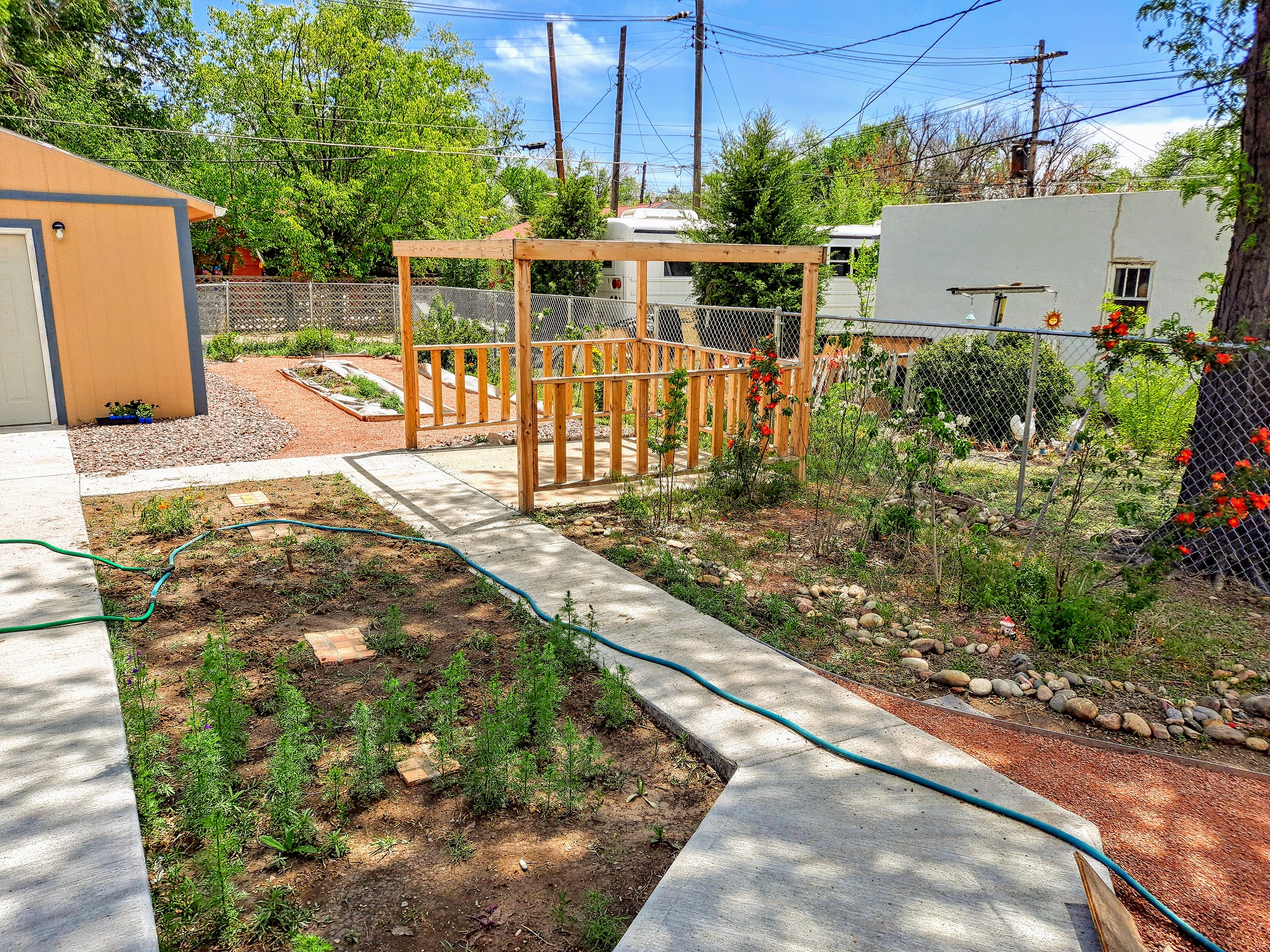
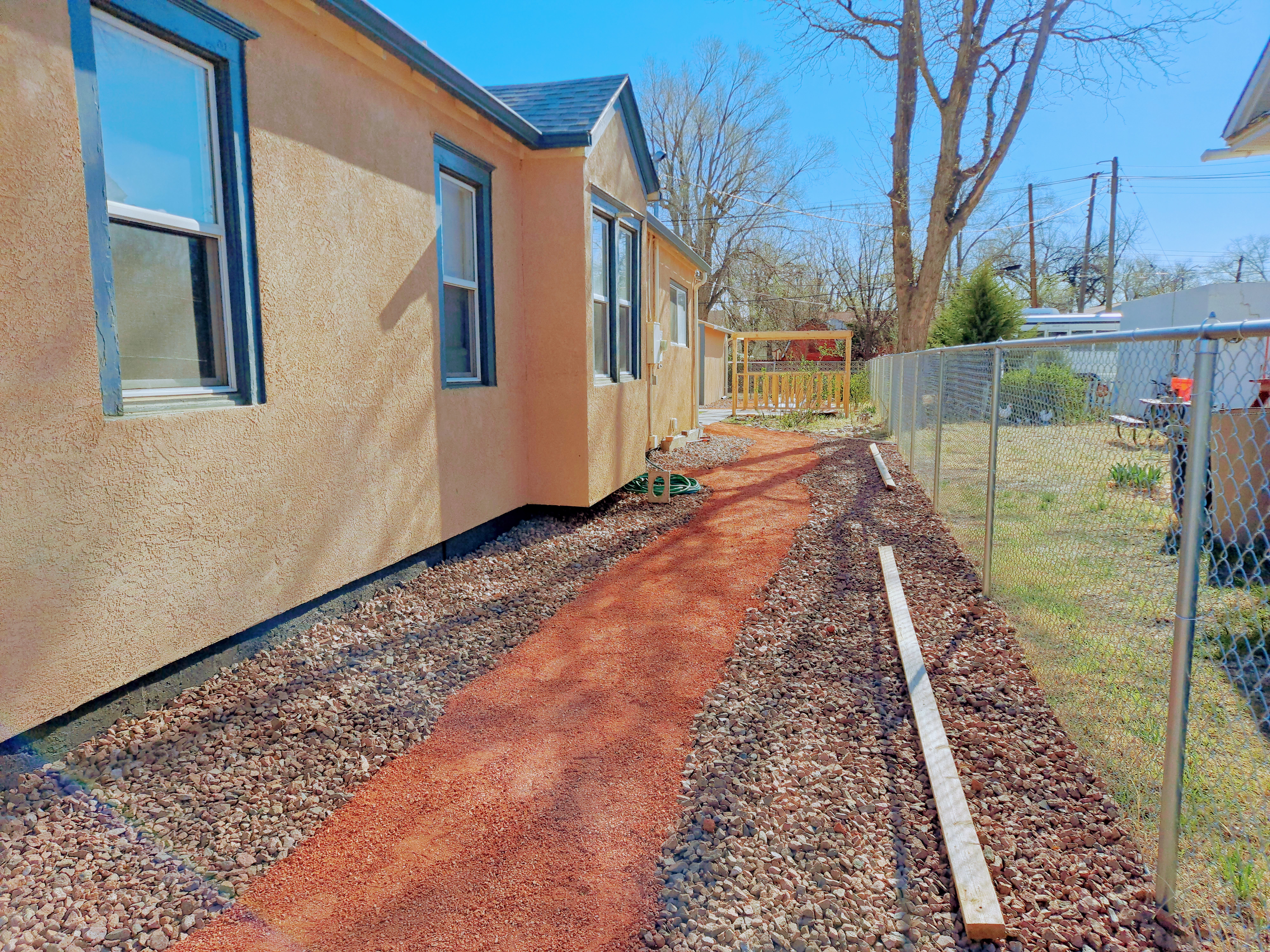
This following picture is the side of the house where a long disused driveway used to be. The crib-like structure toward the end of the pathway is a gazebo being built over a concrete slab that was in front of the old garage. There were enough materials leftover from building the new garage — including shingles — that it’s mostly paid for. I’m not sure I will ever use the gazebo, but it’s something I’ve always wanted. Besides, a concrete slab is a terrible thing to waste.

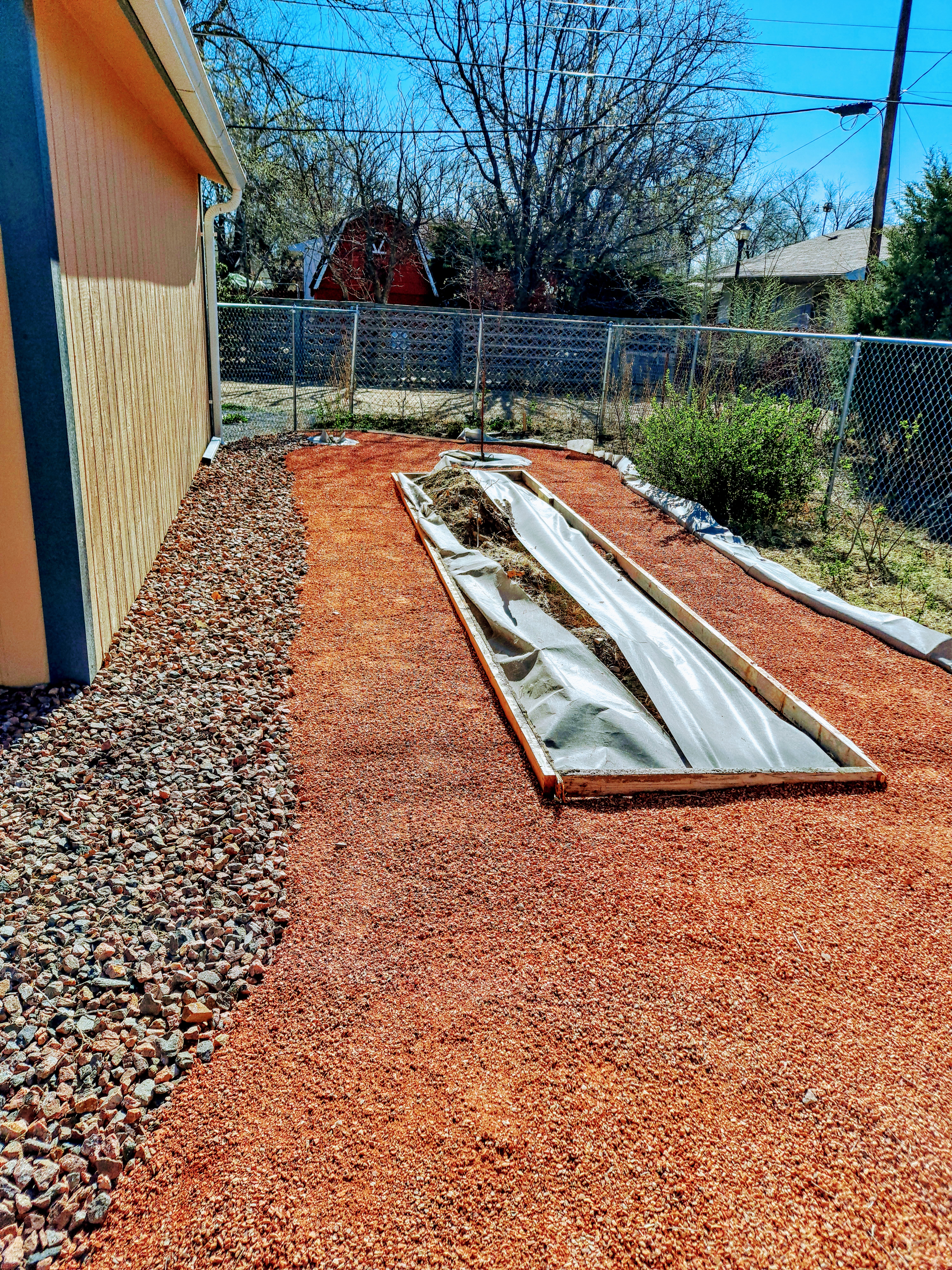
This second photo is the rear of the yard where the old garage used to be. The squared off space in the center of the red pathway will eventually be a raised garden.

I do have another garden spot (the “island” between my back sidewalks) though who knows how much I will ever be able to do with it. Getting down on my knees, even with the help of a garden kneeler is, I am afraid, a thing of the past. This May, when the risk of frost is past, I’ll probably just toss out some seeds, water the area, and see what happens.

Meantime, I am enjoying watching my “estate” take shape.

***

Pat Bertram is the author of Grief: The Inside Story – A Guide to Surviving the Loss of a Loved One. “Grief: The Inside Story is perfect and that is not hyperbole! It is exactly what folk who are grieving need to read.” –Leesa Healy, RN, GDAS GDAT, Emotional/Mental Health Therapist & Educator

A Winning Situation

Lots of activity today! I’d ordered some hydrangea bush/trees from The Arbor Day Foundation (well, actually, I donated a token amount of money, and the hydrangeas came along as a gift), but hadn’t received them, so I thought they forgot me. But the hydrangeas came today, which surprised me. I mean, a couple of days until December is still fall, but not what we generally think of as fall. It also surprised me that the ground was thawed enough to plant. I guess a little sun during the day offsets a lot of cold during the night. I thought I was only supposed to get four of the plants, but they sent me five, so I cheated and put two in the same large hole. It’s a place where I particularly want the bushes, so hopefully, at least one will survive — Arbor Day Foundation trees are notorious for not growing. In fact, all the trees I got from them died, and although the lilac seedlings didn’t die, they didn’t grow, either. Maybe next year!

A couple of workers planned to come early this morning to spread the breeze (crushed rock) for part of my walkway in the yard, but they couldn’t come that early because the breeze was frozen solid. I guess the snow had made its way down the heap, and that’s what froze. I can’t imagine that rock itself freezes, but what do I know. I’m new to this gardening/landscaping thing.

The workers did finally come, and in fact, they are still here.

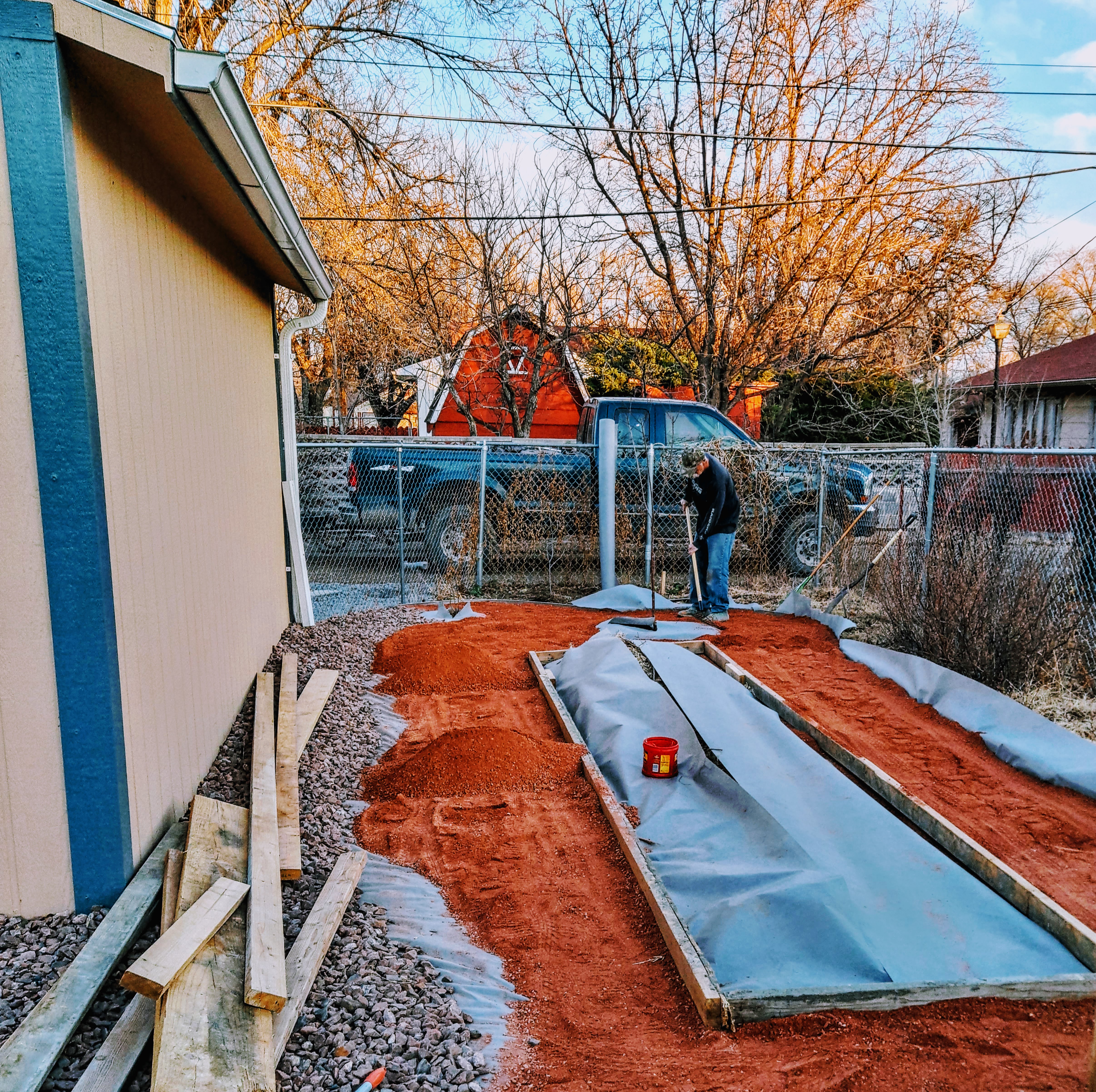
Wow! That breeze rock sure is red!! It’s supposed to dry to a paler red, but we’ll see. I don’t suppose it matters. It’s all earth tone — the garage, the decorative rock around the garage, and the breeze. In the middle of the red pathway is a long rectangle that will be a raised garden.

It’s really interesting to me that although I am doing these things — the raised garden, the pathways, the ramps — for practicality, it’s all turning out to be so lovely.

People keep asking me why I need pathways in my yard, and the truth is, although I will appreciate having smooth walkways, I don’t really need them yet, but as I get older and unsteadier on my feet, I certainly will need them. I wouldn’t want to risk stepping into a depression in the grass and tripping and falling. So many older people’s lives are irrevocably changed by a simple fall. Also, since so many people not that much older than I am using walkers, I want to be prepared. If it got to that point, I wouldn’t want to be housebound just because I couldn’t get around my yard. And if not me, then my friends — I already know several people using walkers or wheelchairs, and I will be ready if ever they were to visit.

Another practicality — the more rock covering the ground, the less lawn or yard to take care of.

Many people either don’t want to think that that far ahead, or simply don’t think of these things, but since I am the only one who will be taking care of me when I get old, I figure the person I am now needs to prepare for the agedness of the person I will become. If I’m lucky, I’ll never need as much accessibility as I am having put in, but at least it will be there in case.

And anyway, it really is fun watching my mini estate taking shape. What’s also fun is seeing how the people who work on my yard really get into it. Although it’s hard work, it also gives them a creative outlet. And I let them do many of the things they think of. So it’s a winning situation all around.

***

If you haven’t yet read A Spark of Heavenly Fire, my novel of a quarantine that predated this pandemic by more than ten years, you can read the first chapter online here: http://patbertram.com/A_Spark_of_Heavenly_Fire.html

Buy it on Amazon here: https://www.amazon.com/gp/product/B0024FB5H6/

Download the first 30% free on Smashwords: https://www.smashwords.com/books/view/1842