Overdone

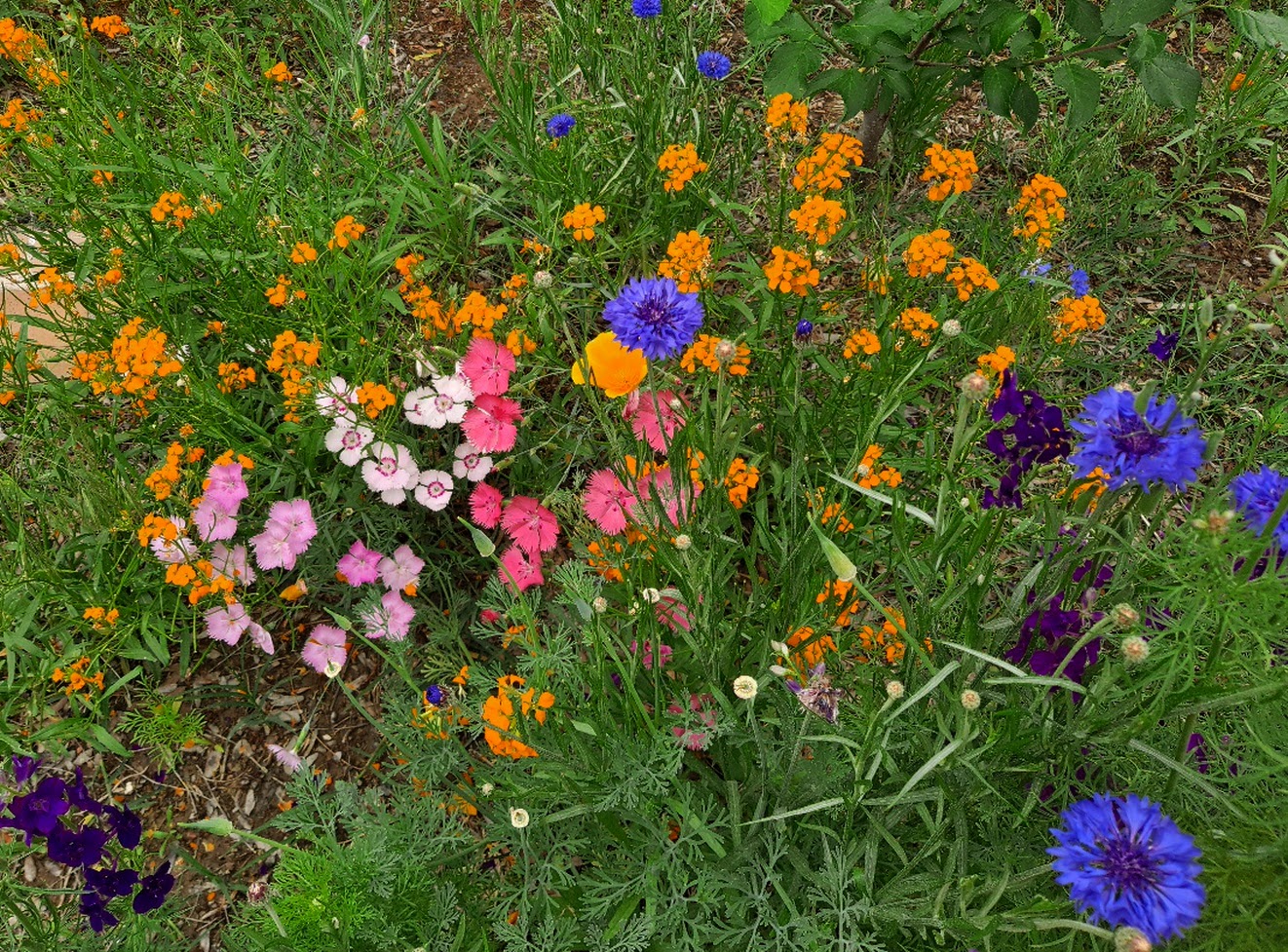
Every year I tell myself I won’t overdo the work in my yard. Last year, I wasn’t all that interested in the garden, so I seldom worked too hard, but this year, I’m back to my old tricks. Because I tend to be goal-oriented and because unfinished tasks irk me, it’s hard to do just part of the work and let the rest go for another day. A couple of days ago, I cleared out a patch of the spent larkspur to create a space for some wildflower seeds I’d been gifted. (Since the giftee is coming to visit in a few months, I thought I should at least make an effort at growing the seeds.)

I did overdo, but I got the job done.

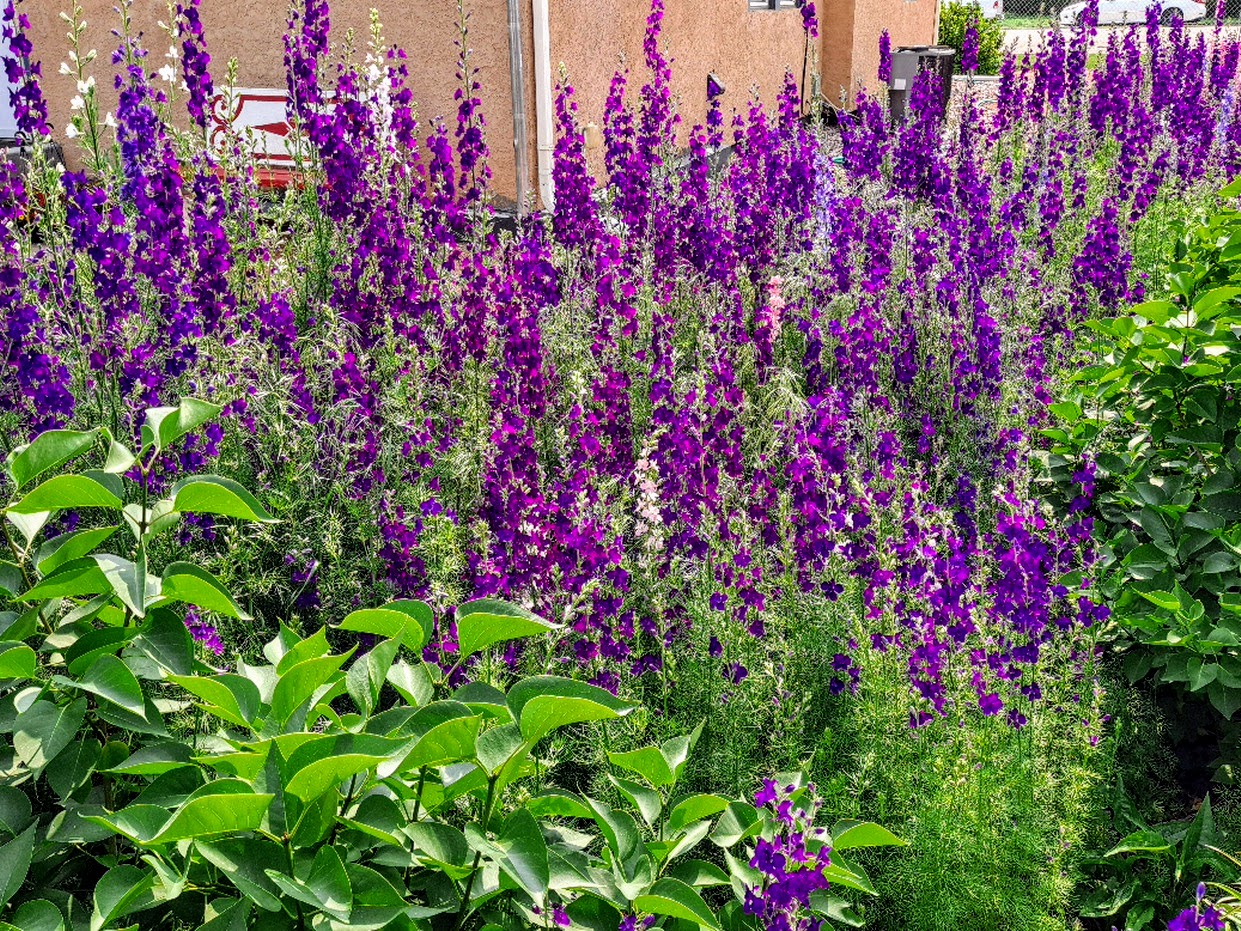
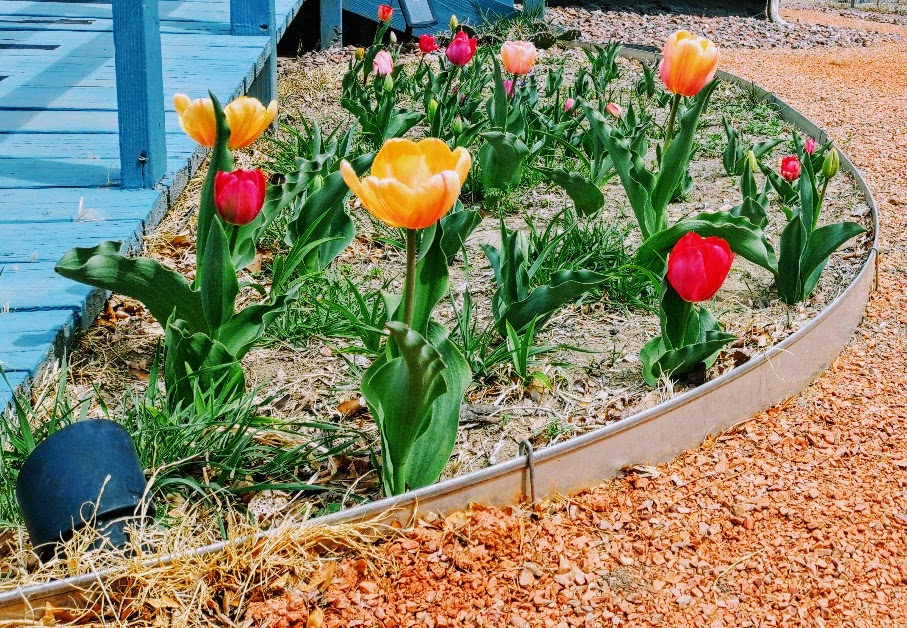
If that was all I was going to do for a while, I would have been fine, but then yesterday I decided to start clearing out the tulip gardens. Despite what the photo accompanying this post shows, the tulips are long gone — in fact, all that was left were the half-rotted leaves. After the tulips came the larkspur. (I was going to post the photo of the larkspur in full bloom, but I’m getting a bit leery of posting photos of my house, even though I’ve done so before.) And then the larkspur died off for the season.

So, yesterday, I started to clear out those two semi-circular beds, one on either side of the ramp. I figured to do a little and then a little more another day, but I started on one side, and then, determined to finish, did the other side. Yikes! Talk about overdoing! Although those garden areas look small, they loom large when one has to do the work. (Each semi-circle is about 15 ft by 5, so that isn’t all that small.)

After I cleared, hoed, raked, I planted dwarf zinnia seeds. So now it’s just a matter of watering them and keeping my fingers crossed.

I’m rather stiff today, totally overdone to be honest, so for sure I am going to take it easy. And as for the rest of the after-spring clean-up? I’ll take it nice and slow.

At least, that’s the plan. Who knows what I will actually end up doing, though chances are, as usual, I will overdo.

***

Pat Bertram is the author of Grief: The Inside Story – A Guide to Surviving the Loss of a Loved One
 

A Strange Avocation

Gardening is certainly a strange avocation. What has happened year after year isn’t guaranteed to happen again this year, and what has never happened isn’t guaranteed to continue never happening.

This year, a few years after the seeds had been planted, hollyhocks suddenly decided to grow. Why? I don’t know. Snapdragons survived the winter intact, and at a time when they should just be getting started for the season, they are already finished blooming. The moss rose and marigolds seeded themselves as they sometimes do, but this year, even though I thinned them dramatically, they are still coming in so strong that I’ll have a jungle, especially considering that I’d already put in petunias. The poppies are a no show — none of the red corn poppies came back and only a single California poppy put in an appearance. Blanket flower is one of those plants that are supposedly impossible to get rid of, but one of my blanket flowers decided to get rid of itself. As in previous years, I’ve been blessed with an abundance of larkspur, but most are not going to seed the way they should. Also, a swath of them are lying flat, as if some animal used them for a wallow. Some other plants were flattened by the wind, but the larkspur are in a protected area, so who knows what’s going on.

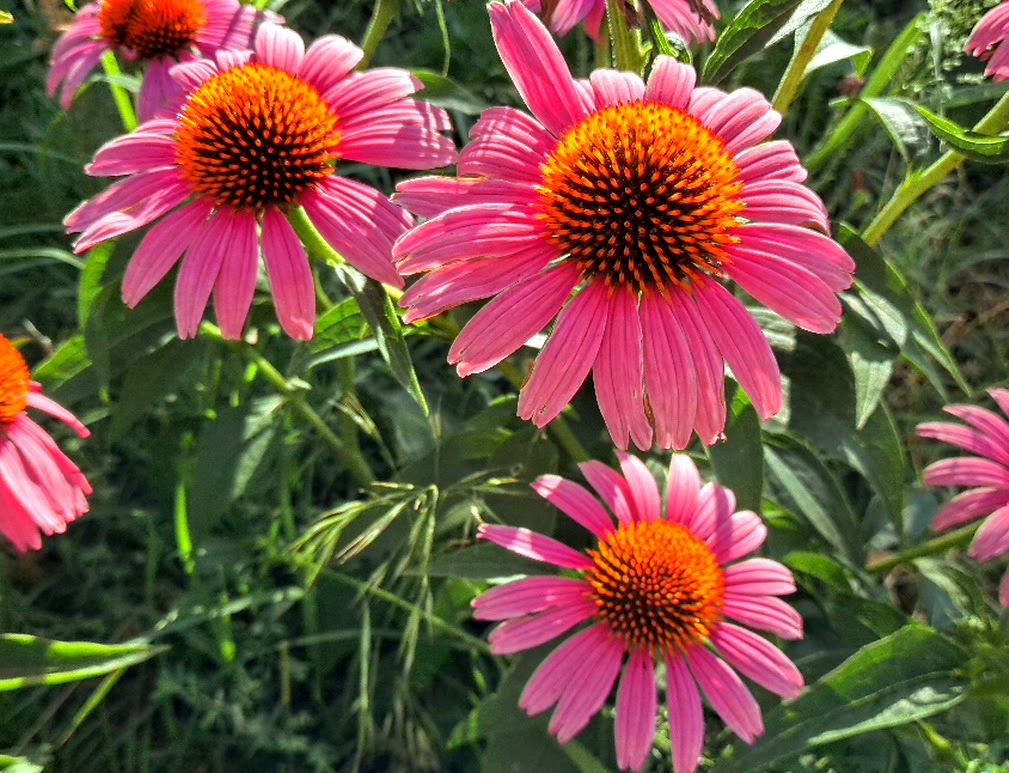
Some things are going along as they should be — the lily tree garden is taller than ever and is filling in with offspring plants, though the flowers are budding a month early. The daylilies also seem to be spreading nicely, but oddly, one of the plants already had a flower, also a month early. The purple magnus echinacea are growing extremely well, but the flowers are now pink — some bright pink, some pale pink. (As soon as I’ve cleaned up my garden areas to ready them for summer, I might have to see where I can move some of them. It’s truly great having a ready source of transplantable plants, especially ones that do so well around here, and pink is always a cheery color.)

The yarrow was another plant that seemed to have been used as a wallow. It’s possible it’s been getting too much water, though it’s hard to believe that anything around here gets too much moisture. And anyway, I’ve been treating it the way I’ve always done. Still, this might be another plant that needs to be moved.

As you can see, in a garden, there’s always something different. The larkspur surprised me — I don’t know why they aren’t going to seed, but luckily I’ve saved seeds from previous years to make up for the lack. And, since I don’t have to wait for the seeds to mature to pull up the dead stalks, I can go ahead and plant other flowers now instead of in July as I normally have to, which is great. It’s hard to get anything to grow from seed in July around here — the ground dries out too fast.

I almost forgot to mention the bees! There are way more this year than normal. Some days my yard is buzzing from the sound of dozens of big black and yellow fuzzy bumblebees feasting on the larkspur. I’m hoping they’ll like other plants as well so they will stick around for a while. There’s something so pleasant and right-with-the-world to have bees in a garden.

All this and summer isn’t even here. More changes from previous years are on the way, I’m sure. But it’s all good. It’s a garden, after all.

***

Pat Bertram is the author of Grief: The Inside Story – A Guide to Surviving the Loss of a Loved One
 

Perfect Summer Day

It feels like summer, not the summer of adulthood when the sun glares and the heat burns and only air-conditioning makes it livable, but the fabled summer of childhood, when each day felt perfect. At least that’s the way we often remember our youthful summers, regardless of the truth.

Summer is still five weeks away, and so is the stultifying heat, but right now, the days feel lazy and warm, with bumblebees buzzing among the flowers, birds digging in the grass for their breakfast. Usually at this time of year, spring winds are almost constant and can be fierce, but they are currently absent. The air is still and soft and falls lightly on my skin. Even the lush blooms speak of an ideal summer, though around here, only a few flowers can keep from being seared by the intense July and August sun.

I tend to think that the mild winter coupled with a warm late winter/early spring helps to make this feel like summer because plants are further along this year than normal, and they are flowering longer. The columbines have been flowering for six weeks! And the larkspur have been flowering almost that long. This long-blooming period gives such a timeless feel to the days, which to me is a summer feeling. (Spring, with the winds and the hurried flowers and the rapid changes, often seems frenetic.)

Also, the temperatures are in the nineties, which in a lot of places, are summer temperatures, but around here, that’s almost cool for summer.

I’m making sure to remember these halcyon days (and if not in my mind, then here, on this blog), because once summer is here for real, all bets are off. And yet, in the past when we’ve had early summer weather, the actual summer months could be cool if the monsoons came. And there is a chance of a wet monsoon season because of predictions for a strong El Nino later this year.

But that’s all mights and maybes. All I know is that right now it feels like a perfect summer day. So what if it’s only May? It’s the feeling (and the feeling of gratitude that comes with it) that counts.

***

Pat Bertram is the author of Grief: The Inside Story – A Guide to Surviving the Loss of a Loved One
 

Garden Stroll

With so much the contention in the world right now, we all need a little peace in our lives, so come stroll with me and I’ll show you my garden. That garden, in itself, brings peace — at least to me — so I’m especially lucky that things are growing well this year.

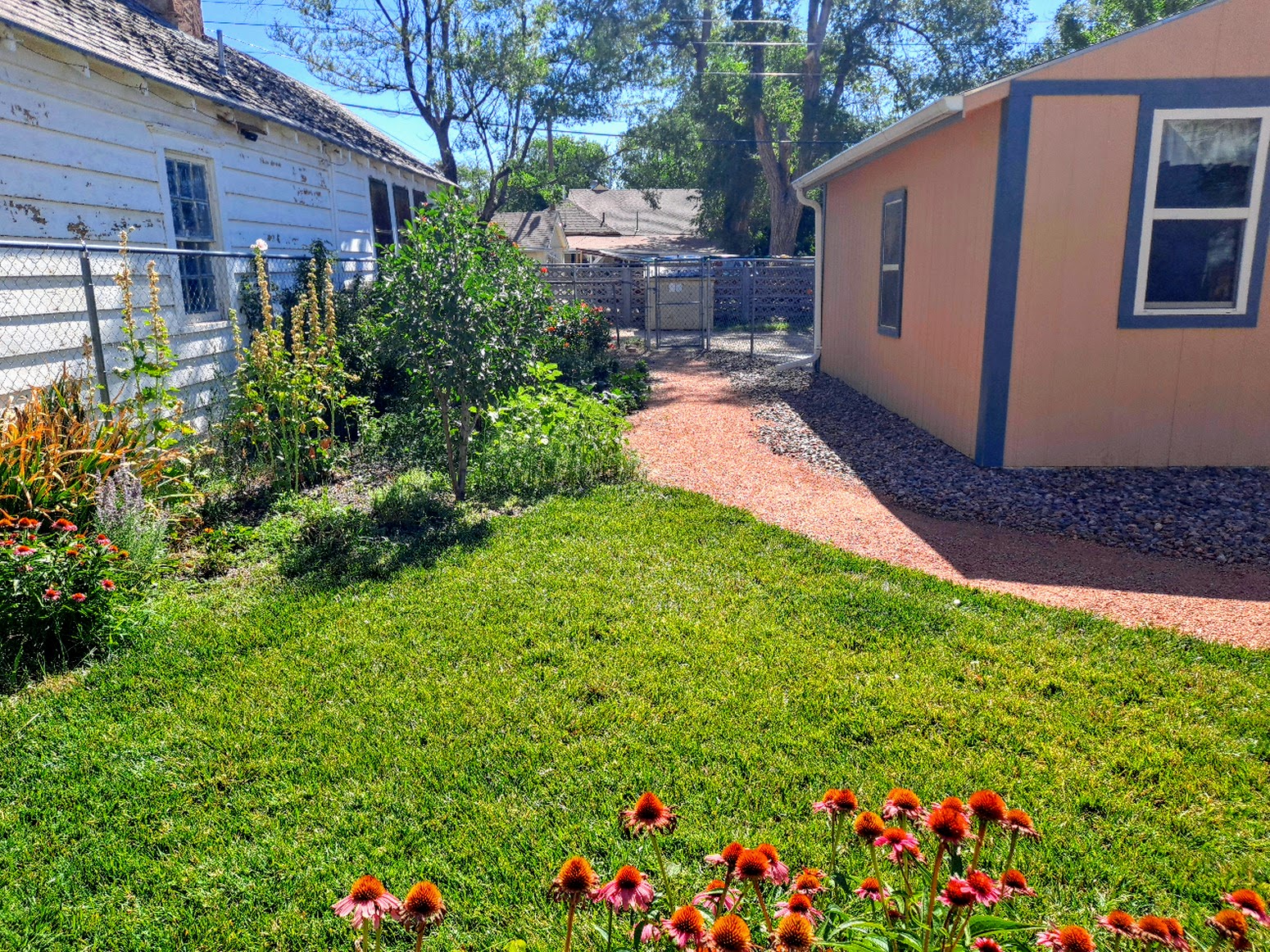
Walk down the path, almost to the garage, you will find this lovely pastoral scene hiding behind the greenery.

I have no idea why the garden is so lovely this year. Winter was warmer but also drier, so those two conditions should have cancelled each other out, but instead, what I have is a lush springtime yard.

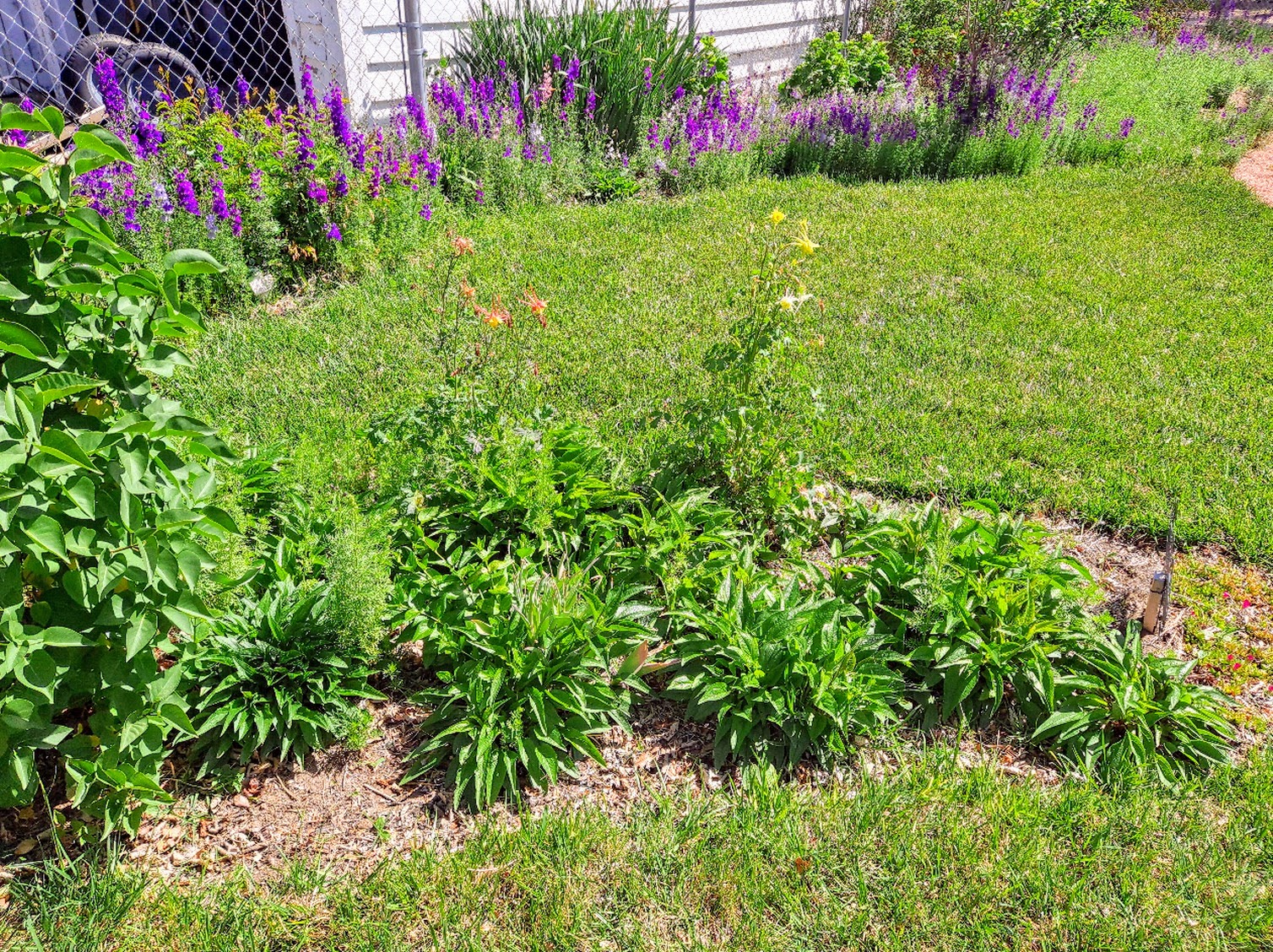
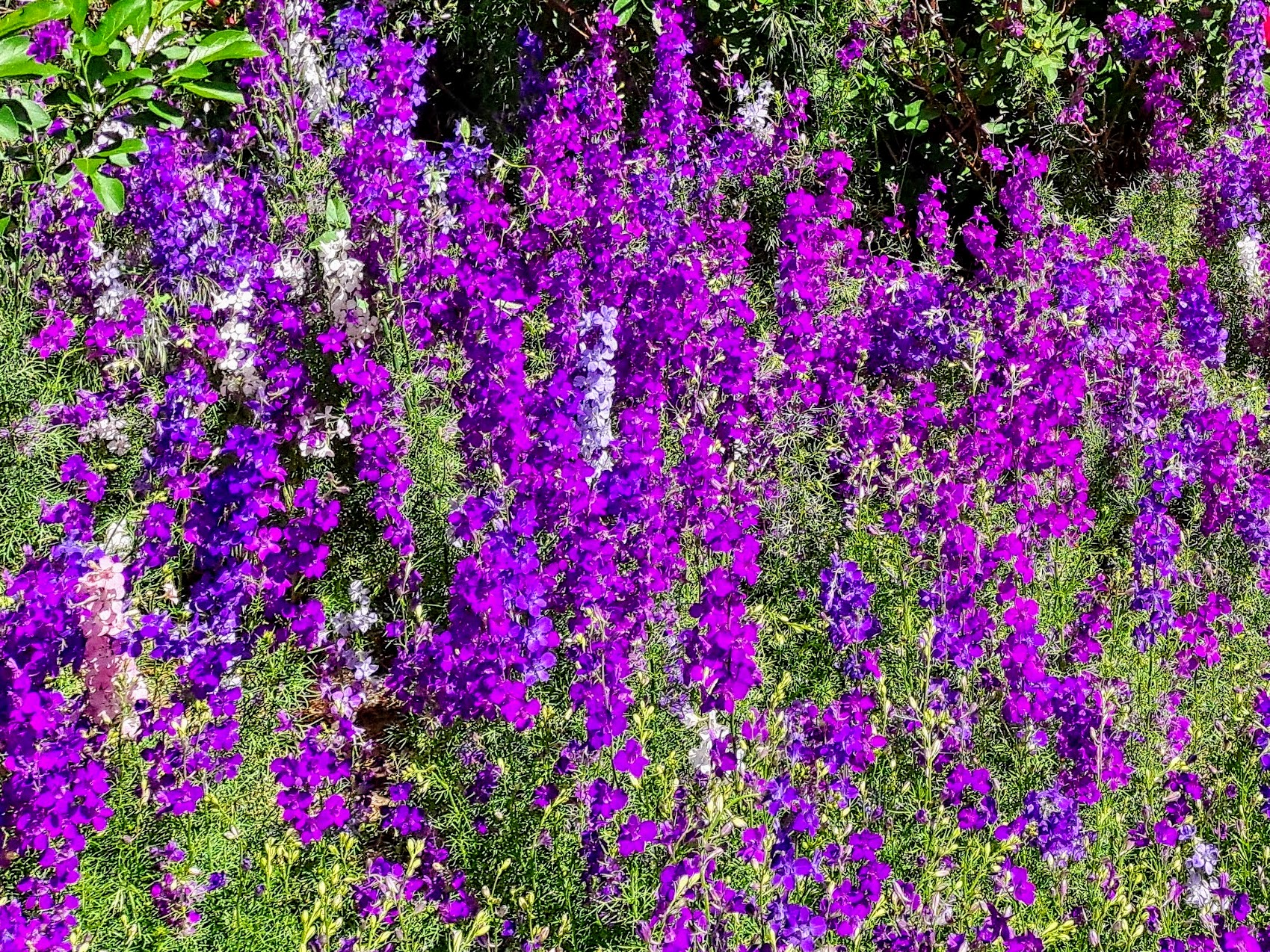
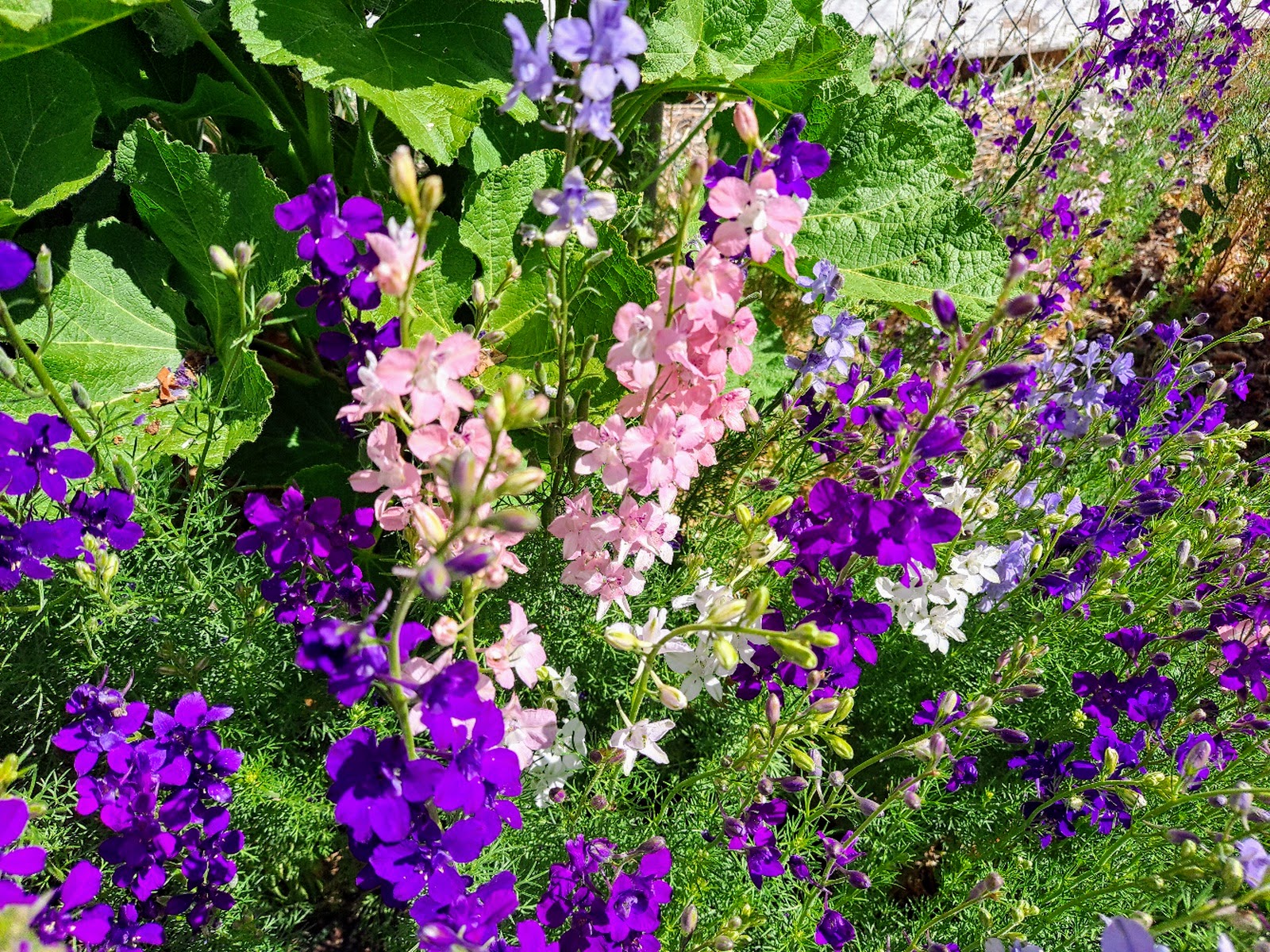
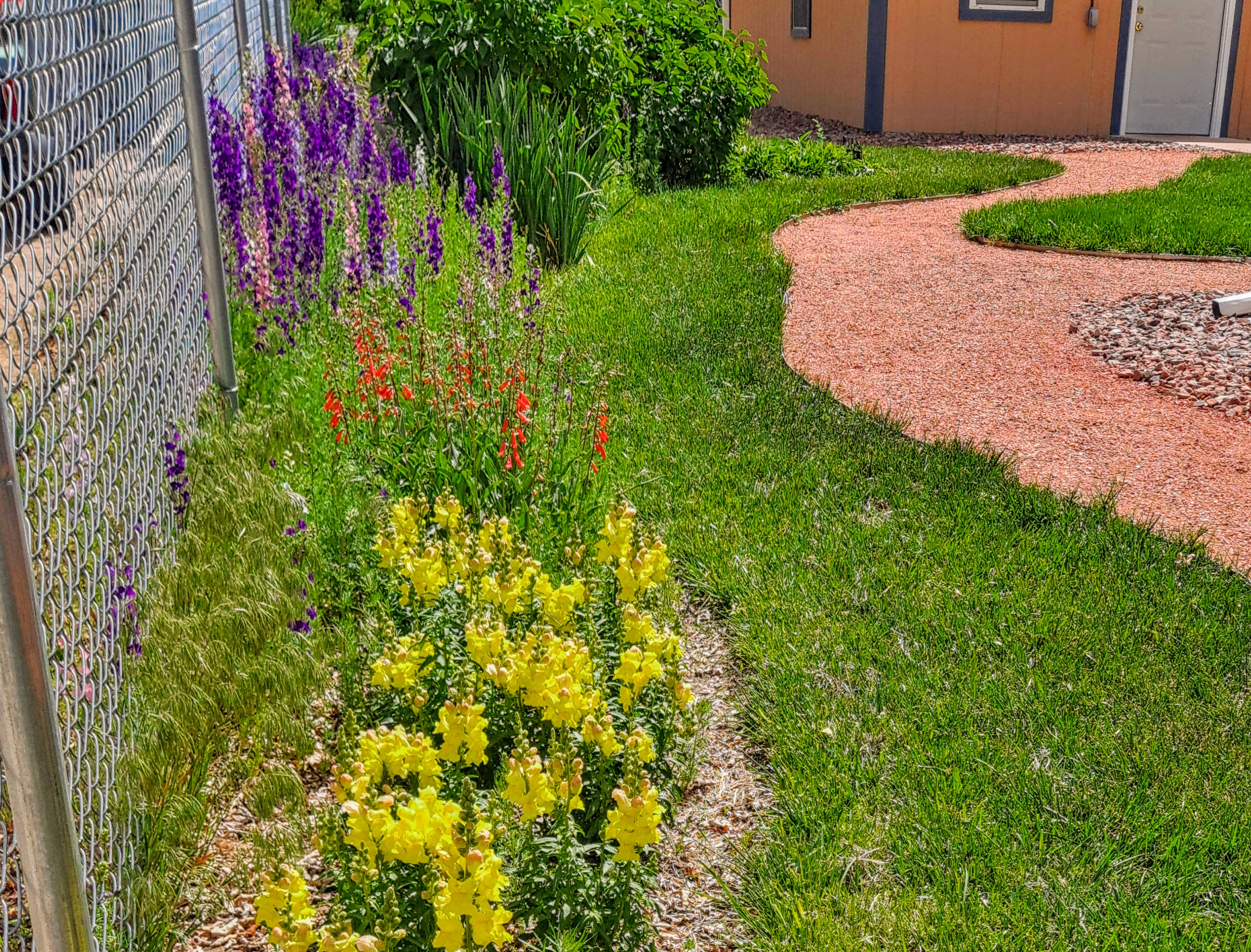
The larkspur, seen along the fence in the two top photos, are growing well, though that’s not a surprise. Larkspur does exceptionally well in this climate, and always I am glad to see the frilly foliage. More than even a robin, larkspur herald spring. It’s interesting that although I started out with only purple larkspur, each year, more colors bloom.

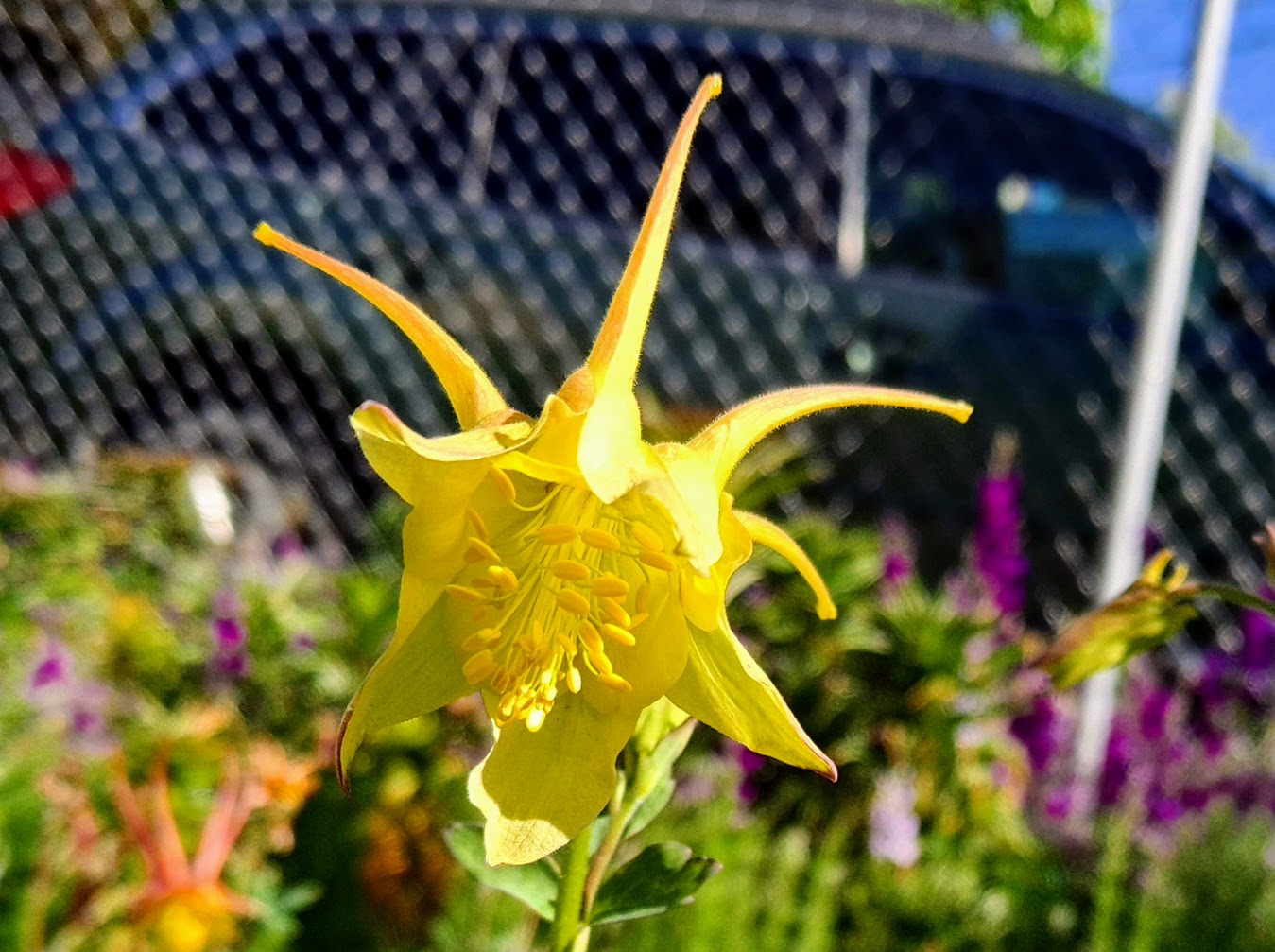
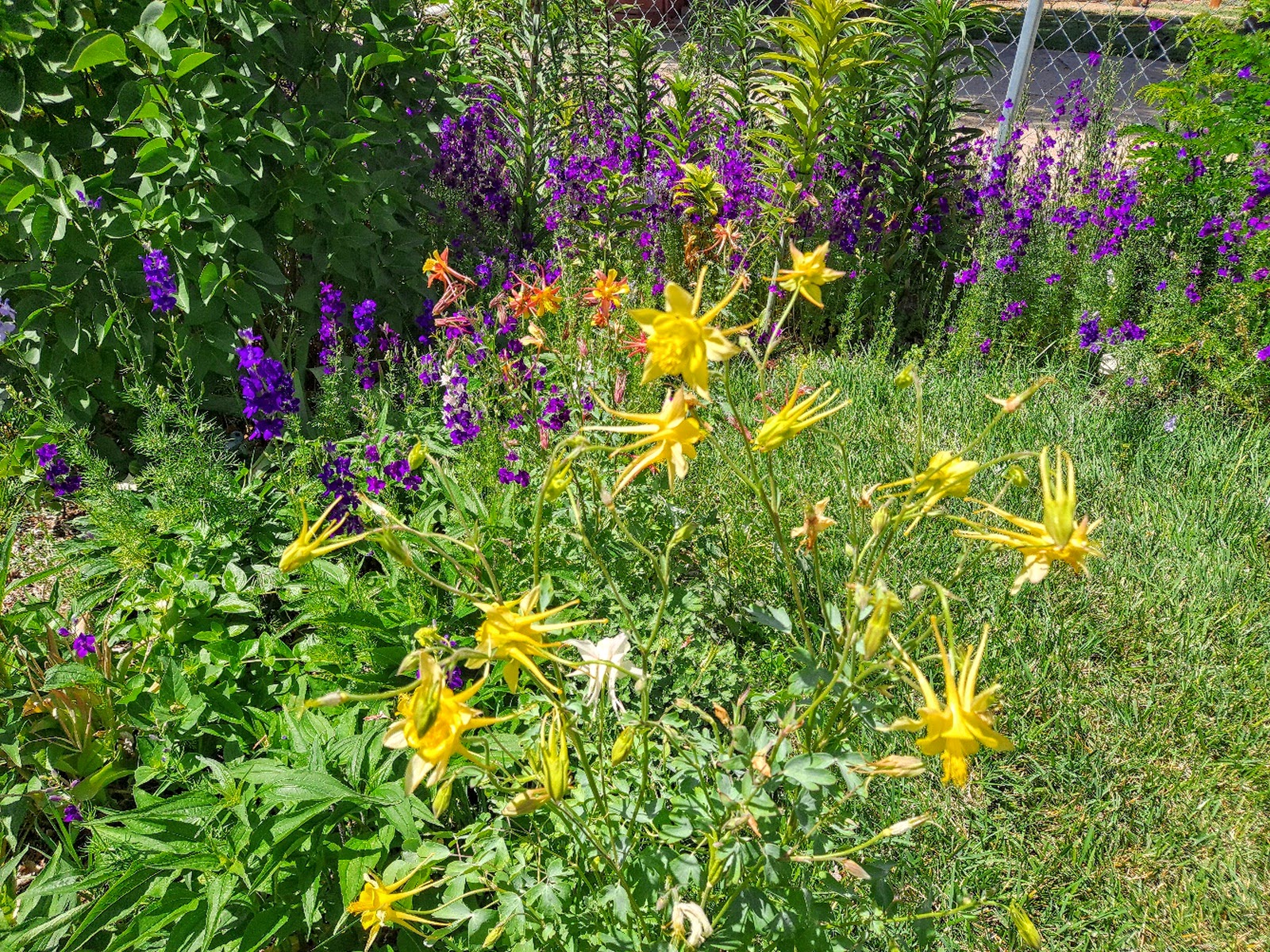
In the forefront of the pastoral photo (second from the top) is a yellow columbine. Oddly, there are also white columbines on that same plant. But that’s no problem. Any columbine is welcome!

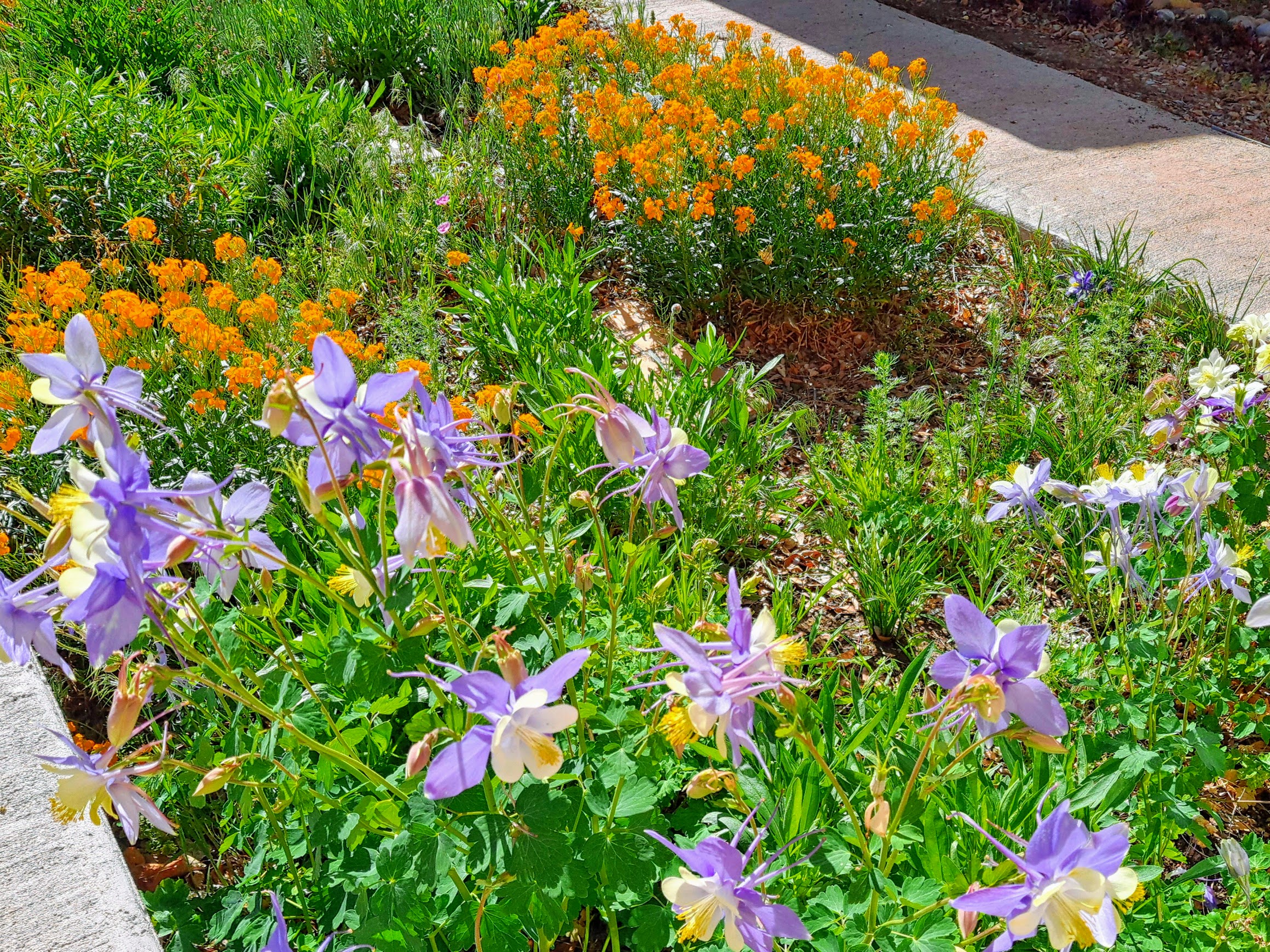
Truly, the columbines are prolific and gorgeous this year. The orange wallflowers in the background of the following photo are hanging around longer than they normally do, which is a thrill for me because that sunrise color sure brightens the day!

I could post more photos, but I don’t want to overwhelm anyone (or tire you out with such a strenuous walk), so I’ll continue this garden stroll tomorrow.

***

Pat Bertram is the author of Grief: The Inside Story – A Guide to Surviving the Loss of a Loved One
 

Detachment

As you can probably tell from my lack of posts for the past couple of months, I’m losing my emotional involvement with my yard. Usually spring offers plenty of gardening photo opportunities, but lately I tend to just look and pass on by rather than document the beauties I see. Oh, I’m still doing the yard work, still waiting to see what blooms, still taking some pictures, but I’m doing so at a degree or two of separation. I’m not exactly sure why I started losing my enthusiasm. Perhaps because of the difficulty of keeping things green and blooming in this dry and sometimes harsh environment. Perhaps of a general feeling of detachment from life and a sense of the passing years. Perhaps because of . . . who knows.

Oddly, even though it hasn’t been that hot compared to previous springs — we’re just now getting up into the 90s — and even though I’ve been keeping up with the watering, the sun is so intense that the grass is already burning and flowering plants are wilting. I feel as if I should care, but I don’t, not really. Or maybe it’s that I don’t want to care. It does take a lot out of a person to plant flowers and greenery and tend them only to watch them struggle.

In a way, it’s not that big of a deal. I can replant grass and flowers and other vegetation. Or I can plant something else in the place of plants that don’t make it. For example, I had one large swath of grass left from the original sod I’d put in, but half of it died over the winter. (Which is odd in itself since all the rest died in the summer heat.) I couldn’t decide whether to replant the grass come fall or plant something else. In the end, I planted wildflowers instead of leaving the dead grass, and if I decide I want the grass, well, autumn (the best time to plant grass around here) is still a long way away. For another example, half of my ice plant that has spread so rapidly over the years also died in the winter, but I was able to replant.

So, not a big deal, but still . . .

I make it sound as if my garden is failing, but the truth is, it was prettier this spring than ever before.

Plenty of flowers planted themselves, such as the red poppies, and the larkspur. Other plants spread nicely. And some not so nicely. (I try to stay away from flowers that take over, but that’s not always easy to control since what should grow here doesn’t always and what shouldn’t sometimes does.)

This is always a rather unpretty time of year, which adds to my disinterest. The summer flowers haven’t yet budded. The larkspur is finished flowering but hasn’t yet gone to seed, so it makes the garden look rather drab. Once the larkspur and other self-planted annuals are finished, I can then replant so that August and September will be nice, but now it’s just a matter of keeping the yard — and me — going.

It’s funny — I waited all winter for this and now?

I’ve been sitting here thinking, wondering about that “and now?” and I have no response to that.

I have a hunch that once we settle into summer, I’ll be okay. Hot, but okay. There’s been just way too many weather changes lately to suit my poor aging mind and body — cloudiness and humidity and sprinkles of rain followed rapidly by sun and heat and then a repeat of the cycle.

At least I will have plenty of work to do outside to keep me occupied. In fact, I better close this off and go mow the grass.

Wishing you well.

***

Pat Bertram is the author of Grief: The Inside Story – A Guide to Surviving the Loss of a Loved One.

What I Am Doing

Obviously, what I am doing right now is working on this blog post, but beyond this moment, I am sure you can guess what I am doing — working on my yard! And beyond that, I am sure you can guess what else I am doing — recuperating from all the work. I never realize how old I am until I start aching, and then, it’s hard to believe I was ever foolish enough to think that just because I could do some physical work, I wasn’t that elderly. (As an interesting aside, interesting to me, that is, elderly used to mean not yet old, whereas now it means old, frail old, decrepit old.)

In previous years, I would post photos of my yard, specific images that showed the few flowers that were blooming, and let you extrapolate from that how gorgeous my yard was. Or was not, which I often had to admit. This year, however, my yard truly is stunning.

The grass I planted last fall looks great. I’m keeping my fingers crossed that come summer and the enormous heat, the grass will survive. To that extent, I am trying not to water even when the grass looks dry and faded, hoping the roots will dig down deep enough that it will survive the heat blast.

Even though I thought I’d harvested all the larkspur seeds last year, enough blew around that any weedy area became a larkspur field this year.

No matter where the larkspur are, even invading a poppy field, they bring joy to all who see them.

Finally, after all these years, my raised garden is not only built, but filled with dirt. And plants! Flowers and vegetables mixed together in harmony. At least, that’s the hope.

The wild roses are doing well.

I have always loved the look of red and yellow bushes mixed together, but my yellow and red bushes got separated. I’ve been trying to buy yellow roses to plant among the red, but never found any. I have come to believe that the yellow is an aberration. One of my red bushes ended up with a stem of yellow flowers. I also found some yellow flowers on a red branch. And in one case, the red rose had yellow petals, too.

And that’s not all! The columbine I planted last year survived the winter and are now thriving.

Cottage pinks that were planted years ago decided to bloom profusely.

The ice plant is forming a carpet of shimmering beauty.

And petunias. What can I say? Petunias always do well here.

It’s funny, but despite the way the yard looks, I still don’t really know what I am doing. I’ve been told that there is an expiration date for that claim, but it certainly hasn’t arrived yet. The beauty of gardening (in addition to the beauty the eyes can see) is that plants that do well thrive and those that don’t, don’t. Any mistakes simply disappear, so what’s left looks as if it comes from heart of a master gardener even though I am strictly a trial-and-error dilettante.

I am learning, however, to take what comes. Last year, one garden area shone with the golden aura of wallflowers. This year, wallflowers are decidedly absent. Some plants that were supposed to be perennials turned out to be biennials. Some wildflower seeds that should have come up this spring never showed even a touch of green. The tulips that started out so hopefully ended up giving up before spring got underway.

I am going to try to take it easy physically for a couple of weeks so that when the larkspur go to seed, I will have the energy to pull up the plants to harvest the seeds and see what plants that wall of blooms is hiding. And then . . .

But “then” isn’t here yet.

Meantime, I am enjoying the surprises I find every day.

***

Pat Bertram is the author of Grief: The Inside Story – A Guide to Surviving the Loss of a Loved One. “Grief: The Inside Story is perfect and that is not hyperbole! It is exactly what folk who are grieving need to read.” –Leesa Healy, RN, GDAS GDAT, Emotional/Mental Health Therapist & Educator.

Blog Update

If you haven’t received a notification about a new blog from me in a while, it’s not because of an issue with your email. It’s that I haven’t done an update recently. I have no real excuse, just laziness, I suppose, though truly, I’ve been anything but lazy. Now that the rains have passed, the days are brighter, and the temperatures are drifting closer to the 100˚ mark, I’ve been able to set aside the Seasonal Affective Disorder that had me dragging for several weeks and enjoy working in my yard again.

The larkspur that had so intimidated me went to seed, and I’ve been spending hours every day harvesting the seeds and pulling up the dead stems.

So instead of this:

I now have this:

The cleaned-up garden is not as dramatic perhaps, but lovely nevertheless.

I’m spending way too much time babying my lawn, but I have a hunch that will always be an ongoing process. I’d give it up, but I do so love the green. And besides, what else would I do? I’m already reading more than I want, and although I’m still playing games on the computer, I’ve cut way back. A few weeks ago when I lost the internet for a week, it got me out of the habit of spending hours and hours on the computer. Now I do other things, like paint-by-number or watch movies, both rather mindless activities. And, as I said, I spend a lot of time outside.

I wonder at times if I have too much invested in my yard, not just money but emotions and work and thought, but when I’m not dealing with S.A.D., I do find gardening worthwhile. So many pretty things to see!

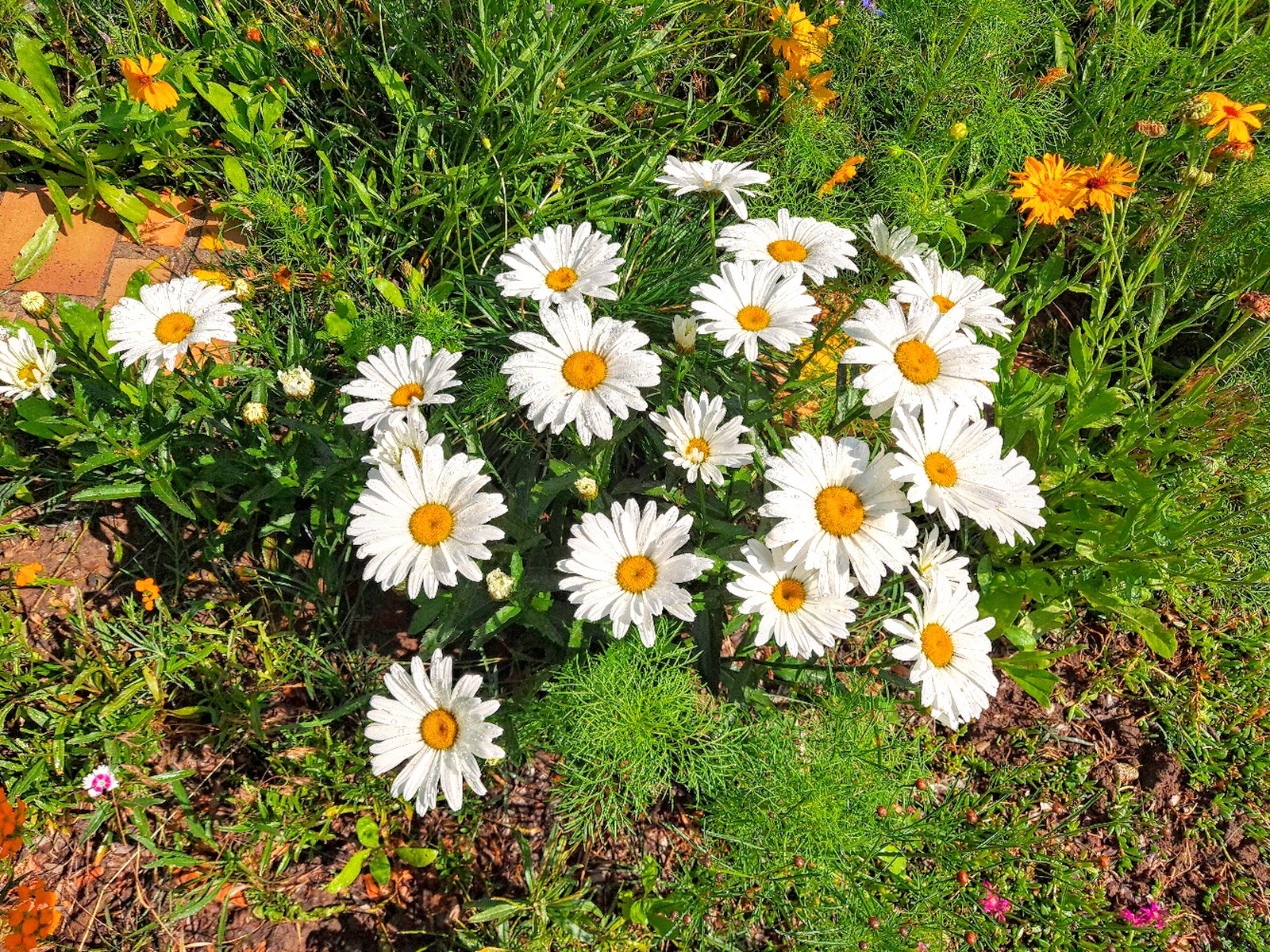
Daisies.

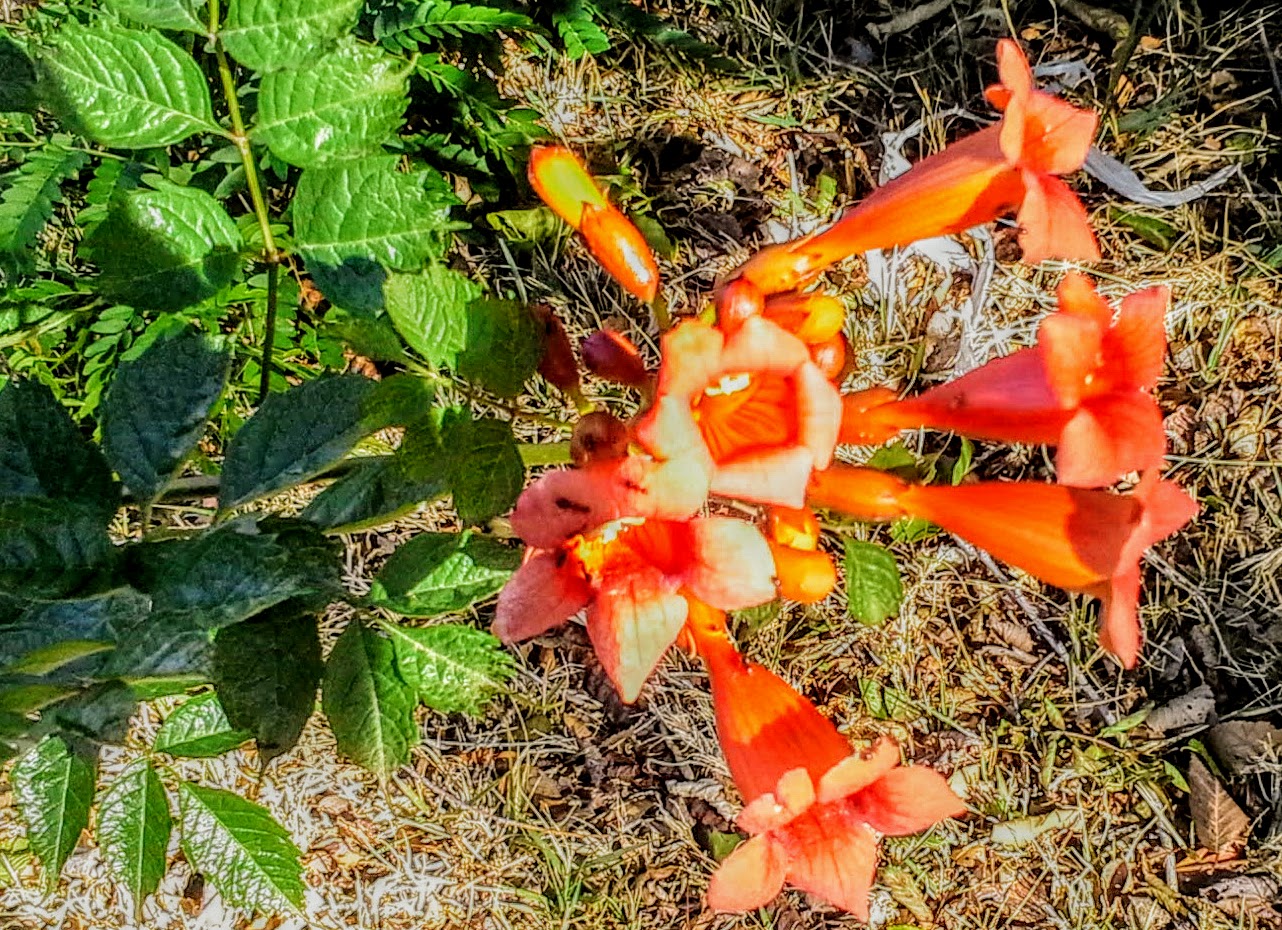
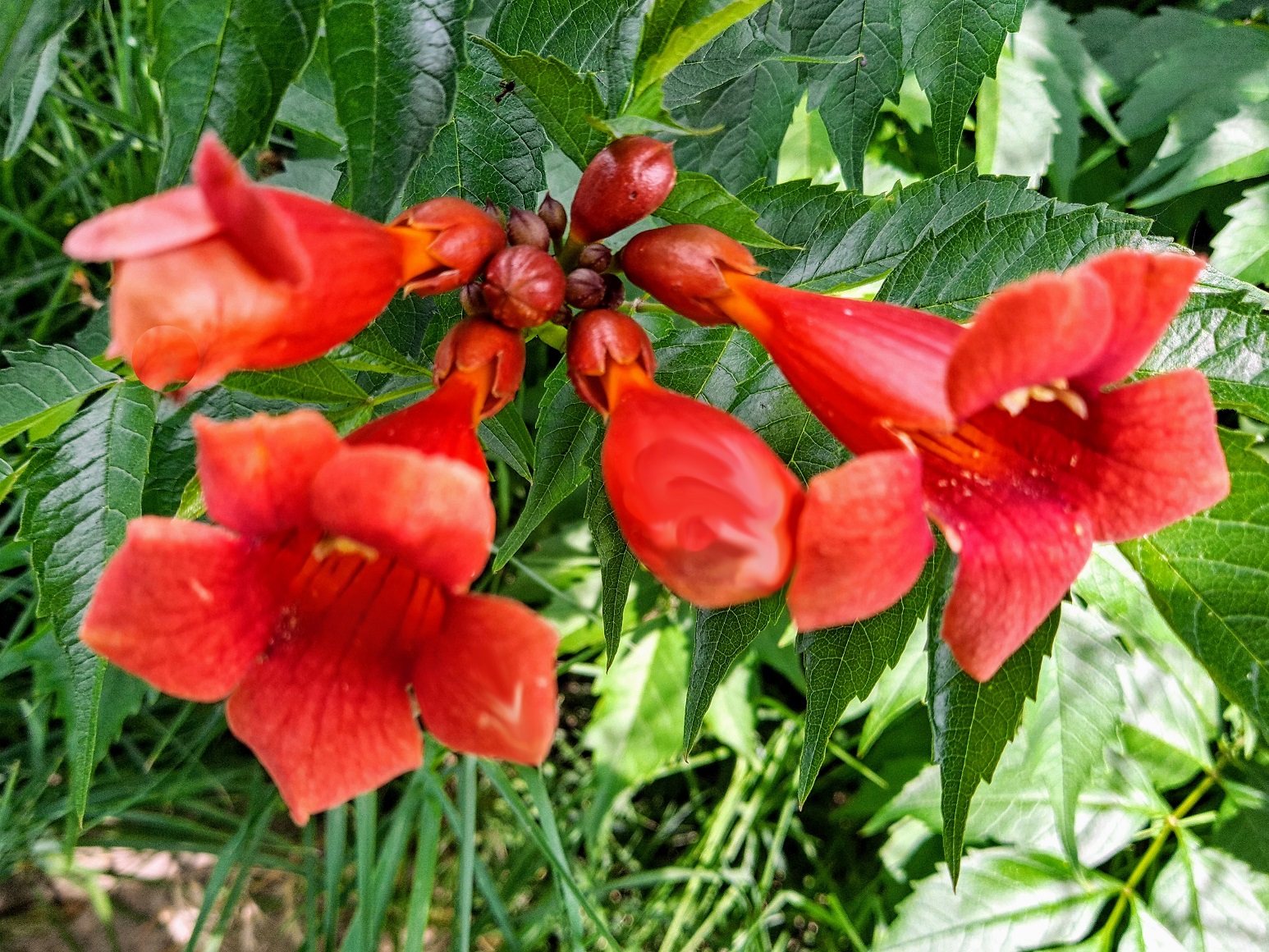
Trumpet vines.

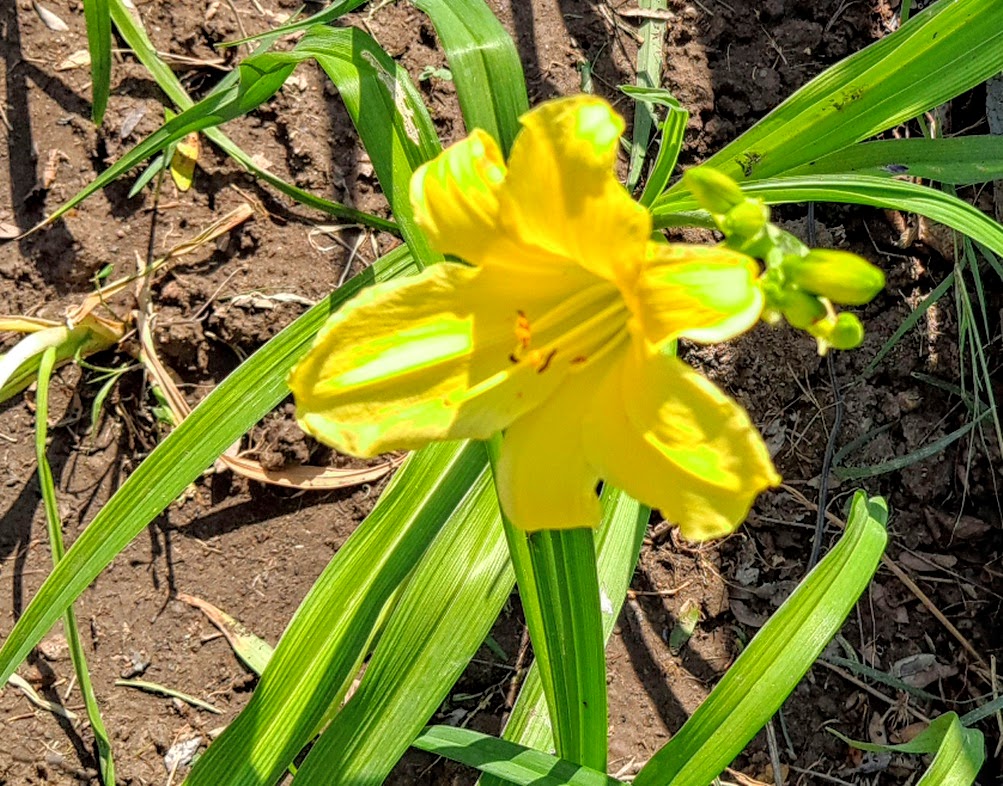
Daylilies.

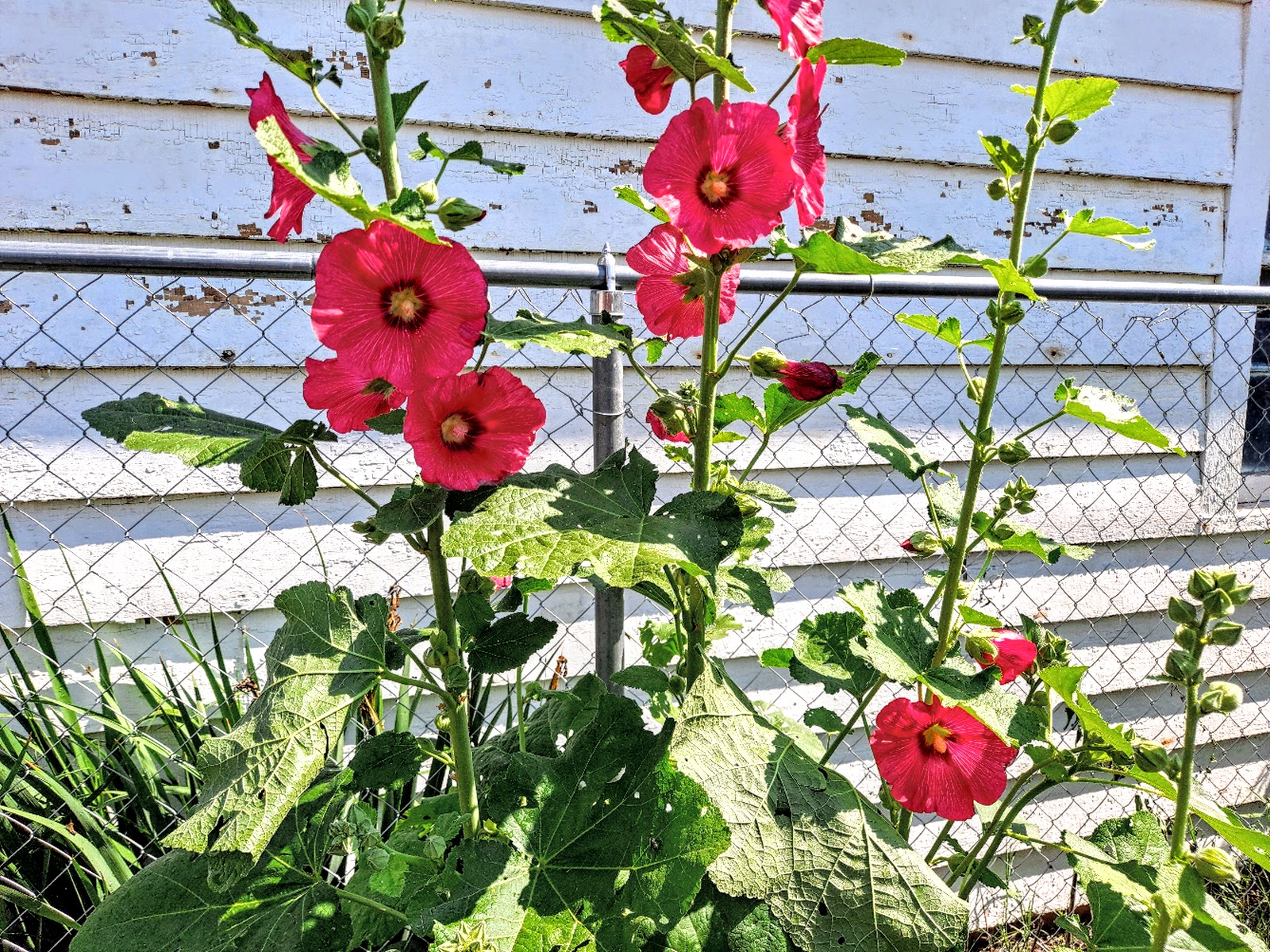
Hollyhocks.

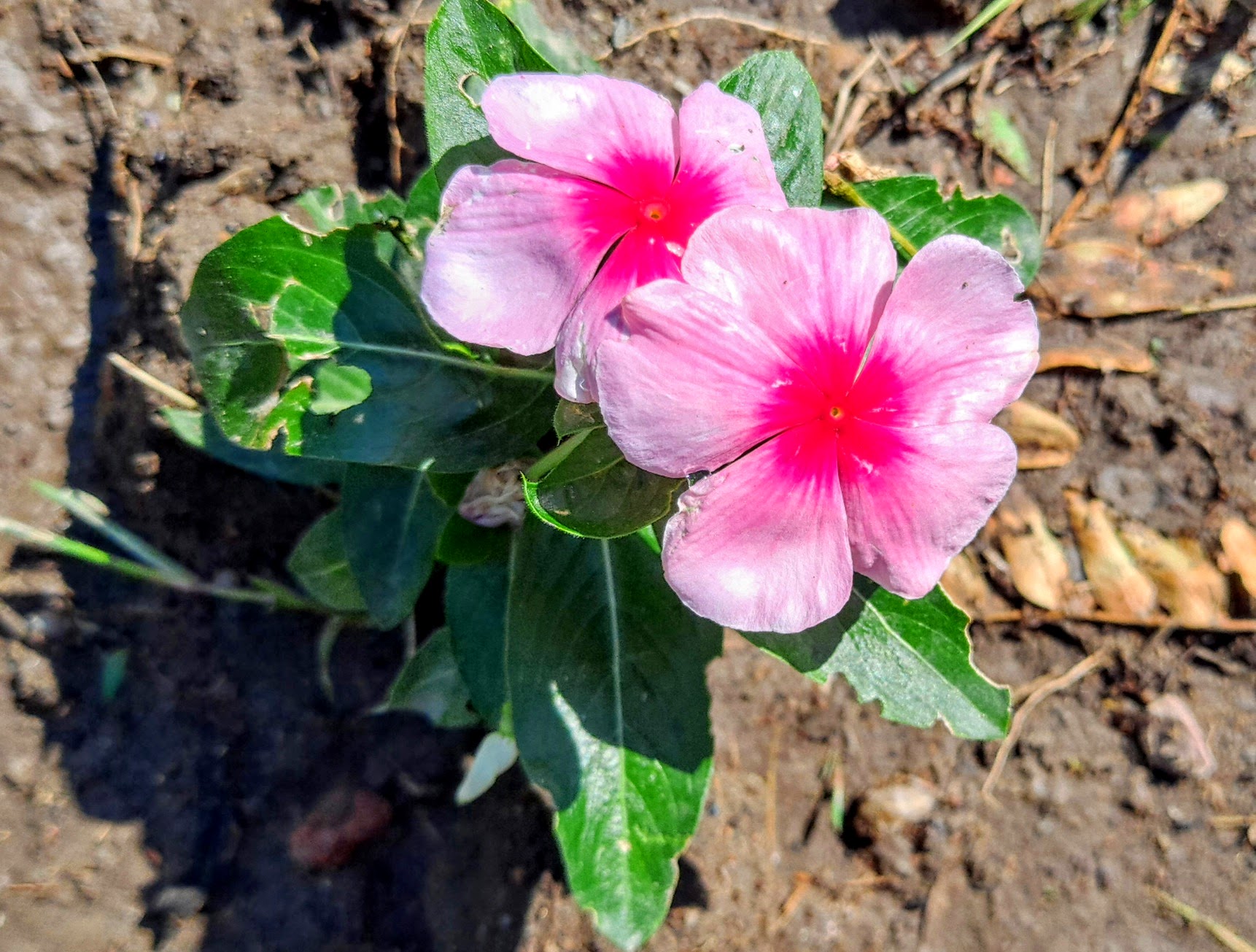
Madagascar periwinkle.

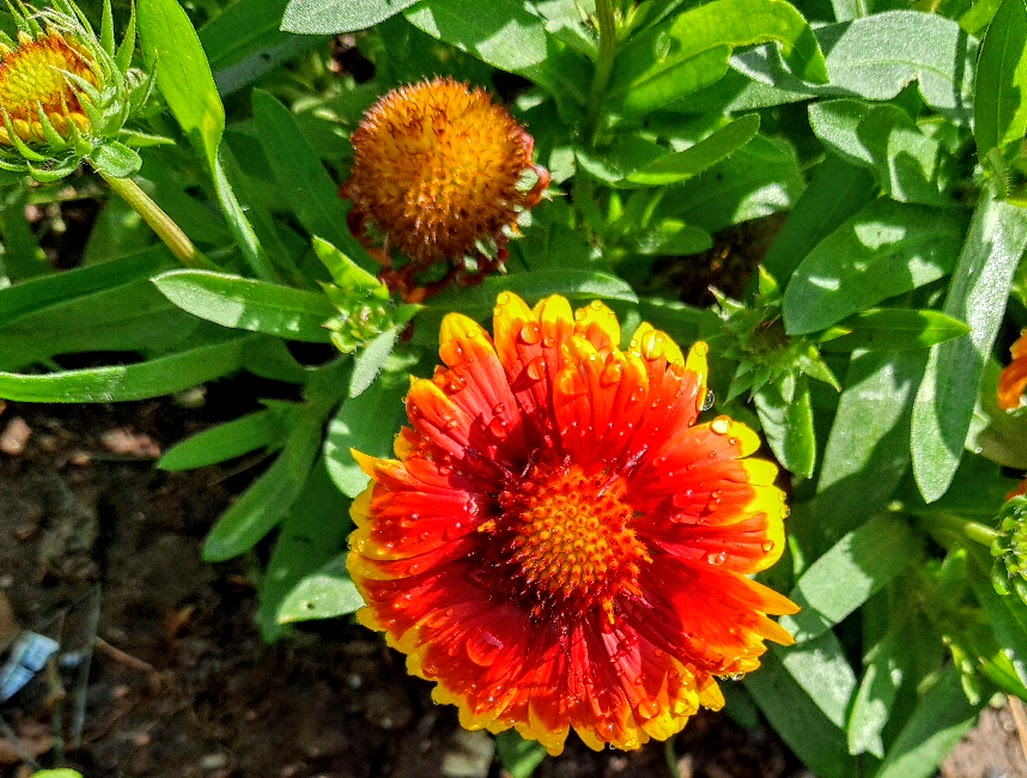
Blanket flower.

If things go as planned, I should have flowers of some sort from now until the first frost and perhaps even beyond. I’m becoming rather fond of fall bloomers — the foliage is pretty in the summer, and then when other flowers have died out, the chrysanthemums and New England asters take over.

I’ve done all the planting I’m going to do this year, so now my time will be spent weeding, cleaning up all the detritus from nearby trees that has blown into my yard, as well and continuing to expand my garden. There’s still rather a large swath that has never been touched, so I have to dig up all the weeds and other unsightly vegetation so I can plant . . . hmm. Maybe more wildflowers.

***

Pat Bertram is the author of Grief: The Inside Story – A Guide to Surviving the Loss of a Loved One. “Grief: The Inside Story is perfect and that is not hyperbole! It is exactly what folk who are grieving need to read.” –Leesa Healy, RN, GDAS GDAT, Emotional/Mental Health Therapist & Educator.

S.A.D. Times

I’m not having all that much fun with gardening this year, at least not so far. It’s too muggy, too buggy, too . . . everything. Normally, this is the sort of spring I like — cool, occasional rain, cloudy days — but this year, because of the rain, the gardening work is overwhelming. Plants that are used to hotter, drier days, are growing out of control. Weeds are growing thickly. And mosquitoes are voracious.

This is the first year that my mosquito repellent clothes aren’t working. I decided to make use of this cool, fairly dry day to work outside, and now I’m covered in mosquito bites in places that are normally covered by those clothes.

Well, now you get a hint of why I haven’t been keeping up with this blog. I don’t like to make a habit of complaining, and I’ve been having a hard time finding delight in much of anything. I have a hunch I have a touch of Seasonal Affective Disorder. I usually have to deal with S.A.D. in winter; having to cope with it in a spring is a first for me, but also understandable. With storms passing us by so frequently (even if we don’t get rain, we still get the clouds), the days are darker than are healthy for my mental state.

There is a change coming — after all, summer will be here in six days, and it won’t be long before I’m complaining about the heat. Also, the larkspur are finally going to seed, so I’ll be able to pull them up to expose the plants — both ornamental and weedy — that have been hidden thus far. It should help me feel less claustrophobic. Although I normally enjoy the larkspur, they grew so densely and so tall they formed an intimidating wall along my pathways.

One thing that has pleased me is that my wildflower garden is really taking off. Some of the perennials that never came up finally did, and many of the annuals seeded themselves and are filling in the area with color.

I also found an unusual stray, this dwarf evening primrose.

It was in the batch of wildflowers I planted a couple of years ago, but this is the first one I ever saw.
And then there was this unusual plant that popped up in one of my garden areas.
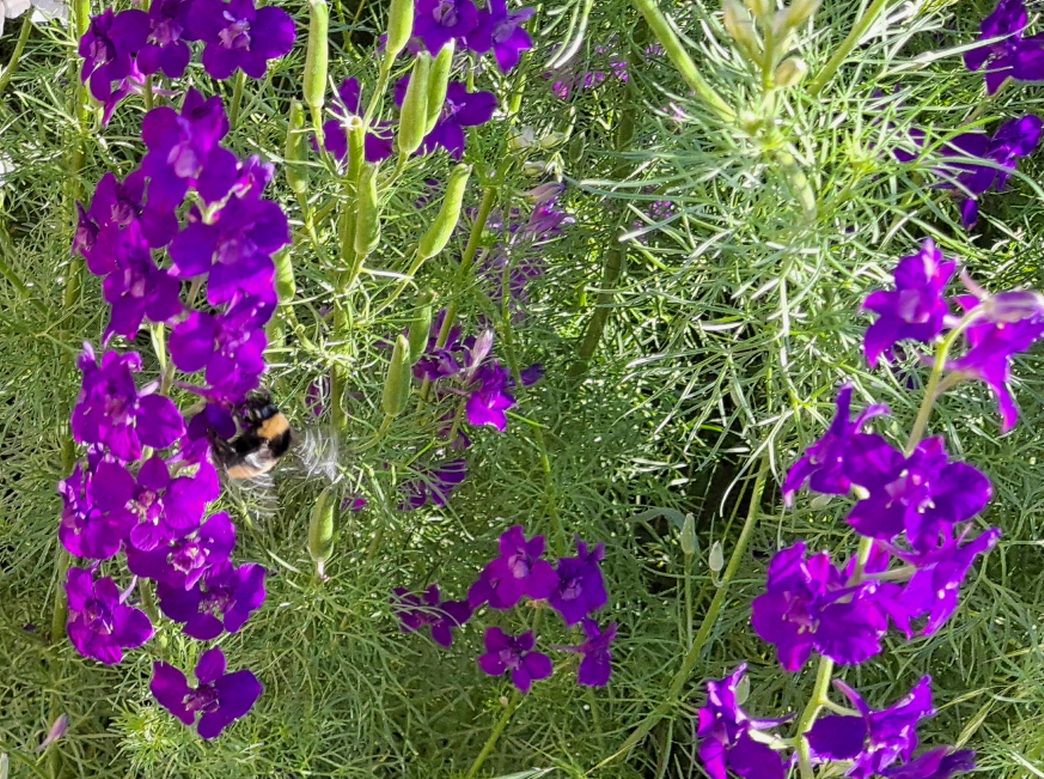
It took a long time to trace it — most plant identifier apps didn’t know what it was. But I think I finally discovered its name: bitter candytuft. It’s from the mustard family, which makes sense — all the wild mustard weeds seem to like it in this area.

As it turns out, it’s a good thing I got some work done earlier — I can hear the thunder of an approaching rainstorm, and the morning is growing darker. Yep. S.A.D. times.

***

Pat Bertram is the author of Grief: The Inside Story – A Guide to Surviving the Loss of a Loved One. “Grief: The Inside Story is perfect and that is not hyperbole! It is exactly what folk who are grieving need to read.” –Leesa Healy, RN, GDAS GDAT, Emotional/Mental Health Therapist & Educator.

Spring of Excess

This spring seems a season of excess. There are way too many bad air days due to wildfire smoke migrating down from Canada, and there is an invasion of miller months because they aren’t migrating. (They are being slowed down by the smoke.) There are hundreds of the moths in my yard, dozens in my garage and basement, but luckily only a few in the house itself. I try to tolerate them because they are pollinators (and because they are pollinators, they are a protected species in Colorado), but I can’t find it in myself to like them, especially not in such vast numbers. Not only do they spook me when they come flying at me out of nowhere, but they are such messy critters, leaving their effluvia on windows, curtains, and anywhere else they happen to land.

There is also an excess of mosquitoes. To me, even a single mosquito is too much, but this year there are clouds of them. Normally, I am fairly safe in the heat of the early afternoon, since they are most active in the early morning and evening, but a short foray outside a couple of days ago netted me over a dozen bites. Luckily, my gardening clothes are mosquito-repellent, so as long as I am careful to wear those clothes when I am outside, I am fine.

I’m not sure why this year is different, but there is an excess of stuff (for lack of a better word) falling from trees. I do know the neighbor’s locust trees are raining flowers (miniscule greenish things that don’t resemble flowers at all), but I don’t know what the slim green things from my other neighbor’s tree are. Perhaps seeds. I don’t remember seeing them before, but this morning they are everywhere. Where’s a good wind when you need it? Oops. I shouldn’t say that — we’ve had way too much wind this spring (my hanging plants spend more time on the ground, safe from the winds, than they do hanging), so a calm morning is welcome.

We’ve had a lot of rain this spring, not an excess, exactly, but enough to make flowers and weeds grow profusely. I would have thought that I’d be appreciative of the floral largess, but to be honest, I find it a bit overwhelming. The larkspur, which is usually about knee-high, is almost as tall as I am. It’s growing thickly, especially where the grass died, making it impossible for me to access the garden bed and the plants that are buried in the larkspur forest.

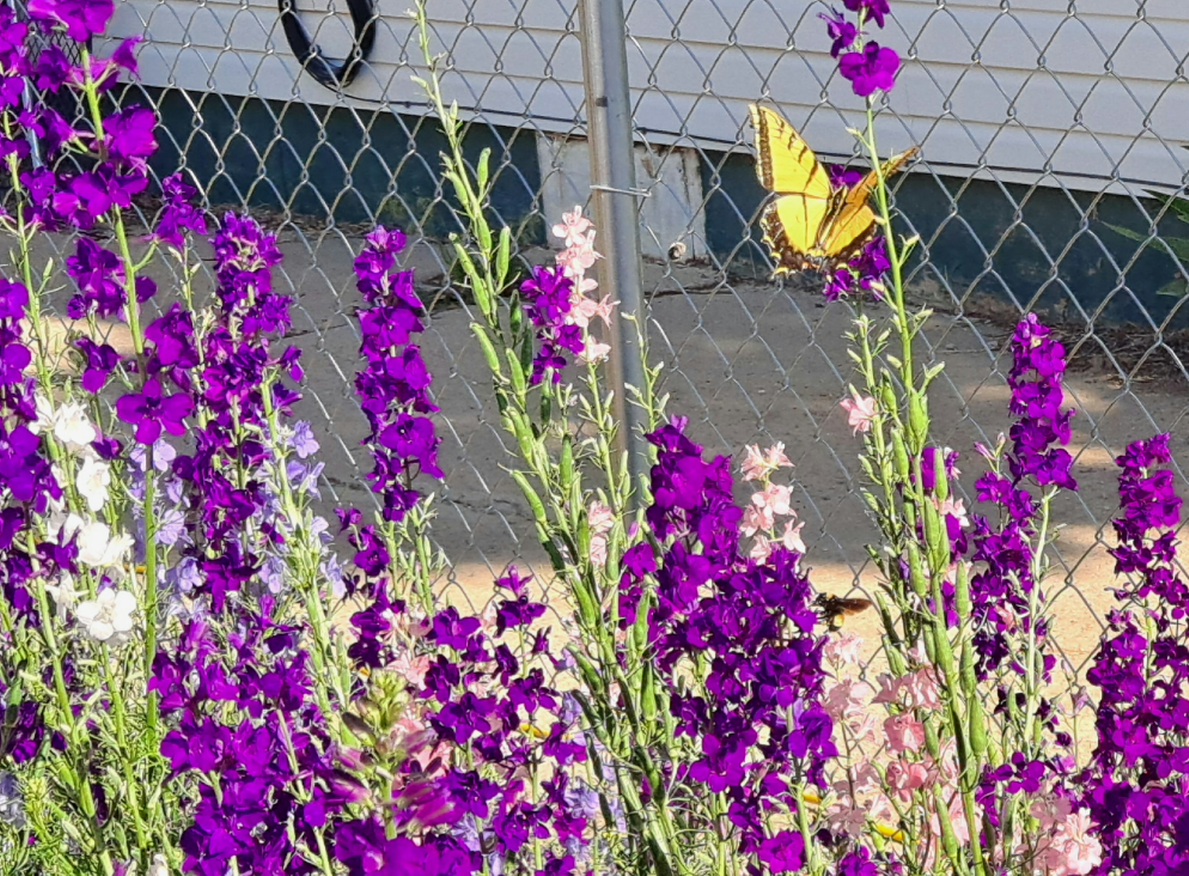
I am the only one who is less than impressed with the growth. Butterflies love it.

Bees love it.

And visitors are awed. But not me. Oh, I do appreciate the beauty, but I find it unsettling. It’s . . . too much.

It’s not just the larkspur that grew more than expected. The lilac bushes doubled in size, and seeds are wildly sprouting. Normally, I have little luck with seeds, so I tend to plant more than is called for in the hope that some will take hold. Well, the zinnia seeds I planted must have had an extraordinary germination rate or they like the weather or something, because almost all of them managed to sprout. So I’ve been thinning the zinnia bed and transplanting the seedlings elsewhere in my yard; although I’ve moved half the seedlings, the bed is still too thickly planted. I have never had such a problem before, but then, I’ve never lived through a season such as this one, either.

On an amusing note, this fecundity has created an almost magical soil. I wanted to see if my neighbor wanted any of my ice plant.

I pinched off a flower to show her. Afterward, instead of tossing the sample away, I stuck in in the ground, and it’s growing. For all I know, if things continue the way they are, the plant could take over the yard.

It won’t be long before summer is here, forcing all my plants and flowers — and me! — to struggle with heat and aridity, but for now, I’m continuing to be overwhelmed by this spring of excess.

***

Pat Bertram is the author of Grief: The Inside Story – A Guide to Surviving the Loss of a Loved One. “Grief: The Inside Story is perfect and that is not hyperbole! It is exactly what folk who are grieving need to read.” –Leesa Healy, RN, GDAS GDAT, Emotional/Mental Health Therapist & Educator.

What a Difference a Month Makes

Sometimes, in life, a month — or even a year — seems to bring no changes; it’s only in retrospect that we can look back and see the difference in our lives. In gardening, however, a month can bring dramatic changes. For example, in this photo, taken a month ago, spring is just making itself known. The lighter green along the right side of the path are larkspur that planted themselves where the grass died last year. The grass I planted (the blue seed) to start replacing some of the grass that died, hasn’t begun to sprout. The greengage plum (the tree in the foreground) is still dormant, and the lilacs (the bushes to the right of the path) are just beginning to green up.

A month later, things are completely different. As you can see from the following photo, many of the grass seeds took hold, and grass has greened up nicely. The tree has leafed out. The lilacs grew more in the past month than they have the past couple of years. And the larkspur have pretty much invaded not just along the path where the grass died, but the whole rest of the garden, too. I had to wade through the larkspur to find some of the plants I put in last fall, such as lilies and chrysanthemums, and clear a space around them to give them room to grow.

This is a sideview of the garden. Look at all those larkspur! To think that all that came from the half dozen or so plants I transplanted from my neighbor’s yard (with his permission, of course). I thought they were a low-growing flower, because that’s how they grew in his unkempt yard, but apparently, when given a bit of care, larkspur grow to monstrous heights. Some of these stalks are shoulder height. And such a lovely sight.

In another month, things will be different again. The larkspur will be gone — after they go to seed I pull up the dead stalks, leaving plenty of room in the garden for the perennials to grow. If there are big spaces left behind in the garden, I plant other annual seeds, such as zinnias. And since I will be able to get to the dead grass, I’ll start clearing the way for replanting the grass this fall. Or I might even plant some zinnias there, too. Since I have not yet learned how to take a photo of something that will happen in the future, obviously, I can’t show you what the area will look like then, but I imagine, at least for a while, it will look very similar to the way it looked a month ago.

And then a month after that, it will all be different again. Because when it comes to gardening, a month makes a huge difference.

***

Pat Bertram is the author of Grief: The Inside Story – A Guide to Surviving the Loss of a Loved One. “Grief: The Inside Story is perfect and that is not hyperbole! It is exactly what folk who are grieving need to read.” –Leesa Healy, RN, GDAS GDAT, Emotional/Mental Health Therapist & Educator.