Would-Be Fantasy Writer

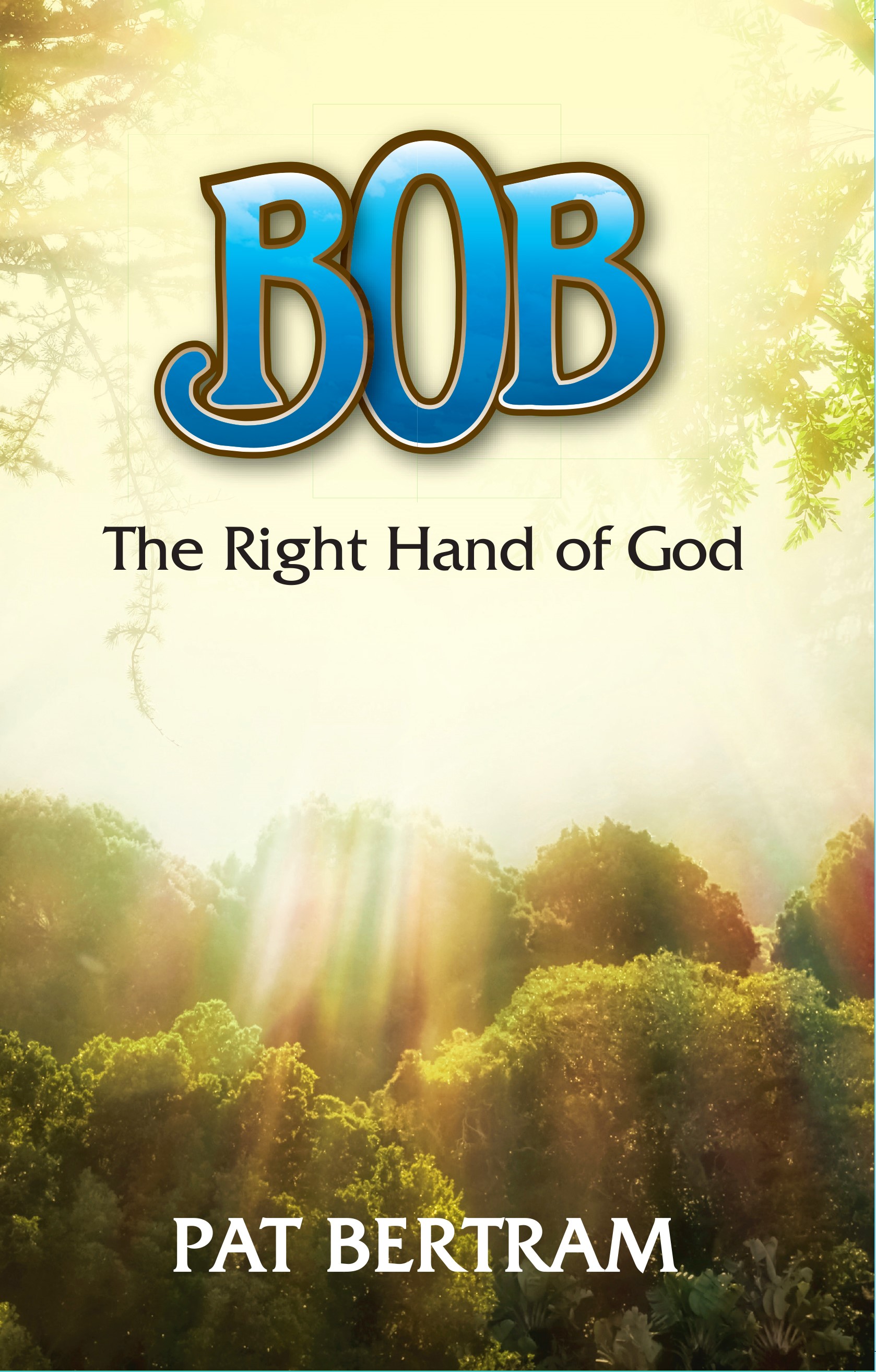
The Wheel of Time book series has apparently inspired as well as created a couple of generations of fantasy writers. Although I have never been able to get into any of those other stories (the books may have been inspired by Robert Jordan, but their worlds and their writing styles fall vastly short of his example), I can understand the urge to create one’s own world. I’ve thought about it myself, perhaps continuing the story I began in Bob: The Right Hand of God. Although Bob: The Right Hand of God is a stand-alone novel, it does seem to lend itself to a sequel since anyone born into that re-made world would have to start developing a new civilization (or not), but I don’t have any interest in writing the sequel. To me, the interesting part of the story was the de-creation of life on Earth as we know it. Anything further seems as if it would be just a ho-hum book. A been there, read that sort of thing.

So, if not Bob: The Right Hand of God, then what? Create a whole new world and culture as so many fantasy writers do? I considered that possibility, thinking a world of my own would be a place to escape to in my own head if not in fact but, though I hate to admit any failing, I don’t have the imagination for such an undertaking. (Although I’ve written two novels that could be considered fantasy, both took place more or less in our own world.) Nor do I need to live any more in my head than I already do. Besides, the truth is, so-called real life is fantasy enough for me.

There are theories that all time exists at once, so we are living our past and our future at the same time we are living in the present. My very first book, the terribly written one that no one will ever see (mostly because a few months ago, in a fit of decluttering, I threw away the only copy of the manuscript), was the story of two people who meet and fall instantly into if not love, then an incredibly deep connection, only to find out that they are reincarnations of each other. My question (and hence the premise of the book) was that if everything exists at once and if there is any validity to reincarnation, could this happen? There is an obscure theory that we are all reincarnations of one another. That not only is there a single electron that moves so fast and through so many dimensions and quantum processes that it creates the entire universe (or even multiple universes), but that there is also a single soul that we are all part of. (Yeah, I read weird stuff, which is inevitable when one reads almost anything almost all the time.)

Other theories say we are creating the world as we live it, that nothing exists yet but possibilities we haven’t yet encountered or envisioned. Other theories suggest that everything exists in our thoughts, that we are thinking into reality the world we live in. The reason we are such a mess is that everyone is thinking of different things and wanting different things. If everyone thought of the same thing at the same time, then that thing would come into fruition. Of course, the chances of that happening are nil since whenever you have even just three people together, one will always be thinking of something else, daydreaming or disagreeing or whatever goes on in people’s heads, and the other two will be saying they are thinking of the same thing, but that thing could be completely different for each of them. (For example, if they are trying to envision an apple, one might see a green apple, another red.)

Am I getting too silly here? Well, not too silly for a fantasy writer, but except for Bob: The Right Hand of God and Light Bringer, I probably will never be a fantasy writer. Probably will never write another book, either, but who knows. I could get bored with the books that currently exist and need to occupy my mind another way.
 

***

Pat Bertram is the author of Grief: The Inside Story – A Guide to Surviving the Loss of a Loved One.


Building a New World for Myself

When a writer builds a world for her novel, she can either begin with the known earthly world and add details to make it her own, or she can create a world from scratch, building the world from the outside in. First, the broad view of how the world looks, smells, feels. Second how the inhabitants make this world their own with cities, farms, and designated wild areas. Third, the infrastructure of this world — the basic divisions of society including cultural, racial and governmental . Fourth, the creatures of the world and how they relate to their environment and each other. Finally, the minutiae of life in this special world — how and what the inhabitants eat and drink; how they deal with bodily waste, move around, survive, find comfort.

heavenI  frequently think about a writer’s need for worldbuilding now that I am carving my own world out of the known world. I’ll be leaving in a couple of months for a road/camping/hiking trip, and though the first three steps of worldbuilding are already in place (I am going adventuring to see what is there, not creating the environment itself), I hope to find new ways of relating to the world and its creatures. To this end, all the minutia of life in this new world has to be thought out.

For example, when some people take off on such a trip, they acquire a recreational vehicle, a home away from home that is larger and more luxurious than the places most of the world’s population live. Other people go minimal — taking just what they can carry on their backs.

Me? I’m far from wanting the conspicuous consumption of the monster RVs, or even the convenience/inconvenience of a camper, but I’m also not yet ready for a minimalist adventure. I will have a car (though my automobile is rather minimalist, now that I think about it. An ancient VW Beetle is about as minimal as you can get and still be driving an enclosed vehicle). I will stay with friends occasionally or in motels when inclement weather so dictates. But for the rest of it, I have to create my own world. What sort of shelter will I use? How will I stay warm? What will I sleep on? How will I deal with body functions in the middle of a frigid night? What will I wear? What will I eat? How will I cook? How can I create a modicum of comfort?

So many details!

I’m not going off on an expedition to a remote corner of the galaxy, where I need to bring everything for survival. I probably will never be more than an hour or two drive from civilization, where I can rectify any oversight or under buying, but still, the point is to be as self-sufficient as possible. Or maybe not. Maybe the point is to prepare as best as I can and see happens.

One of the things I want to seek on this expedition is darkness, places that are far from the light pollution of cities, where stars are so numerous you feel as if you are falling up into the sky. Last night I had a vision of myself in a lounge chair, lying under the stars, and letting myself fall into the infinite sky. Romantic, I know. The truth is probably more dangerous and uncomfortable — frigid temperatures, no protection from the small creatures of the night, and none from the large bidepal ones. But still, I’ve been searching for a strong and comfortable folding lounge chair to make my vision a reality.

Other details I still haven’t worked out, such as disposal of body waste. I had planned on getting a portable camp toilet since I’m not sure I have the muscle tone to squat for as long as I would need to do to my “duty,”  but so far I haven’t found one I like. Maybe plastic bags and kitty litter would work. And maybe I am stronger than I think.

Some people find my preparations amusing, and to be honest, sometimes I do too. But I also find the mental exercise a challenge — rethinking every part of life to see what the alternatives are.

In this, too, my preparations reflect the way a writer builds her world, because isn’t writing about rethinking life as we know it to see what the alternatives are?

***

(Pat Bertram is the author of the suspense novels Light Bringer, More Deaths Than One, A Spark of Heavenly Fire, and Daughter Am I. Bertram is also the author of Grief: The Great Yearning, “an exquisite book, wrenching to read, and at the same time full of profound truths.”)




