Time to Fill

I thought I’d have trouble spending way less time on the internet, but the only problem I have so far is what to do with all that free time. There’s only so much work I can do outside before the heat makes being out there a dangerous folly, so I’m not doing too much more than I had been. I did clamber about my back garden patch, the one where I planted a pumpkin vine that is creeping over the entire area, to do some weeding. Luckily, I was able to do most of the work near the fence, so I had something to hold on to as I worked my way through the jungle. To my delight, I discovered a pumpkin hidden back there! It’s still green, so it will be a while until I can harvest it. Meantime, the first pumpkin I found has turned a luscious orange. Now I just need to figure out what to do with it. Maybe cook it, peel it, puree it, and freeze it. The best part is that the work will take up some of my free time.

And I will have to find things to do to use my reclaimed time. Although I’d just as soon not play the game I’ve been fooling around with for the past six years (being at home during the Covid mess and needing something to do is what got me started with it), it’s hard not to want to log in when I get bored. So I do. Log in. Not to play. Just to check to see what’s going on, maybe play one of the less irritating side games for a few minutes, then I’m finished. Anything more annoys the heck out of me. It’s a simple hidden object game where you look for hidden objects in pictures, and yet they act as if each move is a major casino-like win, with all sorts of lights and flashes, and whirling objects that seem to fly out of the screen. Luckily, I have nothing invested in the game, so whether I play or not is no big deal.

I also check on the news aggregator I follow, but even that now is a quick in and out. To be honest, I’m getting to the point where I don’t want to know what’s going on out there. I’m so much better off in my own little world. Or in the magic worlds of the two fantasy authors I like. It doesn’t even bother me anymore that the books were never finished. Well, I suppose The Wheel of Time was finished, but since it was finished by a terrible substitute author after Robert Jordan died, to me, it is unfinished and will always remain so.

I did find another series from that same era (before Woke hit the fantasy genre), though who knows if I will like it — the reviews are mixed. Still, I’ve read about a third of The Dragonbone Chair, and so far, so good. Best of all, it’s a million-word novel spread out over four different books, so even if it turns out that it’s not my sort of story, it will keep me company through thousands of meals.

Although I don’t particularly like fantasy, in fact I can’t stand most of it, there is a genre within a genre — a coming-of-age/hero’s journey story in an earthlike world, where much is familiar though skewed with a bit of strange — that I do tend to enjoy, but so far, I’ve only found three such series that appeal to me. Luckily, these stories are all very long with multiple books in the series and deserve more than a few readings. In fact, it was only during the second reading of The Kingkiller Chronicles that I realized that much of the dialogue is in rhyme or seven-word sentences depending upon the character. Something to go back and pay attention to. Best of all, none of those books has much to do with our world today except in an allegorical or fable-ous way, which is good for my peace of mind.

Still, as with working outside, there’s only so much reading, and working puzzles, and such that I can do in a day, so there’s still a lot of time to fill.

Luckily, as I find myself reaching for the keyboard to offset an upsurge of boredom, I remember what is waiting for me, and that makes it easy to stay away.

At least for now. Who knows what I’ll get up to in the coming days.

***

Pat Bertram is the author of Grief: The Inside Story – A Guide to Surviving the Loss of a Loved One

Betrayer of Hope

Daily writing prompt
What villain actually had a good point?

In The Wheel of Time books, there are several villains, all with their own reasons for turning to the Shadow aka the Dark One. A music lover wanted to be able to make and listen to music forever, so he figured it was a good bargain. Some turned because they wanted immortality and power beyond imagining. A few turned because they were simply evil. And then there is Ishamael, also called the Betrayal of Hope.

In the prologue of the very first book, after a horrendous ten-year war, Ishamael tells “The Dragon,” (the defender of the light and the hero of the story):

“This war has not lasted ten years, but since the beginning of time. You and I have fought a thousand battles with the turning of the Wheel, a thousand times a thousand, and we will fight until time dies and the Shadow is triumphant!”

The Dragon is a man who was created to fight this eternal battle, though he doesn’t remember his previous lives. (Ishamael apparently does remember.) And since The Dragon never had a choice in the matter, he was just reborn at the proper time to fight the Shadow, I can only presume (on this reading, anyway), that Ishamael himself has no real choice in the matter, either, and was always born to fight the Light.

That’s assuming, of course, that Ishmael is telling the truth. One of the interesting aspects of the books is that each point of view character isn’t privy to the whole of the story, and sometimes they mistake what is going on. Another interesting aspect is how that world runs — the wheel of time keeps turning, and ages come and go and then come around again. Although there might be small variations each time, I get the impression that each age is pretty much the same as it was before.

Which means that these two men are fated to fight forever.

That is why Ishamael turned to the dark — the only way for him to get off the wheel, to end this terrible and terribly meaningless cycle, is to destroy the wheel, which, in his mind, means that the Dark One must be the winner of this eternal battle. Whether he saw this destruction as the ultimate act of mercy for the world or only for himself, isn’t clear. But still, to be stuck forever in a life he sees as futile, remembering fighting the same battle over and over again seems so very tragic.

Although some of the other minions try to kill the current Dragon Reborn at various times, Ishmael sometimes helps him stay alive because if the Dragon Reborn dies before the final battle, then Ishmael continues to be stuck forever in the endless cycle.

It makes me so very glad we live in a linear world, or at least we presume we do, where the past stays in the past and doesn’t come again. There is a fatalism to the books stemming from the wheel, where each age will be repeated when the wheel comes around again to that age again. Which also gives them their belief that you can change your life in small ways, but not large ones. Not an easy philosophy to live under.

Ishamael sees that fatalism, too, so unlike the other minions of the Dark One, he doesn’t seem evil, just driven to end the interminable cycle. And, in the world of The Wheel of Time, he has a good point.

***

Pat Bertram is the author of Grief: The Inside Story – A Guide to Surviving the Loss of a Loved One

Changing a Book Ending

Daily writing prompt
If you could change the ending of any book, which one would it be?

If you’ve been with me any length of time, you know the answer to this one: I would change the ending of The Wheel of Time. Of all the books I have ever read, this is the only ending that gags me. If The Wheel of Time were a single book, it wouldn’t matter. I’d do the same thing I always do with books that have unforgivable endings — forget them and never read them again.

The Wheel of Time is different. A lot of it is utterly brilliant. As with any novel of four million words, most of those words are banal — some are unimportant, some are fill, and some are storylines that could easily be edited out. But it’s the brilliance that keeps me coming back.

If you don’t know, The Wheel of Time is a series of fourteen books that comprise what is, in effect, a single novel. The first eleven books were written by Robert Jordan, the last three by a substitute author who is so bad I can’t even mention his name. Oddly, a huge percentage of fans prefer those last three books. But then, I’m not a fan. As with everything in my life, I am a student, a truth seeker, a pattern recognizer, and The Wheel of Time happens to be the literary focus of those traits and has been for a long time. I first read the books about ten years ago and have read them several times since. In fact, on this very day, in 2020, I did another blog about these books.

Although I’ve figured out in my own mind what the ending should be, it no longer matters. To me, since I’ve mentally erased the last three books from the series, it’s a series without an ending. Which is as it should be since Robert Jordan’s writing ended when he did.

It’s funny when I think about it — the only two series of books I ever study are both unended. One because the author died and I refuse to acknowledge the ending by the substitute, and the other because he . . . I don’t know what happened, but he (Patrick Rothfuss) never managed to finish the third book of his trilogy.

Still, it’s the written words that count, and an ending (or not) doesn’t change their legacy.

***

Pat Bertram is the author of Grief: The Inside Story – A Guide to Surviving the Loss of a Loved One.

Literary Irony

I’ve been leafing through The Wheel of Time books and reading the parts that catch my interest. I’m quickly bypassing all the utterly boring sections, especially when it comes to the teenage girls and their individual grabs for power. These sections could have all been done through gossip or news being passed hand to hand or any number of ways to show their rise to power without readers being crushed beneath the banality. Some readers like those sections, the same people who think those two are the real heroes of the story, though I can see nothing of value to their stories other than that they became forces to oppose and perhaps help the hero.

Mostly I’m interested in the parts of the story that we aren’t bludgeoned with by a plethora of words, parts that slip through the cracks of “backstory” to become something else.

For example, one of the “bad guy” characters showed up in the army of male power-wielders that the hero had been gathering to help him fight the Last Battle. By chance, this particular bad guy was chosen from the ranks to be one of the hero’s personal helpers. Although the bad guy claimed to be a farmer, he seemed rather inept, could barely ride a horse, acted mentally slow, and was often found staring in consternation at the simplest things. He became part of a rebellion that tried to kill the hero, and in turn was himself killed by a “dark friend,” one of those sworn to the Dark Lord because the dark friend assumed he was nothing but the low-level soldier he pretended to be.

But if we turn that story around, piece together what we’ve learned about this bad guy throughout the story, and see it from his point of view, it’s a completely different and ironic tale.

In the first book, the hero kills a bad guy who was trying to kill him. Later, as we find out, this same bad guy is given a new body and sent to be one of the hero’s power wielding soldiers. It was pure happenstance that our bad guy ended up actually being in contact with and in service to the hero. Ouch. Having to serve the very person who killed you? So not fun! At least not for him.

Then we find out this same bad guy, some 3,000 years ago, had been a genius, a genetic researcher who created all the horrible monsters that currently plague the “good guys.” When the Dark Lord had been sealed up after a long-protracted war, this bad guy, along with a bunch of his fellow bad guys had been sealed up, too.

Back when he was sealed up, the world was way more advanced than we today can even dream of being, and so this poor guy wakes up into a backward world he cannot fathom, has no tools and no way to do anything he knows how to do, and so seems to be less than ordinary. And the final irony — this one-time genius, though being one of the premier bad guys, ends up getting killed by another baddie because he’s . . . ordinary.

Gotta love irony!

Another striking irony to me is that some of the characters hated by readers were not written as such by Robert Jordan but by the substitute. One character is a woman who helps the hero as she can, but seems a hard taskmistress since she demands to be treated with courtesy. I don’t think people would have hated her so much if Robert Jordan had been able to finish his books. Most of her worst characteristics ended up in the last three books that had been written by a decidedly inferior writer. So, since those three books don’t exist as far as I’m concerned, she turns out to be a woman who starts out demanding respect and ends up earning it. (I was one who didn’t like her, but she’s a good character up until those final three books, so I’ve come to like her.)

Another such character is a prince who was sworn to protect his sister, the daughter-heir, but she’s disappeared, no one will tell him where she is, and so he’s lost. He doesn’t know what to do and ends up — maybe — making bad decisions based solely on the chance of finding his sister. He’s also in love with a woman who is off doing self-important things, who says she loves him but doesn’t want his protection (even though that’s all he’s been trained to do). His bad luck was to be tied to both the power-hungry teenagers mentioned above.

To me his storyline is sad, and he only becomes an incompetent fool in the last three books under the pen of the substitute.

So, here’s another irony — readers love the substitute author, think he’s better than the original author, but blame Jordan for the characters they hate even though it was the substitute that mangled the characters. Yep! Gotta love irony.

I have those last three books, but as I’m leafing through Jordan’s books this time, I can see more and more mistakes the substitute made, and so I know for a fact I will never want to reread them. I just don’t know what to do with them. If I need the room on my bookshelf, I suppose I’ll take them to one of the little libraries around town since I still can’t force myself to go to the city library. Meantime, there they sit.

Because this post is about irony, I’m trying to find the irony in that previous paragraph, but it seems straightforward to me. Unless the irony isn’t in the paragraph so much as in the books. Although a lot of Robert Jordan’s Wheel of Time is utterly brilliant, an equal amount is plebian at best.

***

Pat Bertram is the author of Grief: The Inside Story – A Guide to Surviving the Loss of a Loved One.

Rereading and Re-rereading

Daily writing prompt
What book could you read over and over again?

I’ve spent the past couple of years rereading various mystery series from start to finish so I could get the full story of the character. Normally, I just picked books at random so sometimes a character is married, sometimes is just meeting the love of his/her life, sometimes is in full parental mode. All while being a cop or agent or private detective, of course.

After reading more than twenty thousand novels (plus thousands of non-fiction books), I’ve found a sameness to the stories, characters, situations, so that novels tended to overlap, which is why I didn’t think it would matter if I read these series again. Unfortunately, I didn’t enjoy the books as much as I thought I would since (for me, anyway) most novels don’t have a lot of depth. What you see is what you get. I even went back and read books I’d read over and over when I was young, but the stories didn’t have the same pull for me now that they did back then. Of course, I’m not the same person now as I was back then, either.

Lately I’d been rereading the first eleven books of The Wheel of Time. (I have no interest in ever rereading the last three books by the makeshift author. Although readers seem to prefer them to the first eleven books, I find them to be overhyped drek.) There are so many layers to the books that Robert Jordan himself wrote, there are so many inspirations from and references to real life, so many interlocking characters to keep track of, that it’s taken me a long time to piece it all together. I’d think the difficulty of remembering in book ten what happened in book two would be a failing of my aged memory, but I do know one thing — I would not have had the patience for these books when I was younger, so any comparison is irrelevant. Nor would have read them then — I never liked that whole good vs. evil theme. It always seemed contrived. Besides, I know more of the world and its culture now than I did then, so the underpinnings of the story are more obvious to me, and those that aren’t are fun to discover.

I’m to the point, though, where I might have gleaned as much of the meaning and found as much of the puzzle as possible, so I might have to pack the books away, but for now, they still sit prominently on my book shelf while I read The Kingkiller Chronicle. Only the first two books of that Patrick Rothfuss trilogy have been published, but I’ll probably reread these books, too. Although there doesn’t seem to be much referencing to our myths and legends, there is a lot of inworld referencing that I’ll need to piece together someday.

I’ve been trying to find more rereadable books and series that I can sink my life into, but so far, no luck. The problem is, I’ve developed an aversion to going to our library (I’ve searched those shelves a thousand times and just can’t force myself to look even once more), so I will have to find rereadable books if I want to continue my lifelong habit of reading. There are a few other books on my shelf to go through, and there are the books I’ve written, of course, which are enjoyable to reread. (Though I have to confess, I’m a bit embarrassed by the reviews I posted here of those books. Talk about self-aggrandizement! So not my thing. Besides, every author feels the same way about their books, which makes those reviews even more cringeworthy.)

And after I’ve finished reading and rereading the books on my shelf? I don’t know. With any luck, I’ll find books to serve my reading needs.

On a completely different slant about these two series: I found a chapter-by-chapter outline by a reader showing where the final book of the The Kingkiller Chronicle might be going, which would be a good way to conclude the series if the author doesn’t ever manage to do it. I’d hoped to find something similar for The Wheel of Time, where the fans outlined what they hoped would happen, but I suppose having the finale written, no matter how badly, put the kibosh on any such online project. And anyway, I pretty much created my own ending, if only in my mind.

***

Pat Bertram is the author of Grief: The Inside Story – A Guide to Surviving the Loss of a Loved One.

Reimagining the Ending of the Wheel of Time

I did it! I figured out the ending of the Wheel of Time, or at least an ending, one that’s more to my satisfaction than the published version. Most readers love the last three books written by a substitute author, but not me. I found them too inconsistent, too many bizarre changes to the characters, too much contradiction to what Jordan had written, too much discontinuity, and too much emphasis on insignificant characters and not enough on important characters. Besides, the whole thing was just so ho hum. The last battle is imminent, but everyone acts as if it will be tomorrow or next month or even next year. They also think it’s their choice when to begin fighting the Dark One, as if the Dark One is just sitting around waiting for them to decide to act.

What truly irritated me was how the substitute author further developed the main hero. This hero went on top of a mountain, ready to kill himself because he thought life and his mission were futile, just as the person he used to be did 3,000 years previously, but instead he had a bit of a revelation — that people were reborn and kept being reborn because it gave them a second chance at love. And because of this rather simplistic realization, the hero (Rand) was suddenly cured of the darkness that the Dark One had been coloring him with, was suddenly cured of his growing madness and became melded with that 3,000 year-old-version of himself that had presented as a voice in his head, and suddenly became what fans of the books call “Jesus Rand.”

Although some Christ-like features can be read into the hero’s character, he was never supposed to be based on the Christian savior, but rather more of a hero like King Arthur (as well as the Fisher King from the King Arthur legends and savior characters from dozens of other myths and legends). But the substitute author seemed to have missed that point completely and overrode the cosmology inherent in the books with his own religious beliefs. Appallingly, when the two personalities of the hero melded, he became a caricature of what a messiah might be. He was so over-the-top perfect that it was creepy, not inspiring. His ancient persona had never been that perfect — in fact, it was reported that he’d been sanctimonious and proud. And the hero in his present persona had become angry, determined, hard, ruthless. So how did those two personalities become so utterly pious when integrated?

Even worse, instead of doing what he was supposed to be doing, preparing himself for the last battle with the dark forces, he wandered the world feeding the hungry, helping the poor, healing the sick (though he himself didn’t heal the sick, he had someone else do it), and rescuing soldiers who had fought themselves into a corner. Under other circumstances it would have been admirable but none of what he did would matter if the world was soon annihilated by dark powers that only he could fight but wasn’t. Still it fit — sort of. Several of the characters feared the hard person he’d become, thinking he should be strong instead of hard, able to laugh and cry as he prepared for the last battle, and so they approved the change.

Worst of all, despite acting so pious, he was still consumed with hubris — not at all a messianic trait — believing he was better than the Creator since the Creator had merely sealed the Dark One away, not destroyed it as the hero intended to do. And oh, yeah. Shortly before going into the battle to save the entire universe, he demolished one of the most powerful magic tools ever made because it was “too powerful to use.” Whatever that means. (Actually, what it means is, as the substitute himself admitted, that he couldn’t figure out how to use it and so got rid of it.)

One part that was supposedly written by Jordan that makes no sense at all, especially coming from someone who’d been a soldier himself, was that even though the hero accepted his death and willingly made the sacrifice, he supposedly left instructions for one of his followers to leave gold and supplies in a tent for him to find when it was all over (though he could have done it himself). But no. Just no. If you’re fighting the last battle, a battle for the entirety of existence, you can’t leave that bit of distraction, that sense that you’re not giving it your all, that perhaps you’re not committed to fighting to the death. If he survives, fine — then get someone to help.

All that is to set the stage for what I suddenly realized today would make a great ending and what actually should have happened besides adding needed conflict.

Forget that whole scene of transformation. Have him go to the last battle as he was, darkness, anger, hardness, madness, and all. In which case, he’d have all sorts of people trying to stop him. His allies who thought that if he fought the Dark One when he was so dark himself, would definitely try to stop him because if he won in that state of mind, it would leave the world worse off than it was. The women power wielders would definitely be against him even more than they already were because they could not control him, and because they believed he’d unloose the Dark One on the world before he could seal him up again and so lose the world to darkness. The misplaced army, the one the dark minions sent after him, would be mobilized against him by the forces of the dark.

Despite that, the hero manages to assemble the forces of light to tell them his terms for fighting the last battle. (To everyone’s horror. So many of them lavished hate on him through eleven books, yet they expected him to willingly sacrifice himself for them!!) After they all sign the peace accords he wanted, the world suddenly grows darker, as if the eternal night is coming, and the forces of the dark descend on them. Although the hero wants to stay and help fight, he knows his confrontation with the dark lies elsewhere. And so he reluctantly heads to the Dark One’s lair. Although he knows it’s his duty, he isn’t sure that he wants to save humanity since they had been set on destroying him.

There is a power vs. power struggle between the hero and the Dark One’s avatar that seems pretty even, but mostly the battle is a philosophical one between Rand and the Dark One rather than actual combat. (As Jordan intended.) So, there he is, almost as dark as the Dark One himself, determined to do his duty, though he’s not sure why. And then comes the battle — dueling scenarios of what the world would be like if the Dark One won and what it would be like if the Dark One was not just sealed away again as the Creator had originally done but instead was utterly destroyed.

After a few of these scenarios (perhaps one that made the hero cry and another that made him laugh) the hero comes to an understanding and acceptance of himself and his fate as the savior of the world. He also realizes the truth — that the Dark One is not a person but a cosmic force. A force of dark to balance the force of light to create the pattern of life that is woven by the wheel of time. Darkness without light is annihilation. But light without darkness is also annihilation. (Think of a blank piece of white paper. It doesn’t signify much of anything, but print black on white, and look what we have!)

So instead of on the mountain, here is where he has his miraculous revelation, the one that brings light to the world the Dark One had all but destroyed. In the vast light that ensues, those physically fighting the dark minions and losing, find the courage and hope and resolve for a final push. So while the hero is winning his own battle, sealing off the Dark One rather than killing it, the humans and the forces of light are also winning their bloody world-wide battle.

I love the irony that the dark force that tried to destroy him would be the very thing that facilitates his transformation, gives him back to himself, and makes him strong enough to do what he needs to do to overcome the Dark One. Gives me shivers! Something the published ending never did, that’s for sure. And it makes sense to me, which is even more important.

Of course, other things happen before, during, and even directly after the last battle as loose ends get tied up and other major characters have their own climactic endings. I’d definitely get rid of the repeated character arc for one of the other two heroes, have them act as the responsible people they’d already become, and make sure all three of the heroes meet up again, something the substitute didn’t do but seems to be a necessary part of bringing things full circle. I’d especially not ignore those characters that were most supportive of the heroes during their travails as the substitute did. But bits such as this are easy enough for me to fit into my interpretation of the ending.

I’ve spent weeks — months! — thinking about this, putting the puzzle together, but now what do I do with all that mental time? I’ve been searching for another all-encompassing project, but so far, haven’t found a series that is even vaguely interesting. I suppose I’ll go back to reading whatever comes to hand, but that idea seems a bit flat.

Oh, I know! I’ll start rereading the Wheel of Time! I must admit, it is a fascinating literary experience to go back and read the first book again after experiencing the huge character arc of the eleven Robert Jordan novels and seeing how far those simple country boys had ended up from their humble beginnings. And then, I’d have to read the second book, and perhaps the third . . .

***

Pat Bertram is the author of Grief: The Inside Story – A Guide to Surviving the Loss of a Loved One.

Fool’s Game

I spent a lot of time researching the final books of the Wheel of Time saga, trying to figure out what parts Robert Jordan wrote and what parts the substitute wrote. Since there was no one place for the information, I had to comb through hundreds of sites and interviews until I came as close as possible to knowing who wrote what.

It was all suspect, of course, because even the parts that Jordan himself wrote were added to by the substitute. Occasionally, the substitute added just a few words, but those few words sometimes changed the thrust of the scene or at least diluted it. And even when the substitute hadn’t changed parts that were written by Jordan, they would have been subject to change if Jordan been able to write the entire ending himself.

Jordan was both a pantster (one who writes by the seat of his pants, who creates and discovers the story as he is writing) and a plotter (one who outlines, who knows the story before he writes). He knew the major points he wanted to hit as well as the end to aim for, but the journey to get there wasn’t plotted out. Which means that even if he had written a significant scene ahead of time to give himself something to aim for, by the time he got to that scene in the writing, things might have changed. In the books he finished, that was often the case, so it would probably have been the same with the finale.

He had supposedly written the final scene while writing the first book, which is why the end seems somewhat sketchy (both in the meaning of not being fully drawn and of not being totally true). The woman who helped the hero at the end was never named, had never appeared previously in the story, and was someone the hero didn’t know because I think at the time he wrote that, Jordan himself didn’t know. And yet, through several of the last books Jordan did write, he was developing a character who was foretold as someone who would help, so I have a hunch by the time he reached the end, this woman would have replaced the unnamed one. And if not, it would have been a grievously misplaced use of Chekhov’s gun. (Chekhov’s gun is a principle where every element in a story should be necessary. As Chekhov pointed out, “One must not put a loaded rifle on the stage if no one is thinking of firing it.”)

Jordan did seem to delight in turning assumptions on end, and even though he said that not every prophecy needed to have a major resolution, still, to have a character who was fated to help the hero and who was central to other characters’ actions (they thought she would kill him), to end up simply having her place a pile of clothes and money aside for him to use if he happened to survive the last battle is not a big enough payoff for all the drama instigated by that prophecy, especially since the hero could have done that himself.

The point I’m trying to make, at least to myself, is that even the parts Jordan wrote are not canonical.

So, basically, for me, the entirety of the final three books are not worth the paper they’re written on.

I am beginning to see, however, why people revere the substitute so much. Not only do they prefer his style of writing (though why people would slog through millions of words of a saga if they didn’t like Jordan’s style, I don’t know), but otherwise they’d be left with the utter sadness of Jordan never being able to finish his epic. Sad for him, of course, and sad for us. I have a hunch his ending would have been visionary if not spectacular — all the issues readers had with his getting sidetracked had pretty much been resolved, and he was again focused on getting the characters to the last battle. Most readers, I’m sure, are just as glad not to have to contemplate what could have been and are willing to settle for what they were given.

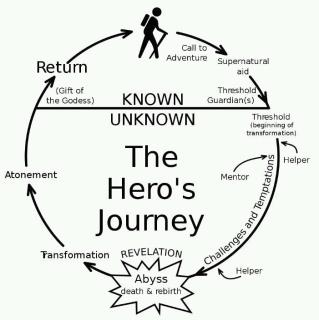
Most. Not all. Not me. I keep thinking I should be able to figure out what the ending would have been because of all the clues Jordan had laced into the saga with foreshadowing and prophecies. The “hero’s journey” concept could be a clue, too, since that was a big part of the origin of the books, but in the end, it’s a fool’s game since there’s no way of knowing what would have come out of Jordan’s subconscious and what he would have discovered as he wrote.

Still, as a person who gets caught up in literary mysteries, I’m sure I’ll continue to do what I can to puzzle out the end, fool’s game or not.


***

Pat Bertram is the author of Grief: The Inside Story – A Guide to Surviving the Loss of a Loved One.

Using My Time

The more I reread The Wheel of Time books, and the more I can retain those millions of words, the more the irony and the subtle humor become apparent.

In one scene, one of the heroes, who is being kept as something of a sex slave for a queen, entered a room where a bunch of women newly come to the palace were milling around. He had a bad feeling about the situation, and he stood there waiting for “one of the Forsaken [what the disciples of the Dark One were called] to leap out of the flames in the marble fireplace, or the earth to swallow the Palace beneath him.” That isn’t amusing, of course, but what is amusing is that although he didn’t know it (nor could anyone who hadn’t previously read the books in their entirety), one of the women in the room really was one of the Forsaken.

In another case, a woman who was sort of a slave caretaker (Robert Jordan created some appalling civilizations), thought that one slave’s new-found acceptance of her situation meant she was going to try to escape, and so doubled up on her conditioning. What I found amusing is that the slave keeper herself ended up being blackmailed into helping the slave escape.

Because of small things like this, which cannot be seen until a reread or two, I’m finding this read through to be more amusing and more touching than I expected. It helps, I think, that I skip the torture scenes. (Those Forsaken do love their torture. Oddly, most of them undergo just as much pain as they give. I suppose that’s what happens when you dedicate yourself to the Dark One. Since he’s also called “The Father of Lies,” you’d think that would be a clue to his nature, right?)

It also helps that I know so much mythology and history, long ago customs and costumes, and all the other bits that make up Jordan’s world, because the knowledge makes the books richer, though I miss a lot. In a passage I just finished reading, someone mentioned the seals on the Dark One’s prison, saying three were hidden away, three were broken, and no one knew where to find the seventh seal. Seeing “the seventh seal” written out like that was a hitting-palm-on-forehead moment for me. I don’t know why I never associated these seals with Revelations and Armageddon, though I should have. I knew the last battle was Armageddon, though in the books it’s called Tarmon Gai’don. I just never got the connection with the seals. Now I’ll have to go through the books and see if I can identify what seals were broken and how they affected the Wheel of Time world. Like the fisher in The Fisher King legend, the Wheel of Time hero is “one with the land,” which is becoming obvious as the hero’s tempestuous moments are reflected by stormy weather. So too must the broken seals have some sort of correlation with what’s happening in that world. As if there’s not already a headful of correlations to find!

I know there’s a lot of correlations between historical battles and those of Jordan’s, such as the off-screen skirmish called “Altaran Noon,” which was based on the “Sicilian Vespers.” Since I don’t know much about battles, I’m sure I miss a lot of what he intended. Or maybe I’m not missing what he intended — it’s possible he didn’t really intend for anyone to see what he was doing; it’s possible he recreated those battles for his own amusement since he was a self-avowed military historian. (Before becoming a full-time writer, he was a nuclear engineer, and before that, he’d served two tours in Vietnam as a helicopter gunner, which contributed to his interest in military history. It’s also what inspired him to give his male characters their unique perspective about not killing women.)

I seem to be writing a lot about these books lately, but there’s a great deal to process, though sometimes I wonder why I want to. Still, I need to be doing something, and studying these books and this world is a good a use of my time as any. And who knows — if I can come to understand his world, maybe I can understand ours.

***

Pat Bertram is the author of Grief: The Inside Story – A Guide to Surviving the Loss of a Loved One.

A Tale of Two Authors

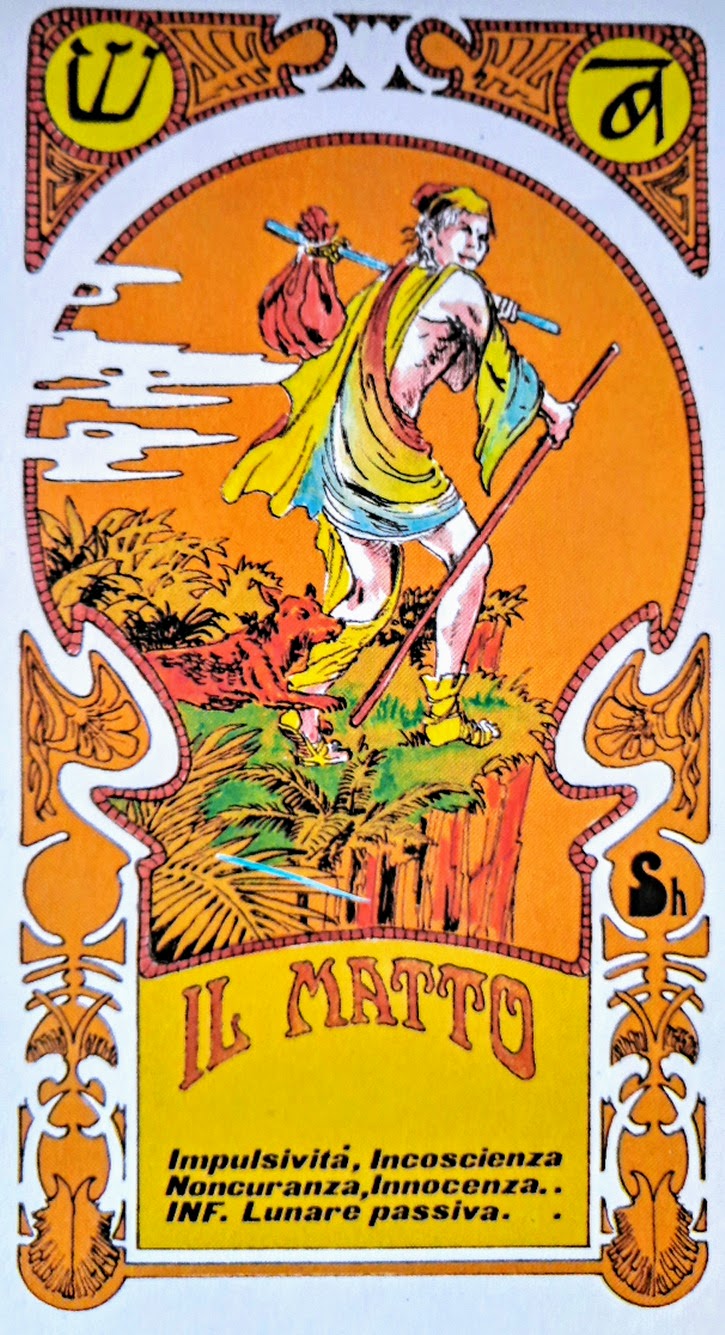
The Fool, one of the major arcana cards in the tarot, symbolizes wanderings, unawareness, naivete, spontaneity, transition, vitality, the beginning of an adventure, the ability to embrace new opportunities. At times, it can also mean recklessness in the face of danger.

The Fool is often depicted as a young man with a stick, a dog at his heels. (In some tarots, this dog is replaced by a fox, which fits because the fool is often “crazy like a fox.”) He is walking blithely toward a precipice, apparently caring nothing for the possible dangers that lie in his path. He’s almost childish in his approach, believing that there are many opportunities in the world just waiting for him to explore and develop.

In Italian versions of the tarot, the fool card goes by “Il Matto.” In French versions, the card goes by the name of “Le Mat” or simply “Mat.” These versions give the name the connotation of “madman,” though in Arabic it means “a dead person.”

In The Wheel of Time, one of the major characters is named “Mat.” Everyone who meets him thinks he is a fool, and in fact, all through the books, that is the word most used to describe him. I thought he was simply an archetype, but when I studied the tarot, I realized he is definitely based on the Fool card. (And if not, it’s too much of a coincidence to ignore. Since the major characters in The Wheel of Time have tarot equivalents, either Jordan succeeded in writing the “all stories” epic he intended — a reimagining all our myths, legends, cultures — or the tarot itself is representative of “all stories.”) Not only is his name “Mat,” not only is his character based on all that the card symbolizes, not only does his character arc follow that which is outlined above, but he represents the Arabic definition of his name. As he once said, “I’m usually pretty good at staying alive. I only failed one time that I remember.”

The Fool supposedly goes in stages from a naïve country boy to a mentally ill outcast (and because of a cursed dagger, Mat truly did become insane for a while), to becoming one who has greatness riding on his shoulder, which Mat does. And through it all, even while Mat is helping save existence from evil cosmic forces, the other characters continue to see him as a fool.

And perhaps he is a fool. He’s the sort of person who will rush into a burning building to save people, cursing himself the whole time, while others just stand and watch. Most often, he rescues women, but as he has come to learn, “even if a woman needed help, if she did not want it, she made you pay for giving it.”

He’s also a character who has no sense of what he really is. Even as he’s breaking into a dungeon to rescue women who can’t rescue themselves, he insists he’s no kind of hero. He thinks he is selfish, though he is not. He’s a bit of a womanizer, but he only goes after women who want him. Though many women are charmed by him, he sometimes overestimates his charm. In one case, a woman was affronted at a slight given by one of Mat’s companions. “Mat offered her a smile. He knew he could smile most women into feeling soothed.” The woman sniffed at him and turned away, not soothed at all. “Most women, he thought sourly.”

Mat is a special character in the Wheel of Time. He only wants to drink, gamble, and cuddle with women, but instead almost always does what is right even if it lands him in more trouble. That trouble, in certain cases, means becoming a battle commander who garners immense loyalty from his men. He almost never loses a fight though he hates killing; he hates even more getting his men killed.

The humor of this character is subtly created by the disparity between who he thinks he is and what he actually does. This is utterly engaging, making Mat one of the few characters who’s fun to read.

Until . . .

Yep, until the substitute author. That writer has no idea what subtlety is. Has no idea what Mat’s appeal is. Has no idea where the character was headed. By the end of the last book Jordan wrote, poor Mat has grown up, accepts the responsibility he has fought against through all the first eleven volumes, and is truly poised to be the hero he was always meant to be. In fact, we begin to see beneath the “fool” to the tragic figure he is hiding behind that lighthearted mask. As he mused: “Taking responsibility drained all the joy out of life and dried a man to dust. What he wanted right then was a great deal of mulled wine in a snug common room full of music, and a plump, pretty serving maid on his knee, somewhere far from Ebou Dar. Very far. What he had were obligations he could not walk away from and a future he did not fancy.”

But the substitute erased Mat’s entire character arc, turned him back into that naïve fool, dressed him like a county bumpkin rather than the sophisticate he had become. Even worse, the author turned him into a clown without the underlying sadness that made him more than one dimensional. Apparently, the author knew Mat was supposed to be a bit of comic relief but had no idea why. And so poor Mat was set up in situations where he tried to be witty but made puerile jokes, got involved in clownish behavior where he played for laughs, was flippant for the sake of flippancy rather than to hide his true feelings, and often acted boorishly silly. 

The interesting thing is, Mat himself as Jordan wrote him was never funny, not even at the beginning when he was known as the town prankster. He took himself seriously, took life seriously, took his responsibilities seriously (even if he complained all the while), but never cracked a single joke, at least none that appeared on the page. Yet, for all that, he brought some lightheartedness to a series of books that could otherwise be rather dismal.

This is one of the reasons I keep up with my studies of the books even though (as you might have guessed) there is a lot I don’t like and cannot bring myself to reread. Not only is this series a masterclass in creating characters and archetypes with a few bold slashes of words, it’s also a study of the contrast between two authors. Though they are developing the same universe, they have two different writing styles, two different ways of presenting material (one is subtle in the storytelling, one hits you over the head with explanations), two different ways of looking at that world, two different senses of what humor is, two different real-world views that color their writing. (One was a soldier who understood the traumas of war and how soldiers dealt with the horror. The other was simply a writer.)

But the main difference? One, at his best, is brilliant. The other . . . never. Though oddly, (oddly to me, that is), most readers seem to prefer the substitute author.

P.S. Influences Jordan admitted he used to create Mat’s character are the Norse war deity Odin; the trickster gods — Loki, Coyote, and the Monkey king; Math fab Mathonwy, a Welsh figure of good fortune; Rommel, the desert fox; Francis Marion, the swamp fox. These last two reflect the “fox” part of the tarot card.

***

Pat Bertram is the author of Grief: The Inside Story – A Guide to Surviving the Loss of a Loved One.


Jordan’s Women

One common complaint about Robert Jordan and his Wheel of Time saga is that he didn’t know how to write women and that all his women characters are interchangeable. They aren’t interchangeable, and each has their place in the story, but because of the way Jordan inverted traditional gender roles, I can see why people think it’s true. Fans also say the characters don’t act like any woman they know, but the characters aren’t supposed to act like women we know.

In the Wheel of Time world, women have the assumption of power (in our world, boys and men used to have the assumption of power and the rest of us, no matter our age, were “just girls”). It was one of Jordan’s themes — turning gender assumptions on end. Those of us who grew up in his era understand why all his women characters treat men as if they are naive boys and why they never bothered to see things from their point of view — because that’s how boys and men treated us “girls.” As if we had no sense. As if we had no point of view worth seeing. As if we were so empty-headed we needed to leave all thinking to them.

But the world today is different from the one that existed when Jordan began developing his saga 50 years ago. (The first book was published almost forty years ago, but before the first word was written, he spent ten years researching and developing his ideas.) To younger generations, gender assumptions are . . . fluid, to say the least, so they can’t relate to that particular theme of Jordan’s. Still, the saga is a fantasy, a creation of a different world, so it should be read only from the point of view of Jordan’s world and not judged by current beliefs in our world.

Admittedly, I don’t like one of his major women characters, and don’t read her point-of-view chapters on rereads. Fans of this teenage character complain that other readers don’t like her because she’s a woman, that if she was a man, there would be no problem with her. (Which sort of illustrates Jordan’s theme, that she was acting like a man from an earlier generation.) But the thing is, people — men or women — who will walk all over anyone, lie, do anything to garner power, might be compelling characters, but will never be someone I like in real life and definitely not in fiction. This woman did not have a character arc — it’s a straight shot upward.

Whenever she saw someone with power, she did all she could to be like them, to become one of their group, use them, and then move on to the next group who could further her objectives. This is the most divisive character among fans — some women think this character is the real hero of the story (which isn’t surprising, since that’s what the character herself believes), while some (like me) see her as evil. The only reason as far as I can see that she doesn’t go over to the Dark One is that she’d have to swear fealty and be second-in-command at best. If she isn’t evil, she certainly portrays the dark triad of personality traits: narcissism, Machiavellianism, and psychopathy. She never changed, never had a moment of self-discovery or reckoning. Anything heroic she did was a side effect of her power grab. And she never stopped grabbing.

A second major character isn’t unreadable so much as she is the young heir to a throne, raised to believe in her right to rule and that she was superior to everyone else, always “sticking her nose in the air,” as one character described her. Despite that, of the three main women characters, she tended to be the most considerate (which isn’t saying a whole lot) and also sometimes acted as peacemaker between the other two. But even that isn’t as much of a problem as that a large portion of a couple of books are devoted to her claiming her throne, a story line that is way out of balance to the rest of the books and one, moreover, that does nothing to move any of the many plots forward. I have a hunch that Jordan planned to go somewhere with that whole subplot to make it less of an add on and more intrinsic to the story, but since the substitute author killed off her realm first thing when he took over, it became even more of a waste of words. As it is, her character arc is meandering, sometimes up, sometimes down, but never going anywhere since she doesn’t really change, just goes from being heir to the throne to being queen, simply becoming more of who she always was.

I started out liking the third one of his major women characters. She was a bit older than the other two, a healer and moral caretaker in the small town most of the heroes came from. Because of her youth, she had to bully people to make them see her authority, but still, she did her best to take care of everyone. She joined with the other heroes so she could look out for them but ended up dealing with a quest of her own. She became more and more of a bully as she tried to keep her place in the world, which irritated me until I saw her character arc. One by one, those she once had authority over turned the tables and she ended up subservient to each until there was only one left for her to bully. When she finally realized she had to give in to his authority too, she cried. That was the end of who she’d been. From there, though, she gradually built up her power base, starting with herself, until she became a true hero, the only one of the three women who did. An actual character arc.

(I wonder if Jordan planned that — one was too much, one too little, and one just right.)

There is another female triumvirate in the saga based on the legend of the three wives of King Arthur, who in Jordan’s books also represent the three aspects of the goddess — maid, mother, crone. (The maid is not a child but rather a warrior, a Maiden of the Spear. The mother is the queen mentioned above, who will have the hero’s children. The crone, though almost as young as the other two, represents the “truth teller” aspect of the crone archetype.) This “three wives” subplot is an unsettling part of the story for many readers (me, included), though it does make sense since Jordan is playing with our myths and legends, imagining what the sources might have been. The maid and crone have similar character trajectories to the queen/mother — ups and downs, with minor changes and an acceptance of their place, but mostly just becoming more of what they’d always been with no major arc that I can see.

Readers often point to the women’s annoying characteristics, such as straightening their clothes, messing with their hair, crossing arms, sniffing loudly, as proof that these characters are written badly, but these are tics, something every writer has. I can’t imagine writing four million words and having to constantly come up with different ways to show vexation or nervousness or disdain. The characters also spend a lot of time describing clothes, but the clothes give hints as to where they are and what they are thinking. It does make me wonder about his wife, though. Jordan says he gave every one of his women characters one of his wife’s characteristics, though he’d never tell her which ones.

In writing this, I developed a better sense of who these characters are, so I might decide someday to read every word of the whole series, including the parts that annoy me.

But maybe not. Since I know their arcs, such as they are, I don’t need to know anything beyond that. At least, I don’t think I do.

***

Pat Bertram is the author of Grief: The Inside Story – A Guide to Surviving the Loss of a Loved One.