I’ve often heard people say that as they get older, it’s easier to remember their childhood than what they had for breakfast. I wonder how old you have to be before that sort of reverse memory kicks in. Or is it more of a dementia thing than an elderly thing?
Studies have shown that after 75, people tend to start becoming truly elderly, leaping ahead in the aging game. Before that age, people’s bodies can keep up with healing whatever goes wrong, but after that age, the ability to heal slows, and so the infirmities add up. Is it the same with mental issues?
So far, my memory seems okay, with only the typical problems people of all ages have of not being able to dig a particular word out of their memory or getting sidetracked and forgetting food on the stove. I am not yet to the point where I forget what I had for breakfast while remembering my childhood. In fact, there’s little about my childhood I remember or even want to remember. I certainly don’t remember being this little girl, though she was (is?) me.
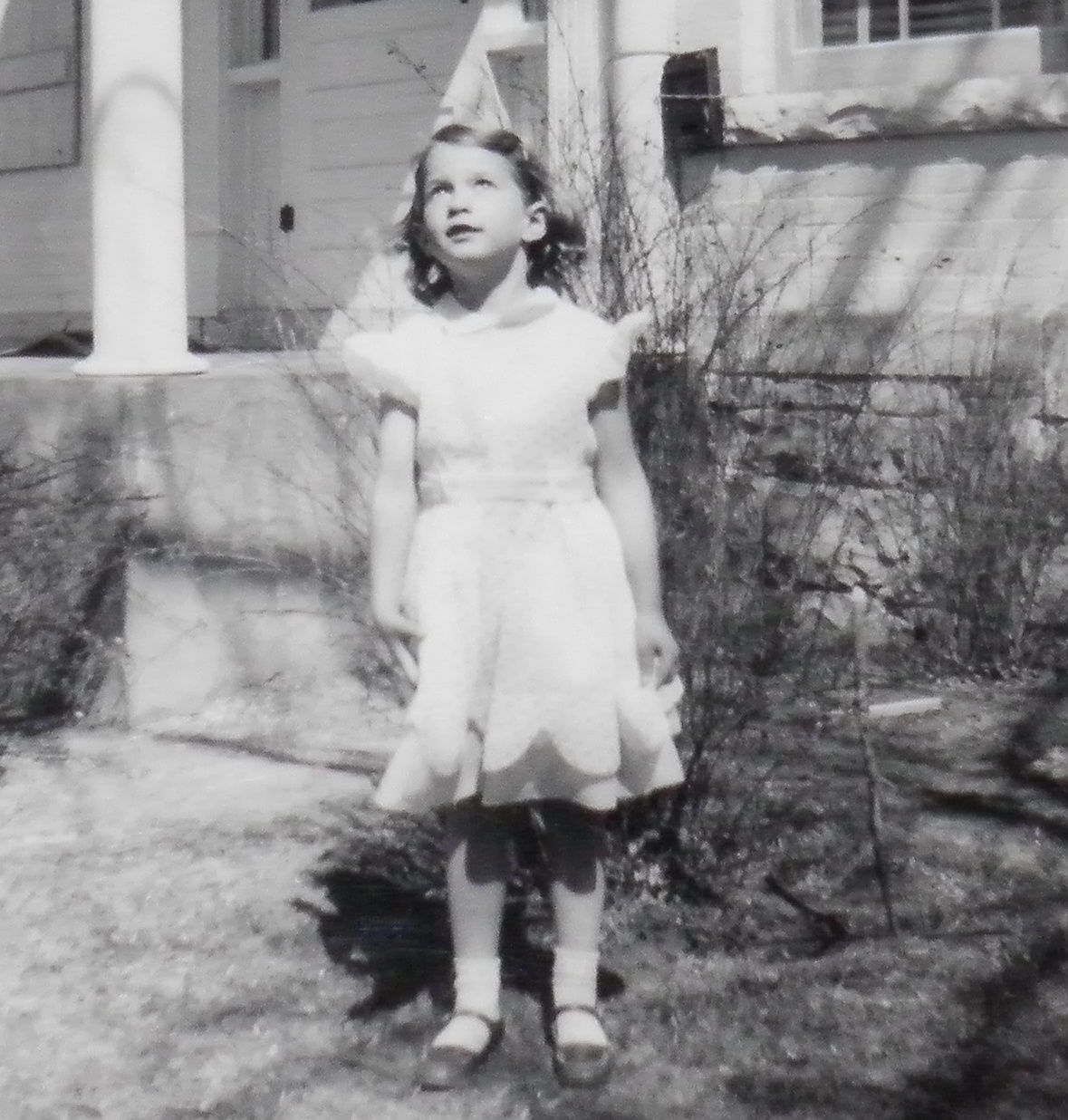
For the most part, I don’t think about the past. It seems irrelevant, and to an extent, non-existent since no one knows where the past is. Mostly, though, I don’t have any issues with the past. I’ve come to terms with any problems that might have lingered, worked through grief, and dealt with my regrets. I purposely did so because back when I was taking care of my father after Jeff died, I knew that someday I’d be needing to create a new life for myself, and I didn’t want to bring along any excess baggage.
So what happens if I get to the point where my short-term memory is shot and my long-term memory is all I have? Do I have to go back to thinking about things I stopped thinking about long ago?
It’s not just the past I don’t think about — I usually don’t think about the future, either. Just as that little girl I once was could never imagine my life today, I’m thinking that the woman I am today can’t imagine what my life will be as the years pass. Of course, I know where the highway of my life will end — where it ends for everyone. Still, I find it best not to look too far ahead, since such views can be worrisome.
A funny thought (or maybe not so funny) — I read so much, a book a day usually, that other people’s lives are more in my mind than my own. When I get to where I forget today and start reminiscing, will I remember those lives as my own? Probably not — considering how much I read — starting a new book as soon as the old one is finished — I don’t give any book enough time to slither from short term memory to long term storage.
As with most of what I think about, none of this matters. These are just idle thoughts to fill an idle mind.
Still, I do wonder.
***
Pat Bertram is the author of Grief: The Inside Story – A Guide to Surviving the Loss of a Loved One.








 Bertram's Blog