Growing

Daily writing prompt
What is one way you have grown this year?

One way I have grown this year? Older. I’ve grown older. I don’t really feel any older than I did a year ago, but there is one indication of that growth: some things don’t heal as fast as they once did. Well, one thing — sinus congestion. So far, I’ve tried just about every possibility, both medical and natural, and still, I have that sinus pressure and post-nasal drip. I’m waiting it out now, hoping it will cure itself. It did once upon a time — when I was young, I had allergies so bad I was almost comatose, but for some reason, I got over it. Maybe I will again.

Maybe not.

That acceptance of what life deals out is part of growth, I suppose, though such acceptance isn’t a recent growth experience for me — it came from years of grief over my various losses and all the living that followed.

I’m sure this blog prompt is about personal growth, though I tend to think I’ve grown up as much as I am going to get. I’m not even sure I want to develop further. At this point, will any sort of growth make my life better? I suppose it’s possible, but I also suppose it’s possible that a period of de-growth will be coming as I continue to age. I hope not — I appreciate the lessons I’ve learned in life, and I hang on to whatever wisdom I gleaned from them. I’d hate to think I’d forget those lessons and have to learn them again. It was painful enough the first time!

Personal growth supposedly contributes to fulfillment, self-awareness, mindfulness, well-being and happiness, which I’m all for when it comes to younger people, and was all for when I was young. But me now? I’m as self-aware as I want to be (any more awareness would turn me too far inward); I try to be mindful whatever I am doing for safety’s sake if nothing else; I have as much fulfillment as I can handle; and my sense of well-being is doing as well as can be expected. Does that sound smug? I don’t mean to be. I am grateful for where I am in life.

Gratitude. Acceptance. Mindfulness. Those are all lessons I’ve learned, things I practice. That seems enough. For now, anyway.

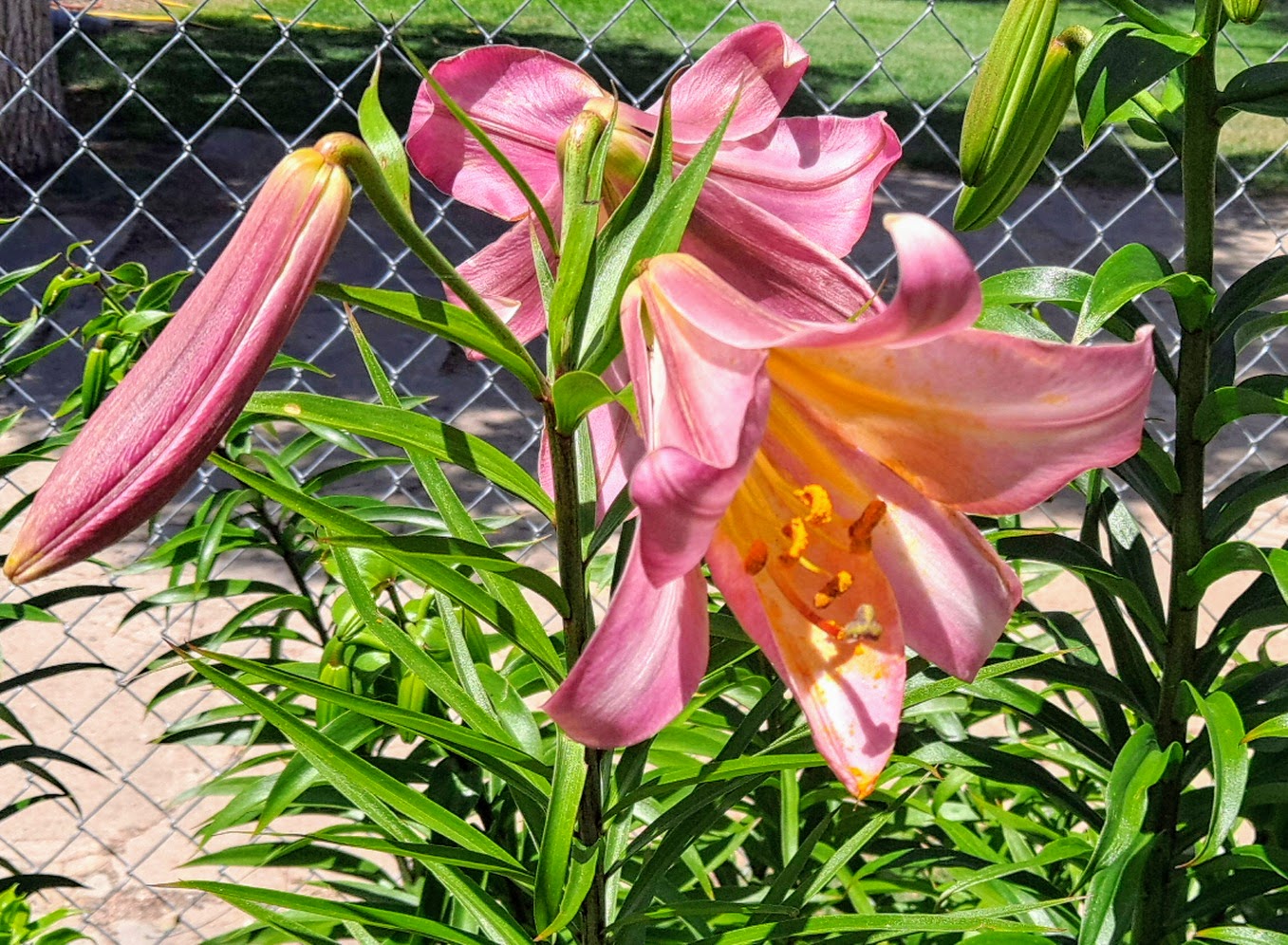
As it is, the only growth I celebrate is what is in my garden. That sort of growth I can get behind!

***

Pat Bertram is the author of Grief: The Inside Story – A Guide to Surviving the Loss of a Loved One

A Quiet Feeling of Contentment

Daily writing prompt
What’s a simple pleasure in life that brings you joy?

I looked up the meaning of joy because I was curious if my personal meaning matched the prevalent meaning, and it appears to be the same. To me, joy is an intense feeling, a kinetic emotion of delight and elation and even jubilation. I call it a kinetic emotion because it seems to be one of movement, an uplifting rather than a more static feeling of perhaps contentment or satisfaction.

Nothing anymore gives me that kinetic feeling of joy, nor does much of anything make me feel the lowering kinetic emotions such as anger and angst and outrage. I’m usually balanced somewhere in the middle rather than clinging to a vastly swinging emotional pendulum, which is how I like it.

There are many simple activities that bring me satisfaction, that take me out of myself and absorb my attention. I used to go to the library all the time, but I’ve taken against that simple pleasure, and so I find other things to do rather than spend all my time reading. Daily blogging, obviously, is one thing that takes up time once dedicated to reading. (I say obviously because . . . here I am!)

I’ve also bought a bunch of pencil puzzles books, a deal since they are outdated magazines, but that’s certainly not a problem since they’re all new to me. There are plenty of different kind of puzzles to keep my mind active, and I tend to think doing puzzles is better for mental stimulation than reading is.

Another activity I’m getting back into is paint-by-number. I used to get a kit occasionally when I was a child, and always enjoyed them, but then they disappeared for decades. My sister sent me a couple of kits for Christmas a few years ago, and that got me started again. They make me feel as if I am actually painting when all I am doing is coloring with paints, but filling in all those shapes satisfies something in me — my sense of order, perhaps.

Doing puzzles seems to be replacing reading, though I do read the books I have in the house especially when I eat. (I can’t seem to develop the habit of sitting down at a table by myself to eat. I know it’s supposed to be better for me, but it seems too bizarre and maybe too earthy to do nothing but concentrate on eating, which leads me to believe I don’t really like to eat.) And doing paint-by-number seems to be replacing computer games, though I still check in with a hidden object game most days.

And, of course, there is gardening. How could I have forgotten that, especially since I just came in from watering my plants and picking a few weeds.

Doing simple things gives my life a sense of balance, peace, and sometimes satisfaction, though the satisfaction doesn’t come from the doing so much as the having done. Seeing a picture come to life, finishing a puzzle book and starting a new one, seeing flowers growing in my yard and basking in the greenness all give me something better than joy. They give me a quiet feeling of contentment.

***

Pat Bertram is the author of Grief: The Inside Story – A Guide to Surviving the Loss of a Loved One

Getting Older is Strange

Getting older is strange, to put it mildly. Watching one’s body slowly change and not for the better, feeling one’s energy deplete, wondering if simple memory loss such as not remembering a word is indicative of a more severe decline.

So far, none of those issues is that great a deal for me. I’ve learned to accept my mild infirmities — the joints that don’t always work well, the cough that lingers too long, the words that elude me. One thing I have not yet learned to interpret is what to do when I have no energy — should I take it easy? Or should I . . . not?

When I was younger and had bouts of enervation, I could contribute them to allergies (my allergies were more of an energy thing than typical upper respiratory symptoms), an incipient cold, or laziness. Most times I gave in to the malaise because if I didn’t, I’d usually get sick. And anyway, I was young enough to get back into the swing of things once the feebleness passed, so if I ended up indulging my laziness, it didn’t really matter.

Now there is a fourth possibility to add to the rest: If I lack energy, is it allergies, a low-grade cold, laziness, or is it old age? If it’s one of the first three, I can treat the enervation as I always do — take it easy and indulge my laziness. If, however, the enervation is due to old age feebleness, I certainly don’t want to give in to it. Barring an accident or illness, or any other life-threatening problem, I could possibly live another decade, perhaps even two, and if I give in to sluggishness too soon, that lack of activity would cause additional problems.

I suppose one way to tell would be if the enervation came on quickly or if the energy loss came slowly over a long period of time, but even then, I get used to ignoring discomfort, so perhaps I wouldn’t notice slow moving debilitation. Besides, I’ve always been a low energy person. Throughout my years I’ve often exercised, but it’s been a push rather than a natural inclination. That’s why I read so much — it doesn’t take much energy to sit and hold and book. Even letting my thoughts wander doesn’t take as much energy as letting my body wander.

Speaking of which, the snow is gone, but I still haven’t resumed my intention of walking every day. I’ve been dealing with a low energy time, and don’t want to create additional problems by walking against the very cold wind. Brrr!

In the end, I’ll do what I always do — stop thinking about why I feel lazy and just grab a book.

***

Pat Bertram is the author of Grief: The Inside Story – A Guide to Surviving the Loss of a Loved One.

Reverse Memory

I’ve often heard people say that as they get older, it’s easier to remember their childhood than what they had for breakfast. I wonder how old you have to be before that sort of reverse memory kicks in. Or is it more of a dementia thing than an elderly thing?

Studies have shown that after 75, people tend to start becoming truly elderly, leaping ahead in the aging game. Before that age, people’s bodies can keep up with healing whatever goes wrong, but after that age, the ability to heal slows, and so the infirmities add up. Is it the same with mental issues?

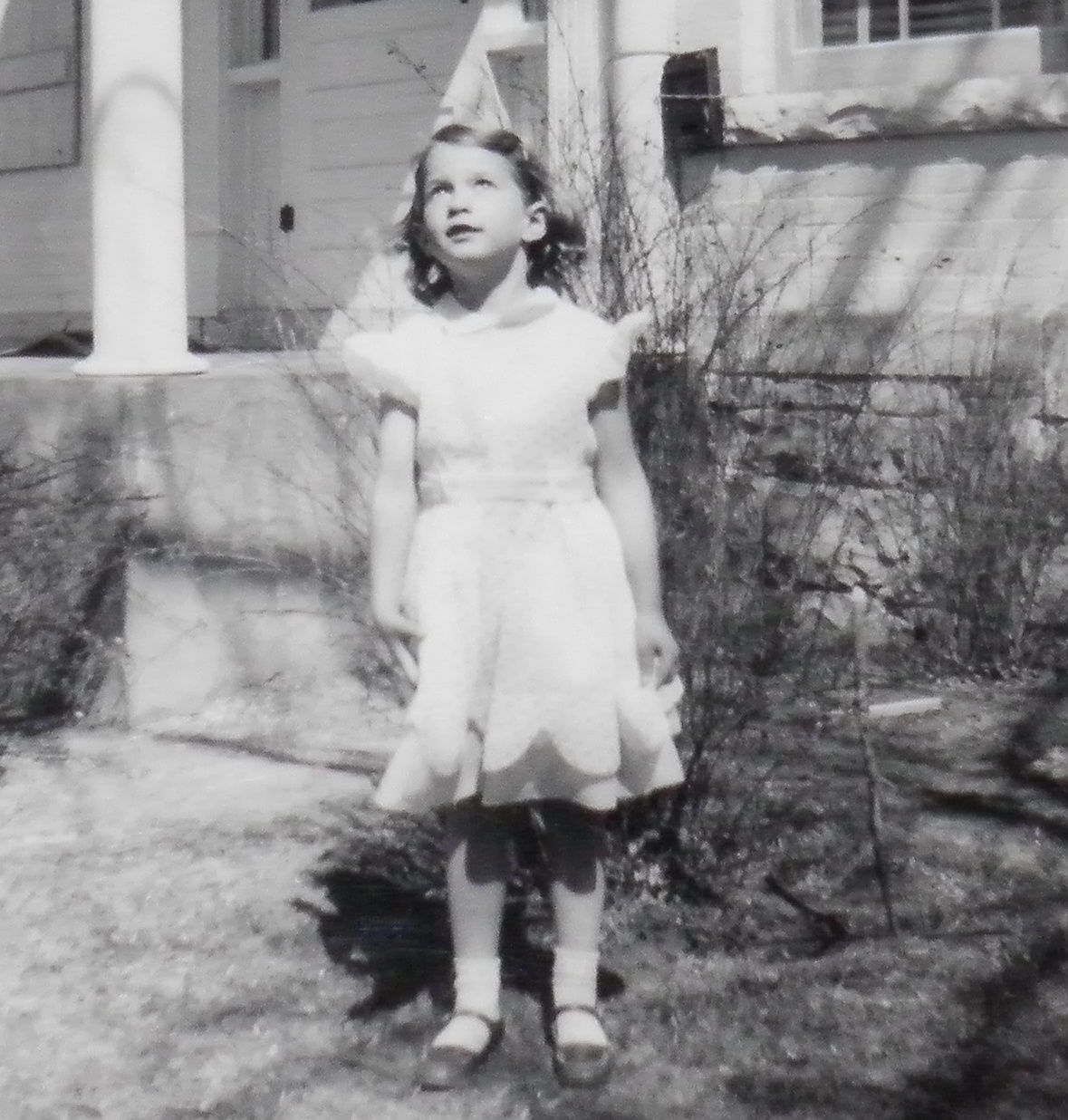
So far, my memory seems okay, with only the typical problems people of all ages have of not being able to dig a particular word out of their memory or getting sidetracked and forgetting food on the stove. I am not yet to the point where I forget what I had for breakfast while remembering my childhood. In fact, there’s little about my childhood I remember or even want to remember. I certainly don’t remember being this little girl, though she was (is?) me.

For the most part, I don’t think about the past. It seems irrelevant, and to an extent, non-existent since no one knows where the past is. Mostly, though, I don’t have any issues with the past. I’ve come to terms with any problems that might have lingered, worked through grief, and dealt with my regrets. I purposely did so because back when I was taking care of my father after Jeff died, I knew that someday I’d be needing to create a new life for myself, and I didn’t want to bring along any excess baggage.

So what happens if I get to the point where my short-term memory is shot and my long-term memory is all I have? Do I have to go back to thinking about things I stopped thinking about long ago?

It’s not just the past I don’t think about — I usually don’t think about the future, either. Just as that little girl I once was could never imagine my life today, I’m thinking that the woman I am today can’t imagine what my life will be as the years pass. Of course, I know where the highway of my life will end — where it ends for everyone. Still, I find it best not to look too far ahead, since such views can be worrisome.

A funny thought (or maybe not so funny) — I read so much, a book a day usually, that other people’s lives are more in my mind than my own. When I get to where I forget today and start reminiscing, will I remember those lives as my own? Probably not — considering how much I read — starting a new book as soon as the old one is finished — I don’t give any book enough time to slither from short term memory to long term storage.

As with most of what I think about, none of this matters. These are just idle thoughts to fill an idle mind.

Still, I do wonder.

***

Pat Bertram is the author of Grief: The Inside Story – A Guide to Surviving the Loss of a Loved One.

Aged Thoughts

So far this year, I’ve kept up with my resolutions and intentions, as well as inadvertent plans. “Inadvertent plans” meaning those things I’ve been doing without ever actually planning to do them, such as daily blogging.

Of course, this is only the fifth day of the new year, but still — to be keeping up with all I want to do is pretty impressive. At least, it is to me.

What’s funny is how much time everything takes. I knew things took a lot of time, which is why I got lackadaisical about doing them. Blogging, by the time I write, rewrite, edit, add images, figure out tags and actually post the thing takes a couple of hours. Exercise — both the stretching (which includes therapy for my knees) and walking — takes another hour. And cooking, eating, and cleaning up after myself as well as other household chores and personal maintenance takes another hour or two or even three.

Lately it seems as if once I’ve done what I’ve planned, there isn’t a whole lot of time left of the day. Admittedly, I am trying to do more, and the day ends early. Despite the end of the creeping darkness and the gradual returning of the light, sunset comes quickly: today the sun will set at 4:47 pm.

Even taking all that into consideration, the day seems to disappear, which makes me wonder if I am moving slower. Is it possible that one can move slowly without knowing it? It doesn’t seem as if I take a longer time to do the things I’ve often done, and yet, the hours evaporate.

A lot of things change around a person without their being aware of it, such as age. Even in late middle age and early old age, we still feel the same as we always did, and despite occasional twinges and a few wrinkles (well, perhaps more than a few!) we tend to think we still look the same. People used to tell me how young I looked, and yet, I was often given a senior discount without requesting it, which told me that I might look good for my age, but when it comes to comparison with young workers, I must look ancient.

Even if our minds slow, we don’t really notice because we are always at home in our own minds. So perhaps it’s the same with movement. We seem to move with the same level of effort, but the effects of that effort, obviously, change with the years, but when does that change come, and will we know it?

None of this really matters, of course. I do what I can when I can, move at a comfortable pace, and as long as there are enough hours to accomplish what I want to accomplish each day, it’s no one’s business (maybe not even my own) about how much of the day is left to read and relax.

Still, I do wonder how much slower I am moving, and how it will affect me during the coming years. Luckily, I don’t often give in to such aged thoughts, which helps me forget the number of years heaped on my head.

***

Pat Bertram is the author of Grief: The Inside Story – A Guide to Surviving the Loss of a Loved One.