Intentions and Unintentions

So far most of my New Year’s resolutions are on track, both the intentional ones and the unintentional ones. My plan of taking a walk every day was pretty much buried in the snow a few days ago. Although the snow is melting, there is too much slush to for me to want to be out there; also I’m fighting some sort of allergy or early cold symptom, which gives me even more of an excuse to remain inside. I am doing well staying away from the news, though occasionally the news comes calling with an email or an inadvertent glimpse when I let my attention wander. I’m also staying with the no sugar/no wheat thing, though I am looking forward to some sort of treat when the month is over. (This resolution was only for a month, though the intention of sticking with real food is an ongoing one.)

My unintentional resolution of blogging every day is still on track. Fifteen days and counting! I never really planned to blog every day . . . I just started, and now here I am. It feels good to be back blogging. An additional benefit is that it’s getting me away from playing games on the computer, which is just as well. The hidden object game I play is getting tiresome, though I still log in and play a bit every day just to keep my hand in, but any sense of wanting to work toward game goals has dissipated.

One unvoiced intention this year was to reread The Wheel of Time series by Robert Jordan and try to pick out clues to the real ending, not the ending we ended up with, which I am trying to do. Jordan, the one who created his world out of a mosaic of our history, culture, myths, and legends, died before he could finish, and the author chosen to finish the series did an execrable job. Not only was he at best a serviceable writer, he dumped characters that played a role through Jordan’s writings, ignored many characters’ development and regressed them to the beginning, traded established subplots for new subplots of his own that added nothing to the story, destroyed his own timeline so that things happened in no order (even seemingly having one character in two places at a time and two characters meeting where their timelines couldn’t have intersected).

[What astonishes me about those ersatz books is how protective everyone is of that substitute author. There are no one- and two-star ratings of his offerings, though there are plenty of low ratings when it comes to Jordan’s books. (Admittedly, some of those are deserved. Although much of Jordan’s story is brilliant and shows the ten years he spent researching, and his writing seems epic at times, it could do with a serious editing, including slashing huge sections of a couple of books.) I did find one review that was an honest critique of the last three books, yet the overwhelming response to the thoughtful piece was that the review was “overwrought drivel” written by an angry fan. (Even though the reviewer admitted he wasn’t a fan.)]

I read this series multiple times because after volume 6, I could no long remember what had happened in volume one. Most of the brilliance in the series comes from foreshadowing, and it’s hard to tell when a foreshadowed event occurs when you can’t remember the foreshadowing. So now I am able to remember the story going both ways — what I’ve read and what I’m going to read. Unfortunately, now I can’t forget those last three mishmash books by the substitute author in order to come up with my own ending as foreshadowed by Jordan’s writings.

I am not a fan of these books so much as a student, which is why I want to puzzle out the real ending. (Something to occupy my mind, if nothing else.) Perhaps as I find more of the clues to the ending Jordan intended, I’ll be able to override in my mind the bad ending with one of my own concoction.

Meantime, the year progresses. Already halfway through January! And my intentions (and unintentions) are still holding strong.

***

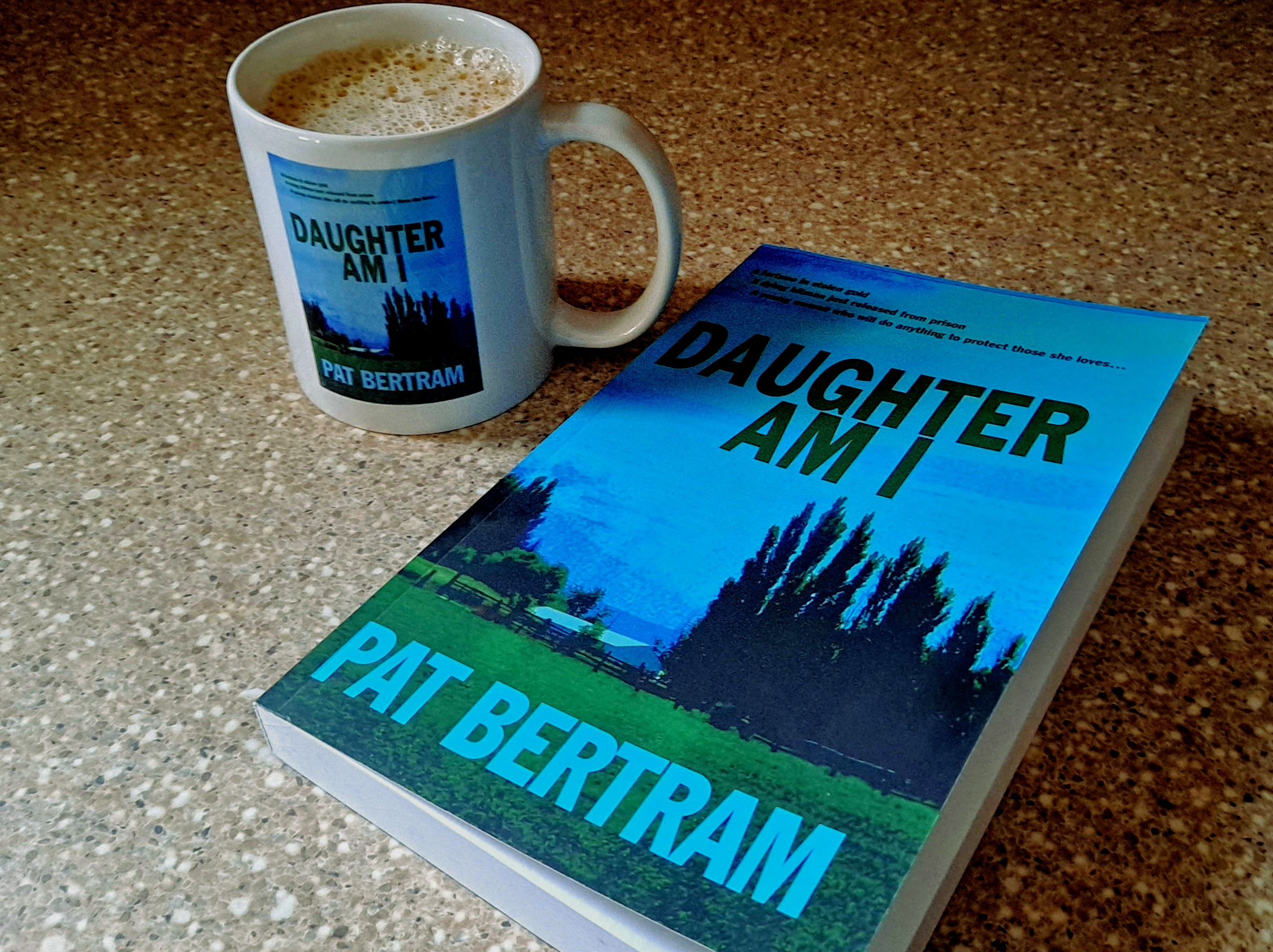
Pat Bertram is the author of Grief: The Inside Story – A Guide to Surviving the Loss of a Loved One.

Ten-Year Anniversary of My Road Trip

Daily writing prompt
Think back on your most memorable road trip.

It’s odd to think that my cross-country road trip was ten years ago! It doesn’t seem that so much time has passed, and yet, I’ve lived what seems a lifetime since then — moving (both into a new location and out of grief), becoming a first-time homeowner, landscaping the yard, meeting new people and making new friends.

Despite the vast change in my life during the past years, I never had any problems adjusting to anything that happened to me probably because of all the traveling that had gone before — the twenty-one week cross-country trip, the longitudinal trips, the half-cross-country trips (from California to Colorado). I really enjoyed all those trips, but now, I’m just as glad to stay home. (Though I tend to think part of that is not wanting to drive my geriatric car too much anymore. I shudder at times to think of my traveling solo all over the country in my ancient VW bug. I made it safely, but I’m not sure I want to test my luck.)

There was so much to see and do on all of my trips, but the most memorable one has to be that cross-country trip. I was out there by myself, doing what I wanted, going where I wanted, camping when I could, staying in motels when I needed to, visiting friends. Most of those friends were people I’d met online, and I was amazed and honored by how well they treated me, taking me to see the special sights and sites in their area. I experienced more of the continental USA during that time than I had in all my previous years.

Lucky for me, even though I do remember the trip, I don’t have to. I documented my travels, from the first hesitant raising of my first tent to the final feeling of loss at finding myself the same at the end as I was at the beginning.

And lucky for you, you can experience my trip for yourself by clicking on this link: Road Trip 2016.

Safe travels wherever you go!

***

Pat Bertram is the author of Grief: The Inside Story – A Guide to Surviving the Loss of a Loved One.

Saved by the Snow

Daily writing prompt
What snack would you eat right now?

It’s too bad that snack foods are so dangerously unhealthy, otherwise I could live on packaged snacks — crunchy, salty, cheesy, sweet, easily available, no cooking, no dishes — yep, sounds good! Despite that convenience, I don’t often eat foods normally labeled as “snack,” though in a way, everything I eat is a snack since one of the definitions of snack is “a very small meal,” and I seldom eat a large meal. (Unless it’s one of those rare occasions I visit a Chinese restaurant.)

Still, I have created a few snacks for myself, such as peanuts and chocolate chips or walnuts and raisins. Or best of all, dried oranges drizzled with dark chocolate. Yum.

But that’s not the question. The question is what snack I would have right now. Considering that I am limiting sugar intake this month (except for honey in my tea), as well as staying away from grains, my choices are limited. So what would I eat right? Probably a hamburger patty topped with cheese. Or perhaps the last of my Christmas gift summer sausage with a few pickle chips. Or even a little tuna salad.

What a boring food life I lead!

Luckily, I read a lot and can vicariously enjoy many delicious snacks through the characters. Though, come to think of it, too many women characters sigh and moan when eating something special as if they were having a sexual experience, and that’s not something I would ever do. Food is just . . . food. I suppose eating is a sensual experience (well, of course it is — taste is a sense) but considering how I have limited my diet, eating, even snacking, is more about staving off hunger than anything else.

But now this blog prompt has got me thinking about ice cream and chocolate and cheesy snacks. Resolutions are meant to be broken, right? It’s a good thing the roads are too slick for me to drive, otherwise I’d forget my healthy intentions and head out to the store. Whew! Saved by the snow.

Of course, I cook bake something, brownies, perhaps, but no. Too much work. It’s easier to stick to my resolution.

***

Pat Bertram is the author of Grief: The Inside Story – A Guide to Surviving the Loss of a Loved One.

Reverse Memory

I’ve often heard people say that as they get older, it’s easier to remember their childhood than what they had for breakfast. I wonder how old you have to be before that sort of reverse memory kicks in. Or is it more of a dementia thing than an elderly thing?

Studies have shown that after 75, people tend to start becoming truly elderly, leaping ahead in the aging game. Before that age, people’s bodies can keep up with healing whatever goes wrong, but after that age, the ability to heal slows, and so the infirmities add up. Is it the same with mental issues?

So far, my memory seems okay, with only the typical problems people of all ages have of not being able to dig a particular word out of their memory or getting sidetracked and forgetting food on the stove. I am not yet to the point where I forget what I had for breakfast while remembering my childhood. In fact, there’s little about my childhood I remember or even want to remember. I certainly don’t remember being this little girl, though she was (is?) me.

For the most part, I don’t think about the past. It seems irrelevant, and to an extent, non-existent since no one knows where the past is. Mostly, though, I don’t have any issues with the past. I’ve come to terms with any problems that might have lingered, worked through grief, and dealt with my regrets. I purposely did so because back when I was taking care of my father after Jeff died, I knew that someday I’d be needing to create a new life for myself, and I didn’t want to bring along any excess baggage.

So what happens if I get to the point where my short-term memory is shot and my long-term memory is all I have? Do I have to go back to thinking about things I stopped thinking about long ago?

It’s not just the past I don’t think about — I usually don’t think about the future, either. Just as that little girl I once was could never imagine my life today, I’m thinking that the woman I am today can’t imagine what my life will be as the years pass. Of course, I know where the highway of my life will end — where it ends for everyone. Still, I find it best not to look too far ahead, since such views can be worrisome.

A funny thought (or maybe not so funny) — I read so much, a book a day usually, that other people’s lives are more in my mind than my own. When I get to where I forget today and start reminiscing, will I remember those lives as my own? Probably not — considering how much I read — starting a new book as soon as the old one is finished — I don’t give any book enough time to slither from short term memory to long term storage.

As with most of what I think about, none of this matters. These are just idle thoughts to fill an idle mind.

Still, I do wonder.

***

Pat Bertram is the author of Grief: The Inside Story – A Guide to Surviving the Loss of a Loved One.

The Glad Game

Daily writing prompt
Describe an item you were incredibly attached to as a youth. What became of it?

Books have always been a part of my life, so it’s no wonder a few of the items I remember from my childhood were my books, all hand-me downs from my much older cousin. It’s possible they were even handed down to her, because they were old by the time I got them. Most I remember reading, but have no clear memory of author or title except for the Judy Bolton mysteries and a boxed set of five vintage Pollyanna books.

Whenever I got sick, I used to read those books. I must have been sick a lot since I read those books dozens of times. I gave away most of the books when I grew up, but I kept the Pollyanna books for years. A friend had once asked for them, and when I needed to downsize, I gave them to her. I have no idea what has happened to them since, but a single early edition of the Pollyanna books is worth about $2,000, which means the set would be worth a small fortune.

I can’t actually say I was incredibly attached to those Pollyanna books because obviously, I did give them away at some point. But no matter where they are now, and whatever they are worth today, all I know is that when I was a child, sick in bed, they were priceless.

Oddly, I was never enamored of her glad game — I could never see the point of being glad one didn’t need crutches when one wanted a doll (but oh, the irony that she ended up needing crutches after all!) — but I will play the game this once. I was very glad of those books!

Is there something you once were glad to have owned?

***

Pat Bertram is the author of Grief: The Inside Story – A Guide to Surviving the Loss of a Loved One.

Mission Statement

Daily writing prompt
What is your mission?

For a couple of decades, my mission was to write the best books I could, to get published, and ultimately to make a living as an author. I succeeded in the first two, and despite my focus and determination, I never figured out how to accomplish the third task.

Eventually my focus shifted, and I felt as if my mission was to tell the truth about grief: that there weren’t any clearly defined stages to climbing out of the pain but instead was a chaotic spiral of never ending and ever recurring emotions, physical side effects, and mental fog; that grief lasted longer than anyone could imagine; and that eventually you would become the person who could handle the soul-searing loss.

I kept at my truth-telling long after people told me I should “drop the mantle of grief” because so many grievers were helped by my raw writings, though to be honest, in real life, I did learn to cloak my sorrow, mostly to keep other people from feeling bad about my situation.

As the years passed, and I became the person I needed to be to survive the death of the person who made my life worth living, I felt less need to continue the mission. Those writings are all there for new grievers to find, but I no longer have anything to say on the subject.

Now my focus is taking care of myself so I can remain strong and independent and living in my own house until my road ends. This is not a mission so much as an intention. There’s no feeling as if this focus is a calling, no sense that it’s a quest, just a vague attempt to do the best I can for myself each day.

Maybe someday I’ll find another mission, but for now, I’m just as glad to drift, dealing with what comes as it comes, without an all-consuming purpose.

***

Pat Bertram is the author of Grief: The Inside Story – A Guide to Surviving the Loss of a Loved One.

More Things In Heaven and Earth

Daily writing prompt
What are your thoughts on the concept of living a very long life?

What a person thinks about the concept of a long life is rather meaningless since one lives the years one is given, and thinking beyond that is rather pointless. But so are most hypothetical musings. I have no thoughts whatsoever on the long lives of other people (or other creatures — the prompt did not specify long life for humans). There have been accounts of alchemists who have cracked the code of life and managed to evade death, though I have never found the truth of that rumor. It’s possible, I suppose. As Hamlet said, “There are more things in heaven and earth, Horatio, than are dreamt of in your philosophy.”

As for a long life for myself, um . . . no. Most people nowadays who live many years beyond what the actuarial tables say they could live, end up frail, sometimes helpless, feeling useless, and occasionally beset by dementia and other bewildering complications. I so do not want that for myself. Until, of course, I get to that point, then I’m sure, like everyone else in that situation, I will do everything I can to keep on living another day.

What is a long life, anyway — outliving your usefulness? Living to one hundred or beyond? Living biblical years of nine hundred or a thousand? It seems that long life to one creature is but a blink to another. To Methuselah, the bristlecone pine in the Inyo National Forest that is almost 5,000 years old, our puny ages would be as nothing.

But speaking of me (which is what this blog always comes down to), if I could have remained young, strong, healthy, vibrant, active, full of youthful energy, and joints that would never give out, living to be as old as Methuselah (either the biblical person or the tree person) would be great. I’d walk the world — literally walk. Just start out on foot, and keep going, looking at everything I pass, musing on everything I see, talking to people I meet, learning what languages I can, watching the years go by as I tramp forever.

It seems that a major problem of a great age, even when one maintains one’s vigor, is boredom. Walking the world, would be a great way to stave off boredom and keep oneself young in spirit to match that ever young body.

Despite Hamlet’s words to Horatio, I tend to think such a dream truly is impossible since I am way past the youthful body stage of my life. I am grateful for the years I’ve had, look forward to more years, and hope that however long my life turns out to be, that I will find a way to enjoy each day.

Wishing the same for you, too.

***

Pat Bertram is the author of Grief: The Inside Story – A Guide to Surviving the Loss of a Loved One.

When Tried and True Isn’t Tried and True

One of the many irritating things about having lived so many years (and admittedly, not the worst thing by any means) is that tried-and-true products are no longer tried and true. People argue that we don’t remember things exactly as they were, which could be possible in some cases, but I don’t believe it.

For example, Hershey’s cocoa powder is not the cocoa of my childhood. I do remember that long-ago powder — dark and rich and a tad bitter. Back then, the powder could not be directly mixed with liquid, it had to be mixed with sugar and a little water, heated on the stove until a paste formed, and milk gradually added. A long drawn-out process, hence (perhaps) the proliferation of hot cocoa mixes.

Now, the cocoa powder easily mixes with water, no heat necessary. The few times I make hot chocolate, I merely add the powder to honey, add enough water to make a paste, add milk, mix, then stick it in the microwave, and it’s done. Simpler, actually than using a packet, and healthier.

That dissolvability is not really an issue. I seldom make hot chocolate, and anyway, for that purpose, the new cocoa is better than the old cocoa.

Also, although the flavor is much blander than the original cocoa, it’s easy enough to double the chocolate a recipe calls for to get the necessary richness.

There is one recipe where the modern cocoa makes a huge difference, so much so that I no longer make the meal. It’s a meat dish, where the meat is dredged in flour, browned, then water and a teaspoon of cocoa powder is added, and as my mother said when she gave me the recipe, “cooked forever.” That gravy cooked up so dark that when I was young, I called it “black meat.” And in my family, the name stuck. The last time I made the recipe, the gravy turned out to be a sickly greyish-brown with none of the rich flavor of the earlier dish. My siblings found the same issue. Which to me proves that the change in the product has nothing to do with a faulty memory, and everything to do with a tried-and-true product being not so tried and true.

I don’t know what the change in the cocoa is. Supposedly the company processes it the same way, but perhaps they press out more of the cocoa butter than they used to. Or perhaps the beans they use are different.

Years ago I read that cacao trees were becoming extinct. Since they are best grown on cleared rainforest land in the shadow of the forest, and since the clearing of the forests was supposed to be curtailed, the habitat the trees needed would supposedly disappear. So who knows why chocolate is still prevalent. Perhaps there is a chocolate bean scarcity and what we call chocolate is mostly something that can best be described as “not chocolate.” Or they found a way to grow the trees without clearing rain forests. Or . . . whatever.

While the difference in what is available today and what used to be available is sometimes an irritant, I’ve made accommodations, and anyway, it’s a small annoyance in comparison to the major irritants of age, such as joint issues and aches that don’t seem to want to go away.

Still, if you ever find yourself on a time machine, will you do me a favor and on your way back pick up a couple boxes of the old Hershey’s Cocoa Powder for me? I would surely appreciate that!

***

Pat Bertram is the author of Grief: The Inside Story – A Guide to Surviving the Loss of a Loved One.

Aged Thoughts

So far this year, I’ve kept up with my resolutions and intentions, as well as inadvertent plans. “Inadvertent plans” meaning those things I’ve been doing without ever actually planning to do them, such as daily blogging.

Of course, this is only the fifth day of the new year, but still — to be keeping up with all I want to do is pretty impressive. At least, it is to me.

What’s funny is how much time everything takes. I knew things took a lot of time, which is why I got lackadaisical about doing them. Blogging, by the time I write, rewrite, edit, add images, figure out tags and actually post the thing takes a couple of hours. Exercise — both the stretching (which includes therapy for my knees) and walking — takes another hour. And cooking, eating, and cleaning up after myself as well as other household chores and personal maintenance takes another hour or two or even three.

Lately it seems as if once I’ve done what I’ve planned, there isn’t a whole lot of time left of the day. Admittedly, I am trying to do more, and the day ends early. Despite the end of the creeping darkness and the gradual returning of the light, sunset comes quickly: today the sun will set at 4:47 pm.

Even taking all that into consideration, the day seems to disappear, which makes me wonder if I am moving slower. Is it possible that one can move slowly without knowing it? It doesn’t seem as if I take a longer time to do the things I’ve often done, and yet, the hours evaporate.

A lot of things change around a person without their being aware of it, such as age. Even in late middle age and early old age, we still feel the same as we always did, and despite occasional twinges and a few wrinkles (well, perhaps more than a few!) we tend to think we still look the same. People used to tell me how young I looked, and yet, I was often given a senior discount without requesting it, which told me that I might look good for my age, but when it comes to comparison with young workers, I must look ancient.

Even if our minds slow, we don’t really notice because we are always at home in our own minds. So perhaps it’s the same with movement. We seem to move with the same level of effort, but the effects of that effort, obviously, change with the years, but when does that change come, and will we know it?

None of this really matters, of course. I do what I can when I can, move at a comfortable pace, and as long as there are enough hours to accomplish what I want to accomplish each day, it’s no one’s business (maybe not even my own) about how much of the day is left to read and relax.

Still, I do wonder how much slower I am moving, and how it will affect me during the coming years. Luckily, I don’t often give in to such aged thoughts, which helps me forget the number of years heaped on my head.

***

Pat Bertram is the author of Grief: The Inside Story – A Guide to Surviving the Loss of a Loved One.