A Toast to Mother

Today is the twelfth anniversary of my mother’s death. I have thought about her more since I moved here to my new home than in all the years I lived at her house.

Admittedly, by the time I got to her house to take care of my father, it wasn’t really her house any more. During the last nine months of her life, she’d cleared out all of her things, and returned all the presents we’d given her over the years. (As one sister said, “If I had known we’d get this stuff back, I’d have given her better gifts.”)

There were a few things left that reminded me of her, like the cupboard full of unmatched stemware. I kept those goblets, and so now I too, have a cupboard of unmatched stemware. I also kept a few interesting utensils, ones that I didn’t already have, and a tiny cutting board, just perfect for cutting an apple. Also a few bits of furniture.

Ah ha! Now I know why I think of her so much. After my father died, I’d packed away the gifts she’d returned to me along with the few pieces I kept when I closed out their house. Now those things are part of my daily life, and every one of them reminds me of her.

When I got my first apartment, I asked her for the recipes that I especially liked — things like pierogis, tuna roll with cheese sauce, and hamburger rolls (known to others as Runzas or bierocks). I found it interesting that I was the only one of my siblings who had those recipes, so several years ago, I made each of my siblings a “Taste of Childhood” recipe book, which included those recipes as well as a Friday staple of our youth: creamed tuna and peas on toast. (Sounds disgusting but was actually quite tasty.)

I didn’t copy all of her cookie recipes. Neither cherry winks nor date nut pinwheels were favorites of mine when I was young, but luckily, my sister kept them, thinking that mother’s treat recipes shouldn’t be thrown away so now I am collecting some of the recipes I didn’t back then. Also, I imagine that at the time I got that first bunch of recipes, I wasn’t considering the distant future when she’d be gone.

Well now, she is.

She wasn’t much of a drinker, though she did love Bailey’s Irish Cream, so in honor of her this day, I offer a toast — in a Bailey’s glass that once belonged to her!

Here’s to you, Mom. I hope your new life is what you’ve prayed for.

***

Pat Bertram is the author of Grief: The Inside Story – A Guide to Surviving the Loss of a Loved One. “Grief: The Inside Story is perfect and that is not hyperbole! It is exactly what folk who are grieving need to read.” –Leesa Healy, RN, GDAS GDAT, Emotional/Mental Health Therapist & Educator.

Remembering

It’s amazing to me that after seventy-six straight days of blogging, I can forget to blog. I didn’t actually forget because here I am, and it’s not quite the end of the day. The truth is, I am here only because I happened to catch a glimpse of my note reminding me to blog. I’ll probably have to start leaving myself a note reminding me to remember to look at the note reminding me to blog.

Not that it’s important — I’m sure you wouldn’t mind a day off from my mental meanderings — it’s just that I challenged myself to write a blog every day for one hundred days, and it’s the one challenge I’ve ever managed to complete. (This is the second time I’ve done this — the last time, once the hundred days were finished, I kept going for four years!) It seemed like a good idea back then, but right now? Not so much. I’m too tired to make sense of this day.

I spent most of the morning and afternoon baking, and now my freezer is filled with cookies, not just those I made today, but those I made a couple of weeks ago.

It’s strange to be doing all this baking. I don’t usually keep things like flour and sugar on hand because I try (not very successfully) to stay away from both wheat and sugar, and if I have treats on hand, I eat them. I don’t know where this urge to bake has come from. Maybe it has to do with having my own grown-up Suzy Homemaker kitchen. Maybe it’s because I’m remembering my mother, which I have often done ever since I got this house. I’ve been especially interested in making the cookies she used to make at this time of year, like Cherry winks and date nut pinwheels.

I’ve been remembering my father, too. Some friends invited me to a VFW Auxiliary dinner this evening, with the hopes that I would join the organization. My father’s Navy service in World War II would make me eligible . . . maybe. He didn’t serve in a foreign country, unless the Bermuda triangle can be considered such — he was one of those tasked with trying to track down the planes that disappeared in that area. More than that, he was a great one for making notes to help him remember, so every time I make a note, I remember him.

Now that I think about it, I’ve been remembering all my dead — not just Jeff and my mother and my father, but also two of my brothers. The memories seem strong here where I now live, though this is neither a house nor an area where any of them have ever even visited. But I am here. And the memories came with me.

I might need notes to remind me of certain things, such as writing a blog, but I do not need a note to remind me of all those who are gone.

I remember.

***

Pat Bertram is the author of Grief: The Inside Story – A Guide to Surviving the Loss of a Loved One. “Grief: The Inside Story is perfect and that is not hyperbole! It is exactly what folk who are grieving need to read.” –Leesa Healy, RN, GDAS GDAT, Emotional/Mental Health Therapist & Educator.

All I Have Lost

Grief seldom visits me anymore, but last night, I couldn’t keep the tears from falling. I thought I’d gone through all the firsts — first Christmas after Jeff died, first birthday, first everything. But there was one first I hadn’t expected.

I’d gone to a women’s club Christmas dinner, and it turns out that husbands were invited. In all the years since Jeff died, although I’ve often been in the company of married women, this was the first time I’ve been in a group with mostly couples. I had no idea that such a first would be a problem. But it was. Since the couples wanted to sit together, I got shunted toward the end of the table, between two husbands, both of whom were faced away from me.

I didn’t know any of the men at the dinner, barely knew the women, didn’t know any of the people they talked about, didn’t understand any of the local issues they discussed, so there I sat . . . alone. Toward the end of the evening, a couple of women made the effort to talk to me, so I was able to keep my tears in check, but as soon as I got home, I started crying.

I thought I was over this part, this feeling out of place in a coupled world. I’ve been spoiled in that most of my new friends are widows (or once were widows). There is no feeling of being a third wheel or fifth wheel or any sort of wheel when I’m with them, so the feeling of being superfluous hit me hard. I’m still feeling sad and unsettled. In a little over three months, it will be ten years that Jeff has been gone. It doesn’t seem possible that I’ve lasted this long. It doesn’t seem possible that I can still feel so bad and for such a silly reason.

I’ve been doing a good job of looking forward instead of back, of not lamenting all I’ve lost, but last night, it was simply too much. I wanted go out into the dark and scream about the unfairness of it all, wanted to wail, “But I didn’t do anything wrong.”

But death doesn’t care about fairness. Death doesn’t care about rightness or wrongness. Death came ten years ago, and sometimes, like last night, I can still feel the cold winds of grief it left behind.

Part of me feels as if I’ve been playing a game, playing house, playing at being sociable, and I was suddenly brought back to the reality of my aloneness. Luckily, there’s nothing I have to do today, so I can find my center again before I once more put on my smile and act as if this life is what I wanted all along.

Don’t get me wrong — it is a good life. But sometimes, oh sometimes, I can’t help but think of all I have lost.

***

Pat Bertram is the author of Grief: The Inside Story – A Guide to Surviving the Loss of a Loved One. “Grief: The Inside Story is perfect and that is not hyperbole! It is exactly what folk who are grieving need to read.” –Leesa Healy, RN, GDAS GDAT, Emotional/Mental Health Therapist & Educator.
Taking a Pot Shot at Pot Shops

In this tiny town where I now reside, there is one grocery store, one drug store, two dollar stores, two liquor stores, and three pot shops with another two rumored to be opening soon.

In addition, a hemp shop is supposed to be opening, and at a local craft show, several people sold CBD oil products, including brownies.

I’m not drawing any conclusions, just laying out the facts, but it’s no wonder that at certain times of the growing season, the whole area smells like skunk. (There are commercial growers as well as many recreational growers.)

Unsurprisingly, there is controversy about what the legalization of recreational marijuana means — some people think that since it’s legal to buy and use in this state (though still illegal according to Federal laws), they can smoke it anywhere, even at work. Moreover, the city is considering getting rid of drug testing for jobs since so many people test positive for marijuana. (Apparently, it stays in the body a week.)

Common sense, of course, tells us that just because something is legal doesn’t mean it is acceptable to smoke on the job (or even right before). After all, liquor is legal, but it’s not acceptable to drink or be drunk at work. For example, I’m sure no one wants their children under the care of someone under the influence of anything that might take their attention from their jobs.

You’d think that all this legalization would get rid of this particular aspect of the drug trade, but apparently, there is still a lot of illegal pot being sold. (The stores limit how much a person can buy at a time, though with three stores, all within a block of each other, it’s easy to enough to triple the dose.) The prevalence of marijuana also increases drug traffic because some people “trade up,” using their pot allotment to get more potent drugs.

None of this affects me, at least I don’t think it does, but I do have to be careful since I am highly allergic to all aspects of jute and hemp — both the smoke and the oils (and burlap!).

I know a lot of people use these products for pain and various other ills, but I’ve never understood the fun of using any sort of mind-altering substance. I have a hard enough time dealing with life when my brain is working on all available cylinders. (Nor would I use CBD oil. Since there is no regulation, the quality varies widely. Even worse, anyone can sell anything and call it CBD oil.)

Apparently, from the proliferation of the pot shops, I am in a minority here. But if I ever change my mind, I certainly have a plethora of places to choose from!

***

Pat Bertram is the author of Grief: The Inside Story – A Guide to Surviving the Loss of a Loved One. “Grief: The Inside Story is perfect and that is not hyperbole! It is exactly what folk who are grieving need to read.” –Leesa Healy, RN, GDAS GDAT, Emotional/Mental Health Therapist & Educator.
Being Clever

When I first started participating in the online world twelve years ago, I was unimpressed by the trivia of it all — the posts about what someone had for lunch, what their dogs or cats did, all the day-to-day things that make up the social aspect of networking.

Since I was trying to establish myself as an author, I tried to take a more grande-dame-ish approach. I wanted to be respected, to be seen a someone with dignity and grace, someone who had something to say and had the power to say it.

To that end, I tried to keep my clever, craft-oriented side to myself.

The whole great lady idea went out the window after Jeff died. It’s hard to try to maintain the appearance of being a grande dame when one is screaming their pain into the blogosphere. Still, I did try to maintain a bit of dignity and grace through it all. Now that my grief has been subsumed into my new life as homeowner and no longer brings me close to the great mysteries of life, what I’m left with is . . . whatever is the opposite of grande dame. Unsophisticated, maybe. Inelegant, perhaps. No high-blown thoughts, for sure.

There’s certainly no reason to keep my cleverness under wraps, especially since it’s about all I’m left with to blog about.

The truth is, I’ve always enjoyed being clever when it comes to small things. I’d prefer, of course, to be brilliant, but cleverness will do. It’s also nice to have a reason to be clever. Considering all the activities I am involved with, such as supplying treats for programs or creating something interesting for potlucks, I have ample opportunities to be clever. Like this little giveaway I thought of:

A Christmas Eve teabag on one side, a Christmas morning teabag on the other.

See? Clever.

But not at all grande dame-ish.

***

Pat Bertram is the author of Grief: The Inside Story – A Guide to Surviving the Loss of a Loved One. “Grief: The Inside Story is perfect and that is not hyperbole! It is exactly what folk who are grieving need to read.” –Leesa Healy, RN, GDAS GDAT, Emotional/Mental Health Therapist & Educator.

Writing is a Super Power

Last night, I gave a brief speech to the seventh graders essay winners, though as it turned out, there were way more family members than there were school kids, so as I talked, I had to adjust what I was saying to address everyone. The following is as close as I can recall to what I actually said:

When I was asked to talk to you about the importance of writing, I immediately sat down and began writing. I listed all the ways writing was important, then I asked my writer friends what they thought was important.

I condensed all of that down into a few points I thought might be of interest. I’d geared this talk to the essayists, but what I have to say applies to everyone. I was going to try to memorize what I wanted to say, but then I realized [I waved my page of notes] what I have here is an example of writing and why it’s important. Writing helps us condense our thoughts and helping us remember. But writing is more than that. 

I’m sure all of you have read stories or seen movies about wizards and magic, super heroes and super powers and have wished you could have a super power too. Well, you do have a super power. Writing might not be as dramatic as poofing someone or something to change them, and it’s much slower, but what we write can change people, events, the world, and ourselves.

Writing is magic. At its core, writing is the ability to transform thoughts, ideas, and emotions into to written word. It takes what is in your mind and allows other people to experience a part of you.

When we talk of writing, we often mean writing stories, writing to entertain people.

To a large extent, what makes us human, what connects us to one another, is our ability to tell a story. A joke is a story. What you tell your friends or your parents about your day is a story. Something you post about yourself online is a story. An advertisement is a story — it tells a story of what your life will be like if you buy that product.

Your essays told a story.

Writing isn’t only about telling stories. It’s about us. About life. About communicating with one another and even with ourselves.

Some of you are going through changes in your lives. You might be experiencing more than you can explain using an emoticon. You can be happy and sad, angry and confused, all at the same time. Sometimes you won’t know how you feel. But writing what you are feeling can help you understand what you are going through, and that will help you to deal with it.

On a broader level, writing is an essential life skill. It is the primary basis upon which you and your work will be judged—in school, in a job, and in the community. If you write well, you can communicate well. If you can communicate well, you can succeed.

Writing is at the center of everything we modern humans do. Language is part of our DNA. It is part of our birthright as human beings. Whenever you write, whatever you write — a story, a diary entry, a post on the internet, an essay, you are engaging in a form of wizardry using letters and words.

And that’s your super power.

Thank you.

***

Pat Bertram is the author of Grief: The Inside Story – A Guide to Surviving the Loss of a Loved One. “Grief: The Inside Story is perfect and that is not hyperbole! It is exactly what folk who are grieving need to read.” –Leesa Healy, RN, GDAS GDAT, Emotional/Mental Health Therapist & Educator.

Small World

I noticed in the local weather forecast, that one day the winds would come from the north, the next day from the south, the next from the west, and it got me curious about what all those winds mean. After an hour or so, I’m still not sure. Too much of the information seemed roundabout and obfuscating, such as “the north wind blows from the north.” Despite this, I have gleaned enough to guess that the north wind brings cold, the south wind brings dampness, and the west wind brings dryness. These guesses might not be correct, but I got tired of researching a rather meaningless topic — after all, the wind will blow when and where it wants, and there’s not a whole lot I can do about it. As long as it’s not huffing and puffing enough to blow my house down or my roof off, it doesn’t really matter.

During the course of this hunt, I stumbled across something that amused me:

Sanandaj, Iran (7,028 miles away); Shāhreẕā, Iran (7,343 miles); and Alik Ghund, Pakistan (7,671 miles) are the far-away foreign places with temperatures most similar to the town where I am living.

In the annals of vital information, that has to be far down the list of importance, much further down even than wind direction.

Does knowing this get me anything besides amusement? To a degree, yes. It ties the world together in a way I hadn’t expected. Those towns I had never heard of, those townspeople I could never in my life have even imagined, are experiencing same weather today that I am.

Apparently, it is a small world after all.

***

Pat Bertram is the author of Grief: The Inside Story – A Guide to Surviving the Loss of a Loved One. “Grief: The Inside Story is perfect and that is not hyperbole! It is exactly what folk who are grieving need to read.” –Leesa Healy, RN, GDAS GDAT, Emotional/Mental Health Therapist & Educator.
Living in a Gated Community

Four years ago, I rented a room in a modular house in a 55+ gated community, and the experience gave me the creeps. Although the people I generally hung around with were older than me, I didn’t like being forced into an area with only retired folks. It seemed too segregated. That these people were a mixed lot, all colors, nationalities, and opinions, did not mitigate their age-related sameness.

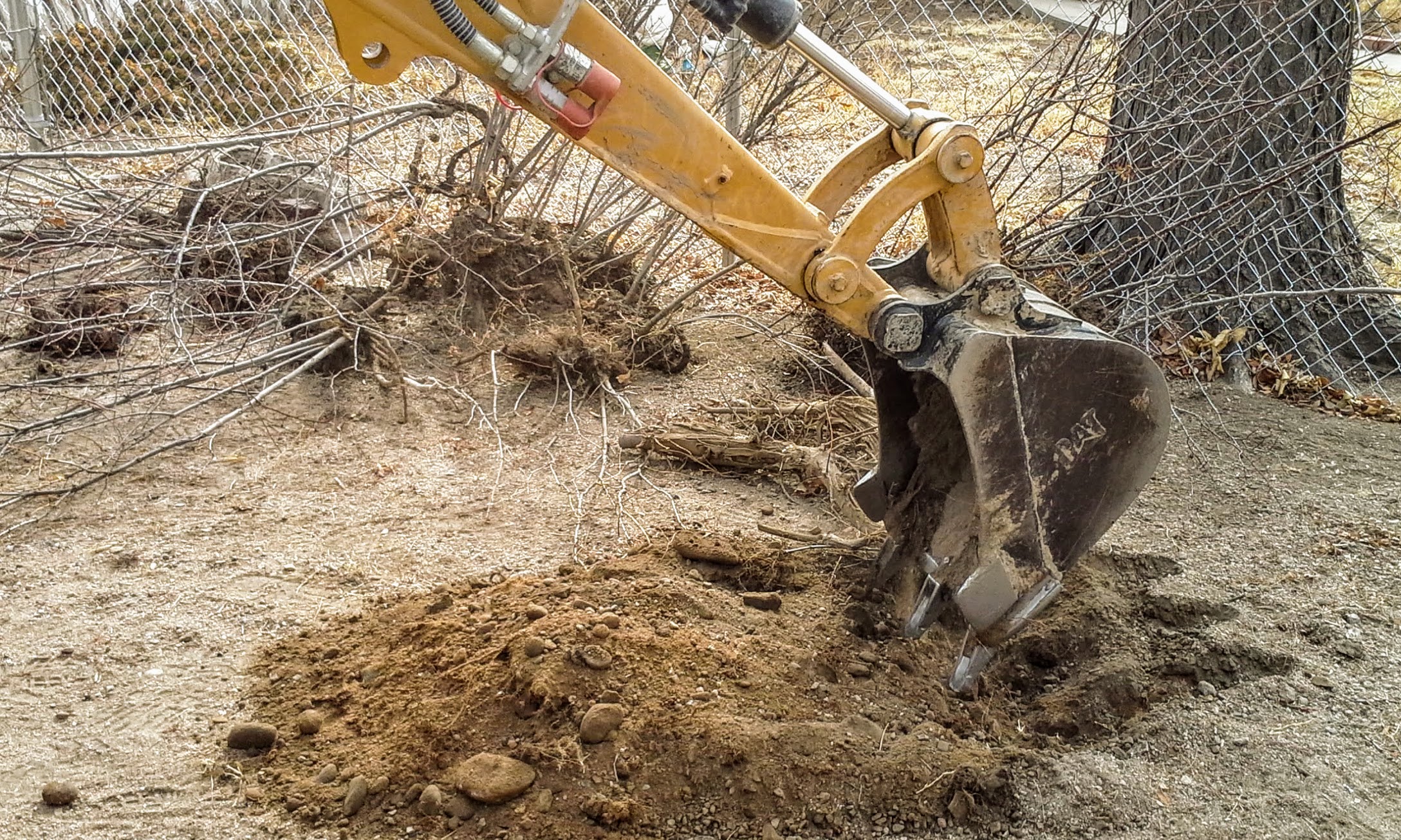
I vowed never to live in a gated community, and yet here I am:

In my defense, these gates enclose a community of one — me. (Can one person be a community? It seems rather oxymoronic.)

When I moved here, I liked that only a portion of the backyard was enclosed. It didn’t intimidate me the way a large yard would have; it was less yard to take care of, and I am not a fan of lawn pampering. When the safety factor of a fence was pointed out to me, I had to agree that fencing the whole place was important. After all, this is my old age home, and the person I am now has to look after the person I will become.

As it turns out, I like the fence. I like having a large yard. I like looking around and greedily thinking, “This is mine!” At least it’s mine for now. Obviously, I can’t take the property with me after I’m gone, so it’s more that I have a life tenancy. Which is okay. That’s all I need.

Most of my life, I have done without. In a culture that seemed bent on accumulating as much as possible, I tried to keep my possessions to a bare minimum. Now, when the fad is to get rid of one’s excess and to declutter, I am cluttering.

Still, part of the decluttering movement is about keeping things that bring you joy, and seeing my things after so many years of being in storage, seeing my pristine kitchen and my cozy living room with its beautiful furniture, seeing my winter-brown yard, all make me smile. Even something so mundane as those gates make me smile.

Yep, a whole lot of smiling going on in this little gated community of one!

***

Pat Bertram is the author of Grief: The Inside Story – A Guide to Surviving the Loss of a Loved One. “Grief: The Inside Story is perfect and that is not hyperbole! It is exactly what folk who are grieving need to read.” –Leesa Healy, RN, GDAS GDAT, Emotional/Mental Health Therapist & Educator.

The Stockings Were Hung by the Heating Unit with Care

A word of advice — if you don’t like the sun setting before 4:30 in the wintertime, be sure to move to the western end of a time zone. The sun sets at the western end of a time zone almost an hour later than the eastern end.

And I live close to the eastern edge of the mountain time zone.

Even worse, there are still three weeks until the end of the creeping darkness.

Usually I wait to put out my bowls of light until close to the winter solstice to celebrate the returning light, but this year, I need them early. Not only does the sun set at 4:30, the long twilights I remember from my previous years in Colorado seem to be missing (maybe because I am further south than where I used to live). So, full dark comes at 5:00. Yikes.

Yesterday I put out the bowls of light.

Today, I put up my Christmas trees. The red tree was a gift to cheer me up three years ago when I couldn’t go anywhere because of my destroyed arm, the green tree was my father’s. I hadn’t intended to bring it with me, but someone thought I needed it, because when my brother helped me move my stuff into a storage unit after my father’s death, there is was.

And now here it is.

One odd aspect of growing older is that everything has a story. Those trees, of course. The stocking that was hung above the heating unit with care was a gift from my sister about fifteen years ago that has been packed away. The bowls the lights are in used to be my mother’s. The table used to belong to an aunt, got handed down to my brother, and now it, too, is here. The red wreath started out as a hatband and will again become a hatband in another week or so.

Every ornament has a story, too. Quite frankly, I had no idea I had so many ornaments — I haven’t had a tree for decades. I put up my father’s tree for him but decorated it with the cute felt nativity set I’d made for my mother when I was young. (It seems to have disappeared. I know she gave it back to me before she died, which is why I had it to use for my father’s tree, but I must have gotten rid of it during one of my storage unit cleansings.) I did recently buy some ornaments from an artist friend — the arabesque (onion shaped) ones — but mostly what I have are things I was gifted. A couple of things I found in with my ornaments, I don’t remember ever seeing before.

It might sound as if I get too attached to things, but if you knew how much stuff that I liked that I’ve gotten rid of over the years, you’d see that some things attach themselves to me, and those are the things I still have.

In this case, it’s good I have the stuff. I mean, first Winter Solstice/Light Festival/Christmas in my new house? Of course, I’ll decorate!!

Besides, it makes the long dark nights on the eastern edge of the time zone a bit brighter.

***

Pat Bertram is the author of Grief: The Inside Story – A Guide to Surviving the Loss of a Loved One. “Grief: The Inside Story is perfect and that is not hyperbole! It is exactly what folk who are grieving need to read.” –Leesa Healy, RN, GDAS GDAT, Emotional/Mental Health Therapist & Educator.


My Life as Told by a Set of Dishes

My Christmas presents the year I was in sixth grade were a used Featherlight sewing machine that my father bought from someone he’d recently met, a set of Melmac dishes that had been a giveaway at Safeway (one piece each week with a purchase), and a new school uniform.

I was pleased with these gifts, even the uniform. My uniforms were the only clothing that was ever bought specifically for me; generally, I wore hand-me-downs from a tiny cousin. (And boy, did having the seams let out to the maximum give me a bad body image at an age when most girls were barely aware of their bodies!)

Back at school, when kids asked me what I got for Christmas, I told them. All day, I could see kids huddled together, glancing at me, and I could hear their tittering. As often happened during those years, I had no idea what I did to make myself a figure of fun. One day, though, a friend came to the house, and with a snicker, she asked to see my gifts.

The snickering stopped when she saw the real sewing machine and the grown-up set of dishes. Apparently, she along with all my classmates thought I got a toy sewing machine and a child’s set of dishes, and they’d been making fun of my childishness.

After that, they still gave me the cold shoulder, which taught me that people blame the victim when they have erred. Apparently, too, being given toys at the advanced age of eleven was infantile, but being given grown-up stuff was plain weird.

I kept the sewing machine until after Jeff died, but I couldn’t keep all three of my sewing machines — my Featherweight, an additional Featherweight that had been handed down to me, and the Pfaff that I had bought in my early twenties when I managed a fabric store. Selling those two Featherweights cheap was a mistake — it turns out they were worth 50 times what I sold them for, and even worse, the Pfaff is so heavy, now that I am getting older, I can barely lift it. (It is solid metal, and I mean SOLID.)

As for the set of dishes, I still have them. They were a source of contention that last year of Jeff’s life. As he pulled away from me, I pulled away from the hurt of his pulling away, and I did not want him to use my plates. The Melmac plates are a nice size, so we used them even more than the Corelle dishes we purchased together since the Corelle plates were too big. But that year, I got concerned about knife gouges and food stains, so I asked him not to use them. But he still did. He liked using things in rotation, so I put Melmac plates at the bottom of the stack. He still used them.

It seems silly now all the emotion I invested in protecting those silly plates. I felt guilty, too, at my selfishness. It took me years to realize the symbolism. I couldn’t protect him, couldn’t protect myself from the pain I was going through at the time, couldn’t protect myself from the grief I would feel after he was gone, but I could protect those plates! But I couldn’t even do that. He simply did not understand what I’d asked of him, and if he did understand, he didn’t remember. Now I know that the cancer that had spread to his brain caused the problem, but at the time, I thought he was being . . . I don’t know . . . inconsiderate, maybe. I don’t use the dishes much any more. Perhaps I’m still protecting them. Or me.

I vaguely remember also having a problem with his using my silverware. (Stainless steel flatware, actually, that had been a giveaway at the bank when I was in my late teens and early twenties — one piece for each deposit). Jeff and I had always intermingled the household things we each brought to the relationship, but for some reason that last year, he began exclusively using my spoons. I preferred those spoons to his because they were a bit narrower and thinner, and seemed to fit me better. Maybe as he got sicker, they seemed more comfortable to him, too, but it left me having to use his thicker spoons, and I resented it. The irony is that after he died, I started using his flatware, and that’s what I mostly use now.

Do you see a pattern here? A set of dishes that’s lasted this long with only one cup missing and a couple of chips on the edge of one small plate. Flatware I’ve used practically my whole life and still use. A sewing machine I bought decades ago and still have. A car I bought new forty-odd years ago and still drive. Could be those kids back in grade school were right — maybe I am a bit weird.

It does seem odd though, that these things are still here, while both my parents, two brothers, and Jeff are gone.

***

Pat Bertram is the author of Grief: The Inside Story – A Guide to Surviving the Loss of a Loved One. “Grief: The Inside Story is perfect and that is not hyperbole! It is exactly what folk who are grieving need to read.” –Leesa Healy, RN, GDAS GDAT, Emotional/Mental Health Therapist & Educator.