On Writing: Clean Up Your Mess

One of the biggest problems writers have is editing their work. It’s difficult to see awkward phrases, sentences, even paragraphs since we know what we want to say and so believe we have said it, though readers might have difficulty trying to figure it out. The best way to find such ambiguities is to ask someone to read your book (someone other than me, that is) and have them mark any passages that make them pause or that jerk them out of the fictive dream.

cleanOther edits, though, are less subjective, and writers should be able to find and correct the errors themselves. The most common non-subjective problem I see in even the most polished works are wrongly used participial phrases that end in ing. According to The Elements of Style by Strunk and White, “a participial phrase at the beginning of a sentence must refer to the grammatical subject.”

The example in the book is: Walking down the road, he saw a woman accompanied by two children. Who is walking? He is, of course, since he is the subject of the sentence, and the ing phrase always refers to the subject. If the woman is walking, you have to rephrase the sentence: He saw a woman, accompanied by two children, walking down the road. You, I’m sure, would never have to worry about who is walking because you’d never use such an ambiguous sentence in the first place!

The other examples of wrong participial phrases Strunk and White give are humorous and show why it’s important to follow the rule:

Being in dilapidated condition, I was able to buy the house cheap.
Wondering irresolutely what to do next, the clock struck twelve.
As a mother of five, with another on the way, the ironing board was always up.

In case you don’t know how to rephrase the above sentences to make them grammatical and remove the silliness (the first sentence, for example, says that you were able to buy the house cheap because you were in a dilapidated condition), here are my quick efforts:

Because of the dilapidated condition of the house, I was able to buy the place cheap.
As I wondered what to do next, the clock struck twelve.
A mother of five, with another on the way, I was never able to put the ironing board away.

Another ing problem comes from simultaneous actions, when an author has a character do something that’s physically impossible. For example: Pulling out of the driveway, he drove down the street. He cannot be pulling out of the driveway at the same time he is driving down the street. He pulled out of the driveway, then drove down the street.

Such sentence structures do slip into our writing, no matter how careful we are. It’s up to us to clean up the mess and make it easy for readers to stay riveted in our stories. (This is primarily a post about “ing”s, which is good since I seem to be reverting to clichés. That, I know, is something you never do.)

Authors often shrug off the necessity for self-editing because either they believe they have the right to write however they please, or they leave the work to their editors, but the truth is, it is up to authors to get their manuscripts as clean and clear as possible before self-publishing or submitting their book to an editor. As someone who has edited one heck of a lot of manuscripts, I can tell you that having to point out the same error page after page after page gets tiresome.

So, do what you were taught as a child — clean up your own mess.

See also:
Grammar Guide for Self-Editing
Self-Editing — The List From Hell
The Editor’s Blog — A Remarkable Resource for All Writers

***

Pat Bertram is the author of the suspense novels Light Bringer, More Deaths Than One, A Spark of Heavenly Fire, and Daughter Am I. Bertram is also the author of Grief: The Great Yearning, “an exquisite book, wrenching to read, and at the same time full of profound truths.” Follow Pat on Google+. Like Pat on Facebook.

A Retrospective of Grief

Another 27th. This is the 46th twenty-seventh of the month I have survived since the death of my life mate/soul mate death on March 27, 2010. At the beginning of my grief, each minute, hour, day seemed unfathomably long. I felt as if I lived years during that first month. I still don’t understand how I made it through that eon. The pain started out unbearable and got progressively worse. Each breath took such effort that it seemed as if it would be easier to stop breathing altogether. And yet I continued to breathe, one agonizing gulp of air at a time.

For the first three years, I could feel the grief surging as each twenty-seventh crept up on me, but today I only knew the date by the calendar. Even so, I might not have noticed if I hadn’t advanced his perpetual calendar.

perpetual calendarAbout a month before he died, he told me he wanted me to keep the calendar. It was special to him — a family heirloom and a relic of his childhood — and he didn’t want me to throw it away with the rest of his effects. Which I probably would have done. I thought such calendars silly because if you don’t remember to advance the calendar each day, the calendar loses its effectiveness. He, of course, had the discipline to advance the calendar. No matter where we lived, no matter the state of his health or the stresses of our life, he always advanced the calendar first thing every morning.

And now so do I. It has become a way of honoring his life, of remembering him, of being connected to him in a small way. For a long time, I felt connected to him through grief. (Odd, that. It was the feeling of being disconnected from him that grieved me in the first place.) Now that my grief has waned, there is nothing to connect me to him. Unlike many who have lost someone important to them, I have never had a visitation, a sign, any indication that he still exists somewhere. He is simply gone — gone from my life, anyway.

The tears are gone, too.

It seems strange now that I grieved so deeply. I can barely remember loving someone so profoundly that his death tore me apart. Can barely remember that shattered woman who screamed her pain to the uncaring winds. Was that really me or simply a character in the book of my life? (I meant this as a metaphor, but I did write a book about my life, or rather my life of grief. That seems strange, too.)

We live each day as it comes, deal with each pain and sorrow, and somehow, through the years, we become something other than we were. I am no longer a schoolgirl dealing with the small dramas of grades, cliques, unacceptance. No longer a young woman desperately and radiantly in love with a man. No longer an adult struggling to live while her soul mate was dying. No longer a grieving woman.

At the moment, I am thrust in the role of caregiver for my 97-year-old father and homeless brother, but someday, I won’t be this woman, either. I don’t know what will become of me, don’t know what I will become (other than older), but chances are, I still will be advancing that ancient calendar in honor of the life that meant so much to me.

***

Pat Bertram is the author of the suspense novels Light Bringer, More Deaths Than One, A Spark of Heavenly Fire, and Daughter Am I. Bertram is also the author of Grief: The Great Yearning, “an exquisite book, wrenching to read, and at the same time full of profound truths.” Connect with Pat on Google+. Like Pat on Facebook.
Is It Cheating to Look at the Solution of a Puzzle Before You’ve Finished?

When you are working a puzzle, such as a crossword puzzle, and you come to the end of what you can do on your own, do you consider it cheating to look at the solution for hints so you can finish the puzzle? Do you see checking the answer as part of the fun of doing puzzles? Or do you abandon the puzzle half-finished to keep from cheating? If you do consider it cheating to check the solution for an answer you have no way of figuring, do you also consider it cheating to ask someone, to use a crossword puzzle dictionary, or to look online for the answer to the clue? Do you find yourself shying away from more difficult puzzles because you can’t do them without cheating?

This has nothing to do with anything, of course, I’m just curious what you think. I did a hard Sudoku this morning and had to check the solution to keep going. I used to consider it cheating to check the solution when I got stuck, but after realizing how many puzzles I wasted by not jump starting the puzzle, I understood it was simply a way of working the puzzle and had wasn’t dishonest.

Just for fun, here are a couple of A Spark of Heavenly Fire Sudoku. You work these exactly as you do number Sudoku, but you use the letters from A Spark of Fire. (A, S, P, R, K, O, F, I, E). If you don’t know how to do Sudoku, you can find the directions here: http://www.sudoku.ws/rules.htm You should be able to print out the puzzles to make them easier to work.

ashf-sudoku4ashf-sudoku

Click here for solutions:

solution

***

Pat Bertram is the author of the suspense novels Light Bringer, More Deaths Than One, A Spark of Heavenly Fire, and Daughter Am I. Bertram is also the author of Grief: The Great Yearning, “an exquisite book, wrenching to read, and at the same time full of profound truths.” Connect with Pat on Google+. Like Pat on Facebook.
All Is Calm, All Is Bright

All is calm in my world today, and the sun is shining brightly. There have been no storms in my life in the past few days, neither internal nor environmental. There have been no midnight trips to jail to pick up an errant sibling, no recent trips to the hospital to admit my aged father. Nothing has pushed me past my limits to where I wanted to kick someone. I haven’t had any major grief upsurges for a while, not even any minor ones. I’ve been getting enough exercise to keep my stress levels low, and I’ve been catching up on my sleep.

I don’t know how long peace will last in this King of Hearts world of mine, but for now I am enjoying the calm.

It seems strange, though, not to have much to say, especially since the word I chose for my daily resolution is “largiloquent,” meaning “full of words.” (Not a bad thing for a writer to be!) There always seems to be something — or someone — bedeviling me, giving me plenty of fodder for this blog, but at the moment, there are no jumbled thoughts I need to sort out. I have no words of wisdom, either, other than a reminder to myself that the universe is unfolding as it should, and I am where I am supposed to be — dreaming myself into the person I wish to become.

Untitled-2

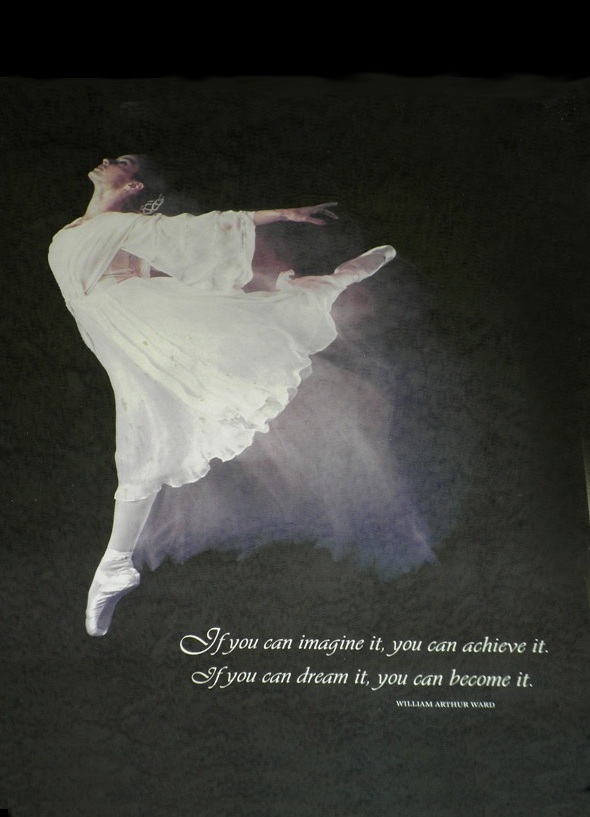
“If you can imagine it, you can achieve it. If you can dream it, you can become it.” William Arthur Ward.

***

Pat Bertram is the author of the suspense novels Light Bringer, More Deaths Than One, A Spark of Heavenly Fire, and Daughter Am I. Bertram is also the author of Grief: The Great Yearning, “an exquisite book, wrenching to read, and at the same time full of profound truths.” Follow Pat on Google+. Like Pat on Facebook.

Hollywood Treasures

I recently took a trip to Hollywood to search out secret stairs (Secret Stairs (Part I), (Part II), (Part III)) and found many other treasures. Some of these included:

A poinsettia that grew free and wild and unpotted.

A bird of paradise that looked as if it were about to take wing.

Trumpet flowers blaring their beauty.

Indian paintbrush coloring the hillside.

Balconies enough for an entire clan of Romeo and Juliets.

Castles in the air.

Tree trunks that looked as if they had been hand painted by a set designer for greater effect.

Tile work adorning the side of a house.

More welcomes than you can count.

And of course, the Hollywood sign.

***

Pat Bertram is the author of the suspense novels Light Bringer, More Deaths Than One, A Spark of Heavenly Fire, and Daughter Am I. Bertram is also the author of Grief: The Great Yearning, “an exquisite book, wrenching to read, and at the same time full of profound truths.” Follow Pat on Google+. Like Pat on Facebook.

Secret Stairs (Part III)

[Continuation of Secret Stairs (Part I) and Secret Stairs (Part II)]

The third and final leg of the journey to search for secret stairs in Hollywood took us to the Temple Hill neighborhood. There weren’t a lot of steps to climb (only 108 compared to the more that 300 in Whitley Heights), but there were many steep hills that could have used a few stairs to make the hike easier.

This is an area was once the home of various spiritual centers, including Madame Blavatsky’s Theosophists and the Vedanta Temple:

On Vine Way, we found this graceful and winding set of 47 easy steps:

snd these private steps:

We continued to Holly Mont Drive where we saw Hollymont Castle, once Barbara Stanwyck’s estate and now owned by pianist Derek Grey. We met a man who claimed to be Derek Grey’s twin brother, and he could have been, for all I know. He confirmed that the castle was haunted.

Across from the castle was a set of 61 steps that divided into two narrow stairways.

I was disappointed when the search for secret stairs ended for the day. I’ve never known that stairs could be so romantic. I’ve seen very few staircases in the past twenty years — there was no real need for them in the high flat areas I’ve lived, and whatever steps I encountered were banal, simply a way to get from one place to another. Now I will keep an eye out for stairways, and wonder about all who have set foot on those steps.

***

Pat Bertram is the author of the suspense novels Light Bringer, More Deaths Than One, A Spark of Heavenly Fire, and Daughter Am I. Bertram is also the author of Grief: The Great Yearning, “an exquisite book, wrenching to read, and at the same time full of profound truths.” Follow Pat on Google+. Like Pat on Facebook.

Secret Stairs (Part II)

[A continuation of Secret Stairs (Part I)]

Secret. There is something about the very word that rouses our curiosity, making us wonder what dire (or delightful) truths are being kept from us. Secret societies. Secret meetings. Secret codes. Secret stairs.

Secret stairs? I’d never even heard of such a thing until a friend invited me on a trip to search out some of the secret stairs in Los Angeles. Apparently, there are many secret stairways in steep hilly neighborhoods. In the days before cars took over the city, these stairs allowed people to get down the hill to schools, markets, and trolley cars. In fact, many of the houses in these neighborhoods had no other access to the outside world than these public staircases.

We saw once public stairways, such as these steps that now go up to someone’s back yard in Whitley Heights:

Stairs

We saw remnants of stairs:

We climbed stairs that meandered through a park,

old wooden stairs,

faux wood stairs,

painted stairs.

And we took these concrete stairs up to my favorite part of the hike,

this lovely secluded walkway.

There are so many wonders in the world, secret and otherwise, that it’s amazing we go about our ordinary lives without stopping more frequently to gasp at the awe of it all.

To be continued . . . Secret Stairs (Part III)

***

Pat Bertram is the author of the suspense novels Light Bringer, More Deaths Than One, A Spark of Heavenly Fire, and Daughter Am I. Bertram is also the author of Grief: The Great Yearning, “an exquisite book, wrenching to read, and at the same time full of profound truths.” Follow Pat on Google+. Like Pat on Facebook.

Secret Stairs (Part I)

A friend invited me to go on a trip with her for a “secret stairs” hike in Hollywood. Even though I didn’t know what the hike was about, of course I said “yes.” I have developed the habit of saying yes to anything anyone invites me to do, even if my first inclination were to hesitate or even say no, a practice that has led me to many wonderful places and activities that I would never even thought of experiencing. Even if I weren’t already primed to accept, I’d have gone — I’ve never been able to resist anything “secret.” There are a vast number of secrets in the world, including life itself, and being gifted with an insatiable curiosity, I try to ferret out those secrets, but considering that so many secrets are . . . well, secret . . . by definition, I wouldn’t know that they even exist. And there, in a few simple words, I was being offered a chance to discover a hitherto unknown secret.

Secret stairs. Even the phrase evokes feelings of adventure, wonder, mystique.

Apparently, there are many secret stairways in Los Angeles in the steep hilly neighborhoods that were built back before cars took over the city. These stairs allowed people to get down the hill to schools, markets, and trolley cars. In fact, many of the houses in these neighborhoods had no other access to the outside world than these public staircases. The stairs were largely forgotten until Charles Fleming published his book Secret Stairs: A Walking Guide to the Historic Staircases of Los Angeles.

A friend has been doing all of the walks — 42 of them — and has finished all but the last few. The walk she invited me on was a combination of #36 and #35 in Fleming’s book. (It was such a lovely day, she decided to do two of them.)

We started out with an unplanned stop by a bit of sidewalk graffiti that seemed oddly appropriate:

Sidewalk Sayings

Our first scheduled stop was the historic Highland Towers apartments, where William Faulkner is supposed to have lived when he worked on such films as The Big Sleep and To Have and Have Not:

We passed the Hollywood Heritage Museum, and walked up Milner to the first secret staircase — the Whitley Terrace steps, an L-shaped staircase with 160 steps.

Whitley Terrace steps

At about the ninetieth step, there was a landing with fabulous views of the High Tower residential area — not that I know what the area is, but it was an interesting sight:

High Tower Residential Area

I paused at the top to take a photo of the steps we had just climbed before searching out the next set of secret stairs in Hollywood. (Hint — the key to walking up huge flights of outside stairs is to stop periodically to marvel at flowers or take photos of . . . anything. That way you can catch your breath without having to admit that you have reached your limit.)

Whitley Terrace Stairs

To be continued . . . (But of course, you already knew I’d be continuing this saga since the title says “Part I” and you can’t have a “Part I” without a “Part II”.)

Secret Stairs (Part II)

Secret Stairs (Part III)

***

Pat Bertram is the author of the suspense novels Light Bringer, More Deaths Than One, A Spark of Heavenly Fire, and Daughter Am I. Bertram is also the author of Grief: The Great Yearning, “an exquisite book, wrenching to read, and at the same time full of profound truths.” Follow Pat on Google+. Like Pat on Facebook.

Thank You

thankyouA big thank you to everyone who responded to my post Enabling or Decency and Caring?, offering support and advise. I still am not sure what to do about the situation, but I am taking all your comments into consideration before deciding how to handle the problem.

During all these years of grief over the loss of my life mate/soul mate, I found comfort telling myself, “I am where I am supposed to be.” I don’t believe in fate, don’t believe that our lives are decided for us (at least, not always), and yet, there is serenity to be found in accepting that perhaps the universe is unfolding as is should. It’s possible this drama of mine is also unfolding as it should. It is bringing me closer to being emotionally free of a conflict that has burdened me almost my whole life. At the very least, talking about it has brought me peace.

I do not think I am in a dangerous situation (though of course, any situation has its dangers). I do not think I will be hurt and, despite my brief outbursts of unadmirable behavior, I do not think I will hurt anyone else.

I have finally come to an understanding that I did not create the problem, and that there is nothing I can do to change it. I can change myself, though, to the extent that any of us can change ourselves. I can make sure that I take care of myself, relieve stress with physical activities, lead my own life as much as possible under the circumstances, and most of all, find solace in the realization that all things come to an end.

***

Pat Bertram is the author of the suspense novels Light Bringer, More Deaths Than One, A Spark of Heavenly Fire, and Daughter Am I. Bertram is also the author of Grief: The Great Yearning, “an exquisite book, wrenching to read, and at the same time full of profound truths.” Follow Pat on Google+. Like Pat on Facebook.

Excerpt from LIGHT BRINGER by Pat Bertram

Description of Light Bringer:

Becka Johnson had been abandoned on the doorstep of a remote cabin in Chalcedony, Colorado when she was a baby. Now, thirty-seven years later, she has returned to Chalcedony to discover her identity, but she only finds more questions. Who has been looking for her all those years? Why are those same people interested in fellow newcomer Philip Hansen? Who is Philip, and why does her body sing in harmony with his? And what do either of them have to do with a shadow corporation that once operated a secret underground installation in the area?

Excerpt from Light Bringer:

The trail was a gentle decline, hard-packed, and free of rocks, as if it had been well traveled since time out of mind. It ended at a stream so clear its cobbled bed looked like a mosaic of semi-precious stones. On the other side of the stream, the tall meadow grasses, lavender in the mountain’s shadow, whispered softly among themselves.

Laughing, Rena caught Philip’s hand. “They’re inviting us to come play.” She ran the last few steps toward the edge of the water.

He pulled his hand away, hearing in his mind the sickening sound of ripping ligaments and tendons, and feeling the pain.

Walking carefully, he joined her by the stream.

“Too bad there’s not a bridge,” she said, “but the water isn’t deep. We can wade across.”

He put out a foot, drew it back. “You go. I’ll wait here.”

She nodded in understanding, and took his hand again. “That’s okay. I can go another time.”

They sat on the forested slope, listening to the whispering of the grasses increase in pitch as the day came to an end. After the sun set, they headed home in a rich, warm alpenglow that turned the world to gold.

***

Where to buy Light Bringer:

Second Wind Publishing

Amazon

Barnes & Noble Nook

iStore (on iTunes)

Palm Doc (PDB) (for Palm reading devices)

Epub (Apple iPad/iBooks, Nook, Sony Reader, Kobo)