Happy Bloggiversary!

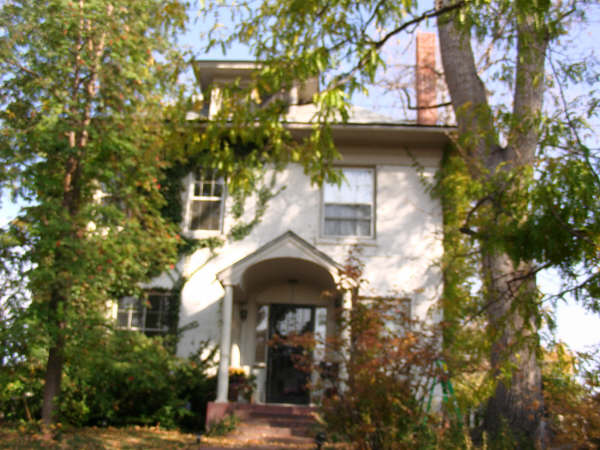
Today is the eighteenth anniversary of this blog. Considering how little I’ve posted during the past couple of years, perhaps I should rephrase that and say that I started this blog eighteen years ago. The two sentences mean basically the same thing, yet the first seems to indicate an ongoing proposition, while the second acknowledges the truth of my inactivity.

Over the years, I’ve used this blog as a place to dump all the thoughts and feelings that didn’t otherwise leave me alone, and luckily, nowadays I’m seldom haunted or taunted by those tenacious circular thoughts (thought loops that continue to swirl ever tighter as one’s mind tries to cope with stress and negativity).

I can’t take credit for the lessening of those thought loops since I’ve never really learned to turn them off; it’s more that I’ve landed in a situation where I can control what goes on in my life. Mostly, of course, that situation lets me spend my time alone, away from anyone or anything that causes me unnecessary distress. And I have pleasant means of occupying my mind — there’s always reading (and I do mean always — it’s no secret why the library staff knows me well) and gardening, of course.

I started the gardening season with a sense of detachment — it seemed foolish, in a way, to care so much for something about which I have little control. No matter what I do, plants die, the sun sears, winds desiccate, unsightly weeds flourish. And yet, despite my sense of detachment, I did what I could, and this fall, I’m reaping the benefits of a beautiful yard.

I have learned, over the years of living here in this sometimes harsh and unpredictable climate, that the promise of spring dies in the heat of summer, so I’ve been spending more attention to fall plants. By autumn, the winds have lessened, the sun has moderated its intensity, pulled weeds stay gone, and flowers flourish.

And I find my mind calm, with seldom anything to write about. Except, of course, to mention that there isn’t anything to blog about on this eighteenth anniversary. I could, of course, talk about all the changes that have gone on during those eighteen years, both in my life and in the world, but thinking of all that tumult would put me back where I don’t want to be.

Still, I survived those years, and through it all, this blog was there for me. And for you.

Happy bloggiversary to us!

***

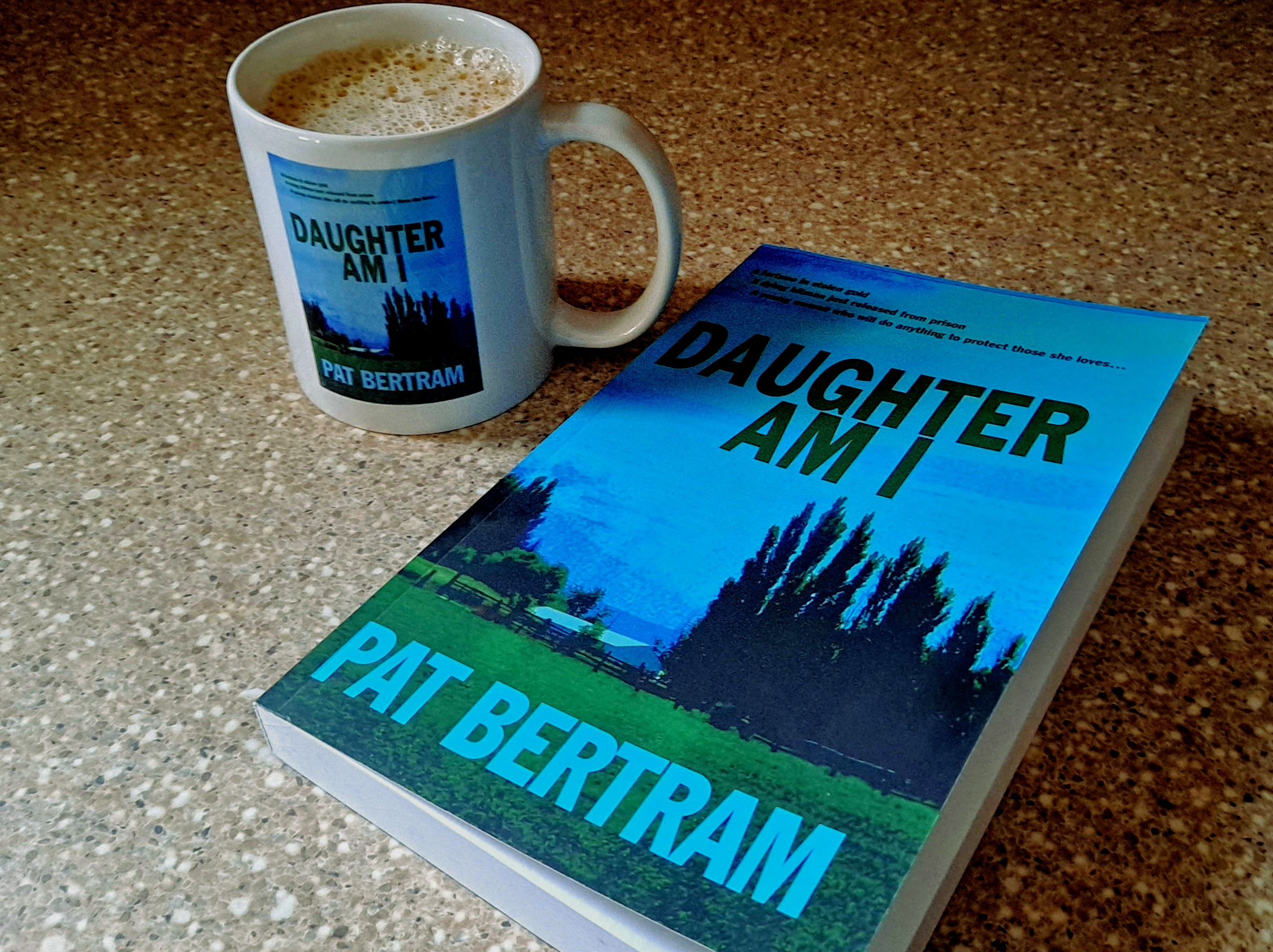
Pat Bertram is the author of Grief: The Inside Story – A Guide to Surviving the Loss of a Loved One.
Update

After an early heavy snow, followed by higher than average temperatures, we’re now in a deep freeze. Later in the week, the temperatures will get above freezing, although only fleetingly.

And then all too soon, it will be time to work out in my yard again.

I enjoy these months of respite from the struggle against weeds and sun-dried grass, but I miss the daily gifts — the flowers that come up despite this harsh climate, the volunteer plants that so tenaciously take a stand, the perennials that stretch their territory. I do get a flower fix with paint-by-number kits. It’s not the same as real gardening by any means, but it’s a real boon to someone without an artistic bone in her body.

Oddly, what I don’t miss is writing — about gardening or anything else, for that matter. For almost three decades, writing (and blogging) was my life. It kept me going during the long years of Jeff’s ill health and in the dark times after he died. It gave me a reason to get up in the morning, gave me a focus that I might not otherwise have had. In fact, because of this blog, I went on excursions and attended events I might have passed on, but I figured anything I did gave me a topic to write about.

So did my desire to stay at home squelch my desire to blog? Or did my lack of desire to blog squelch any desire for venturing out? Silly questions. Silly because the answers don’t matter. I’ve become a homebody, and that’s it. My being a homebody is not surprising since I’ve always had reclusive tendencies, but what is surprising is that I have a home. And a garden! It still astonishes me that this place is mine. In my restless years of grief and its aftermath, I spent a lot of mental energy trying to figure out what my unshared future would be like, and never once did I come close to imagining this reality.

I remember back then occasionally thinking that my future should be wonderful, because if the pain of grief was something I never knew existed, then there had to be some joy to come I also never knew existed.

And now here it is. And now here I am.

Of course, that raises a conundrum that I try not to consider: the only reason I’m living this particular good life is that Jeff is not here. Still, the last thing Jeff ever said to me was that everything would work out for me, so I know he’d be pleased for me. And yet, there’s that niggle in the back of my head that I try not to think about.

But those are thoughts for another time.

Today I’ll think good thoughts and be grateful for all I’ve been given.

***

Pat Bertram is the author of Grief: The Inside Story – A Guide to Surviving the Loss of a Loved One. “Grief: The Inside Story is perfect and that is not hyperbole! It is exactly what folk who are grieving need to read.” –Leesa Healy, RN, GDAS GDAT, Emotional/Mental Health Therapist & Educator.
Here I Am!

Can you believe it? Here I am, and it’s only been two months since I last put in an appearance on this blog! Occasionally, people contact me, wanting to know how and what I’m doing, which makes me realize that I need to post an update more often. I’ve had a note by my computer reminding me to do a blog for weeks now. I don’t know what the issue is — I suppose it used to be that I wrote to get myself out of my head, but now I’m not really in my head, so writing is not as much of a necessity as it once was.

Considering, too, that there’s not much going on in my garden in August, that takes away one topic of conversation. The only topic, actually. I haven’t written about much else in a long time, and August is a hard time for gardening around here. There are a few pretty flowers scattered around my yard, but mostly my gardening activities revolve around helping my greenery survive the heat and the humongous grasshoppers that are almost as big as the giant zinnias, and planning what to do for next year.

For a while, I made a point of eating outside. Eating alone at a table always seems so lonely, so generally I read while I eat, but lately, I’ve been trying something different — eating at the table in my gazebo without a book. Just enjoying what I’ve accomplished with my yard. Now that a heat wave is blasting through here again, I’ve put that activity on hold, and considering how hard it is to get me to do anything, who knows if I’ll get back to al fresco dining when it cools off again.

It’s ironic that for so many years after Jeff died I worried about stagnating, and I have to admit, despite all that worry, it’s come true. I tend my yard, read, play a game on my computer, talk to neighbors occasionally, and that’s about it. I really was doing fine going out and about, joining various activities, and inviting friends to tea until the whole Bob thing catapulted me into a solitary life. [If you don’t already know, I call it The Bob because of a conversation in A Spark of Heavenly Fire, my novel about a novel disease.] Now, I just don’t seem to have the impetus — or the energy — to catapult myself back into being gregarious again. Perhaps when it’s cooler, I’ll be more willing to be sociable. Or not.

Wishing you a wonderful September.

***

Pat Bertram is the author of Grief: The Inside Story – A Guide to Surviving the Loss of a Loved One. “Grief: The Inside Story is perfect and that is not hyperbole! It is exactly what folk who are grieving need to read.” –Leesa Healy, RN, GDAS GDAT, Emotional/Mental Health Therapist & Educator.
What I Am Doing

Obviously, what I am doing right now is working on this blog post, but beyond this moment, I am sure you can guess what I am doing — working on my yard! And beyond that, I am sure you can guess what else I am doing — recuperating from all the work. I never realize how old I am until I start aching, and then, it’s hard to believe I was ever foolish enough to think that just because I could do some physical work, I wasn’t that elderly. (As an interesting aside, interesting to me, that is, elderly used to mean not yet old, whereas now it means old, frail old, decrepit old.)

In previous years, I would post photos of my yard, specific images that showed the few flowers that were blooming, and let you extrapolate from that how gorgeous my yard was. Or was not, which I often had to admit. This year, however, my yard truly is stunning.

The grass I planted last fall looks great. I’m keeping my fingers crossed that come summer and the enormous heat, the grass will survive. To that extent, I am trying not to water even when the grass looks dry and faded, hoping the roots will dig down deep enough that it will survive the heat blast.

Even though I thought I’d harvested all the larkspur seeds last year, enough blew around that any weedy area became a larkspur field this year.

No matter where the larkspur are, even invading a poppy field, they bring joy to all who see them.

Finally, after all these years, my raised garden is not only built, but filled with dirt. And plants! Flowers and vegetables mixed together in harmony. At least, that’s the hope.

The wild roses are doing well.

I have always loved the look of red and yellow bushes mixed together, but my yellow and red bushes got separated. I’ve been trying to buy yellow roses to plant among the red, but never found any. I have come to believe that the yellow is an aberration. One of my red bushes ended up with a stem of yellow flowers. I also found some yellow flowers on a red branch. And in one case, the red rose had yellow petals, too.

And that’s not all! The columbine I planted last year survived the winter and are now thriving.

Cottage pinks that were planted years ago decided to bloom profusely.

The ice plant is forming a carpet of shimmering beauty.

And petunias. What can I say? Petunias always do well here.

It’s funny, but despite the way the yard looks, I still don’t really know what I am doing. I’ve been told that there is an expiration date for that claim, but it certainly hasn’t arrived yet. The beauty of gardening (in addition to the beauty the eyes can see) is that plants that do well thrive and those that don’t, don’t. Any mistakes simply disappear, so what’s left looks as if it comes from heart of a master gardener even though I am strictly a trial-and-error dilettante.

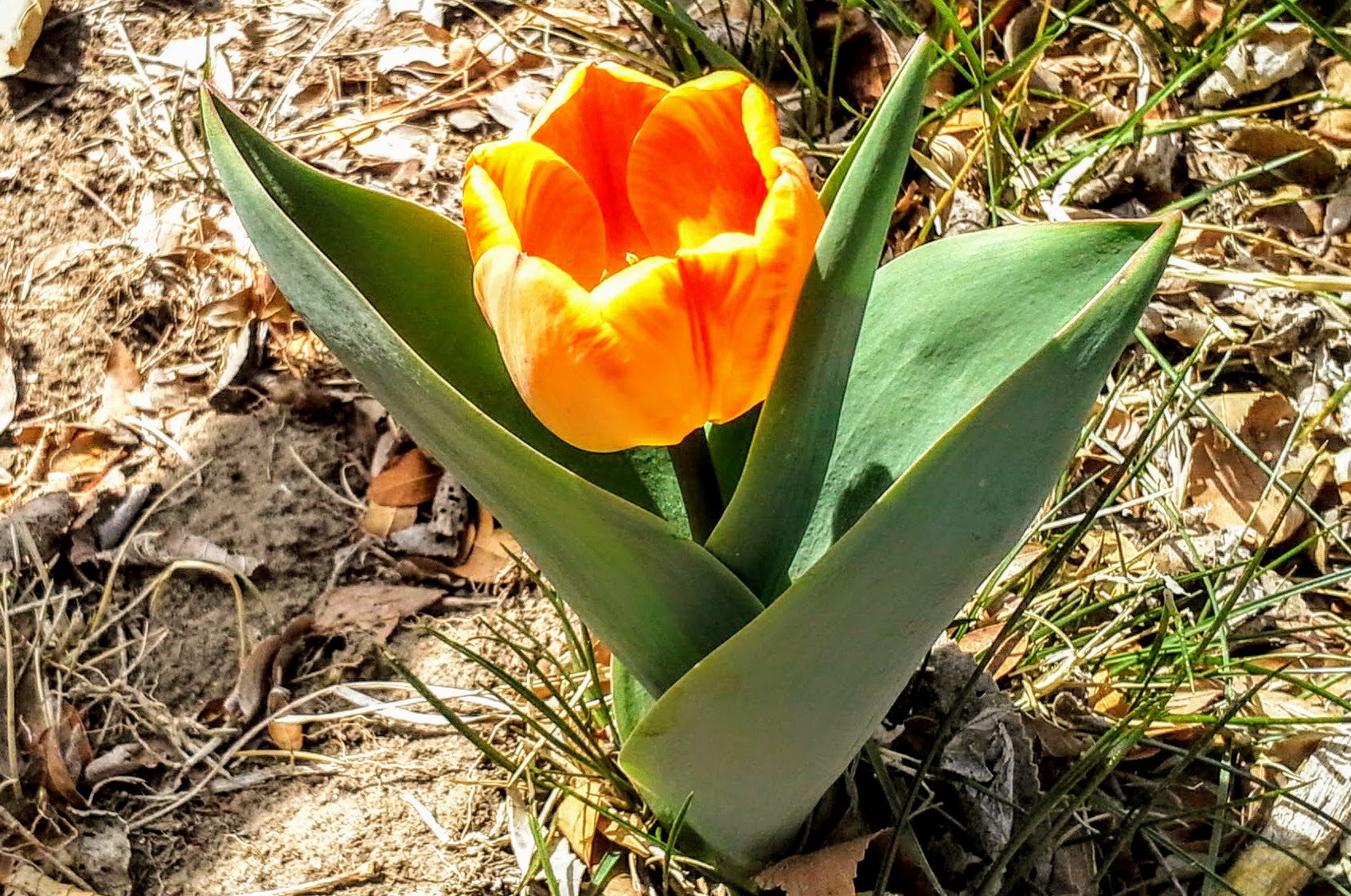
I am learning, however, to take what comes. Last year, one garden area shone with the golden aura of wallflowers. This year, wallflowers are decidedly absent. Some plants that were supposed to be perennials turned out to be biennials. Some wildflower seeds that should have come up this spring never showed even a touch of green. The tulips that started out so hopefully ended up giving up before spring got underway.

I am going to try to take it easy physically for a couple of weeks so that when the larkspur go to seed, I will have the energy to pull up the plants to harvest the seeds and see what plants that wall of blooms is hiding. And then . . .

But “then” isn’t here yet.

Meantime, I am enjoying the surprises I find every day.

***

Pat Bertram is the author of Grief: The Inside Story – A Guide to Surviving the Loss of a Loved One. “Grief: The Inside Story is perfect and that is not hyperbole! It is exactly what folk who are grieving need to read.” –Leesa Healy, RN, GDAS GDAT, Emotional/Mental Health Therapist & Educator.
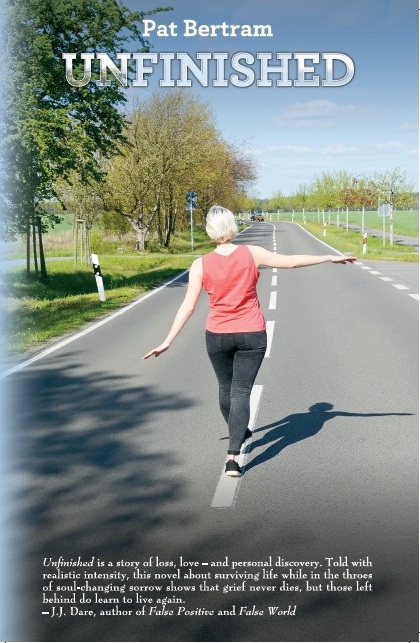
Body Image vs. Self-Image

In a book I recently read, a woman who’d recovered from anorexia but was slipping back due to stress, reminded herself that body image is not the same thing as self-image. That really made me stop and think because too often our self-image is reflected by our body image. For example, even though I am fairly realistic, seeing my body as it actually is, I don’t always like the way I look. I try to minimize my flaws, of course, but with mirrored closet doors in my bedroom, it’s hard not to see the unclothed truth. And, even though I generally accept myself for what and who I am, there are times when I can’t help but be influenced negatively by that mirror image of myself.

As a culture, we seem to think that beautiful, thin, fit folks have more worth than those of us who are rather ordinary and out of shape. Although people don’t treat me badly because of my looks (perhaps because the hat amuses them and my smile delights them), I can’t help but feel as if I’m not worthy of all the good things in life. Well, that’s not exactly true. I am worthy. It’s just . . . well, it’s hard to overcome that conditioning.

To be honest, I don’t want to fall in love again — I really am fine as I am — but it does bother me that deep down I think that I am not romantic material. Perhaps it’s due to my reading. In almost all books, whether thriller, horror, mystery, romance, suspense, the heroine — no matter what her age — is beautiful, tall, intelligent, feisty, fit, and attracts the well-muscled handsome hero.

Even if a writer wanted to have an out-of-shape, unattractive heroine, there’s really no way to present the character in a good light. All the adjectives to describe someone of oh . . . I don’t know, perhaps someone of my body shape, are rather unpleasant. Even “pleasingly plump” despite the “pleasingly” part, is rather negative especially since so many of us not-thin folks are not pleasingly plump — unpleasingly lumpy is more like it.

Stout, chunky, hefty, overweight, heavy, obese, chubby, dumpy, rotund, flabby, paunchy, stolid, pudgy, corpulent — these are not words that bring “heroine” to mind. Nor are they words that lend themselves to a love affair, even though most people do not fit the ideal portrayed in books or movies. One of the most disappointing movies to me was “Shallow Hal.” Jack Black was supposedly hypnotized into seeing the inner beauty of a 300-pound woman. Except he didn’t see the inner beauty — he saw her as a thin person which just exacerbated the whole “the only worthy woman is a thin beautiful woman” mystique. Or worse, that “inside every fat person is a thin person struggling to get out.” The movie would have been so much more satisfying if he actually saw the fatness but could see beyond that to the inner person.

It’s amazing to me that anyone of any body shape manages to develop a good self-image despite the current body image situation. Everything we see and hear corroborates that social norm of beauty as all important, so not-so-beautiful people tend to be at a disadvantage. It’s hard not to live down to that body image. As for those with the socially acceptable image, I imagine it’s hard to live up to it. Truthfully, I don’t have much sympathy for tall, beautiful woman because no matter what their self-image, all sorts of good things accrue to them because of how they look. (Of any two job candidates, the winner is generally the taller and prettier.) But still, I do concede that social conditioning is a hard thing to break out of.

No wonder I was so taken with the comment that body image is not the same thing as self-image. It’s an important point to keep in mind as we — no matter our size or age or level of attractiveness — navigate the pitfalls of life.

***

Pat Bertram is the author of Grief: The Inside Story – A Guide to Surviving the Loss of a Loved One. “Grief: The Inside Story is perfect and that is not hyperbole! It is exactly what folk who are grieving need to read.” –Leesa Healy, RN, GDAS GDAT, Emotional/Mental Health Therapist & Educator.
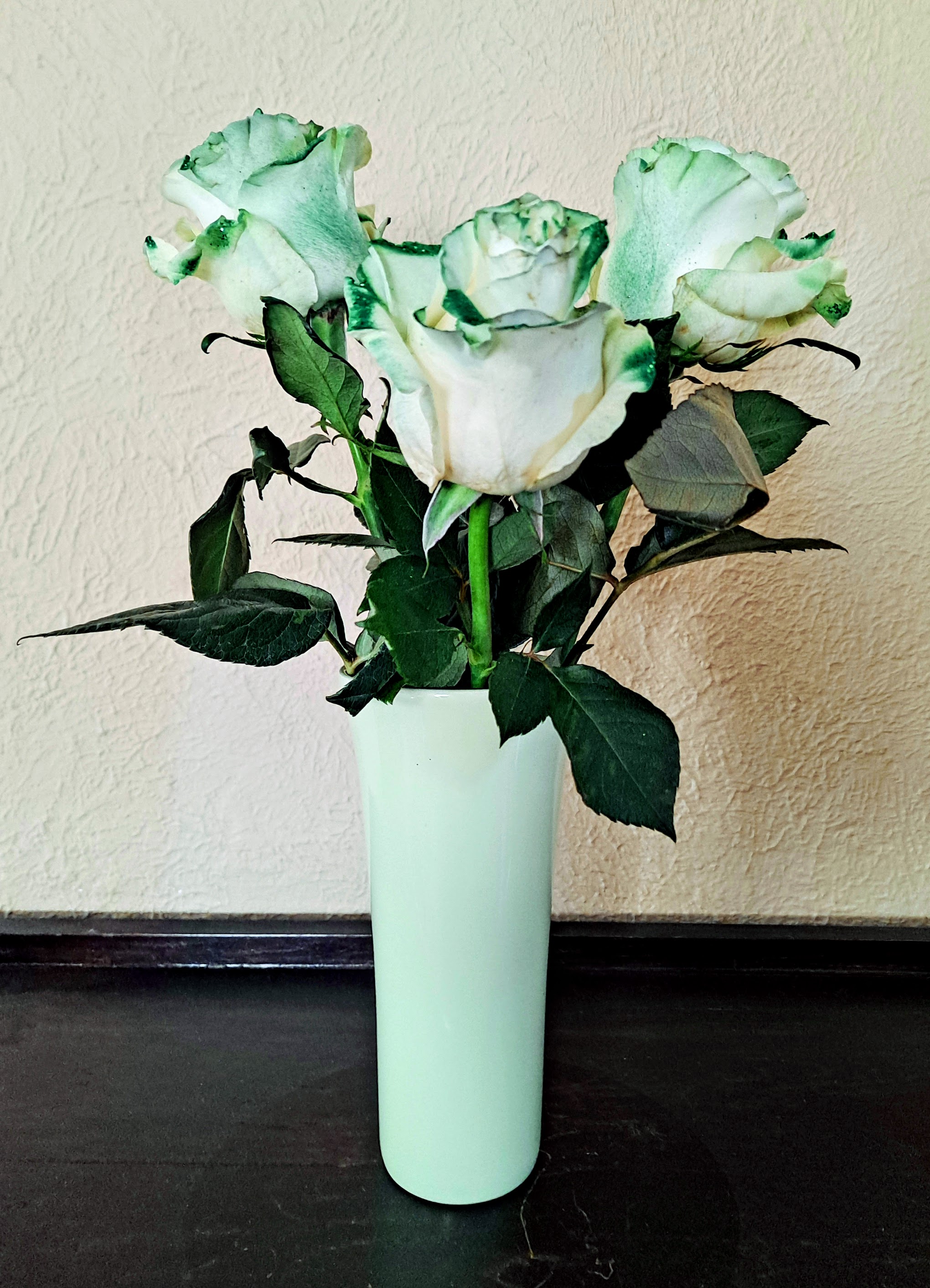
Mirror of the Soul

Ever since the summer, I’ve been doing a three-card tarot reading for myself, and it began to seem silly. The only thing I really needed to know was what I needed to know that day. The first two cards only served to muddy the reading — in my mind, anyway — so this month I went back to a one-card reading. Even better, I went back to using the Crowley Thoth deck. It’s not one I particularly like, but I do have a great handbook that goes with the deck: Tarot Mirror of the Soul.

As the title suggests, this particular guidebook, more than any other, uses the tarot as a mirror to reflect inner realities without judgment to give us a new perspective. Ideally, anyway. Admittedly, the tarot itself it a tool for self-exploration, though I have not often found it to be so. This book, though, gives me more of what I need to focus on each day’s lesson.

For example, today’s card is the Nine of Swords. It generally means cruelty directed at oneself and points to a tendency to put yourself down. In rare cases, it can mean physical or psychological cruelty by some heartless person, but no one lately is cruel to me. Actually, I’m not cruel to myself, either, though I have recently noticed a tendency to judge myself harshly when (perhaps) I am doing the best I can. Even if I’m not doing the best I can, that judgment call seems to be worse than whatever goals I breeched.

This particular card does seem to suggest that knowing the foible or lack is important — as important as knowing one’s good points, which I tend to ignore. It’s the cruelty of judging oneself that should be done without.

This book doesn’t just describe the symbols on the card and suggest what they mean, but continues with what the card indicates, which, in this case is about the necessity of recognizing the behavior pattern before it can be overcome. Another section is for questions to ask oneself, such as who judged you? And are you now ready to forgive your parents, others and yourself?

The section for the Nine of Swords then ends with an affirmation: I am loved, simply because the I am the way I am. This is something that I really do need to know. Concurrently with my recognition of how often I castigate myself for not being my ideal self, I’ve been wondering why people like me. (I suppose that’s a reasonable question. If I don’t particularly like myself — I don’t dislike myself, either, I just don’t go around patting myself on the back for my good qualities — then it makes sense I wouldn’t understand why they like me.)

People who know the tarot or who are more intuitive in their reading than I am can figure this out all on their own, but I like following along with the Mirror of the Soul. It helps me focus on one thing for the day (or at least for the start of the day because by the time I go about the business of living, I’ve already forgotten what I learned from the tarot that morning).

My plan for learning the tarot had been to pick one card each day for one year, two cards for the next year, three for the third, and so on, but the third year is only about half finished and I abandoned the plan. Eventually, perhaps, I’ll do a real reading with five or more cards once a week or once a month, but for now, this particular practice mirrors what I hope to gain from my daily tarot reading.

***

Pat Bertram is the author of Grief: The Inside Story – A Guide to Surviving the Loss of a Loved One. “Grief: The Inside Story is perfect and that is not hyperbole! It is exactly what folk who are grieving need to read.” –Leesa Healy, RN, GDAS GDAT, Emotional/Mental Health Therapist & Educator.
It’s Weird Being the Same Age as Old People

I saw a saying on a tee shirt that made me laugh: It’s weird being the same age as old people. Because . . . oh, how true that is!

So often now when a character in a book is described as old, the character’s acquaintances go on and on about being worried about the old person, or the character’s children wonder how they are going to take care of their aged parent, or the detectives discount what an old witness might have seen because of the unreliability of an elderly person’s eyesight or hearing. I find myself nodding in agreement, because elderly people can be frail, fraught with ailments, have the beginnings of age-related dementia, or any number of issues.

Then, like a static electricity shock directly to my brain, it hits me that I’m the same age or even older than the character. When did “elderly” characters in books get so young? Or maybe they have always been young. (At least from the point of view of someone my age.) For example, although Miss Marple’s age is never stated in any of Agatha Christie’s stories, various clues make her out to be in her mid-seventies, so that’s the age she’s generally portrayed in movies. But Agatha Christie’s great-grandson thinks the “elderly spinster” was meant to be much younger — perhaps in her 60s.

Either way, these “elderly” characters are a lot younger than I imagine them to be, so perhaps a better question than “when did elderly characters get so young?” is “when did I get so old?” Either way, it really is weird being the same age as old people.

Although I have often written about getting older and have mentioned some of my age-related debilities, such as my wonky knees, for the most part, I don’t see myself as old. I don’t see myself as young, either. I’m just . . . me. Admittedly, I do worry about growing old alone, but even that shows my age ambiguity — “getting old,” you see, rather than “being old.” I have a hunch if Jeff and I were still together, age wouldn’t be a factor at all — we’d continue to deal with whatever life hands us without putting labels on it, but since I’m alone, and have only myself to rely on, it’s important for me to prepare now as much as possible for whatever old age might bring.

And it’s not just me. Other people in my situation — women who lost their mates and have been left to live alone — also think about the same things. One friend told me she had to be careful because what if she fell and knocked herself out and no one knew? This happened to one woman I know, but luckily for her, it was her cleaning lady’s day to work. I try not to think about such things, because there’s not much I can do about it but be as careful as I can (and I do have a neighbor who pays attention to my window shades and gets concerned if I don’t raise them each morning, so that’s a comfort) but this is simply concern for the coming elderliness, not for now. Still, if I were a character in a book, I’d be worried.

In real life, though, I don’t have to worry about being elderly. From what I’ve been able to gather, most of us consider an elderly person to be anyone who is ten or more years older than we are, so from that standpoint, none of us is ever really elderly until there’s no one that much older than us left alive.

So perhaps it’s not being the same age as old people that’s weird. Maybe it’s just age in general that’s weird.

***

Pat Bertram is the author of Grief: The Inside Story – A Guide to Surviving the Loss of a Loved One. “Grief: The Inside Story is perfect and that is not hyperbole! It is exactly what folk who are grieving need to read.” –Leesa Healy, RN, GDAS GDAT, Emotional/Mental Health Therapist & Educator.
Go? Stay away?

Back when “shelter in place” edicts went into effect, I happily discarded all my group activities. When I moved here, I’d been careful to get involved so that I wouldn’t become a total hermit and stagnate in my aloneness, but pulling back came at a good time. I already knew many people, had friends to see occasionally, a small job, and neighbors to talk to over my fence.

Even though most people seem to have gone back to their normal gregarious lives, I’m still leery about doing things in groups, though I have been attending meetings for the one group I still belong to. Unfortunately for me (but fortunately for the group), there have been several new members, just enough that the number of people attending makes me uncomfortable, but not enough to make me want to quit. Not that I would quit — all of the original long-standing members have become friends, and since they all have busy lives, the meeting is a good opportunity for me to visit with them. And anyway, I can generally handle anything for a couple of hours.

A lunch was added to the most recently scheduled meeting, with everyone to bring offerings to feast on before the business discussion followed by a special project, which would greatly have extended the time of being around others.

Thinking of all those people in a small room, especially since this is turning into one of the worst flu seasons in several years, and the flu season hasn’t even started, I worried about going, obsessed even. I didn’t want to take a chance on getting sick, but I also thought I should go since I seldom do anything in a group anymore. (And anyway, not everyone shows up each time, so perhaps it would have been okay.) All the dithering was driving me nuts, so I considered calling a friend and asking her to talk me into going. In the end, I decided to leave it up to the fates: if it was warm enough to finish my outside chores before it was time to get ready for the meeting, I’d go. If not, I wouldn’t.

As it turned out, despite the awful winds, I managed to water my lawn in plenty of time. Resigned, I started getting ready to go. Then I got a text: due to an emergency, the meeting was cancelled.

I laughed. Not at the emergency, of course, but at myself. All that worrying for nothing! It showed me the folly of becoming preoccupied by a situation that might not even come to pass. (Part of me wonders if all that obsessing somehow caused the emergency, which turned out to be rather minor in the end, but that, too is folly.)

So here I am again, apparently having learned nothing. The lunch and meeting have been rescheduled for next week, and I’m wondering: Should I go? It would be nice to step out of my hermitage and see friends. Should I stay away? It certainly wouldn’t be nice to be inadvertently exposed to any of the flus going around.

Go? Stay away?

Yikes.

When it comes time, I suppose I’ll do whatever it is that I end up doing, so there’s no real point to thinking about it before hand.

Or so I tell myself.

***

Pat Bertram is the author of Grief: The Inside Story – A Guide to Surviving the Loss of a Loved One. “Grief: The Inside Story is perfect and that is not hyperbole! It is exactly what folk who are grieving need to read.” –Leesa Healy, RN, GDAS GDAT, Emotional/Mental Health Therapist & Educator.
Filling My Life

I can see why I had such a hard time trying to find topics when I was blogging every day — there are no great emotions in my life as when I was dealing with grief, no great adventures as when I was hiking or road tripping, no wonderful new experiences as when I bought my house. There’s just me going about what has become my normal life, which mostly entails spending two or three hours working on my yard and the rest of the time reading or relaxing and trying to recuperate from the labor.

To be honest, I’m not sure this is a fulfilling life, but to be even more honest, I’m not sure I care. It takes a lot of energy to search for ways of being fulfilled and then to follow through, and I have never been a high-energy person. I do have a part-time job looking after an older woman, so that’s something anyone would consider worthwhile. Outside of that job, however, my only responsibility is looking after myself, and that should be at least as worthwhile as looking after someone else, right? I’m not sure why, but we seldom think we are as important as others. When we’re coupled, it’s easy to feel as if we’re leading a worthwhile and fulfilling life because of its “we” centeredness. Being “me” centered is considered selfish, but when “me” is all there is, then by definition, we have to give ourselves as much validity as when we were a “we.”

Now that I think of it, I spend more time looking after my yard than I spend looking after myself. I’m pretty easy to care for — make sure I have plenty of books, fix relatively healthy meals, try to put myself to bed at a reasonable hour. My yard, on the other hand, is rather demanding. Because of the lack of natural moisture in the area (due to a curse put on this land by the survivors of the Sand Creek massacre, I’ve been told, and even a subsequent blessing ceremony by more current members of that tribe couldn’t remove the curse) I have to spend time watering my grass and plants. I gave up weeding my gardens in the summer because it was impossible to keep on top of the growth (the weeds around here thrive even without much moisture), so I am having to do now what I didn’t do then. I’m also extending my garden, bit by bit. (There is still a swath of my backyard that has never been cleared; the weeds and weedy grasses are so dense it takes an hour just to clear a few feet.)

Although such work might not be compelling to others, it is to me, especially this time of year when the cleared gardens stay cleared, and the fall flowers bring intense color to the yard. It’s also fulfilling work in a creative sort of way, with the yard as a canvas I paint with plants. Although the heat-stressed grass hasn’t yet greened up, at least, with the cooler temperatures, I don’t have to worry about additional damage the sun can do, and there’s always hope for the spring.

Actually, hope isn’t just for spring. When there aren’t big emotions, big adventures, big experiences to fill my life, there’s always hope for something — a chance visit with a friend, a few words that make me think, a new flower to plant or to enjoy, a book that keeps me interested. Even without hope of . . . something . . . there’s still today and my gratitude that even though there might not be a lot to bring drama to my life or heighten my emotions (and hence give me blog topics), there’s nothing to torment me, either.

***

Pat Bertram is the author of Grief: The Inside Story – A Guide to Surviving the Loss of a Loved One. “Grief: The Inside Story is perfect and that is not hyperbole! It is exactly what folk who are grieving need to read.” –Leesa Healy, RN, GDAS GDAT, Emotional/Mental Health Therapist & Educator.

A Dream of the Future

I came across a Buddhist quote this morning: “Do not dwell on the past, do not dream of the future, concentrate the mind on the present moment.”

Normally I would agree that this is a good philosophy (one, moreover, that worked well for me while I was dealing with grief), especially since all we have is the present moment, an eternal now. Though come to think of it, I’m not sure that’s true. By the time you’ve said or thought “now,” that particular now — that moment — is already in the past. I suppose the secret is to forget “now.” To just be. Though I wouldn’t know either the truth of that or how to do it now that I’m identifying as a gardener. Or landscaper. Or whatever.

For example, this morning when I was out digging up Bermuda grass and other weedy vegetation, I also tried to figure out what else I need to do now to prepare for the garden I hope to have next spring. Prepare the ground, of course, to extend a grassy area into the garden area so I can more easily get to the back of the garden to take care of those distant plants. Decide what to plant in areas denuded by the removal of dead annuals, or perhaps decide not to plant and simply wait until next spring and see if any of those annuals reseed themselves. Also decide where to move plants that need to be divided, such as the New England aster, which are growing rapidly this year. (I started out with one stalk three years ago. It grew to seven stalks last year, so I divided them and thought I was set for another couple of years, but now each of those seven stalks has spawned at least an additional seven stalks.) Since the asters won’t divide and replant themselves, I have to decide where to put them.

Admittedly, this transplanting won’t need to happen for another month or so, but meantime, I need to get an idea of where to put them and to prepare the ground if they are to be planted in what are now uncultivated areas.

All of this takes planning because all of this takes a lot of work, and I have to pace myself to make sure I can do the work despite an aging body and diminishing reserves.

So, is planning part of the present moment? Obviously, one can only think in the present moment because you can’t think today’s thoughts yesterday or yesterday’s thoughts tomorrow, but all that planning is for the future.

And a garden is, almost by definition, a dream of the future.

Dwelling on the past is also something that is necessary when it comes to a garden. You have to pay attention to what thrived and what didn’t, what you did that you might not want to do again, what you didn’t do that you should have done. (I’m still trying to figure out what I could have done differently to keep swaths of my newly sodded lawn from dying, because until I can figure that out, any reseeded grass would surely end up with the same fate.)

There are, of course, those times in the garden that one does what one does — planting, weeding, watering — without thinking of . . . well, without thinking of anything. Much of gardening is mindless work where nothing exists beyond the work itself. So that part might live up to the Buddhist ideal, but the rest of it? Not so much.

It’s a good thing, then, that I’m not Buddhist.

***

Pat Bertram is the author of Grief: The Inside Story – A Guide to Surviving the Loss of a Loved One. “Grief: The Inside Story is perfect and that is not hyperbole! It is exactly what folk who are grieving need to read.” –Leesa Healy, RN, GDAS GDAT, Emotional/Mental Health Therapist & Educator.