Living on the Edge

Some of my happiest times during the past few years have been when I have been standing on the edge of places.

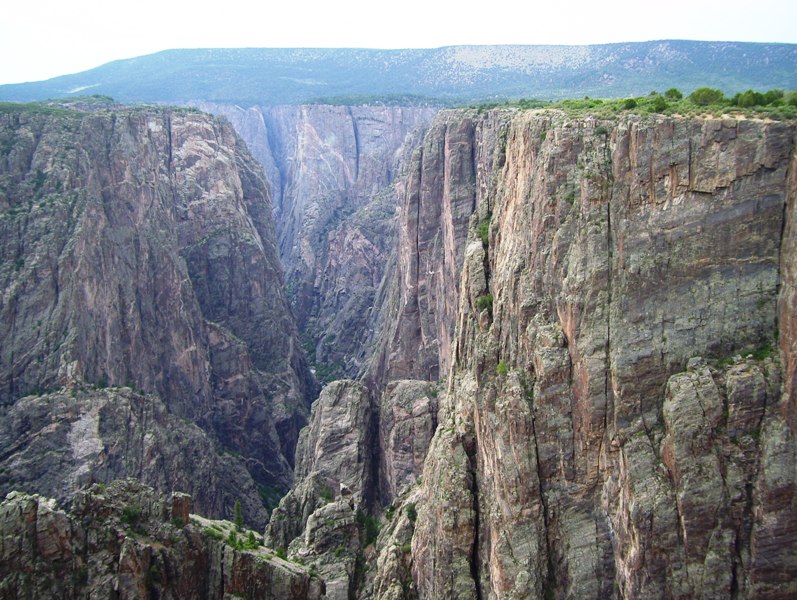
On the edge of a canyon:

Black Canyon of the Gunnison -- north rim

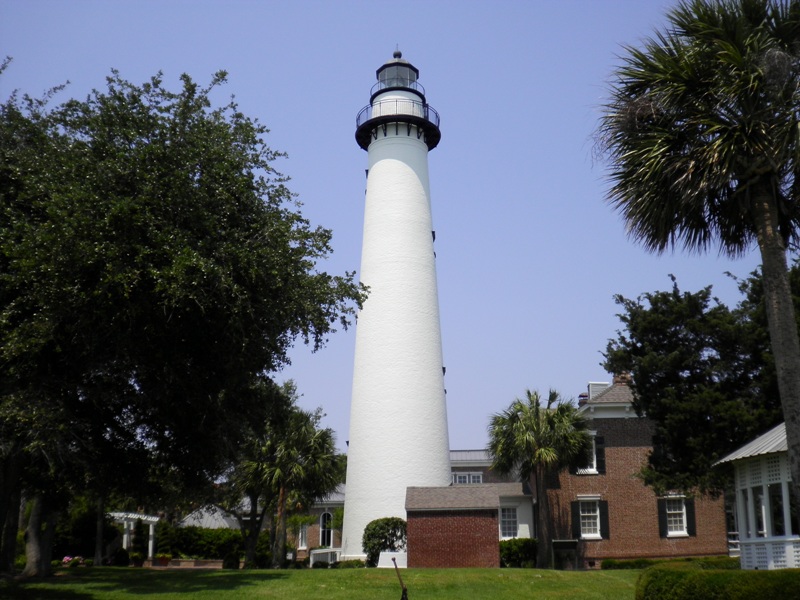
On the edge of a lighthouse:

Lighthouse

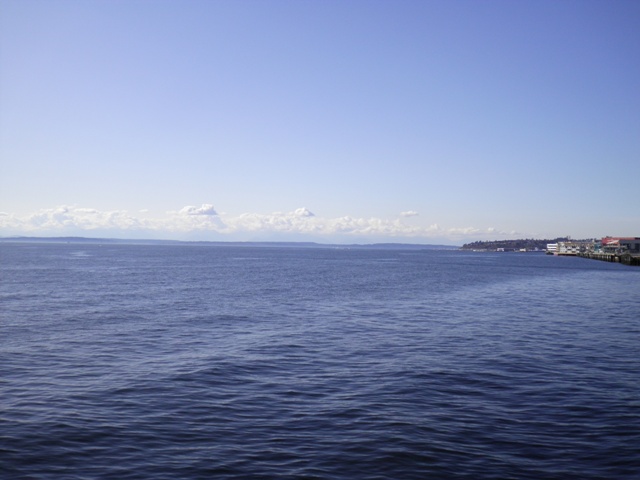
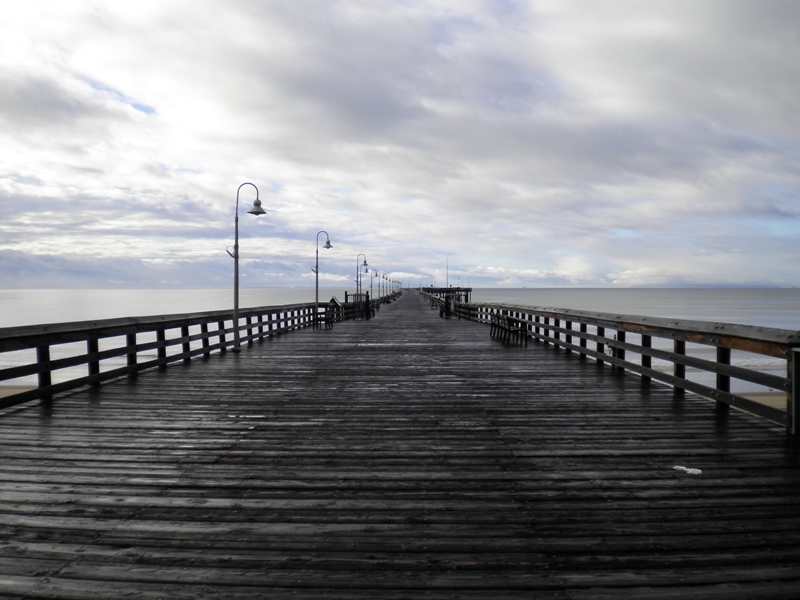
On the edge of a pier:

Ventura Pier

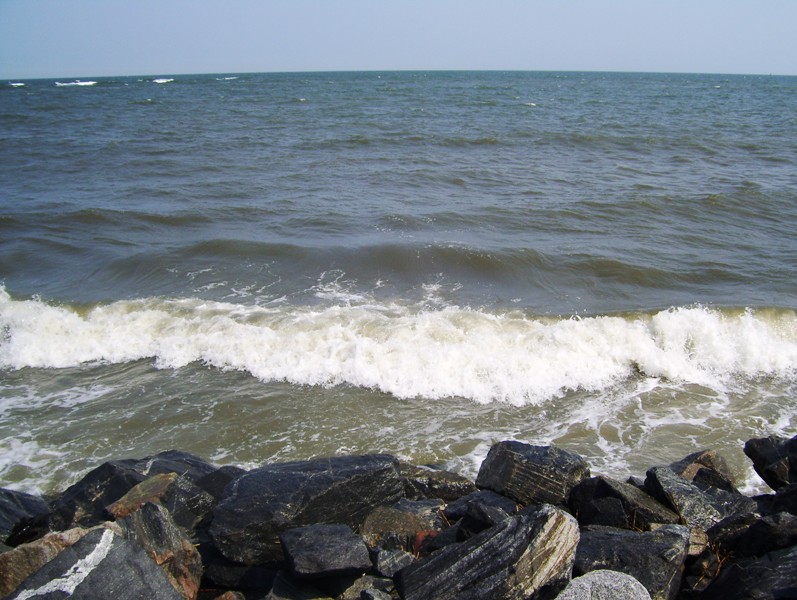
On the edge of the continent:

Atlantic Ocean

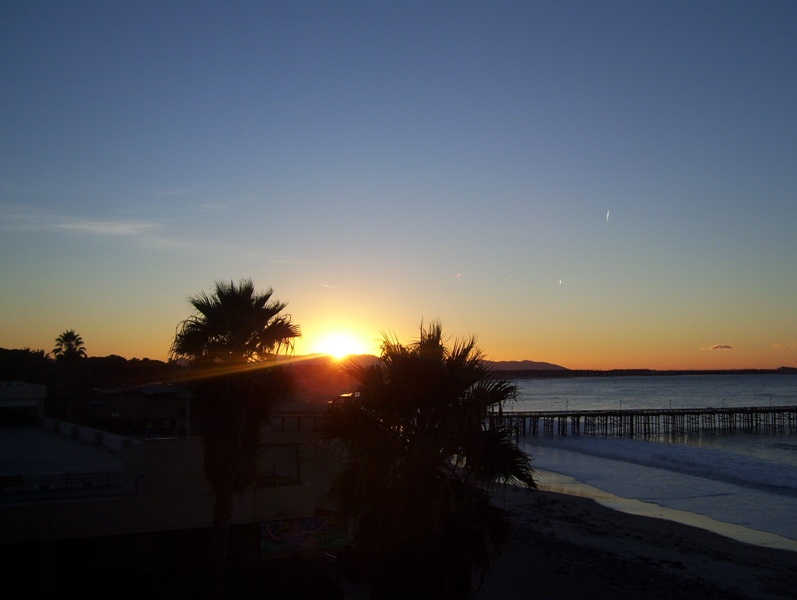
On the edge of a day:

Ocean Sunrise

I’m not sure why edges have such appeal for me. Perhaps it’s because when I am on an edge, I can see a long way, catching glimpses of possibilities far in advance of their appearance. Or perhaps it’s because edges create a boundary between two very different areas — land and sea; balcony and air, cliffs and gorges, night and day — and such differences mirror my own internal boundaries. Or perhaps it’s more symbolic, a precursor to the time when I will be standing on the edge of life, looking out onto . . . who knows what.

Some people “collect” lighthouses, going from one to another, taking pictures, maybe even getting stamps in a lighthouse passport. I considered making such a trek someday, but what I’d really like to do is visit edges of places.

Maybe that’s where I’ll finally find happiness: living on the edge.

***

Pat Bertram is the author of the suspense novels Light Bringer, More Deaths Than One, A Spark of Heavenly Fire, and Daughter Am I. Bertram is also the author of Grief: The Great Yearning, “an exquisite book, wrenching to read, and at the same time full of profound truths.” Follow Pat on Google+. Like Pat on Facebook.

Dreaming Time is Here

After profound grief winds down, there should be a more noble state than the period of disgruntlement and dissatisfaction I am now experiencing. It’s possible this dissatisfaction is a precursor to taking action as some people have suggested, but the truth is, I still have no idea what action to take. I have no real dreams, no list of wants left unfulfilled, no idea of where to go with my life.

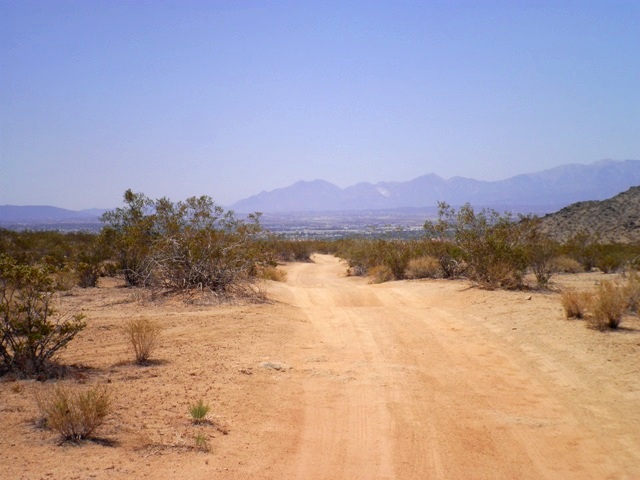
To be honest, I can’t go anywhere, not yet. I am still looking after my 96-year-old father, which limits me to some extent, yet at the same time offers me enough freedom to roam the nearby desert, to indulge myself in small ways, to dream.

One benefit of having let myself feel every cyclonic and cyclic aspect of my grief is that I have experienced the worst it can throw at me (at least I presume I have), so I don’t have to keep busy to prevent myself from thinking. I am free to let my mind roam without fear of where it will take me. Sometimes I think of where I’d like to travel, what I’d like to do, what I’d like to be. Other times, I let the cool desert winds blow all thoughts out of my head and wait to see what flows back to me.

Someday I will travel. Someday I will finish my poor work-in-pause. Someday I will set up my barbells. Someday I will . . .

But today, now, I am content to let the thoughts flow, dreaming up possibilities, like a child, with no regard to probability.

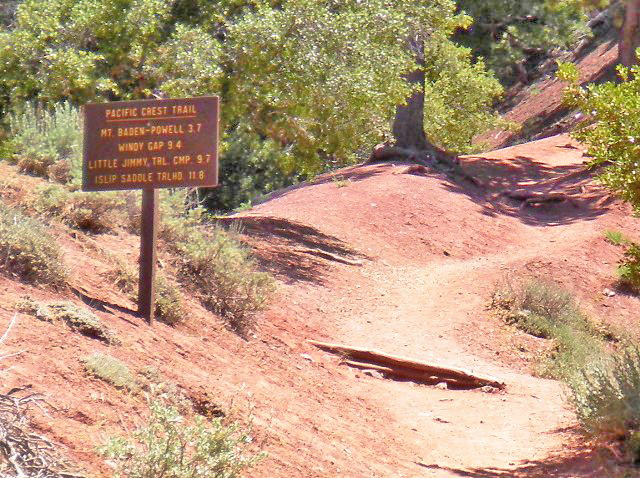
I am in no shape to trek the length of the Pacific Crest Trail and yet I can dream and perhaps one day I will hike a small part of it. I don’t have the knees for running anymore, yet I can still dream of the freedom it once gave me. I am basically a hermit, yet I can dream of making friends and charming people wherever I go.

Perhaps fantasizing is a more noble state to follow the waning of profound grief than disgruntlement. Or not. Either way, dreaming time is here.

***

Pat Bertram is the author of the suspense novels Light Bringer, More Deaths Than One, A Spark of Heavenly Fire, and Daughter Am I. Bertram is also the author of Grief: The Great Yearning, “an exquisite book, wrenching to read, and at the same time full of profound truths.” Follow Pat on Google+. Like Pat on Facebook.

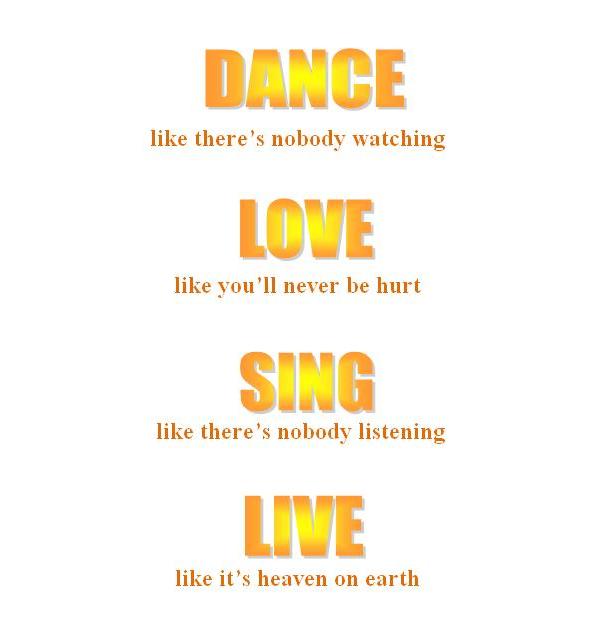
Live Like It’s Heaven On Earth

I came across this saying earlier today (apparently it was written by William Watson Purkey, but now is in the public domain. The word art is mine, however). It caught my attention because I’ve been struggling to figure out how to live now that I am uncoupled due to the death of my life mate/soul mate.

LIve like it's heaven on earth

Most of this saying doesn’t pertain to me. Occasionally, I dance around the living room by myself, a sort of dance therapy, as a way of helping me feel lighter in spirit. And a couple of weeks ago I danced to the light of the moon. (It seemed appropriate at the time.)

But I never sing, seldom even listen to music except during my brief stints of dance therapy, and at the moment, I am fresh out of people to love. Well, family and friends, of course, but no one special to plan a future with. Perhaps someday
. . . or not. Life gives, and life takes away, and I am learning to deal with that.

I don’t believe in heaven, either, especially not the harp and clouds sort of patriarchal afterlife so often touted by religions, but something about that last sentence caught my imagination. Live like it’s heaven on earth. So what does that mean to me? Live with abandonment, saving nothing for another life. Live joyfully. Live.

I have no idea how to do that, but it seems a good basis for planning a new life.

Besides, if life and death are simply different facets of being, then this is heaven on earth even though it so often feels like hell.

***

Pat Bertram is the author of the suspense novels Light Bringer, More Deaths Than One, A Spark of Heavenly Fire, and Daughter Am I. Bertram is also the author of Grief: The Great Yearning, “an exquisite book, wrenching to read, and at the same time full of profound truths.” Follow Pat on Google+. Like Pat on Facebook.

My Punctuated Life of Equilibrium

I never understood evolution, especially Darwin’s version of how it happens. I mean, a bat is always a bat. Bats beget bats and have been begetting bats for millions of years. So how does a bat become something else? And how did something else become a bat? Stephen Jay Gould’s idea of punctuated equilibrium is the only evolution theory that ever made sense to me since batsit mirrored what I knew — that bats always beget bats until . . . they don’t.

Punctuated equilibrium says (at least the way I understand it) that everything exists in a state of equilibrium, with very few evolutionary changes except on a local level. (By “local level” I mean within a species. A species of creatures that becomes separated by a river, for example, will undergo minor changes as time goes on, with those individuals most able to adapt to the new environment surviving to procreate. But still, the adapted creature is recognizably the same species as its forebears.) These vast times of stasis are occasionally punctuated with relatively short (on a cosmic scale) periods of genetic changes, and then things settle down into another long, long, long, period of equilibrium.

This is what my life feels like — long, long, long periods where everything is static, and then brief but frenetic periods of change before stasis sets in once more.

During all the years when my life mate/soul mate was dying, our lives seemed stagnant. We did things of course, but there were no major changes, nothing to yank us out of our torpidity. Day after day, year after year, he got sicker and weaker and I became more emotionally anesthetized since I could not bear what was happening to him and I couldn’t do anything to help him get better.

As the years passed, I felt as if it would always be that way — he dying, me struggling to live. And then one day, things changed. He bent down to pick something up, and a horrendous pain shot through him. He bore the pain as long as he could — three unbelievably agonizing weeks — because he knew that any drug strong enough to kill the pain would also destroy him. And it did. When he finally got on morphine, it made him disoriented. Sometimes he didn’t remember me, and sometimes he didn’t remember himself.

I hunkered down for a long siege since the doctor said he had three to six months to live.

And just like that, three weeks later, after one last breath, the long years of stasis were over. I went through a few months of rapid changes, getting rid of his stuff, putting mine in storage, moving in with my father to take care of him.

These past years of grief have masked the truth. That my life is still basically the same. Stagnant. Living with a man (my father this time) who is declining. Struggling to find a way to survive live despite the situation. I’ve agreed to stay to the end, which could be years, and I’m okay with that. (Designated Daughter, don’t you know.)

The end of this stage of equilibrium will be punctuated with another brief but frenetic period of change as I adjust to the new situation of having no one but me to be responsible for. And then . . .

I’m hoping to figure a way out of this punctuated equilibrium of mine, maybe find a way to incorporate small but steady changes to punctuate my future and keep things from becoming one long run-on sentence, to keep me ever-evolving until the inevitable period is put on the end of my life.

Of course, this is easy to say. It’s harder to do. No matter what we plan, life scatters punctuation marks where it will.

***

Pat Bertram is the author of the suspense novels Light Bringer, More Deaths Than One, A Spark of Heavenly Fire, and Daughter Am I. Bertram is also the author of Grief: The Great Yearning, “an exquisite book, wrenching to read, and at the same time full of profound truths.” Follow Pat on Google+. Like Pat on Facebook.
Fishing for Life: Another Hill to Climb

I’m still making an effort to fish for life, and that “fishing” so far has centered mostly around climbing hills. Today was no exception.

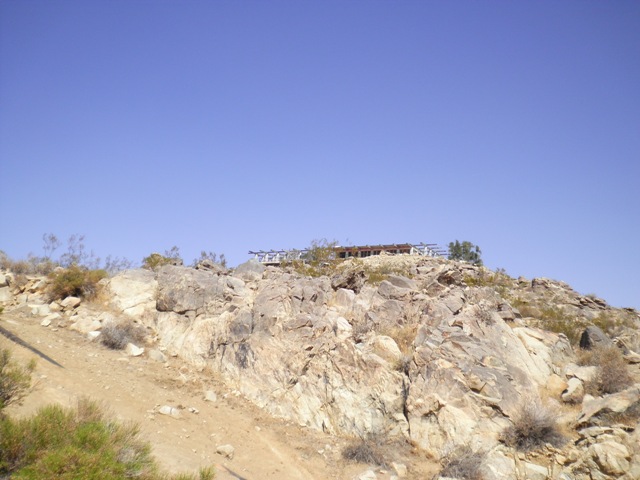
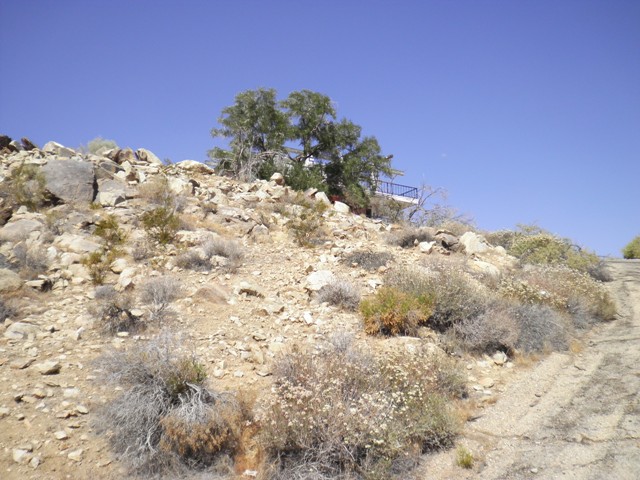
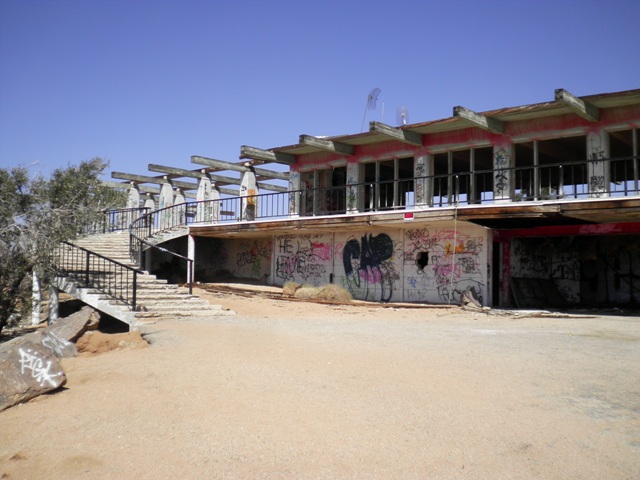
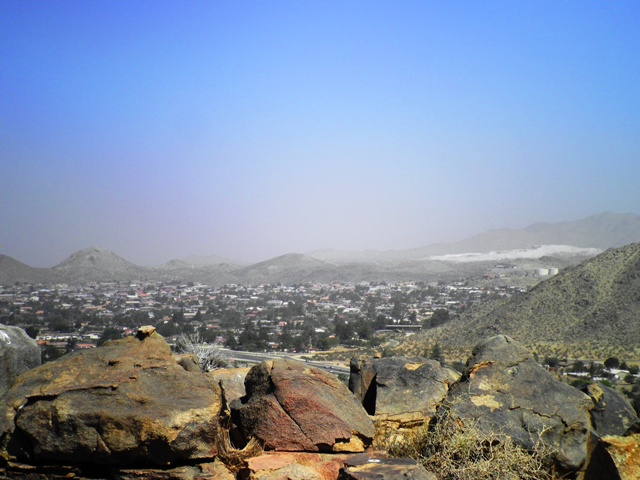
High on a hill over looking town are the ruins of a once magnificent house.

The house is on fenced private property, so a couple of days ago I tried to climb up the unfenced side of the hill. Being more of a hiker than a rockclimber, I didn’t quite make it. (Visions not of sugar plums but broken limbs danced in my head.)

Determined not to give up, today I found a break in the fence, and quite daringly climbed up the steep old driveway, but it turns out half the town uses that old road as a hiking trail, so all that derring-do went to waste.

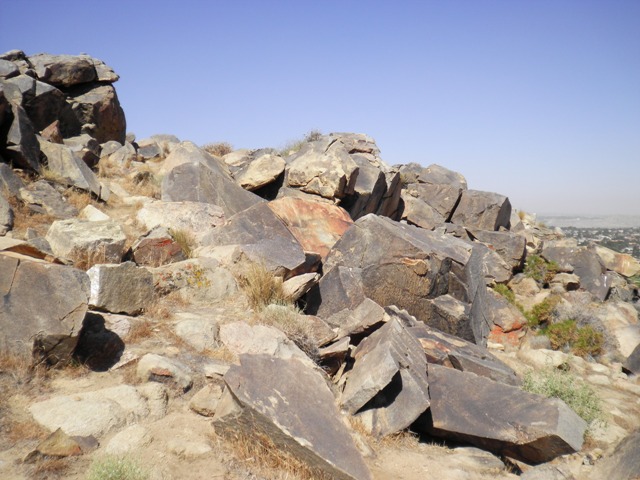
Unfortunately, the ruins, while still fascinating, weren’t quite as attractive close up. Graffiti? Why? Doesn’t anyone have a sense of awe anymore? Is it necessary to desecrate everything? Apparently so.

Still, the house was fascinating, and the views magnificent. The hills in the background are my “backyard” where I go walking every day.

***

Pat Bertram is the author of the suspense novels Light Bringer, More Deaths Than One, A Spark of Heavenly Fire, and Daughter Am I. Bertram is also the author of Grief: The Great Yearning, “an exquisite book, wrenching to read, and at the same time full of profound truths.” Follow Pat on Google+. Like Pat on Facebook.
Laziness, Catness, and Patness

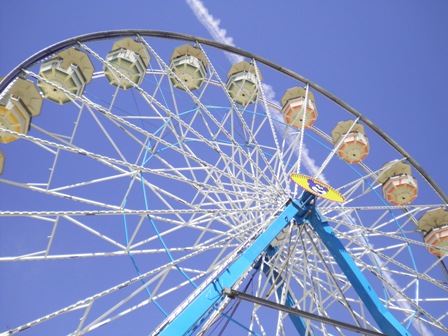
In an effort to add spontaneity, color and vitality to my life, I went to the county fair. Just walked around, ate giant onion rings and funnel cake, rode the Ferris wheel. (Could ride one of those all day. Maybe next time I’ll get a wristband for unlimited rides and just go round and round and round. I wonder if that would wind my life into a higher gear or maybe wind me back to a simpler time?)

I saw a white tiger, visiting from the local zoo, but as much as I would have liked to admire the poor thing, I couldn’t bear to see it in that cage. (Of course, I’d hate even more to see the thing out of the cage, stalking me!) As I passed the cage, I heard the handler tell the gathering crowd that cats were some of the laziest creatures in the world. Huh? Lazy? The poor cat was in a cage, singing for its supper. Okay, so it wasn’t singing, it was yawning, but still, it was the primary advertisement for the zoo, so it was working as hard as the man maligning it. Besides, laziness is a human judgment. A cat can only be a cat. Its nature is to take it easy until it is time not to take it easy. That is not laziness. That is catness.

And anyway, who’s to say laziness is wrong? Most of us have been raised with a work ethic that is almost religious, and who is to say that is the right way? I am not advocating living off other people or shirking one’s responsibilities, but if you’ve worked hard enough to pay your bills with a bit set aside for emergencies, why is it lazy not to put forth more effort?

Years ago, I did the billing for a law office. Worked one week a month. In that one week, earning just a dollar or two above minimum wage, I made enough for all my living expenses, paid for the upkeep of my car, went out to eat when I felt like it. (It was a simpler time, of course, and my needs were simpler than most people’s.) The rest of the time I walked, read, wrote snippets of poetry, and did whatever I felt like. I still remember the looks of incomprehension and disdain I would get from people when they found out what I did. It wasn’t the week I worked for the lawyers that concerned them but the three weeks I didn’t. They couldn’t understand why I didn’t feel the need to work, and they couldn’t understand how I managed to fill all those non-working hours.

Maybe that lifestyle wasn’t laziness, either. Maybe it was Patness.

But, back to the fair . . .

The excursion did what I wanted — gave me something different to eat and do and think. Not bad a bad exchange for a few dollars. And I did it mostly on the spur of the moment, which is one of the things I am trying to relearn — doing things without planning. I woke up with the idea of going to the fair, and as soon as it opened, I went.

Maybe next year I’ll see you at the fair! We’ll meet by the Ferris wheel . . .

***

Pat Bertram is the author of the suspense novels Light Bringer, More Deaths Than One, A Spark of Heavenly Fire, and Daughter Am I. Bertram is also the author of Grief: The Great Yearning, “an exquisite book, wrenching to read, and at the same time full of profound truths.” Follow Pat on Google+. Like Pat on Facebook.
Fishing For Life

Today is the 3 and 1/6-year anniversary of my life mate/soul mate’s death, and I’m still sad, still missing the spark to get my life going again. For thirty-four years, he was my spark — everything was so much more vibrant when he was in my life — and without something to spark my interest again, my life will continue to feel sad and flat.

A few days ago, in Dreaming My Life into Being, I wrote about my plans to go fishing for life. Well, today, I went. (The second part of that plan was to turn off my computer for a day, and as you can see, I didn’t do that, but following through on half a plan is better than doing nothing, right?)

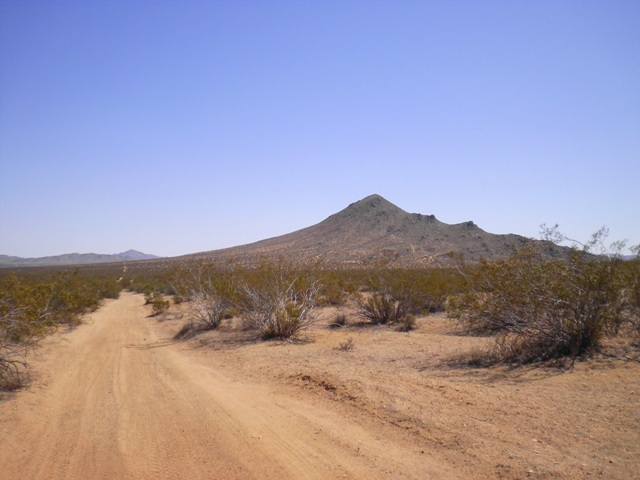
Today’s fishing trip wasn’t a major journey by any means, just a long hike through the desert on a quest to find the trail to the top of Bell Mountain. I’d climbed halfway one day, but gave up when the trail petered out to 60-degree angle. There is no way I could have climbed that sort of slope with only my tennis shoe-clad feet and bare hands — who am I trying to kid;  there is no way I could ever have climbed that slope — so I turned around and came back. (Slid down halfway, I’m sure, though I don’t remember. It was in the midst of the worst of my grief, and there are blank spots of pain in my memory.)

Bell Mountain

Bell Mountain

I’d recently read online that there is a trail to the top, though it’s on the other side of the mountain, so my quest today was to make my way to the other side and find the trail. Again, I had to turn back. I’d walked for two hours, and perhaps another two hours would have taken me around to the trailhead, but then, I’d have been too exhausted to make my way back. So once again, the mountain defeated me.

The way back.

The way back.

Just because one goes on a fishing trip doesn’t mean you’ll get what you went for, but still, it was a lovely day in the sun with just enough wind to keep me from dying of the heat. So I did catch something — a bit of life.

I also caught a thought. We talk about life being a journey, but it’s always a forward motion or maybe even sideways. No matter how far we go, we continue on from there. Unlike other physical journeys, such as a hike, we don’t have to return to home base. So we can give it all we have without needing to keep anything in reserve for the return trip.

I hope I remember that when next I feel as if I can’t continue my life’s journey.

***

Pat Bertram is the author of the suspense novels Light Bringer, More Deaths Than One, A Spark of Heavenly Fire, and Daughter Am I. Bertram is also the author of Grief: The Great Yearning, “an exquisite book, wrenching to read, and at the same time full of profound truths.” Follow Pat on Google+. Like Pat on Facebook.
Life in Motion

I was driving in traffic today, running errands, when all of a sudden, the thought hit me: Is this all there is to my life? Just this constant motion — walking, driving, typing?

speedI didn’t have so much trouble dealing with the seeming foolishness of daily living when my life mate/soul mate was with me, but now that he is dead, so often it seems as if despite all the motion, I am simply running in place.

And yet, even if I am sitting still, going nowhere, everything is in constant motion.

It’s windy, and so the air is moving at about 20 per hour. The earth is also moving, of course, spinning on its axis at about 1000 miles per hour and it is hurtling around the sun at 67,000 mph. The sun is racing around the Milky Way Galaxy at 483,000 mph. And the galaxy is moving at perhaps 2,237,000 mph. The entire universe is also moving and expanding, at untold speeds.

And that’s not all. The very atoms of our bodies are constantly moving, creating and recreating themselves and us in the process. Thoughts are pinging around in our heads, sometimes faster than we can catch them, light is traveling at 186,202 miles per second, and sound is traveling at approximately 768 miles per hour in dry air.

All that motion. Constant motion. And for what? Just to be in motion? Is that all there is to life? Motion?

All this speed is wearing me out. I think I’ll go take a nap.

***

Pat Bertram is the author of the suspense novels Light Bringer, More Deaths Than One, A Spark of Heavenly Fire, and Daughter Am I. Bertram is also the author of Grief: The Great Yearning, “an exquisite book, wrenching to read, and at the same time full of profound truths.” Follow Pat on Google+. Like Pat on Facebook

Dreaming My Life into Being

JJ Dare, friend, fellow author and sister in sorrow, wrote a blog post today about Floating in the Sea of Dreams that got me thinking . . . again. . . . about how I am dreaming my life into being. The Sea of Dreams is like a primordial ooze where ideas and hopes rise up and evolve and then sink back into the deep only to ascend once more in a different guise. And every permutation of these dreams changes us, makes us grow, helps us reach our destiny.

A few months ago when my 96-year-old father (my current responsibility) seemed near death, the idea of living on the go appealed to me. I worry about settling down and stagnating somewhere, and moving from place to place would vanquish that worry, though of course, other worries would take its place. Weather, for example. It’s one thing to think of such a life in the puget soundstillness of a warm desert spring day, and another thing to consider the possibilities of snow and tornadoes, hurricanes and ice storms.

My father is doing well, so much so that it’s possible he could outlast me, and the thought of living on the road was subsumed into the Sea of Dreams. I’m back to taking life one day at a time, not thinking about the future, not making any long-term plans.

The other phase of my original idea of living on the go was to do an extended bookstore tour in an effort to introduce my books and my publisher to the offline literary word. That idea, as I have discovered, seems to be another overly rosy daydream. Since I couldn’t go on the road, I’ve been doing my bookstore tour via mail. Sending out letters, gift certificates, offers to interview booksellers.

There’s been little interest in my mailing, and unfortunately, it makes sense. Bookstores are in the business of making money, and since I am not a big name in the literary world (hard though it may be for you to believe), they have no incentive to stock my books. Of course, if/when I do become a big name, they will be interested in my books, but by then, I won’t need them. (If you are a bookstore owner and reading this, and you are interested in my books, let me know and I’ll send you a gift certificate. Or if you are interested in my interviewing you, you can find the interview questions here: Bookseller Questionnaire.)

So this dream of becoming an offline author, like many others I’ve had, is slowly sinking back into the depths, but already, some dreams are beginning to arise. I’m getting inklings of a desire to finish my works in progress. And the idea of being on the go is slowly evolving into something I can do now. I’m considering shutting off the internet one day a week (gasp!!) and taking myself on a fishing trip. (Not to fish for fish, of course, since such a hobby is only peaceful for the one fishing. The poor fish are scared, hurt, and fighting for their life.) My idea is to go fishing for life. Just take off for a day. Go wherever. See what I can see.

Meantime, I’ll continue floating on the Sea of Dreams, dreaming my life into being.

***

Pat Bertram is the author of the suspense novels Light Bringer, More Deaths Than One, A Spark of Heavenly Fire, and Daughter Am I. Bertram is also the author of Grief: The Great Yearning, “an exquisite book, wrenching to read, and at the same time full of profound truths.” Follow Pat on Google+. Like Pat on Facebook.
Designated Daughter

The problem with having a star-studded weekend is that resuming real life can be difficult. Sunday evening, on the way back from the airport, I found myself dreading the return to my life. It’s not that I would have wanted to keep up the frantic pace of wonderful waterside seafood restaurants, Ferris wheels, merry-go-rounds, limousines, champagne, and fabulous shows, but that until I was away from it for a while, I hadn’t realized how depressing my current living situation is. (I am the “designated daughter,” looking after my 96-year-old father.)

Dad and me

Dad and me

When I came here three years ago to be with my father, he was still mostly strong and vital, which gave me the opportunity I needed to grieve for my deceased life mate/soul mate without having to deal with the minutiae of daily life or my father’s medical condition, but this changed as my father declined. And now, I’m back where I was for so many years, keeping vigil while someone close to me struggles to live (or die. Sometimes I’m not sure which is harder for them.)

My father is doing well (he even insisted I leave him by himself while I was gone instead of getting someone to stay with him) but still, he is suffering from congestive heart failure, and it’s hard watching someone decline, especially when it’s someone you have a complicated relationship with. He vacillates from being the authoritative father when he is well to needy child when he isn’t, which makes a complicated situation even more problematic. And for the most part, I am his main contact with the outside world, which at times adds an additional burden.

I thought I was doing okay, accepting this new direction in my life, but now I see that this situation only adds to my sorrow. But it is what it is, and there’s not much I — or anyone else — can do to change things, though life itself will eventually make the change for me. Until then, I’ll muddle through the best I can, and try not to give in to depression.

***

Pat Bertram is the author of the suspense novels Light Bringer, More Deaths Than One, A Spark of Heavenly Fire, and Daughter Am I. Bertram is also the author of Grief: The Great Yearning, “an exquisite book, wrenching to read, and at the same time full of profound truths.” Connect with Pat on Google+