Respecting My Years

I am rapidly approaching that “elderly” birthday, the one that can no longer be kindly categorized as late middle age. For the most part, I don’t notice a difference, but there are some interesting dichotomies. My memory is slowing down, especially when it comes to short-term memory, and I am a bit slower in thought, but on the other hand, I think that I think better, if that makes sense. I’m also a bit slower physically, some of which is due to age and some to my perception of age, by which I mean that I am respectful of my years and try to make accommodations, even if they aren’t strictly necessary.

For example, I have no trouble shoveling my sidewalks, and yet I won’t go walking in the snow unless I must, and if I do have to, I make sure to wear non-skid hiking shoes and use my dual trekking poles. I also make sure to carry my single hiking pole whenever I am out in the dark or in any other possibly adverse condition, though to simply take a walk on a good weather day, I leave it behind. (People call it my cane, which I object to because a cane seems such an elderly thing to carry, but I suppose technically it is a cane since I’m using it in the city to help with my balance as I navigate broken sidewalks and bumpy streets.)

Now that my knees are doing better, I could probably climb stairs without too much trouble but I am very careful when I’m on stairs, walking up or down like a very old-elderly woman instead of a young elderly one.

Knowing how easy it is to trip, I try to be aware of what I am doing, even when walking around the house. I pay particular attention to the sill between the kitchen and dining area; it’s the sort of thing old women tend to trip on, and after such a fall, too many of their lives are never the same.

Sometimes I worry that respecting my years and acting like an old woman will age me more rapidly, but I tend to think it’s better to err on the side of caution even if I move slower than I could. Of course, accidents happen to even cautious people, but I can’t worry about every little thing — otherwise I’d never do anything! But still, I am trying to respect my many years of living so I can be around to enjoy more of them.
***

What if God decided S/He didn’t like how the world turned out, and turned it over to a development company from the planet Xerxes for re-creation? Would you survive? Could you survive? Would you even want to?

Click here to buy Bob, The Right Hand of God

A Princely Pattern

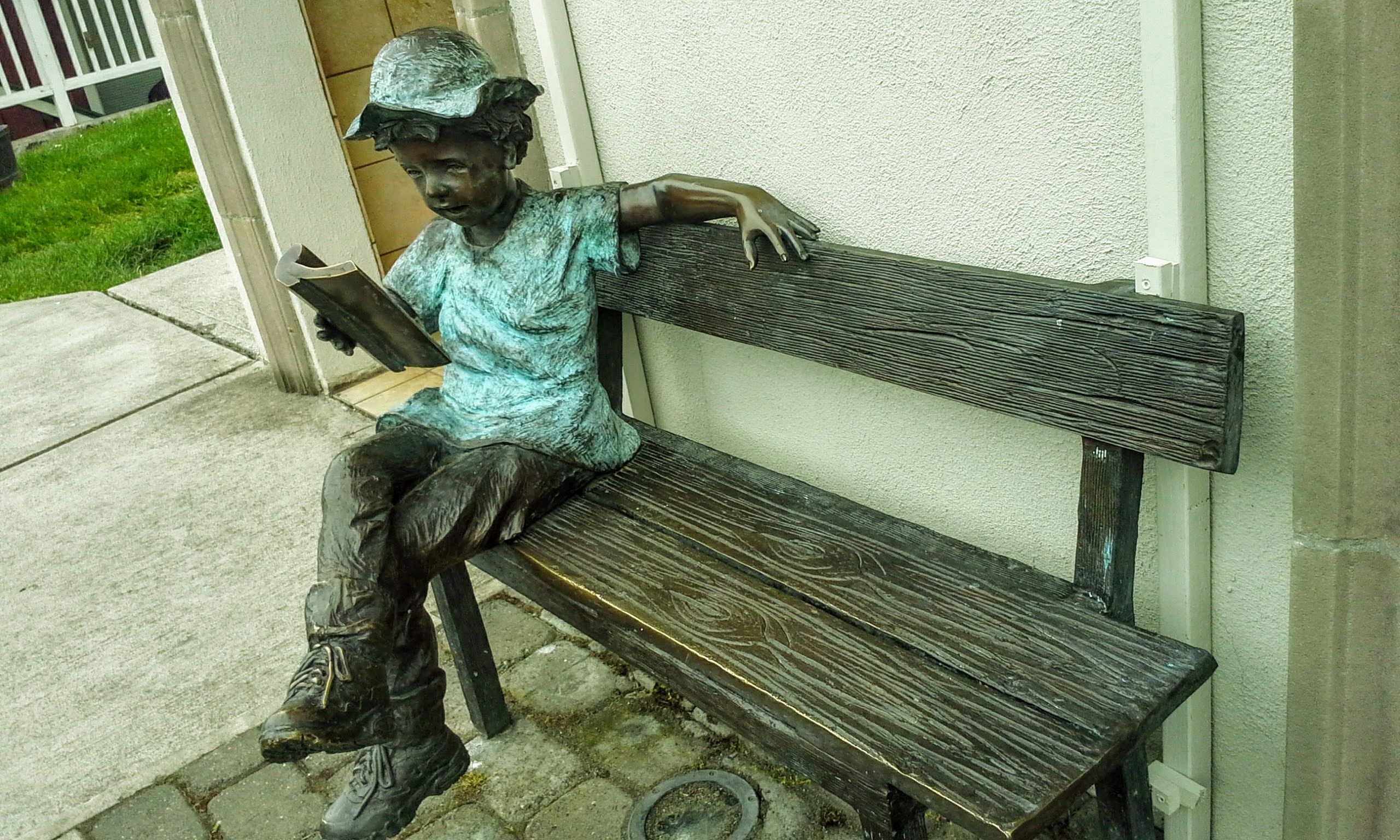
I’ve been reading children’s books published around the turn of the twentieth century, and it surprises me how philosophical and mystical so many are, including two books I remember from my own childhood. One book, The Little Lame Prince, I remember reading several times; I even remember where it was place on the shelf in the public library. Years later, I went looking for the book in that library and couldn’t find it. Back then, I thought that libraries kept all books ad infinitum, but now I know that simply is not feasible. I must have told my mother about the book, because one day when I was in my forties, she handed me a red book and told me, all smiles, “Look what I found at a yard sale.”

Yep. The Little Lame Prince. Not surprisingly, I wasn’t impressed with the book. After all, it was a children’s book and whatever I had gleaned from it when I was young no longer seemed relevant. I don’t know what happened to the book. I’m sure I gave it away as I do with all my books once they’ve been read to saturation, though now I wish I had the book if only because my mother had thought of me when she saw it.

Now, oddly, the book seems relevant again. Or at least interesting from a scholarly point of view. The book is about — ta da! — a little lame prince. The author in no way panders to the child, either the character or the child who is reading the book, but instead instills in him the need to accept what he can’t change, that comfort came by seeing “the plain hard truth in all its hardness, and thus letting him quietly face it.” Such an odd sentiment (without being sentimental) for an old children’s book, but oh, so true! It’s what I’ve been saying about grief: it’s important to face it, to feel what you are feeling, and for others to let you feel the harshness of grief without their trying to cajole you into a better frame of mind.

Something else that struck me is the sentence: “The plan of this world is infinite similarity and yet infinite variety.” It’s something we know without actually thinking about. We know all snowflakes are alike and yet all are different. We know all leaves are alike in their leafness, and yet all are different. In such a way, all people are alike, too. I mean, if you see a person, you know immediately it’s a human being and not a starling or a star (of the celestial type). It’s this similarity and variety that makes it seem as if everyone grieves differently, when in fact, there is great similarity in the grief cycles of those suffering from the death of a spouse.

The other children’s book that particularly struck a chord was The Lost Prince. (Hmm. There seems to be a princely pattern here.) This book is very Zen or Buddhist or anyway, not a typical western way of thinking. The lost prince was brought up to think good thoughts, to be good, to find balance and peace in silence so that he can connect to “the Thought that thought the world.”

It shouldn’t surprise me that this sort of thinking didn’t mean anything in particular to me when I was so very young and reading these books for the first time. It’s possible I understood the message, but it seemed no different from any other message I gleaned from a book; when one is new, all ideas are new and all are treated the same. It’s only as we get older and supposedly wiser that we categorize ideas and things and people, which seems a very unwise thing to do.

It’s also possible that a steady diet of such books at a young age helped create my own rather mystical bent, or at least compounded it.

Whatever the truth of me, my mind, or these books, it’s definitely been a interesting experience, rereading these books and seeing in them the philosophies that helped formed my own life.

***

Pat Bertram is the author of Grief: The Inside Story – A Guide to Surviving the Loss of a Loved One. “Grief: The Inside Story is perfect and that is not hyperbole! It is exactly what folk who are grieving need to read.” –Leesa Healy, RN, GDAS GDAT, Emotional/Mental Health Therapist & Educator

Judgement Call

I sometimes watch television with the woman I sit with several hours a week, and the show of choice is Judge Judy. The most annoying things, of course, are the commercials. The political ads were horrific, but thankfully they are done with, and by the time they return, I’ll probably be finished with this job and with television. Almost as bad as political ads are the drug commercials, with all the happy people dancing around gleefully while the life-threatening side-effects are listed. Most annoying are those sleazy lawyers promising to get me big bucks if only I could get injured in a car accident.

I suppose the lawyer ads make sense, since this show is partly about the law. It’s mostly, of course, about Judge Judy and her sharp bluntness. That sounds oxymoronic, but she is so very blunt in her speech and so pointed in her remarks that her bluntness comes across as sharp. Not just smart as in keen but sharp as in cutting.

As I watch her, I wonder what it would be like to be so very direct. I realize she is a judge, and that it is her show and her courtroom, so what is entertaining coming from her mouth would be downright rude and hurtful coming from me. And above all, I strive not to be rude or hurtful or unkind in any way. If people annoy me, I stay away from them. It gains me nothing to get in their face and tell them what I think of them. Besides, it would probably make me feel worse than it would make them feel.

As I watch the people who stand before the judge, I wonder how I would act if I were one of them. Would I be able to stand there and keep my mouth shut while my opposite number is spouting lies? Would I be seething at the injustice? Would I protest out of turn? Would I be too intimidated to speak up when allowed? I have a hunch I’d be one of those who try to explain too much, to give the context and other background information. A lot of what happens to us can’t be fit into a yes or no situation. There are always gray areas. And yet often, those folks, whether defendant or plaintiff, are only allowed a single word — yes or no.

But none of that matters. I truly doubt I would ever go to a small claims court, would ever apply to be on judiciary show, would ever get a lawyer to try to resolve any situation those litigants get into.

If I lend someone money, I assume it’s lost, and if they pay it back, great. If they don’t pay it back, I will nag them, and if I still can’t get the money back, eventually give that up, too.

I have seldom gotten a deposit back from a landlord — they have almost always managed to find a way to keep it — so I made sure any deposit was an amount I could afford to lose. Now that I own a house, I don’t have that sort of problem, for which I am eternally grateful.

I do have a contractor who doesn’t always show up when he says he will, but I couldn’t sue him even if I wanted to (which I don’t) because I don’t have a written contract. And anyway, we’ve become friends. Whenever I need something done immediately (like a leaky toilet) that goes beyond what would be contracted for, he does without question. A friendship like that helps take some of the stress out of home ownership and is not worth jeopardizing.

I’ll probably never have a property line dispute — the first thing I did when I got here was to have my property surveyed, and it is now part of the legal definition of the place.

I’ve been bitten by dogs, my car has been hit by other drivers, and I’ve slipped and fallen and been badly injured, and never have I sued. In fact, that’s a matter of contention between me and a friend because my not doing so comes across as my being contrary rather my making a judgement call. And maybe I am contrary, but I know for sure I’d rather end a fender bender (even when it is the other person’s fault) with a hug rather than an appearance before a judge.

**

Pat Bertram is the author of Grief: The Inside Story – A Guide to Surviving the Loss of a Loved One. “Grief: The Inside Story is perfect and that is not hyperbole! It is exactly what folk who are grieving need to read.” –Leesa Healy, RN, GDAS GDAT, Emotional/Mental Health Therapist & Educator

Malaise

I’m having a hard time thinking of something to write about today. To be honest, I’m having a hard time even caring about thinking of something to write about, or caring about much of anything. Oh, I am still enamored of my house — I feel blessed to be here. I am still intrigued with the possibilities for landscaping. And I’m still hopeful about my newly published novel. But other than that, I’m feeling . . . disconnected. Or maybe just upside down.

Part of it, I’m sure, is shock over the direction people have chosen to steer this country. We’re already as close to socialism as I ever want to be, but apparently, most people want what I don’t, and the thought of what’s going to be happening in the next few months and years makes me nervous.

Part of it, too, is that I’m tired. I still haven’t recovered from the time change, though why that should make a difference, I don’t know. I’m also tired from caring about things I have no control over.

Part of it is that I spend too much time alone. I have my job, and I do see other people now and again, but I am too much in my own head, which isn’t always a good place to be.

And part of it might be that, as my tarot card today intimated, I am at a crossroads, needing to reflect and reevaluate my life so I can have a better understanding of where I am and where I need to grow. (One thing, I know is that I need to opt out of reading or hearing any news — I no longer want to know anything “they” are doing since there’s nothing I can do about it.)

Of course, all of the above could be hogwash. It could simply be that I have nothing to say. 411 days of daily blogging is a long stretch. (I had to look up the word “hogwash.” know what it means in its usage today but not how it started out. It turns out hogwash is not something for cleaning hogs, as I vaguely assumed, but is actually swill — kitchen scraps one feeds to the pigs.)

The weather was nice enough today after the winds died down that I was able to take a walk, which helped. And I had a couple of nice meals — eggs and a vegetable salad. So maybe this malaise will soon pass, at least I hope it will.

***

My latest novel Bob, The Right Hand of God is now published!

What if God decided to re-create the world and turn it into a galactic theme park for galactic tourists? What then?

Click here to order the print version of Bob, The Right Hand of God. Or you can buy the Kindle version by clicking here: Kindle version of Bob, The Right Hand of God.

Everyday Magic

After the past four days of enumerating and celebrating my blog accomplishments, I woke this morning feeling uneasy. I have spent the past ten and a half years talking about my life, my grief, my feelings, my traumas, and the dramas that seem to follow me. (Before that, I mostly talked about reading and writing, but Jeff’s death blew me wide open, and that was reflected here on this blog.) Suddenly, after all this time, I’m uneasy, unsure that I like people knowing so much about me. It makes me vulnerable, and seems to put me at a disadvantage with people I see in real life. Do I really want them to know my innermost thoughts? Do I really want them to see my soul bared? It doesn’t seem a smart thing to do.

For example, too many people here have guessed the identity of the one person in town I try to avoid (this person’s insulting remarks were the last straw for me and Facebook), and that’s more than I want anyone to know. I’m also not sure how comfortable I am discussing things that bother me when I know the people involved will be reading what I write. I’ve been censoring myself to an extent because of this, but even so, I tend to think I say too much. Still, whatever a person says to an author and blogger is fair game for a writing topic. That’s what I do — I write about what happens in my life and try to find a lesson or gratitude or some sort of accommodation with the occurrence.

But it does make me vulnerable, and I wonder how wise I am to continue with my way of blogging.

One thing in particular happened, a minor occurrence for sure, but I took it to heart. This added to my confusion about continuing the blog path I’m on, mostly because I wanted to write about it and wasn’t sure if I should. And yet, it is a bloggable situation.

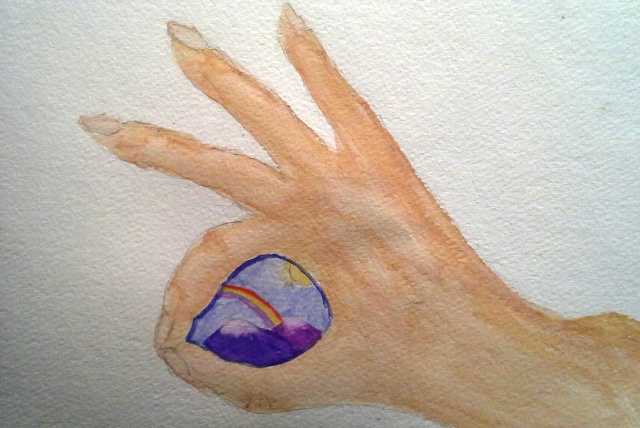
The other day, I was driving back from a nearby town when I happened to see a vehicle ready to pull onto the highway. After I passed, it pulled in behind me, and it stayed behind me as we headed into town. This tickled me because it was only the day before that I had seen the vehicle for the first time, and I knew who was driving. It seemed a bit of serendipity, even solidarity, on what is normally a faceless and friendless highway. One of life’s small miracles. Everyday magic.

The other driver’s reaction? That I drive slowly.

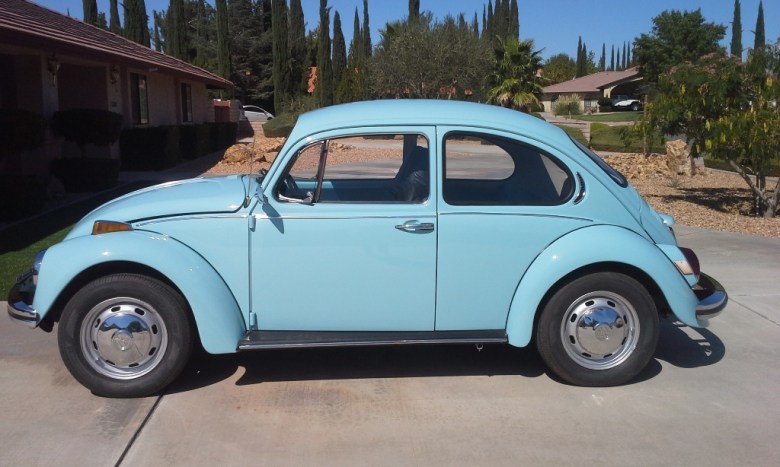
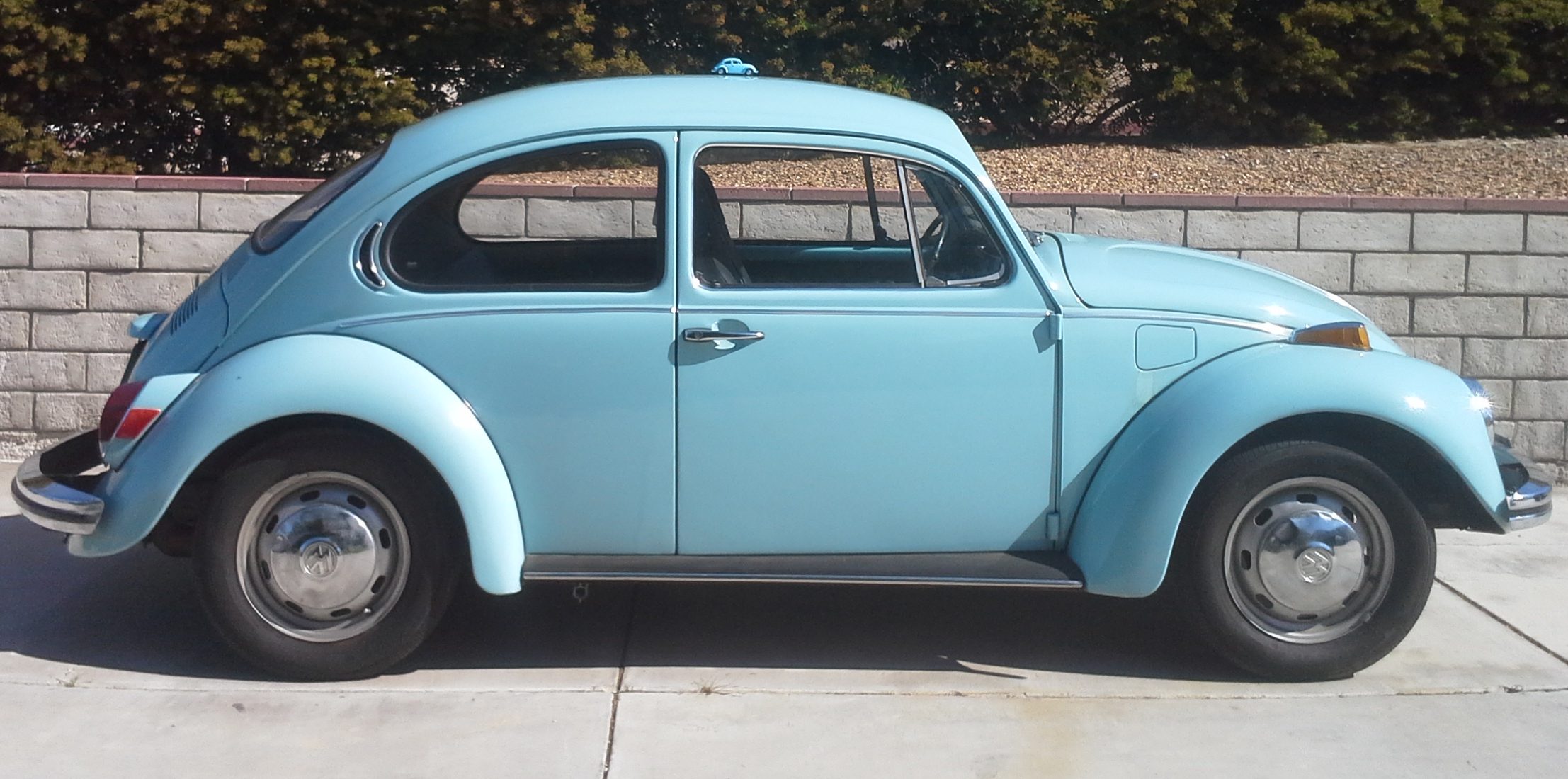
Huh? When is driving the speed limit slowly? Well, to be honest, it almost always is. Several cars had passed me, crossing a double-yellow line to get ahead of me shortly before I met up with this particular driver. I wonder what all those drivers would have done if I had been driving 55mph the way I’m supposed to. Driving 65mph is not a good idea for a car with such a small, air-cooled engine, and my mechanic cautioned me about burning out the engine. Still, I sailed along at 65 until we hit town, and then I slowed way down to the new speed limit, and then way, way down when it came time to turn.

I tend to forget that people don’t know there are cars without power steering, power brakes, and automatic transmissions. If you’ve ever driven such a car, you know you can’t slow at the last minute and then careen around a corner. You have to brake in plenty of time, and then downshift to make a safe turn.

Still, this wasn’t the point. The point is that I thought the drive into town was something special, a bit of magic, and the other driver thought I drove too slowly.

I just realized I answered my dilemma. This episode is not a reason to back off from telling my truth, the only thing unique I have to write about, but is instead a reason to keep going. Someone needs to point out the minor miracles, the everyday magic, the important lessons, and the serendipitous moments on the road of life that would otherwise pass unnoticed.

I’m sure my uneasiness will eventually dissipate. After all, considering the myriad heartfelt grief posts I’ve written, I’m no stranger to vulnerability.

***

Pat Bertram is the author of Grief: The Inside Story – A Guide to Surviving the Loss of a Loved One. “Grief: The Inside Story is perfect and that is not hyperbole! It is exactly what folk who are grieving need to read.” –Leesa Healy, RN, GDAS GDAT, Emotional/Mental Health Therapist & Educator.

Does It Matter to Anyone What I Think?

I’ve been thinking about what I wrote yesterday, my being afraid to say what I think. I’m not sure it’s fear, like hiding-under-the-bed fear, that keeps me from talking about the things that worry me. It’s a healthy sense of self-preservation, but even more than that, it’s that I don’t think it matters what I think. It is interesting to talk to people, to get other points of view, to broaden one’s outlook, but when such a discourse is not available, when all people want is to propound their own point of view (emphasis on “pound”), talking doesn’t advance any cause. (Nor does burning buildings, or even oneself, but that’s a discussion for a more benign and less uncivil era.)

In a gale force wind, a puff of breath is not noticed, and certainly won’t help to calm the forces creating the wind. In a ship violently crashing from side to side because of insanely high waves, nothing one can say will rock the boat any further, and certainly won’t help to steady the craft or the people in it.

If what I said (or wrote) really mattered, I might be courageous enough to tell my truth, but when so many people have already made up their minds, locked their mental door behind them, and pulled up the drawbridge against critical thought, a single word or a thousand will not batter down those fortifications.

A greater problem than closed minds is that people hear what they want to hear, filtered through their own value system. They hear a slogan, process what it means to them, and then head out to defend that slogan without ever finding out what that slogan means to the people who wrote it and what their agenda really is. Which means sometimes well-intentioned people fight against their own interests without knowing it.

This is a relatively short blog. I’d written a lot more, even going so far, despite my reservations, as to talk about many of the issues at stake, but in the end, I deleted all that because I realized it truly doesn’t matter what I think. I’m not sure it even matters to me. Nothing I think will change anything. Nothing I say will change anyone’s actions, so is there any point in even thinking about the current situation? It’s not as if I’m young and still have a whole lot of ideological formation ahead of me. I’m pretty much a done deal. I’ve mostly lived my life in my own head, and a lifetime of thinking and reading and researching and studying and writing and being can’t be undone by new/old emotionally-charged slogans or radical groupthink.

Besides, nothing in this new world is more redundant than an old woman, no matter how perspicacious her thoughts might be.

***

Pat Bertram is the author of Grief: The Inside Story – A Guide to Surviving the Loss of a Loved One. “Grief: The Inside Story is perfect and that is not hyperbole! It is exactly what folk who are grieving need to read.” –Leesa Healy, RN, GDAS GDAT, Emotional/Mental Health Therapist & Educator

The Best of Social Networking

Although I have always been a fan of social networking on a personal basis — getting to know people, making friends, feeling connected even when I am alone — I am also aware that it is a platform for the dissemination of a particular brand of ideas. Anything that doesn’t fit the narrative of that brand is labeled “fake news.” That most people don’t see they are being herded by this one-sidedness shows the efficacy of the brand. That those same people heap shame on those who don’t agree with the stated beliefs shows how deeply entrenched the brand is.

And yet . . .

During this past week, I have been enormously pleased to see so many posts by black people decrying the current narrative, ie: downtrodden blacks, liberal saviors, white racists (and according to this narrative, all whites are by definition racists).

I understand that the black/immigrant/minority experience is different from mine, but that does not negate my life. Does not make me better. Does not make me a racist. It makes me . . . me.

Whatever anyone experiences makes them who they are. The current narrative defines certain people by their race, not who they are individually. The posts I’ve been reading and the videos I’ve been seeing are not from blacks living the “black experience,” whatever that might be. They are individuals living their lives, refusing to claim the victimhood the narrative foists on them, refusing to be seen as anything other than as themselves, as a member of the human race, as an American.

These people don’t want reparations, don’t want to be identified with the rioters and looters, don’t want to be limited by what other people are doing and saying. They want to grab whatever opportunity (legal opportunity) they can to create good lives for themselves. They want to take responsibility for what they do without the mitigating (and oh, so paternalistic) factor of needing special compensations because of their skin color.

Normally, we don’t get to hear what these people have to say because it doesn’t fit with the point of view the media forces down our throats. And we need to hear their voices. We need to see these folks as they see themselves — not victims, not un-“privileged.” But people dealing with life as best as they can.

This — getting to hear different voices, getting to listen to people tell a different story than what we expect — this is the best of social networking.

***

Pat Bertram is the author of Grief: The Inside Story – A Guide to Surviving the Loss of a Loved One. “Grief: The Inside Story is perfect and that is not hyperbole! It is exactly what folk who are grieving need to read.” –Leesa Healy, RN, GDAS GDAT, Emotional/Mental Health Therapist & Educator.

If People Lived Like Me

I went to the store today, not because I really needed anything, but because I had to drive my car. I did get a few essentials at the store, as well as a few non-essential (but healthy, or rather healthier) snacks, such as dried apricots and coconut chips.

The most difficult part about going shopping nowadays is to figure out what hat goes with a white surgical mask. I finally decided that a simple straw fedora with a black edging around the brim wouldn’t look too silly. I’m sure it wouldn’t matter if I didn’t wear a mask — none of the store employees would say anything, particularly since the check-out clerks are the only ones who wear them. And since a mask is for their protection, not mine — and since I know for a fact I don’t have The Bob (it’s impossible to catch something when you’re not around people) — it’s sort of silly, but then, wearing it for ten minutes a week isn’t going to kill me.

A friend stopped by last night with a gift of beets and he wore a mask, but by the time I opened the door barefaced, it was too late for me to run to get a mask. (Which, now that I think of it, came from him in the first place.)

Other than donning a mask for my infrequent forays out of my hermitage, my life really hasn’t changed much during the past couple of months, and I doubt it will change when everything is open again. I never did buy much more than essentials, anyway. Hardly ever went to a restaurant. Never went to a bar. Seldom went to any sort of gathering. Probably the only thing I’d do different is have someone over for tea.

I used to think the world would be a vastly different place if people lived like me, and now that they are (except for driving newer cars), it doesn’t seem any different. But then, it’s hard to know if things are different since I am among people so seldom.

I have liked driving to the local stores, though, rather than walking or going to a bigger store in a bigger town. (I take a short drive out into the country first because I don’t think it’s good to drive less than a mile, particularly since I only go out every five or six days.) Every time I drive around here, I get to have a conversation about my car, which is nice. And it’s good, I think, for people to associate me with the bug in case of roadside emergencies or some such.

So that was my day. How was yours?

PS: If you have a good recipe for fresh beets, let me know. Thank you!

***

Pat Bertram is the author of Grief: The Inside Story – A Guide to Surviving the Loss of a Loved One. “Grief: The Inside Story is perfect and that is not hyperbole! It is exactly what folk who are grieving need to read.” –Leesa Healy, RN, GDAS GDAT, Emotional/Mental Health Therapist & Educator.


Being Me

A handyman who does maintenance at the prison stopped by last evening to see about fixing my washer. (It gets stuck in the final spin cycle as if the basket is unbalanced, and then it won’t unlock, in case you’re wondering.) We wore masks and stayed apart, in case you’re wondering that, too.

His diagnostic checks took longer than he expected, so he apologized and asked if he was keeping me from going anywhere. I had to laugh at that. “I’m still in lockdown,” I said. I reminded him that although the state is loosening some of its restrictions, people over sixty are still supposed to be staying at home at all times except for essential errands. Then I mentioned how isolating being isolated was when you lived alone.

That seemed to startle him, and he said, “I never thought of that.” Then he added in a reflective tone of voice, “Isolation is how we punish the prisoners.”

We went on to talk about how this crisis has affected us, and he admitted it hasn’t affected him all that much. He still goes to work, still returns to his loving family in the evening. And me? Just about the only times I see anyone are the rare occasions someone comes to work here or the rarer occasions when I happen to encounter my next door neighbor.

We went on to talk about how strongly people hold to their opinions, and how they try to intimidate others to accept that opinion, if only by ridicule or scathing remarks. I mentioned that no one ever changed anyone’s mind, and it is true. Heated argument doesn’t change anyone’s mind, but sometimes . . . just sometimes . . . a rational discussion can help the other person see a different point of view.

Obviously, the handyman’s learning that for some people ‘isolation” is not just a word in an official order but a punishing lifestyle won’t change anything except his awareness, but it reminded me how necessary it is to continue writing, to continue telling my point of view. That it is my point of view is just that — my point of view. But it is also what makes the telling so important — no one else thinks exactly as I do or sees the world as I do because they are not me.

And being me, even in isolation, is what I am supposed to be doing.

***

Pat Bertram is the author of Grief: The Inside Story – A Guide to Surviving the Loss of a Loved One. “Grief: The Inside Story is perfect and that is not hyperbole! It is exactly what folk who are grieving need to read.” –Leesa Healy, RN, GDAS GDAT, Emotional/Mental Health Therapist & Educator.