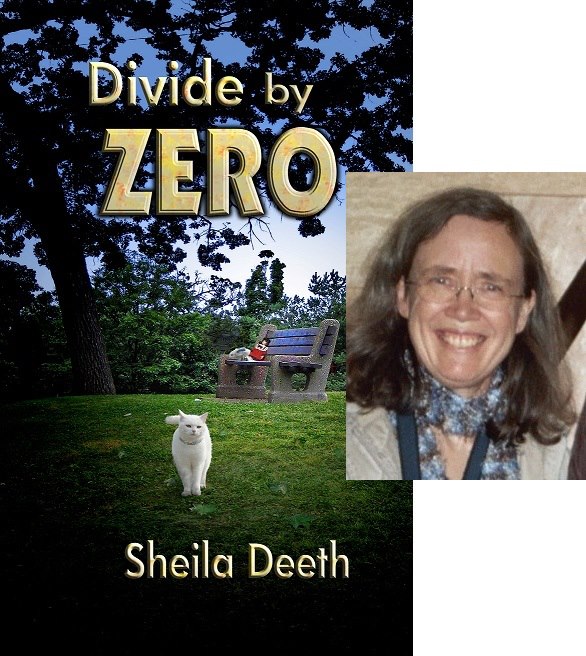
A couple of months ago, Malcolm R. Campbell, author of “The Sun Singer” and “Sarabande”, invited me to participate in a blog chain, where everyone who is tagged answers a few questions about their work in progess, their next big thing. Since then, I have been asked to participate by Sheila Deeth and Dellani Oakes, and I was tagged by Emma McCoy and Rami Ungar.
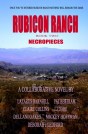 I’m not really working on anything of my own right now. I have a half-finished novel in hiatus, disjointed chapters of another novel (my attempt at doing NaNoWriMo a couple of years ago), and a short story I intended to finish this month but keep forgetting about. So, I’ve chosen to talk about Rubicon Ranch, a serial I’m writing with several other Second Wind authors. The first book in the series, Rubicon Ranch: Riley’s Story is available online or as a free download in the format of your choice. Currently, we are working on the second book in the series, and when this book is finished, we will continue with the serial in the hopes that one day it really will be the next big thing.
What is your working title of your book?
Rubicon Ranch: Necropieces
Where did the idea come from for the book?
This is a continuation of the Rubicon Ranch serial. It was conceived as a blog promotion, and it captured the imagination of several Second Wind authors. We each created a character and have sole creative control of that character, which makes the serial seem like a cross between a novel and a role playing game.
What genre does your book fall under?
Mystery, suspense, thriller. Take your pick.
Which actors would you choose to play your characters in a movie rendition?
My character is a forty-something widow, five feet five inches tall, grey eyes, brown hair, fit, oval face, flawless skin. Does that sound like anyone you know? If not, I’d choose any famous actress to play the part to make sure the movie was a success.
What is a brief synopsis of your book?
Residents of Rubicon Ranch are finding body parts scattered all over the desert. Who was the victim and why did someone want him so very dead? Everyone in this upscale housing development is hiding something. Everyone has an agenda. Everyone’s life will be different after they have encountered the Rubicon. Rubicon Ranch, that is.
Will your book be self-published or represented by an agency?
It will be published by Second Wind Publishing since they are the ones sponsoring the project.
How long did it take you to write the first draft of your manuscript?
We’ve been working on the current Rubicon Ranch story about eight months, and it’s not yet finished. You can find the work in progress here: Rubicon Ranch: Necropieces
What other books would you compare this story to within your genre?
I don’t know of any other book like this. It’s written by eight different authors, each taking a turn to write their chapter. We are writing blind — no outline, no idea of who is the killer, and we won’t know until the end. The authors are all presenting their character as a villain, and at the end, we will decide which one did it.
Who or what inspired you to write this book?
I did a round robin with a writers group, where someone started a story, and each writer took a turn at continuing the story. So many of the authors seemed to sabotage the story and other characters by introducing ridiculous elements, that I wondered what would happen if there was a bit more control, where one author could not sabotage another’s efforts. And so Rubicon Ranch was born.
What else about your book might pique the reader’s interest?
You can sign up on the Rubicon Ranch blog to receive notification of new chapters of Rubicon Ranch: Necropieces as they are posted, or you can check back every week. Things are heating up, and each character’s secrets are being revealed. I hope you will stop by Rubicon Ranch and join the fun! Several wonderful Second Wind authors are involved in the project: Dellani Oakes, Deborah J Ledford, Lazarus Barnhill, Mickey Hoffman, JJ Dare, Claire Collins. And me, of course.
Several gallant bloggers have agreed to continue with this blog chain. During the week of December 3rd, look for The Next Big Thing blog posts by Joylene Nowell Butler, A.F. Stewart, Sherri Hansen, Jerold Last, and A. J. Race. It should be interesting to find out what everyone is working on!
***
Pat Bertram is the author of the conspiracy novels Light Bringer, More Deaths Than One, A Spark of Heavenly Fire, and Daughter Am I. Bertram is also the author of Grief: The Great Yearning, “an exquisite book, wrenching to read, and at the same time full of profound truths.” Connect with Pat on Google+
 Hi, Rami. Good to talk to you! What is your book called?

 When I first got the internet in 2007, I embraced it as if it were a wonderful new friend. At the time, my mother was dying and my life mate/soul mate was sick. There was nothing I could do about either of those circumstances, and the internet gave me a place to escape from my real life.
 I give my blog spam folder a quick look now and again to make sure that non-spam comments don’t get relegated to spam limbo. Sometimes the spam comments are totally absurd, such as this one: Nice tips. It is actually incomprehensible opinion now, but also from general, that usefulness in addition to significance is usually overwhelming. Thanks once again and all the best.











What Do You Do If Someone Posts an Insulting Comment on Your Blog?
November 28, 2012 — Pat BertramFor one thing, my posts tend not to be controversial — they’re more of a way of chronicling my journey through life and the writing life. It’s hard for someone to argue that I’m getting it wrong when I can’t get it wrong. I’m being me, and who can argue with that?
For another thing, my readers tend to be intelligent and kind, and they give thoughtful responses that add to the conversation instead of posting negative comments that bring the discussion to an abrupt end.
The other day, however, someone left an insulting comment on my article How Many Books Are Going to be Published in 2012? (Prepare for a Shock) that I didn’t know how to handle. That is not my favorite post by any means, in fact, it’s one of the few I wish I had never written. I’d only written the article as a way of trying to make sense of the current book climate and to show the meteoric increase in the number of books available, not to establish myself as any authority on the subject. And yet it’s become my most quoted article, and the one most frequently linked to.
It’s no wonder that an insulting remark landed on the post. Someone commented: “why would anyone bother to pay attention to a blog which starts off with uninteresting stuff about the author, and then gives data without a source? takes all types, I guess.”
I guess it does take all types. When I see an article that doesn’t lead up to the hype, I merely pass on by without stopping to leave a comment. But, for whatever reason, that person left a comment. I didn’t know whether to delete it or approve it. And if I posted it, I didn’t know whether to respond to it or ignore it. Admittedly, it’s not much of an insult, but it still put me in a quandary.
I asked my blogger friends on Facebook what they do in such a circumstance, and got a whole range of answers from “delete it” to “find where the person lives and go beat them up.” Some people thought that if it had merit or if it said more about the commenter than me, that I should post it but not respond. Some said that if it was a business blog, to delete the comment, that it wasn’t good to have snipers in your store.
The comment now seems innocuous, and the commenter has a point, why would anyone bother to pay attention to that particular blog post? (Though I did give a source, just not a link to the source.) Still, I left his remark in comment limbo until just a few minutes ago. I found the deciding factor in You and Your Blog Suck: 7 Steps to Responding to Negative Comments, a blog post by Marc Ensign. He said, “By deleting it you are telling your readers that they are welcome to say whatever they want as long as they agree with you. The only time I would consider deleting a post is if it was obscene or offensive to your readers.”
Since the comment under consideration is not obscene, not offensive to my readers, not even much of an insult, I took a deep breath and approved the comment.
So, what do you do if someone posts an insulting remark on your blog? Do you delete it or do you approve it so posts where everyone can see it? If you post it, do you answer it or ignore it?
***
Pat Bertram is the author of the conspiracy novels Light Bringer, More Deaths Than One, A Spark of Heavenly Fire, and Daughter Am I. Bertram is also the author of Grief: The Great Yearning, “an exquisite book, wrenching to read, and at the same time full of profound truths.” Connect with Pat on Google+