Meet Malcolm R. Campbell and “The Seeker”

Malcolm R. Campbell is the author of the contemporary fantasies, The Sun Singer, Sarabande, The Seeker, and the satire, Jock Stewart and the Missing Sea of Fire. He is also a prolific blogger, posting interesting articles and reviews, and collecting Book Bits, the most fascinating and relevant book-related links on the internet.

I recently interviewed Malcolm to find out more about his new book and his writing practices. The interview is posted on my Pat Bertram Introduces . . . blog, but I’m posting a few responses here to whet your appetite to read more. I hope you will enjoy meeting Malcolm R. Campbell.

SeekerCoverMalcolm, What is your book about?

In The Seeker, David and Anne meet while working as seasonal employees at Many Glacier Hotel in Glacier National Park. He comes from the Montana high county where he is at home with totem animals, magic and mountain climbing. She comes from the Florida Panhandle where she is at home with botany, beaches and coastal swamps. Their intense summer romance leads them to believe they’ll be lovers forever. Typically, the realities of college life in separate towns get in the way. Then, when David’s intuition tells him Anne is in danger, he uses ancient magic to rescue her. However, cheating fate brings consequences and misunderstandings that threaten to drive them apart.

What inspired you to write this particular story?

The story was inspired by my work as a summer employee in Glacier National Park as well as my love of both the Rocky Mountains and the Florida Gulf Coast where I grew up. To my Florida friends, my going to Montana for summer work and Colorado for summer school was tantamount to traveling to another planet. The worlds are so different. So, I wondered whether two people from such diverse regions could maintain a relationship once the summer was fading away into the past.

How much of yourself is hidden in the characters in the book?

David Ward is very much like me. We both love climbing mountains, following our intuition, and consorting with totem animals. In the upcoming second and third books of the trilogy, my experiences are somewhat similar to David’s aboard a Vietnam-era aircraft carrier in The Sailor, and my work as a college journalism instructor leads to David’s teaching work in The Betrayed.

Tell us a little about your main characters. Who was your favorite? Why?

David’s grandparents, the medicine woman Katoya, and the sheep rancher Jayee, are very influential in his life. Katoya teaches in magic. Jayee teaches him logic and the practical work labor-intensive jobs. Katoya and Jayee come from different worlds, having married for reasons of necessity, so they’re at odds with each other about almost everything. I had fun writing about their love/hate relationship and how it impacted their grandson. Yet, I don’t let them steal the show from protagonist David Ward, a mountain climber who really would refer working on the railroad to going to college, and Anne who is a very earth-centered, environmentally conscious young woman who doesn’t like what we’re doing to the planet.

Click here to read the rest of the interview: Malcolm R. Campbell, Author of “The Seeker”

You can find Malcolm on his website at http://www.malcolmrcampbell.com as well as on his Facebook author’s page at https://www.facebook.com/Malcolm.R.Campbell.Author

image001

What Would You Like to Ask a Bookstore Owner?

In an effort to combat a certain online megastore from taking total control of the book world, I am going to initiate a program to interview book store owners and give them a bit of exposure on my Pat Bertram Introduces . . . blog,  To do this, I will need questions to pose. Obviously, I will need to ask where their store is located, hours, directions so people can find them. I’ll also need to ask what sort of books they carry and if they special order.

Basic information like that gets boring after a while, so I need some exciting or at least fresh and interesting questions to ask.

For example:

askingWhat book do you wish would sell better?

What little-known book would you like to see make it big?

What is your reading preference?

As you can see, I am having a hard time coming up with interesting questions. If you were going to interview a book store owner, what would you ask? (Ask as a reader, I mean. I know what you’d like to ask as an author!) If you were reading such an interview, what would you like to know? If you are a book store owner, what would you like someone to ask?

Thank you for your help!

***

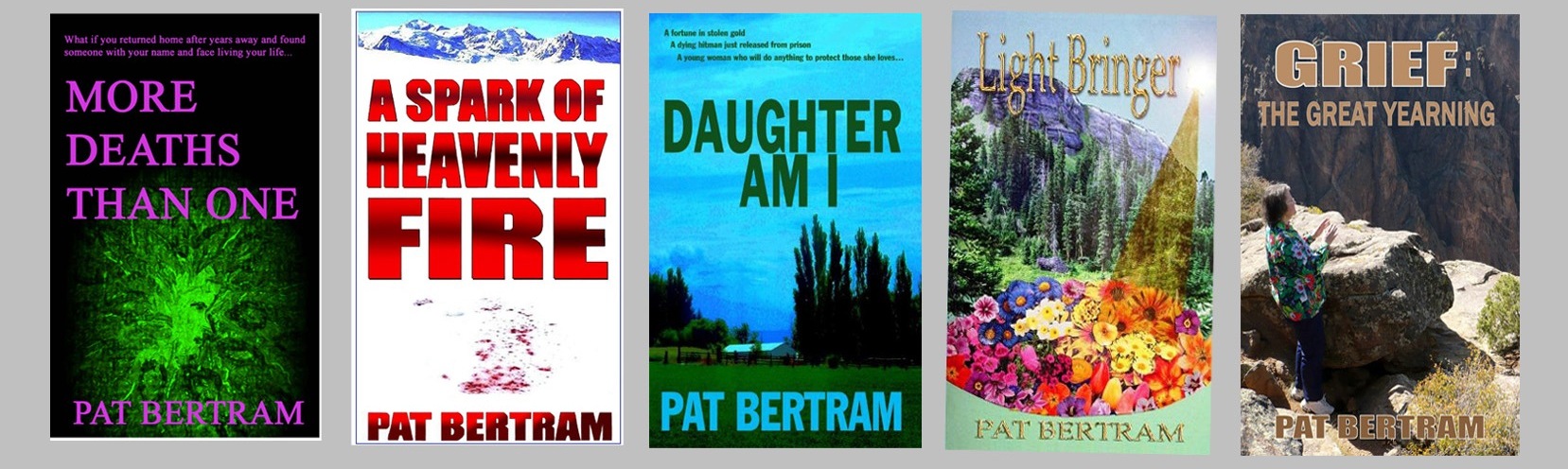
Pat Bertram is the author of the suspense novels Light Bringer, More Deaths Than One, A Spark of Heavenly Fire, and Daughter Am I. Bertram is also the author of Grief: The Great Yearning, “an exquisite book, wrenching to read, and at the same time full of profound truths.” Connect with Pat on Google+. Like Pat on Facebook.

What is Wrong With Using a Prologue?

Most agents, editors, and publishers frown on prologues because they claim that readers skip them.

Perhaps that’s true. I myself am not a fan of prologues. Some writers have the appalling habit of using a prologue as an information dump, telling readers things they think they need to know rather than presenting the material a bit at a time when it is needed. Some writers have the even more appalling habit of augmenting a poor beginning with a prologue that is not really a prologue but more of an interlogue, an excerpt taken from the middle of the book, copied and pasted into a prologue. While this excerpt might create suspense and keep us reading through a less than stellar beginning, it is not necessary to the story since the material is a duplication, and we feel cheated when we reread it during the course of the book.

I don’t even have much use for true prologues, which present events that happen before the story begins. The main rule in writing is “everything in service to the story.” If a prologue does not advance the story, if it is not as exciting as the rest of the book, then it should be removed and any essential information presented during the course of the story.

Sometimes, however, a prologue is necessary, especially if important events take place years before the main story. Occasionally, lbmugto get past the stigma of a prologue, authors will label the pre-story chapter “Chapter One.” To call a prologue “Chapter One” does not make it any less of a prologue, and it confuses readers, who think they are reading one story and find out they are reading another.

Despite the cautions about prologues, I used one in Light Bringer. It is a true prologue in that the events take place thirty-five years before the present day action, but I do something that is frowned on even by those who see nothing wrong with prologues: I introduce a character who does not appear in the body of the work, only mentioned in dialogue.

When I rewrote Light Bringer before submitting it to Second Wind Publishing, I considered getting rid of the prologue but I kept it for three reasons: I wanted readers to experience for themselves the events that precipitated the story, it was the way I originally conceived it, and I loved the image of tiny footprints in the snow. The prologue might seem like a darling, a word used by William Faulkner to describe the parts we love but that have no real function in the story, but without the prologue, the story loses some of its immediacy. Being told of a radiantly special baby being found on a doorstep is entirely different from experiencing it for ourselves through the eyes of the staid woman who found her.

And if readers skip my prologue? Well, there’s not much I can do about that. The truth is, there is there is nothing wrong with a prologue as long as it has a hook at the beginning, has conflict, and is written with immediacy as a scene, just as with any other chapter.

If you’d like to read the prologue, click here: Light Bringer by Pat Bertram

***

Pat Bertram is the author of the suspense novels Light Bringer, More Deaths Than One, A Spark of Heavenly Fire, and Daughter Am I. Bertram is also the author of Grief: The Great Yearning, “an exquisite book, wrenching to read, and at the same time full of profound truths.” Connect with Pat on Google+

Foreshadowing and Backshadowing: Making Our Writing Seem Inexorable

I’m not one of those authors who are so overflowing with ideas that they can sit down and just let the words spew out of their fingers onto the page. I have to think of everything, which is why beginning a novel or creating a new character is so hard. I am faced with a universe of choices where all things are possible.

What am I going to write? How am I going to write it? First person or third? Sassy, sarcastic, serious? Who is going to be the main character? What does she most desire? Who or what is stopping her from fulfilling this desire? What does she look and act like? What are her internal traits, both her admirable ones and less admirable ones? Who are her allies? Who are her mentors?

askingAnd those choices lead to other choices. What does the character need? (As opposed to what she wants.) Is she going to get what she wants or is she going to get what she needs? For example, maybe she wants to be a homebody, to marry the boy next door, but what she and the story need are for her to become a senator and possibly leave the boy behind.

And so the choices continue, each choice narrowing the story’s universe a bit more.

One of the best parts of writing for me is when the weight of those choices become so great that the answer to future choices can be found in past ones. It gives the story a sense of inexorability, as if there were always only one way to tell the story.

For example, yesterday I wrote about creating a new character. Although Lydia was not originally my creation, but instead was an offscreen character created by Lazarus Barnhill in the first book of Rubicon Ranch, the serialization I am writing online with other Second Wind authors, I have adopted her as my own. Even if readers don’t remember who Lydia is, she will still pull the first book into the third, connecting them in a seemingly inexorable way, by making the sheriff confront his past. Ideally, it will seem as if this was our intention all along, with the first book foreshadowing the third when it is actually the third book backshadowing the first.

Lydia being a previously mentioned character narrows my choices, since she already has a name and a past, but there is still plenty of scope for choices. And in the end as in the beginning, writing is about the choices we make.

***

Pat Bertram is the author of the suspense novels Light Bringer, More Deaths Than One, A Spark of Heavenly Fire, and Daughter Am I. Bertram is also the author of Grief: The Great Yearning, “an exquisite book, wrenching to read, and at the same time full of profound truths.” All Bertram’s books are published by Second Wind Publishing. Connect with Pat on Google+

Creating a New Character

J J Dare, author of False Positive and False World, delights in creating evil characters. A fellow collaborator in the Second Wind serialization, Rubicon Ranch, J J Dare created the monstrous victim in Rubicon Ranch: Necropieces, the second book of the series, along with a couple of his offspring. She calls her evil characters Bad Wasps.

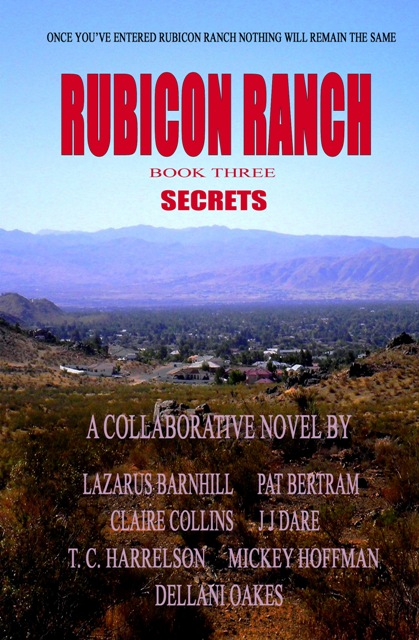
We’re starting a new book,  Rubicon Ranch: Secrets, and seeing how much fun J J Dare has with her evil characters, I’d considered exchanging my ongoing character for a bad wasp, but my character, Melanie Gray, still has so much to accomplish that I can’t just dump the poor woman. She needs to find out who killed her husband and why, and she needs to resolve her feelings for the misogynistic sheriff.

I considered writing another character in addition to Melanie, and I almost gave up when I couldn’t think of a character I’d be willing to spend the next year with, but then I discovered Lydia Galvin. Or rather rediscovered her.

Lydia was an offscreen character in the first book of the series, Rubicon Ranch: Riley’s story — Sheriff Bryan’s lover. Told from the sheriff’s point of view, she was a grasping woman who wanted him to divorce his wife and marry her, but when he wouldn’t fall in with her schemes, she ended up turning him in to the disciplinary committee.

Here’s the excerpt (written by Lazarus Barnhill):

“Anyway, Lydia Galvin . . . Lieutenant Lydia . . . she and I had an affair. What Lydia wanted was love. And she wanted me. She could not believe I didn’t love her to the extent she loved me. She wanted me to leave Monica. When I wouldn’t, she threatened to tell her. I told Monica first, as a preemptory strike. Lydia had visions of confronting Monica. Boy was she surprised when Monica confronted her. Monica told her to be content with what she had with me, that she was going to mess up all our lives if she kept on.”

Bryan paused for a reaction from Melanie, but her serene face gave no indication of her thoughts.

He took a sip of tea. “Somehow Lydia got the idea that if she came between me and my career, between me and my marriage, I would magically realize how much I cared for her. Once she told the right people on the force what was happening, the disciplinary procedures couldn’t be stopped. And of course discipline issues on the police force become public record. I had been the beloved, fair-haired boy before. It was so totally different to become the pariah. Lydia came to me—even after I had cleaned out my office and watched them paint over my name on my parking space. She came to where I was standing and said, ‘Can’t you understand how much I love you?’”

“What did you say to her?”

“I said, ‘I’m still licensed to carry a sidearm in California and if you come near me again I’m going to shoot you between the eyes.’”

On rereading the passage, I realized how much of a philanderer’s point of view it portrayed. In trying to see the situation from Lydia’Lydias side, I got the impression of a woman, perhaps a bit lost, perhaps hard used by the sheriff who obviously wanted only one thing from her, and it wasn’t the love she so desperately craved. It must have hurt her deeply to try one last time to connect to the man she loved, and to have him threaten to kill her. Might this (and whatever in her background that made her so desperate for love in the first place) have turned her into a stonehearted woman willing to kill to serve her ends?
I’ll find out in the coming months as I develop the character. It should be fun to discover if she’s a bad wasp or merely a woman who’s had too much pain in her life.

f you have not yet checked out Rubicon Ranch, you can do so here: Rubicon Ranch.

***

Pat Bertram is the author of the suspense novels Light Bringer, More Deaths Than One, A Spark of Heavenly Fire, and Daughter Am I. Bertram is also the author of Grief: The Great Yearning, “an exquisite book, wrenching to read, and at the same time full of profound truths.” Connect with Pat on Google+

Rubicon Ranch: Secrets — The Story Begins!

RRBookThreemidsizeRubicon Ranch is a collaborative and innovative crime series set in the fictional desert community of Rubicon Ranch and is being written online by the authors of Second Wind Publishing. The very first chapter of the very first book (Rubicon Ranch: Riley’s Story) was posted on October 24, 2010, and we are still going strong! In fact, we are getting better and better. Seven authors, including me, are involved in the current story — Rubicon Ranch: Secrets, which is shaping up to be a psychological thriller.

The  body of a local realtor is found beneath the wheels of a blow-up figure of a Santa on a motorcycle. The realtor took great delight in ferreting out secrets, and everyone in this upscale housing development is hiding something. Could she have discovered a secret someone would kill to protect? There will be suspects galore, including a psychic, a con man, a woman trying to set up an online call-girl service, and the philandering sheriff himself. Not only is the victim someone he had an affair with, but he will also have to contend with an ex-wife who has moved back in with him and a jilted lover, both with their own reasons for wanting the realtor dead.

Although some of the characters were introduced in Rubicon Ranch: Riley’s Story, the first collaboration in the series, and further developed in Rubicon Ranch: Necropieces, Rubicon Ranch: Secrets is a stand-alone novel, so don’t worry if you are new to Rubicon Ranch. A new chapter will be posted every Monday on the Rubicon Ranch blog. I’m posting the first chapter here, but if you don’t want to miss further chapters, please go to the blog and click on “sign me up” on the right sidebar to get notifications of new chapters.

We hope you will enjoy seeing the story develop as we write it. Let the mystery begin! Whodunit? No one knows, not even the writers, and we won’t know until the very end!

(If the Christmas theme seems unseasonal, well . . . considering how long it takes to write a book at the rate of a chapter a week, in a few months, the season will catch up to us!)

Chapter 1: Melanie Gray
by Pat Bertram

Sunday, December 22; 7:05pm

Melanie Gray typed THE END, then sat back and studied the words on the computer screen. She’d found no satisfaction in telling the story of famed horror writer Morris Sinclair’s macabre life and death, and she felt no elation now that she’d finished the task. The evil man should have been buried in unhallowed ground and left to rot rather than be immortalized in a book, but she’d needed the money her publisher had offered. With the generous advance, she would be able to devote herself to finding out who killed her husband five months previously and, more importantly, why the murderer wanted Alexander dead. Morris had wooed death his whole life, so it was no surprise that death had come for him, but Alexander’s murder could not be so easily dismissed.

Tears stung Melanie’s eyes. She scrubbed the tears away, furious at herself for still grieving. She’d always considered herself a strong woman, up to any task, and yet she couldn’t write “the end” to her grief.

Damn you, Alexander! How could you do this to me?

She rose stiffly, stretched to get the worst of the kinks from her body, and tottered to the front closet for her coat. Except for a few hours of fitful sleep each night during the past nine weeks, she’d spent all her time at the computer, and she was sick of it. Sick of Morris Sinclair. Sick of death. Sick of Rubicon Ranch.

She opened the front door and blinked at the shadowy figures gliding through the darkness. Morris’s fans had descended on the neighborhood when news of his demise had hit the airwaves, and they had stayed when they learned that not all of Morris’s body pieces had been recovered. Dressed as vampires and zombies and ghouls of every imaginable—and unimaginable—ilk, they roamed the neighborhood and the nearby desert looking for necropieces in some sort of grisly treasure hunt.

Melanie hesitated, wondering at the wisdom of going out so late in the evening, but the twinkle of Christmas lights adorning a nearby desert willow made her set aside her caution.

Alexander had always loved Christmas, and no matter where in the world they happened to be living, he managed to find a tree and decorate it. If Alexander still lived in her memory, he’d want her to wander through the neighborhood so he could see the lights.

Smiling at the whimsical thought, she locked the door behind her and strolled down the driveway to Delano Road. Even with half the houses lit up with holiday decorations, the neighborhood seemed dark. Too many people had left the area, temporarily abandoning their homes, though the flickering of candlelight through closed curtains hinted that squatters had taken up residence in some of the empty houses.

Melanie stood at the curb, trying to decide whether to go right or left. “It’s your fault, Alexander,” she murmured. “Until you died, I never had a problem making decisions.” But now, it didn’t make any difference whether she went north or south, whether she left Rubicon Ranch or stayed. Without Alexander, everything seemed uniformly bleak.

A house across the street all at once came ablaze with thousands of small white lights. Melanie cut across the road and headed for the brightness, wishing Alexander could see the decorations for real. Lights outlined the driveway, every bush, every rock, and dripped from the eaves like dazzling falls of lace.

She walked leisurely, savoring the radiant display on Alexander’s behalf, then hurried past the next dwelling, which was dark, and slowed again at the following house to look at the whimsical blow-up figure of Santa on a motorcycle.

After the brilliance of the lights at the first domicile, she had to wait a moment to let her eyes adjust to the relative dimness of this scene. And then she wished she hadn’t hung around to get a better look. Santa, with a wide grin and an upraised hand, seemed to be gleefully running over the prone body of a woman. A mannequin, it looked like.

Melanie drew in a sharp breath. Who would create such a morbid tableau for Christmas? But then, seeing a vampire with glowing teeth run past her, she sighed. Anyone in this insane neighborhood could have done it. After Morris Sinclair’s demise, Rubicon Ranch had become a bacchanalia of death, a celebration of the worst in humanity.

A car moved along the street behind her. The headlights illuminated the scene as clearly as if it were day, and suddenly something seemed wrong. So very wrong.

The woman being run over by the cheery Santa looked stiff in the way of death, not stiff like a mannequin.

Melanie told herself to continue on, to forget the gruesome sight and enjoy the rest of the decorations, but her leaden feet refused to do her bidding. Finally, wishing she were anywhere but here, she crept closer to the scene.

She caught a faint whiff of death—like meat just beginning to go bad—and her heart beat faster.

No. No. She’d had enough of death. Alexander. Poor kidnapped little Riley Peterson. Morris Sinclair. How could so much death be associated with a community as small as Rubicon Ranch?

Melanie bent over the body and touched a finger to the side of the woman’s neck to check for a pulse, though she already knew the truth.

She fumbled in her coat pocket for her cell phone and wondered if the sheriff would continue to believe in her innocence. Hell, she didn’t believe it herself. Maybe she was some sort of Typhoid Mary when it came to death. She’d been the one who found Riley Peterson’s body out in the desert, stuffed in a television console. She’d been the one to lead the sheriff to the desert where they’d found the body of Riley’s birth father. She’d been the first one to come across a necropiece—a dismembered foot—after Morris was killed. And now once again she had found death.

She punched in 999, but when the call didn’t connect, she realized she’d used the emergency number for Britain. She cleared the number, then punched 119. Crap. Wrong again. That was the emergency number for Mozambique. Where was she? She took a deep breath, and let it out slowly.

Rubicon Ranch. Rojo Duro County. Mojave Desert. California. USA. Ah, yes. 911.

Melanie made the call, gave the information to the dispatcher, then pulled her coat more firmly around her to protect her from the chill of the high desert winter night.

She’d expected to wait a half an hour or more until the sheriff or his deputies could make the thirty-mile trip from Rojo Duro, but only ten minutes had gone by when a dark SUV pulled up to the curb, and Deputy Kelvin Midget slid out from behind the wheel more nimbly than seemed possible for such a massive man.

The SUV didn’t have official county plates, so Melanie supposed the vehicle was the deputy’s private ride. She felt a spasm of guilt at cutting into the man’s personal time, but then she remembered what Deputy Midget had once told her—that he’d lost his wife to pancreatic cancer about three year and a half years ago, and had come out west to start over so he could heal. Maybe, like Melanie, he had no real life but was just going through the motions of living.

“What seems to be the trouble, Ms. Gray?”

Shivering, Melanie pointed to the body.

Midget picked his way through the xeriscaping, got down on his haunches to check the woman’s neck as Melanie had, then rose to his feet without using his hands to shove himself upright.

“Did you see what happened?”

“No. Just found her lying here is all. Checked her pulse. Called it in.”

Midget walked around to the other side of the body, scanning the ground, his dark brow furrowed. “Did you find her purse?”

“No, but I didn’t look for it.” Melanie wondered about the deputy’s concern for the woman. It seemed more than simply a law enforcement officer’s professional interest in a crime scene. “Did you know her?” she asked.

“Didn’t you?”

“I don’t think so. I don’t know many people in the neighborhood.”

“Seth—Sheriff Bryan—thinks you notice everything.”

“Well, the sheriff thinks a lot of things that aren’t true.”

Midget made a small sound that might have been a chuckle. “Hit a nerve, did I?”

More to get away from the uncomfortable topic of the Sheriff than because she wanted to identify the woman, Melanie circled the body so she could get a better look. The woman did appear familiar at that. Aquiline nose, close set eyes, coiffed hair, manicured fingernails with a shimmering design painted atop the polish, high heels, tailored business suit.

Melanie backed away from the body. “I think she might be a real estate agent. I’ve seen her around the neighborhood.”

“Nancy Garcetti,” Deputy Midget said. “She sold me my house. Poor woman. She was such a terrible judge of character. Looked at the superficial and assumed she knew what the person was about. Kept notes of everything. You sure you didn’t find her purse?”

“Maybe the person who murdered her took it.”

“What makes you think she was murdered?”

“What else could it be? Nancy got tired, so she decided to take a nap by the wheels of Santa’s motorcycle and froze to death?” Regretting her caustic tone, Melanie huddled deeper into her coat. Had she become so used to murder that all death seemed so unnatural? But death was unnatural. A deletion of life. A void.

“People die from many causes,” Deputy Midget said. “It’s possible she had a heart attack. A stroke. Some sort of accident. A mugging gone wrong. Could be anything. We won’t know until the ME gets here.”

A tan Navigator parked behind Midget’s SUV, and Lieutenant Rosaria Frio stepped out of the vehicle.

The lieutenant looked even more like an Hispanic Barbie doll than when Melanie first met her. No emotion showed on the law enforcement officer’s beautiful face, and the dim light made her skin look plastically perfect. Only the glitter of the lieutenant’s dark eyes and her easy stride confirmed her humanity.

She greeted Deputy Midget with a nod. “You got here fast.”

“I just bought a house here in Rubicon Ranch over on Adobe Pobre Court. I told you about it. Got an awesome deal from a couple who could hardly wait to get away from the area. They said there was too much crime.”

“Imagine that.” Lieutenant Frio turned to stare at Melanie. “And here is our one-woman crime spree herself. Or maybe cadaver dog would be a better description.”

Melanie returned the Lieutenant’s gaze, but refrained from answering in kind. Lieutenant Frio seemed to have taken her in dislike when they met after Riley’s murder and her manner had only grown colder with the passage of the months. Melanie didn’t entirely blame her. If their places were reversed, she’d probably be just as skeptical as the lieutenant about her penchant for finding corpses.

Lieutenant Frio walked to body and stood over it for a moment, then slanted a glance toward Melanie. “Sheriff Bryan will be here shortly. He and his wife were dining out, and he needs to take her home first.”

Melanie remained impassive. She already knew the sheriff and his wife were back together. Melanie had talked to him a couple of times to get details for her book, and he had told her his wife had decided the celebrity-ridden area might not be such a backwater after all. He’d sounded apologetic, but other than behavior that bordered on unprofessionalism, he had nothing to apologize for. They hadn’t had an affair, not even a fling. Just a little bit of flirtation and a lot of anger.

“Can I go?” she asked.

“I’ve questioned Ms. Gray,” Deputy Midget said. “If we need her again, we know where to find her.”

Lieutenant Frio turned her implacable gaze toward Melanie. “Don’t leave the county.”

If anyone else had deadpanned such a remark, Melanie would have assumed it was either a friendly suggestion or possibly a joke, but coming from the lieutenant, the command sounded like a jail cell slamming shut.

Melanie wanted to run back to her place, but she forced herself to walk since she was sure the lieutenant would see haste as a sign of guilt. She tried not to look at the houses she passed. The joyful decorations suddenly seemed obscene.

She didn’t believe Deputy Midget’s suggestion that Nancy had died of natural causes. The missing purse hinted that something grimmer was going on. What secrets Nancy had kept in her purse? Everyone in Rubicon Ranch seemed to have something to hide. And someone—perhaps someone in one of these very houses—might have a secret they would kill to protect.

***

Pat Bertram is the author of the suspense novels Light Bringer, More Deaths Than One, A Spark of Heavenly Fire, and Daughter Am I. Bertram is also the author of Grief: The Great Yearning, “an exquisite book, wrenching to read, and at the same time full of profound truths.” All Bertram’s books are published by Second Wind Publishing. Connect with Pat on Google+

Where My Books Originated

Last night, while working on an online interview to be posted in a few weeks on a book interview site, I had an interesting epiphany. (Interesting to me, anyway.) I’ve written one non-fiction book about grief and four suspense novels, which at first glance are all completely different from one another. I did know the four novels had similar themes, but since the grief book was a personal account of my first year of grief rather than an imaginative story, I didn’t think it had anything in common with my fiction, but it does.

The unifying theme in all of my books is the perennial question: Who are we? More Deaths Than One suggests we are our memories. A Spark of Heavenly suggests we are the sum total of our experiences and choices. Daughter Am I suggests we are our heritage. Light Bringer suggests we are otherworldly. And Grief: The Great Yearning suggests we are what we love.

Untitled-1b

I’m also a bit of an iconoclast, and my books reflect that character.

Both More Deaths Than One and A Spark of Heavenly Fire debunk much of what we know about our shared past, especially when it comes to government control and human experimentation. (We have entrusted our lives to men and women who have not only not protected us from willful harm but instead have sold us out for . . . quite frankly, I’m still not sure what they sold us out for. Cash, in some cases, I’m sure. Power and political position, probably. The good of the whole at the expense of the few, possibly.)

Daughter Am I debunks some of the gangster myths that have been propagated by Hollywood.

Light Bringer debunks UFO myths, while at the same time postulates a greater UFO mystery.

And Grief: The Great Yearning debunks many of the myths about grief we have come to accept as truth.

The grief stages that Kübler-Ross proposed often don’t hold true for someone who has suffered a grievous loss, such as a child or a soul mate. In fact, those stages represented what she observed in terminal patients grieving for themselves and their own life. The final stage is acceptance, and acceptance of one’s own death is completely different from acceptance of another’s. I can learn to live without my soul mate and even accept it. I can admit that death relieved him of his suffering, but it is not my place to accept his death, since acceptance carries a connotation of it being okay, and I will never believe that it is okay for him to be dead. (For articles about the real stages of grief, see: The Mythic Stages of Grief, Grief and Lingering Feelings of Resentment, and Why “Grief: The Great Yearning” is Important.)

I suppose it makes sense that the same themes appear in all my books, no matter what the subject matter is since they all originated in the same place: a questioning mind that has often pondered the questions: Who are we? and What is life all about?

***

Pat Bertram is the author of the suspense novels Light Bringer, More Deaths Than One, A Spark of Heavenly Fire, and Daughter Am I. Bertram is also the author of Grief: The Great Yearning, “an exquisite book, wrenching to read, and at the same time full of profound truths.” All Bertram’s books are published by Second Wind Publishing. Connect with Pat on Google+

Pick a Shamrock and See What Ebook You Won!

Pick a shamrock and win a free ebook from Second Wind Publishing! Each number represents a Second Wind novel — even numbers for romance and chick lit; odd numbers for mystery, mainstream, and adventure. So, do you feel lucky? Go the the Second Wind blog (just click on the photo) and follow the directions. You won’t win a pot of gold, of course, but you will get a coupon for a free ebook in the format of your choice. Who knows, you might even win one of my books! (Hint: mine would be an odd number.)

shamrocksbb copy

Best of luck to you!

Offer ends March 24, 2013.

My Favorite of the Books I Have Written

A friend asked me if I had a favorite of the books I have written. The truth is, each is a favorite in it’s own way.

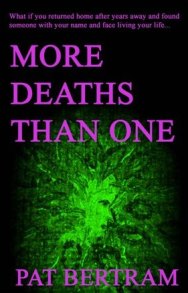
More Deaths Than OneMore Deaths Than One is my favorite because of all the rewrites. I rewrote it four different times, each time making it better, and so I learned to rewrite and to edit. I also liked the ironies that showed up in the book.

Click here to read the first chapter: More Deaths Than One

***

A Spark of Heavenly FireA Spark of Heavenly Fire is my favorite, because halfway through I realized I’d learned how to write, and because it is a solid, classic story of life and love in impossible times.

Click here to read the first chapter of: A Spark of Heavenly Fire

***

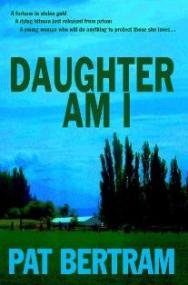
DAIDaughter Am I is my favorite because of the fun we (my mate and I) had coming up with the great characters, and because it was the fulfillment of a desire to write a “hero’s journey” story.

Click here to read the first chapter of: Daughter Am I

***

Light Bringer is my favorite because it’s the culmination of a lifetime of research, combining modern and ancient myths into a plausible whole, and because some of the descriptions were stunningly beautiful.

Click here to read the first chapter of: Light Bringer

***

Grief: The Great Yearning is my favorite because writing it helped me get through the worst year of my life, and because unwittingly, it turned out to be the story I always wanted to write, the story of a love that transcended time and physical bonds, told with wisdom and sensitivity.

***

Pat Bertram is the author of the suspense novels Light Bringer, More Deaths Than One, A Spark of Heavenly Fire, and Daughter Am I. Bertram is also the author of Grief: The Great Yearning, “an exquisite book, wrenching to read, and at the same time full of profound truths.” Connect with Pat on Google+

My Wish List

Wish lists, such as things you want to accomplish before you turn thirty (or forty or fifty) or things you want to do before you kick the bucket (I finally figured out that’s what a bucket list is!!), seem to be perennial favorites as blog topics, so I though I’d share my list:

1.

Yep that’s it. A total blank. Looking back, there are only two things that were ever on my mental list of things I wanted to do with my life when I grew up: read and write. For most of my life, I indulged my habit of reading rather than doing something that might have been more lucrative, such as striving for a high-powered career. I also tried to write a novel when I was young and it was one of the regrets and sadnesses of my life to discover that I had no talent for fiction, yet eventually, I did become an author. (Proof that you don’t need an innate talent for writing but can learn how to tell a story in a compelling way, which in itself is sort of a talent.)

There are things that I would have added to a life list if I had been aware that I would experience them. I would have wanted to be deeply connected to another human being, to have the privilege of being there at the end of his life, though I had never aspired to doing either of those before they happened. I would have chosen to experience for a brief time such disparate places as a mesa in the high plains of Colorado, the edge of the north woods of Wisconsin, the high desert of California, but again, those are not things I would ever have added to any list since I’m not easily uprooted. I would have also wanted to reconnect with my best friend from high school, and now I’ve done that. (The visit was wonderful, by the way, and wonderfully strange considering all the years that have passed since I last saw her.) Besides, now that I’ve done these things, I would have crossed them off any list anyway, and the list would still be blank.

A couple of times I tried to do the creativity stimulation exercises in Julia Cameron’s The Artist’s Way, and I generally stuck with the morning pages (three pages every morning to write whatever came to mind) and the artist’s date (a weekly date with yourself) but always, when I got to the part about making lists, the excercises screamed to a halt. There are various exercises in the book involving lists: What would I try if it weren’t too crazy? What would I do if it weren’t too selfish? What five things would I never personally do that sound like fun? What do I wish for?

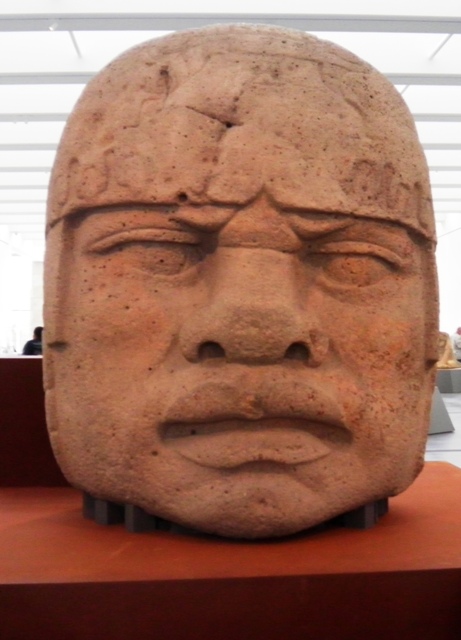
I’d like to be able to make a living with my books, of course, but other than that, no wish comes to mind. I’ve never had any desire to go to Paris or London, never had any desire to travel to exotic locales to see ancient ruins, though I wouldn’t mind seeing such places if I could figure out a way of simply being there without having to make the long trip. I did have a desire to see the Olmec heads, and one came visiting at a museum nearby, so I satisfied that desire.

I’m not sure it’s possible for me to become a wisher. I used to want things, of course, but too often I didn’t get what I wanted, so I learned not to want. I know it’s important for a character to want something — it’s what makes them compelling. But is it important for us to want things? Or is it better for us to be more zen in our approach, to accept what comes our way? This is where I am now, stuck somewhere in the middle of those two questions.

Maybe this could be my list?

1. Find something to wish for.
2. Wish for it.

***

Pat Bertram is the author of the suspense novels Light Bringer, More Deaths Than One, A Spark of Heavenly Fire, and Daughter Am I. Bertram is also the author of Grief: The Great Yearning, “an exquisite book, wrenching to read, and at the same time full of profound truths.” Connect with Pat on Google+