Story Excerpt From “Second Helpings” ~ The Gift by Pat Bertram

Second Helpings
An Anthology of Holiday Recipes and Short Stories
From Authors of  Second Wind Publishing

Second Helpings

A perfect gift for short story lovers and food connoisseurs!

From sweet childhood remembrances to fanciful solutions of family dramas to romantic relationships that begin–or end–during the holidays, Second Helpings is an anthology of stories and memories, but most especially of recipes. Our end-of-year celebrations are occasions that bring reunions with unforgettable feasts and that one special, treasured dish. At the end of each story, vignette, reminiscence, you’ll find a recipe or collection of recipes that will make your next holiday memorable as well.

EXCERPT FROM:

The Gift
By
Pat Bertram

Monica Dryden hummed along with the Christmas carols on the radio as she pulled the chocolate chip cookies out of the oven. They were David’s favorite, and she’d baked them for him every Christmas Eve for as long as they’d been together—five years now—continuing a tradition his mother started when he was a boy.

Still humming, Monica transferred the baked goods from the cookie sheet to a plate she’d purchased for the occasion—white china with a cheerful holly border. Her family had been too poor and too indolent to do much for Christmas, so making the holidays special for David brought her extra joy.

David Hollister. Even his name seemed to promise holiday cheer.

She put the plate of cookies and a glass of milk on a tray, added a sprig of holly from the bowl in the center of the table, and bore her offerings to the living room where David watched television.

He didn’t take his eyes from the screen when she nestled against him, but he didn’t pull away either, as he sometimes did. She smiled to herself, thinking how pleased he would be with the burgundy sweater and pinstriped shirt she’d bought him.

“Do you have to do that?” David asked.

“Do what?”

“You’re humming.”

She clapped a hand to her mouth. “I’m sorry. I didn’t realize—”

“Are those chocolate chip cookies?”

“Of course.”

He clicked off the television and turned to face her. “We have to talk.” He spoke the words softly, almost kindly, but still they chilled her.

“Talk about what?” she asked warily.

“It’s not working out.”

“What’s not working out?”

“Us. We’re not right for each other. You’re too . . . predictable.”

She stared at him as if he’d spoken in an alien tongue. “Predictable? Me? You’re the one who insists on my doing the same things the same way. Remember those throw pillows I bought? You said—”

“That’s the old me. The new me wants . . . change.”

Her head snapped back as if she’d been hit. David wanted change? Since when? She opened her mouth and said the only thing that came to her stupefied mind. “Do you want me to make you a different kind of cookie?”

“This isn’t about cookies. It’s about . . .” He looked at her, expecting her to supply the words as she often did. She usually knew what he was thinking and could easily fill in his missing words, but now she couldn’t even hazard a guess.

David’s eyes shifted from side to side as if he were searching frantically for a way out of the conversation. Finally his gaze settled on his hands. “I want a divorce.”

Monica froze, then, getting control of herself, she pulled her shoulders back and lifted her chin. “You can’t have a divorce.”

He jumped to his feet and all but screamed, “I knew you’d be difficult about this. Why can’t I have a divorce?”

“We’re not married,” Monica said evenly.

He gaped at her for a moment, then a grin that broke her heart spread across his face. “That’s right. I forgot.”

Monica slumped forward, elbows on knees, head in her hands. He forgot? How was that possible? Just last week they’d talked about getting married. No . . . wait. She’d talked about getting married. He’d nodded with a faraway look in his eyes that made her think he’d been seeing their future together but apparently only meant he hadn’t been listening.

David’s voice seemed to come from a long way off. “I’ll guess I’ll be leaving.”

Monica jerked upright. “You’re leaving? But this is your apartment.” And then, all in an instant, she understood. “Who is she?”

***

Second Helpings is available in print and all ebook formats from Second Wind Publishing.

***

Pat Bertram is the author of the suspense novels Light Bringer, More Deaths Than One, A Spark of Heavenly Fire, and Daughter Am I. Bertram is also the author of Grief: The Great Yearning, “an exquisite book, wrenching to read, and at the same time full of profound truths.” Connect with Pat on Google+

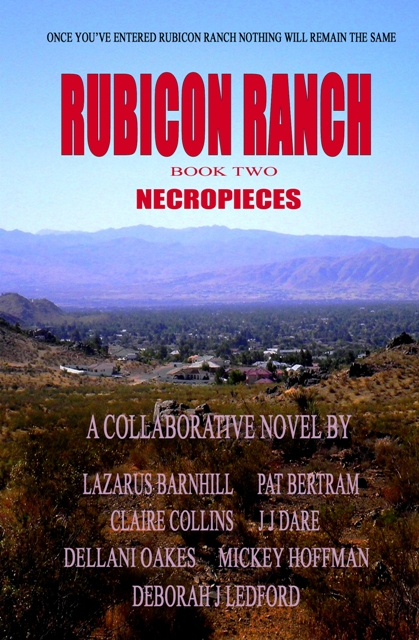
Rubicon Ranch: Necropieces — The Story Continues

Rubicon Ranch is a collaborative and innovative crime serial set in the desert community of Rubicon Ranch and is being written online by the authors of Second Wind Publishing. Seven authors, including me, are involved in the current story — Rubicon Ranch: Necropieces.

Residents of Rubicon Ranch are finding body parts scattered all over the desert. Who was the victim and why did someone want him so very dead? Everyone in this upscale housing development is hiding something. Everyone has an agenda. Everyone’s life will be different after they have encountered the Rubicon. Rubicon Ranch, that is.

Although some of the characters were introduced in Rubicon Ranch: Riley’s Story, a previous collaboration, Rubicon Ranch: Necropieces is a stand-alone novel. A new chapter is posted every Monday.

We hope you will enjoy seeing the story develop as we write it. Whodunit? No one knows, not even the writers, and we won’t know until the very end!

Chapter 25: Melanie Gray
by Pat Bertram

Melanie paced her rented house, wandering through the great room to the bedroom, then up the stairs to her loft office to stare out the window. The clouds that had skirted Rubicon Ranch all day yesterday had settled over the town in the early morning hours. The rainstorm had now weakened to a soft drizzle, but floodwaters were swirling out of the desert and down the middle of the street like dirty bath water in search of a drain.

Melanie half expected to see body parts floating by, but it had been forty-eight hours since she had found the ravens breakfasting on the disembodied foot, so perhaps by now all the necropieces had been discovered. Shivering, she turned from the window, trudged down the steps to the great room and then into the bedroom. She’d spent most of the fifteen weeks since Alexander’s death roaming the desert, and she found it almost impossible to relax during this enforced incarceration. If she were any kind of photographer instead of an amateur shutterbug, she’d be out in the desert despite the rain, chronicling the way the runoff was recreating the desert floor, but her tiny camera wouldn’t stand up to the moisture, and then where would she be?

She plodded back through the great room and up the stairs again. Her cell phone rang, and for just a second, her spirits rose. Alexander! He was finally calling to tell her he was coming back. Just as abruptly, the realization that he was dead hit her like a physical blow, and tears spilled down her cheeks. Why couldn’t she remember that he would never come home? His body had been cremated and the ashes stored in a square brass urn sitting atop the dresser until she could take them high up into the Rocky Mountains in Colorado and scatter them.

By the time she reached her bedroom where she’d left her cell phone on the nightstand, the phone had stopped ringing. The tiny screen showed the number for her agent, and when the phone rang again, she considered not answering. What could the woman say that hadn’t been said a dozen times before? Melanie already knew her deadline had passed. She already knew she owed the publisher either the book or the return of the advance. She already knew . . . Oh, crap. It would be better to talk to Dottie and get it over with.

“Yes?” she said, hating the hesitancy she heard in her voice.

“Dahling!” Dottie chirped. “I’ve been calling and calling. Have I got good news for you! I’ve been talking to Jack, and he says you can have all the time you need to finish the desert book. He’ll even hire a photographer for you. And he’ll send you five hundred thousand dollars, though I’m sure I can get him up to a million.”

“What does he want from me? A kidney?” Jack Nolan, her publisher, had a reputation for wringing every last bit of creative effort from his authors while paying the least possible advance. He got away with it because, despite his miserly ways, he was scrupulously honest, remitting every penny of the royalties his authors earned.

Dottie chuckled. “So cynical, dahling. It’s perfect, really. You’re there. You know the people and the place. And from what I understand, you live next door to the Sinclairs.”

“No,” Melanie said, without a hint of uncertainty in her tone.

“You don’t live next door to them? My sources—”

“I mean, no. I will not write whatever book Jack wants me to write. I’m going to finish the desert book and then . . .”

“And then what? Knowing Alexander, he probably left you not only broke but also in debt. Someone is going to write the book about Morris Sinclair. It might as well be you.”

“Wait a minute,” Melanie said. “How do you know what’s going on here?”

Dottie laughed. “The whole world knows. It’s everywhere. On television, Facebook, Twitter. It’s such a delicious story. The author of the infamous ‘Necropieces’ series has himself become a series of necropieces. His fans don’t believe he’s permanently dead. They are holding vigils, waiting for him to come back to life. And his head was found in the house where that little girl died. Riley? Is that her name? The girl that was kidnapped as an infant and then killed by her biological father? How can you not want to write the story of Rubicon Ranch? It’s going to be huge. Humongous.”

“Not interested.”

“Wait! There’s more!” Dottie said. “You gotta love this stuff. One of the suspects in Morris’s murder is Tara Windsor.”

“Who?” Melanie asked.

“You had to be living out in the boonies somewhere not to have heard of Tara. Oh, right—you’ve been out of the country for the past umpteen years. Tara is an actress. She was in that movie with that actor, you know, the one with the gorgeous abs? No, I guess you don’t know. Anyway, it turns out the suspect isn’t Tara at all. Tara is in Cabo with her pool boy. Don’t you just love it?”

Melanie sank down onto the bed, suddenly weary. “No.”

“And then there’s you,” Dottie said slyly.

Melanie sat up straight. “Me? What about me?”

“The cops say you’re a suspect. You knew that, right? Jack says if you killed Morris and tell all the gory details, he’ll up your advance to two million.”

A suspect. Melanie had presumed the Sheriff’s insinuation that he considered her a suspect was his way of manipulating her and keeping her off balance, but if he or someone in the Sheriff’s department had given out her name, then she really had a problem. She heard the echo of herself screaming at Morris, “You leave me alone, Sinclair, or I’ll be shooting your dead body parts.” Could she have been more foolish?

“Do you know a good lawyer?” She gave a small laugh, wanting Dottie to think the question a joke, but fear clutched at her belly with clammy fingers. Maybe she’d have to write Morris’s story in order to pay for a defense attorney.

“You might not be a celebrity on a par with Morris or Tara,” Dottie said, “but you and Alexander have quite a following. Since there’s been mention of your involvement in Alexander’s death—”

“Who told you I was involved in Alexander’s death?” Melanie demanded.

“Just a guess.” Dottie voice sounded smug, as if she’d caught Melanie out in a secret. But there was no secret when it came to Alexander’s death. Just shoddy police work. “So many important deaths in such a small place make for a good story,” Dottie added.

“All the deaths are unrelated,” Melanie pointed out.

“Perhaps, but it’s more likely they are connected somehow. After all, Morris had autopsy photos of that little girl, and Alexander took some photos of necropieces for Morris.”

“You knew about that?”

“Alexander accidentally included a couple of the pictures when he sent Jack a batch of desert photos.”

Melanie sighed. “Maybe you’re right. Maybe Alexander’s death had something to do with Morris and the evil that this place seems to bring out in people.”

“So can I tell Jack you’ll write the book if he gives you an advance of a million dollars?”

“No. But you can tell him I’ll consider it.”

“Good girl. I’ll see what I can do about finding you a lawyer.”

Melanie set the phone on the nightstand, and put her head in her hands. Oh, Alexander. Look what you’ve done to me. She took a few deep breaths, determined not to cry, but when the tears spilled over anyway, she jumped to her feet, ran up the stairs, and plopped in front of the computer. Immersing herself in research always helped take her mind off herself, and she needed to know more about Morris before she could give Dottie her decision.

Typing “Morris Sinclair” into her search engine resulted in over two hundred million hits. Morris’s website. Book and movie sites. Thousands of fan sites and cult groups. Blogs. Articles. She narrowed her search to “Morris Sinclair biography” and managed to piece together the story of a highly narcissistic and anti-social man in his late sixties who had started out as a normal kid, turned into a troubled and rebellious teenager, and grew into a sadistic beast during his tour of duty in Vietnam.

After Vietnam, Morris married a woman he’d only known for a few weeks. He worked as a roughneck on an oilrig and wrote tales of terror on the side. When the stories were published, they found an immediate readership. He quit work to write fulltime.

Morris and his wife had three children, two boys and a girl. His wife committed suicide while the children were very young. Or perhaps Morris had killed her? That made more sense to Melanie—what mother would kill herself and leave her children to be raised by the devil incarnate?

Although the thought of a million dollars and the freedom it could buy tempted her, Melanie did not want to spend the next few months of her life immersed in the evil that was Morris. She was all set to call her agent and turn down the deal, when the doorbell rang.

She opened the door to find Lieutenant Frio and Deputy Midget standing on her doorstep, their faces set as if in stone.

“Ms. Gray,” Lieutenant Frio said, “we’d like for you to come with us. Sheriff Bryan wants to talk to you.”

Melanie held out her hands, wrists together, but Deputy Midget shook his head. “Sheriff Bryan says not to cuff you unless you give us trouble.”

“Can I get my coat?”

Lieutenant Frio threw Melanie a stern look. “You’re not going to try anything?”

“No.” Melanie darted into the bedroom, grabbed a trench coat from the closet and tucked her phone in the pocket.

Sandwiched between the two law officers, Melanie marched out to the tan Navigator parked at the curb in front of her house. Deputy Midget opened the back door of the vehicle, put a hand on her head to guide her through the opening as if she were a common criminal, then lowered himself into the front passenger seat. The right side of the Navigator sank, and the tires seemed to scream out for relief.

Lieutenant Frio peeled away from the curb. The tires sent up huge plumes of floodwaters that broke over the vehicle, and made it seem as if they were driving through a car wash.

Melanie stared out the window, though she couldn’t see anything but the backwash of water. If she strained her ears, she felt sure she could hear Alexander’s ghostly laughter. During all their years of living in countries with no civil liberties, they had never had a single problem with the authorities, and yet now, not even four months after his death, she found herself at odds with the law.

Maybe this arrest was just another of the sheriff’s games? She had never known what he wanted from her, though when they met after she’d found Riley’s body, he had focused his attention on her, and made her feel . . . seen. No one but Alexander had ever looked at her that closely, and even Alexander had stopped paying attention to her years before. Or maybe what had seemed like manipulation—the sheriff concentrating his attention on her and then ignoring her—had all been in her head, a widow’s cry to be noticed.

Once they hit the dry road of the highway, the thirty miles to Rojo Duro seemed to slip past in an instant. Deputy Midget ushered Melanie to a small room with two chairs and a metal table bolted to the floor, and left her alone.

A mirror on one wall had to be a one-way window, but Melanie put a finger against the glass to be sure. Finger touching finger without any space told her the truth—anyone could be watching her from the other side, and she would never know. She resisted the urge to stick out her tongue in a childish show of temper. Instead, she sat tall in a chair, hands folded on the table, and tried not to think of where she was. Tried not to think of her pathetic life. Tried not to think of her uncertain future.

Nine minutes later, Sheriff Bryan entered the room and locked the door behind him. He perched one hip on the table, and stared at her, no friendliness in his eyes.

After a long moment, he heaved a sigh and said, “Why did you do it, Melanie?”

***

Pat Bertram is the author of the suspense novels Light Bringer, More Deaths Than One, A Spark of Heavenly Fire, and Daughter Am I. Bertram is also the author of Grief: The Great Yearning, “an exquisite book, wrenching to read, and at the same time full of profound truths.” Connect with Pat on Google+
The Next Big Thing

A couple of months ago, Malcolm R. Campbell, author of “The Sun Singer” and “Sarabande”, invited me to participate in a blog chain, where everyone who is tagged answers a few questions about their work in progess, their next big thing. Since then, I have been asked to participate by Sheila Deeth and Dellani Oakes, and I was tagged by Emma McCoy  and Rami Ungar.

I’m not really working on anything of my own right now. I have a half-finished novel in hiatus, disjointed chapters of another novel (my attempt at doing NaNoWriMo a couple of years ago), and a short story I intended to finish this month but keep forgetting about. So, I’ve chosen to talk about Rubicon Ranch, a serial I’m writing with several other Second Wind authors. The first book in the series, Rubicon Ranch: Riley’s Story is available online or as a free download in the format of your choice. Currently, we are working on the second book in the series, and when this book is finished, we will continue with the serial in the hopes that one day it really will be the next big thing.

What is your working title of your book?

Rubicon Ranch: Necropieces

Where did the idea come from for the book?

This is a continuation of the Rubicon Ranch serial. It was conceived as a blog promotion, and it captured the imagination of several Second Wind authors. We each created a character and have sole creative control of that character, which makes the serial seem like a cross between a novel and a role playing game.

What genre does your book fall under?

Mystery, suspense, thriller. Take your pick.

Which actors would you choose to play your characters in a movie rendition?

My character is a forty-something widow, five feet five inches tall, grey eyes, brown hair, fit, oval face, flawless skin. Does that sound like anyone you know? If not, I’d choose any famous actress to play the part to make sure the movie was a success.

What is a brief synopsis of your book?

Residents of Rubicon Ranch are finding body parts scattered all over the desert. Who was the victim and why did someone want him so very dead? Everyone in this upscale housing development is hiding something. Everyone has an agenda. Everyone’s life will be different after they have encountered the Rubicon. Rubicon Ranch, that is.

Will your book be self-published or represented by an agency?

It will be published by Second Wind Publishing since they are the ones sponsoring the project.

How long did it take you to write the first draft of your manuscript?

We’ve been working on the current Rubicon Ranch story about eight months, and it’s not yet finished. You can find the work in progress here: Rubicon Ranch: Necropieces

What other books would you compare this story to within your genre?

I don’t know of any other book like this. It’s written by eight different authors, each taking a turn to write their chapter. We are writing blind — no outline, no idea of who is the killer, and we won’t know until the end. The authors are all presenting their character as a villain, and at the end, we will decide which one did it.

Who or what inspired you to write this book?

I did a round robin with a writers group, where someone started a story, and each writer took a turn at continuing the story. So many of the authors seemed to sabotage the story and other characters by introducing ridiculous elements, that I wondered what would happen if there was a bit more control, where one author could not sabotage another’s efforts. And so Rubicon Ranch was born.

What else about your book might pique the reader’s interest?

You can sign up on the Rubicon Ranch blog to receive notification of new chapters of Rubicon Ranch: Necropieces as they are posted, or you can check back every week. Things are heating up, and each character’s secrets are being revealed. I hope you will stop by Rubicon Ranch and join the fun! Several wonderful Second Wind authors are involved in the project: Dellani Oakes, Deborah J Ledford, Lazarus Barnhill, Mickey Hoffman, JJ Dare, Claire Collins. And me, of course.

Several gallant bloggers have agreed to continue with this blog chain. During the week of December 3rd, look for The Next Big Thing blog posts by Joylene Nowell Butler, A.F. Stewart, Sherri Hansen, Jerold Last, and A. J. Race.  It should be interesting to find out what everyone is working on!

***

Pat Bertram is the author of the conspiracy novels Light Bringer, More Deaths Than One, A Spark of Heavenly Fire, and Daughter Am I. Bertram is also the author of Grief: The Great Yearning, “an exquisite book, wrenching to read, and at the same time full of profound truths.” Connect with Pat on Google+
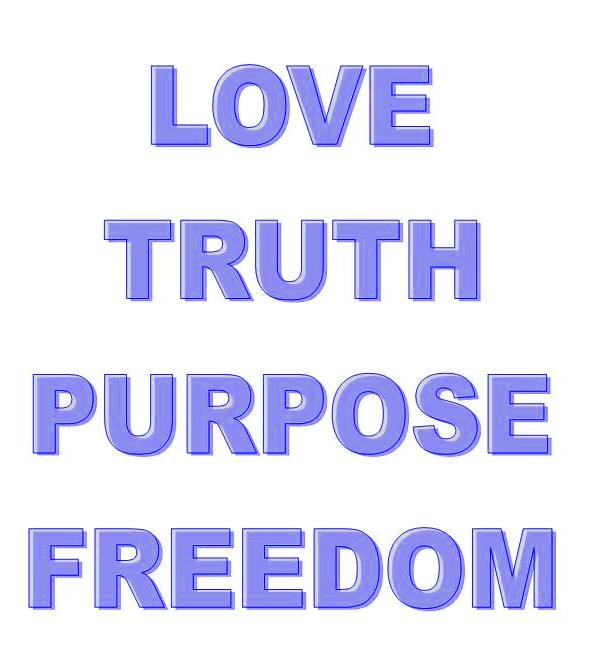
Love, Truth, Purpose, Freedom

Linda Bonney Olin interviewed me for her blog the other day, and the interview turned out to be special, at least for me, because it made me realize what my values are and how those values find a place in my books.

Linda asked me: Why did you choose to write A Spark of Heavenly Fire?

I responded: “A Spark of Heavenly Fire came about because of a Washington Irving quote: ‘There is in every true woman’s heart a spark of heavenly fire, which lies dormant in the broad daylight of prosperity; but which kindles up, and beams and blazes in the dark hour of adversity.’ When I read those words, I could see her, a drab woman, defeated by life, dragging herself through her days in the normal world, but in an abnormal world of strife and danger, she would come alive and inspire others. And so Kate Cummings, the hero of my novel A Spark of Heavenly Fire was born. But born into what world?

“I didn’t want to write a book about war, which is a common setting for such a character-driven story, so I created the red death, an unstoppable, bio-engineered disease that ravages Colorado. Martial law is declared, rationing is put into effect, and the entire state is quarantined. The world of the red death brings out the best in Kate and some of the characters she comes in contact with while bringing out the worst in others. Most of all, the prism of death and survival reflects what each of the major characters values most. Kate values love. Dee values purpose. Greg values truth. Jeremy values freedom. Pippi, who values nothing, learns to value herself.”

Next Linda asked if my fiction reflected my personal values, and I realized that of course my fiction (and non-fiction) reflects my values. Like Kate, I value love. Like Dee, I value purpose. Like Greg, I value truth. Like Jeremy, I value freedom. Like Pippi, I am learning to value myself. (You can read the entire interview here: Love, Truth, Purpose, Freedom: Pat Bertram.)

More than those qualities, though, I value kindness, and an innate kindness permeates all of my books despite the horrors the characters have to contend with. Though my heroes all have a love interest that helps form the story, none of my books can be classified as romances. The romance angle is not the main focus, and the romance is never conflicted. My couples in love treat each other kindly, showing a united front against the horrors of their world. For the most part, that’s the way I lived, so my characters can do no less.

***

If you would like to interview me, please let me know. I don’t usually open up this way, preferring to interview others, but turnabout is fair play. You can supply the questions, or I can, whichever you wish.

If you would like me to interview you instead, you can find the questions and instructions here: Author Questionnaire.

***

Pat Bertram is the author of the conspiracy novels Light Bringer, More Deaths Than One, A Spark of Heavenly Fire, and Daughter Am I. Bertram is also the author of Grief: The Great Yearning, “an exquisite book, wrenching to read, and at the same time full of profound truths.” Connect with Pat on Google+
A Romance with Books

I watched the 1987 movie 84 Charing Cross Road yesterday, and it struck me as particularly poignant considering the current state of the book business. Some people call this movie a romance, though basically, the relationship between Helene Hanff and Frank Doel is little more than a business relationship. The true romance is Helene’s love of books — not just the content of the books, but the volumes themselves.

With the advent of Kindles, Nooks, Palm Pilots, IPads and other reading devices, bound books seem to be valued less and less. Ebook readers sneer at those who profess to love the smell of the book and the feel of the pages, but the truth is, there is a mystique about a printed volume. It exists as a thing separate from its words. You can hold the tome in your hands, riffle the pages, sample a word here and there. There is a tactile connection between reader and story, linking the two parties in a very physical way.

You love your ereader. I get that. I understand you love the ease of being able to cart around an entire library of downloaded stories and novels for a minimal cost. I understand that ereaders, with their ability to zoom in (or do I mean out?) and make the words larger for those with vision problems allow people to keep reading long after their eyes have given up on them. I also understand that such reading devices are the wave of the future.

But . . . here’s my dirty little secret. (Not much in the way of dirty little secrets, I admit, but it’s the only one I have.) I don’t own an ereading device, and I have no intention of getting one until I am forced to. For me, reading has always been a Zen-like experience where I become the book. Not the story. The book. My eyes would be focused on the page. One hand would be grasping the book while the other turned the page, quite mindlessly, I might add. The book might be resting on sternum or stomach, depending on my position. And the story osmosed through my body and into my soul without referencing the words.

For most of my life, I was a constant reader. That’s all I wanted to do, so for several years I did temp work to give myself maximum amount of time to read. To feed my habit, I would take out stacks of books from the library and buy bagfuls of new and used books. Often, I would pass the purchased books on to my mother. One time, I included Oh, God in a stack of books I gave her, and the language appalled her. I shrugged it off, saying I didn’t notice. That really upset her. “I don’t know which is worse,” she said, “that you would be so blasé as not to be bothered by the words, or so naïve as to not know what they mean.”

I tried to explain to her that I didn’t read words, but that upset her even more. I suppose it does sound weird, but it’s the truth. At least, it used to be. As I got older and my eyes weaker, the osmosis didn’t work as well, and I had to start reading words. I did not like that at all! Oddly, my eyesight has changed, and I now have perfect vision about nine inches from my eyes, (though I can’t see beyond that) so I can do the Zen reading thing again, but since I have a hard time finding non-trivial stories to osmose with, I don’t read much any more. (I used to feel guilty at having “wasted” my life reading, but now I’m glad I did.)

Anyway, the point is that while some people love their reading devices, others don’t seem to find the relationship rewarding, and I bet Helene Hanff would have been such a one. All those books she ordered from 84 Charing Cross Road are probably now available free from Google books (because really, who among us except die-hard literature students like Helene would pay to read the unabridged prose of John Dunne), but reading the books on a Kindle wouldn’t be the same for her as reading a leather-bound book with gilt edging. And, although my reading tastes are much more plebian than hers, reading on a device wouldn’t be the same for me, either. I don’t see myself having a Zen-like experience with a Nook or a Kindle.

The lesson of this movie is that it’s important to do things when you can, because one day it will be too late. Helen supposedly carried on a great friendship with Frank — or at least with the bookstore where he worked — but she never once called him, never once sprung for a ticket to London until after the store closed for good. (I’m not giving away any spoilers — the movie begins with her visiting the empty store.) And so it was with me and my romance with books. If I hadn’t wasted my youth reading but waited until now to carry on my romance with books, the romance would have been over before it had even begun.

***

Pat Bertram is the author of the conspiracy novels Light Bringer, More Deaths Than One, A Spark of Heavenly Fire, and Daughter Am I. Bertram is also the author of Grief: The Great Yearning, “an exquisite book, wrenching to read, and at the same time full of profound truths.” Connect with Pat on Google+
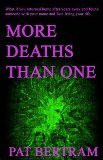
Genre vs. Traditional Fiction

Yesterday I wrote about traditional stories, the kind of untagged, unlabeled, uncategorized and ungenrefied fiction we grew up on. There used to be certain sections for genres in libraries and bookstores, but most books were shelved alphabetically under “fiction.” I read all types of books without discrimination, but I found the most satisfying books not with the genre stories, but in with the general fiction. And that’s the kind of book I tried to write.

I don’t know why genre became the core of the book business rather than the peripheral it once was, but it’s probably because of marketing — as one editor who rejected Light Bringer told me, “I loved the story, and your writing is excellent, but I don’t know how to sell it. It doesn’t have enough science fiction elements to be science fiction, and it has too much science fiction to be anything else.” (The truth is, Light Bringer was never meant to be science fiction. It a traditional story based on both modern conspiracy theory and the Sumerian cosmology, though I admit, it does have elements that are construed as science fiction. Luckily, I eventually found a publisher who publishes traditional fiction as well as genre.)

I don’t know what came first — readers’ need to buy books that fit into certain categories or book marketers’ need to funnel readers into those categories, but it doesn’t really matter. Either way, this genreization of the book business makes me an outsider, both as a reader and a writer. I have a hard time sorting through the 130,000,000 million books available to find ones I want to read, and I have a hard time fitting my books into the available genres. (When I have to give a category, I say “conspiracy fiction.” That’s not a genre, or at least I don’t think it is, but it gives me a pithy and realistic way of labeling my books.)

The hardest of my books to categorize, besides Light Bringer, is More Deaths Than One. It has many of the elements of a thriller, but the story is not about what happened to the main character (Bob) but who is he and how he reacts to what happened to him. In a thriller, there should be some sort of showdown between the hero and villain, but in More Deaths Than One, that showdown is given to an offscreen character, and Bob hears of it second hand. Some readers think the scene is a cheat. Even I think it’s a cheat, or rather I would think so if More Deaths Than One was a thriller. The hero should always be the one who performs the decisive action in the story, but in this case, the decisive action is not the discovery of the truth, but how Bob and Kerry (the woman he loves) deal with that truth.

I could have had the showdown and then Bob and Kerry’s scene afterward, but then their scene becomes anti-climactic. I could have had the two scenes concurrent — the showdown and their reactions, but there is no way Bob would have opened up to her with a dangerous creature in the room. And most of all, he would never have brought her to the attention of the villain since he would have wanted to protect her at all costs.

You’d think that with the emphasis on the two characters that More Deaths Than One is romantic suspense, but it is far more than that (and far less. Those who have read it for romantic suspense don’t like it because the romance isn’t forefront. Nor is the conflict a romantic one — Bob and Kerry get along from the beginning). More Deaths Than One is traditional fiction — a story that demanded to be written in a certain way, regardless of any genre conventions.

As Mickey Hoffman, author of School of Lies and Deadly Traffic, said, “What are you waiting for? Read this book. Now. More Deaths Than One is much better than any ‘bestseller’ out there. The plot is constantly surprising and intricate, the characters draw you into the tale and the overall writing is top notch.”

***

Pat Bertram is the author of the conspiracy novels Light Bringer, More Deaths Than One, A Spark of Heavenly Fire, and Daughter Am I. Bertram is also the author of Grief: The Great Yearning, “an exquisite book, wrenching to read, and at the same time full of profound truths.” Connect with Pat on Google+
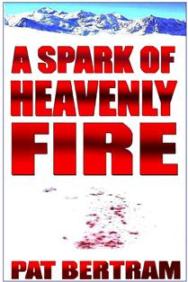
The Kind of Fiction I Grew Up On

On Malcom Campbell’s blog post yesterday, BOOK BITS: ‘Black Beauty,’ Plagiarism, Donna Small, Larry McMurtry’s ‘Custer,’ Book stories for the election, he described “traditional fiction” as the kind of fiction we grew up on before novels started getting whittled down to novella-lengths and forced into marketing categories. Dare I say, literary fiction is what’s left after publishers and booksellers have sliced and diced readers and books into every possible pigeonhole, slot and category they can possibly imagine? We are, I think, so scared of making our own decisions about what we read these days, that we cannot pick up a book without knowing how it’s been tagged, labeled, categorized and genrefied.”

Ah! Now I have a term for the sort of fiction I write, and it’s the perfect term — traditional fiction. My novels are not genre fiction in any way, and those who try to fit the stories into such pigeonholes end up not liking them. There is not enough romance for the romance readers, not enough horror for the apocalyptic crowd, not enough villainry for the thriller lovers, not enough grue for the horror aficionados, not enough science or fantasy for the scifi folks.

Each of those elements has a place in my books, of course, since each aspect is part of the story’s big picture (in the same way those elements make up the big picture of our lives), but none overwhelms the basic intent of my stories, which is to tell a satisfying tale with archetypal characters and classic themes that can last beyond the fads of the day. In other words, a traditional novel.

In A Spark of Heavenly Fire, for example, there is plenty of horror, such as the gruesome end of those afflicted with the red death, but generally the horror is more subtle than visceral — empty streets instead of bodies piled everywhere, struggles to maintain a semblance of normality instead of rioting. The experiments done on humans during both the hot wars and the cold wars twentieth century are not experienced first hand by the characters, but the slow reveal of those old horrors affect them deeply nonetheless.

A Spark of Heavenly Fire explores the theme of love in all its guises, not just romance, but friendship, caring, trust. There is love mixed in the villainry, too, because someone had to have lovingly created the organism that caused the red death. Unlike genre stories, there is no hero trying to stop the villain before he can release his “baby.” The deed had been committed before the story even began. We don’t see the story from the villain’s eyes as in a thriller, and it’s only at the end that we realize with what love and glee the villain had set his creation free.

More than horror or history, romance or mystery, A Spark of Heavenly Fire is the story of ordinary women who found only failure in the ordinary world where everyone else seemed to find success, but when the world turned upside down, they found their place and their worth, and they came alive. As Washington Irving wrote, “There is in every true woman’s heart, a spark of heavenly fire, which lies dormant in the broad daylight of prosperity, but which kindles up and beams and blazes in the dark hour of adversity.

This is the kind of fiction I grew up on as a reader, the sort of traditional story that digs deep so that what affects the characters also affects the readers, the sort of ungenrefied story I have always loved. And it’s the kind of fiction I grew up on as a writer. It was halfway through writing A Spark of Heavenly Fire that everything clicked and I became a writer.

***

Pat Bertram is the author of the conspiracy novels Light Bringer, More Deaths Than One, A Spark of Heavenly Fire, and Daughter Am I. Bertram is also the author of Grief: The Great Yearning, “an exquisite book, wrenching to read, and at the same time full of profound truths.” Connect with Pat on Google+
The Worst Books by the Best Writers

I got an email today from someone at oedb.org (Online Education Database) asking me to share an article with my blog readers. Generally, I ignore such requests, partly because the articles seldom have anything to do with the topics covered in this blog, and partly because . . . well, this is my blog and my personal soapbox. But I am making an exception in this particular case because I liked the following introduction to the article, “The Worst Books by the Best Writers.”

It is said that even a blind pig finds a truffle now and then. That may be true, but writing a good book (despite what so many deluded amateurs seem to believe) is exceedingly difficult. A lousy writer is unlikely, under even the best circumstances, to produce a novel of any value. The reverse, however, unfortunately happens quite easily. The finest writer, if prolific enough, is still practically guaranteed to come up with a couple of duds. Lest anyone mistake the spirit of this inquiry, in which we look at failures on the part of authors whose reputations remain unimpeachable, let it be understood that our choices, though bound to rankle in some cases, are not meant to offend. It may be that we can learn something from great novelists’ misfires, perhaps as much as we can from their successes.

You can find the rest of the article and the list here: The Worst Books By the Best Authors.

Quite frankly, I’m not sure that I consider any of those writers to be the best. (They list Ernest Hemingway, DH Lawrence, John Updike, Tom Wolfe, S.E. Sinton, Kurt Vonnegut, Flannery O’Conner, Bob Dylan, Alice Sebold, Jeffrey Eugenides). I know don’t remember being particularly enamored of any of their books. But still, the person who wrote the article has a good point, that we can learn to be better writers by considering books that missed the mark.

My current concern is that except for a select group of writers and perspicacious readers, few people seem to value good writing or good books, let alone great books. In a world where everything has devolved into opinion, and one person’s uninformed opinion is the same another’s studied judgement, the only books anyone seems to care about are those that sell, usually because of some sort of titillation, whether erotica or violence. I sound jaded, I know, but what passes for good writing today makes me want to weep. If by chance the writing is okay, the story is often trivial, which is just as bad. Triviality is not the mark of a great writer.

It won’t be too long before literature degrades to the point where all we can do is celebrate the best books by the worst writers.

The Grim Origin of the Grim Reaper

Scholars trace the origin of the Grim Reaper to ancient times where he was known as Cronus to the Greeks and Saturn to the Romans, but the Grim Reaper as he is depicted today comes directly to us from the Middle Ages and the Black Death.

According to William Bramley, author of The Gods of Eden: “In Brandenburg, Germany, there appeared fifteen men with ‘fearful faces and long scythes, with which they cut the oats, so that the swish could be heard at great distance, but the oats remained standing.’ The visit of these men was followed immediately by a severe outbreak of plague in Brandenburg. Were the ‘scythes’ long instruments designed to spray poison or germ-laden gases?

“Strange men in black, demons, and other terrifying figures were observed in other European communities carrying ‘brooms’ or ‘scythes’ or ‘swords’ that were used to sweep or knock at people’s doors. The inhabitants of these houses fell ill with plague afterwards. It is from these reports that people created the popular image of death as a skeleton, a demon, a man in a black robe carrying a scythe.

The Black Death began in Asia and spread to Europe between 1347 and 1350 where it killed over 25 million people, 1/3 of the population.

Despite the current belief that rats in overcrowded cities spread the plague, many outbreaks occurred during the summer in uncrowded conditions. And not all outbreaks were preceded by rat infestation. In fact, most outbreaks seemed to have nothing to do with an increase in rodent population. Nor were outbreaks confined to urban areas. The plague often struck isolated human populations which had no contact with infected areas.

Many people in stricken areas reported that outbreaks of the plague were caused by evil-smelling mists. Bright lights and unusual activity in the skies frequently accompanied these mists. And sometimes, a mist was seen to be coming from rocket-like airships. Not only did these mists kill people; they killed trees and destroyed the fertility of the land.

People were warned: “If newly baked bread is placed for the night at the end of a pole and in the morning is found to be milewed and internally grown green, yellow, and uneatable, and when thrown to the dogs causes them to die from eating it, then the plague is near at hand.”

Foul mists were blamed for other epidemics. During a plague in ancient Rome, Hippocrates (c.460-337 BC) had people build large public bonfires that he believed would get rid of the bad air. Considering the current belief that the plague was caused by a disease carried on the fleas of rodents, this advice seems ludicrous. But if what is intimated by these reports is true, and the plague was caused by germ-saturated aerosols such as those used in modern biological warfare, then bonfires would be the only defense.

***

Bramley’s descriptions and hypotheses of what happened in the middle ages, and the implications of what it might mean if true, really spooked me. I used this research for the following excert from Light Bringer:

“Alchemy wasn’t merely about the transmutation of metals,” Ernst said. “It was also about the transmutation of the alchemist. Once this mutation took place, the alchemist’s life span increased by hundreds, maybe even thousands of years. Apparently they learned to turn off the death genes.”

How interesting that he should mention alchemists, Teodora thought. Arist Kochavallos had recently told her that one reason for the Black Death in medieval times was that humans were becoming too advanced and had to be retarded. For him, those were not the dark ages, but an age of light. The alchemists, a greater percentage of the population than anyone imagined, were learning about nuclear fusion and fission. The Arabs were learning about rocketry and jet propulsion. Architecture, as manifested in European cathedrals, was unsurpassed. Along with many other technological inventions, a simple binary machine—a computer—had been created.

And the custodians of earth did not like what they saw.

Outbreaks of the plague were accompanied by strange phenomena, such as torpedo-shaped craft emitting noxious mists, and men dressed all in black walking through the streets with long instruments that made a swishing sound like a scythe.

According to Arist, that’s where the image of death as a skeleton in a black robe carrying a scythe originated.

More than anything else, finding out the origins of the plague had convinced Teodora that the tenth planet existed, that at least a small enclave of its inhabitants resided on Earth, and that they had no love of humans.

***

(Pat Bertram is the author of the suspense novels Light Bringer, More Deaths Than One, A Spark of Heavenly Fire, and Daughter Am I. Bertram is also the author of Grief: The Great Yearning, “an exquisite book, wrenching to read, and at the same time full of profound truths.”) Connect with Pat on Google+. Like Pat on Facebook.

Character as Fate and Fate as Character

Heraclitus believed that a person’s character is their fate. Character — the sum total of a person’s traits — influences the choices a person makes, and the consequences of those choices ultimately become that person’s destiny. Or not. Much of life is luck, happenstance, and totally out of our control, though we tend to believe we have much more control over our lives than we really do. But that’s not an issue here because this is a writing discussion, and in our story worlds everything is under our control, and what our characters do determine their own fate.

This is most obvious in a tragedy — a character comes to an unhappy end because of a flaw in his or her own character, though in today’s stories, because readers like a more optimistic ending, that fatal flaw is often balanced by a special strength. But character/fate works for other types of stories, such as a thriller where a character becomes obsessed with finding the truth, and that obsession leads to both the character’s fate and the end of the story.

For example, In Daughter Am I, a young woman is determined to find out the truth of who her grandparents were and why someone wanted them dead. That determination overrides her usual placidity and takes her on a journey that eventually leads her home again, changed forever. She really did find her destiny because of her character.

I wonder if the opposite is more true (if truth has degrees), that destiny is character. Does what happens to us, both the actions under our control and those beyond our control, determine who we are? Determine who our characters are? This was a theme I explored in More Deaths Than One. So much happened to my poor hero Bob that was not under his control, yet what was under his control — how he handled his fate — made him the man he became.

Any discussion about fate and writing would also have to include the question: does the writer’s fate affect the character’s fate? None of my books have totally happy endings. There is always a pinprick of unease in the background, but the book I am now contemplating — the story of a woman going through grief — is going to have even less of a happy ending. Perhaps because I know the ending of my own love story? Not my story, obviously, since I’m still here, but the story I shared with another. Except for my work in progress (the one that’s been stalled all these years) the stories I’m thinking about writing now all end up with the characters alone.

When I wrote the first draft of my novel More Deaths Than One (and the second draft and the third) I had the hero Bob meandering around his world trying to unravel his past all by himself, and it was boring. Did I say boring? It was moribund. The story went nowhere because there was no one for Bob to butt heads with.

In the fourth draft of More Deaths Than One, I gave Bob a love interest, a waitress he met at a coffee shop. (Hey, so it’s been done before. The poor guy spent eighteen years in Southeast Asia, and didn’t know anybody stateside. How else was he supposed to meet someone?) That’s when the story took off. He had someone to butt heads with, someone to ooh and aah over his achievements, someone to be horrified at what had been done to him.

From that, I learned the importance of writing scenes with more than one character. And yet here I am, once more falling into the black hole of writing characters alone because I can’t visualize them ending up with anyone.

Which leads me to my final question: could the fate of the character also influence the writer’s fate? If so, maybe I should decide where I want to go from here, and write my destiny. Or  I could just wing it and see where destiny takes me and my characters.

***

Pat Bertram is the author of the conspiracy novels Light Bringer, More Deaths Than One, A Spark of Heavenly Fire, and Daughter Am I. Bertram is also the author of Grief: The Great Yearning, “an exquisite book, wrenching to read, and at the same time full of profound truths.” Connect with Pat on Google+