Okay, I Admit It. I’m Jealous.

Jealous of whom? Need you ask? I bet if they were honest, most authors would also admit they were jealous of Dan Brown. Whatever one thinks of the man himself, the man as a story steller, the man as a wordsmith, the fact is, he wrote a book that is dazzling the world.

I only read The DaVinci Code because I was curious as to what captured people’s attention when it came to books. Though his prose is supposedly the worst thing since moldy bread, what I noticed were the internal inconsistencies — if the villain was so smart as to stay one step ahead of Robert and Sophie, if he was so smart as to figure out where they were going next and kill the person they wanted to contact, why wasn’t he smart enough just to kill the two of them and put us out of our misery? I don’t like books where the body count rises just to show how smart the hero is to stay alive. Cheap thrills, but apparently they work. 

The internal inconsistencies were bad enough, but what drove me nuts were the external inconsistencies — though the cathedrals in France do hide a code, the code predates the cathedrals, predates Christianity even. The cathedrals were all built on ancient mystical sites, as was the Vatican itself.  If the cathedrals themselves do contain a code, it is a manifestation of the prehistoric meaning. And then there was Sophie as the direct descendent of Jesus. Puh-leeze. A family tree is exactly that — an everspreading, ever thinning genetic branching. Even if Sophie was a direct descendent, her Jesus genes would be so minuscule as to be indistinguishable from yours or mine. (Go back twenty generations, and we’re all related.) I won’t even mention the possibility that Mary Magdalene never existed as a flesh and blood woman but, together with the other two Marys, was a manifestation of the mother goddess. And then, of course, I kept hearing echoes of a previous book I’d read — Holy Blood, Holy Grail — the book that he didn’t credit for his research.

Still, with all that, he captured the world’s attention, and now with his new book, for whatever reason, he is dazzling the world again. I wonder what that would be like? Must be nice.

add to del.icio.us : Add to Blinkslist : add to furl : Digg it : Stumble It! : add to simpy : seed the vine : : : TailRank : post to facebook

Aaaarrrgggghhhh!!!!! Now I Have to Write a Review!

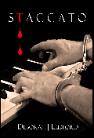
StaccatoWhile most of the world is talking about the new Dan Brown bestseller, Second Wind Publishing, LLC has quietly released a thriller of its own — Staccato by Deborah J Ledford. You won’t find all the elements that have become Brown’s hallmarks: cartoonish characters, amateurish prose, tin-ear for dialogue, internal inconsistencies. What you will find is a well-written, well-constructed story that will keep you enthralled.

The product description on Amazon says it better than I could: Performed against the backdrop of the Great Smoky Mountains of North Carolina, Staccato transports readers to a behind-the-scenes glimpse of professional musicians, the psychological twists and turns of its characters, and in the end, retribution that crashes in a crescendo of notes played at the literary pace of a maestro’s staccato. The only drawback to Staccato is that it doesn’t come with a soundtrack — each meticulously chosen piece of music enhances the mood of the scene it accompanies, and unless you are much more informed about music than I am, you will miss some of the brilliance of this composition.

Readers are in for a treat, and me? Aaaarrrggghhhh!!! I have to write another review! Well, I don’t have to, but the book deserves all the attention it can get. So, I will add it to the stack of other books I’ve promised to review, yet haven’t:

Lacey Took a Holiday by Lazarus Barnhill
The Medicine People by Lazarus Barnhill
Steel Waters by Ken Coffman
Toxic Shock Syndrome by Ken Coffman
Mazurka by Aaron Lazar
Heart of Hythea by Suzanne Francis
and now, Staccato by Deborah J Ledford

Although all these books are much more literate, readable, and enjoyable than Dan Brown’s pap, the best I can come up with as a review for each of these deserving novels right now is, “Good book. I liked it and you will, too.”

add to del.icio.us : Add to Blinkslist : add to furl : Digg it : Stumble It! : add to simpy : seed the vine : : : TailRank : post to facebook

How Do You Choose the Books You Want to Read?

I took an informal poll to find out how people discover new authors. (Hmmmm. Wonder why I’m interested in that!) I posted the following on discussion boards on both Goodreads and Facebook:

It seems as if there are as many ways of discovering books as there are readers, but I’m curious as to how you choose the books you want to read. Do you go by reviews? By recommendations from friends? Because you’re familiar with other works by the author? Do you ever read a book because of an ad you saw? Because of a blog article? Because of a mention on a website such as Goodreads? Do you cruise book stores, libraries, or online sites like Amazon? Do you find them some way I haven’t mentioned, such as gifts, perhaps?

Admittedly, the questions were loaded, but I still got an interesting and probably quite accurate overview:

Favorite authors or previously read authors: 36
Word of mouth: 26
Blog reviews/Book websites: 26
Goodreads/Shelfari: 24
Local bookstores: 21
Amazon/B&N/other online stores: 15
Library: 13
Publisher sites/newsletters: 5
Social networking sites like Facebook: 5
Book Clubs: 5
Author appearances/writing conferences: 5
NY Times bestseller list: 5
Offline reviews: 5
Yard sales/second hand bookstores: 4
Advertising: 3
Saw the movie: 3
Oprah: 1
Free downloads: 1
Gifts: 1

I’m not sure exactly what this means in terms of promotion, except that ideally you want to become everyone’s favorite author and have them recommend you.

How do you discover the books you want to read? Or rather where. (A lot of people said they found books to read by the front cover or the blurb on the back, but I’m more curious as to where they saw the cover.)

“Now That My Book is Out, What is the First Thing I Should Do?”

A newly published author asked me an interesting question today: “Now that my book is ‘out,’ what is the first thing I should do?” I ought to know the answer to that since I was in the same position not that long ago and will be again next month when Daughter Am I is released, but I’m still a bit mystified about how to promote effectively online.

So much of book promotion on the internet depends on social networking sites, which means that one’s promotion efforts have to start long before the book is ever published because you need people to promote to. That was the big lesson I learned during my first months as a published author. The internet is so vast that any message thrown casually out into cyberspace has about as much impact as a child’s balloon set free to drift on the wind. If you hand a child a balloon, however, at least one person for sure will see it, maybe even two or three. If you have “friends,” on social networking sites perhaps a few of them will see the messages you post on your profile and be glad for you. Or at least they will pretend to be glad for you since chances are they are promoting a book, too, and responding to such messages is part of their promotion campaign.

(Do I sound cynical? I don’t mean to. I am a bit disappointed that promoting on the internet hasn’t had the impact on my sales that I’d hoped, but on the other hand, I’m having a wonderful time meeting new people, discovering new books, rediscovering old friends, creating new relatives. In essence, I’m developing a whole new life, which is a thrill in itself.)

Some new authors send email messages to all their contacts, but unless you know the people personally, I don’t think it’s such a good idea. I’m hearing through the grapevine that spamming generally doesn’t have much impact on sales, and it only irritates people, which might cause a backlash. On the other hand, status updates on MySpace, Facebook, Goodreads, Twitter are good, especially if you link the update to a blog article that tells about your struggles to get published or something else of an equally personal or helpful nature.

The secret to social networking is to be social. I admit I don’t do the one-on-one thing that well. I have a huge list of people I owe blog comments to, but somehow the days pass, and the list keeps getting longer. I’ve started responding to comments on my blog, though, which is a big step in the right direction. I used to think it was better to give commenters the last word, but recently my blog readers have convinced me they like a bit of dialogue, if only to let them know I read and enjoyed their comments. And I do. Read them and enjoy them, I mean.

I’m starting to ramble a bit here.

The point is . . . heck, if I knew what the point is, I’d be sitting back and counting my millions. Still, I have learned one thing — websites, blogs, tweets and status updates all work together to create something more than the individual parts. Who knows, that something may eventually turn out to be book sales.

Daughter Am I will be released by Second Wind Publishing, LLC in October, 2009

add to del.icio.us : Add to Blinkslist : add to furl : Digg it : Stumble It! : add to simpy : seed the vine : : : TailRank : post to facebook

Lisping Dialogue

I used to read books about writing — dozens of them.  Several mentioned that mispelled words and apostrophes are no longer in style to show speech defects or accents — such dialogue is difficult to read.  To denote dialect, one needs to show speech patterns from the specific area, such as “It’s not far, just down the road a piece.” Tells you a bit about the character, and it’s easy to read. Another suggestion was to use the misspellings and apostrophe’s to set the character’s accent in the reader’s mind, then switch to normal spellings.  I heeded this particular bit of advice in my upcoming novel, Daughter Am I. To get the full meaning of the excerpt, you need to know that the Scourge and Butcher Boy once worked for the Outfit, aka the Mob. 

“Who ith it, my love?” A rotund little old man wearing plaid bermuda shorts and a pink polo shirt appeared at the door beside the woman.

“Hello, Wallace,” Happy said.

Mary bit back a giggle. This was the Scourge? This gnome of a man with twinkling eyes and a lisp?

Wallace peered through the screen at Happy. “Do I know you?”

“Don’t you remember? We used to work for the same outfit.”

The woman’s face lit up. “Oh, how nice. Won’t you come in?”

She made a move to open the door, but Wallace put out a hand to stop her.

“That won’t be necessary. These folks were just leaving.”

“Hey!” Happy protested. “What’s the big deal? All we want is some information about Butcher Boy.”

“The supermarket in town has a nice butcher,” the old woman said, “but you can’t really call him a boy. He has to be at least forty.”

Wallace patted the woman’s arm. “Let me handle this, sweetie.” He opened the door, slipped through, and closed it behind him. Motioning for Mary and her gang to follow, he headed for the road.

“This your bus?” he asked.

A couple of editors mentioned that I was inconsistent, that I should have carried the lisp throughout the scene.  It was only two pages, but still, that’s a lot of th’s.

“That won’t be nethethary. Thethe fokth were jutht leaving.”

“…Thweetie.”

 “Thith your buth?”

So, when you read Daughter Am I (you are going to read when it’s released, right?) and notice the inconsistency, just remember how kind I was being to your eyes.

add to del.icio.us : Add to Blinkslist : add to furl : Digg it : Stumble It! : add to simpy : seed the vine : : : TailRank : post to facebook

Free Ebooks!

Free ebooks! Just stop by the Labor Day GiveAway at the Second Wind blog before September 12, 2009, mention the name of a Scover-mdtosecond Wind book that you’d like to read, and you might win an ecopy. http://secondwindpub.wordpress.com/2009/09/06/labor-day-giveaway/
 
Now is your chance to read More Deaths Than One or A Spark of Heavenly Fire!
 
More Deaths Than One: Bob Stark returns to Denver after 18 years in Southeast Asia to discover that the mother he buried before he left is dead again. He attends her new funeral and sees . . . himself. Is his other self a hoaxer, osparks-coverr is something more sinister going on? And why are two men who appear to be government agents hunting for him? With the help of Kerry Casillas, a baffling young woman Bob meets in a coffee shop, he uncovers the unimaginable truth.

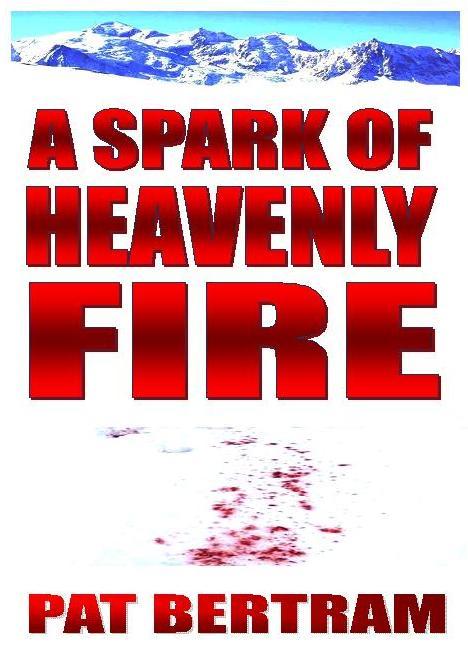
A Spark of Heavenly Fire: In quarantined Colorado, where hundreds of thousands of people are dying from an unstoppable disease called the red death, insomniac Kate Cummings struggles to find the courage to live and to love. Investigative reporter Greg Pullman is determined to discover who unleashed the deadly organism and why they did it, until the cost — Kate’s life — becomes more than he can pay.
 

add to del.icio.us : Add to Blinkslist : add to furl : Digg it : Stumble It! : add to simpy : seed the vine : : : TailRank : post to facebook

Blog Talk Two

I just finished being interviewed on blog talk radio, and all things considered, it went okay. Well,  there was that part where my mind went blank and I couldn’t think of a single disease mentioned in A Spark of Heavenly Fire, couldn’t think of a single biological warfare experiment that I researched. Sheesh. I spent years on the research. You’d think at least some of it would have come easily to mind. I did manage to mention a  connection between swine flu and the novel, but still . . . it would have been nice to sound as knowledgable as I am about the horrors of biological warfare and human experimentation. And I talked about the Hanta River in North Korea, when it’s in South Korea.  In the end, though, it doesn’t matter. The story isn’t about disease, though I kill off hundreds of thousands of Colorado residents with the flu-like epidemic I created. The disease, the deaths, the quarantine are all simply the setting for the story of how insomniac Kate Cummings came alive when all around her people were dying.

What does matter is that I didn’t give the right website address for my publisher, Second Wind Publishing. Aaaarrrggghhhh! You can find them at http://secondwindpublishing.com. Just goes to show that you can’t take anything for granted. Make sure you have website addresses and other pertinent information right in front of you. Don’t rely on your memory!

I had fun, though. I’d met one of the hosts, Steven Clark Bradley, author of Patriot Acts, through Facebook. We’ve had a few interesting email conversations, he’s participated in some of my discussions, and he did a wonderful review of More Deaths Than One. During the blog talk show he mentioned that he stayed up late one night to read my book –Oh, how I enjoy keeping men up late at night! What power!

We talked about how I got the ideas for my books, talked about the characters, and I got in a plug for my novel, Daughter Am I, which will be published next month. All good stuff. The best thing about Blog Talk Radio is that, like all blogs, it’s forever. So stop by whenever you can. I’ll be there.

Blog Talk Two (Today’s interview): Back Story — The Behind the Scenes Look at Writing a Novel

Blog Talk One (My first interview): Talk to Me: Conversations With Creative, Unconventional People

Steven Clark Bradley’s review: More Deaths Than One

More Deaths Than One and A Spark of Heavenly Fire are available from Second Wind Publishing, LLC.

You can also download the first 30% free at Smashwords

add to del.icio.us : Add to Blinkslist : add to furl : Digg it : Stumble It! : add to simpy : seed the vine : : : TailRank : post to facebook

I Need a…Gulp…Outline

I’ve been rereading my work-in-progress, trying to get back into the mindset of the story so I can work on it. Usually by the time I’ve written 37,000 words, my characters help develop the story. No, my characters never take over — they always do what I make them do. It’s more that I know who they are, what they want, and who’s going to stop them from getting what they want. Unfortunately, during the first part of my WIP, my hero mostly contended with the ever-changing world, and the people he met were simply passing through his life. So now I have to create a whole cast of characters.

I’m thinking of having a contest — let people suggest characters, and if I use it, they get an acknowledgement in the book along with a copy of the printed book when it’s published next year. Seems a bit of a cheat, but it could be fun.

But I digress. One of the characters I have to create is a group. Sounds odd, but groups have a culture, a dynamic of their own, a character that is different from the sum of the individual members. Groups also develop, just like characters do, and there are several distinct stages:

1. Coming together and finding the individual roles
2. Defining the task.
3. Feeling unrest — disenchantment with the group and each other
4. Cohesion — beginning to feel like a team
5. Interdependence — work as a team, believe in the subculture they have created.

In addition to creating a whole new cast of characters and developing them into a group, I need to figure out how to get my hero to give up the relative security he recently embraced and go back out into the dangerous world and dubious freedom.

When the novel is finished, much of this scaffolding will be invisible to the reader, but I need to be able to see at a glance how all the parts fit together so I can show what’s happening rather than telling it. It sounds to me like a need a . . . gulp . . . outline. I’ve never outlined a novel before. Should be interesting.

add to del.icio.us : Add to Blinkslist : add to furl : Digg it : Stumble It! : add to simpy : seed the vine : : : TailRank : post to facebook

On Writing: Looking Up

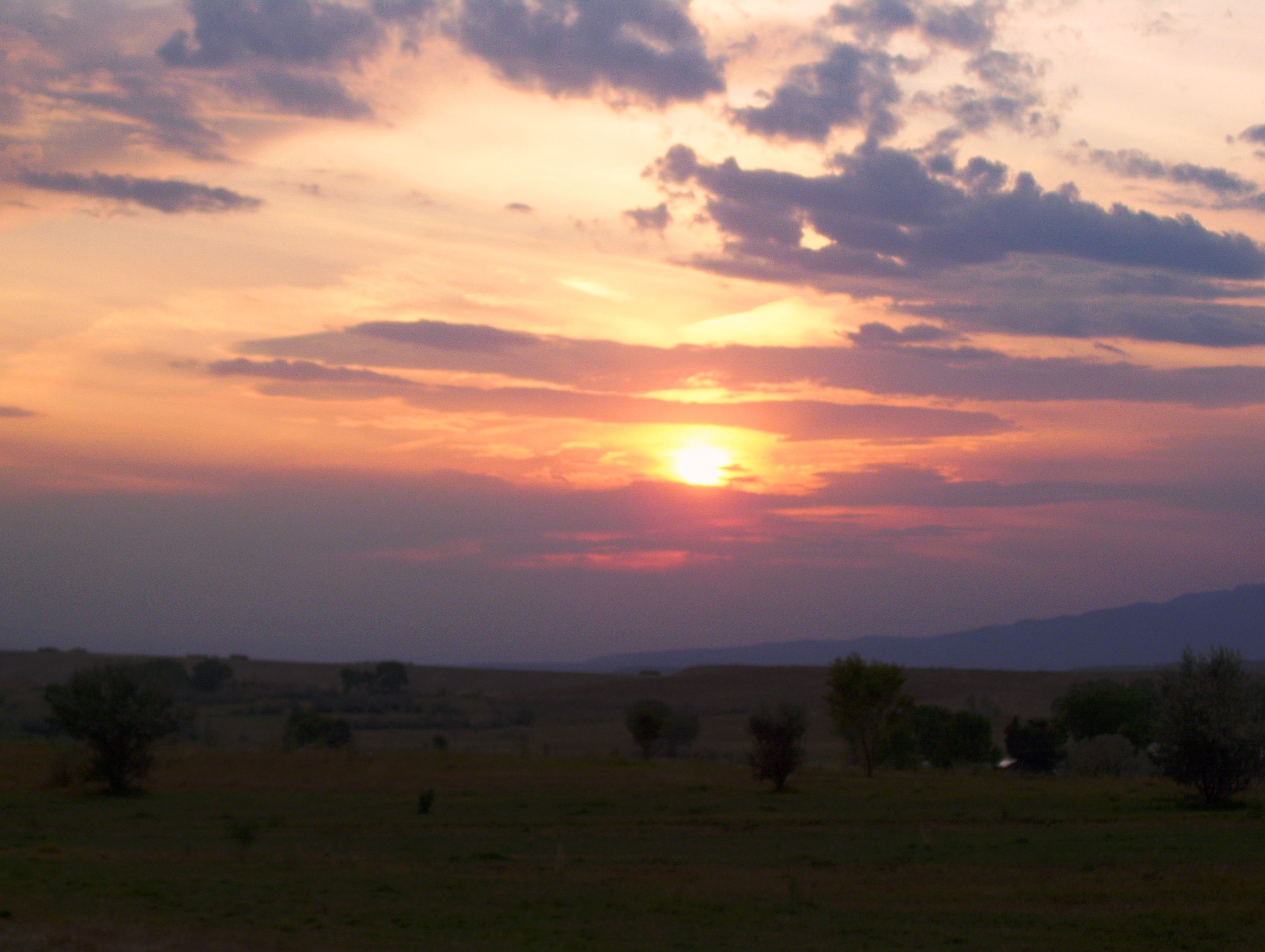
When your characters look up, what do they see? Sunsets and sunrises are so prevalent in books as to be clichés, yet every day there is a sunrise and every day there is a sunset, even if it’s too cloudy for us to see either. I suppose mentioning the rising or setting sun makes more sense if there is a reason. For example, tonight there was a gorgeous sunset here because of the fires in California. The smoke drifts to Colorado and is trapped by the mountains.

I try to find different things for my characters to look at, because to a certain extent, a character is what he sees. If a character sees a flock of what looks like hawks, and he or she knows that they are vultures, it tells you a bit about the character. Vultures fly in packs, hawks fly alone. Or so I’ve been told. Both hawks and vultures are equally lovely as they coast on the updrafts, but somehow knowing that the regal bird is a vulture and not a hawk takes away some of the beauty of the scene. 

In A Spark of Heavenly Fire, the characters see helicopters patrolling the skies above quarantined Colorado. In Light Bringer, which will be published next year, the characters see unnatural lights in the sky, they see strange airplanes, and they see an impossibly brilliant rainbow. In my WIP, the characters see a light in the west on Easter morning, and for just a moment, they think it’s the rising sun.

So what do your characters see when they look up? Does the sight have a bearing on the story? Does it tell you a bit about the character?

007a

add to del.icio.us : Add to Blinkslist : add to furl : Digg it : Stumble It! : add to simpy : seed the vine : : : TailRank : post to facebook

Distilling the Essence of a Story

I have an interview on BlogTalkRadio on Saturday, September 5 at 11:30am ET. We’re going to be talking about back story — where I got the ideas for A Spark of Heavenly Fire and More Deaths Than One. Although one of the hosts of the show has read at least one of my books, I’m sure at some point he will ask me, “What are your books about?” And I will give the same answer I give to everyone who asks. A blank stare. Though, being radio, it will come across as blank silence.

How does one encapsulate a three-hundred-page novel with subplots and subtexts, themes and scenes, complexities and ironies into a minute of description? This distillation is commonly called an elevator speech, and after five months of being published, I still haven’t figured mine out.

I can talk around the story — More Deaths Than One is a thriller/mystery/suspense novel that explores what it is that makes us who we are. Is it our memories? Our experiences? Our natures? A Spark of Heavenly Fire is a thriller/suspense novel with a strong romantic element. It tells the story of ordinary people who become extraordinary because of the trauma they must endure. — But neither of those descriptions gives an idea of what the stories are about.

I can relate a bit of the story — More Deaths Than One tells the story of Bob Stark who sees his mother’s obituary in the morning paper, which stuns him because he buried her two decades ago before he the country to live in Southeast Asia. So how can she be dead again? A Spark of Heavenly Fire tells the story of how Kate Cummings, an ordinary woman, gathered her courage and strength to survive the horror of a bioengineered disease let loose on the state of Colorado.

The problem I’m finding is that I don’t know the essence of either story, the emotional triggers. What do the books do for readers? Why should people read them? Perhaps the books will bring romance and adventure to readers’ lives. By showing ordinary people rising to horrific occasions, perhaps readers will feel better about themselves, knowing they too have the potential for heroism. And, in the case of A Spark of Heavenly Fire, people will know what to expect if ever the Swine Flu or any other virulent disease spreads so rapidly that an entire state needs to be quarantined in an effort to curtail the deaths.

So, how do you distill the essence of your book (or any book!) into a few words and make a reader desperate to read it?

More Deaths Than One and A Spark of Heavenly Fire are available from Second Wind Publishing, LLC.
You can also download the first 30% free at Smashwords.

add to del.icio.us : Add to Blinkslist : add to furl : Digg it : Stumble It! : add to simpy : seed the vine : : : TailRank : post to facebook