Subverting Stereotypes in The Wheel of Time

Last night, I spent a considerable amount of what should have been sleeping time looking for bad reviews of the last three books of The Wheel of Time series. After the death of the real author, the series was finished by a stand-in author, who did an execrable job, and I wondered why none of those books rated less than a three-star review on Amazon.

One reason, I discovered, is that a lot of people give him kudos for doing a thankless job, but it wasn’t thankless. He got paid for his work, and those books helped catapult him into the fantasy-writer stratosphere.

Another reason is that he writes in a simplistic style that appeals to today’s readers — short sentences; quick scene changes; lots of action; little real character development; not a lot of depth, emotional or otherwise. All of which is antithetical to Robert Jordan’s writing.

I also tend to think a lot of the acclaim he gets for his Wheel of Time books is because they are in direct contrast to Jordan’s books. There is no doubt that Jordan’s last few books could have used some heavy editing (though oddly, one of the substitute author’s acclaimed books is more or less a replay of the Jordan book that people tend to hate) but much of what people seem to object to in Jordan’s writing are things that shouldn’t be an issue.

For example, when Jordan started writing The Wheel of Time books, there were few female protagonists in that genre. This lack makes sense in a way because the writers of high fantasy tended to be male. Also, the genre seemed to attract more males than females in the beginning (or at least it was assumed to be so). Writing a male protagonist was safe — females will read books written by and for males more often than the reverse.

Jordan tried to turn this assumption on its head, writing both male and female protagonists. He tried to balance the power between males and females, and he tried to subvert stereotypes. It surprised me to discover that so many people think his writing is sexist, though in a world of his own making, with sexual dynamics of his own making in that world , how can he possibly be considered sexist?

One of the problems is that his readers are so young. (I have yet to discover a group of readers my age, online or off, who have any interest in reading the books let alone discussing them in any depth.) These younger generations don’t realize there was a time not that long ago when women were considered gossipy, flighty, unable to handle finances, and needed to be looked after as if they were children. In fact, it wasn’t until 1974 that women could obtain credit cards in their own name without a male co-signer. At the same time, it became illegal for mortgage companies to refuse loans to unmarried women as had been common.

It was only a handful of years after these major real-world changes that Jordan started thinking about his series. In his attempt to subvert stereotypes, he reversed things — women in his series consider men to be gossipy children who don’t have any sense, so the women think nothing of bullying the men to get them to do what the women think is right. Making things more complicated, in Jordan’s world, men are raised to be chivalrous, putting women’s safety first, and protecting them even if they don’t want the protection. This leads to an underlying theme of the story — men don’t understand women, though they try to. Women don’t understand men, though they think they do.

Adding further to this complicated dynamic, the “magic” system had become one-sided. It used to be that both men and women could tap into the power that drove the universe, so they were equals. But during the time of the story, only women were able to use the power, so it threw the balance off.

And yet readers try to fit today’s mores into Jordan’s world.

What really made me stop and think during my research last night is that most of the people in the United States today became adults after those life-changing laws governing women’s financial autonomy came into play. If only 20% of people were born before 1964, then that means 80% never had to deal with (and probably never had to learn about) a fairly recent time when things were so terribly unbalanced in the real world. No wonder so many Wheel of Time readers haven’t a clue what that particular theme of Jordan’s was all about.

In the end, I suppose it doesn’t really matter why the substitute author gets lauded for his awful writing. In my world, those books no longer exist, so unless I can come up with my own ending, the series ends with the real author’s death.

***

Pat Bertram is the author of Grief: The Inside Story – A Guide to Surviving the Loss of a Loved One.

Steeped in Symbols

I have never paid much attention to iconography since I have no real feel for art or imagery. I think in words, process emotions in words, and come to terms with life and the world by way of words. In fact, until this very moment, I’d never even used the word “iconography.” I do know what it means, of course — the interpretation of the symbols in art, images that tell a story, especially religious symbols. It comes from eikon a Greek word meaning “image,” and graphe a Greek word meaning “writing.” Such “image writing” was the earliest form of writing. From what I’ve managed to glean, a pictograph is a simpler version of a icon, something with a single, specific meaning, whereas an icon is a symbol with a broader, more artistic meaning that generally needs to be interpreted in cultural context. (Oddly — odd to me, anyway — iconography is not the study of iconographs — iconographs are pictures formed of words.)

Not only had I never paid much attention to iconography, I’d never really paid much attention to the symbols and images that we are all familiar with until recently. I play one of those hidden images games, though for some reason I’m embarrassed to admit it. Still, I do spend time on the game, going from location to location to find the objects.

These locations are completely different from one another, and each is instantly recognizable. For example, a Christmas scene is obviously Christmas themed, a Chinese New Year scene is obviously Chinese themed, a haunted house is obviously Halloween themed. There are a vast array of images that evoke Christmas — stockings, trees, reindeer, cookies, wreaths, stars, snowflakes, candy, the colors red and green. (There are just as many images of a religious nature, such as nativity scenes, but those aren’t used in the Christmas scenes in this game.) Many recognizable Chinese images, such as lanterns, storks, conical hats, fans, and dragons. And many images that evoke a spooky feel — bats, gargoyles, brooms, witch’s hats, toads, tarot cards, wands.

The locations in the game don’t all revolve around holiday themes. For example, there is a laboratory, with images such as telescopes, magnets, funnels, bellows, oil lamp, and a medical mask; a train station with luggage, cameras, books, pigeons, and pith helmet; a seaside bungalow with mermaids, pirate hat, barometer, boat, toucan, books, and sandcastle.

None of these locations can be confused with any other, which has led to me to this reflection upon the images of our lives. We are steeped in symbols, way more than I ever imagined. This game reflects many of the cultural symbols of our lives, but there are all sorts of symbols. Religious symbols. Musical symbols. Occult symbols. Political symbols. And each of these symbols calls forth some sort of emotion. The news media in particular uses images to convey messages, and many of those images have become part of our heritage, such as Kennedy’s Texas motorcade, Nixon’s outstretched arms, the little Napalm girl.

I don’t know what any of this means — it’s just something I’ve been thinking about. But it does show me that as sophisticated and advanced as we think we are, our basic form of communication still seems to be the pictograph just as it was so many thousands of years ago.

***

Pat Bertram is the author of Grief: The Inside Story – A Guide to Surviving the Loss of a Loved One. “Grief: The Inside Story is perfect and that is not hyperbole! It is exactly what folk who are grieving need to read.” –Leesa Healy, RN, GDAS GDAT, Emotional/Mental Health Therapist & Educator.

Pain Management

I’m reading a book about a drug dealer who only deals in legal painkillers and only sells to people in pain who can’t get the drugs from doctors and pharmacists. I do know people who have had to resort to buying their legal drugs on the street because doctors won’t prescribe the amounts they need, and even if the doctor did prescribe the drugs, pharmacists wouldn’t supply them. There are a whole lot of people falling into the cracks created by those who are trying to curb the so-called opioid epidemic.

According to the Mayo Clinic, about 10% of those who are prescribed opioids get addicted, and another 30% misuse the drugs. Although they give no explanation for the misuse, I do know that often the dose the doctors prescribe is too low to manage the pain, and either the doctors can’t or won’t up the dosage for fear of addiction, so people either suffer or take more than is prescribed. Even after doctors have established that a person is dying, they still withhold needed painkillers lest their patient become addicted. As if a person dying of cancer really cares if they become addicted — they want whatever life they have left to be as comfortable as possible. (That’s one thing that hospice does right — makes sure that people get the drugs they need for comfort. Unfortunately for me, if I ever end up in that situation, their drug of choice is morphine, which does absolutely nothing for me.)

For those who get addicted, it is a terrible thing, but so is withholding pain medications from those who desperately need them because of that 10%. Still, the vast majority of people who take opioids don’t get addicted.

The only time I took heavy painkillers was after I destroyed my wrist and arm. The doctor was more than willing to prescribe the pills and even prescribed a high enough dosage to manage the pain. The problem was the pharmacists. What ogres they were! The first pills I was prescribed didn’t work, so the doctor gave me a prescription for Percocet. The pharmacy closest to me didn’t carry Percocet, and the next pharmacy was going to throw away the prescription because they figured I was scamming them. Yep, me, with a device like a mini sewing-machine attached to my arm, bloody bandages still visible (because doctors are rethinking the idea of constantly changing bandages; apparently blood is clean but air isn’t). Those people stared at me with cold eyes and watched until I left the store. I finally found a pharmacy that had the drugs and would fill the prescription, but they fought me on it because the records showed I still had some of the first pills left. A couple of weeks later, when I went to get more pills, they refused to sell them to me because their records showed I should still have half of them left — even though the prescription was for six a day, the pharmacist thought I should only be taking three a day. Many tears and a long confrontation later, I left with painkillers. Truly a horror!

I’m lucky in that my pain was relatively short-lived — six months vs. the lifetime of pain some people suffer. I also hated the pharmacists way more than I hated the pain, so I weaned myself off the pills long before the six months were up even though I still had pain because cripes, who wants to be treated like a criminal when all they want is to get their legally prescribed painkillers?

I don’t know what the answer is. I do know people shouldn’t have to suffer when the means to minimize the pain is available especially since 90% of them won’t get addicted. I do know that people shouldn’t have to be reduced to illegal activities to get the medication they need. And yet there is that 10% who do get addicted. There must be some way to catch the addiction early so that no one becomes addicted and no one has to deal with pain, but apparently that is beyond today’s pharmaceutical industry.

***

Pat Bertram is the author of Grief: The Inside Story – A Guide to Surviving the Loss of a Loved One. “Grief: The Inside Story is perfect and that is not hyperbole! It is exactly what folk who are grieving need to read.” –Leesa Healy, RN, GDAS GDAT, Emotional/Mental Health Therapist & Educator.

It’s Groundhog Day!

Is it still Groundhog Day when you live in an area where there are no groundhogs? When there is no creature to determine how much of winter is left?

The superstition is that if the groundhog sees its shadow, there will be at least six more weeks of winter, which is a sure bet since this year there are six and a half weeks between February 2 and March 20, the official first day of spring. If the groundhog doesn’t see its shadow, there will still be six and a half weeks until spring, though supposedly, the temperatures will be a bit milder.

But what if there is no groundhog? Will there be six more weeks of winter? It’s still a sure bet!

Groundhogs, also known as woodchucks, are flatlanders and live in the eastern portion of the United States. Here in Colorado, we have yellow-bellied marmots, also known as rock chucks or whistle pigs, and they prefer higher elevations. Although groundhogs and marmots are not the same thing, they are both rodents of the squirrel family. The scientific name of the groundhog is Marmota monax. The name of the yellow-bellied marmot is Marmota flaviventris. So technically, the name of this day should be Marmot Day.

But either way, no matter what sort of creature you use to foretell the demise of winter and the coming of spring, a wood chuck, a rock chuck, or a chuckleheaded weather person, it still comes down to the same thing — six and a half more weeks of winter.

To be honest, here in Colorado, that’s a good thing. Too often we get early spring weather and then — so much fun! — we get a late-season Indian Winter. (Oops. Can’t say that. Indian Summer is now called Second Summer, so Indian Winter would be called Second Winter.) The problem with that upsurge of winter once spring has started to make itself felt is that new buds are “nipped” by the late freeze, damaging crops, preventing fruit trees from producing, and decimating or delaying spring flowers.

Luckily, despite what all those seer of seers, prognosticator of prognosticators say, spring will be here in a matter of 46 days.

Happy Marmot Day!

***

Pat Bertram is the author of Grief: The Inside Story – A Guide to Surviving the Loss of a Loved One. “Grief: The Inside Story is perfect and that is not hyperbole! It is exactly what folk who are grieving need to read.” –Leesa Healy, RN, GDAS GDAT, Emotional/Mental Health Therapist & Educator.

Just For Fun

Today’s blog prompt: List five things you do for fun.

Knowing me as well as you do, I’m sure you’ve figured out what the first thing I did was. Yep, I Googled, “What is fun?”

I had to research the word because the truth is, I don’t really know what “fun” is. To me it’s about doing something with pleasure or joy or playfulness or laughter or silliness, and very little of what I do includes those feelings. That kind of fun connotes fellowship of some sort, going outside of oneself. I mean, it’s hard to be silly and laugh when one is alone, especially someone like me who spends so much time inside herself. Admittedly, I do a lot of things to “spend” time, such as reading or blogging or playing a game on the computer, but there’s no real element of what I’d consider “fun” to any of those things. I just do them. Especially reading. Reading is as necessary to me as breathing, and I don’t consider breathing to be “fun.” It’s just something I do, something I need to do.

I enjoy the company of others (though preferably just one or two at a time). We talk and we often laugh, but despite the lightheartedness of many of our conversations, I don’t consider them “fun.” Being with people is about connecting, about creating a space for friendship, about feeding the soul, an experience that goes so much deeper than the easy entertainment and party atmosphere that “fun” connotes. If reading is akin to breathing, then friendship is akin to food, and while food can be considered “fun” at times, it’s too necessary to ever fall strictly into the category of “fun.”

Things like hiking and traveling weren’t strictly for fun, either. There was a deeper intent there — sort of a vision quest, or maybe even just a quest (though I was never sure for what I was “questing”).

Writing certainly isn’t fun for me — despite a playfulness that sometimes shows up in my books, writing is way too hard for me to classify it as fun. (And it goes back to the idea mentioned above of spending time within myself.) Gardening is the same — too hard to be fun, as well as serving to pull me deeper into myself.

As it turns out, my idea of fun (the word “fun,” that is) is pretty close to the mark. Various online definitions of fun include: “pleasure without purpose;” “lively, joyous play or playfulness;” “light-hearted pleasure, enjoyment, or amusement;” “boisterous joviality or merrymaking;” “hedonic engagement and a sense of liberation;” “diversion, amusement, mirthful sport;” “a cheat, trick, or hoax;” “foolishness, silliness.” Also “any activity on the positive side of valence” (whatever that means).

So what do I do for fun? I’ll have to get back to you on that — when and if I ever manage to think of something to do just for the fun of it.

***

Pat Bertram is the author of Grief: The Inside Story – A Guide to Surviving the Loss of a Loved One. “Grief: The Inside Story is perfect and that is not hyperbole! It is exactly what folk who are grieving need to read.” –Leesa Healy, RN, GDAS GDAT, Emotional/Mental Health Therapist & Educator.

What Is Your Spirit Animal?

Do you have a spirit animal? That’s the blog prompt for today: “What is your spirit animal?” I have no idea how to figure out what mine is. Aboriginal Americans found their spirit animal through a vision quest, some spiritualists find theirs through a dream, other people are lucky enough to have their spirit animal find them.

Me? As far as I know, I don’t have such a guide, and if I do, it hasn’t made itself known to me. At one time I wanted to do a long-trail hike, thinking it would also work as a vision quest, but that didn’t work out. I did try to do some of those quizzes that supposedly introduce you to your spirit animal, but the very first question on a few of them stymied me: “What is your favorite element — water, earth, air, fire, wood, space?” How the heck does one answer that? I mean, you need those to live. Without wood (trees) there would be no breathable air. Without space, there would be no Earth. Without water, earth, air, fire (energy) there would be no life.

I did manage to find one quiz that asked different questions, but most of the questions did not pertain to me, such as what sort of television programs I watch — news, reality TV, documentaries, and a few others. Since I don’t watch television, it was a bogus question, as were several others. Still I did stumble through the quiz, and according to them, my spirit animal is a raccoon. Supposedly, the racoon embodies creativity, discretion, and keeping your ideas close to your chest until you’re ready to unveil them. Sounds feeble enough to apply to almost anyone.

I also found a site that linked spirit animals to one’s birthday, so depending on what culture I espouse — Western, Chinese, Native American, Celtic — my various spirit animals are fish, rabbit, wolf, snake. Not exactly a unanimous consensus, or even a general consensus!

The only dreams I ever had that could possibly be considered a vision quest or a way for my spirit animal to make itself known were both white dreams. In the first, I was walking in the white sands of the desert, with a white sky above me and a white path stretching before me. As I walked, three white horses sped across my path, then four white bunnies in a bunch, then two small white squarish creatures I could not identify, and finally, one immense white owl. For sure a mystical dream! All of those creatures are powerful totem animals, except perhaps for the small squarish animals. Another time I dreamt of a white tiger, a spirit animal that is drawn to a soul with inner strength.

So there you have it — all I know about me and my spirit animals. Since there is such a plethora of them, it could mean I need a whole lot of help. It could also mean that at different times, I was influenced by different manifestations of spirit. Or it could mean nothing at all, which, to be honest, is what I tend to believe.

***

Pat Bertram is the author of Grief: The Inside Story – A Guide to Surviving the Loss of a Loved One. “Grief: The Inside Story is perfect and that is not hyperbole! It is exactly what folk who are grieving need to read.” –Leesa Healy, RN, GDAS GDAT, Emotional/Mental Health Therapist & Educator.
Celebrating the Chinese New Year

When was the last time you did something for the first time?

As a person gets older, the first times dissipate. At the beginning, of course, everything is a first — first step, first word, first tooth, first birthday, first day of school, first night away from home, first date, first kiss, first job, first apartment. When the obvious firsts are gone, there are others to look for, such as first overnight hike, first cross-country trip, first mortgage. And then there are the other firsts that no one should ever have to deal with yet all of us do, such as the death of a loved one.

After the firsts come the seconds and thirds and the ho-hum of having done everything so many times before, that it seems as if there are no firsts left. And yet there are more firsts — at least I hope there are.

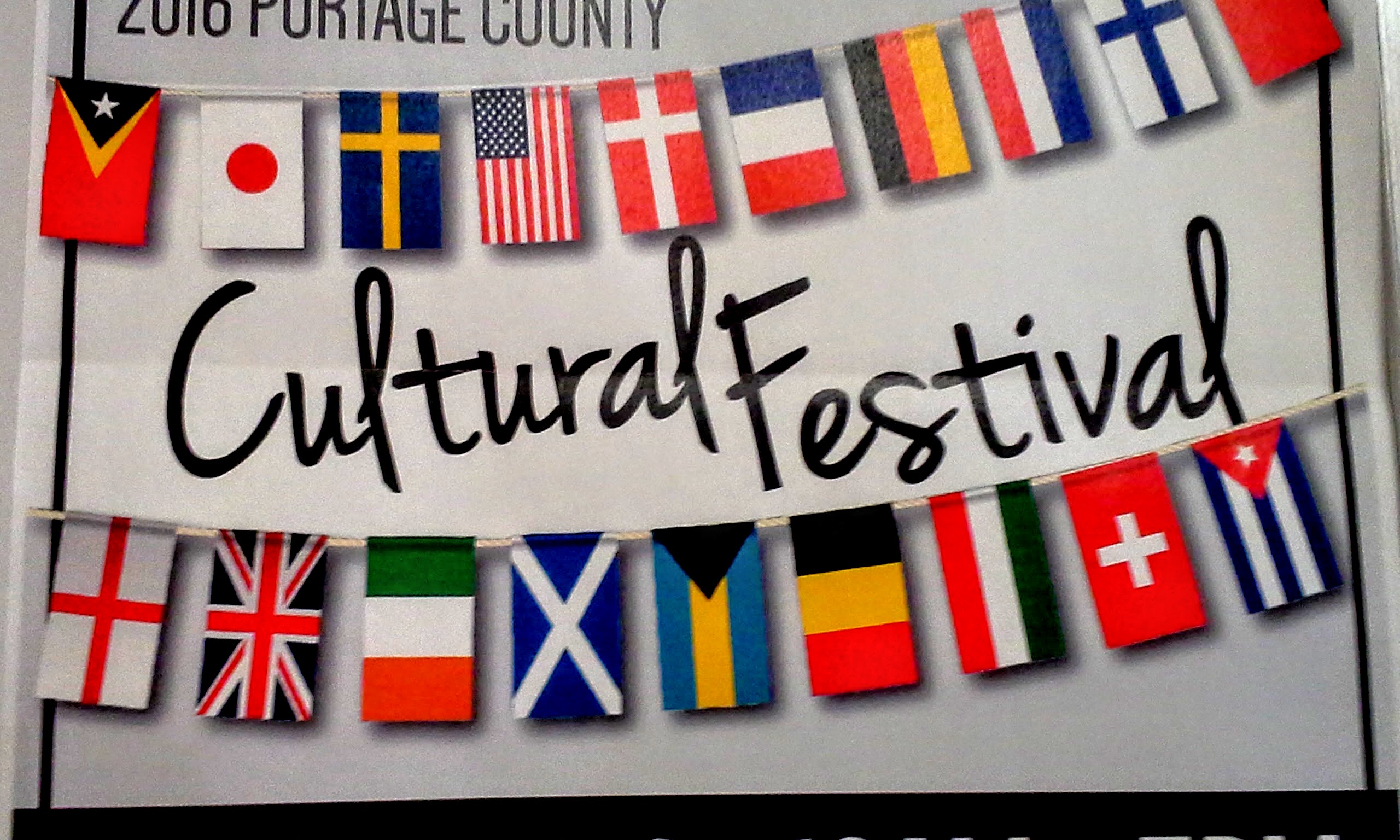
What made me think about all this is that just yesterday was the last time I did something for the first time — I celebrated the Chinese New Year.

This Asian holiday is something I’ve never before celebrated, never even considered celebrating. After all, I’m not Chinese or from Chinese ancestry, so it didn’t seem right to be glomming on to another culture’s traditions, but yesterday I was invited to join the celebration by my friend who does have a Chinese heritage. We didn’t do much, just dressed in red and went to a Chinese restaurant, but that seems to be the main way of celebrating — family, friends, and food.

To make sure I didn’t commit any major faux pas, I looked up Chinese New Year and found that the Chinese don’t call this holiday “Chinese New Year,” which makes sense. That’s like us calling our January 1st celebration “American New Year.” They simply call it New Year or Spring Festival. The problem with calling this Lunar New Year a Chinese New Year is that many other Asian countries also celebrate a lunar new year. Luckily, since my friend is of Chinese heritage, my calling it the Chinese New Year (as she did) didn’t offend her.

Anyway, it was nice starting this particular new year by doing something new, and it was it was especially nice celebrating the newness with good friends and good food.

***

Pat Bertram is the author of Grief: The Inside Story – A Guide to Surviving the Loss of a Loved One. “Grief: The Inside Story is perfect and that is not hyperbole! It is exactly what folk who are grieving need to read.” –Leesa Healy, RN, GDAS GDAT, Emotional/Mental Health Therapist & Educator.
Do-It-Yourself State

I read the other day that you don’t need a blood test to get married in Colorado. Wondering if that was true, I checked various sources online, and yes. That’s true. What truly surprised me, though, is that in Colorado, self-solemnizing marriages are legal. This means that in Colorado you don’t need to have a judge or a minister or even a friend officiating at your wedding. You don’t need witnesses or vows or a wedding gown or guests or any of the other trappings of so many weddings. In fact, when you apply for your marriage license from the Clerk and Recorder, you can both sign it right there, give it back to the county clerk, and it’s done. A mere twenty minutes after you enter the building, you’re married.

You can, of course, get your marriage license, go to the mountains or your back yard or some other special place, dress up, exchange vows, sign the license, then return it to the court within thirty-five days, and you’re married. (You don’t even have to be a citizen of Colorado, which makes this an even easier place for a quick wedding than Nevada because in Nevada, there must be an officiant and witnesses.)

If you don’t want even that minimum hassle of getting married, you don’t have to do anything — since Colorado one of the few common-law states, all you have to do is say you’re married, act married, let people think you’re married, and you’re married. Without the license, though, there could be problems. If one of you dies and there is no will, the property rights of the remaining spouse could be contested, though property rights in Colorado are the same whether a traditional marriage, a self-solemnized marriage, or a common law marriage. Strangely, if you’re common law and want to break up or marry someone else, you need to go through the courts to get a divorce, though if it’s an amical dissolution, you can do the paperwork yourself.

Another interesting situation in Colorado is that it is legal to bury someone on your property, though the burial must be recorded with the county clerk within thirty days. You can scatter cremains on your property without having it recorded — you just do it. If you want the ashes all in one place, such as beneath a tree, you need to neutralize the cremains because they contain an exorbitant amount of salt which is toxic. There are various mixtures you can buy that will turn the cremains into soil, or you can make sure you scatter them widely to mitigate any danger.

Colorado is also the only state that doesn’t license funeral homes and crematories. Colorado law even allows families to forgo a funeral director and conduct their own home funeral and burial service, though it has to be within 24 hours of death, otherwise the Colorado requires the body to be embalmed. It’s also the only state with a legal, open-air funeral pyre.

Apparently, this is a do-it-yourself state, from home births to self-affirming marriages to personal burial practices. Who knew? Certainly not I. At least not until now.

***

Pat Bertram is the author of Grief: The Inside Story – A Guide to Surviving the Loss of a Loved One. “Grief: The Inside Story is perfect and that is not hyperbole! It is exactly what folk who are grieving need to read.” –Leesa Healy, RN, GDAS GDAT, Emotional/Mental Health Therapist & Educator.

Happy Saturday the 14th!

cat

Whew! We made it through another Friday the thirteenth! I hope you managed to hide from bad luck and dire deeds. I sure did.

To tell the truth, I have no particular opinion or fear about thirteen or Friday or Friday the thirteenth, though I do find a lot of irony associated with the avoidance of thirteen. For example, buildings with more than 13 floors don’t call the 13th floor the 13th floor, but instead skip the number and go directly to the 14th floor or call it 12A. It’s still the 13th floor, right? So do people simply fear the number rather than the actual floor? And if they fear the number, do they refuse to buy baker’s dozens of donuts or cookies? (Though perhaps that is dating me — I don’t think I’ve come across a baker’s dozen of anything in a long time.) And if it’s the number thirteen they fear, why is only Friday the thirteeth a fearful day? I realize it’s the conjunction of fateful Friday and the ominous number that causes friggatriskaidekaphobia, but still, for those with the simpler case of triskaidekaphobia, wouldn’t any thirteenth day of the month be cause for concern?

(Interesting side note — in many Spanish speaking countries, Tuesday the thirteenth is the unlucky day, so for them, the movie Friday the Thirteenth was renamed Tuesday the Thirteenth.)

If Friday the thirteenth were really an unlucky day as more than 20 million Americans believe, to be on the safe side, shouldn’t the calendar makers follow the example of builders and change all 13s that fall on a Friday to 14 or maybe even 12A? And speaking of calendars, our current calendar was not universally adopted in Europe until the eighteenth century. So is our current Friday the thirteenth the real Friday the thirteenth? Wouldn’t the day fall on other dates using other calendars?

Whether or not you believe that Friday the thirteenth is bad luck (and if you do, please forgive my levity), I hope you had a fearlessly wonderful day.

***

Pat Bertram is the author of Grief: The Inside Story – A Guide to Surviving the Loss of a Loved One. “Grief: The Inside Story is perfect and that is not hyperbole! It is exactly what folk who are grieving need to read.” –Leesa Healy, RN, GDAS GDAT, Emotional/Mental Health Therapist & Educator.

Wolf Moon

The full moon we experienced on Friday is called the Wolf Moon because traditionally wolves howl at the moon at this time of year. As romantic as that sounds, the supposed reason for the howling is rather sad — they howl at the moon because they are hungry. Actually, they howl at other full moons, too, though perhaps they are not actually howling at any moon. They are crepuscular creatures, meaning they are most active at dawn and dusk, and the Wolf Moon in January (at least it did this January) rises in the dusk. The howl is a social cry to rally other wolves to hunt; it’s also a territorial call. Because raising their heads makes the sound travel further, it makes it seem as if they are howling at the moon.

Whatever the truth of wolves and the moon, this full moon was supposed to be a powerful one. According to astrologists and spiritualists, the wolf moon is an emotionally charged one, signaling a time of change and introspection, a time to face our fears and trust our instincts, a time to use our inner strength and wisdom. It’s also a time to connect with the earth.

Whether the Wolf Moon means anything beyond its astronomic meaning — that it’s a micromoon, appearing smaller than a normal full moon because it takes place at the moon’s furthest point from the earth (252,146 miles away) — I decided to take action as a sign of female empowerment. So, as I walked home under the bright light of the moon, I howled.

Why howling at the full moon is supposed to be an empowering thing for women to do, I have no idea. I certainly didn’t feel any different yesterday or today. What was different is that as I walked home Friday evening, I was accompanied all the way by the howling of dogs. Apparently, I did make some sort of connection, with those dogs if not the earth.

***

Pat Bertram is the author of Grief: The Inside Story – A Guide to Surviving the Loss of a Loved One. “Grief: The Inside Story is perfect and that is not hyperbole! It is exactly what folk who are grieving need to read.” –Leesa Healy, RN, GDAS GDAT, Emotional/Mental Health Therapist & Educator.